

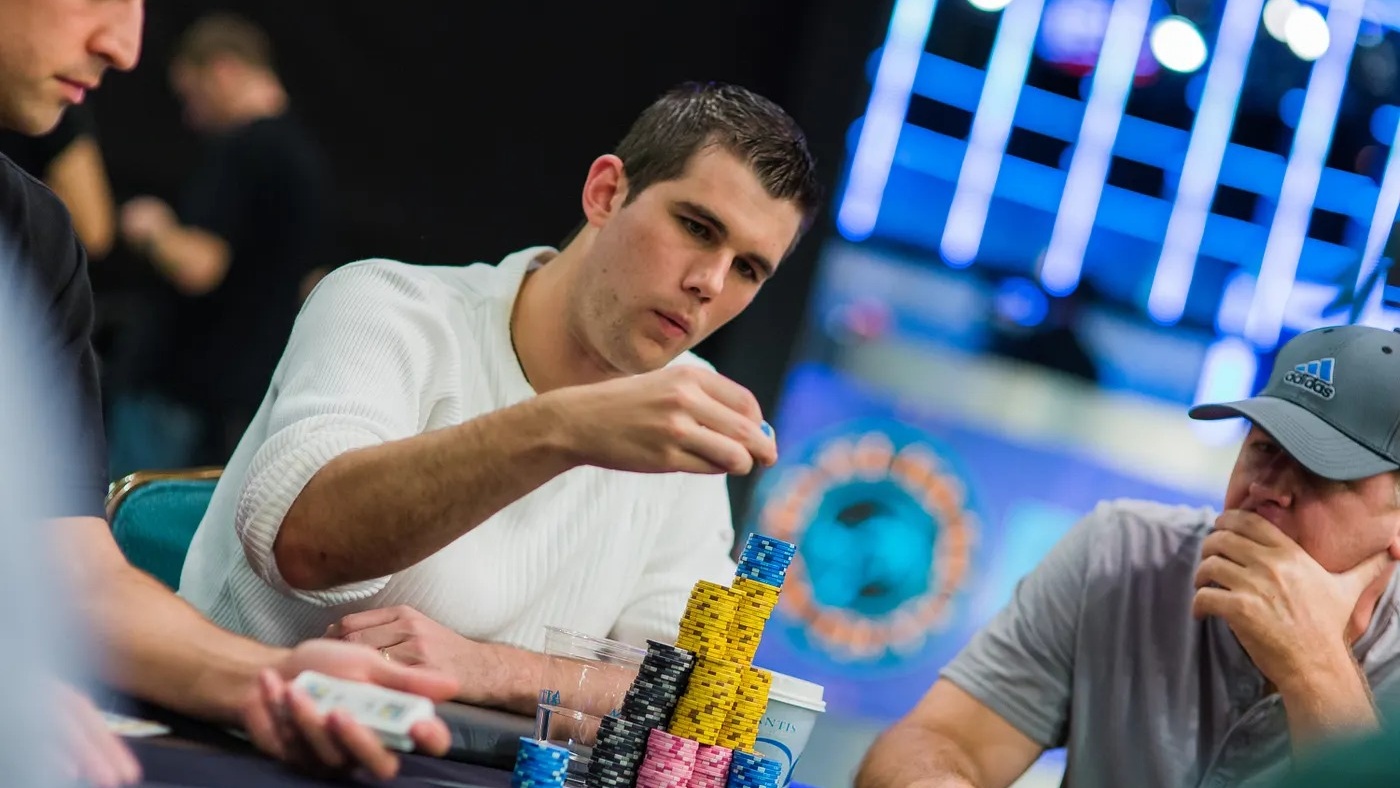
Alex Fitzgerald is one of the most prominent tournament poker coaches in recent years. His perspective on the game is shaped by thousands of hours in live tournaments, where theory quickly meets reality. In an interview for Chasing Poker Greatness, he revisits a core concept: the goal isn't to look like a good player, but to win against specific opponents.
Nobody is Prepared for Multiway Games
A major theme in the interview is multiway pots. Fitzgerald points out that in regular live tournaments, playing against multiple opponents comprises the majority of decisions. Despite this, the bulk of study and content focuses on heads-up spots that occur far less frequently in practice.
In multiway pots, he believes the difference between players becomes apparent. A typical example is a top pair with a good kicker, which feels comfortable in a heads-up situation but quickly becomes a marginal hand in a 5-way pot. The ability to fold such hands is one of the first steps toward more profitable play.
Fitzgerald openly states that a large portion of live fields is systematically unbalanced. Players rarely bluff, rarely raise in multiway pots, and significantly underestimate the power of aggression at the right moment. These tendencies create opportunities for exploits.
He emphasizes that playing unbalanced isn't a mistake if opponents can't punish that imbalance. In an environment where most players react emotionally rather than analytically, it's often correct to choose a simple yet tough strategy. Fewer bluffs against calling stations and more thin value against players who don't want to appear weak.
Overbets as a Weapon Against Comfort
He places great emphasis on overbets. According to Fitzgerald, they are one of the most effective tools in live tournaments because they disrupt opponents' emotional balance. Most players are familiar with standard sizings — small bet, half pot, two-thirds pot. Overbets take them out of their comfort zone.
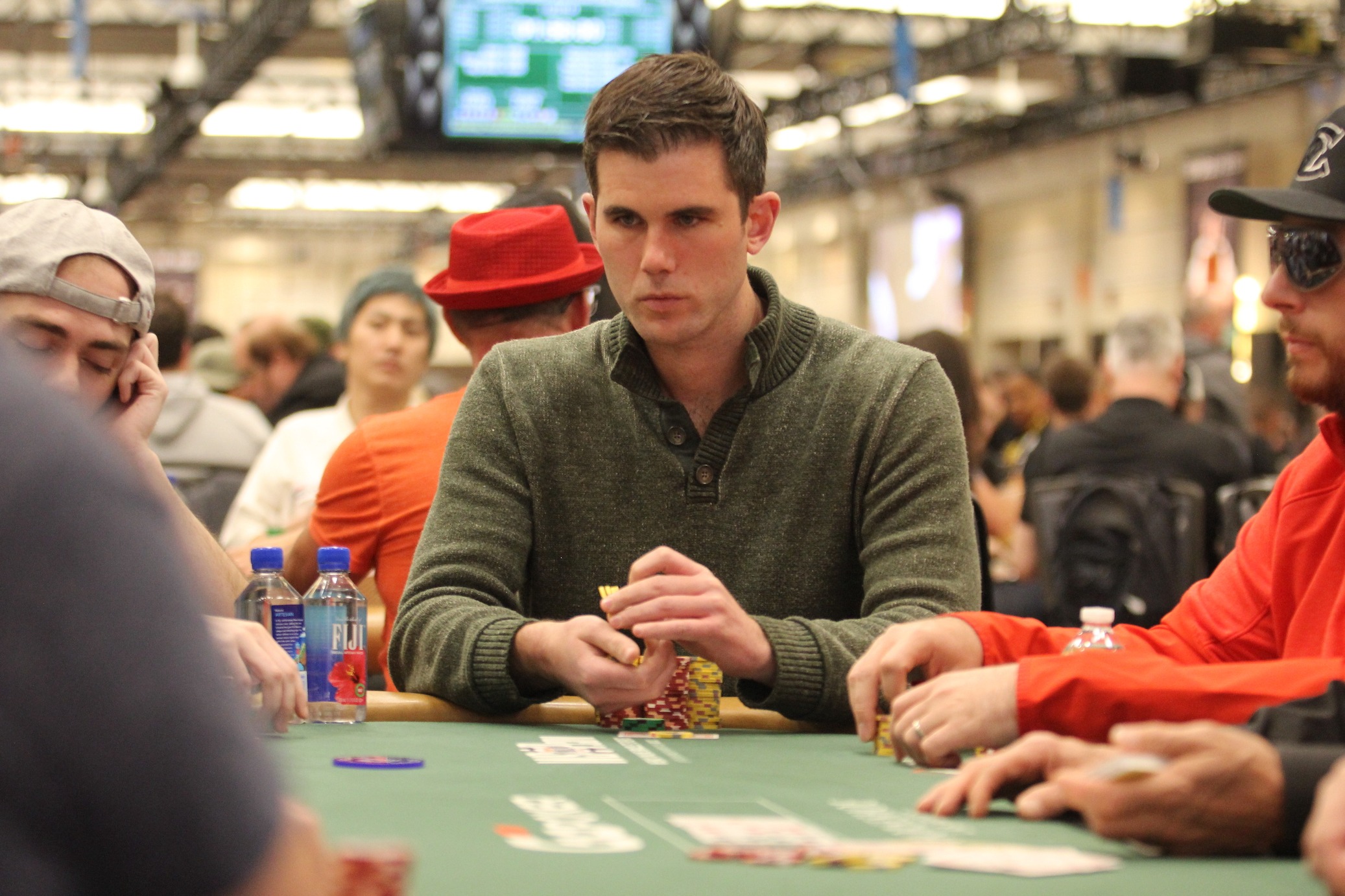
He describes situations where players, after a quick call on the flop and turn, mentally expect standard continuation. But when a big bet comes, decisions are often made not based on combinations but feelings. This is where folds occur that would never happen with smaller sizing.
Fitzgerald repeatedly emphasizes the importance of attention. In live poker, there is a wealth of information that players simply ignore — the way someone places chips, the speed of decision-making, the change in behavior with a strong hand. He openly talks about systematically collecting this data, not as one-off reads but as recurring patterns. Only when a tell recurs multiple times does it become a reliable basis for an aggressive strategy adjustment.
Why It's Better to Look Strange
One of the strongest points in the interview is rejecting the need for respect. Fitzgerald claims that players often make decisions to appear reasonable at the table. They avoid thin value and big bluffs, as well as significant folds. The problem is that poker doesn't reward you for making a good impression. It only rewards the right decisions against specific opponents. If a play seems chaotic but works, it's better than an elegant strategy that doesn’t earn anything.
Fitzgerald also talks about endurance — not as the ability to play perfectly, but the ability to maintain a high level of attention for extended periods. Tournament poker isn't a sprint — it's a marathon full of moments that decide the entire day. This, according to him, is where the difference lies between players who have theory and those who have results. Consistent focus, the willingness to make uncomfortable decisions, and the ability to keep going after mistakes.
This episode of Chasing Poker Greatness with Alex Fitzgerald isn't about playing perfectly — it's about playing effectively. It shows that in live tournaments, success doesn't come from balance, but from the willingness to break the habits of the field. For players navigating tournaments from a few hundred to a few thousand dollars, it provides an exceptionally practical perspective on the game.
More from Chasing Poker Greatness
Wayne Chiang: Why the Future of High Stakes Poker Is More Fragile Than It Seems
Bryan Paris: Why Fundamentals Still Decide MTT Poker Victories
Justin Saliba - Why Sometimes You Have to Fold Kings to Win the Game
Dr. Lara Eisenberg – From Doctor to WSOP Champion
Stephen Baker: Most players know what to do – but don't do it
Jared Alderman: The Mindset that Changes the Way You Win in Poker
Sources – Podcast Chasing Poker Greatness, X, PokerNews, CardPlayer

