

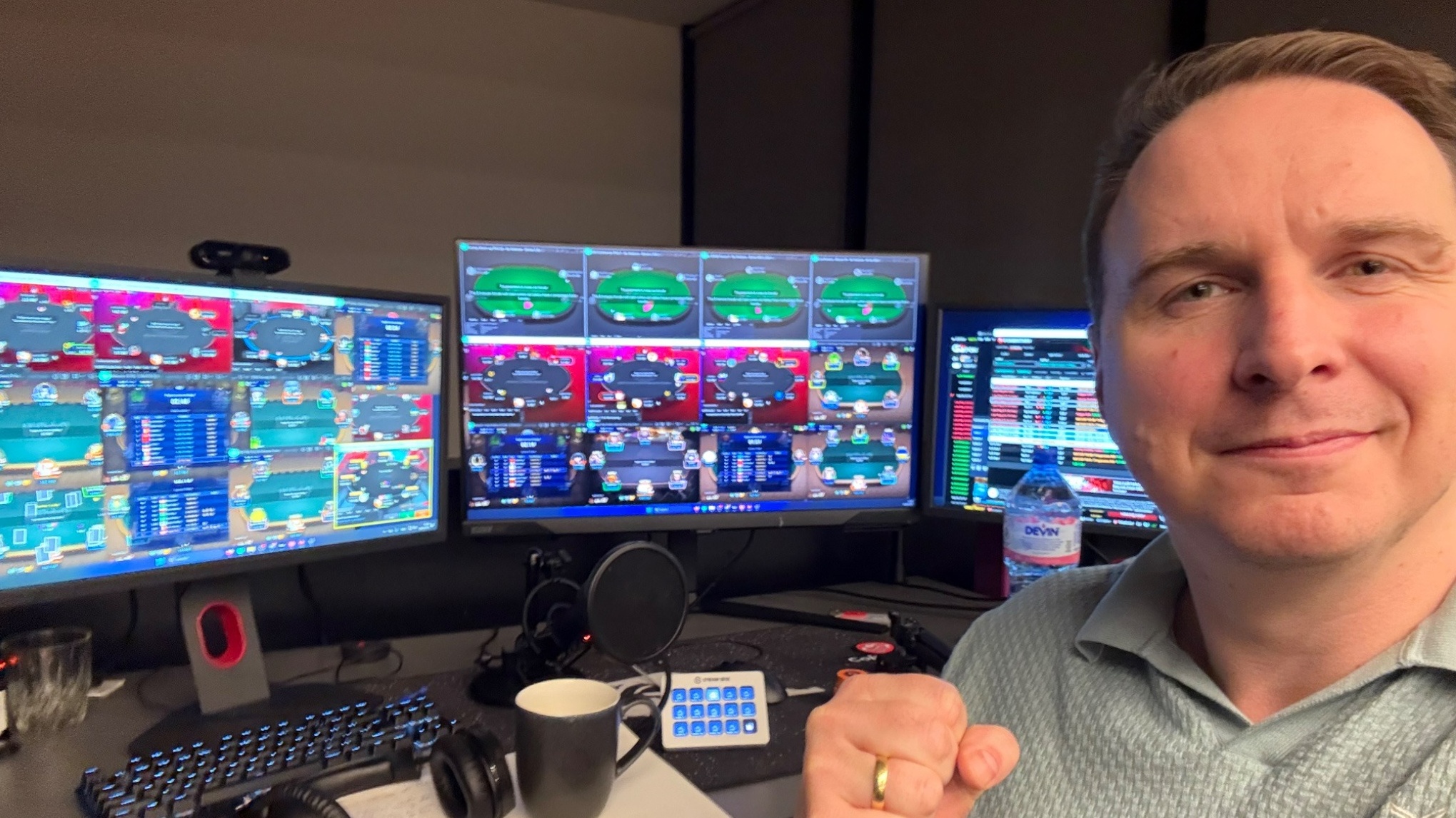
Poker players love to compare their stats and look for figures that seem suspicious. However, in his new video, Benjamin “BenCB” Rolle shows why this approach could be dangerous. He opened his own database, taking a sample of roughly 20,000 hands and candidly reviewed his game from preflop to river. He identified areas where he continues playing unnecessarily, spots where he's not aggressive enough, but also stats that deviate significantly from GTO that he has no intention of changing.
Perfect GTO Numbers? That Might Be the Problem
One of the key ideas of the video comes early on. If your stats perfectly mirror GTO, according to Rolle, it's possible you're not exploiting enough. Theory remains a starting point, and a player must know what a balanced strategy roughly looks like to identify their own deviations. The crucial question then arises: how does the real player field operate?
A good example is folding against a 3-bet. The figure might initially seem too high, but if the population 3-bets less and with stronger hands, a wider defense just to make the HUD look "correct" might simply mean more money lost. BenCB repeatedly distinguishes between a theoretical leak and a profitable exploit – the number itself doesn't tell into which category it falls.
Preflop aggression is among the most interesting parts of his database. Rolle shows that from several positions, he 3-bets significantly more aggressively than a pure GTO strategy would suggest, but he also explains why in detail. According to his observations, players often don't 4-bet enough in many spots, allowing their opponent to expand the 3-betting range without being adequately punished.

The advantage isn't just in folding the original raiser. A 3-bet pushes out the button and blinds too, preventing them from cheaply realizing equity. A suited hand that might initially seem like a comfortable call can quickly lose much of its value once more players enter the pot. BenCB recommends considering not just the strength of your hand, but how much equity you can realistically realize in the particular spot.
When the Field Adapts, an Exploit Stops Being an Exploit
An aggressive strategy, of course, doesn't work forever. Rolle admits he's recently seen more bold 5-bet shoves, and his own database allows him to track if his image and high frequencies are beginning to turn against him. If opponents know he frequently 3-bets and 4-bets, they might start attacking segments of his range that he can no longer defend profitably.
This is why, concerning his 4-bet stats, he says not "this is the right number," but rather "this needs further monitoring." His current frequencies might be profitable today, yet if the field starts responding with more frequent all-ins, the same strategy could quickly turn into a leak. This is a main takeaway of the video: an exploit isn't static. When player field tendencies change, so must the response.
In postflop play, Rolle finds aspects he explicitly dislikes. One of them is his willingness to continue against flop c-bets. In some spots, he folds less than he'd like, finding a similar trend in blind-versus-blind pots. Upon review, he discovers hands he thought were simple calls during play now appear less convincing in the database.
A Check-Raise Doesn't Have to Signal a Monster
Also notable are hands where BenCB uses aggression in ways many players wouldn't automatically choose. For instance, he highlights a check-raise with a low pair, not aiming to inflate the pot with an average hand but to push out overcards, weaker pocket pairs, and combinations with notable equity. If he gets a call, he doesn’t blindly continue on every turn – he chooses cards that improve his range or give another reason to keep up the aggression.

His database also highlights several areas where he wants to be more aggressive. Delayed c-bets and lines after a checked flop, he believes, offer untapped potential. When a flop goes check-check, much of the population is not defending strongly enough on the turn, providing the aggressor another chance to take the pot without continuing on the flop.
A similar issue arises on the river. If an opponent checks the flop and turn, then starts betting, their range might be excessively value-heavy in the real player pool. While theory demands a certain number of bluffs, the majority of natural bluffing combinations might have been used on previous streets. The result is a line where folding might be correct much more often than a solver would advise.
You Don't Need 500,000 Hands
The analyzed sample isn't massive. Rolle works with roughly 20,000 hands and openly notes that for specific stats, there are too few situations for solid conclusions. Nonetheless, this doesn’t mean the database lacks value. Even a smaller sample can unveil notable preflop trends or guide players to areas worth exploring in more depth.
This is crucial information for part-time players. They don't have to wait until amassing hundreds of thousands of hands to make reviews meaningful. Even five or ten thousand hands can highlight a significant deviation if players understand the boundaries and later examine specific situations. The more specific the spot, the greater caution is needed in interpretation, but basic trends can emerge quite early.
The same process doesn't have to end with one's own game. Rolle demonstrates that hand histories can be filtered by specific opponents, allowing for an analysis of regulars' tendencies you repeatedly face. Who folds too much against 3-bets, who rarely check-raises, who's predominantly value-heavy on the river, or who pushes too many combinations – numbers alone don't provide an answer, but they indicate where to start investigating.
The greatest value of the video isn't a list of recommended percentages. Rolle illustrates a mindset where a stat far from GTO can be left as is, while another might immediately signal it's likely losing money. The determining factor is not the size of the deviation, but its reason.
Sources: YouTube, PokerNews, Photo Credits by Neil Stoddart

