


In the World Series of Poker Europe Main Event, which became the largest five-thousand-euro tournament in European history, every decision carried real weight. This time, Negreanu focused not on grand gestures but on hands where precise range reading, the courage to call, and the ability to avoid turning a value bet into a self-made trap were crucial.
The first hand discussed revolves around David Coleman, who got into a 3-bet pot against an opponent with K d Q d. The flop K c J c J s looks manageable at first, but this is exactly the problem with such spots — you have top pair, but against an aggressive and studied player, every following street becomes a nerve test. Negreanu explains that against Coleman, it's not enough to only consider value combos. You must acknowledge that this type of player will have enough bluffs in similar runouts that you can't just fold everything.
And when the hand goes through the turn 2 h to a river shove on 3 d, it’s no longer about whether you like the call, but whether you can afford not to make it. Coleman eventually reveals A c Q h, one of the combinations Negreanu identified in his analysis as a possible bluff. He also highlights why A c is so crucial in this scenario — it blocks part of the possible flush draw combos and opens other opportunities the player might represent on the river.
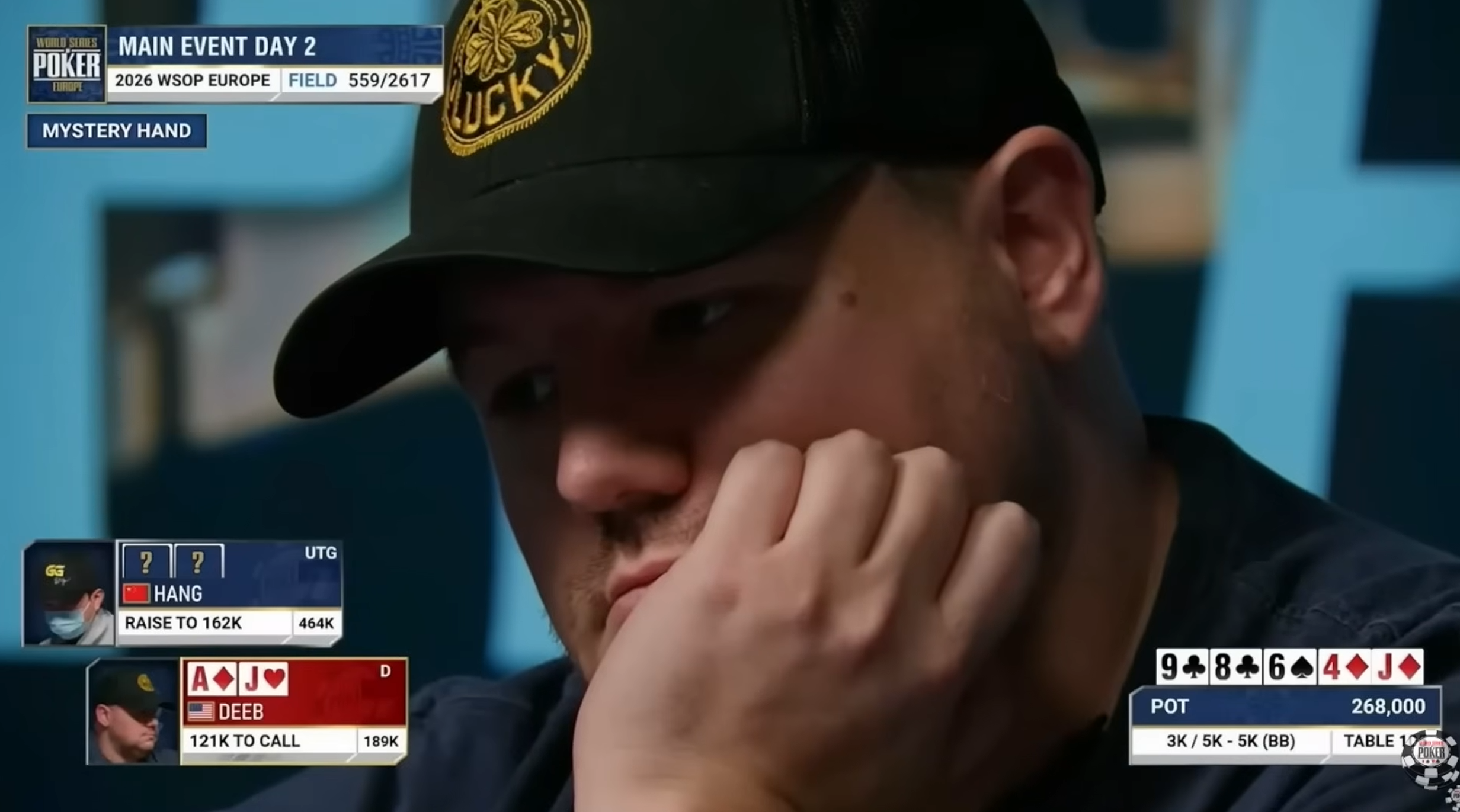
The second hand features Shaun Deeb, who was on a hot streak, with two runner-up finishes and a strong position in the WSOP Player of the Year race. Deeb calls on the button with A d J h against an open raise from UTG. On the flop 8 c 6 s 9 c, he tries to take the initiative with a bet. After a check-check turn 4 d, the river J d gives him top pair, top kicker. It seems like an ideal card for a thin value bet, but Negreanu precisely shows how treacherous situations are when your range seems strong at first glance but is actually capped. That's when a 'good river' becomes a minefield.
Deeb goes for value with 41,000, but the opponent responds with a big check-raise to 162,000, and suddenly a one-pair hand becomes a decision about a massive pot. In this segment, Negreanu excellently explains that it's not just about which value combos the opponent might have. Modern poker increasingly involves players turning showdown hands into bluffs when they feel beaten and your sizing reveals a one-pair range too loudly. And that's exactly what happens — a clear bluff is revealed with 7 h 7 d.
Negreanu doesn't just highlight these hands but turns them into a lesson on how to think about tournament poker one street ahead. In both cases, he returns to the same principle: before the river, you must know what you'll do if pressure comes. And when that pressure arrives, it's too late to piece together the entire hand from scratch. That's why this analysis works — not as dry theory, but as a reminder that even top players lose big pots not because they can't play, but because today's poker can be brutally precise and brutally creative at the same time.
Sources – YouTube, PokerNews, WSOP+

