

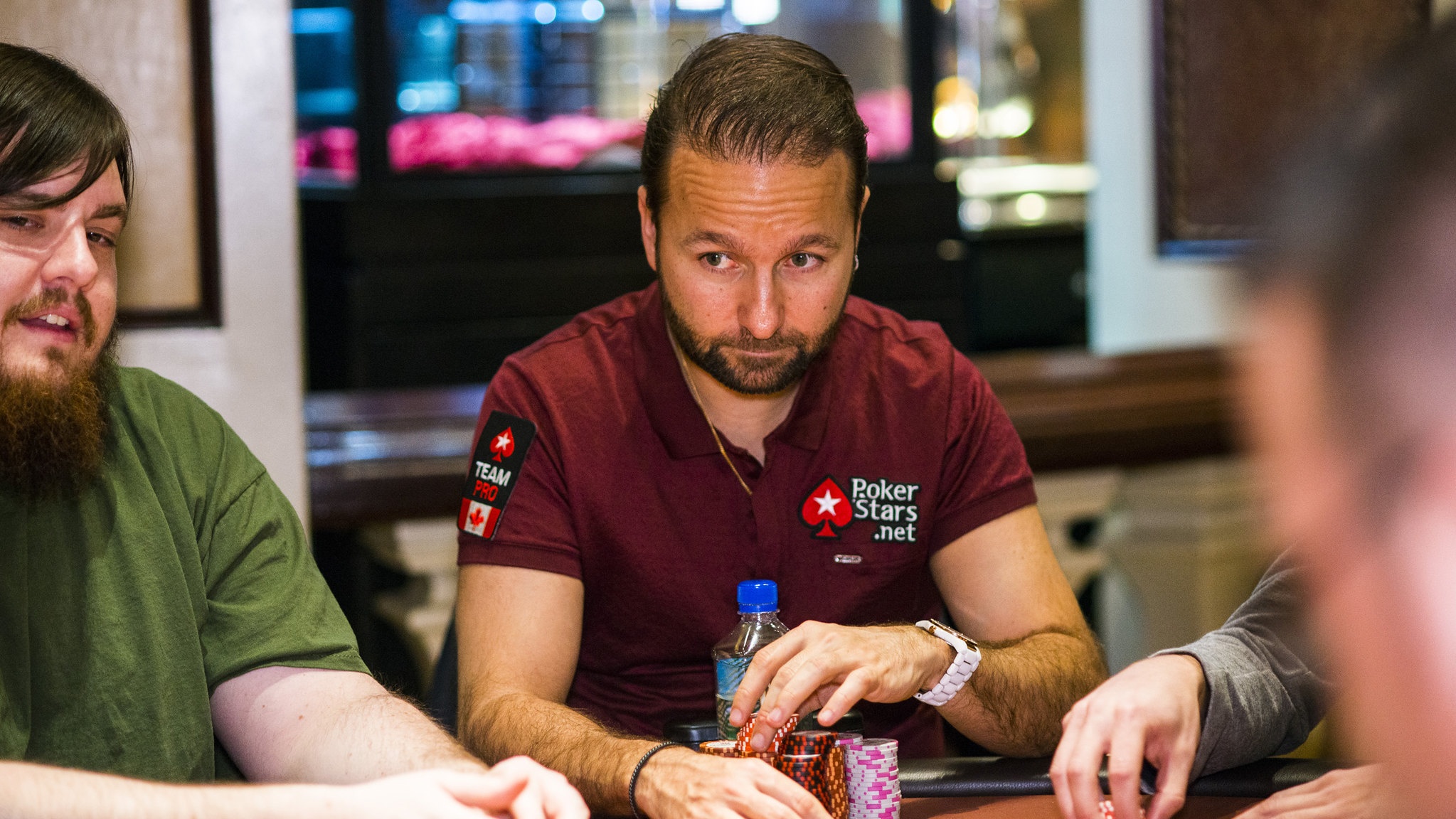
For years, Negreanu became the player most associated with this style. He did not rely only on huge all-ins, rigid preflop charts or waiting around for premium hands. Instead, he built edges by entering more pots, keeping those pots manageable, pressuring opponents after the flop and trusting his postflop decision-making. That style became one of the signatures of the poker boom era and helped shape how many tournament players thought about aggression, position and pot control.
Small ball poker was not simply about playing loose. It was about creating more playable situations, especially against weaker opponents who made mistakes after the flop. Negreanu understood that in many live fields, the biggest edge did not come from pushing tiny preflop edges. It came from dragging opponents into uncomfortable postflop spots where experience, observation and timing mattered more.
For a broader look at his career, WSOP bracelets, WPT titles, GGPoker role and legacy, read our full Daniel Negreanu ultimate guide.
That is why small ball poker became one of the most talked-about concepts in Daniel Negreanu’s career. It matched his personality, his instincts and the era in which he became a star. It also helped turn him into one of the most influential tournament players of his generation.
What Is Small Ball Poker?
Small ball poker is a strategy based on controlling pot size, playing more hands in position, applying pressure with smaller bets and using postflop skill to outplay opponents over multiple streets.
The core idea is simple. Instead of taking every marginal edge preflop by shoving, 3-betting big or building massive pots early, a small ball player often prefers to keep stacks more flexible and decisions more open. The goal is to see flops with hands that can play well, then use position, board texture, opponent tendencies and pressure to win pots without always needing a monster hand.
This style is especially useful in tournaments, where survival matters and stack preservation is important. A player using small ball does not want to risk the entire tournament life in every close spot. Instead, the style looks for lower-risk ways to accumulate chips steadily and force opponents into mistakes.
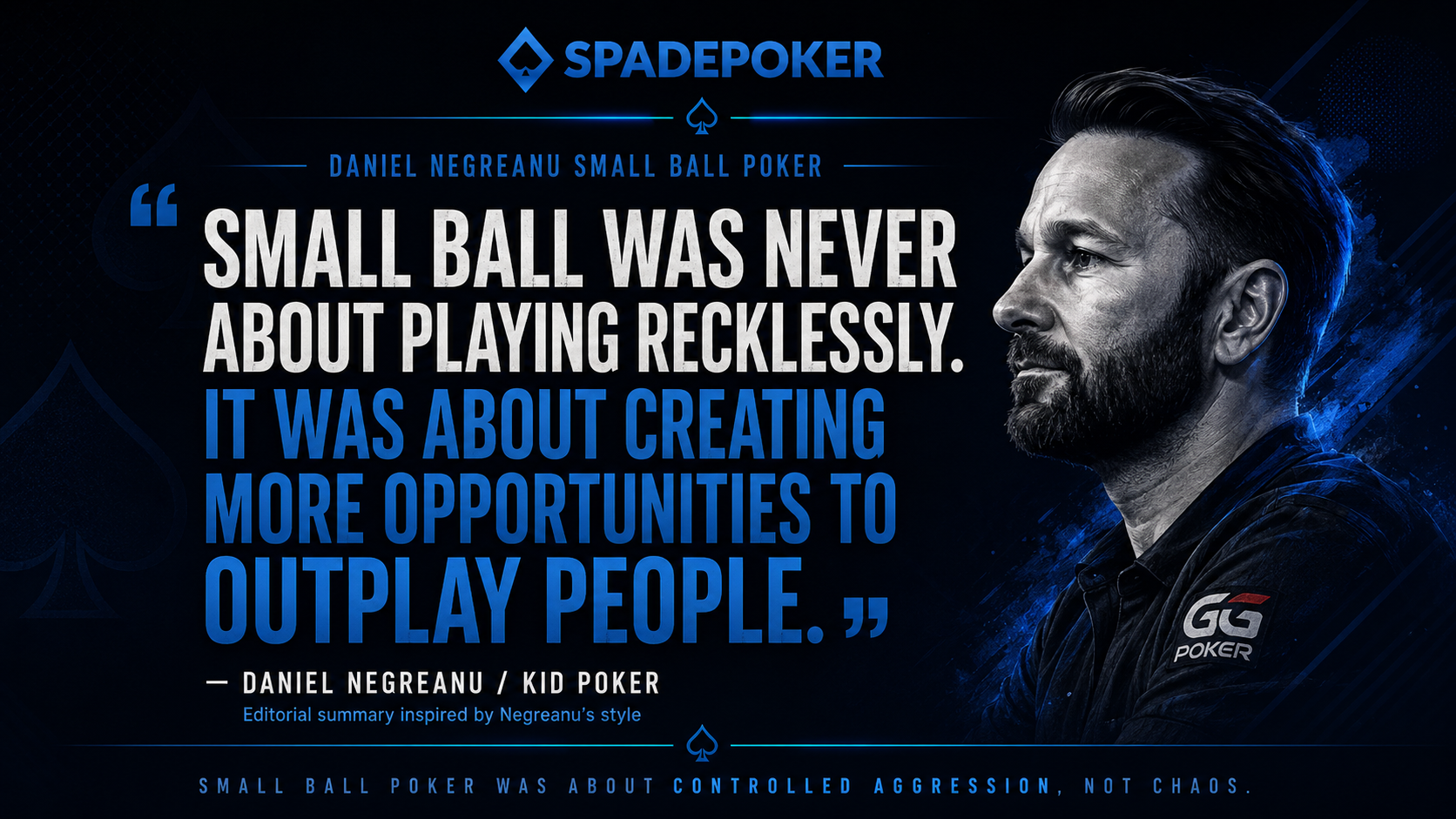
That does not mean small ball is passive. In fact, it can be highly aggressive. The difference is that the aggression often comes in more controlled ways. Rather than blasting every street with oversized bets, the small ball player often uses smaller sizing, wider ranges and more nuanced pressure.
Why Daniel Negreanu Became the Face of Small Ball
Negreanu was the perfect poster figure for small ball poker because his strengths fit the style almost perfectly.
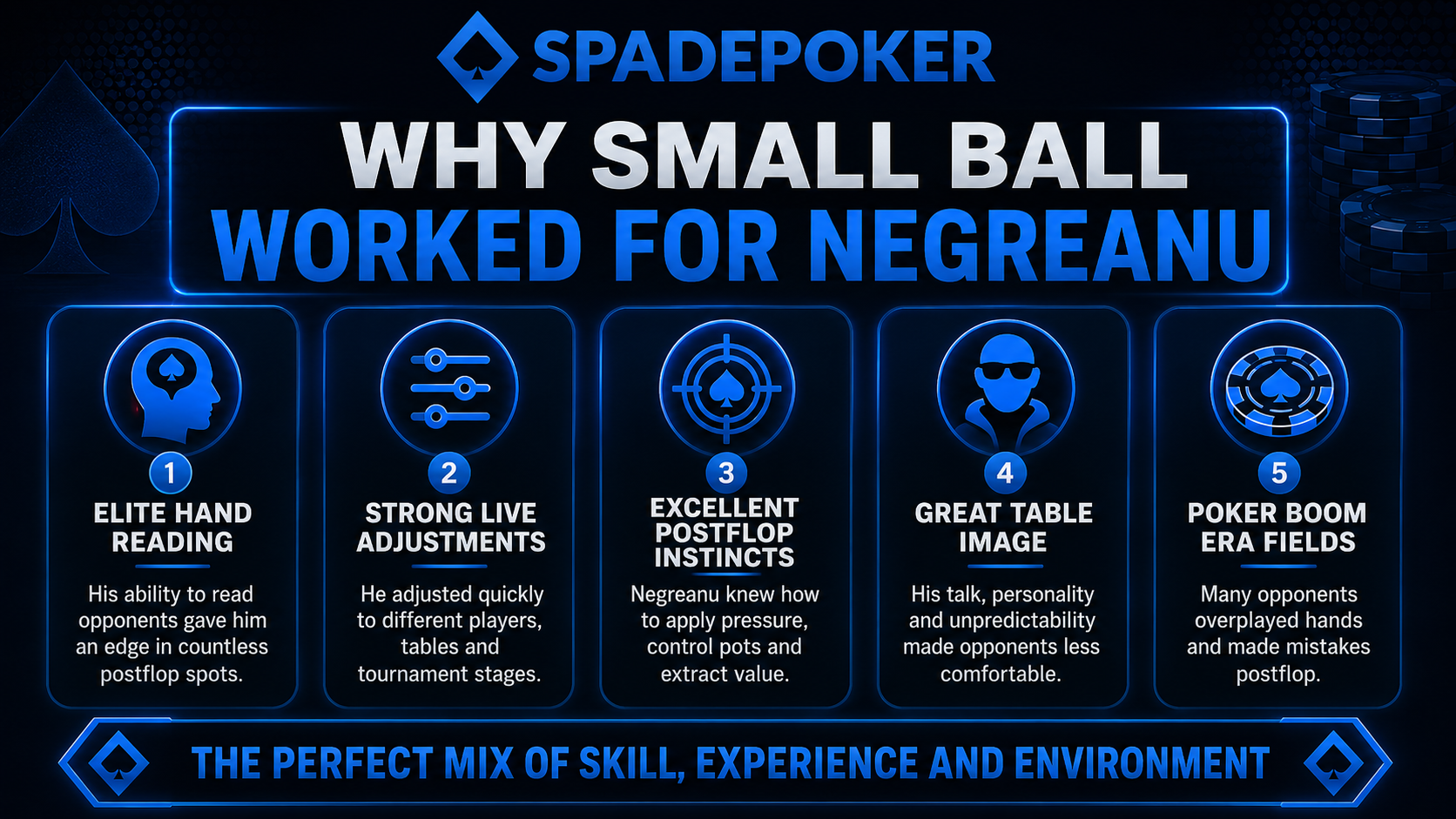
He has always been elite at reading people, adjusting to opponents and navigating complicated postflop situations. He also built much of his career in live environments, where players gave away information through timing, bet sizing and behavior. In those conditions, a flexible style created huge opportunities.
Small ball also suited Negreanu’s table image. He was active, conversational and hard to pin down. That same table image helped create many of Daniel Negreanu’s most famous poker hands. Opponents often knew he was involved in many pots, but that did not make him easier to play against. If anything, it created more confusion. His ranges appeared wider, his decisions were more dynamic and his willingness to talk through hands sometimes made players even more uncomfortable.
His long-term success also helped make him one of poker’s most commercially valuable names, a topic we cover in our Daniel Negreanu net worth breakdown.
Just as importantly, the poker boom era was full of players who made major postflop mistakes. Many opponents overvalued one-pair hands, played too honestly after the flop or failed to defend properly against pressure. A player like Negreanu could exploit those habits far more effectively by playing small ball than by using a simple wait-for-premiums approach.
How Small Ball Works Preflop
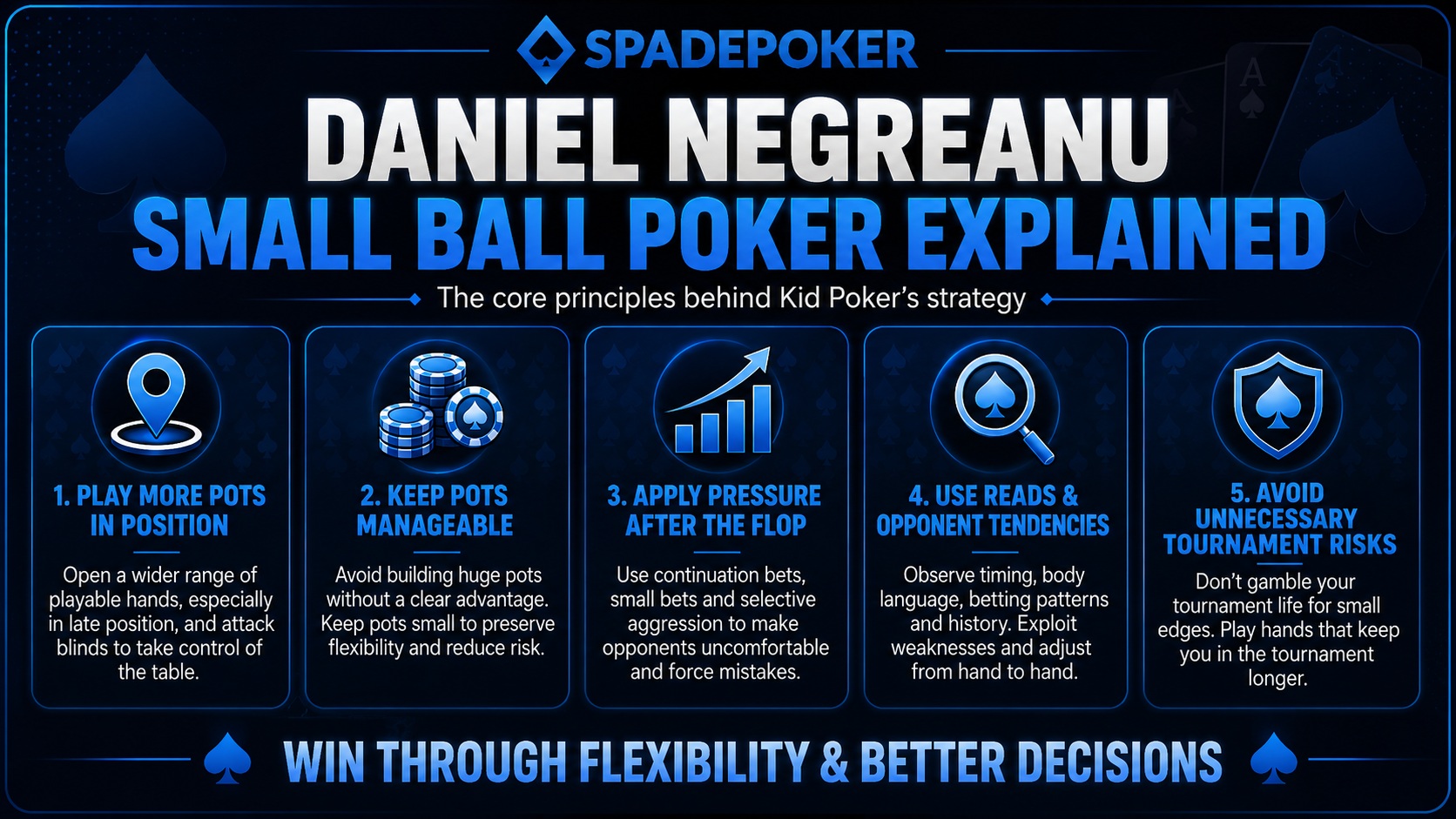
Preflop, small ball poker usually means opening a little wider, especially in position, while avoiding unnecessary preflop wars when the reward is small and the downside is large.
A small ball player likes to attack blinds, isolate weaker players and see flops with hands that have playability. Suited connectors, suited aces, broadways and medium-strength holdings all become more useful when the plan is to outplay opponents after the flop rather than force the entire hand into a preflop confrontation.
This style often avoids turning every decent hand into a huge pot. Rather than 4-bet jamming light or taking maximum-variance routes with medium-strength holdings, the small ball mindset usually asks a different question: can I keep this pot under control, maintain flexibility and make better decisions later in the hand?
In tournament poker, especially in earlier structures and softer live fields, that approach can be very powerful. It allows strong postflop players to accumulate chips without constantly risking tournament life in thin preflop spots.
How Small Ball Works Postflop
Postflop is where small ball truly comes alive.
Once the flop is dealt, the small ball player wants to use position, range advantage, board awareness and pressure to make life difficult for opponents. Smaller continuation bets, delayed aggression, controlled pot growth and selective bluffing all become part of the toolkit.
The strength of the style comes from its flexibility. A small ball player can bet small with a wide range, check back to preserve pot control, float in position, attack capped ranges and thin-value bet effectively. This creates constant uncertainty for opponents, especially those who are not comfortable thinking in ranges.
Negreanu was especially effective in these spots because he understood not only the cards, but the person across from him. He could identify who hated calling down light, who overreacted to pressure and who would reveal hand strength through physical or betting tells. That allowed him to turn many modest pots into steady chip gains.
Position, Pot Control and Pressure
Three pillars define successful small ball poker: position, pot control and pressure.
Position matters because the style depends heavily on making better decisions than your opponent after the flop. Acting last lets you see how an opponent responds before you commit more chips. It also gives you more ways to realize equity, bluff effectively and extract value.
Pot control matters because the style is built around keeping decisions flexible. If every hand becomes a bloated pot, the strategic advantage of maneuverability disappears. Smaller pots allow skilled players to survive mistakes, take more lines and maintain stack health throughout long tournaments.
Pressure matters because small ball does not work if it becomes timid. The point is not to drift into pots and surrender. The point is to enter controlled pots and then make opponents uncomfortable. That can mean c-betting the right boards, attacking weakness on later streets or forcing opponents into thin bluff-catch decisions.
Negreanu combined all three. He entered many pots in position, kept those pots manageable and then turned up the pressure in exactly the kinds of spots where weaker players made errors.
Why Small Ball Worked So Well for Negreanu
Small ball worked for Daniel Negreanu because it amplified everything he did well.
He was strong in live reads. He was calm in medium-sized pots. He was comfortable adjusting from hand to hand. He knew how to extract thin value and how to make opponents talk themselves into mistakes. His live-read ability is a major part of that edge, and we explore it in our Daniel Negreanu hand reading guide. He also played in eras and fields where many opponents were not technically sharp enough to defend properly against constant controlled pressure.
This is important because small ball is not automatically powerful by itself. It becomes powerful when used by a player who can actually outplay the field after the flop. In the hands of someone without those skills, it can easily become an excuse to enter too many pots, bleed chips and avoid decisive aggression.
In Negreanu’s case, the style was not random looseness. It was a structured way of using his comparative advantages more often.
Small Ball vs Tight-Aggressive Poker
Small ball poker and tight-aggressive poker are not opposites, but they emphasize different strengths.
A classic tight-aggressive approach focuses on strong hand selection, disciplined aggression and high-quality starting ranges. It is often simpler, cleaner and easier for most players to execute well. Many winning players build their games on this foundation.
Small ball is more fluid. It often uses wider opens, more playable marginal hands and greater reliance on postflop maneuvering. The reward is that it can create more chip accumulation opportunities. The risk is that it demands much more decision-making skill.
Tight-aggressive poker is usually safer for developing players. Small ball becomes more attractive when a player has strong postflop instincts, understands opponent tendencies and knows how to avoid turning controlled aggression into reckless spew.
Small Ball vs Modern GTO Poker
Modern poker theory has changed the conversation around small ball.
Today’s strongest players study solver outputs, balanced ranges and optimized bet sizing. That means some of the old small ball magic has become harder to reproduce, especially against technically strong opponents who understand how to defend, check-raise and punish capped ranges.
In some ways, small ball as a label belongs more to the poker boom era than to the solver era. But the underlying ideas are still alive. Position still matters. Pot control still matters. Pressure still matters. What has changed is that these tools now have to be used with greater theoretical awareness.
Modern elite players are better at responding to the kind of flexible aggression that once overwhelmed softer fields. That is why Negreanu’s later-career strategy has had to evolve. He can no longer rely only on feel and experience. He has needed to combine exploitative instincts with modern theoretical understanding. That old-school exploitative identity versus modern solver-driven poker became one of the themes behind the Daniel Negreanu vs Doug Polk rivalry.
| Area | Small Ball Poker | Tight-Aggressive Poker | Modern GTO Approach |
| Main goal | Create postflop edges | Play strong ranges aggressively | Stay balanced and theoretically sound |
| Pot size | Usually controlled | Often moderate to large | Depends on range and board |
| Hand selection | Wider and more flexible | Tighter and more disciplined | Structured by solver-based ranges |
| Key strength | Postflop maneuvering | Simplicity and stability | Hard to exploit |
| Best environment | Softer live fields | Broad player pools | Strong modern competition |
Can Small Ball Still Work in 2026?
Yes, but with an important condition: it must be used in the right environments and by players who understand why they are using it.
Against weaker live tournament fields, small ball can still be extremely effective. Many recreational players still call too much preflop, fold too honestly postflop, misread pressure and make avoidable mistakes in medium-sized pots. In those games, controlled aggression remains a powerful weapon.
Against strong modern regulars, however, old-school small ball can run into serious trouble. If your opens are too loose, your sizings are too transparent or your pressure is not grounded in sound range logic, tougher players will exploit you. They will 3-bet more accurately, defend more effectively and punish the very flexibility that small ball once used to dominate.
So the short answer is this: small ball still works, but not as a nostalgic formula. It works as part of a strong overall strategy.
What Poker Players Can Still Learn from Negreanu’s Small Ball Style
Even if poker has evolved, there is still a lot to learn from Daniel Negreanu’s small ball approach.
The first lesson is that poker is not only about charts. Decision quality after the flop still matters. Position still creates value. Pressure still wins pots. Many players study preflop ranges intensely and then give away far too much edge once real postflop decisions begin.
The second lesson is that not every profitable hand needs to become a huge pot. A strong player can win by preserving flexibility and making better choices later in the hand.
The third lesson is that style must fit skill. Negreanu’s small ball was successful because it matched his strengths. Players should not imitate it blindly. They should understand the deeper principle: build a strategy that repeatedly places you in spots where your edge is greatest.
That is the real value of studying Negreanu’s style. It is not about copying every line he ever took. It is about understanding how a top player turned self-awareness into a winning system.
Final Verdict
Daniel Negreanu’s small ball poker strategy helped define one of the most interesting chapters in modern tournament poker. That strategic identity also helped shape many of Daniel Negreanu’s biggest poker wins across WPT, WSOP and high roller events.
It was a style built on flexibility, postflop skill, pot control and relentless pressure. It fit the live tournament environment of the poker boom era and helped turn Negreanu into one of the game’s most studied and entertaining players. More importantly, it showed that poker excellence could come from more than brute-force aggression or robotic hand selection.
Small ball poker is no longer a magic formula in the way some fans once imagined. Modern theory has changed the game too much for that. But the core ideas behind it remain deeply valuable. Position, adaptability, pressure and self-awareness still separate great players from merely competent ones.
That is why Negreanu’s small ball legacy still matters. It is not only part of poker history. It is also a reminder that the best strategy is often the one that allows your strengths to show up most often.
FAQ
What is Daniel Negreanu’s small ball poker strategy?
It is a flexible tournament style built around playing more pots, keeping pot sizes manageable, using position well and outplaying opponents after the flop through pressure and better decision-making.
Why is Daniel Negreanu associated with small ball poker?
Negreanu became the most famous public face of small ball because the style matched his strengths in live reads, table talk, postflop skill and opponent adjustment.
Is small ball poker aggressive?
Yes. Small ball poker can be very aggressive, but the aggression usually comes through controlled pressure, smaller sizings and postflop maneuvering rather than constant preflop all-ins or oversized bets.
Does small ball poker still work?
Yes, especially in softer live tournament fields. However, it must be adapted to modern poker theory and used carefully against stronger opponents.
Is small ball poker better than tight-aggressive poker?
Not necessarily. Tight-aggressive poker is often more stable and easier for most players to execute. Small ball can be highly effective, but it requires greater postflop skill and stronger opponent awareness.
Did Daniel Negreanu use small ball in cash games too?
Elements of the style can apply to cash games, but small ball became most strongly associated with Negreanu’s tournament play, where stack preservation and postflop edge were especially important.
Is small ball poker the same as GTO poker?
No. Small ball is more of a strategic style and framework, while GTO poker is based on balanced, theoretically optimized decision-making. Some small ball ideas still fit within modern theory, but the classic version is more exploitative than solver-driven.
What is the biggest lesson from Daniel Negreanu’s small ball strategy?
The biggest lesson is that strategy should amplify your strengths. Negreanu used small ball not because it sounded clever, but because it allowed his postflop skill, live reads and pressure game to create more edges.

