

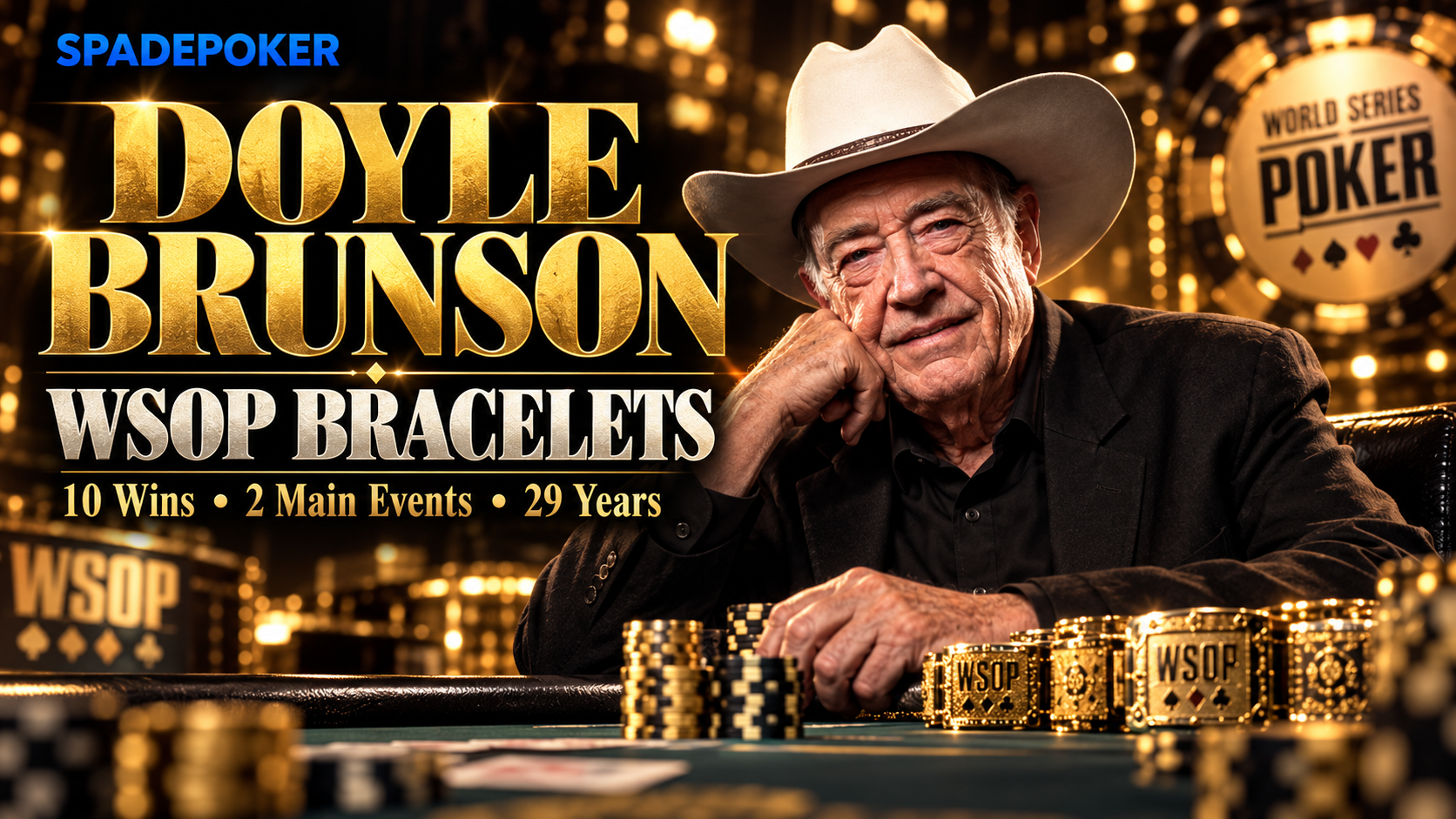
Doyle Brunson won 10 World Series of Poker bracelets and became one of the defining figures in WSOP history.
His bracelet résumé stretches from 1976 to 2005 and includes victories in No-Limit Hold’em, 2-7 Draw, Seven Card Stud, Razz, H.O.R.S.E. and mixed formats.
But two wins stand above the rest.
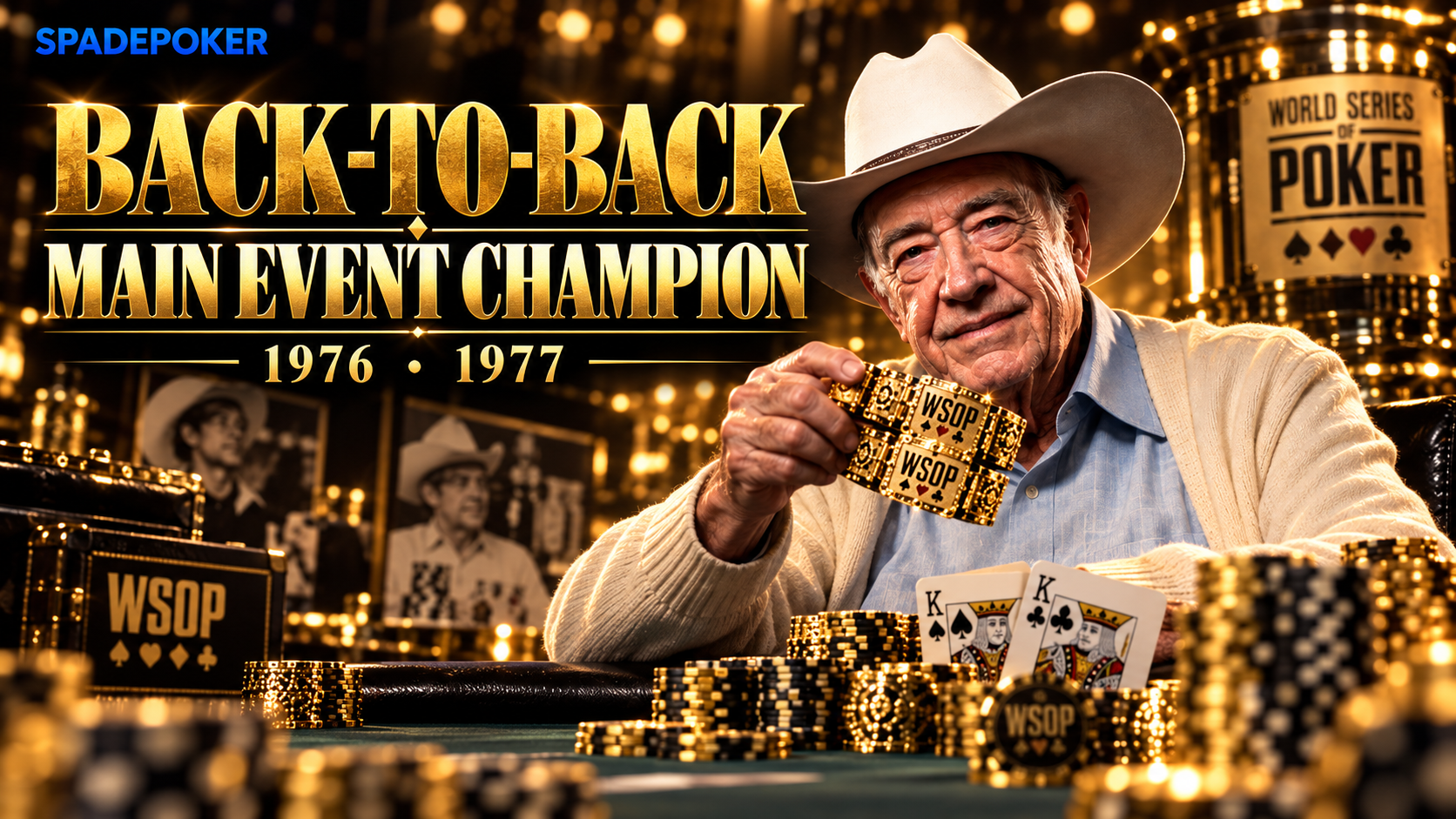
Brunson won the WSOP Main Event in both 1976 and 1977.
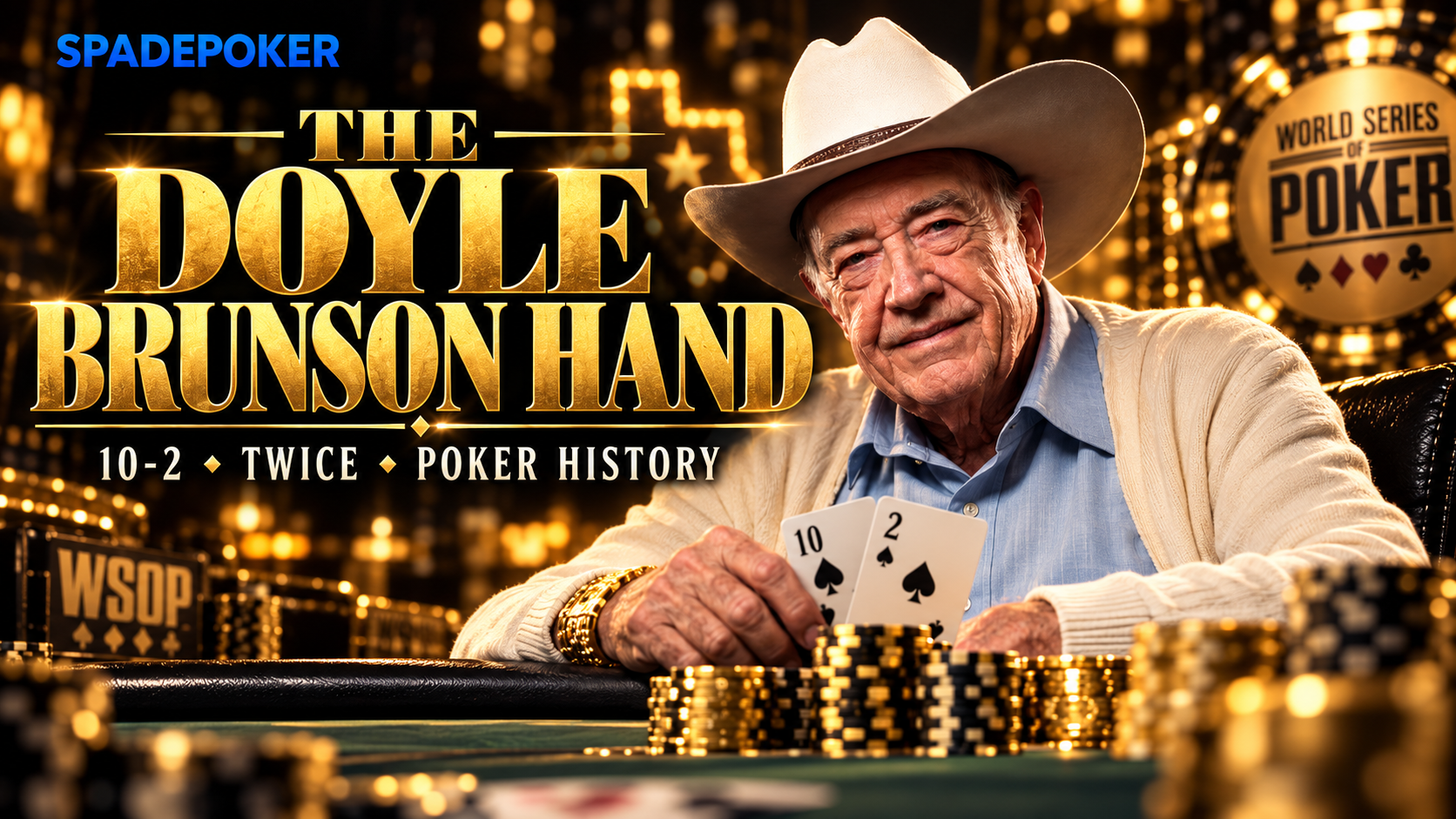
In both championship victories, the final hand ended with Brunson holding 10-2.
That coincidence permanently connected one of poker’s weakest starting hands to one of the game’s greatest players.
How Many WSOP Bracelets Did Doyle Brunson Win?
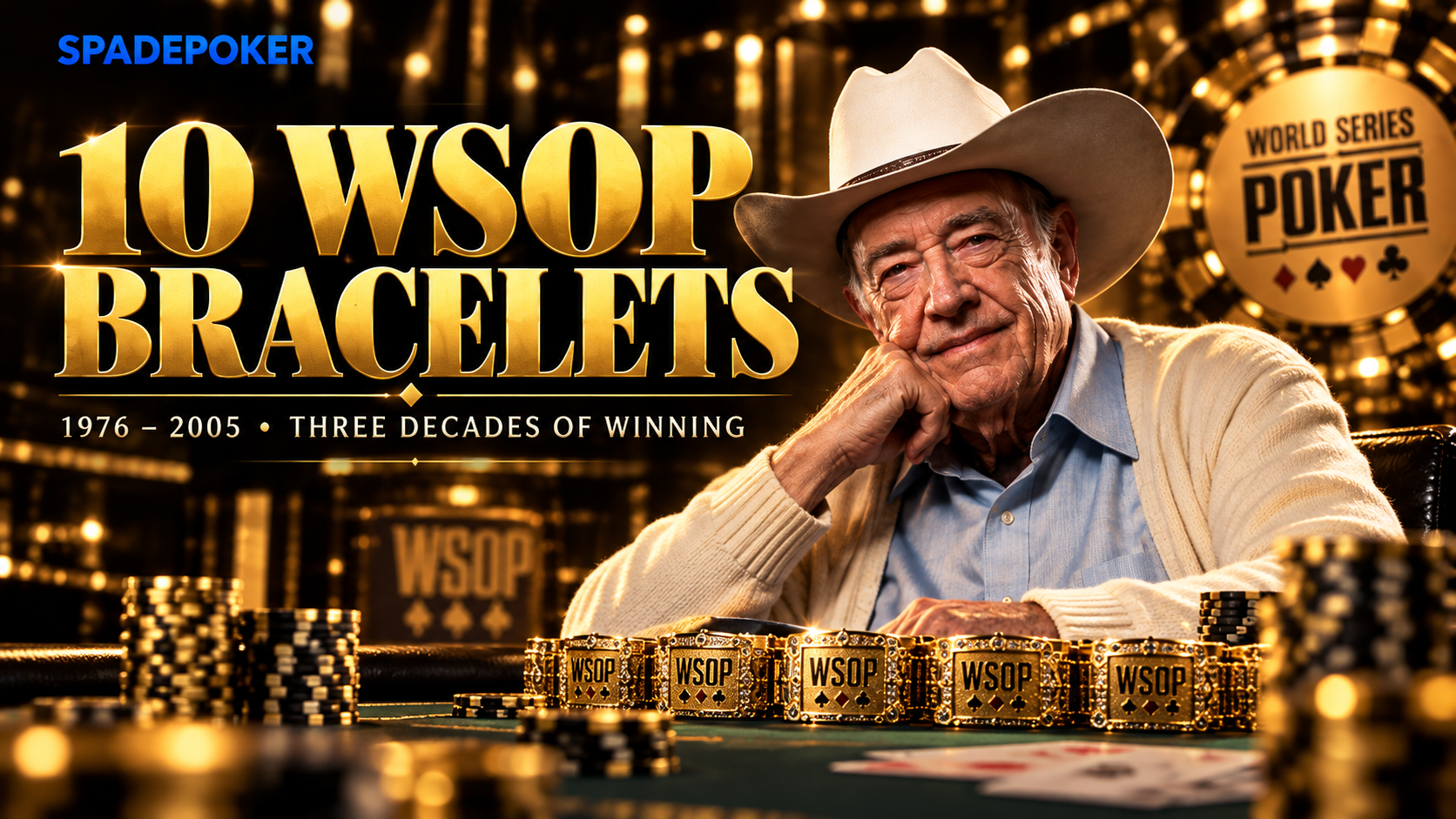
Doyle Brunson won 10 WSOP bracelets.
His first two came in 1976, and his tenth and final bracelet arrived in 2005.
That means Brunson won bracelets across nearly three decades.
Few achievements explain his longevity better.
Doyle Brunson’s 10 WSOP Bracelets
| # | Year | Event | Prize |
| 1 | 1976 | $5,000 No-Limit 2-7 Draw Lowball | $90,250 |
| 2 | 1976 | $10,000 WSOP Main Event | $220,000 |
| 3 | 1977 | $10,000 Limit Seven Card Stud Hi-Lo | $52,500 |
| 4 | 1977 | $10,000 WSOP Main Event | $340,000 |
| 5 | 1978 | $5,000 Limit Seven Card Stud | $68,000 |
| 6 | 1979 | $600 Mixed Doubles Seven Card Stud | $4,500 |
| 7 | 1991 | $2,500 No-Limit Hold’em | $208,000 |
| 8 | 1998 | $1,500 Limit Razz | $93,000 |
| 9 | 2003 | $2,000 Limit H.O.R.S.E. | $84,080 |
| 10 | 2005 | $5,000 No-Limit Hold’em 6-Handed | $367,800 |
Doyle Brunson’s First WSOP Bracelet
Brunson’s first bracelet came in 1976.
He won the $5,000 No-Limit 2-7 Draw Lowball event for $90,250.
The field contained 26 entries.
That victory came before his first Main Event title in the same series.
By the end of the 1976 WSOP, Brunson had transformed from one of poker’s respected cash-game professionals into a two-time bracelet winner and world champion.
The 1976 WSOP Main Event
Brunson won his first Main Event title in 1976.
The $10,000 championship drew 22 players.
He collected $220,000 for the victory.
But the tournament became legendary for another reason.
In the final hand, Brunson held 10-2.
It was not a premium starting hand.
It did not need to be.
Brunson won the pot, the tournament and his first Main Event bracelet.
The 1977 WSOP Main Event
One year later, Brunson did it again.
The 1977 Main Event attracted 34 players.
Brunson won $340,000 and became a back-to-back world champion.
Then came the detail that turned the story into poker folklore.
Once again, the final hand ended with Brunson holding 10-2.
The same starting hand had now appeared at the end of two consecutive Main Event victories.
From that point on, ten-deuce became the Doyle Brunson hand.
Why Brunson’s Back-to-Back Main Event Wins Matter
Winning one WSOP Main Event can define an entire career.
Winning two consecutive Main Events is far more unusual.
Brunson joined an extremely small group of players who managed to defend the world championship title successfully.
The achievement becomes even more impressive when placed in the context of his entire career.
He was not a specialist built around one tournament.
He was already a high-stakes professional before the WSOP existed and remained relevant for decades afterward.
The Doyle Brunson Hand: Why 10-2 Became Famous
Ten-deuce is one of the most recognizable named hands in poker.
It is called the Doyle Brunson because Brunson won the final hand of both the 1976 and 1977 WSOP Main Events holding 10-2.
The hand itself is normally considered weak.
That contrast is part of the appeal.
A poor starting hand became permanently attached to one of poker’s strongest careers.
Four Bracelets in Two Years
Brunson’s success in 1976 and 1977 went beyond the Main Event.
He won two bracelets in each year.
In 1976, he captured both the 2-7 Draw Lowball title and the Main Event.
In 1977, he won the Seven Card Stud Hi-Lo event before successfully defending his Main Event championship.
That gave him four bracelets in only two WSOP festivals.
Brunson’s Mixed-Game Strength
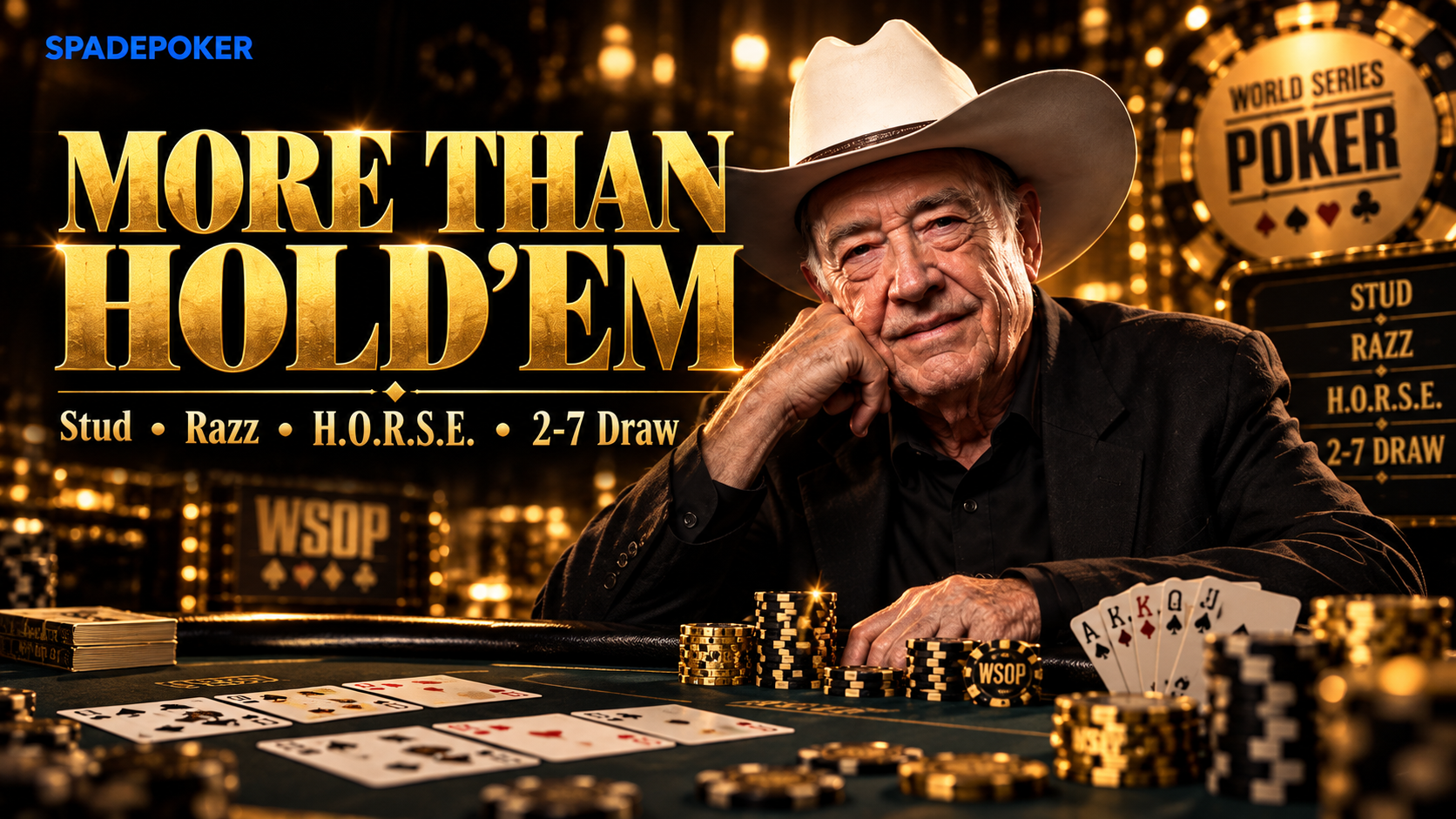
One of the strongest features of Brunson’s bracelet record is variety.
His wins came across multiple formats:
- No-Limit Hold’em,
- No-Limit 2-7 Draw Lowball,
- Seven Card Stud Hi-Lo,
- Seven Card Stud,
- Mixed Doubles,
- Razz,
- and H.O.R.S.E.
That reflects the poker culture in which Brunson developed.
Elite professionals of his era were expected to understand multiple games.
Brunson’s bracelet collection proves that he could win in far more than Texas Hold’em.
The 1979 Mixed Doubles Bracelet
One of the most unusual wins on Brunson’s résumé came in 1979.
He won the $600 Mixed Doubles Seven Card Stud event.
Mixed Doubles was a team event, and Brunson won alongside Starla Brodie.
Team bracelet events are rare in modern WSOP history, which makes the title a distinctive part of Brunson’s collection.
A 12-Year Gap Before Bracelet Number Seven
After winning his sixth bracelet in 1979, Brunson did not win another until 1991.
That 12-year gap makes the next chapter of his WSOP career especially important.
In 1991, Brunson won the $2,500 No-Limit Hold’em event for $208,000.
The victory demonstrated that his early success had not simply belonged to the small-field WSOP era of the 1970s.
He could still win as tournament poker evolved.
Bracelet Number Eight: Razz in 1998
Brunson added an eighth bracelet in 1998.
He won the $1,500 Limit Razz event for $93,000.
Again, the game mattered.
Razz is structurally very different from No-Limit Hold’em.
Winning in that format reinforced Brunson’s reputation as a complete poker player.
Bracelet Number Nine: H.O.R.S.E. in 2003
Brunson’s ninth bracelet came in 2003.
He won the $2,000 Limit H.O.R.S.E. event for $84,080.
H.O.R.S.E. tests players across several poker variants in rotation.
For a player already famous for mixed-game ability, it was a fitting title.
Doyle Brunson’s Final WSOP Bracelet
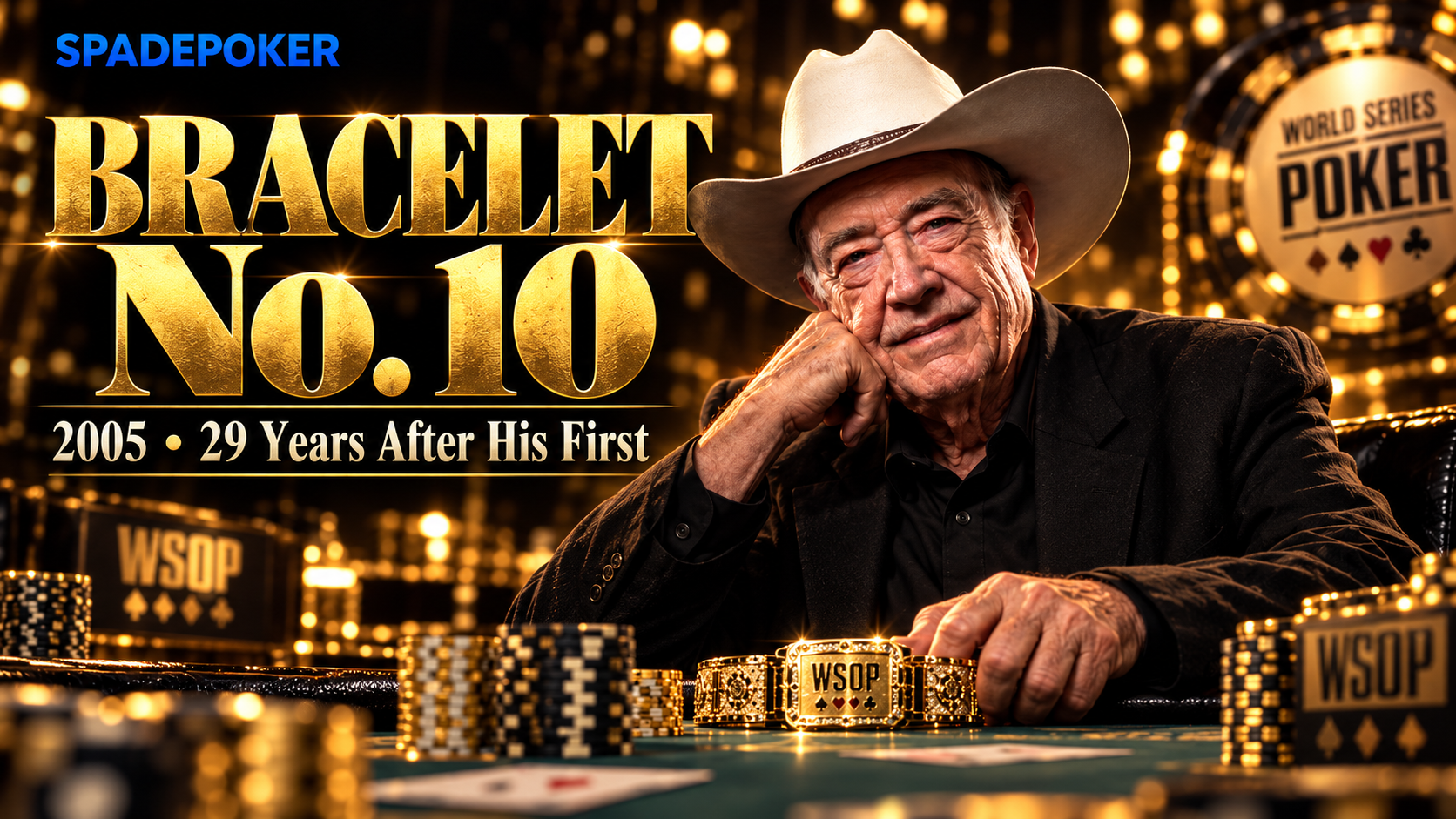
Brunson won his tenth and final bracelet in 2005.
He captured the $5,000 No-Limit Hold’em 6-Handed event for $367,800.
The victory came 29 years after his first bracelet.
That gap is one of the clearest demonstrations of his longevity.
Brunson had started winning WSOP titles in an era of tiny fields and road gamblers.
By 2005, poker had entered the television and online boom.
He was still winning.
How Much Did Doyle Brunson Win at the WSOP?
Official WSOP records list Brunson with more than $5.16 million in career WSOP earnings.
He also recorded 29 final tables and 46 cashes.
Those numbers need context.
Many of Brunson’s biggest victories came before modern WSOP prize pools exploded.
His historical standing is therefore better measured through bracelets, longevity and Main Event success than raw prize money alone.
Where Does Doyle Brunson Rank in WSOP Bracelet History?
Brunson remains one of the few players ever to reach double-digit WSOP bracelets.
He finished his career with 10.
That total keeps him in the same historical tier as other legendary multi-bracelet champions.
More importantly, Brunson’s bracelet collection spans both championship events and specialist formats.
Doyle Brunson vs Phil Hellmuth
Phil Hellmuth holds the all-time WSOP bracelet record.
But Brunson’s résumé is different.
Hellmuth built much of his success around No-Limit Hold’em tournament poker.
Brunson’s bracelet collection reflects a more mixed-game-heavy era.
He won across draw games, stud games, mixed formats and No-Limit Hold’em.
That makes direct bracelet-count comparisons interesting but incomplete.
Doyle Brunson vs Phil Ivey
Phil Ivey later moved ahead of Brunson with an eleventh WSOP bracelet.
Both players share an important characteristic.
Their reputations extend far beyond tournament results.
Both became legendary high-stakes cash-game players and both demonstrated elite ability across multiple poker variants.
Why 10 Bracelets Do Not Tell the Whole Story
Ten bracelets are enough to place Brunson among the greatest WSOP players ever.
But even that number does not fully explain his importance.
Brunson competed in the first WSOP.
He won consecutive Main Events.
He helped define professional poker before it became mainstream.
He continued winning titles into the modern era.
And his influence extended into cash games, books and strategy.

Final Verdict: Doyle Brunson’s WSOP Legacy
Doyle Brunson’s WSOP career is one of the most complete in poker history.
He won 10 bracelets.
He won two Main Events.
He won four bracelets across 1976 and 1977 alone.
He won in Hold’em, Stud, Draw, Razz and H.O.R.S.E.
And his final bracelet arrived nearly three decades after his first.
But the image that remains strongest is still the simplest.
Doyle Brunson.
Ten-deuce.
Back-to-back world champion.
Doyle Brunson WSOP Bracelets FAQ
How many WSOP bracelets did Doyle Brunson win?
Doyle Brunson won 10 WSOP bracelets between 1976 and 2005.
How many WSOP Main Events did Doyle Brunson win?
Brunson won the WSOP Main Event twice, in 1976 and 1977.
Why is 10-2 called the Doyle Brunson hand?
Because Brunson won the final hand of both his 1976 and 1977 Main Event victories holding ten-deuce.
When did Doyle Brunson win his first bracelet?
His first bracelet came in 1976 in the $5,000 No-Limit 2-7 Draw Lowball event.
When did Doyle Brunson win his last bracelet?
His tenth and final bracelet came in 2005 in the $5,000 No-Limit Hold’em 6-Handed event.
How long was Doyle Brunson’s bracelet-winning career?
His first bracelet came in 1976 and his last in 2005, a span of 29 years.
How much did Doyle Brunson win at the WSOP?
Official WSOP records list more than $5.16 million in career WSOP earnings.
What games did Doyle Brunson win WSOP bracelets in?
His bracelets came in No-Limit Hold’em, 2-7 Draw Lowball, Seven Card Stud Hi-Lo, Seven Card Stud, Mixed Doubles, Razz and H.O.R.S.E.

