

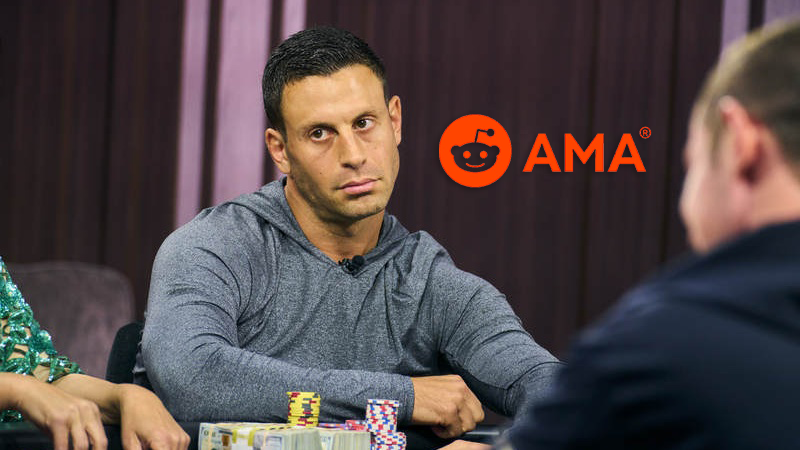
For years, Garrett Adelstein was one of the biggest stars in televised cash games. At the table, he carved out a reputation as an intensely aggressive, thoughtful, and fearless player capable of winning in Los Angeles's biggest games.
Then came a single hand that shifted the course of his career.
The controversial showdown with Robbi Jade Lew and the J4 combination became one of the most talked-about moments in modern poker history. Adelstein publicly expressed his belief that it wasn't a standard game, accepted a returned $135,000 from Lew, and subsequently vanished from regular streamed cash games.
Nearly four years after the incident, he returned to the poker community via an Ask Me Anything session on Reddit. The extensive discussion attracted over 200 posts and numerous pointed questions. Adelstein didn't shy away from uncomfortable topics, although he reserved a full explanation of the J4 controversy for an upcoming book and separate video. The full AMA is available on Reddit here.
It's time I tell the full story... pic.twitter.com/wZApO2rDp4
— Garrett Adelstein (@GmanPoker) March 25, 2026
Why did some of the community turn against him after the J4 incident?
One of the most direct questions addressed why a significant portion of the poker public criticized Adelstein, even though he still believes the hand's circumstances suggested cheating. Garrett provided three main reasons.
The first was a lack of information. According to Adelstein, the public knows only a fraction of what occurred surrounding the incident. Many people formed definitive opinions based on a few videos or brief online searches, although the complete story is considerably more extensive.
The second reason was his own mistakes. Adelstein admitted to making several wrong decisions after the incident. He did not try to portray himself as having handled the situation perfectly; quite the opposite, he acknowledged that his communication style and some subsequent actions contributed to how the public began to perceive him. The third factor he identified was the narrative pushed by the other side. He believes that a simple story took hold, where a wealthy professional took money from a recreational player after losing a huge pot. This version of events was easy to grasp and compelling for part of the public.
His reaction would have been the same even if he had won
An interesting question was posed regarding an alternative scenario: what would Garrett have done if he had won the controversial J4 hand? His response was unequivocal. He maintains that his reaction would have been the same regardless of the outcome of both run-outs. According to Adelstein, it wasn’t frustration over a lost pot but the circumstances during and immediately after the game that raised his suspicions.
However, he acknowledged that had he won the hand, the public might not have paid it as much attention. There wouldn’t have been an international poker scandal, extensive investigation, or years-long discussion. His upcoming book might not have been written either. According to him, one hand didn’t just create controversy; it completely altered the direction of his professional and personal life.
Leaving Hustler Casino Live could have cost him millions
Following the incident, Adelstein stopped playing regularly at Hustler Casino Live, even though he was one of its biggest stars and most successful players. When asked how much money this decision might have left on the table, he responded surprisingly specifically: approximately 1 to 3 million dollars annually. This is not a confirmed loss but rather his estimate of missed earnings from games he would have continued to play under normal circumstances.
However, Garrett didn’t seem to regret the decision purely for financial reasons. Continuing in lucrative games would have meant remaining in an environment he lost trust in after the incident. Instead, he chose his own convictions, even though it came at a substantial financial cost.
A strained relationship with Ryan Feldman
The discussion also touched on Ryan Feldman, a key figure at both Live at the Bike and later at Hustler Casino Live. Adelstein admitted that he considered Feldman's ability to set up attractive cash games as exceptional. These games significantly helped Garrett build his reputation and fan base during the years 2017 to 2022.
“We did a lot for each other,” Adelstein summarized their former partnership. However, he added that he is no longer a fan of Feldman. He once considered him a close friend, but their relationship changed significantly after the events surrounding J4. While he didn’t go into complete detail, his response hinted that the scandal not only cost him a regular seat in the game but also several personal relationships.
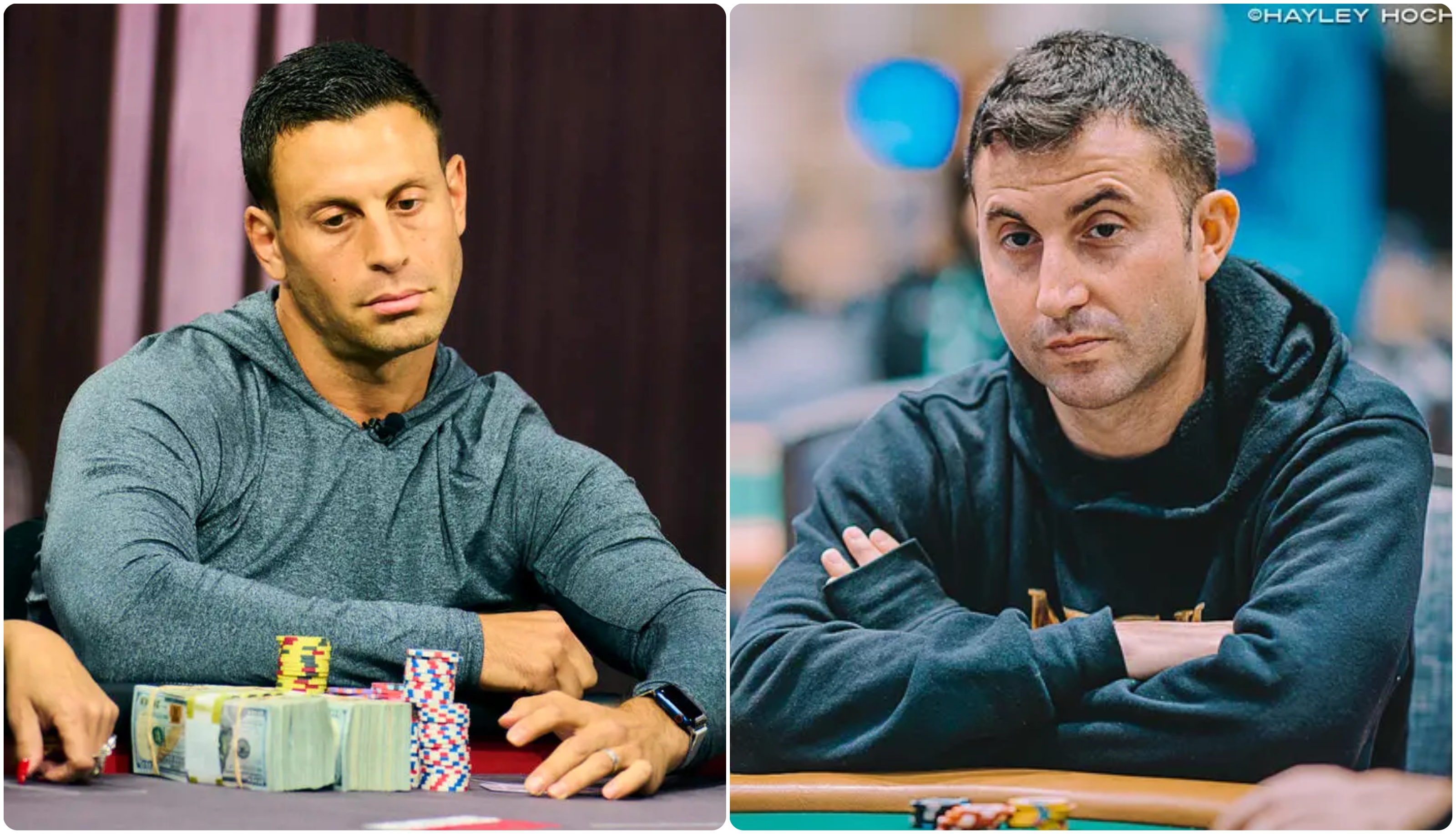
If not for J4, he might still be grinding
Garrett was asked a hypothetical question of what he would be doing today if the controversial hand had never happened. Initially, he said he might have moved on to personal development or another job that brought him inner fulfillment. However, he soon honestly admitted he might just be telling himself that.
The competitiveness, money, and constant recognition from fans, he suggested, would be very hard to leave behind. Without the upheaval that J4 brought, he likely wouldn’t have had a sufficient reason to step away from the world of regular high-stakes cash games.
No plans for a full-time return to professional poker
Fans naturally wanted to know if the former star of streamed games plans to return to regular playing. The answer wasn’t overly optimistic. Adelstein does not foresee returning to poker full-time. However, he hasn’t ruled out a few high-stakes appearances each year.
Poker still attracts him. The competitiveness and adrenaline of the biggest games still appeal to him, primarily in smaller doses. Still, he doesn't want the daily grind to dictate his entire life again. Since the J4 incident, he claims to have rarely played outside of occasional streamed appearances. His time has been filled with writing a book, creating an over 35-hour course for Upswing Poker, preparing a documentary project, and most importantly, family.
Fatherhood changed priorities, not his nature
Garrett is now raising two small children, approximately three and one year old. A question about whether fatherhood changed his view of poker brought one of the most personal answers of the AMA. Adelstein explained that the birth of his daughter happened just months after the J4 incident. For him, it is difficult to separate what changes were caused by the scandal and which by parenting. In a short span, both his personal and professional lives were completely upended.
He emphasized that having children doesn’t change a person's basic nature. He still considers himself highly ambitious and competitive. The energy he used to regularly direct toward poker has merely shifted to the book, training course, documentary, or distance running. Fatherhood didn’t destroy his desire to compete; it just re-ordered his priorities.
According to him, regularly balancing family care with the mentally demanding world of high-stakes poker is not a life he wants to lead today. However, when he does sit at the table again, he wants to win just as intensely as before.

The toughest opponent? Andrew Robl
Purely poker-related questions also had their place. When asked to name a player with an exceptionally challenging style, Adelstein highlighted Andrew Robl. According to Garrett, Robl is better than anyone else he has played against at combining theoretical foundations, exploitative decisions, and the pressure typical of very deep-stack cash games.
He didn’t want to reveal his complete list of five toughest opponents immediately. Together with Doug Polk, he prepared a more detailed video dedicated to this topic. Adelstein also reminded that his journey to the top wasn’t instantaneous. In the early days, he struggled in online poker. It took him about two to three years, between ages eighteen and twenty-one, to work his way up the limits.
Garrett Adelstein presented a different face
Adelstein's AMA didn’t provide a definitive conclusion to the J4 controversy. Anyone expecting a new piece of evidence or a complete reconstruction of the incident didn’t get it. Garrett reserved the most important details for his book Beneath the Cards and a planned video. However, the discussion showed a player who speaks much more openly about his decisions today.
He admitted mistakes in communication, named the financial cost of his withdrawal, and openly recognized that poker wasn't sustained by pure love for the game alone. He also made it clear that even a loss of an estimated 1 to 3 million dollars annually wasn't a sufficient reason to return to an environment he no longer trusted.
And while he may no longer be a regular face in the biggest streamed games, he cannot completely stay away from poker. Several times a year, he wants to return, sit down with the best, and remind everyone why he was long considered one of the world's most feared cash game players.
More articles from Reddit Ask Me Anything
Phil Hellmuth: Confidence, Controversies, Sharp Questions, and the Typical Ego
Stephen Chidwick - Routines, Solvers, and the Truth Behind 76 Million in Winnings
Benjamin “BenCB” Rolle – There's No Destination, Only Progress
Daniel Negreanu on Poker, Politics, AI, Coolers, and His Legacy
Sources – Reddit AMA, PokerNews, X, CardPlayer, PokerGO

