

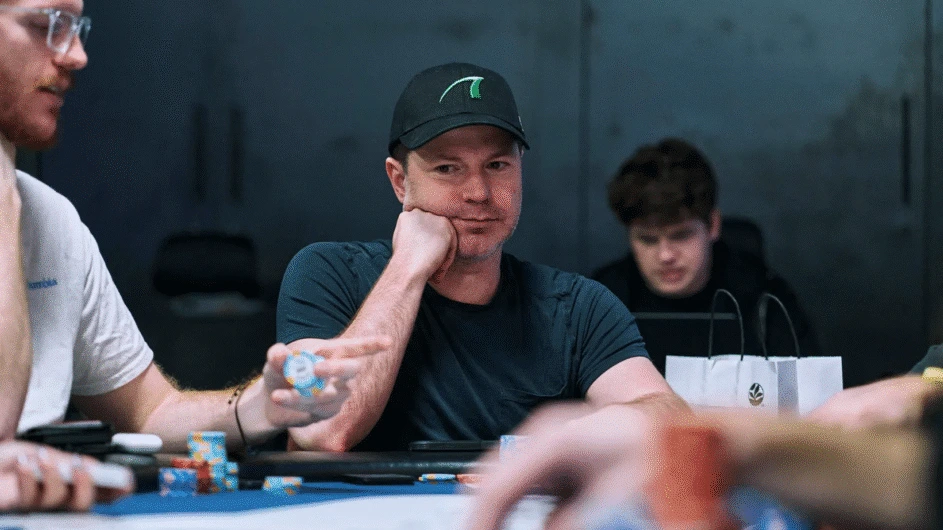
Jonathan Little is one of the most renowned poker coaches and a consistently successful tournament professional. His own story began in a way that sounds almost unbelievable today. Before turning 21, he reportedly turned an initial $50 into about $350,000.
He grew up during a time when online poker was, in his words, the "Wild West." Players didn't have access to today's solvers, extensive databases, or endless training materials. Most of them were just experimenting to see what worked and learned directly at the tables. Two decades later, Little decided to find out if similar success could still be achieved at lower stakes. He returned to live cash games and played over 80 hours at small stakes. The result? According to his published words, his profit went over the $20,000 mark.
Even more interesting than the result are his observations. Players today are technically better than they were in 2005, according to Little, yet they continue to repeat many of the same basic mistakes. To beat $1/$2 or $2/$5 games, he suggests, you don’t need to be a postflop genius. Often, making significantly better decisions before the flop is enough.
Before 21, I turned $50 into $350,000 playing poker.
— Jonathan Little (@JonathanLittle) August 8, 2026
Now, I'm back to prove it can still be done today, this time in live cash.
After 80+ hours of small stakes cash, I'm up $20,000+.
And I'm seeing the same mistakes I built a career exploiting.
Here are 5 of the biggest: 🧵 pic.twitter.com/K0WlIdJi1v
1. Stop Limping When Entering the Game First
The first and probably most noticeable mistake is the frequent open limp. A player just calls the big blind because they want to see the flop cheaply, but suddenly raises with their strongest hands. If this pattern is repeated, opponents can quickly gauge the strength of the player’s hand. A limp represents a weak or speculative hand, while a raise is conspicuously biased towards premium cards. More observant players can then make easier and more accurate decisions against them.
Limping also creates more multiway pots. More opponents join the game cheaply, reducing the equity of individual hands and making postflop decisions more complicated. The player also loses the chance to win the pot before the flop or to take the initiative into the later betting rounds. Little therefore recommends a simple rule: if a hand is good enough to play, in most cases you should open with a raise. Exceptions might include some situations from the small blind, where limping has its place in a well-constructed strategy.
2. Exploit the Cutoff and Button Much More Aggressively
The second fundamental mistake is overly passive play from late positions. During live cash games, Little noticed that many players fail to defend their blinds adequately. Therefore, the cutoff and button become ideal spots to increase aggression. Raising more frequently from late positions brings several advantages. The player can steal more pots preflop, develop an aggressive image, and often reach the flop with positional advantage. Weaker opponents can be pressured, and subsequent decisions become easier as they act last.
The difference between positions is enormous. Little’s published charts show that he opens about 12% of hands from UTG. On the button, his opening range widens to over 40%. Due to the positional advantage, even hands like A3o and Q2s are playable, which from early positions would be easily folded. This is not blind aggression though. The goal is to identify players who give up their blinds too easily and consistently apply pressure.
UTG is tight, as it should be.
— Jonathan Little (@JonathanLittle) August 8, 2026
But look at how much wider we can open from the BTN.
We're opening hands as weak as A3o and Q2s because the positional advantage is so valuable. pic.twitter.com/WMvnS5g32q
3. Don't Blindly Follow GTO Strategies
Solvers have fundamentally changed how poker is studied. However, Little warns that some new players try to mechanically copy mixed GTO strategies even in games where opponents make obvious and repeated mistakes. If a solver suggests alternating between raise, call, and fold for a particular hand, it doesn't mean a player must perfectly randomize every time at the table. GTO solutions assume that opponents also respond with quality and balanced strategies, which often isn't the case at low stakes live games.
When an opponent calls too many 3-bets, Little doesn’t want to mix bluffs and value bets according to theoretical frequency. He simply increases the number of value 3-bets. If an opponent folds too often, the natural adjustment is to increase the number of bluffs. GTO charts should serve as a firm starting point, not an immutable law. The basic strategy is dictated by theory, but the correct deviation is revealed by an opponent’s specific behavior.
4. Adjust to Each Opponent
Little emphasizes that you don’t need hundreds of hands or a perfectly accurate database to adjust your strategy. In live poker, a lot can be learned about an opponent from their initial decisions, betting sizes, and involvement frequency. If a player repeatedly calls 3-bets with too wide a range, respond with more value 3-bets. If they fold too often, include more bluffs. And if someone rarely 3-bets, their raise is likely to represent a very strong range worth folding more hands against.
The biggest mistake is using the same strategy against everyone. An aggressive regular, passive recreational player, and an opponent playing almost every hand represent three completely different challenges. Each requires a different response. Therefore, observation remains one of the most valuable poker skills. A player doesn’t have to know an opponent's exact frequency immediately. It’s enough to recognize a clear tendency and exploit it.
5. Account for Typical Mistakes of the Entire Field
The final point builds on exploiting individuals but elevates it to a higher level. Some tendencies are so common at low stakes that you can prepare for them before the first hand. Little identified two basic deviations. Players call 3-bets too often, but use them too infrequently themselves. Against the first tendency, he wants to 3-bet more hands for value. Against the second, he plans to fold more in situations where a passive opponent suddenly shows significant aggression.
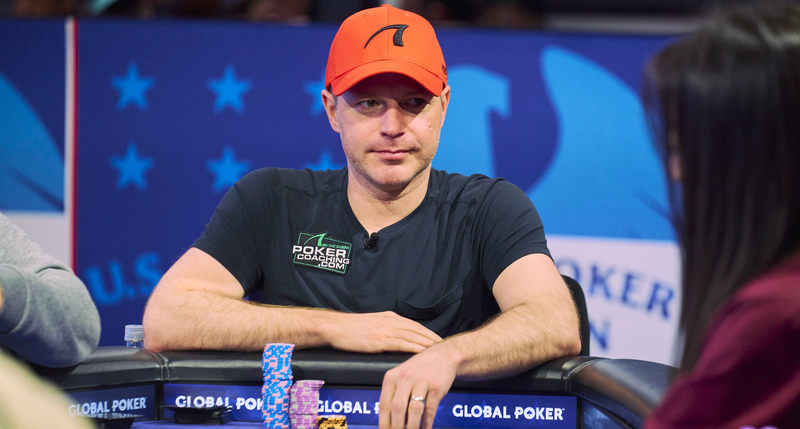
This strategy is not based on exact data about a specific player but on experience with the entire environment. When new information emerges, Little adjusts his approach further. However, he doesn’t enter the game completely blind—he works from the start with the most likely errors of the population.
Simplicity Can Beat Complex Theory
Little’s experiment doesn't offer a guide for automatic $20,000 profit. Such a result is affected by game selection, session length, opponent quality, and natural variance. However, his main message remains highly practical. At low stakes, often what matters is not who knows the most complicated solver solutions, but who can discipline themselves to fold weak hands, enter the game with a raise, leverage positional advantage, and notice what opponents are doing wrong.
Little uses his preflop ranges as a foundation, adapting them according to the table dynamics. This combination of a solid theoretical base with active opponent exploitation might be why he has found substantial edge at low stakes even after years.
His five recommendations can be summed up simply: avoid limping, attack the cutoff and button, don’t blindly follow GTO, adjust to each opponent, and account for the field’s typical mistakes from the start. Poker has evolved significantly since 2005, but according to Little, the fundamental errors have survived—and players who can recognize them can still build their edge.
Sources - X, CardPlayer, PGT

