

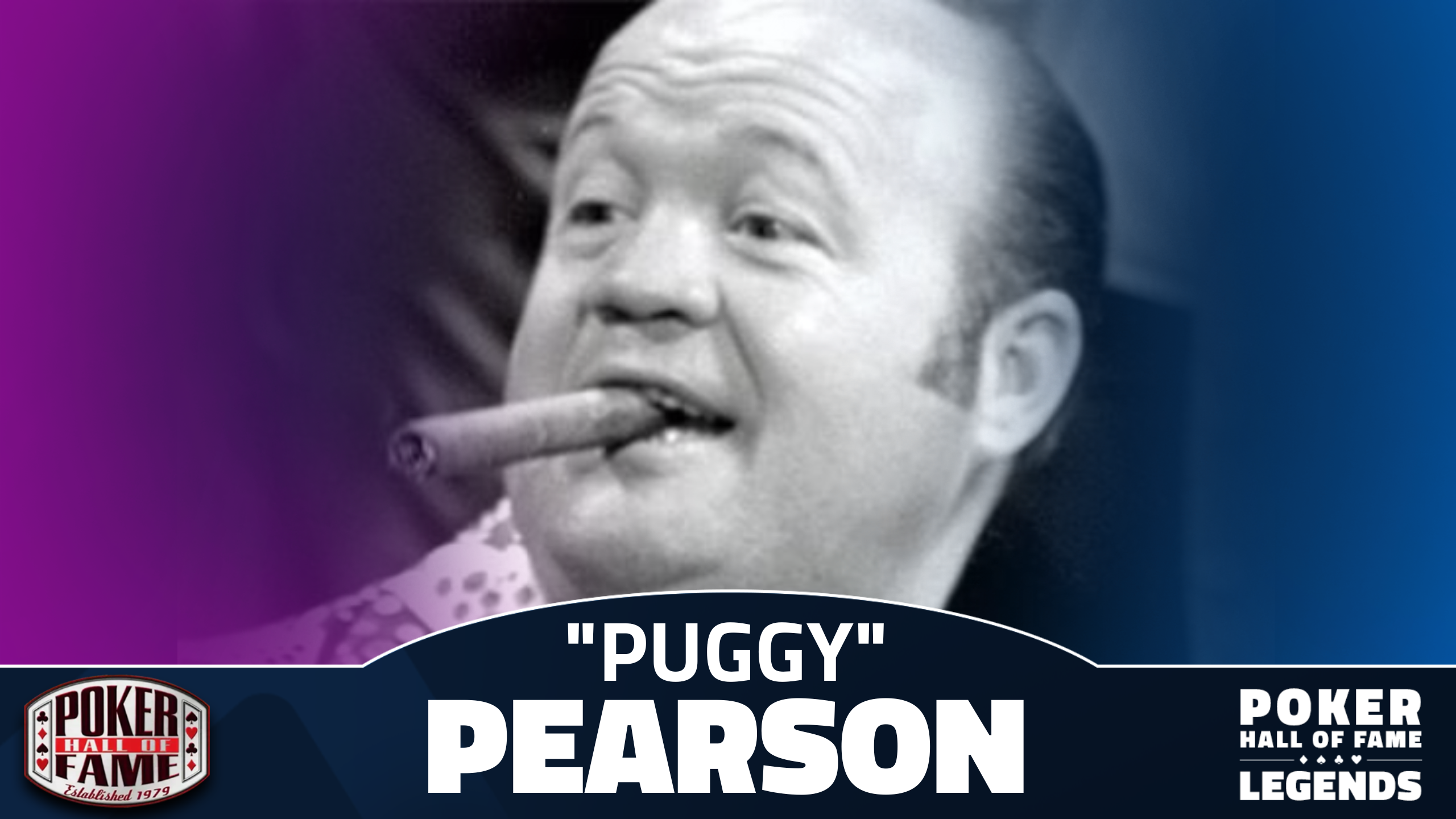
Nickname Thanks to a Broken Nose
Walter Clyde Pearson was born on January 29, 1929, in Adairville, a small town in Kentucky, where his family lived off the land. He was one of nine children in a poor farming family. He left school at ten — not because he didn't want to study, but because he needed to work to help feed the family.
While working, he suffered an injury that defined him for the rest of his life. During the construction of a church, he tried to impress passing girls by walking on his hands, which ended with him falling on his face. His smashed and flattened nose earned him the tragicomic nickname "Puggy," referring to the pug dog breed known for their flat noses.
At the age of 16, Puggy ran away from home and joined the Navy, serving three tours. He narrowly missed World War II, but the Navy changed his life. During long, monotonous voyages, he had the opportunity to earn money gambling with fellow soldiers. He learned to play cards, dice, and honed his skills in billiards.
When he left the Navy in the early '50s, he was thousands of dollars richer. More importantly, he had developed a passion for gambling and the determination never to hold a conventional job again.
On the Road
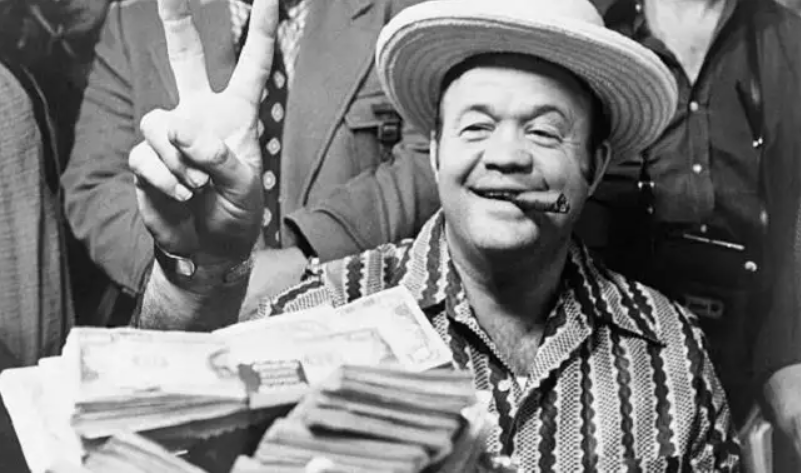
After years at sea, Puggy hit the road. He became a road gambler — a nomad who traveled across America in a motorhome with the legendary slogan: "I’ll play any man from any land, any game he can name for any amount he can count, provided I like it."
Puggy played everything: poker, gin, billiards, dice. His style? Aggressive, bold, and ruthless. He had a keen sense not only of his opponents but also of his own abilities, and once he sensed an advantage, he relentlessly pursued victory. This ability put him among the greatest players of his era alongside Johnny Moss and Doyle Brunson.
WSOP Titles and Records
Puggy made his WSOP debut in 1970, in the very first year of the event. He won his first bracelet the following year, dominating the $1K Limit 7 Card Stud. At the next year's WSOP Main Event, he came tantalizingly close to winning, finishing controversially in second place in an event that changed the poker world forever. Pearson and Doyle Brunson wanted to avoid media attention, so they agreed to split the prize and allowed Amarillo Slim, then in a short stack position, to win from third place.
The poker explosion of 1973 centered around Puggy Pearson. He won three tournaments during one event, an extraordinary feat considering there were only seven tournaments in 1973. Titles and winnings Puggy Pearson took home in 1973:
-
$4,000 Seven Card Stud – first event of the series, winning $28,000
-
$1,000 No Limit Hold’em – winning $17,000
-
$10,000 Main Event – winning $130,000 (equivalent to ~$900,000 today)
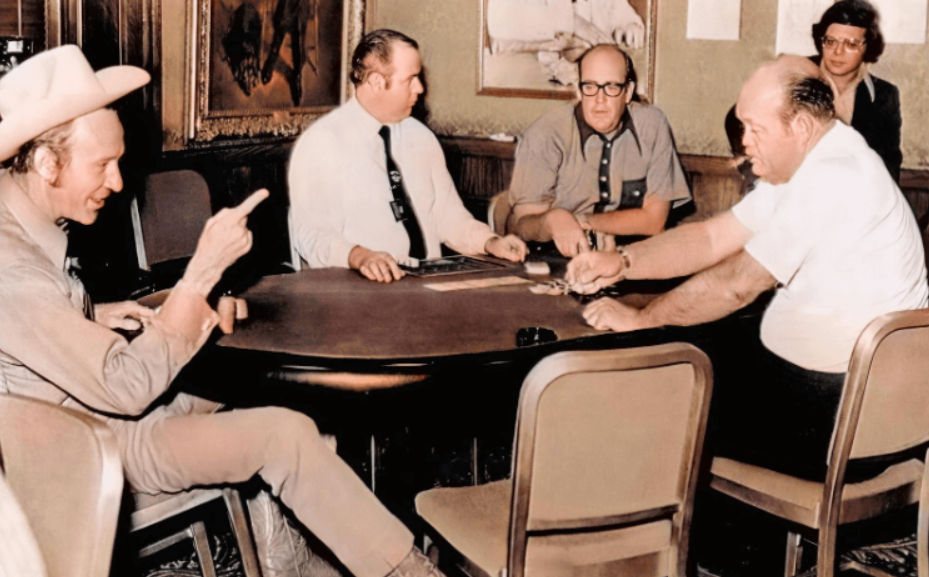
In total, Pearson secured "only" four WSOP titles, as more victories narrowly escaped him in following years. Nevertheless, these results were just the tip of the iceberg. Puggy's true empire lay in cash games, where he played for tens of thousands of dollars, though the exact figures of his winnings are unknown.
Showman Who Inspired Hellmuth
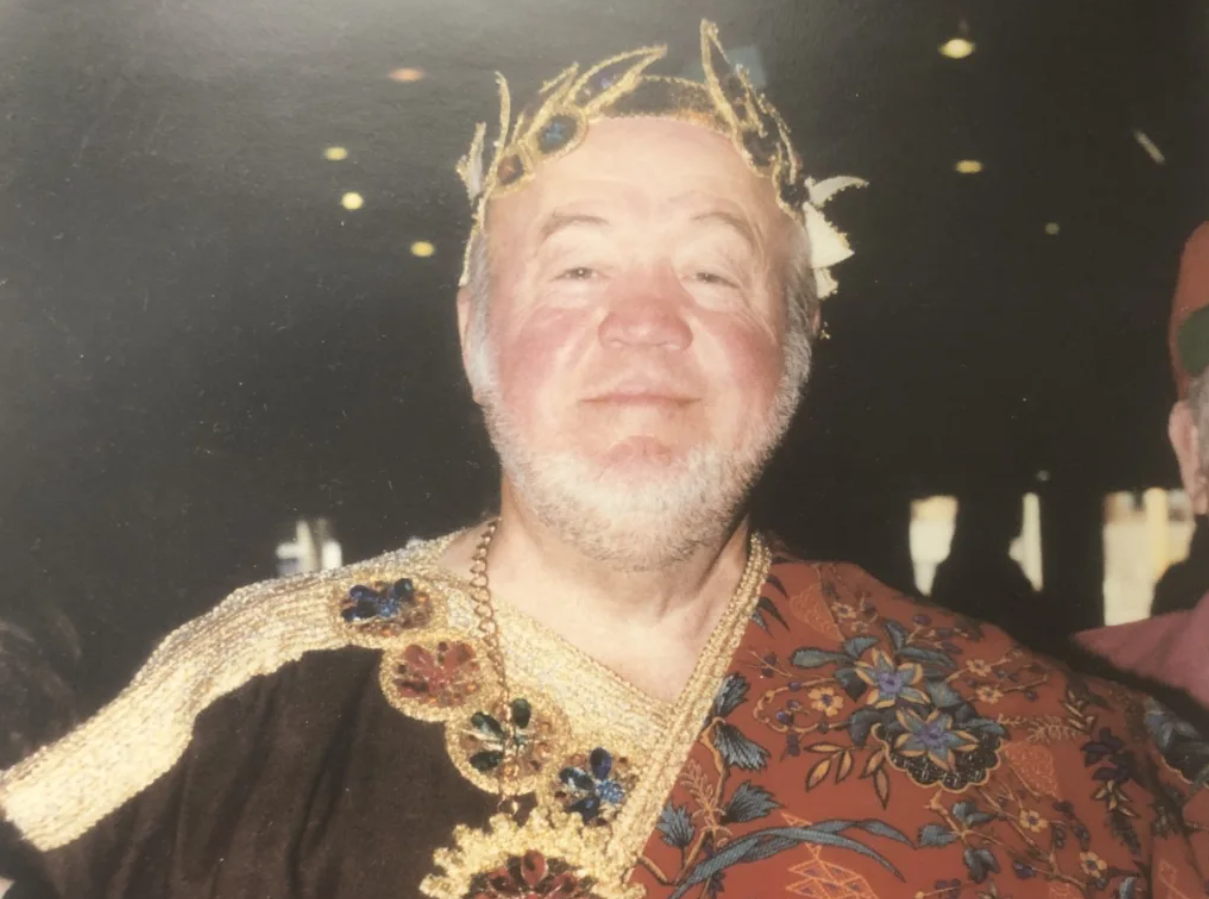
Puggy was not only an excellent player but also a poker showman, foreshadowing the era of Phil Hellmuth by decades. At several WSOP Main Events, he appeared in costumes — as a cowboy, a Viking, or even Genghis Khan. At his last Main Event in 2005, at 76 years old, he took the stage and sang the song “Roving Gambler,” the anthem of road gamblers, perfectly capturing his life. This moment marked the pinnacle of his showmanship.
Puggy Pearson’s connection to the WSOP lasted for years. He played every WSOP Main Event from the inaugural one in 1970 until 2005 — 36 consecutive years! In 2006, he intended to continue this tradition, but fate had other plans. Walter Clyde Pearson passed away on April 12, 2006, from heart complications, narrowly missing the 37th series held two and a half months later.
Hall of Fame Induction and Lasting Legacy
He was rightfully inducted into the Poker Hall of Fame in 1987. Puggy Pearson was ahead of his time and added significant career achievements. With 4 WSOP bracelets, an aggressive style, and his impact on tournament poker (rumor has it that Pearson proposed the knockout tournament format that persists today), he was destined for legendary status.
Puggy Pearson was not just a champion — he was the soul of poker: witty, bold, and unyielding. His caravan may have stopped, but the message of the song “Roving Gambler” lives on.
More from PHoF Legends
Legends of the Poker Hall of Fame XIV: Henry Green
Legends of the Poker Hall of Fame XIII: Red Hodges
Legends of the Poker Hall of Fame XII: Murph Harrold
Legends of the Poker Hall of Fame XI: Joe Bernstein
Legends of the Poker Hall of Fame X: Tom Abdo
Legends of the Poker Hall of Fame IX: Bill Boyd
Legends of the Poker Hall of Fame VIII: T. "Blondie" Forbes
Legends of the Poker Hall of Fame VII: James Butler "Wild Bill" Hickok
Legends of the Poker Hall of Fame VI: Sid Wyman
Legends of the Poker Hall of Fame V: Red Winn
Legends of the Poker Hall of Fame IV: Edmond Hoyle
Legends of the Poker Hall of Fame III: Felton "Corky" McCorquodale
Legends of the Poker Hall of Fame II: Nick "The Greek" Dandolos
Legends of the Poker Hall of Fame I: Johnny Moss
Sources: Wikipedia, WSOP, Pokerstarsnews, Card Player