

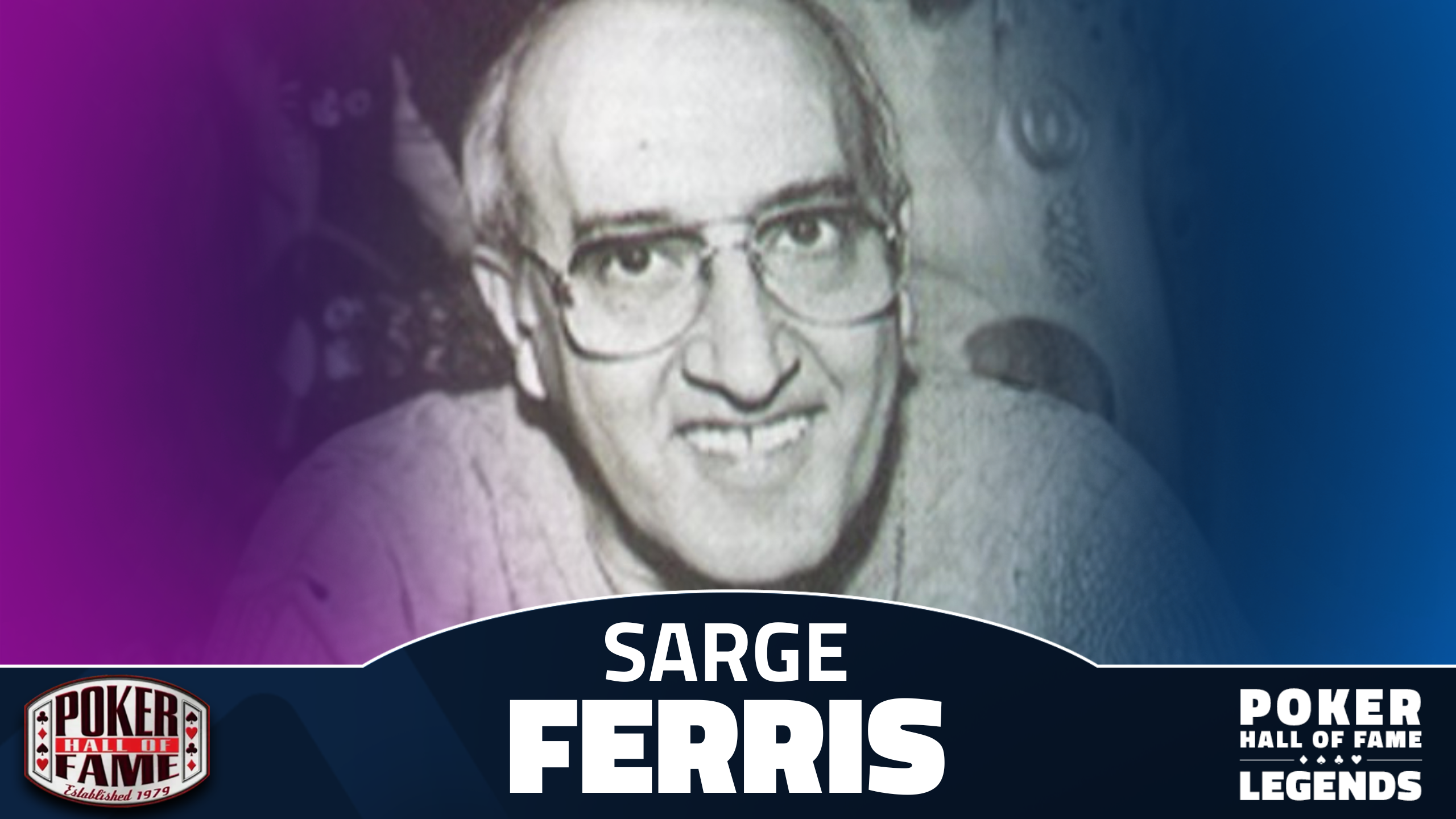
From Poverty in Maine to the Nickname “Sarge”
Fred Ferris was born on December 1, 1928, in Waterville, Maine. His background was exotic; he was the son of a Lebanese railroad worker, which gave him a unique Southern look that often led people to mistake him for a Hispanic.
The Ferris family's childhood was marked by utter poverty. His brother Ferris P. Ferris later recalled that they grew up in complete lack, teaching Fred to value money but never be tied to it. This early life lesson later allowed him to play for huge sums without hesitation.
He earned the nickname “Sarge” for his service in the U.S. Air Force. Although he left the military, the discipline and ability to stay calm in any situation served him throughout his life.
Cash Games with Legends
In the '40s and '50s, Sarge began as a classic “road gambler.” He traveled the southern USA, playing illegal games in Texas, Louisiana, and Oklahoma. In this dangerous environment, rife with cheating and violence, he built a reputation as an honorable man.
Sarge was the one who kept another giant, Doyle Brunson, afloat. In times when Doyle went broke on the road, Sarge lent him hundreds of thousands of dollars without hesitation to get back in the game. Their friendship was based on mutual respect and love for poker. In the '60s, he moved to Las Vegas, where he became a force in Five Card Stud. At the time, he was probably considered the best player of this variant in the entire United States.
In the '70s, the largest games in the history of Las Vegas were not in tournaments but at the cash game tables in the Dunes casino, organized by casino co-owner Syd Wyman (a Hall of Fame member of 1979). With blinds of $1,000/$2,000, the game ran nonstop. Sarge was one of the few who could keep up with elite players like Doyle Brunson, Puggy Pearson, Jack Straus, and Bobby Baldwin.
His kingdom was the No Limit Deuce-to-Seven Draw, but he was unafraid of any challenge. Billy Baxter once said of him: “Sarge was a bulldog. He had a huge heart, which in poker means absolute courage. He wasn't afraid of money. Whether he had the last $200 in his pocket or $200,000, he'd bet it all without blinking.”
The Discovery of Stu Ungar
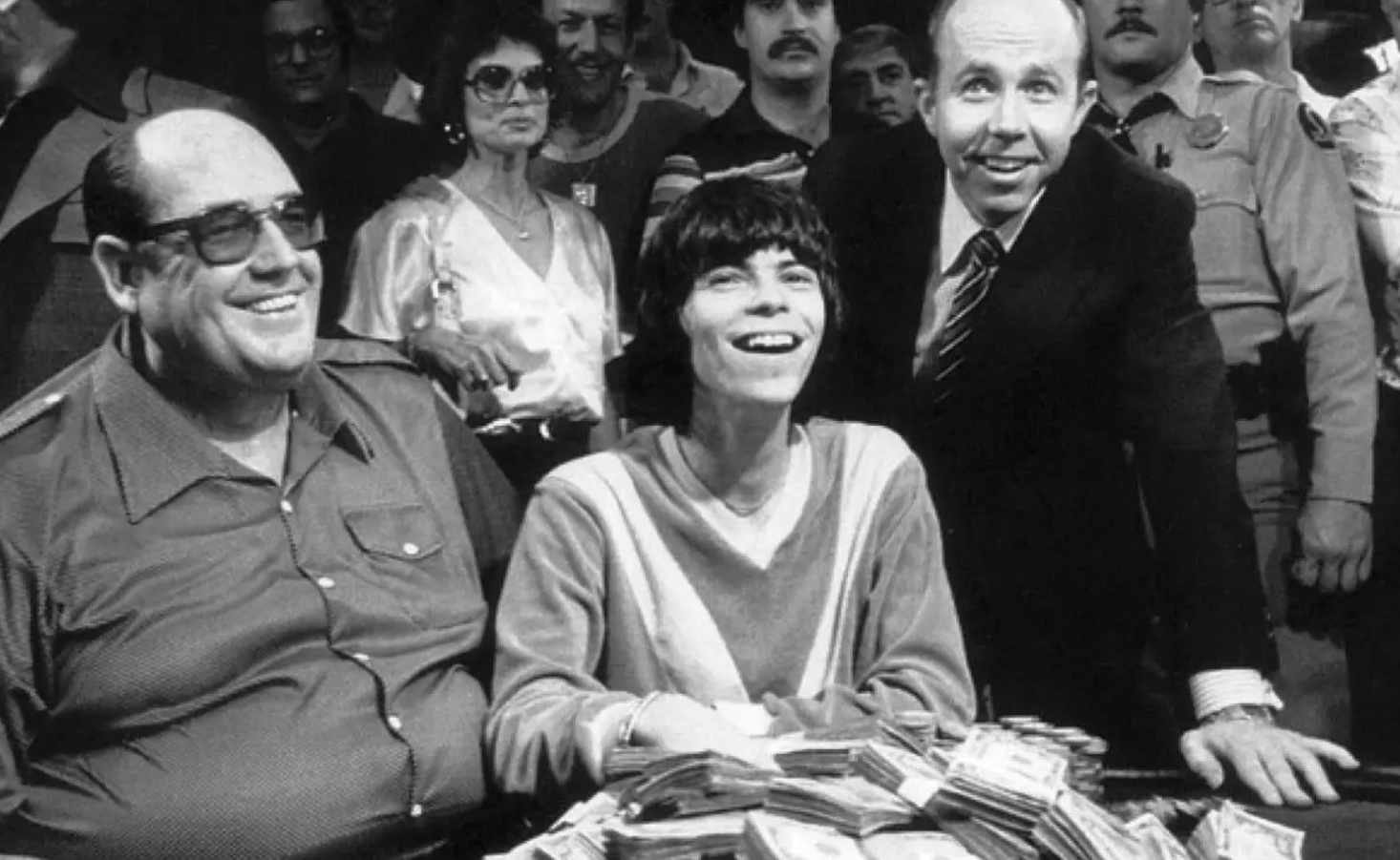
Perhaps the most significant moment of Ferris's life, which forever changed poker history, came in 1980. Sarge made a risky move by paying the $10,000 buy-in for a then 26-year-old from New York who had never played No Limit Hold'em before. That young man was Stu Ungar.
Ferris's judgment was genius. Ungar dominated the tournament and won his first world champion title. Without the backing and trust Sarge placed in him, the world might never have witnessed Stu's poker genius.
WSOP 1980 Gold Bracelet
Although Sarge was primarily a cash game player, his talent shone in the tournament world as well. In 1980, he achieved a career-defining victory at the WSOP in a $10,000 No Limit Deuce-to-Seven Draw event.
It wasn't just any win. Sarge defeated none other than Doyle Brunson in the final heads-up, leaving Bobby Baldwin in third place. He took home $150,000 for first place. This result confirmed his status as one of the best players in the world at that time.
Confrontation with the IRS and the “Taco Incident”
On April 22, 1983, Sarge was at the center of one of the most famous scandals in poker history. Agents from the IRS (tax authority) stormed the table during a game at Binion's Horseshoe casino, seizing $46,000 in chips due to tax arrears.
It's said that after taking all his money, one of the agents tossed him back a $25 chip, mockingly telling him to “buy a taco.” Because Sarge had Lebanese heritage and was often assumed to be Hispanic, many (especially in the local Hispanic community) perceived this as a racist insult.
Ferris, however, remained utterly composed. It later turned out that the agent was merely suggesting dinner at a Mexican restaurant inside the casino where Sarge regularly dined. This moment perfectly illustrated Sarge's character: calm even when authorities were taking away his lifelong bankroll.
The Final Game and Eternal Fame
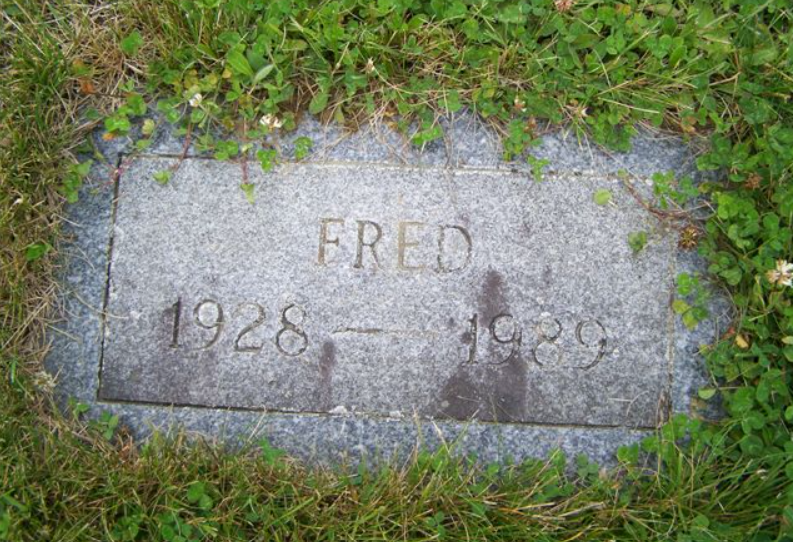
Fred “Sarge” Ferris lived poker to the very end. He passed away on March 12, 1989, at the age of 60. Symbolically, his heart gave out just hours after he finished a high-stakes game. A few months later, in December 1989, Ferris was posthumously inducted as the 18th member of the Poker Hall of Fame.
Though he never sought fame or publicity at the table, his contribution to the game, his courage, and honor earned him a place among the immortal. Fred “Sarge” Ferris remains remembered as the man who “wasn't afraid of money” and who quietly influenced the paths of the greatest names in the history of the game.
More from Legends of the PHoF
Legends of the Poker Hall of Fame XVII: Doyle “The Godfather of Poker” Brunson
Legends of the Poker Hall of Fame XVI: Jack “Treetop” Straus
Legends of the Poker Hall of Fame XV: Walter Clyde "Puggy" Pearson
Legends of the Poker Hall of Fame XIV: Henry Green
Legends of the Poker Hall of Fame XIII: Red Hodges
Legends of the Poker Hall of Fame XII: Murph Harrold
Legends of the Poker Hall of Fame XI: Joe Bernstein
Legends of the Poker Hall of Fame X: Tom Abdo
Legends of the Poker Hall of Fame IX: Bill Boyd
Legends of the Poker Hall of Fame VIII: T. "Blondie" Forbes
Legends of the Poker Hall of Fame VII: James Butler "Wild Bill" Hickok
Legends of the Poker Hall of Fame VI: Sid Wyman
Legends of the Poker Hall of Fame V: Red Winn
Legends of the Poker Hall of Fame IV: Edmond Hoyle
Legends of the Poker Hall of Fame III: Felton "Corky" McCorquodale
Legends of the Poker Hall of Fame II: Nick "The Greek" Dandolos
Legends of the Poker Hall of Fame I: Johnny Moss
Sources: WSOP, Wikipedia, Find a Grave

