


But the most serious allegations connected to the Czech high roller came during the 2023 World Series of Poker $250.000 Super High Roller, when several prominent poker professionals publicly questioned whether cards used in the event had been marked.
For the broader context around his table behaviour and public reputation, read our full explainer on why Martin Kabrhel is so controversial.
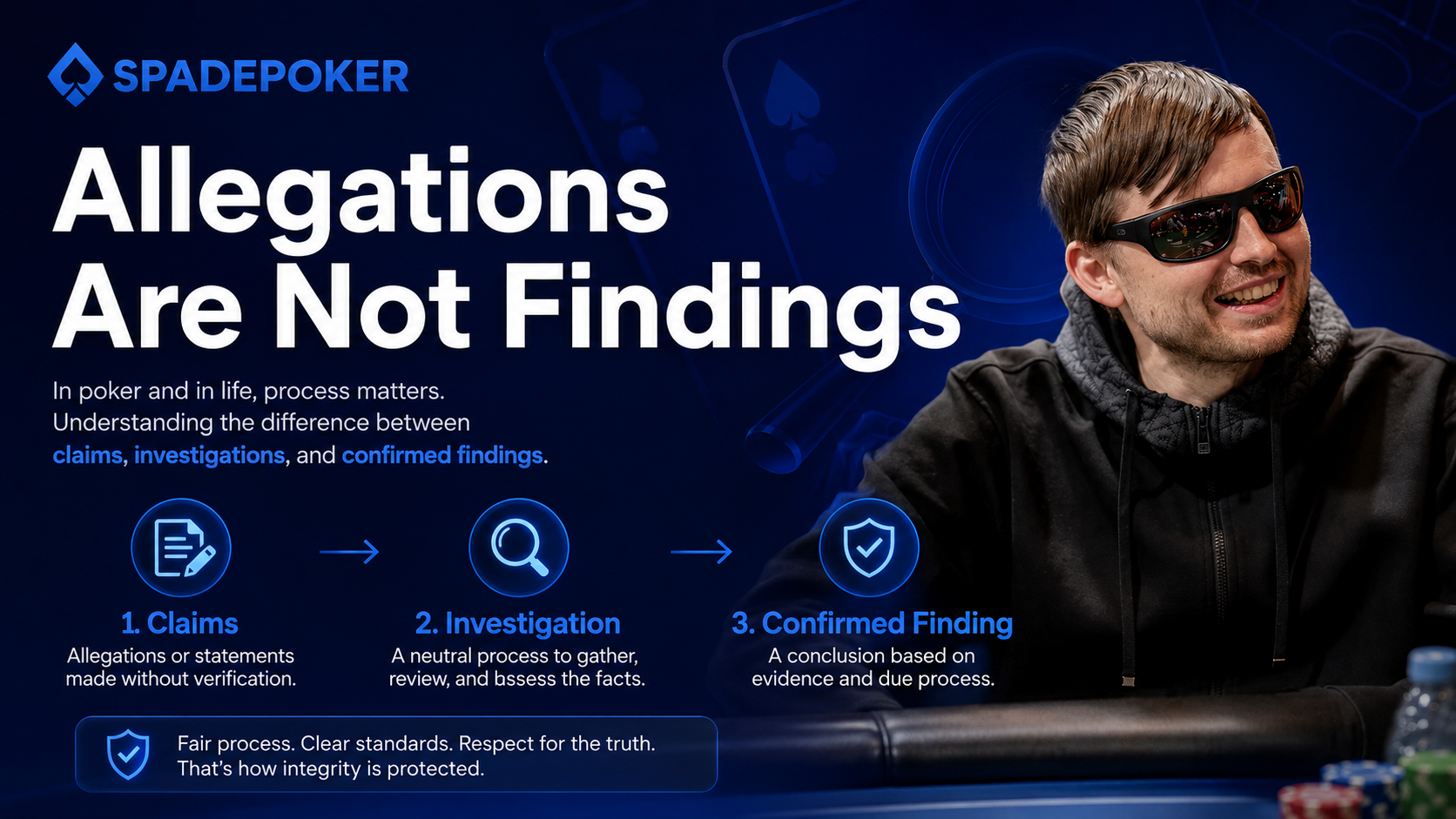
This article separates three things that are often mixed together online:
- public accusations made by players,
- the WSOP’s response and investigation,
- whether any allegation was publicly proven or officially confirmed
Those distinctions matter.
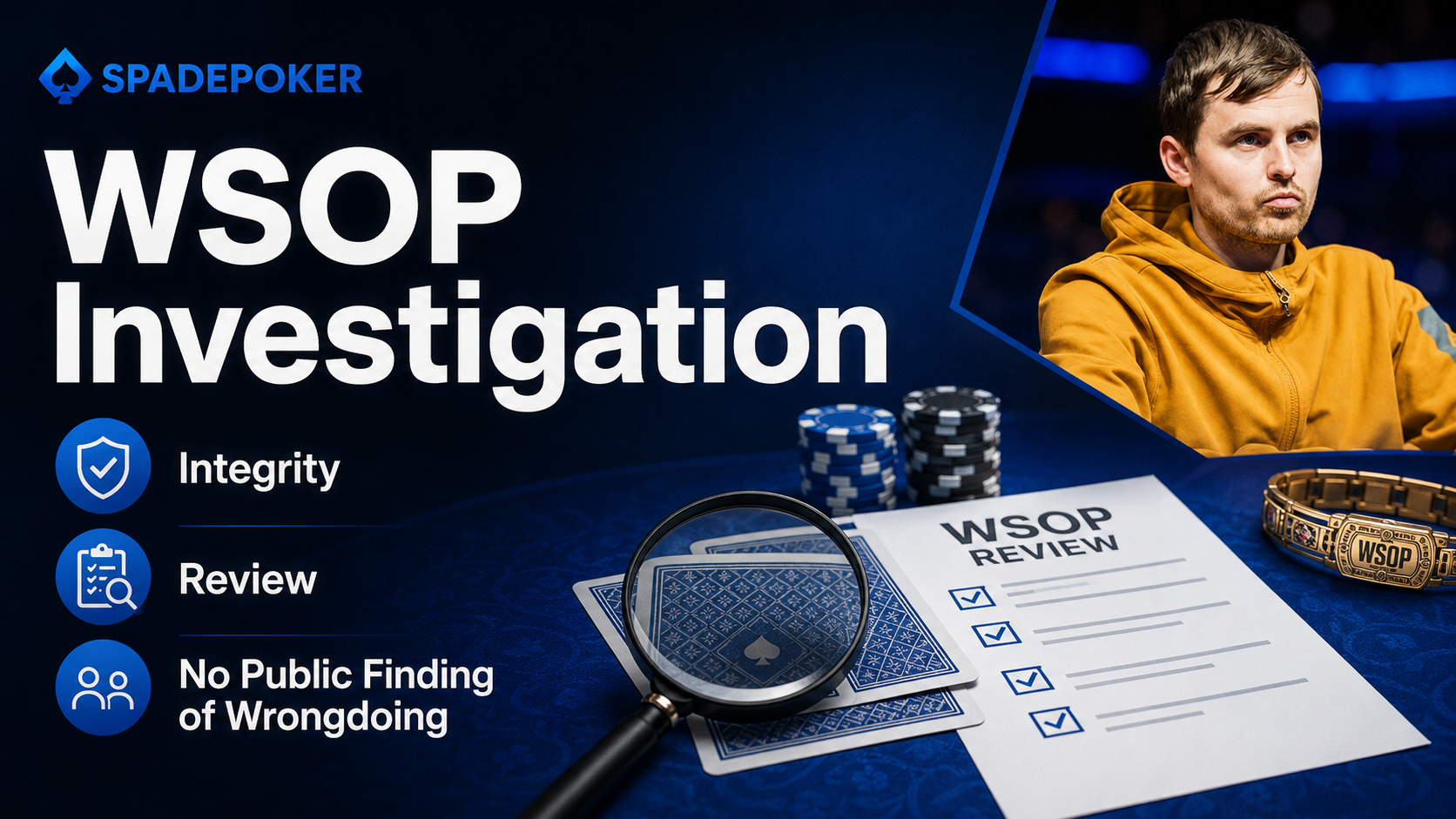
Martin Kabrhel denied cheating. The WSOP said at the time that it was taking the allegations seriously and that the matter was under investigation. Public reporting later stated that WSOP officials examined cards from the table and found no signs of marked cards, while no publicly confirmed final ruling established that Kabrhel had cheated. For a complete overview of his age, poker career, WSOP results, net worth and public image, visit our Martin Kabrhel profile.
What Happened at the 2023 WSOP $250K Super High Roller?
The controversy began during Event #40: $250.000 No-Limit Hold’em Super High Roller at the 2023 WSOP in Las Vegas.
The tournament attracted some of the biggest names in high-stakes poker. Martin Kabrhel made a deep run and ultimately finished third for $2.279.038, while Chris Brewer won the event.
During the event and immediately afterward, poker players and viewers began discussing what they considered unusual behavior involving cards in play. Some clips circulated online, while players at the table publicly questioned whether cards may have been marked.
The discussion quickly moved beyond ordinary criticism of Kabrhel’s table manners. It became a broader integrity issue involving marked-card claims, tournament security and whether the WSOP would publicly explain what it had found.

That result remains one of Martin Kabrhel’s biggest poker wins, even though the event is now remembered largely because of the controversy that followed.
Who Accused Martin Kabrhel and What Was Claimed?
Andrew Robl was among the first high-profile poker professionals to publicly raise concerns after the event. He suggested that Kabrhel may have been marking cards, while Dan Smith and other players were also linked to the public discussion around suspicious cards and table behavior. These were public player allegations, not an official finding by tournament staff.
The core allegation was not that Kabrhel had simply played slowly or acted provocatively. It was that cards used at the table may have been physically marked in a way that could create an advantage for a player who recognized those marks.
That is why the issue became so serious.
Marked-card allegations go directly to the integrity of a poker game. Unlike table talk or slow play, they are not questions of etiquette. They concern the possibility of a player obtaining information unavailable to opponents.
However, the public claims were still allegations. The existence of accusations, clips or player suspicions was not the same as a publicly established finding that Kabrhel had marked cards or cheated.
What Did the WSOP Say?
The WSOP issued a brief public statement after the controversy gained attention.
It said that the integrity of the game remained paramount, that the allegations were being taken seriously and that the matter was under investigation. The WSOP did not publicly disclose detailed security procedures or provide a full explanation of what specific cards or equipment it examined.
That limited communication created uncertainty.
For many poker fans, the lack of a detailed public conclusion allowed the story to continue long after the event ended. Some viewed the absence of an immediate public finding as evidence that questions remained unresolved. Others argued that poker operators are not required to disclose every security protocol or investigative step.
Later reporting from PokerOrg stated that WSOP officials examined three complete card setups from the table and found no signs of marked cards. The same report said that the investigation had completed with no finding of card-marking by Kabrhel.
That point is central to any responsible summary of the case.
Martin Kabrhel’s Response and Denial
Kabrhel denied cheating from the beginning.
In public comments during the 2023 fallout, he rejected the accusations and said that the claims were damaging to him professionally and personally. He also indicated that he intended to pursue legal action against Andrew Robl.
In April 2024, Kabrhel appeared on Doug Polk’s YouTube show and again denied ever cheating in poker, including during the $250.000 WSOP event. He acknowledged that some people might find his behavior suspicious, but said he was not trying to look like a cheater or create that impression to gain an edge.
Kabrhel’s public position has remained consistent:
He denied marking cards, denied cheating in the event and denied intentionally acting suspiciously to manipulate opponents.
Legal Action and Defamation Claims
The legal aspect of the story requires careful wording.
Public reporting stated that attorney Daniel Ravicher sent a legal notice on Kabrhel’s behalf to several poker professionals and PokerGO. The notice said that Kabrhel was preparing to pursue legal claims related to statements alleging that he was a cheater or marked cards. It also asked recipients to preserve relevant communications.
That does not automatically mean a lawsuit was filed or resolved.
The publicly reported step was a notice of possible legal action, not a publicly documented court judgment. Without verified court records or later public filings, it would be inaccurate to state that Kabrhel definitively sued, won or lost a defamation case.
The accurate description is that Kabrhel publicly threatened legal action and his legal representatives sent notices indicating that claims were being prepared.
Was Martin Kabrhel Proven to Have Cheated?
Based on the public reporting reviewed for this article, no.
No public source located for this article establishes a publicly confirmed final finding that Martin Kabrhel cheated during the 2023 WSOP $250.000 Super High Roller.
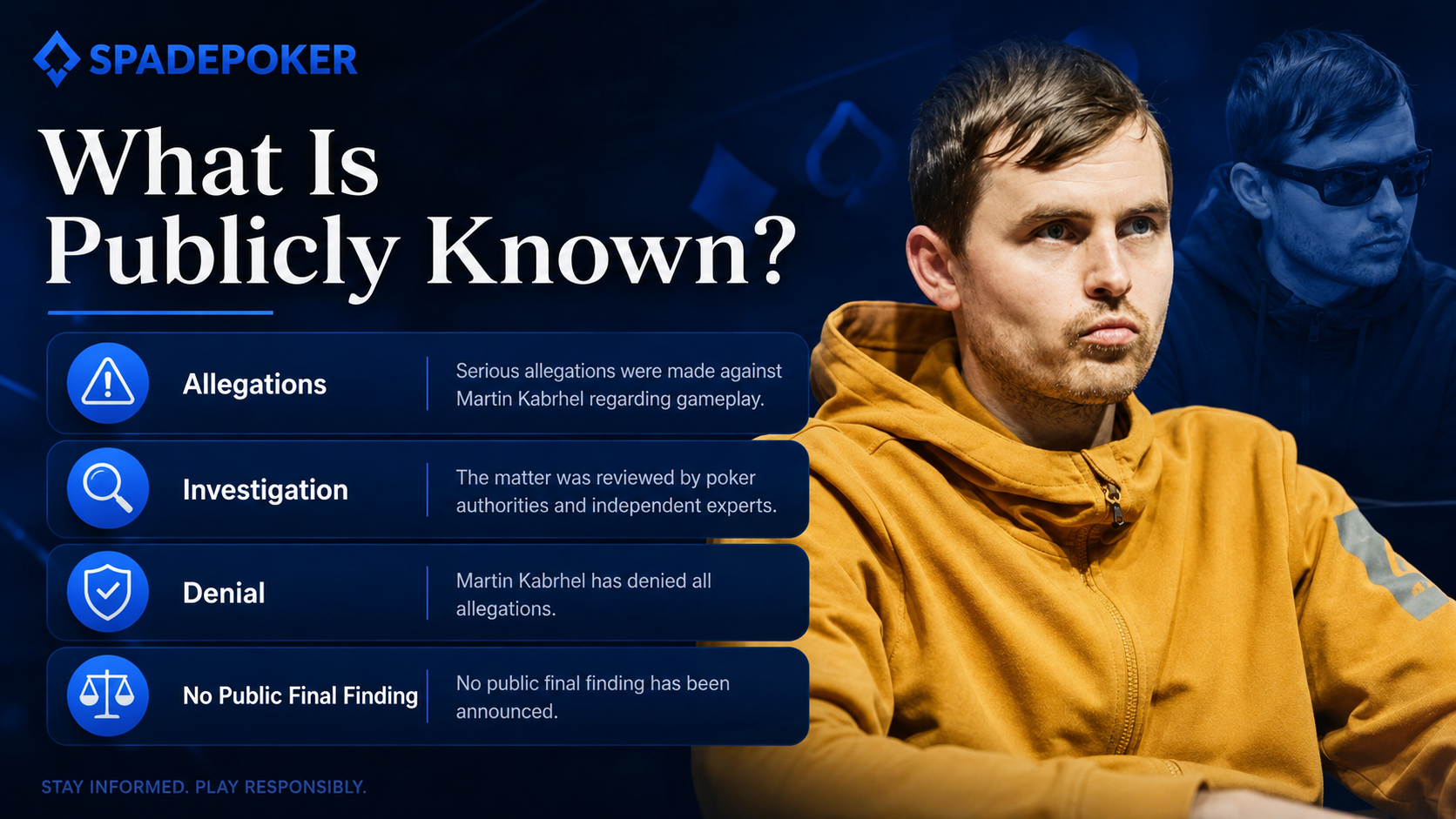
The available public record shows:
- several poker professionals made card-marking allegations;
- the WSOP said it was investigating;
- Kabrhel denied the allegations;
- later PokerOrg reporting stated that WSOP officials examined card setups and found no signs of marked cards;
- no publicly confirmed WSOP ruling was found stating that Kabrhel had cheated.
That does not require anyone to decide what they personally believe happened.
It simply means that allegations, an investigation and a confirmed finding of wrongdoing are different things. They should not be treated as interchangeable.
Why the Allegations Still Follow Martin Kabrhel
The allegations continue to appear in poker discussions because they became part of a larger narrative around Kabrhel.
He already had a polarizing reputation before the 2023 event. His constant talking, visible reactions, tanks and unusual mannerisms made many players suspicious of him even in situations unrelated to card marking.
That reputation is closely connected to Martin Kabrhel’s poker style, especially his table talk, timing and psychological pressure. When serious claims emerged, they were interpreted through that existing reputation.
The story also spread during a period when poker communities were increasingly sensitive to integrity issues. Solvers, real-time assistance, marked cards, device use and streamed-game security had become regular topics of concern. In that environment, allegations involving a high-profile, controversial player were likely to gain unusual traction.
Kabrhel’s later appearances at the WSOP have kept the topic alive. For example, his 2026 RFID dispute with Sam Soverel reopened debate around game security, televised poker and player preferences around card scanning. That RFID disagreement was separate from the 2023 allegations, but it showed how quickly any issue involving Kabrhel can become connected to broader integrity debates.
What the Case Changed in Poker
The Kabrhel allegations did not create poker’s integrity concerns, but they highlighted several issues that continue to matter in live tournament poker.
First, tournaments need clear processes for handling player concerns about cards, equipment and suspicious behavior. Players need to know where to report concerns, while organizers need room to investigate without compromising security procedures.
Second, poker media and players need to distinguish between reporting allegations and declaring guilt. Social-media clips can spread quickly, but short videos rarely contain the full context needed to establish what happened.
Third, operators face a difficult communication balance. Too little information can leave fans suspicious that nothing was done. Too much information can expose security practices or unfairly damage players before facts are established.
Finally, the case showed how player reputation shapes public reaction. A controversial player may receive less benefit of the doubt, while a popular player may receive more. Neither reaction should replace evidence.
Final Verdict: What Is the Accurate Summary?
The accurate summary of the Martin Kabrhel card-marking controversy is straightforward.
Public allegations were made during and after the 2023 WSOP $250.000 Super High Roller. The WSOP said it took the claims seriously and investigated. Kabrhel denied cheating and later took legal steps against some of those who accused him.
Later reporting stated that WSOP officials found no signs of marked cards in the card setups they examined. No publicly confirmed final finding was identified stating that Kabrhel cheated.
That does not erase the impact of the controversy. It remains part of why Kabrhel is one of the most debated personalities in poker.
But it does mean that responsible coverage should describe the matter as allegations that were investigated and denied, not as a proven case of cheating.
Martin Kabrhel Cheating Allegations FAQ
Was Martin Kabrhel accused of cheating?
Yes. During the 2023 WSOP $250.000 Super High Roller, several poker professionals publicly accused or suggested that Kabrhel may have been involved in card marking. He denied cheating.
What did the WSOP say about the Martin Kabrhel allegations?
The WSOP said it took the allegations seriously and that the matter was under investigation. It did not publicly disclose detailed security procedures at the time.
Did the WSOP find marked cards?
PokerOrg later reported that WSOP officials examined three complete card setups from the relevant table and found no signs of marked cards.
Did Martin Kabrhel deny cheating?
Yes. Kabrhel publicly denied cheating in 2023 and again during a 2024 interview with Doug Polk.
Did Martin Kabrhel sue Andrew Robl?
Public reporting confirmed that Kabrhel threatened legal action and that legal notices were sent on his behalf. This article did not find a publicly confirmed court judgment or verified record establishing the final outcome of any lawsuit.
Was Martin Kabrhel banned from the WSOP?
No public source reviewed for this article confirms that Kabrhel was banned from the WSOP over the 2023 allegations. He continued to play WSOP events after the controversy.

