

The routine stays simple and it stays repeatable. You halt a broadcast at a high tension decision, you predict a hand set for the other seat, and you write down the line you expect at showdown. Then you run a matching situation in a free practice room so your next live click feels like a trained response that holds up under heat. This turns watching into work you can measure.
Casino.org points people toward free online platforms for poker such as Replay Poker, where play tables let you run hands while you keep cash untouched and build pattern recognition. That matters because skill grows through repetition, and repetition needs volume, and volume gets easier when mistakes cost almost nothing. You still face real opponents and real timing, which keeps the lesson honest and keeps you engaged during long weeks. You also get fast feedback, which makes improvement feel real.
Stop with intent
A well-timed stop works best when you freeze the clip on a decision that splits action. Hold the stream on the turn or river, then capture four facts: position, stack depth, board texture, and bet size. Those facts act like coordinates, and they keep your later review grounded in the same way a hand history settles a table argument fast. You can rewatch the same ten seconds and learn something new each time.
You begin with the preflop set that reaches the flop for that line, then you set aside holdings that exit on earlier streets. You keep holdings that call, raise, or float with the shown sizing. A smaller bet tends to keep more combinations in play, while a larger bet tends to concentrate action into stronger value and purposeful bluffs, which makes your prediction more refined. You want a tight reason for every combo that remains.
Predict the other seat with simple math, then test the call
Range work gets easier when you treat it like counting, because counting pulls heat out of the moment and puts structure back in. You start with a sensible set from preflop, then you trim it street by street based on what the line allows, and you end with two buckets you can actually use, value and bluff. Researchers who study decisions under risk keep finding that stronger reasoning and number skill link to better choices in gambling-style tasks, which supports the basic idea of building an efficient model instead of riding a feeling.
Blockers sharpen the final estimate without adding complexity. A blocker is a card in your hand that removes combos from the other seat, like holding the ace of the flush suit on a three flush board, which reduces the nut flush holdings they can show. That change matters because it shifts the mix inside your two buckets, and that shift changes what a river bet means in practice.
Pot odds keep the prediction honest because they translate the whole spot into one required number. You take the call price and divide it by the final pot after you call, then you ask whether your bluff share clears that equity bar. Research on numeracy and risky choice suggests that higher numeracy links to less distortion in value and probability judgments in monetary gambles, which is why pot odds work so well as a simple check during river decisions.
Run reps in free rooms, then keep a tight log
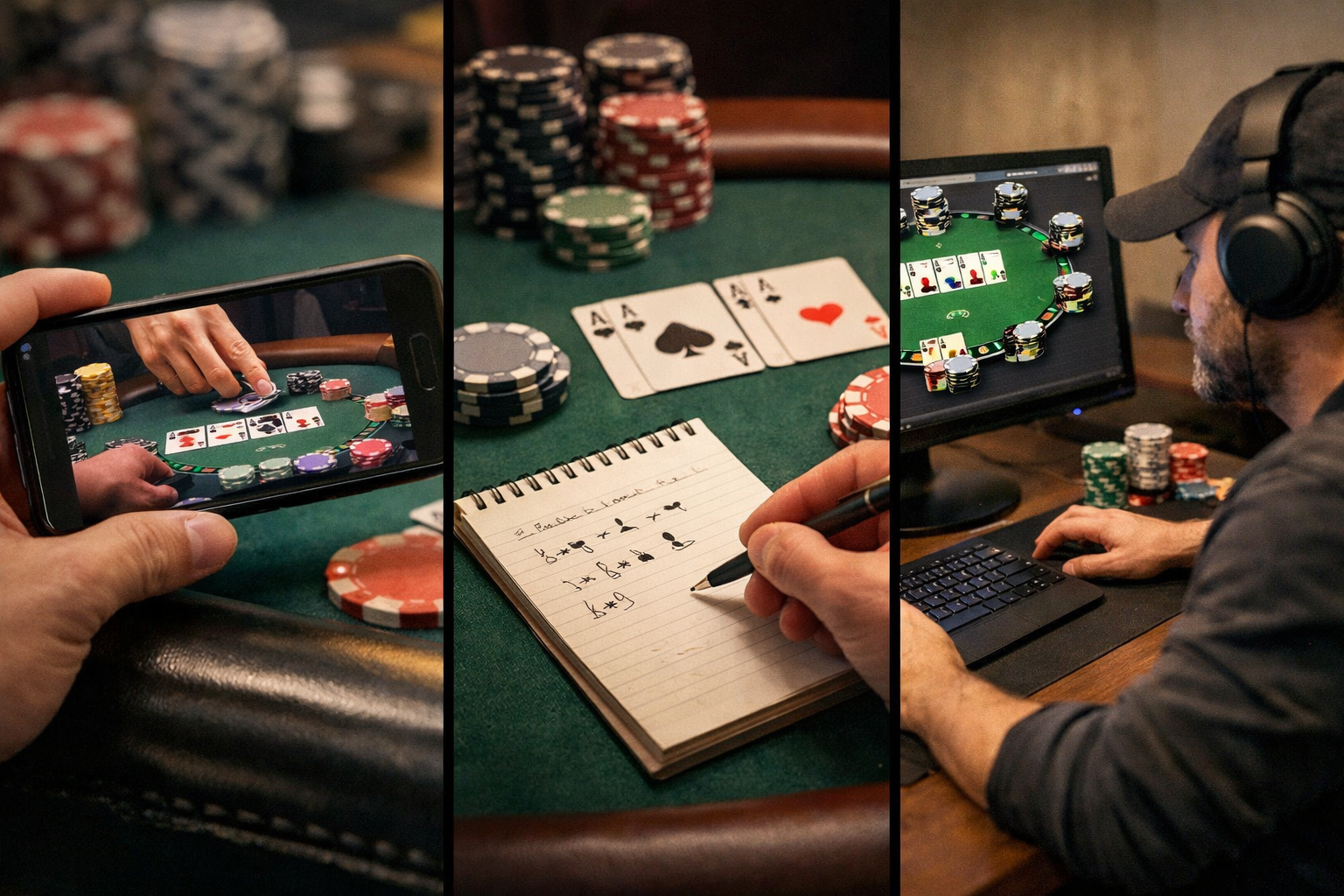
Now you turn the frozen clip into a drill. Replay Poker runs free cash tables and tournaments around the clock, and it's presented as a free-to-play environment for Texas Hold’em and Omaha. Use those rooms to recreate the same node, meaning similar stack depth, similar board class, and similar sizing, so the response becomes automatic rather than improvised during a late night session. The goal stays simple: see the spot, run the process, repeat.
Keep your log small so it survives real life. Record the board, the action line, and your predicted hand set in one short block. Add the revealed holding when it appears, then write one sentence on what changed your read. Over time, you will see patterns such as over weighting missed draws or under valuing thin value, and you can correct the model with calm edits that improve choices at speed. Your notes should feel like a clean audit trail.
Live series coverage gives you high quality examples with slick structure and deep stacks. Wynn Millions Championship is a great example. Those hands often feature disciplined sizing and clear lines, which makes them ideal for stop and predict work when you want real world texture. The stacks stay deep enough for mistakes to matter.
Online festivals deliver the same learning fuel at a faster cadence. SCOOP 2026 runs from March 1 through March 25 with large guarantees and a deep schedule, and media coverage echoed that date range. You can watch a final table spot, hold right before showdown, then jump into a free room and hunt for a close match within minutes, which suits modern training habits. The volume helps you spot trends fast.
This method stays grounded because it ties each opinion to a written guess and a visible result. You watch with intent and you learn more per minute. You keep stakes at play money level while decisions get sharper, then you bring the same calm process back to real money pools, where steady judgment pays across thousands of hands, like compounding interest that shows up quietly in the long run.

