

The Texas Giant: From Poor Boy to Road Gambler
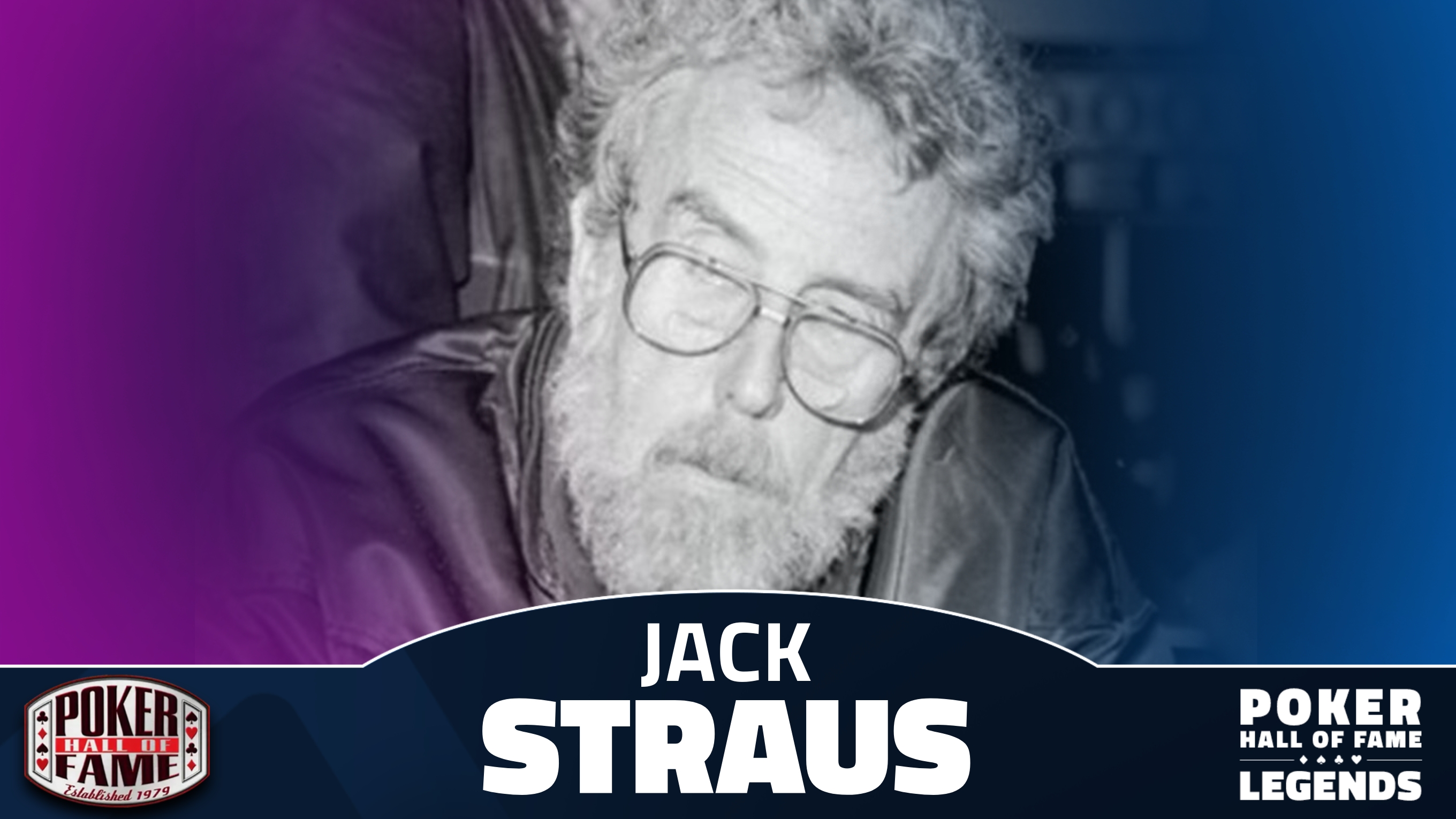
Jack Straus was born on June 16, 1930, in the small town of Travis, Texas, in the heart of an area where gambling was part of the local culture and where boys like him learned cards before the alphabet. His father introduced him to poker at just six years old. “In Texas, you grow up with poker; it’s a Texas game,” he’d later say. As a teenager, he reached the height of two meters, earning him the nickname “Treetop” due to his curly hair.
In high school, he played basketball, which was his ticket to Texas A&M University. After college, Straus returned home as a teacher. However, this profession was short-lived as the call of gambling was louder. In the 1950s, he became a road gambler, traveling across the southern US. He played not just poker but also billiards and craps, placing bets on golf and sports. As Vegas started becoming the hub of the gambling world, he had to be there.
Straus's life wasn’t only about success; it was more a carousel of wins and losses. In one tale from 1970, after a bad streak, he was down to his last $40. Treetop didn’t give up even then. He took the money to the blackjack table, bet everything, and won. He continued until he turned $40 into $500. At that point, he moved to poker, where he multiplied it to $4,000. Even then, he didn’t stop, returned to blackjack, and reached $10,000. Finally, he bet the entire amount on the Kansas City Chiefs winning the Super Bowl, doubling his money. It’s a perfect illustration of his unyielding spirit and ability to turn the tide.
He lived and played in a way that's synonymous with the phrase “all or nothing.” Doyle Brunson fondly recalled him and in his book, Godfather of Poker, shared a story that highlights his boldness. During a flight to Curacao in the Caribbean, he handed out marijuana brownies on the plane. It’s understandable then, that on the return journey, the whole group faced a thorough search by customs. Jack Straus was a man who lived intensely. He wasn’t just a gambler. He was an adventurer, a big game hunter (once killing a lion in Africa and carrying its paw as a talisman), and an enormous prankster with an intellect that surprised many at the table.
Beginnings at WSOP
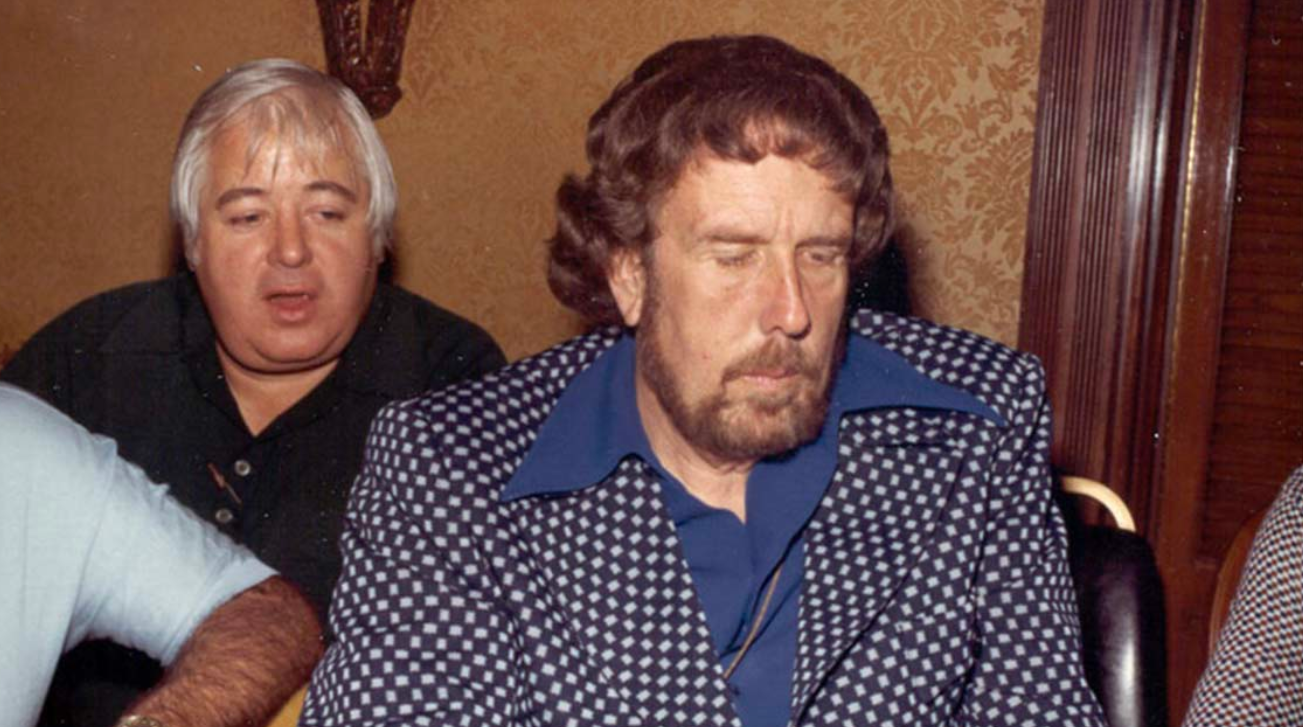
Straus's WSOP debut is usually associated with 1971, the first year of the tournament format and the second year overall. However, in Doyle Brunson’s book, there's a reference that Straus played in the first year (1970) but didn’t make it to the final table among the top seven players.
In 1971, he was almost etched into history, but he finished second in the Main Event, falling short to Johnny Moss. In 1973, he took 3rd place in the Main Event and a few days earlier won his first bracelet in the $3,000 No Limit 2-7 Draw Lowball. Despite several top finishes, Straus wasn’t an ideal tournament player. His kingdom was in cash games, where he could best use his ultra-aggressive style and willingness to risk it all.
This was demonstrated in one legendary cash game where he raised despite holding 72o – the worst starting hand in No Limit Hold'em. The flop showed 7-3-3, giving him a relatively weak two pair (sevens and threes). Straus aggressively raised and the opponent, with what was evidently a higher pair, re-raised him. Jack called without hesitation. The turn brought a 2, which didn’t change much for him. Straus again bet a huge sum and the opponent hesitated. At that moment, Jack offered: “Pick any card of mine and I’ll show it to you for $25.” The opponent paid, and Jack showed him the 2.
His opponent concluded that Jack made such an offer because he held 2-2 and had a full house. He promptly folded. This brilliant bluff, where psychology and theatrical gesture surpassed reality, became part of poker folklore and was even depicted in the film “High Roller: The Stu Ungar Story,” although screenwriters attributed it to another player.
WSOP 1982: The Year of the Greatest Comeback in History
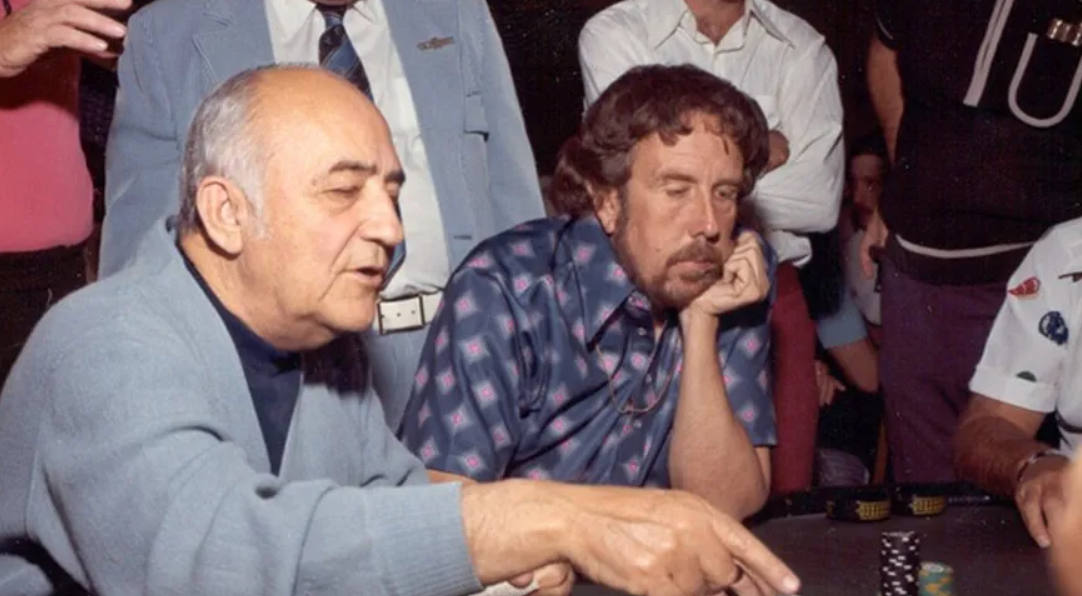
Jack Straus was certainly a figure to be noticed, but his fame exploded in 1982, a year that changed poker forever. The 1982 WSOP featured 14 events, and for the first time in history, the Main Event drew a three-figure number of players (104 participants) and a seven-figure prize pool.
Treetop played his typical aggressive game, but his end seemed imminent on the second day. At one point, he pushed all his chips into the center, but his opponent revealed a stronger hand. Straus was already standing, ready to leave, when someone noticed his last $500 chip under his napkin. Since he hadn’t declared an all-in, he was able to continue playing according to the rules. Jack was left with no choice but to go all-in. For him, it meant nothing, as he was always ready to risk everything.
The others expected a quick end for Straus, but he started an epic comeback. By the end of the second day, he was continuously increasing his stack, and by the third day, he even climbed to the position of chipleader. Straus's aggression and large stack became a lethal weapon. He gradually eliminated all his opponents at the final table, including Dewey Tomko in heads-up play. This is how the legendary phrase “a chip and a chair” was born. In response to Straus's incredible victory and his comment reflecting that all a player needs is a chip and a chair.
A Death at the Table and a Lasting Legacy
Straus was a gambler with all his heart and personality until the very end. On August 17, 1988, the 58-year-old Treetop was playing high stakes at the Bicycle Casino in Los Angeles. Due to an aortic aneurysm, he died right there at the table. Two months later, he was inducted into the Poker Hall of Fame, joining Tom Abdo and Wild Bill Hickok, two others who died playing poker and were inducted into the Hall of Fame.
Straus's two WSOP wins, including the 1982 Main Event, were enough to qualify him as a legend. His enduring legacy became the phrase that has helped countless players in short stack positions. His story is not just about winning; it’s about a comeback from the dead.
.jpg)
More from the Legends of PHoF
Legends of the Poker Hall of Fame XV: Walter Clyde "Puggy" Pearson
Legends of the Poker Hall of Fame XIV: Henry Green
Legends of the Poker Hall of Fame XIII: Red Hodges
Legends of the Poker Hall of Fame XII: Murph Harrold
Legends of the Poker Hall of Fame XI: Joe Bernstein
Legends of the Poker Hall of Fame X: Tom Abdo
Legends of the Poker Hall of Fame IX: Bill Boyd
Legends of the Poker Hall of Fame VIII: T. "Blondie" Forbes
Legends of the Poker Hall of Fame VII: James Butler "Wild Bill" Hickok
Legends of the Poker Hall of Fame VI: Sid Wyman
Legends of the Poker Hall of Fame V: Red Winn
Legends of the Poker Hall of Fame IV: Edmond Hoyle
Legends of the Poker Hall of Fame III: Felton "Corky" McCorquodale
Legends of the Poker Hall of Fame II: Nick "The Greek" Dandolos
Legends of the Poker Hall of Fame I: Johnny Moss
Sources: WSOP, Wikipedia, PokerListings, CardPlayer, PokerNews