

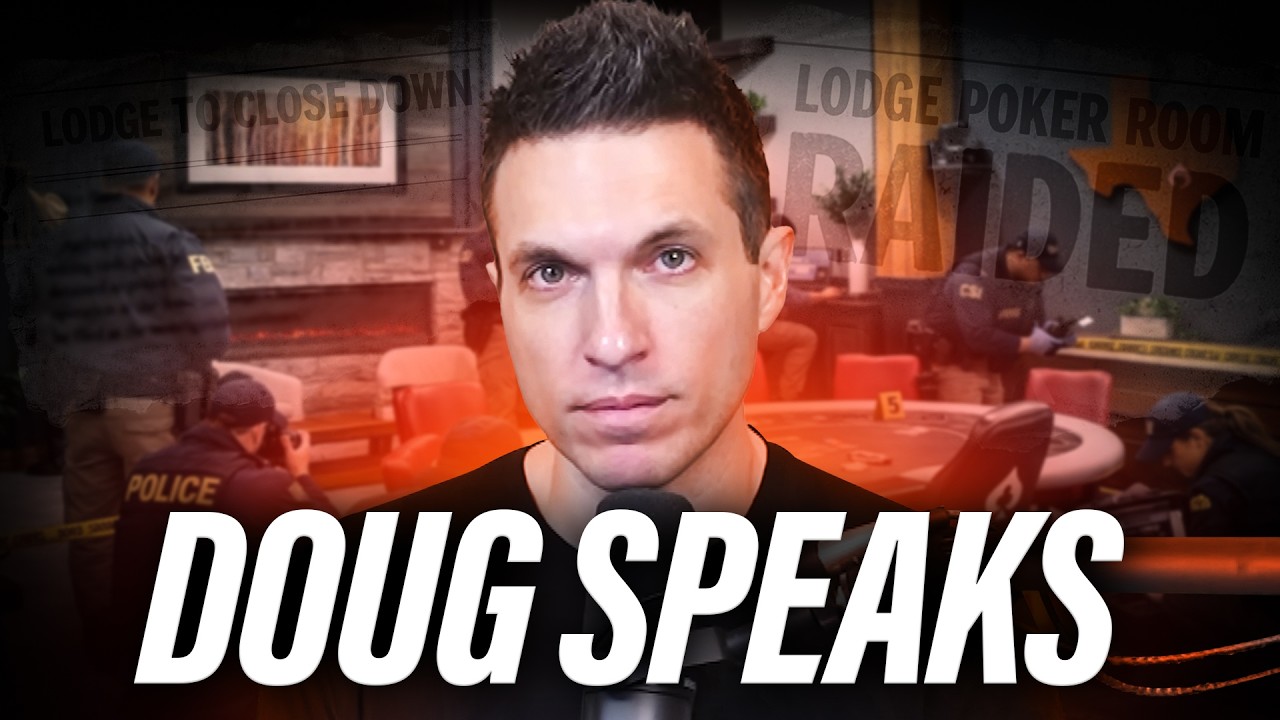
The Raid that Shook Texas Poker
The case began on March 10 when agents from the Texas Alcoholic Beverage Commission, county sheriff’s officers, and IRS investigators entered The Lodge. The raid nearly crippled one of Texas's most famous poker brands overnight. The club lost access to its accounts, some assets were seized, and serious suspicions began to accumulate around the entire operation. There were whispers of organized crime, money laundering, gambling promotion, and illegal gaming operations.
Polk reminds us of an important fact: despite the dramatic nature of the allegations, no arrests have been made, and no formal charges have been filed. This discrepancy between the harsh language in the documents and the lack of concrete legal action leaves the case in a peculiar limbo. The Lodge remains a hot topic in American poker, yet it's unclear if this is the start of a stringent legal offensive or a dispute hinging on interpretations of Texas's long-tolerated poker club operations model.
READ MORE:
Polk Openly Acknowledges the Seriousness of the Situation
In his video and the subsequent PokerNews podcast, Polk appears cautious yet transparent about the gravity of the situation. He openly admits that he is named in the files, that the investigation is ongoing, and that for a long time after the raid, he didn’t know the exact reasons or the specific allegations against him. According to him, this led to enormous communication chaos post-raid.
Polk strives to separate reality from the avalanche of online theories. He rejects ideas of a grand federal conspiracy, is skeptical of speculations about competitors' interests, and asserts that no substantial evidence supports such scenarios. He emphasizes a simpler, potentially more uncomfortable truth for the state: Texas has long operated in a legal gray area where rules are interpreted differently, and identical models can be accepted in one place while challenged in another.
What Happens to Players' Money and Laid-off Employees?
The strongest point in Polk's communication wasn’t about legal details but about the players. At the heart of the matter is the practical question: what will happen to the money frozen after the raid? According to Polk, the amount involves seven-figure sums in unpaid tournament winnings and chip balances.
His statement that if The Lodge doesn't pay the players, he will personally take responsibility was a significant moment for the community. At a time when accounts are blocked and the club’s future is uncertain, this is the first concrete public commitment. It’s not yet a solution, but it’s a pledge of accountability that the community often seeks in similar cases.
Polk cautions against unrealistic expectations. He emphasizes that payouts can’t happen immediately until there’s clarity on how the state will handle the seized assets and what the next procedural steps will be. This makes his stance more resilient. While acknowledging the legal reality, he sends a clear signal to players that their money isn’t just an entry in a crisis communication plan.
Another hard-hitting aspect of this case emerged when Polk talked about the people who lost their jobs after the raid. According to him, The Lodge in Round Rock had to lay off 200 employees. Here, it stops being just a major poker topic and becomes a broader issue affecting the local community.
Behind the brand, livestreams, known name, and media hype were dealers, floor managers, service staff, and many others suddenly left in limbo. Polk insists that the layoffs shouldn't symbolize a definitive end but were rather an attempt to allow these individuals to move on instead of waiting indefinitely without income or answers.
Why The Lodge Case is Crucial for All of Texas
In his statements, Polk repeatedly points out that The Lodge wasn’t operating as a traditional casino. The club was based on a model typical for Texas for many years: no rake from individual pots and a membership-based approach. This was the legal stance clubs took, claiming they didn’t profit directly from the game and thus adhered to Texas laws for private clubs.
The problem is that while this model has functioned for years, it has never rested on entirely solid foundations. This is why the raid at The Lodge has broader implications. If the case hinges on the state questioning the membership system’s consistency or the way this model was enforced in practice, it won’t just be one club’s problem. It could serve as a warning for all Texas poker.
According to Polk, there are roughly 70 to 80 poker clubs operating in Texas today. Some are more diligent in staying within legal bounds, while others push the limits more aggressively. This is where the current tension lies. If the state doesn't offer a unified interpretation and application of the rules, the entire system remains precarious, potentially impacting other well-known names.
April 9 Could Indicate the Way Forward
As of now, Polk marks April 9 as the first fixed point in the case timeline. According to him, authorities have limited time to take further formal steps if they wish to keep the assets within a civil process. This may not mean a definitive turnaround or legal breakthrough, but it’s a date that could indicate the direction the case will take.
This date is eagerly awaited by The Lodge and virtually all of Texas poker. It could signal if the case moves towards stricter legal ground or leaves room for more favorable scenarios.
The most significant aspect of Polk’s reaction is that it reintroduced a concrete voice and personal accountability into the case after long silence. While it hasn’t closed the investigation, dispelled all doubts, or provided definitive answers, at a time when more emotions than facts surrounded The Lodge, this was what the community needed to hear.
From today's perspective, the raid at The Lodge doesn't just appear as a problem for a popular poker venue. It seems more like a test of the entire model that Texas live poker has relied on for years. If it turns out that the crux of the case is primarily a differing interpretation of a long-tolerated system, it won’t just concern Doug’s reputation or the future of one poker room. It will be a question of whether Texas can finally set clear boundaries for an industry that has long balanced between popularity, business, and uncertain legislation.
Sources – YouTube, X, PokerNews

