

The $50,500 Onyx High Roller Championship final table at Merit Royal Diamond Hotel Casino & Spa gave viewers something rarer: eighteen entries, an $864,000 prize pool, and a genuine spread of styles sitting across nine seats. Alexey Borovkov came into the day with the chip lead. Rob Yong registered at the literal last moment and still ended up second in chips. Mikita Badziakouski and Artur Martirosian, two players who've built careers on reading exactly the kind of information this piece is about, were both still alive deep into the field. That's not a lineup you scroll past.
But here's the uncomfortable truth. Ninety percent of people who watched that stream absorbed almost nothing they could use at their own table. Not because the content wasn't there. Because they didn't know where to look.
Start With the Stacks, Not the Cards
Everyone's eyes go straight to the hole cards the second they flash on screen. Wrong instinct. The stack sizes tell you more about what's actually going to happen than any two cards will.
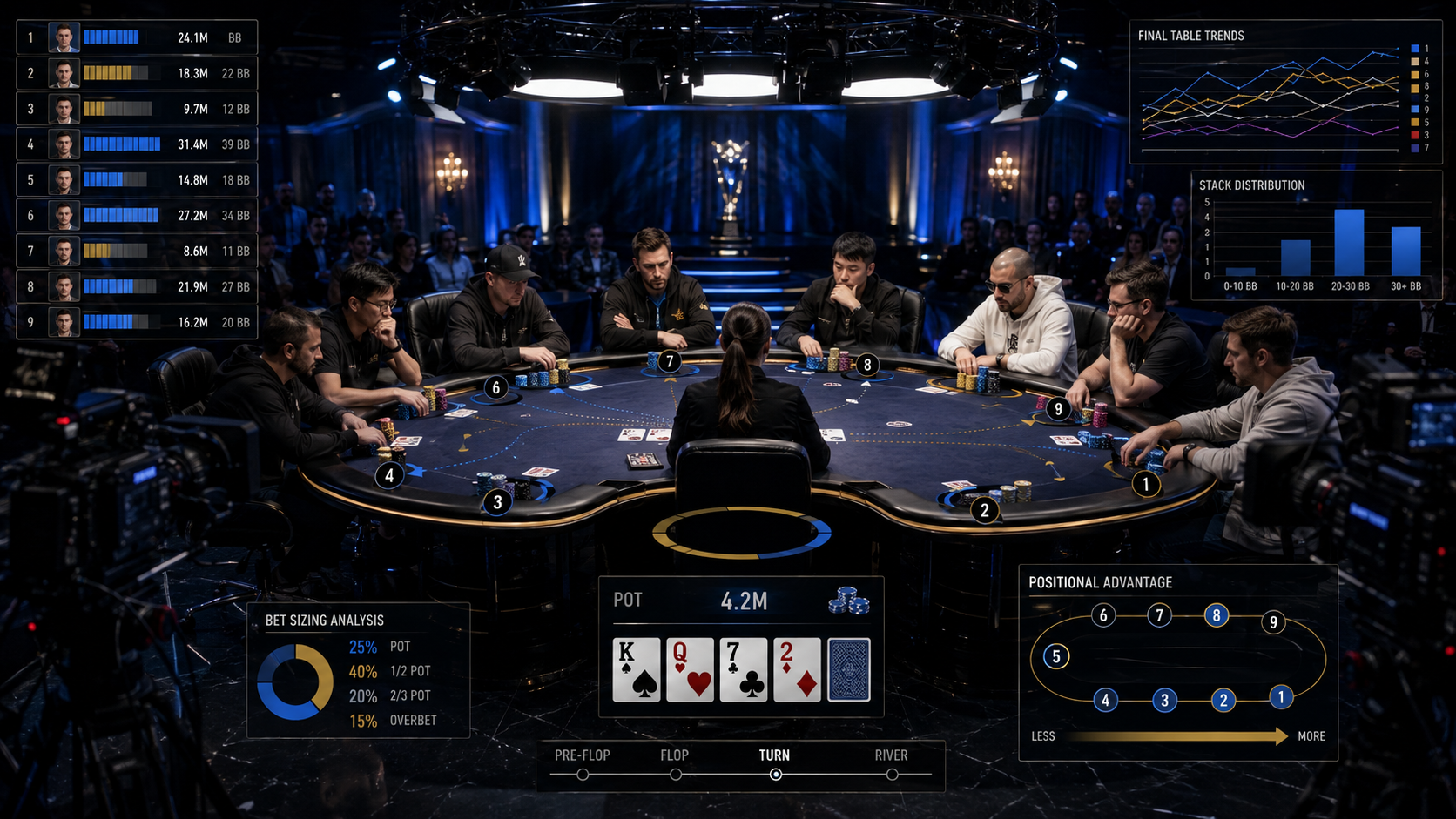
Borovkov started Day 1's final stretch with 1,289,000. Yong sat close behind at 1,019,000. Badziakouski, Martirosian, and the rest of the field were meaningfully shorter. That gap matters enormously. A player with a commanding stack can apply pressure without real risk. A short stack has to manufacture fold equity out of nothing, because calling stations don't fear chips they can afford to lose.
Watch how differently Borovkov and a tenth-place stack play the exact same board texture. One is betting for value and protection. The other is often betting because he has no other move left. If you're only watching the cards, you'll never catch that distinction. If you're watching stack-to-pot ratios, it jumps off the screen.
There's a catch, though, and it's one most casual viewers never think about. Most high roller streams, including Onyx's coverage on its Live channel, run on a delay of roughly two hours to prevent live information from leaking to players still at the table. That delay changes what you're allowed to learn in real time. You're not watching a live decision. You're watching a decision that already happened, which means the bet-sizing patterns you catch are historical data, not live intelligence you can act on for that exact hand. It's still useful. It's just useful for a different reason: pattern recognition over time, not real-time reads.
For viewers who want to go back and actually study these patterns rather than just watch them scroll by once, a deeper archive helps more than a single live broadcast ever will. That's where a site like Pokertube tends to come up among fans who want a wider library of final-table replays and hand histories to pull from, rather than relying on catching everything live the first time around. Rewatching a hand three or four times, pausing on the bet sizing instead of the result, changes what you take from it entirely.
Gambling carries real financial risk, so treat any strategy content here as educational rather than a promise of results, and only wager what you can genuinely afford to lose.
Bet Sizing Is a Language, Learn the Grammar
Here's where most viewers check out mentally. Bet sizing looks boring compared to a big bluff or a hero call. It shouldn't.
A half-pot continuation bet means something completely different from a bet that's 125% of the pot. The first is often a standard, low-commitment probe. The second is a player trying to end the hand immediately, usually because they either have it or desperately need you to think they do. Martirosian's game has always leaned on this kind of size differentiation. He doesn't bet the same way with the nuts as he does with air, but the sizes are close enough that an untrained eye sees no pattern at all.
That's the actual skill gap between a casual viewer and someone studying the game. Recreational players size bets based on feel. Elite players size bets based on what story they're trying to tell, and then they stay disciplined enough to tell that story even under pressure with millions on the line.
A 2025 PokerBench study from arXiv tested how well large language models could approximate Game Theory Optimal decision-making in exactly these spots, comparing model outputs against solver-verified correct plays. The finding worth remembering: even sophisticated models struggled with mixed strategies, the deliberately inconsistent bet sizing that keeps human opponents from ever fully solving you. That's your reminder that the wobble in a good player's sizing isn't sloppiness. It's often intentional.
Watch the Face, Not Just the Chips
Paul Ekman's decades of research on microexpressions, first published widely in the late 2000s and still cited constantly in behavioral science, found that genuine emotional leakage happens in fractions of a second, well before someone consciously suppresses it. MIT Technology Review covered the mechanics of this kind of lie detection in detail, and the underlying idea translates directly to a final table broadcast.
Most players have trained their face into something close to neutral. But close isn't perfect. Watch the moment a bet lands, not the moment a card is revealed. A flinch when facing a raise, a slight change in breathing pace, a hand that suddenly stops fidgeting with chips. None of it is conclusive on its own. Stacked together across a four-hour session, patterns emerge.
Badziakouski is a useful case study here specifically because he's known for stillness. When his usual stillness breaks, even slightly, it means something. You won't catch that watching a highlight reel. You catch it watching full hands, in order, patiently.
Slow Down and Rewatch the Boring Parts
Everyone skips to the all-ins. That's exactly backwards.
The folds are where the real information lives. When a player like Yong, who registered at the absolute last second and still built a monster stack, decides to give up a hand without a fight, ask why. What did the bet sizing tell him? What did the previous three hands establish about his opponent's range? A fold rarely happens in isolation. It's the end of a small story that started two or three streets earlier.
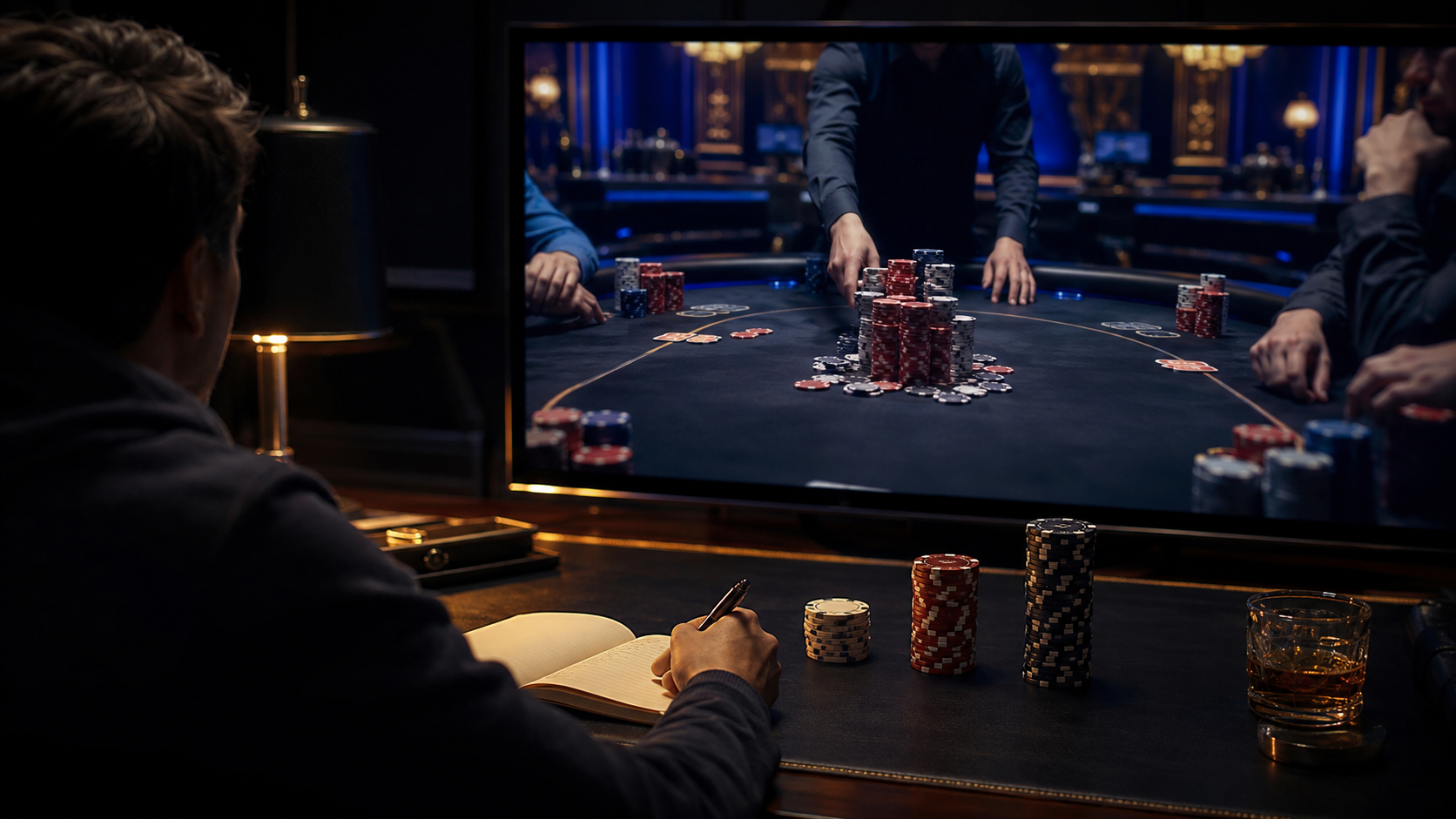
This is slow work. It's not exciting the first time through. But rewatching a final table with a notepad, tracking bet sizes against stack depth and position, will teach you more in ninety minutes than a hundred hours of passive viewing ever will.
Turning a Broadcast Into an Education
None of this replaces actually playing hands yourself. Watching, no matter how carefully, is a supplement, not a substitute. But most people never even get the supplement right. They watch for entertainment, catch a big bluff, feel something, and move on with nothing retained.
The players who improve fastest treat these broadcasts almost like game tape. Coaches in every other sport have used film study for decades. Poker is finally catching up, helped enormously by how much footage is now archived and searchable rather than lost the moment the live stream ends. If you want to go deeper on tournament structures and how to actually track a schedule of upcoming events worth studying, Spadepoker's live poker calendar is a solid place to start planning which final tables to prioritize watching next.
Frequently Asked Questions
Why do high roller streams run on a delay? Broadcasters like Onyx Live typically hold coverage back by an hour or two so players still competing can't gain information from viewers or rail-watchers about opponents' hole cards. It protects the integrity of the event while still letting fans follow along closely.
Does watching poker streams actually improve your own game? It can, but only if you watch actively. Tracking bet sizing against stack depth and position teaches pattern recognition. Passive viewing for entertainment alone rarely translates into better decisions at your own table.
What should a beginner focus on first when watching a final table? Start with stack sizes relative to the pot before anything else. Once you understand why a short stack and a big stack make different decisions with similar hands, bet sizing and timing tells start making a lot more sense.
Are microexpressions reliable for reading opponents on stream? Not on their own. They're one data point among many, and camera angles plus broadcast delay limit what you can genuinely pick up. Treat facial cues as supporting evidence, not a standalone read.
Why does bet sizing matter more than most viewers think? Sizing often reveals intent more clearly than the cards themselves. A half-pot bet and a massive overbet usually tell different stories, even when the underlying hand strength looks similar on paper.
Poker broadcasts have gotten sharper, the production values keep climbing, and events like the Onyx series prove there's an appetite for genuinely well-covered high-stakes tables. The next final table you sit down to watch, whether it's a rerun or something live, try tracking one thing only: the relationship between stack size and bet size across a full orbit. It's a small habit, but it's the one that actually separates a fan from a student of the game.

