

Grosvenor Swansea Closes Due to Long-term Financial Issues
The staff at the High Street venue were informed of the possible closure by letter back in July. According to media reports, the Rank Group, which owns the Grosvenor Casinos brand, highlighted “significant and ongoing financial challenges” uncovered by a detailed review of the venue’s performance. Ultimately, the casino’s last day was Sunday, August 30th.
Grosvenor's official website later confirmed the closure, thanking customers and team members. The venue's profitability had dropped by 107 percent over the last decade, with major issues cited including rising operational costs and insufficient revenue.
The poker room in Swansea had long lost its prime. In the past, it hosted tournaments such as the Grosvenor Deepstack Series, regular freezeouts, and local events. However, big festivals gradually disappeared, leaving mostly smaller local tournaments in recent times. The current season of the Grosvenor UK Poker Tour did not include Swansea, so the shutdown does not immediately affect the GUKPT calendar.
For local players, the loss is more significant: they lost the only available base from which a stronger poker community could have regrown over time. A major tournament doesn’t just pop up overnight. It needs regular cash games, small weekly tournaments, experienced dealers, and a group of recreational players who slowly venture into larger events.
The Nearest Alternative is Miles Away
With Swansea's closure, the most notable poker venue in Wales is now Les Croupiers Casino in Cardiff. The issue is the distance. Players from Swansea face a journey of about 50 miles, or around 80 kilometers, to find live poker.
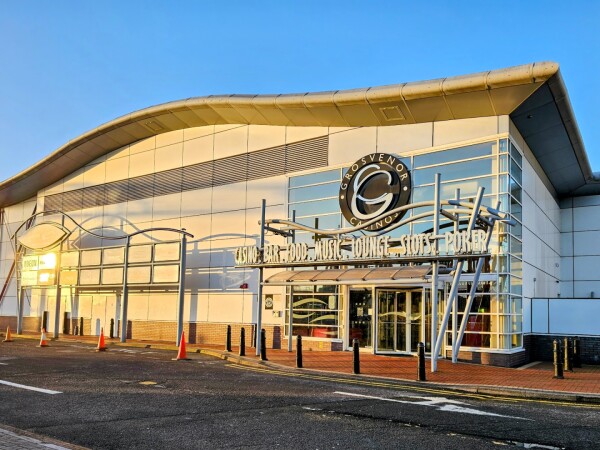
For a professional or a regular participant in larger festivals, this may not pose an insurmountable obstacle. However, for a recreational player who wants to play a tournament with an affordable buy-in after work, the trip back and forth significantly alters the equation. Travel costs, time, and often the need for accommodation if the tournament ends late, all add to the initial buy-in.
Local and occasional players sustain smaller poker ecosystems. If their participation stops being viable, tournaments lose entries, cash games open less frequently, and the remaining venues have more reasons to limit their offerings. The closure of a single casino can trigger a chain reaction.
It's Not Just Swansea: August Sees Three Grosvenor Casinos Close
The biggest warning isn’t just this one venue closing, but the timing. In August, Grosvenor also closed casinos in Sunderland and Reading Central. Each had its local issues mentioned, including weaker revenues, rising costs, and doubts about long-term viability. However, three closures in one month cannot simply be dismissed as the failure of a single branch.
The contrast is stark. Grosvenor continues to host hugely successful festivals like the GUKPT and the record-breaking Goliath. Large events at established centers can draw thousands of players, while smaller regional venues struggle to survive. UK live poker is increasingly concentrating in a few strong locations, primarily in London, Coventry, and other major cities.
It's essential to view this in the broader economic context. Since April 2026, the UK Remote Gaming Duty for online casino games has increased from 21 to 40 percent. Before the changes, Rank Group estimated that the new tax policy could reduce its annual operating profit by around £40 million.
This tax does not directly apply to live poker in brick-and-mortar casinos, so it wouldn't be accurate to point to it as the sole reason for Swansea's closure. However, Rank operates both physical and digital activities under one group. When one part of the business faces a significant cost increase, management naturally looks for savings across the company – including reducing staff, marketing expenses, and reassessing the least profitable operations.
Ironically, Rank also anticipated record net gaming income of approximately £834.1 million and an operating profit of at least £76 million. Yet, even the group's growth doesn't always save a regional casino that cannot justify its economic existence on its own.
Closed Doors Are Hard to Reopen
Poker players should not overlook the closure of a venue they might never have played in. Every lost regional poker room reduces live poker availability, takes jobs from skilled dealers, and weakens the player base from which larger tournaments eventually grow.
Online poker can offer more tables and continuous action but does not replace the social aspect of live play. A local poker room is a place where a new player can come alone, meet regular visitors, and slowly become part of the community. Once it closes, it is often not the case that everyone moves to a more distant casino. Many simply stop playing live poker altogether.
The end of Grosvenor Swansea is thus not just about one unprofitable venue. It is yet another warning that while the biggest UK festivals continue to break records, the everyday regional infrastructure on which all live poker stands could slowly be fading. Once the tables, dealers, and community of regular players disappear, their return proves much harder than the initial closure.
Sources: GrosvenorCasinos, WalesOnline, PokerScout, JonBryanPoker, Casinos.com