

Cap Camera and Silent Accomplice
The perfect example of modern cheating was revealed by renowned American professional Bart Hanson in his show, Crush Live Poker. In a YouTube video, he shared a player’s account under the pseudonym “Joe,” who detailed how he and other regulars uncovered a cheating scheme at Aria Casino in Las Vegas.
The operation involved two people. One appeared to be a classic, laid-back recreational player. “He played a massive number of hands, casually 3-betting hands like 6-2 offsuit or K-7 offsuit,” Joe explained. Despite the wild play, this person mysteriously kept winning. Soon, other players noticed two anomalies:
-
The player bluffed relentlessly, yet never walked into the nuts.
-
A silent man sat at the table, never playing a single hand, with a cap laid out in front of him.
Regulars quickly realized what was happening. The cheaters always positioned themselves near the dealer, providing the best view of the dealing. The cap contained a hidden miniature camera capturing the underside of the cards as the dealer dealt them. This video feed was sent in real-time to a third person outside the casino, who rapidly analyzed the cards and transmitted the information back to the active player at the table.
When confronted by the players, the duo promptly left the casino, speaking in a foreign language to each other. Similar organized groups have been reported in casinos across the United States.
European “Gangsters” Used Phones and Micro Earpieces
Cheating with technology isn’t just a U.S. affair. French authorities previously uncovered a gang that used specially modified clothing and technology to cheat players out of €200,000 at a single casino.
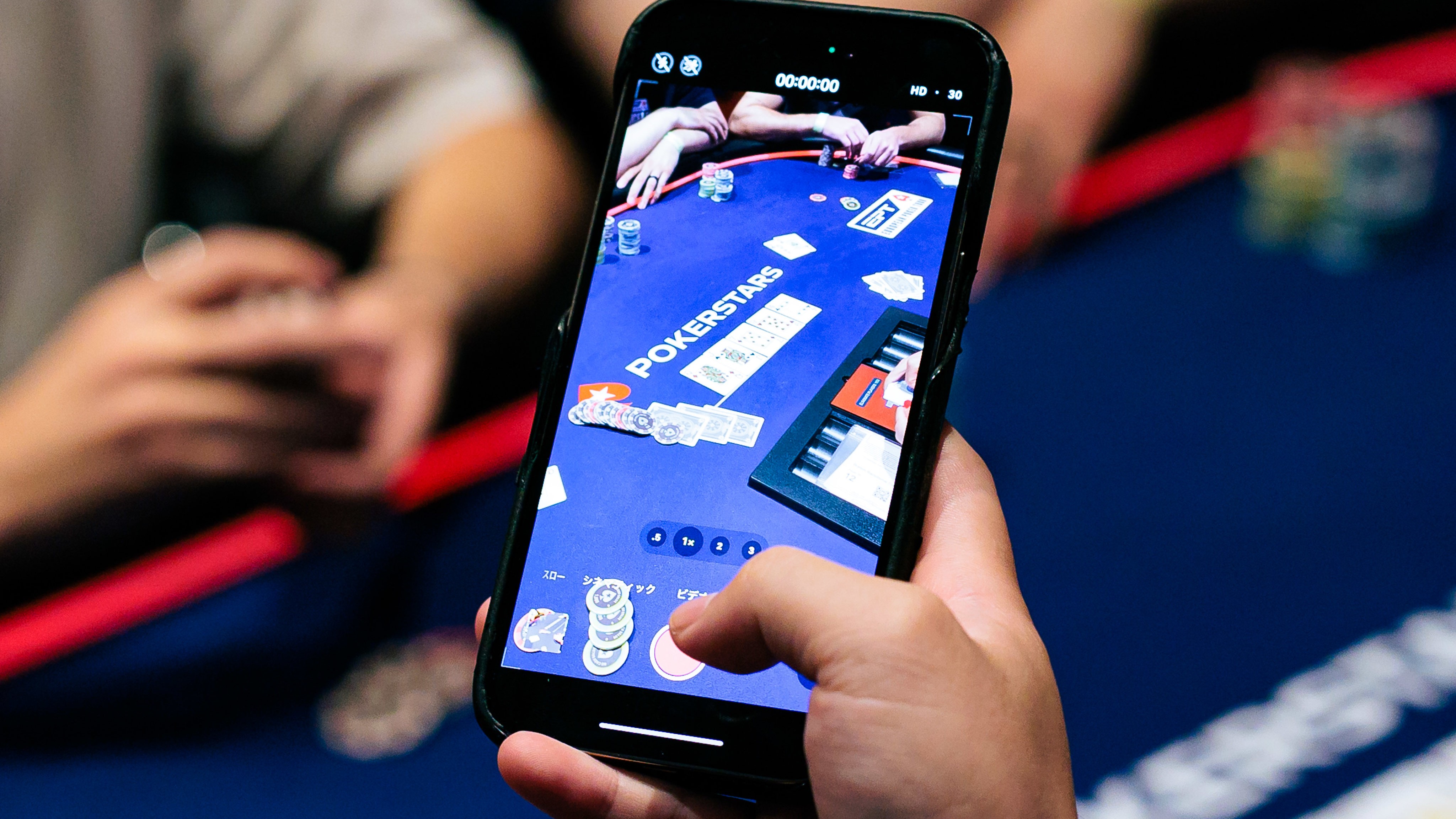
These fraudsters used a mobile phone placed on the table to capture the card faces directly during dealing from a low angle. The entire scheme was coordinated with accomplices outside the casino.
Players at the table received card information directly in their ears through microscopic earpieces. These devices were so tiny that police had to extract them from suspects’ ears using a strong magnet.
Banning Phones
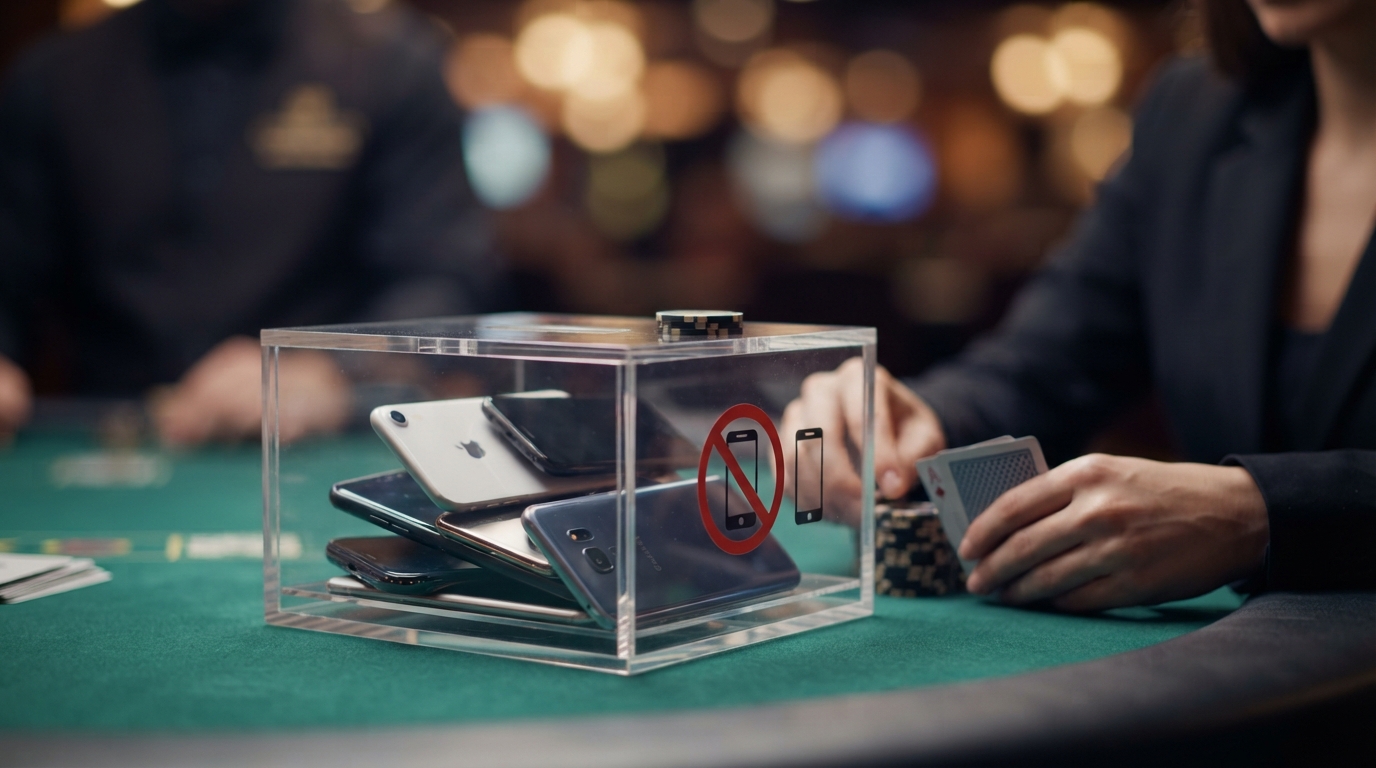
How is the casino industry responding to these threats? The first and most natural line of defense is to declare war on electronics at the table.
While it was common in the past for players to browse social media while waiting for cards, many casinos are now putting a stop to this. For instance, Hollywood Park Casino in Los Angeles has implemented a strict ban on all electronic devices at the table. No phones, iPads, or laptops are allowed on the green felt or the rails. If a player wants to send a message or check Instagram, they must stand up and physically step away from the table. Personnel regularly enforce this rule.
The Station Casinos network in Las Vegas has taken a similar approach. Phones are banned from use directly at the table, and they are entirely forbidden when a player is active in a hand.
The World Series of Poker (WSOP) has also joined this global trend, banning electronic devices at final tables to combat RTA software and external coaching.
Slide Dealing: A Return to Safe Classics
Not everyone is convinced that a total ban on phones is the right path. “I don’t think it’s realistic or reasonable to completely ban electronics at the table,” said Jason Sanborn, poker room manager at South Point Casino in Las Vegas.
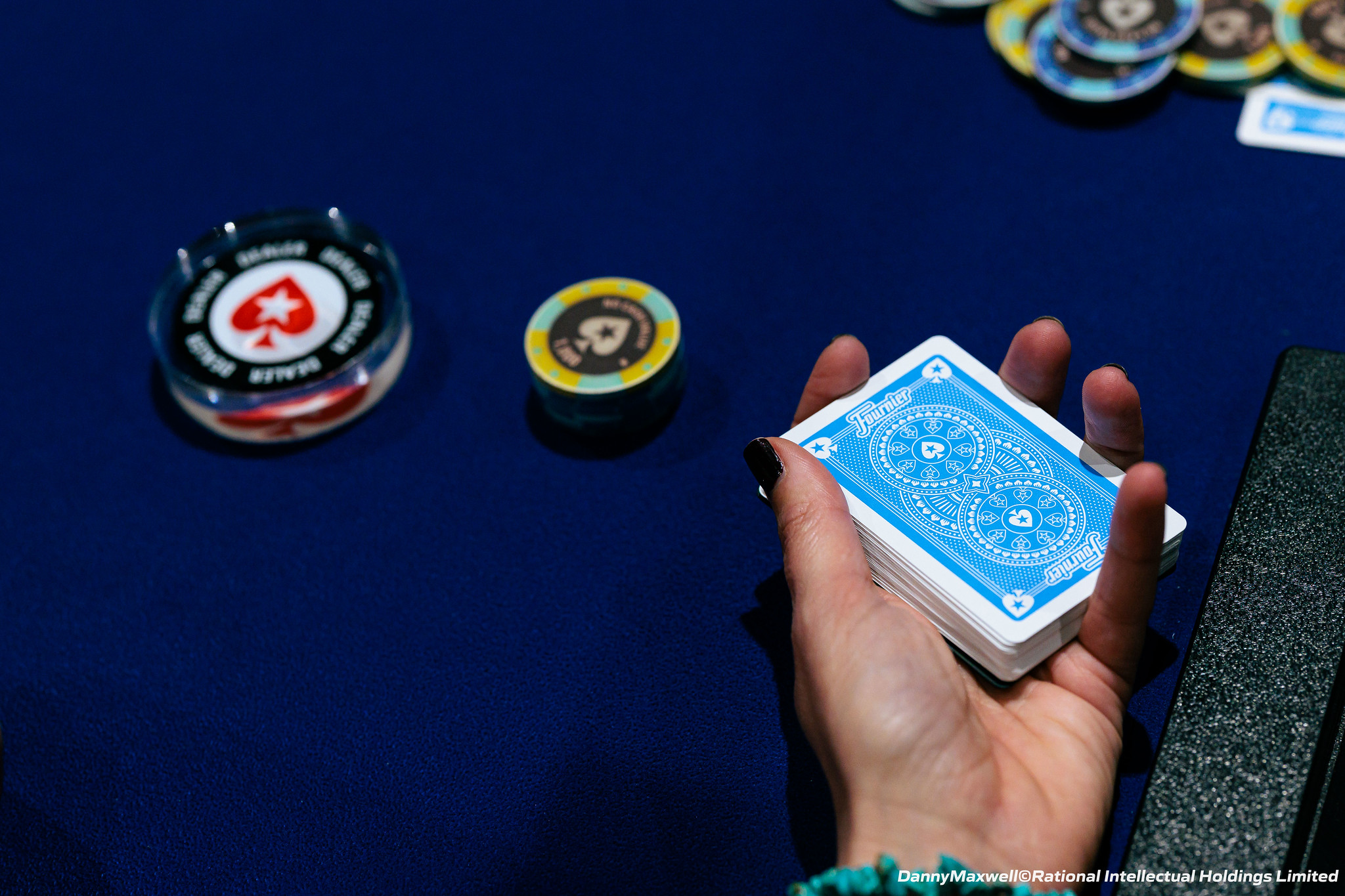
Instead of limiting player comfort, South Point has opted to change the card dealing technique by introducing “slide dealing.” Commonly used in Europe, this technique involves the dealer holding the deck just above the felt and sliding the cards to players without lifting them off the table.
Although critics argue that slide dealing slightly slows down the game, for casinos, it's the most cost-effective and efficient way to protect game integrity. Major series like the European Poker Tour (EPT) under PokerStars adopted slide dealing as standard last year.
Cheating in the Underground
If you think casino measures are strict, private and illegal clubs face even more dramatic situations. One example is a federal investigation last year that uncovered rigged games tied to the New York mafia and professional athletes, with former NBA coach Chauncey Billups among those arrested.
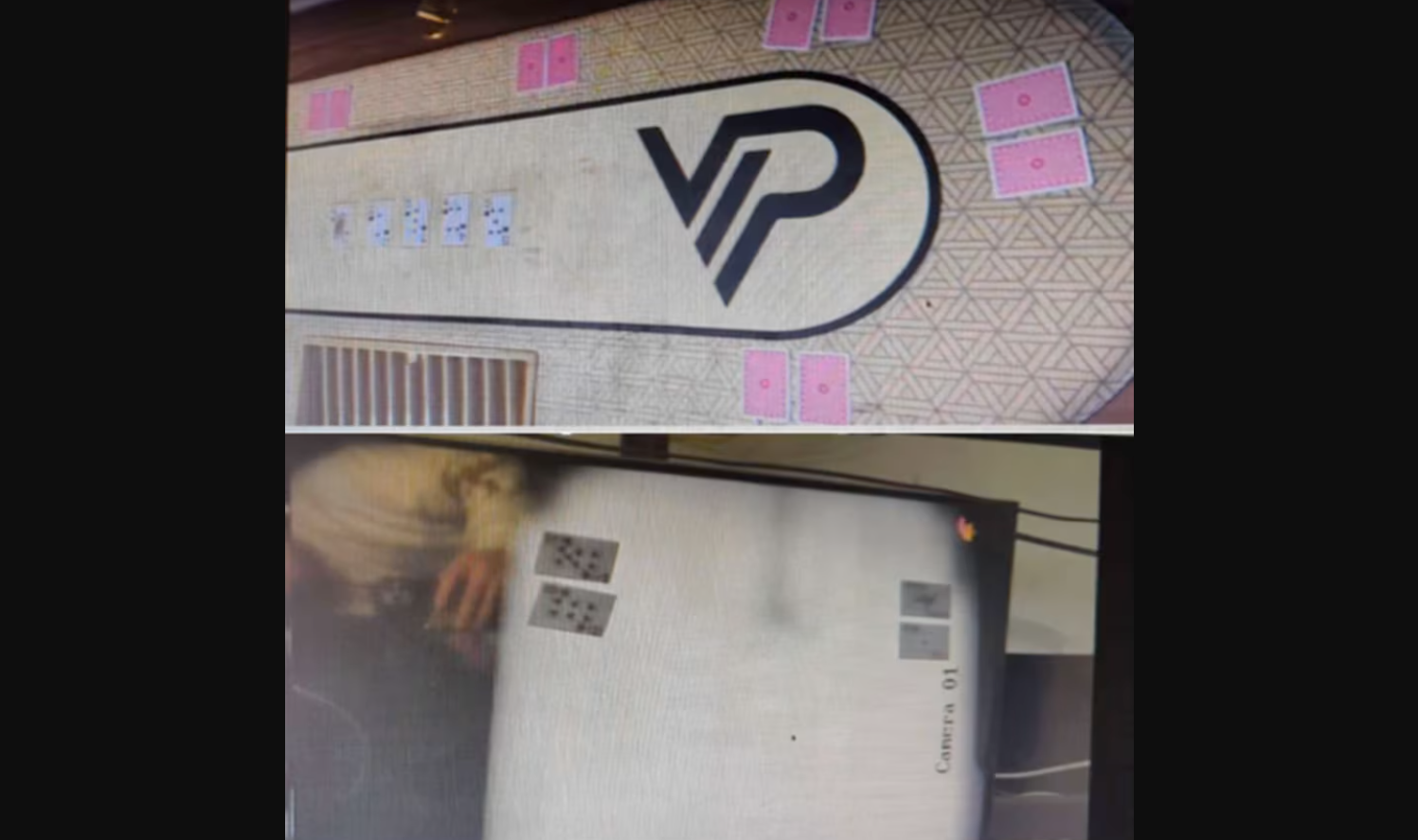
In these private games, cheaters didn’t wait to see a dealer’s card. They used modified automatic shufflers, special X-ray tables, and altered contact lenses or glasses capable of reading invisible ink on the back of cards. These organized frauds generated tens of millions of dollars for the operators.
Why Players Should Welcome These Measures
Security innovations in poker raise an important question: How far are casinos and players willing to go for the sake of security? Are we prepared to accept tables without phones, slower gameplay due to sliding cards, or constant monitoring by staff?
Poker has always been a game of psychology, reading body language, and math. But if technology allows dishonest players to see cards before they hit the table, the magic of the game vanishes.
Therefore, tightening rules doesn't appear to be just a temporary whim of casino managers but the only way to keep poker alive.
Sources: WSOP, Flickr, CNN