

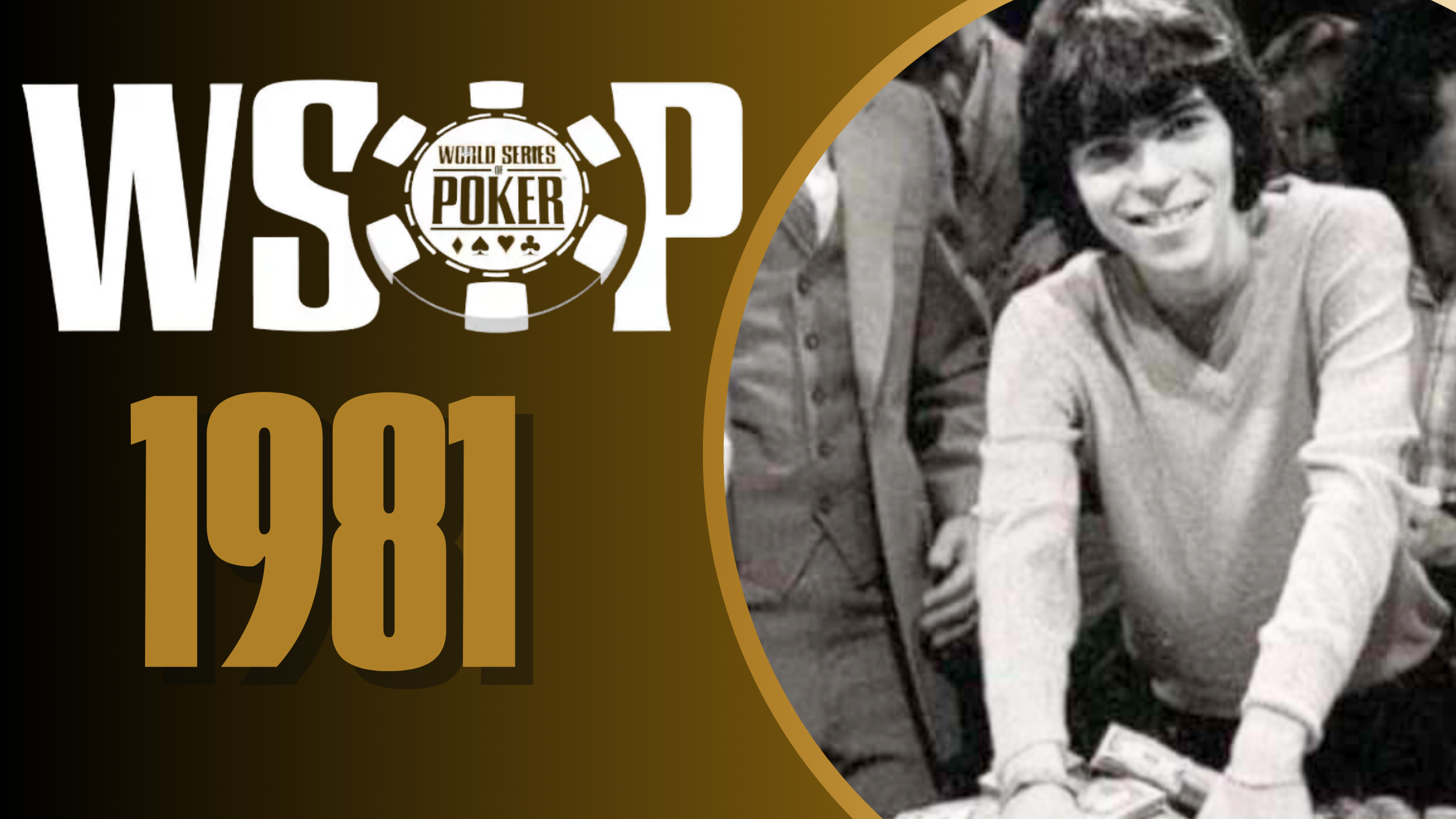
Bigger, Better, and International
The twelfth festival brought even more action. Organizers expanded the schedule to 13 tournaments, and the overall number of entries across the series nearly reached one thousand. Under the leadership of the Binion family, Binion’s Horseshoe Casino was touted as a place for 'serious players' where no Las Vegas spectacle would distract from the game.
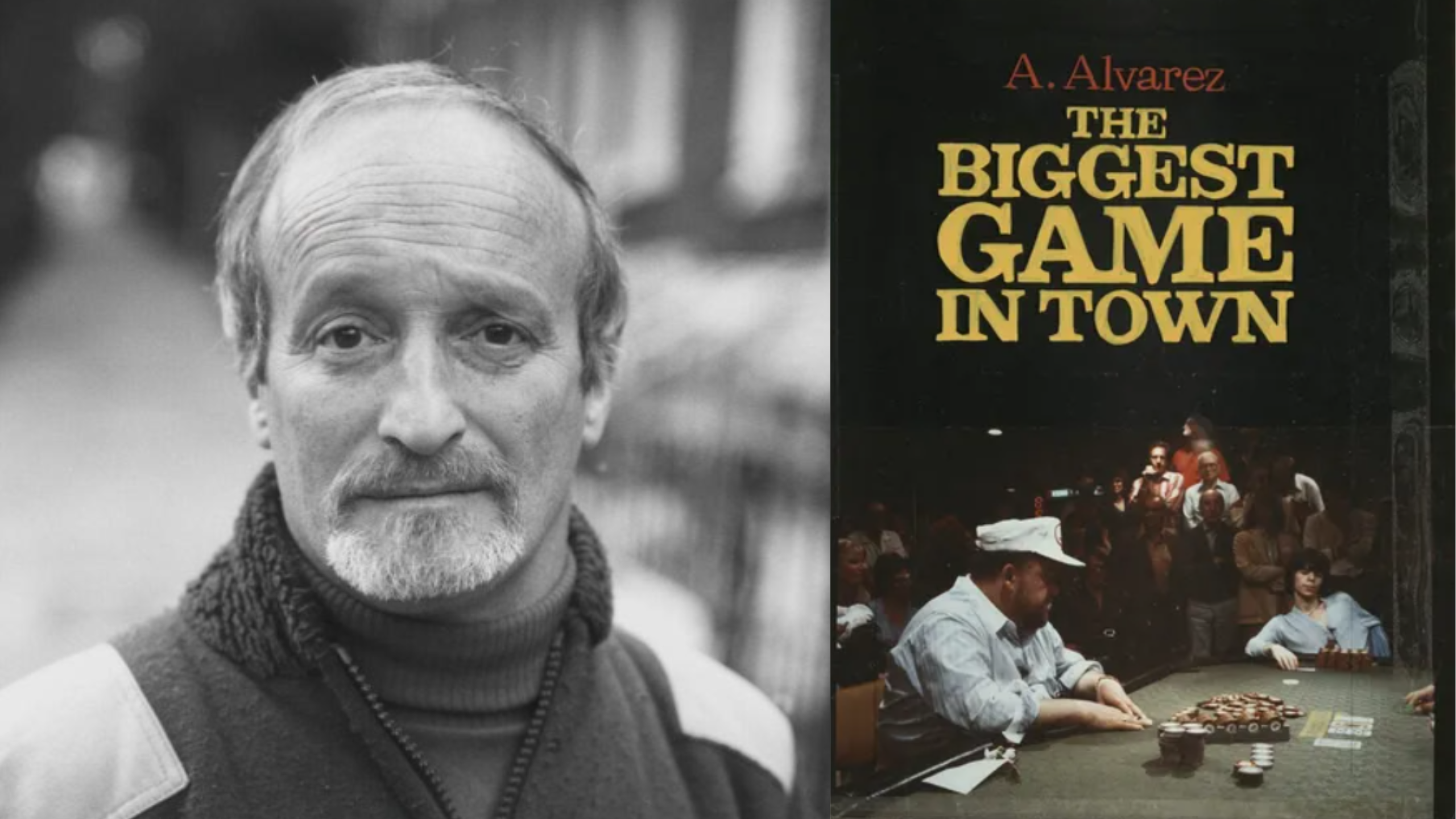
This year was also significant from a European perspective. Hugh Neville, the reigning Irish champion, entered the Main Event, becoming one of the first documented European players in the main tournament. Joining him was British author Al Alvarez, who later chronicled the 1981 series in his famous book “The Biggest Game in Town.”
Johnny Moss Rewrites His Own Records
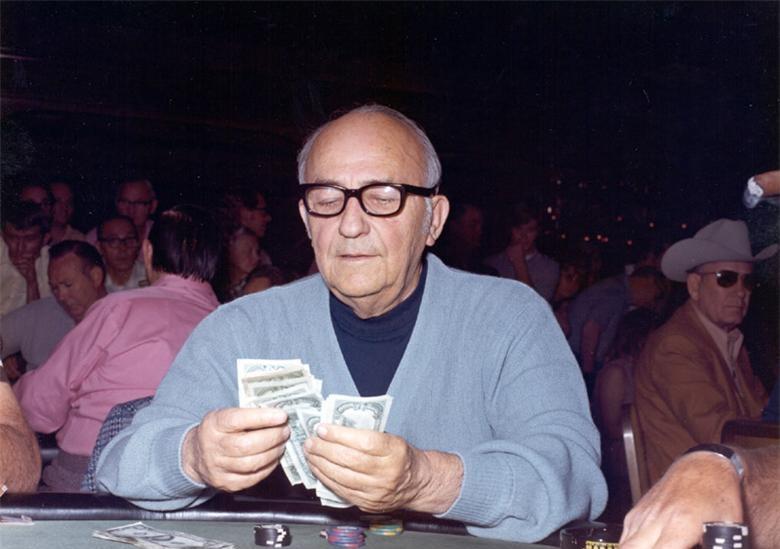
While Stu Ungar dominated the series' end, veteran Johnny Moss captured attention mid-event. Winning Event #7: $1,000 Seven Card Stud Hi-Lo, he collected his eighth bracelet and extended his own record for titles.
He also improved his record as the oldest champion in WSOP history. His 1981 triumph came just days before his 74th birthday.
The MVP title went to Chip Reese, who managed to cash four times out of 13 tournaments, finishing in the top five in four consecutive events.
Ruth Godfrey also had her victory moment, overcoming a field of 88 entries in the ladies' tournament to claim a then-record female prize of $17,600.
|
Tournament |
Entries |
Winner |
Prize |
|
Event #1: $1,000 Limit Draw High |
36 |
Ed Barmach |
$18,000 |
|
Event #2: $600 Mixed Doubles (Stud) |
52 |
Frank Cardone Juanda Matthews |
$7,800 each |
|
Event #3: $1,500 NL Hold'em (Non-Pro) |
128 |
Fred David |
$96,000 |
|
Event #4: $1,000 Limit Seven Card Stud |
104 |
Sid Gamerman |
$52,000 |
|
Event #5: $400 Ladies Limit Seven Card Stud |
88 |
Ruth Godfrey |
$17,600 |
|
Event #6: $1,000 Razz |
69 |
Bruce Hershenson |
$34,500 |
|
Event #7: $1,000 Seven Card Stud Hi-Lo |
67 |
Johnny Moss |
$33,500 |
|
Event #8: $5,000 Seven Card Stud |
27 |
A.J. Myers |
$67,500 |
|
Event #9: $2,500 A-5 Draw |
37 |
Mickey Perry |
$46,250 |
|
Event #10: $1,000 No-Limit Hold'em |
162 |
Dody Roach |
$81,000 |
|
Event #11: $1,000 A-5 Draw |
88 |
Glen Rodgers |
$44,000 |
|
Event #12: $10,000 2-7 Draw Lowball |
19 |
Stu Ungar |
$95,000 |
|
Event #13: $10,000 Main Event (NLH) |
75 |
Stu Ungar |
$375,000 |
Main Event with a Television Innovation
The $10,000 Main Event attracted 75 players and featured two revolutionary changes. For the first time in history, all nine final-table players were paid (previously, only up to five places) and ESPN showcased players’ cards to viewers using on-screen graphics during select hands.
The final table was a display of talent, with defending champion Sam Ungar, 1978 champion Bobby Baldwin, bracelet holders Jay Heimowitz, Gene Fisher, Perry Green, and the notable Ken “Top Hat” Smith with his signature top hat.
Bobby Baldwin started the final table as the chipleader and initially thrived, eliminating the first two players. However, he lost a massive pot to Perry Green, an Alaskan furrier. Baldwin never recovered, eventually exiting in seventh place.
Heads-up: Pro vs. Amateur
The final showdown for $375,000 was between Stu Ungar and Perry Green. Although labeled an 'amateur,' Green already had three bracelets from preceding years.
However, in heads-up play, Ungar leveraged his aggressive style. Initially trailing slightly, he managed to turn things around, calling Green’s all-in on a board of 7 d 8 h 4 h with A h Q h. Green, holding T c 9 d, was hoping for a straight, but the board completed with 4 c and Q d, sealing Ungar's victory.
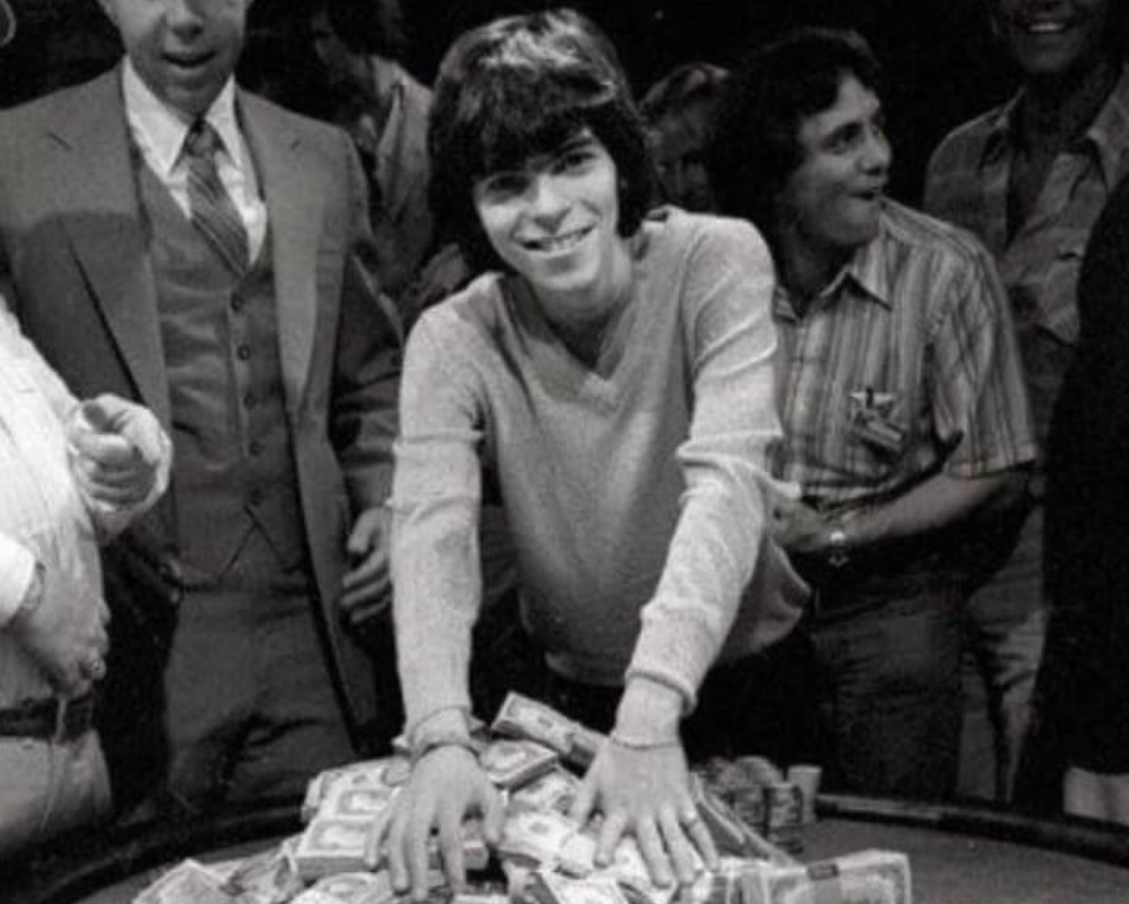
At 27, Stu Ungar became only the third player in history to win the Main Event back-to-back (following Johnny Moss and Doyle Brunson). His triumph confirmed that 'The Kid' was the best player of his generation.
Interestingly, just before the Main Event, Stu Ungar won the $10,000 2-7 Draw, defeating Bobby Baldwin in heads-up for an additional $95,000.
His total WSOP 1981 winnings nearly reached half a million dollars, suggesting he could dominate the poker world in coming years. Yet, his story took a drastically different turn.
More from the History of WSOP
The History of WSOP: 1980 – The Rise of Stu 'The Kid' Ungar
The History of WSOP: 1979 – A Milestone Triumph for an Amateur and the Birth of the Hall of Fame
The History of WSOP: 1978 – The End of the 'Winner Takes All' Era
The History of WSOP: 1977 – The Miracle of 10-2 Repeats Itself
The History of WSOP: 1976 – Texas Dolly's First Triumph and the Birth of the Legendary Hand 10-2
The History of WSOP: 1974 – Johnny Moss's Return to the Throne and the Birth of Iconic Bracelets
The History of WSOP: 1973 – Puggy Pearson's Triumph and the Dawn of the Television Era
The History of WSOP: 1972 – Amarillo Slim's Controversial Win
The History of WSOP: 1971 – The First Freezeout Tournaments
The History of WSOP: 1970 - The First World Champion Elected by Vote
Sources: WSOP, Wikipedia, YouTube

