

The Satellite Revolution
The most significant contribution to the future growth of world poker came in 1982 from tournament director Eric Drache. Before the Main Event began, Drache noticed a table of cash game players with about $10,000 in front of them.
He suggested they pool their money to play a mini-tournament, with the winner receiving a $10,000 entry ticket to the Main Event. This gave rise to the first ever poker satellite. This concept has since allowed thousands of players to qualify for major tournaments at a fraction of the cost.
The Watch Instead of Bracelet Experiment
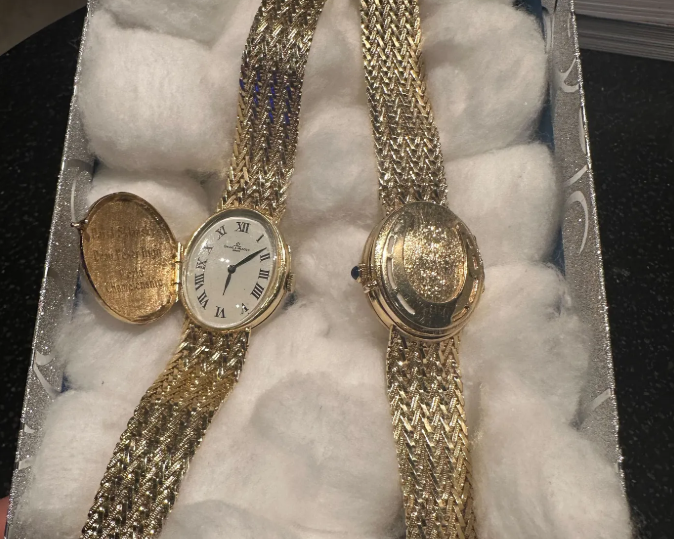
In 1982, organizers decided on an unexpected marketing move. Winners at the 1982 WSOP did not receive traditional gold bracelets. They made this decision following criticism that bracelets appeared too feminine and that men rarely wore them. It's even said that legendary Doyle Brunson allegedly didn't claim some of his early bracelets because he considered them cheap women's jewelry.
The Binion family opted for gold wristwatches as the new trophies for winners. Benny Binion personally presented them at the Main Event eve reception. However, this idea turned out to be a marketing misstep.
The watches did not catch on among players, and by 1983, the festival returned to the tradition of bracelets while the gold watches from 1982 remained rare historical artifacts.
Female and International Breakthroughs
The 1982 Main Event continues to captivate attention, but other tournaments also showcased remarkable achievements and milestones.
Billy Baxter pulled off an incredible feat by winning the first two series tournaments within two days, cementing his status as the king of Lowball. In the opening tournament ($2,500 No-Limit A-5 Draw), he had to overcome an elite final table featuring Bobby Baldwin (2nd place), Doyle Brunson (3rd place), and Michael Perry (5th place).
Thanks to his third-place finish in the opening event, Doyle Brunson surpassed the million-dollar mark in total WSOP winnings. He became the first player to ever hit seven figures.
Vera Richmond made history by winning Event #11 ($1,000 Ace-to-Five Draw), becoming the first woman to win an open WSOP event (excluding the Ladies Event or Mixed Doubles).
The 1982 edition was also groundbreaking in terms of poker globalization. For the first time, players from outside the USA made it into the money. Hugh Todd from South Africa achieved this first, followed by Dennis Zervos from Greece, Barry Clayton from England, and Noli Francisco from the Philippines.
Interest in the game continued to rise, as evidenced by Event #9 ($1K Limit Hold'em), which set a new participation record with 202 entries.
|
Tournament |
Entries |
Winner |
Prize |
|
Event #1: $2,500 Ace-to-Five Draw |
39 |
Billy Baxter |
$48,750 |
|
Event #2: $10,000 Deuce-to-Seven Draw |
19 |
Billy Baxter |
$95,000 |
|
Event #3: $1,000 Seven-Card Stud Hi-Lo |
88 |
Tom Cress |
$44,000 |
|
Event #4: $1,000 No-Limit Hold'em |
192 |
Jim Doman |
$96,000 |
|
Event #5: $500 Ladies Seven-Card Stud |
64 |
June Field |
$16,000 |
|
Event #6: $1,000 Limit Razz |
80 |
Nick Helm |
$40,000 |
|
Event #7: $800 Mixed Doubles (7-Card Stud) |
44 |
David Sklansky Dani Kelly |
$8,800 each |
|
Event #8: $1,500 Non-Pro No-Limit Hold'em |
164 |
Ralph Morton |
$123,000 |
|
Event #9: $1,000 Limit Hold'em |
202 |
John Paquette |
$101,000 |
|
Event #10: $5,000 Seven-Card Stud |
37 |
Chip Reese |
$92,500 |
|
Event #11: $1,000 Ace-to-Five Draw |
77 |
Vera Richmond |
$38,500 |
|
Event #12: $1,000 Limit Draw High |
31 |
David Sklansky |
$15,500 |
|
Event #13: $1,000 Seven-Card Stud |
112 |
Don Williams |
$56,000 |
|
Event #14: $10,000 Main Event (NLH) |
104 |
Jack Straus |
$520,000 |
The Miracle of 'Treetop' Straus in the Main Event
The Main Event, with a $10,000 buy-in, for the first time in history, exceeded 100 entries (104 in total), creating a prize pool of over a million dollars ($1,040,000). The significant increase in participants led to a six-day battle for the Main Event title. Favorites like Stu Ungar and Bobby Baldwin were eliminated early, leaving the stage for Jack 'Treetop' Straus to create the event's biggest story.
Straus, a towering Texan gambler who wore a lion's paw around his neck as a charm, encountered massive problems at the start of the tournament. In one big hand, he pushed all his chips into the middle but was outmatched by his opponent.
Convinced he was out, Treetop stood up from the table. It was only then that someone spotted a single $500 chip hiding under a napkin. Since Straus had never verbally declared 'all-in,' the rules allowed him to continue playing.
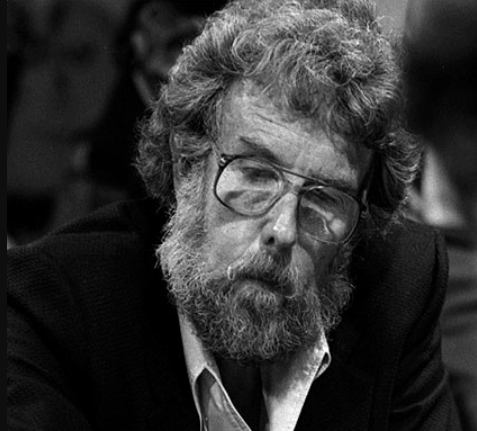
This single chip was all Straus needed to spark an unbelievable turnaround. By the end of the second day, he had a stack of 70,000, and by the third day, he was the chipleader with over 340,000 chips. At the final table, Straus methodically eliminated all his opponents, including Doyle Brunson, who finished fourth.
In the heads-up, he faced a former kindergarten teacher, Dewey Tomko, but Tomko could not find a way to stop Straus. In the final hand, both players went all-in before the flop, with Jack Straus holding A h T s against Dewey Tomko’s A d 4 d.
After the flop 7 d 5 s 4 s, it seemed Tomko might turn things around. After the turn Q c, Straus had only three outs. Yet the river T c completed the greatest comeback ever, earning Jack Straus the world championship title and a record $520,000.
More from WSOP History
The History of WSOP: 1981 –Stu Ungar Reaches the Top Once Again
The History of WSOP: 1980 – The Rise of Stu 'The Kid' Ungar
The History of WSOP: 1979 – A Milestone Triumph for an Amateur and the Birth of the Hall of Fame
The History of WSOP: 1978 – The End of the 'Winner Takes All' Era
The History of WSOP: 1977 – The Miracle of 10-2 Repeats Itself
The History of WSOP: 1976 – Texas Dolly's First Triumph and the Birth of the Legendary Hand 10-2
The History of WSOP: 1974 – Johnny Moss's Return to the Throne and the Birth of Iconic Bracelets
The History of WSOP: 1973 – Puggy Pearson's Triumph and the Dawn of the Television Era
The History of WSOP: 1972 – Amarillo Slim's Controversial Win
The History of WSOP: 1971 – The First Freezeout Tournaments
The History of WSOP: 1970 - The First World Champion Elected by Vote
Sources: WSOP, Wikipedia, w50p, UNLV