

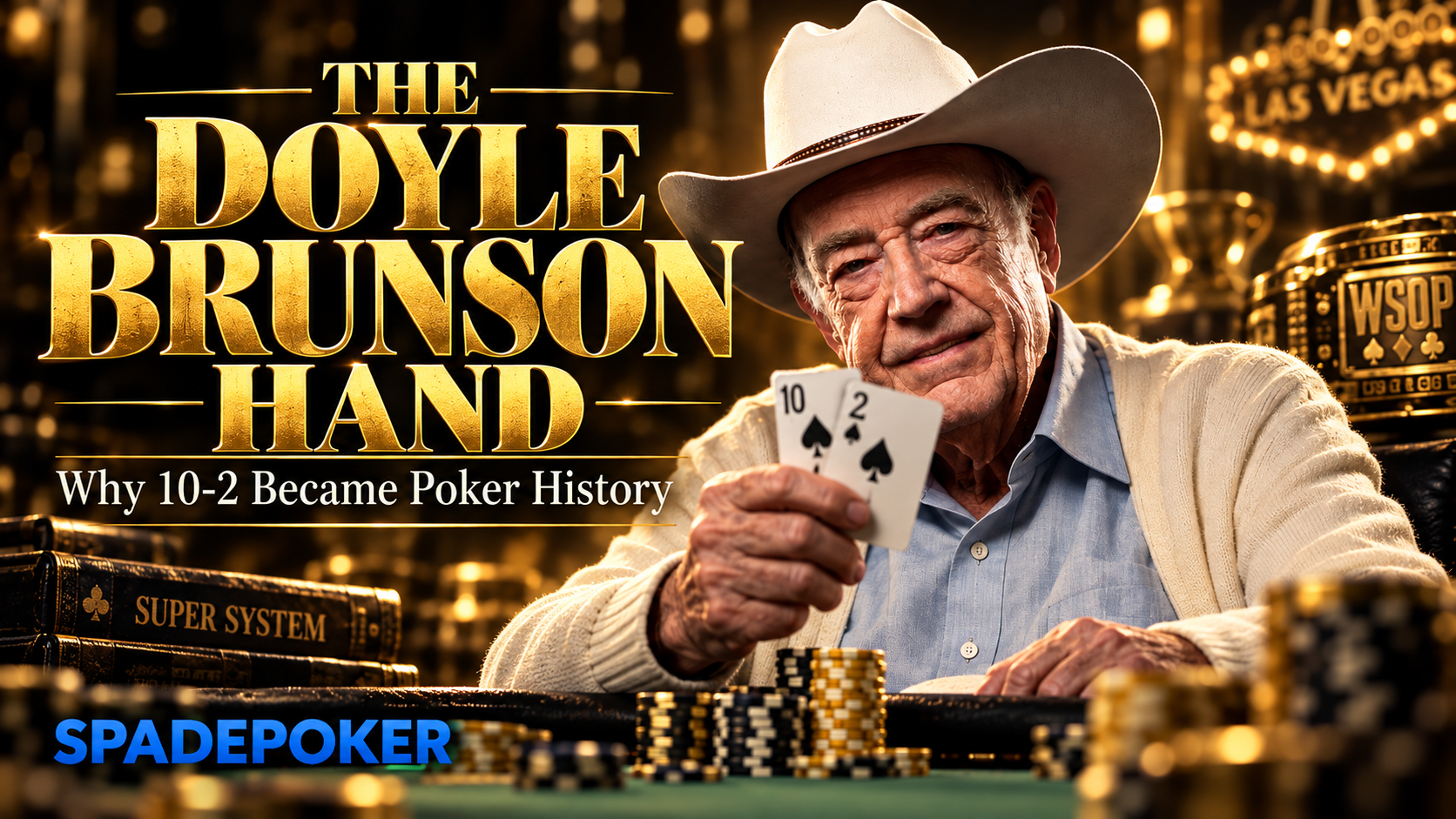
Ten-deuce is not supposed to become one of the most famous hands in poker.
It is weak, awkward and rarely worth celebrating.
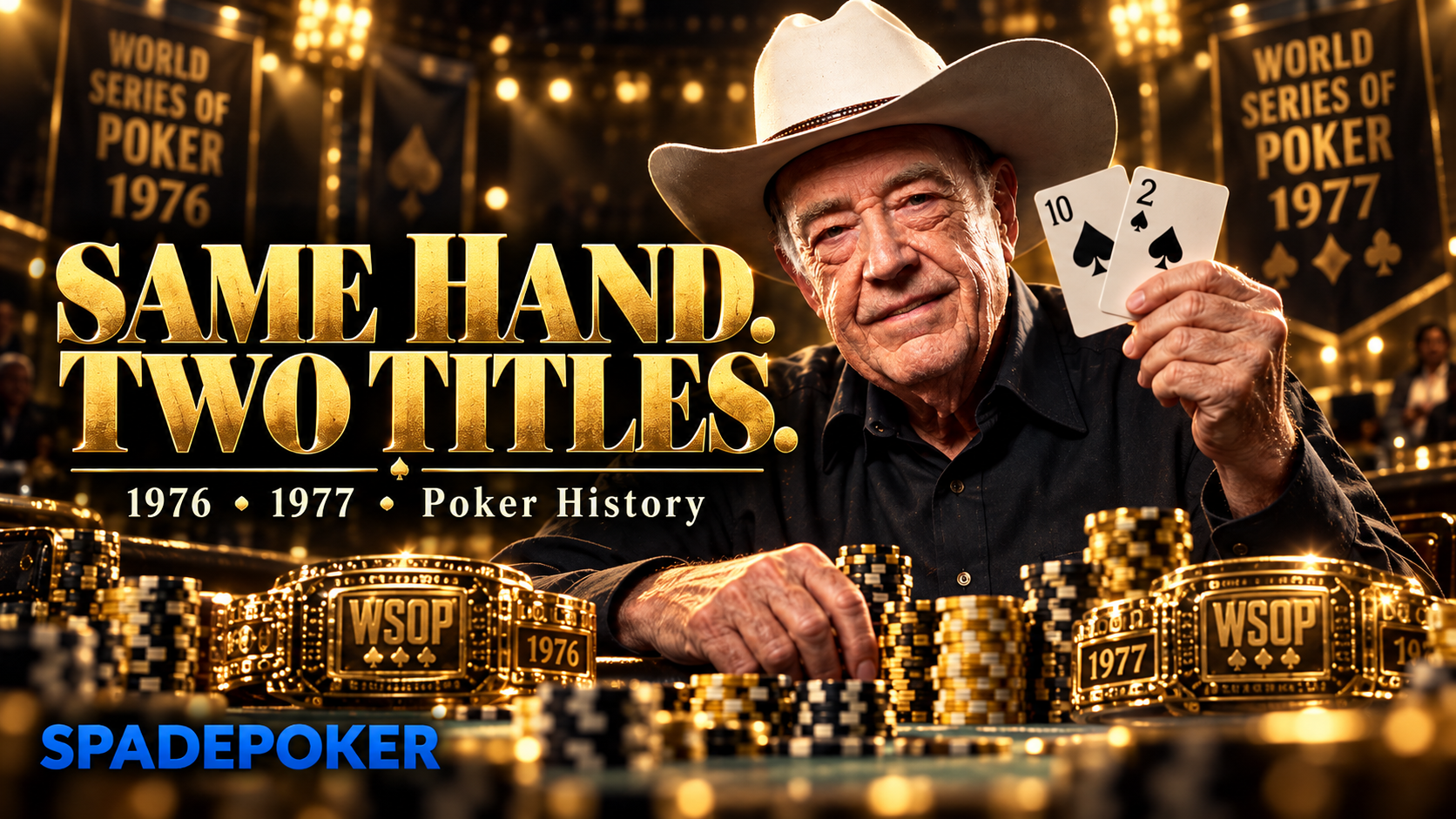
Yet 10-2 became permanently connected to Doyle Brunson because the same unlikely starting hand appeared at the end of two consecutive World Series of Poker Main Event victories.
Brunson won the WSOP Main Event in 1976.
Then he won it again in 1977.
Both times, the final hand ended with Brunson holding 10-2.
That extraordinary coincidence turned a poor starting hand into poker history.
Why Is 10-2 Called the Doyle Brunson Hand?
Ten-deuce is called the Doyle Brunson hand because Doyle Brunson won the final hand of both the 1976 and 1977 WSOP Main Events holding 10-2.
The official WSOP record identifies Brunson’s 1976 final hand as 10♠ 2♠ against Jesse Alto’s A♠ J♦.
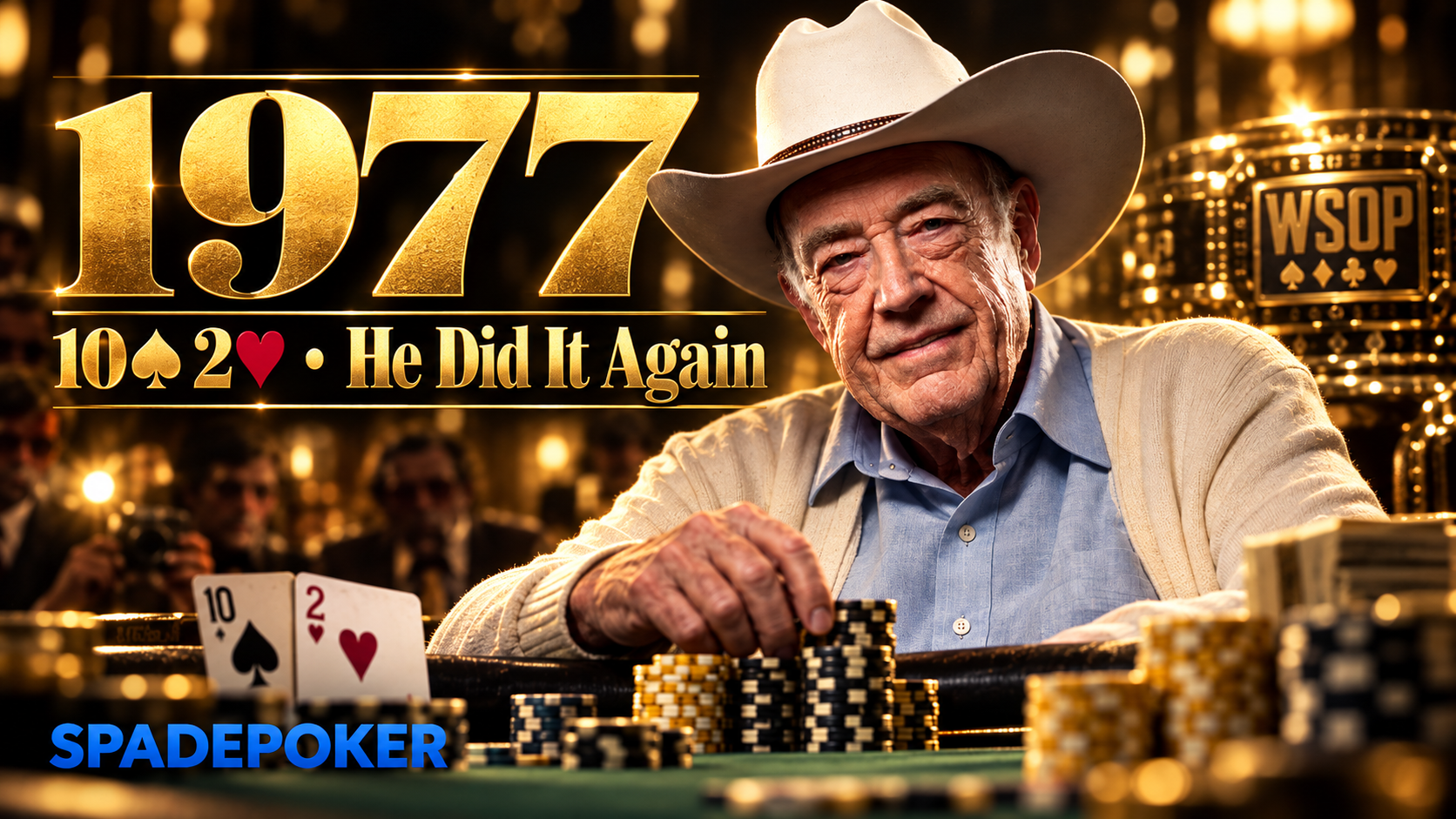
One year later, Brunson again held 10-2 in the final hand, this time 10♠ 2♥ against Gary “Bones” Berland’s 8♥ 5♣.
Winning one world championship with ten-deuce would already have been memorable.
Doing it again one year later made the hand impossible to forget.

Is 10-2 a Good Poker Hand?
No.
In Texas Hold’em, 10-2 is generally considered a weak starting hand.
The cards are far apart, making strong straights difficult to build.
When they are offsuit, they also lose much of their flush potential.
Even when suited, the hand can easily make a weak pair that is dominated by stronger tens.
That weakness is exactly why the Doyle Brunson story became so powerful.
If Brunson had won both Main Events with pocket aces, the coincidence would still be interesting.
But winning them with 10-2 made the story much stranger.
The 1976 WSOP Main Event
Doyle Brunson entered the 1976 WSOP Main Event as one of the most respected professional gamblers in the United States.
The $10,000 championship was still a tiny event compared with the modern WSOP, drawing only 22 players.
Brunson eventually reached heads-up play against Jesse Alto.
The final hand began with Brunson holding 10♠ 2♠.
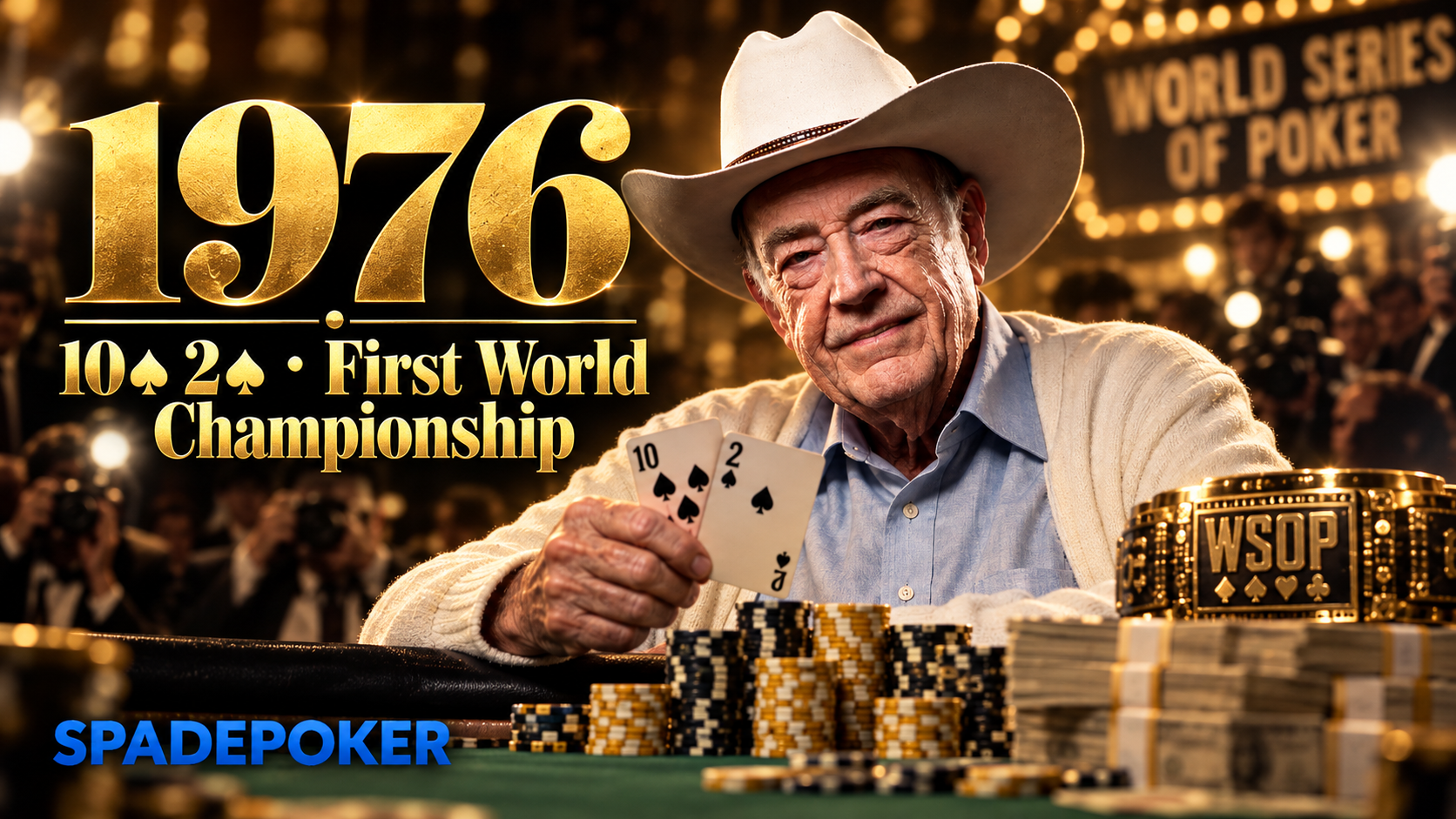
Alto held A♠ J♦.
Brunson’s starting hand was clearly weaker.
But poker is not decided before the flop.
Brunson improved enough by the river to win the pot, the $220,000 first prize and his first WSOP Main Event championship.
At that point, ten-deuce was simply the hand he happened to hold when he became world champion.
The real legend began one year later.
The 1977 WSOP Main Event
Brunson returned in 1977 and once again reached the final stage of the Main Event.
This time, the field had grown to 34 players.
His final opponent was Gary “Bones” Berland.
Then came the coincidence.
Brunson looked down at 10♠ 2♥.
Ten-deuce again.
Berland held 8♥ 5♣.
Brunson won the final hand and collected $340,000.
He had now won consecutive WSOP Main Events with the same starting-card combination.
From that moment, 10-2 no longer belonged only to the starting-hand chart.
It belonged to Doyle Brunson.
How Rare Were Back-to-Back Main Event Wins?
The hand became famous because the achievement behind it was already extraordinary.
Brunson won the world championship in consecutive years.
Back-to-back WSOP Main Event victories are extremely rare and place Brunson in one of poker’s most exclusive historical groups.
The fact that both championships ended with 10-2 added a layer of mythology that no normal tournament statistic could create.
There was now a story simple enough for every poker player to remember.
1976.
1977.
10-2 both times.
How Did the Name “Doyle Brunson Hand” Start?
Over time, poker players began referring to ten-deuce simply as “the Doyle Brunson.”
The nickname was natural.
Unlike many named poker hands that come from jokes, rhymes or cultural references, this one came directly from a historic result.
The official WSOP still refers to 10-2 as the cards made famous by Brunson’s back-to-back Main Event championships.
Nearly five decades later, players around the world still recognize the reference.
Did Doyle Brunson Actually Like Playing 10-2?
The fact that 10-2 became his signature hand does not mean Brunson considered it strategically strong.
The hand became famous because of circumstance and history, not because it appeared in Super/System as a premium starting hand.
Brunson understood better than almost anyone that starting-hand strength depends on position, stack depth, opponent tendencies and the action in front of you.
Ten-deuce remained ten-deuce.
The nickname did not turn it into pocket aces.
Did Brunson Play 10-2 More Often Because of the Nickname?
Later in his career, the hand inevitably became part of Brunson’s table image.
Televised poker made the connection even stronger.
Whenever Brunson was dealt 10-2, commentators and viewers immediately recognized the significance.
That created situations where playing the hand could become entertaining or psychologically interesting even if it was not normally part of a standard range.
Other professionals also began playing or showing 10-2 specifically because of its connection to Brunson.
The hand became part strategy, part inside joke and part tribute.
10-2 on Televised Poker
The poker boom helped carry the Doyle Brunson hand into another generation.
Television programs such as The Big Game repeatedly highlighted ten-deuce whenever it appeared.
PokerStars later compiled memorable 10-2 hands involving Brunson and other famous professionals, including Daniel Negreanu, Jason Mercier, Phil Laak and Joe Hachem.
That is important because the nickname survived far beyond the original WSOP story.
Players who were not alive in 1976 still learned what “the Doyle Brunson” meant through televised and online poker culture.

Why Poker Players Love Named Hands
Poker has always created nicknames for memorable starting hands.
Pocket aces are called bullets.
Pocket eights are sometimes called snowmen.
Ace-king has accumulated several names over the years.
But the Doyle Brunson hand is different.
Its name is directly connected to two of the most important championship hands in poker history.
It is not simply a joke.
It is a historical reference.
Why 10-2 Became Bigger Than the Actual Hands
Most tournament hands disappear from collective memory.
Even important ones.
Players remember who won the tournament, but not necessarily the exact hole cards from the final hand.
Brunson’s 10-2 survived because the story was almost too perfect.
The same player.
The same tournament.
Two consecutive years.
The same unlikely starting hand.
That kind of symmetry creates mythology.
Doyle Brunson’s 1980 Main Event Run
Brunson nearly added another Main Event title only a few years later.
He finished second in the 1980 WSOP Main Event.
That result reinforced the idea that his back-to-back victories were not simply the product of tiny fields or short-term luck.
Brunson remained one of the strongest Main Event players of his era.
He later added additional deep runs, including fourth place in 1982 and third place in 1983.
His broader Main Event record gave even more weight to the 10-2 story.
Was Doyle Brunson Lucky to Win With 10-2?
Of course luck played a role in the final hands.
That is true of every individual poker hand.
But reducing two Main Event championships to one starting hand misses the point.
Brunson first had to survive the entire tournament.
He had to reach heads-up play.
He had to make thousands of decisions before those final cards were dealt.
The 10-2 hands became symbols of the victories, not complete explanations for them.
Should You Play 10-2 Because Doyle Brunson Won With It?
No.
The historical significance of the hand does not make it strategically profitable in ordinary situations.
Recreational players sometimes overvalue famous hands because of stories associated with them.
That is dangerous.
Ten-deuce remains a weak starting hand in most situations.
Playing it simply because Brunson once won two championships with it is not a sound strategy.
The lesson is not “play 10-2.”
The lesson is that poker history can turn even the weakest-looking cards into something unforgettable.
Why the Doyle Brunson Hand Still Matters
Doyle Brunson died in 2023, but ten-deuce remains one of the simplest ways poker remembers him.
A player can sit down in a small local tournament today, look at 10-2 and immediately think of Texas Dolly.
Few poker players have ever achieved that kind of cultural permanence.
Brunson won 10 WSOP bracelets.
He wrote Super/System.
He played high-stakes cash games for decades.
He became known as the Godfather of Poker.
But two ordinary playing cards became another permanent part of his legacy.

10-2 as a Tribute to Doyle Brunson
After Brunson’s death, the meaning of the hand became even more symbolic.
Showing down 10-2 is no longer only a reference to two tournaments from the 1970s.
For many poker players, it is also a small tribute to one of the game’s most influential figures.
That is how poker culture works.
History survives through stories, nicknames and moments players continue repeating at the table.
The Doyle Brunson hand contains all three.
Final Verdict: How 10-2 Became Poker History
Ten-deuce should have been forgettable.
Instead, Doyle Brunson made it immortal.
He held 10-2 when he won the 1976 WSOP Main Event.
He held 10-2 again when he won the 1977 WSOP Main Event.
Those back-to-back championships transformed an ordinary weak starting hand into one of poker’s most recognizable symbols.
That is why poker players still call 10-2 the Doyle Brunson hand.
Not because it is a good hand.
Because Doyle Brunson made it legendary.
Doyle Brunson Hand FAQ
What is the Doyle Brunson hand?
The Doyle Brunson hand is 10-2 in Texas Hold’em.
Why is 10-2 called the Doyle Brunson hand?
Because Brunson won the final hand of both the 1976 and 1977 WSOP Main Events holding 10-2.
What did Doyle Brunson hold in the 1976 WSOP Main Event final hand?
Brunson held 10♠ 2♠ against Jesse Alto’s A♠ J♦.
What did Doyle Brunson hold in the 1977 WSOP Main Event final hand?
Brunson held 10♠ 2♥ against Gary Berland’s 8♥ 5♣.
Did Doyle Brunson win the Main Event twice?
Yes. He won consecutive WSOP Main Event titles in 1976 and 1977.
Is 10-2 a good starting hand?
No. Ten-deuce is generally considered a weak Texas Hold’em starting hand and should not be played simply because of its historical nickname.
Did Doyle Brunson intentionally play 10-2 because it was his hand?
Later in his career, the hand became part of his public poker identity and appeared in televised games, but its fame came from the two Main Event final hands rather than from being a strategically strong starting hand.
Is 10-2 still called the Doyle Brunson today?
Yes. The nickname remains widely recognized in poker and continues to be used decades after Brunson’s back-to-back championships.

