


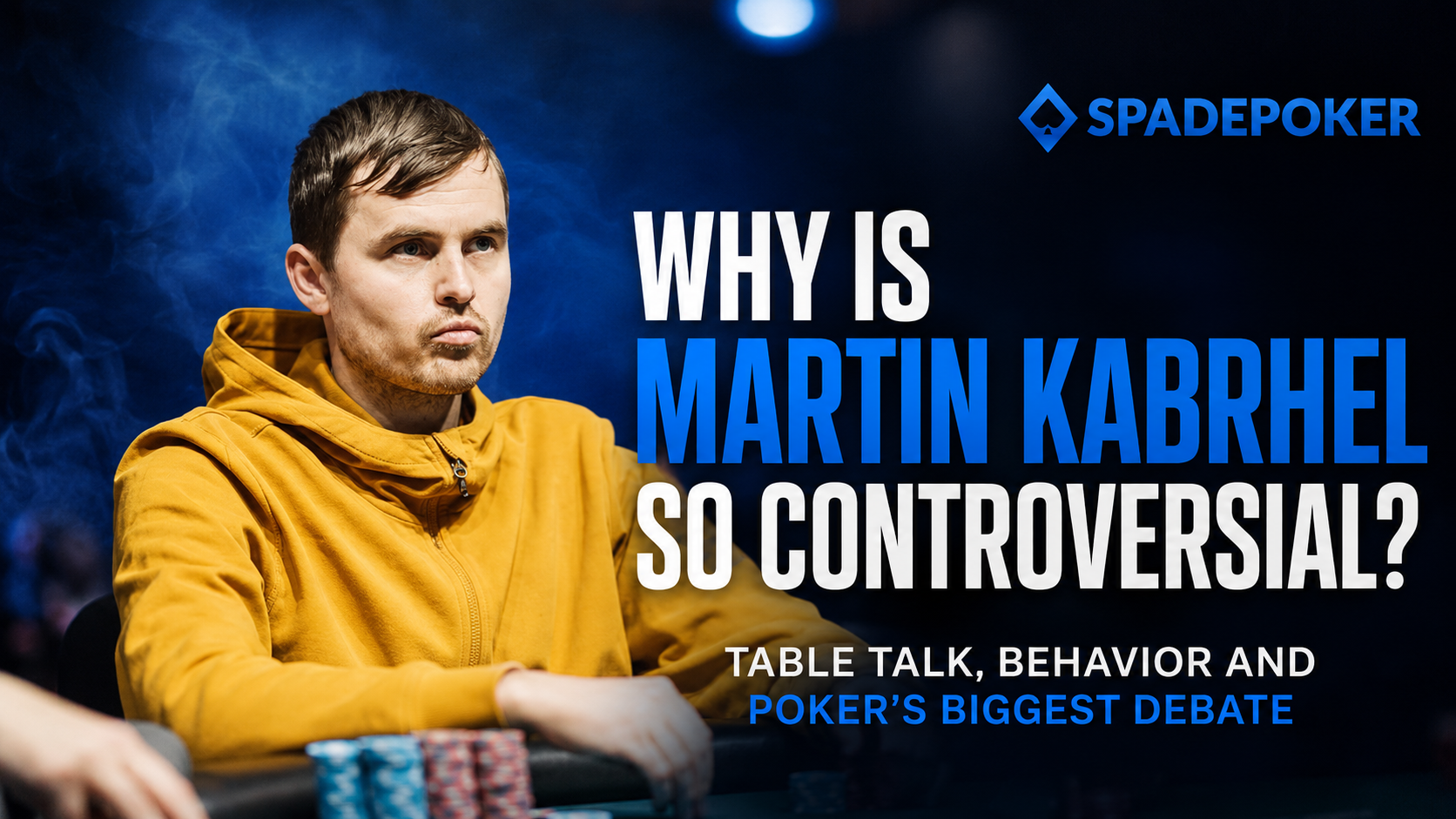
The Czech high roller has five WSOP bracelets, more than $19 million in recorded live tournament earnings and a résumé that places him at the top of the Czech all-time money list. But when poker fans search his name, they are often not looking only for results.
They want to know why Martin Kabrhel talks so much at the table, why players call the clock on him, why his “not like that” moments became memes, why some professionals enjoy playing against him and why others believe he pushes live poker too far.
The answer is not one isolated controversy. It is the cumulative effect of a style that is deliberately visible, unusually verbal and often disruptive to the rhythm of a tournament table.
For supporters, Kabrhel is one of poker’s few genuine characters: unpredictable, entertaining and capable of giving high-stakes poker a sense of personality. For critics, he is a player whose constant talking, prolonged decisions and behavior around opponents can cross the line from gamesmanship into distraction.
That divide has made Martin Kabrhel one of modern poker’s most polarizing figures. For the full career overview, including his age, WSOP bracelets, net worth and background, read our complete Martin Kabrhel profile.
Why Do Poker Players Find Martin Kabrhel Controversial?
Kabrhel’s reputation comes mainly from four areas:
- constant speech play during hands,
- repeated long tanks and slow decision-making,
- verbal pressure on opponents,
- an unpredictable table persona that can dominate an entire table.
None of those things automatically make a player a rules violator. Poker has always included table talk, bluffing, intimidation, theatrics and psychological pressure.
The debate begins when those elements affect the pace of play, distract opponents during major decisions or create a table environment that other players consider unfairly uncomfortable.
Kabrhel’s critics often argue that his behavior turns ordinary tournament spots into prolonged performances. He may ask questions, repeat phrases, react loudly, stare at opponents, comment on board runouts or keep talking after other players would normally allow silence.
Supporters see exactly the same behavior as part of the product.
They argue that poker needs personalities, especially in an era where many elite players are quiet, technical and difficult for casual audiences to distinguish. Kabrhel creates clips, reactions and memorable moments. Whether people love him or dislike him, they know who he is.
PokerNews described him during the 2025 WSOP as the player who commanded more attention than anyone else at the series, partly due to results but largely because of his antics. The same article also noted that some fans and players consider his villain role good for poker because it makes televised action more entertaining.
Martin Kabrhel’s Table Talk: Strategy, Entertainment or Distraction?
Table talk is legal in poker within limits. Players can speak, ask questions and react during hands as long as they do not reveal live cards, violate tournament rules or improperly influence action.
But legality does not settle the etiquette debate.
Kabrhel’s approach is more intense than standard speech play. He does not simply make the occasional comment or joke. He can turn a routine hand into a continuous verbal exchange, especially in high-pressure situations where opponents are trying to process betting sizes, ranges and tournament implications.
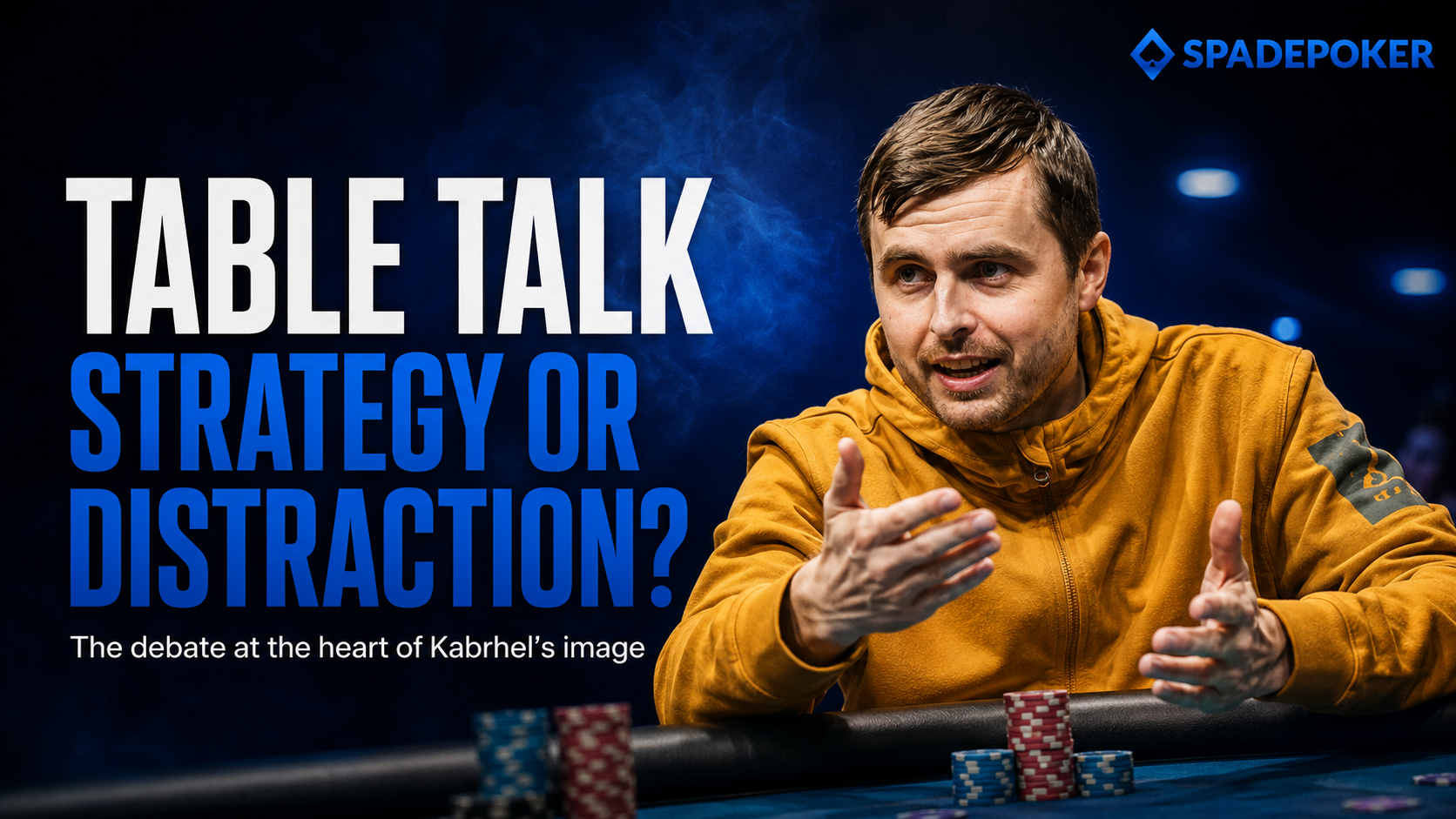
That can serve a strategic purpose.
Poker decisions are rarely made in a vacuum. A player who creates extra noise, uncertainty or emotional tension can make difficult choices feel even harder. Kabrhel’s style may encourage opponents to rush, react emotionally or lose focus. It can also make them more likely to call the clock, argue or become distracted by the atmosphere rather than the cards.
At the same time, many professionals believe that this style creates too much friction. The concern is not that Kabrhel talks. The concern is that he sometimes makes it difficult for others to think, slows the game and turns attention toward himself rather than the hand.
That is why the debate around Kabrhel is not really about whether table talk belongs in poker. It is about how much table talk is too much. The strategic side of his speech play, timing and table image is explored in more detail in our guide to Martin Kabrhel’s poker style.
Why Is the Clock Called on Martin Kabrhel So Often?
One of the most common complaints about Kabrhel is his use of time.
During the 2025 WSOP, PokerNews reported that opponents were calling the clock on him frequently, including in situations where he had not faced a major bet. The report described a table environment where Kabrhel’s lengthy pauses had become such a recurring issue that some players called the clock almost immediately.
Slow play is one of poker’s most sensitive live-tournament issues because it affects everyone at the table.
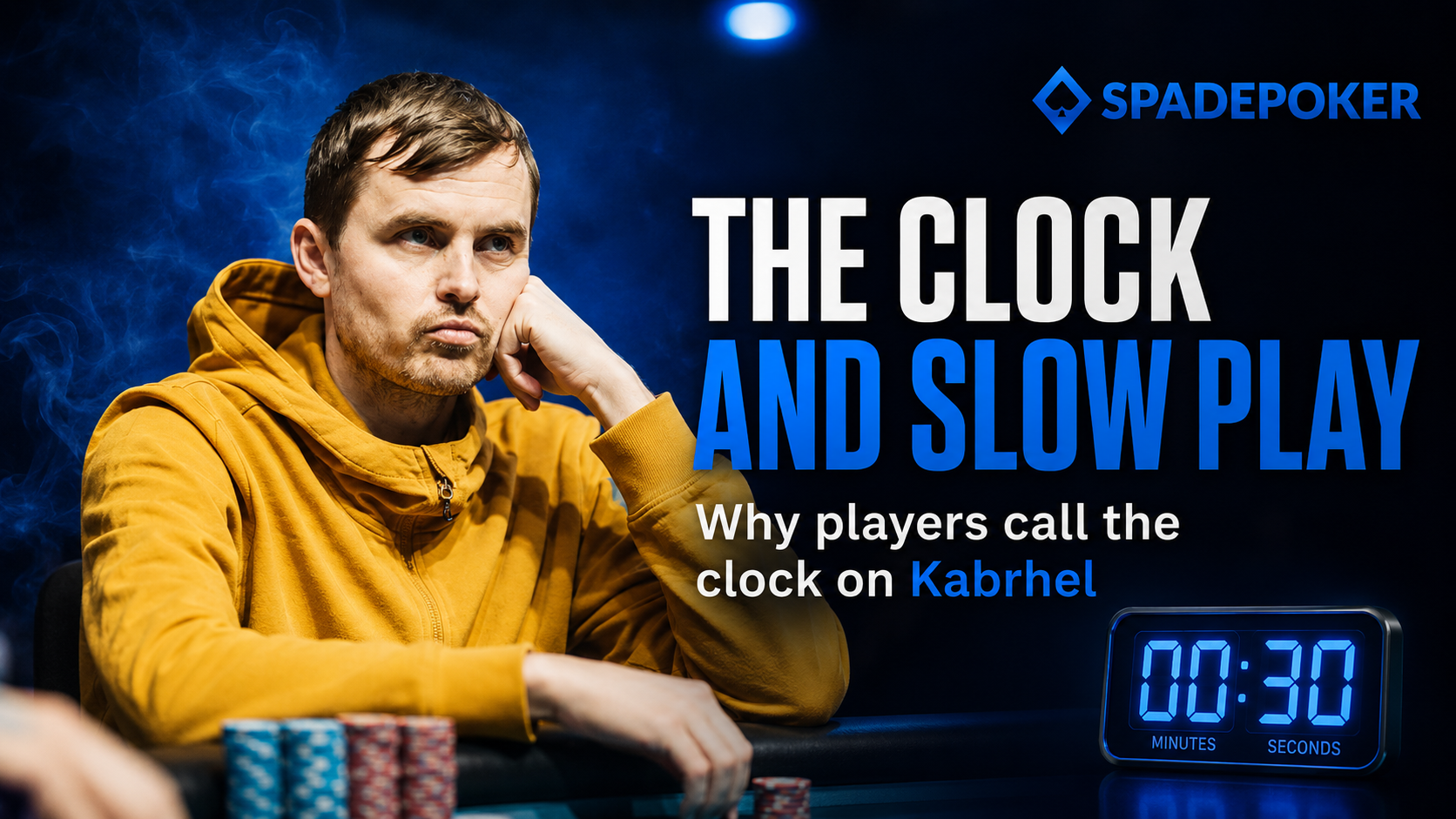
A long decision in a major pot is understandable. High-stakes professionals are expected to think carefully when hundreds of thousands of dollars or major tournament equity is at stake. The problem comes when long tanks happen repeatedly in routine spots or become part of a player’s general table presence.
Kabrhel’s defenders sometimes argue that other players use the clock too quickly against him because they are already frustrated by his reputation. That point is not entirely unreasonable. Once a player becomes known as slow, opponents may be less patient with him than they would be with someone else.
But the opposite is also true: reputation does not appear from nowhere. Repeated clock calls became part of the Kabrhel story because many opponents felt his pace regularly affected the game.
The “Not Like That” Effect
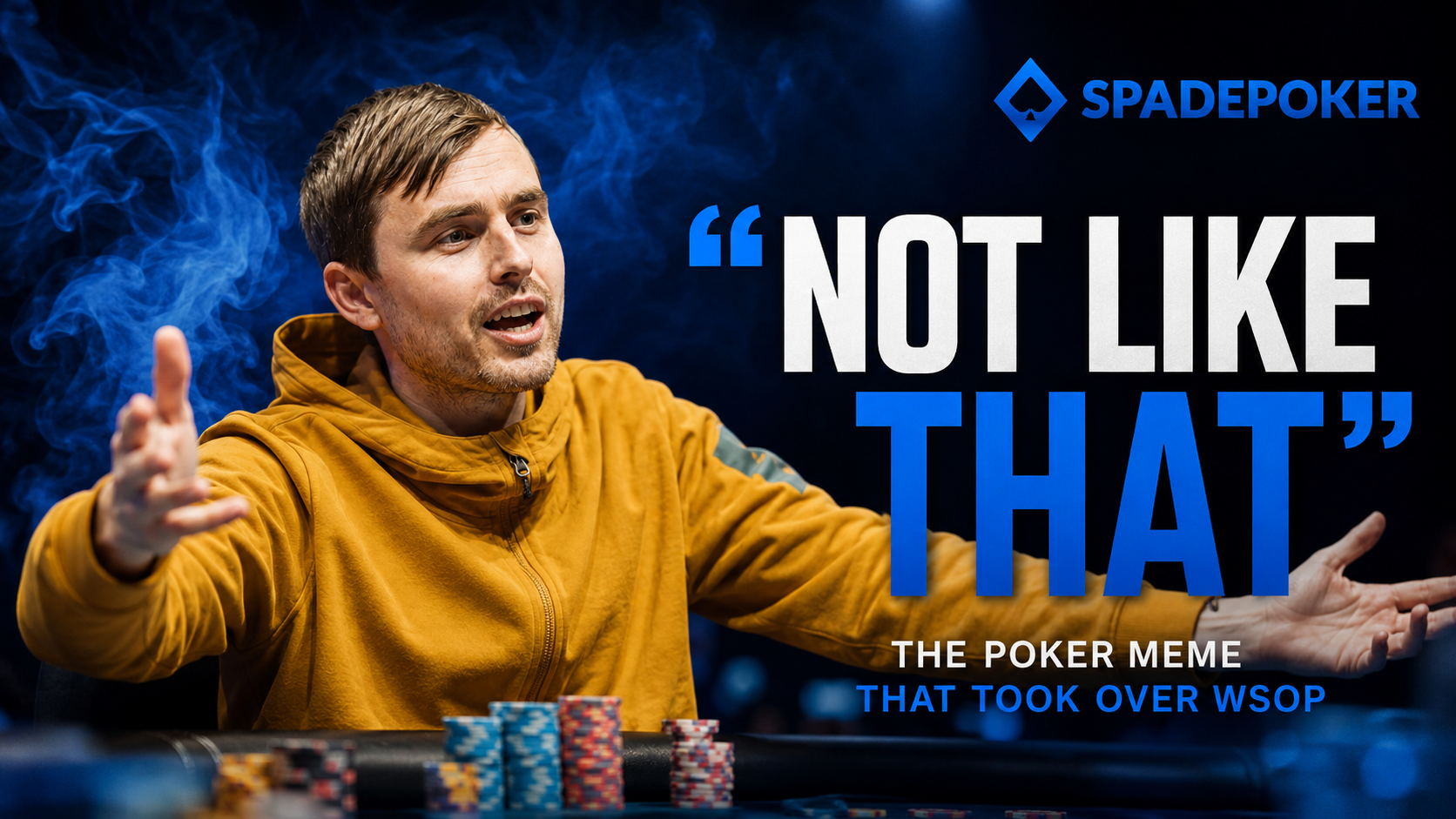
Kabrhel’s catchphrase “not like that” became one of the defining poker memes of the 2025 WSOP.
The phrase was linked with his dramatic reactions to difficult runouts, bad beats and frustrating tournament moments. It became widely shared because it captured the contrast at the heart of his public image: elite player, intense competitor and highly theatrical personality.
For fans, the line was funny because it was recognizably Kabrhel. For critics, it was another example of why playing with him can be exhausting.
But the meme also showed something important about modern poker: attention has value.
Poker is no longer experienced only by the players at the table. Clips spread on social media, streamed hands are replayed, reactions become short-form content and players with recognizable personalities can become more relevant than players with stronger results.
Kabrhel understands that reality better than most.
He may not be universally liked, but he has become instantly identifiable. In a game full of hoodies, headphones and quiet analysis, that alone makes him unusual.
The Poker Villain Role
Poker has always needed villains.
Phil Hellmuth built part of his public identity around emotional reactions and confrontations. Tony G became famous for relentless needling. Mike Matusow, Will Kassouf and others have all shown that a poker player can become a media attraction through personality as much as results.
Kabrhel fits into that tradition, but with a more modern high-stakes version of the role.
He is not playing the villain from a distance. He is usually sitting in the middle of the action, talking, reacting and forcing other people to respond. That makes him more divisive than a player who simply gives a sharp quote after a hand.
Some professionals believe this is positive for poker. Texas Mike publicly said during the 2025 WSOP that he found Kabrhel amusing and that poker needs villains. PokerNews argued that Kabrhel’s presence can make poker more entertaining for casual audiences, even while acknowledging that he frustrates many regular players.
That is the strongest argument in Kabrhel’s favor.
Poker often struggles to make elite competition emotionally accessible. A technically perfect player can be brilliant and still difficult to watch. Kabrhel, by contrast, gives viewers a clear emotional role to react to. People want to see him win, lose, get called, bluff, tank or create chaos.
The question is whether that entertainment value outweighs the cost to the players around him.
When Does Gamesmanship Become Disruption?
This is the real Kabrhel debate.
Poker rewards psychological pressure. A player can represent strength, weakness, confidence, hesitation or confusion. They can talk, stay silent, stare, smile, act disappointed or project certainty. All of that is part of live poker.
But tournaments also need structure.
Players are entitled to a reasonable pace of play. They need room to think through decisions without being overwhelmed by constant noise. Dealers and floor staff need authority to keep hands moving. Event organizers need rules that apply equally, even when a player’s personality generates attention.
The line between gamesmanship and disruption is rarely clean.
A player who talks during a hand may be applying legal pressure. A player who keeps talking after being asked to stop may be crossing into something else. A player who takes time on a huge river decision may be thinking carefully. A player who delays routine preflop folds may be wasting everyone else’s time.
Kabrhel lives in that grey area more than almost anyone else in poker.
That is why he creates such strong reactions. He is not easy to categorize as simply “good for poker” or “bad for poker.” He can be entertaining and frustrating in the same hand. That broader argument about behaviour and competitive boundaries also explains why Kabrhel’s later disputes around poker technology attracted so much attention.
Martin Kabrhel and the RFID Debate
Kabrhel’s presence in poker debates has recently extended beyond table talk and tanking.
In June 2026, a public dispute involving Kabrhel and Sam Soverel revived broader discussion about RFID cards, broadcasting, competitive integrity and whether players should be able to ask for certain table conditions. The debate was not only about one player’s request. It reflected a deeper disagreement about how transparent televised poker should be and how much influence players should have over production choices.
The argument also showed that Kabrhel’s reputation changes how poker fans interpret his actions. We covered that debate in detail in our report on Martin Kabrhel’s clash with Sam Soverel over RFID cards.

When another player questions a tournament setup, it may be viewed as a normal preference or competitive concern. When Kabrhel does it, many viewers immediately connect it with earlier controversies, table behavior or suspicion around his motives.
That is the burden of being a polarizing figure. Even ordinary decisions can become part of a larger narrative.
The important distinction is that the RFID debate should be treated separately from the 2023 card-marking allegations. One concerns public disagreement over poker technology and table conditions. The other involved serious accusations that Kabrhel denied. They should not be blurred together simply because both are controversial.
What Happened During the 2023 Card-Marking Allegations?
The most serious controversy connected to Martin Kabrhel emerged during the 2023 WSOP $250.000 Super High Roller.
Several high-profile poker professionals publicly accused Kabrhel of marking cards or behaving suspiciously with the deck during the event. The WSOP stated at the time that it was aware of the allegations and was investigating them.
Kabrhel denied cheating.
In 2024, he publicly responded through legal representatives, stating that he had not marked cards and describing the accusations as false and malicious. PokerOrg reported that Kabrhel threatened legal action against Andrew Robl and others connected to the allegations.
The wording here matters.
Public allegations and an investigation do not amount to a confirmed finding of wrongdoing. Kabrhel denied wrongdoing, and the public reporting cited above did not establish a publicly confirmed conclusion that he had cheated.
This article is focused on why Kabrhel is controversial as a poker personality. The full timeline of the card-marking allegations, the WSOP response, Kabrhel’s denial and the legal fallout deserves a separate, dedicated article so that the issue can be handled with the necessary precision.
The full factual timeline is covered separately in Martin Kabrhel Cheating Allegations Explained.
Why Some Players Have Changed Their View of Kabrhel
One of the more interesting developments around Kabrhel is that some players who were once highly critical of him have become more willing to separate his behavior from the most serious suspicions surrounding him.
In the recent RFID discussion covered by SpadePoker, Chance Kornuth said his view had changed over time because earlier fears about possible cheating had faded, and he increasingly saw Kabrhel as a player trying to get inside opponents’ heads. Alex Foxen also suggested that Kabrhel’s presence can distract other players and therefore create value for those who remain focused.
That does not mean Kabrhel suddenly became universally popular.
Many players still dislike his pace, table talk and confrontational approach. But it shows that the poker community’s view is more complicated than a simple villain narrative. Some players may dislike playing with him while still believing he adds something valuable to the game.
That distinction will matter as Kabrhel continues to appear at major WSOP and high roller events.
Is Martin Kabrhel Good for Poker?
There is no objective answer, but there are two strong arguments.
The case against him is easy to understand. Poker should protect players from unreasonable delays, intimidation that crosses rules boundaries and behavior that damages the experience for everyone else at the table. A tournament cannot function well if one player repeatedly controls the pace and emotional climate of every hand.
The case for him is equally clear. Poker needs memorable personalities. It needs players who generate stories, clips and emotion. It needs villains, heroes, rivalries and players who make people care about the outcome.
Kabrhel delivers all of that.
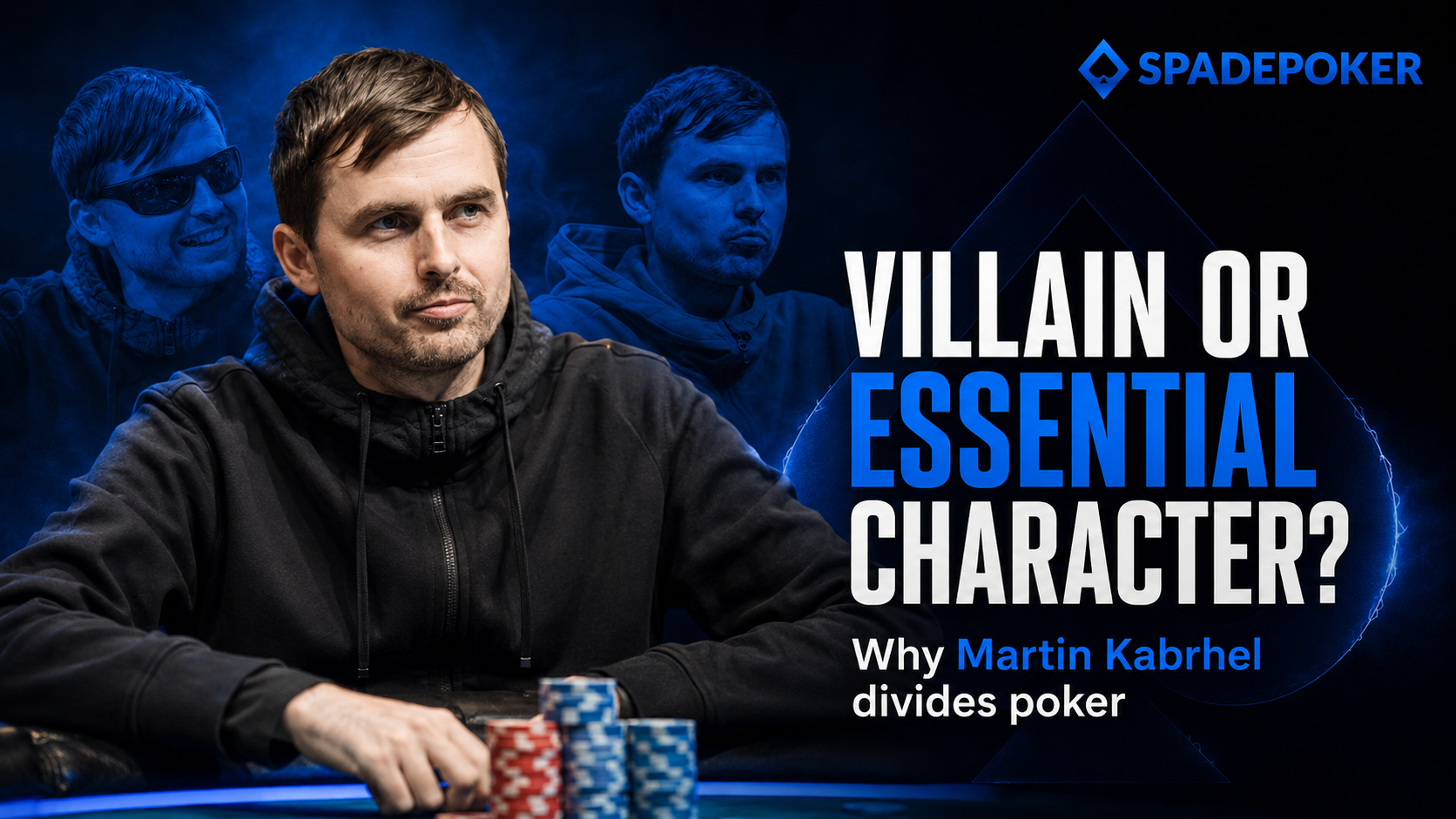
He is not controversial because he is irrelevant. He is controversial because he matters. His success guarantees that he appears deep in major events, and his personality guarantees that people react when he gets there.
The best solution is not to remove personality from poker. It is to enforce clear standards consistently. Strong table talk can remain part of the game. Excessive delay, disrespectful conduct or behavior that interferes with play should be handled by dealers and tournament staff without hesitation.
That balance would protect the game while preserving what makes players like Kabrhel compelling to watch.
Final Verdict: Why Martin Kabrhel Divides Poker
Martin Kabrhel is controversial because he refuses to be invisible.
His poker results give him the right to be taken seriously: five WSOP bracelets, six Circuit rings and more than $19 million in recorded live tournament earnings. His titles, biggest cashes and career milestones are covered in detail in our guide to Martin Kabrhel’s WSOP bracelets and biggest wins. But his table behavior ensures that his career will always be discussed in terms larger than trophies and payouts.
To some, he is an exhausting opponent who slows games down and pushes too hard against the unwritten rules of poker etiquette.
To others, he is a rare entertainer who gives high-stakes poker personality, tension and a reason for casual viewers to care.
Both views contain some truth.
Kabrhel’s future place in poker will likely depend on whether he can keep the entertainment while reducing the parts of his behavior that make opponents feel the game is no longer being played on equal terms.
Martin Kabrhel Controversy FAQ
Why is Martin Kabrhel controversial?
Martin Kabrhel is controversial because of his frequent table talk, long tanks, verbal pressure on opponents and a poker style that many players consider disruptive. Supporters view those same traits as entertaining gamesmanship.
Does Martin Kabrhel talk too much at the poker table?
Many players believe he does. Kabrhel is known for constant speech play and extended verbal exchanges during hands, while supporters argue that table talk is a legitimate part of live poker.
Why do players call the clock on Martin Kabrhel?
Players often call the clock because they believe he takes too long to act, including in routine spots. During the 2025 WSOP, PokerNews reported frequent clock calls against Kabrhel.
What does “not like that” mean in poker?
“Not like that” became a meme associated with Kabrhel’s dramatic reactions to difficult runouts and tournament moments, particularly during the 2025 WSOP.
Was Martin Kabrhel proven to have cheated?
Kabrhel faced public card-marking allegations during the 2023 WSOP $250.000 Super High Roller. He denied cheating, and the WSOP said at the time that it was investigating. Public reporting did not establish a publicly confirmed finding that he had cheated.
Is Martin Kabrhel good for poker?
Opinions are divided. Critics believe his behavior slows tournaments and distracts opponents, while supporters believe he makes poker more entertaining and gives fans a memorable villain figure.

