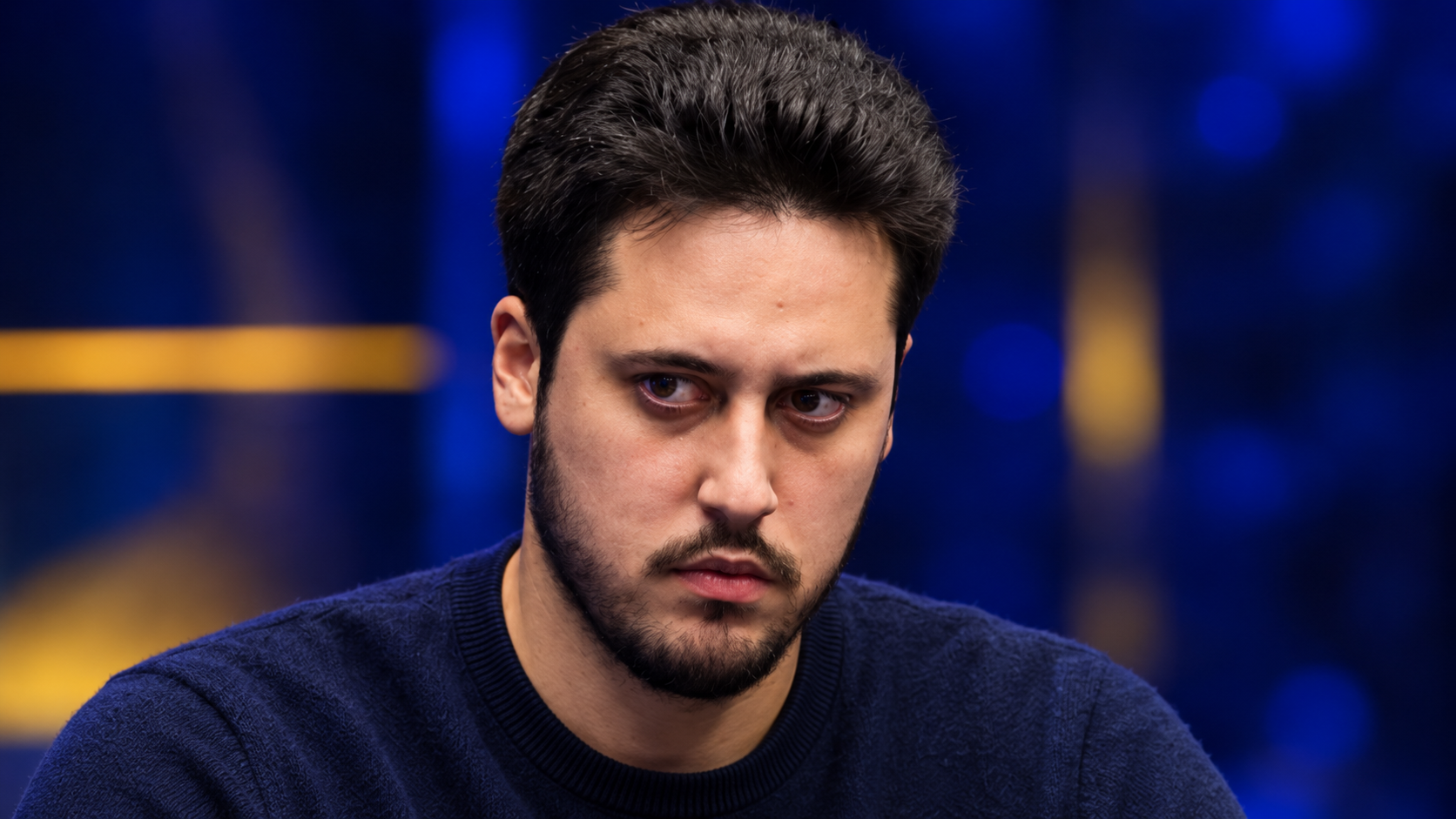
Adrian Mateos
Adrian Mateos is a Spanish professional poker player, six-time World Series of Poker bracelet winner and one of the most accomplished tournament competitors
By August 2026, Mateos had accumulated 67.813.885 $ in recorded live tournament cashes. That total placed him fifth on poker’s all-time money list and first among Spanish players. of his generation.
He achieved those numbers while repeatedly setting age records.
Mateos won the 2013 WSOP Europe Main Event at 19, became the first Spanish champion in European Poker Tour history at 20 and collected his third WSOP bracelet at 22. In 2026, he became the youngest player ever to reach six bracelets, completing the achievement at age 31.
His greatest financial success arrived during the same extraordinary period.
In May 2026, Mateos won the 200.000 $ Triton Invitational in Montenegro for 6.370.000 $, the largest live cash of his career. Less than one month later, he captured the 250.000 $ WSOP Super High Roller for 4.334.411 $ and his sixth bracelet.
Mateos has also won an EPT Grand Final Main Event, three Triton Poker titles, the partypoker MILLIONS World Bahamas Main Event and numerous elite online tournaments under the screen name “Amadi_017.”
His résumé combines large-field success, heads-up ability, online excellence and sustained dominance in super high rollers.
No Spanish player has achieved more.
Early Life in San Martín de la Vega
Adrian Mateos Díaz was born on July 1, 1994, in San Martín de la Vega, near Madrid, Spain.
Competitive games were part of his childhood before poker became a serious interest.
Mateos briefly attended a chess school when he was approximately eight years old. He did not continue with organised chess for long, but the game introduced him to planning, pattern recognition and the importance of thinking beyond the immediate move.
He also played traditional Spanish card games with his parents and grandparents.
One of those games was Mus, a partnership card game that combines probabilities, bluffing and communication. The family played for small stakes, and Mateos has recalled that he was usually successful enough to earn spending money.
Those experiences did not automatically make him a poker professional. They did, however, create a natural familiarity with incomplete information and strategic competition.
When Mateos discovered online poker as a teenager, the game offered a more complex version of the same challenge.
He quickly became interested in improvement rather than casual play.
Discovering Online Poker
Mateos began taking poker seriously during the period when Spain’s online community was producing a new generation of technically ambitious players.
Internet poker provided an ideal learning environment.
A live player might see only 25 or 30 hands in an hour. An online grinder could play several tables simultaneously, review complete hand histories and encounter the same strategic situations thousands of times.
Mateos used the screen name “Amadi_017” on PokerStars. The nickname combined elements of his name and became familiar throughout the European online tournament community.
His early development was not based only on natural talent.
Mateos studied, discussed hands and built the discipline required to play long tournament sessions. He learned how position changes the value of a hand, how stack depth affects aggression and why a decision can be correct even when the immediate result is negative.
These lessons became the foundation of his later live career.
Online poker also taught him to act decisively. The pace left little room for theatrical hesitation, and that efficiency remained visible when he moved into major televised tournaments.
The Rise of “Amadi_017”
Mateos developed into an elite online tournament player under the name “Amadi_017.”
Over time, he won five Spring Championship of Online Poker titles and four World Championship of Online Poker titles on PokerStars.
His championship results covered different buy-ins, structures and field sizes.
They included a 2.100 $ six-handed SCOOP victory in 2017, a WCOOP turbo title in 2018, a progressive-knockout WCOOP title in 2019 and several major wins during the online-heavy years of 2020 and 2021.
One of his largest PokerStars victories came in the 25.000 $ WCOOP Super High Roller Sunday Slam in 2020, where he earned more than 543.000 $.
Mateos also became a successful competitor in the GGMillion$, GGPoker’s weekly high-stakes tournament.
Online results are separate from the 67.813.885 $ figure used for his recorded live earnings. This distinction matters because Mateos has generated millions of dollars in internet cashes across several platforms.
His complete tournament career is therefore larger than any one live database can show.
First Live Tournament Results
Mateos recorded his earliest live tournament cashes in Madrid during 2012.
He was only 18 and still largely unknown outside the Spanish poker community.
The first decisive breakthrough came in January 2013, when he entered the Estrellas Poker Tour Madrid Main Event.
The tournament attracted 632 entries and created a prize pool of 606.720€.
Mateos won the event for 103.053€.
The title provided more than a bankroll increase. It demonstrated that the skills he had developed online could survive the slower and more physical environment of live poker.
Live tournaments demand patience across long days. Players must maintain concentration, observe opponents and adapt when only a small number of hands provide useful information.
Mateos showed an unusual level of comfort immediately.
The Estrellas victory announced him within Spain. His next major result introduced him to the entire poker world.
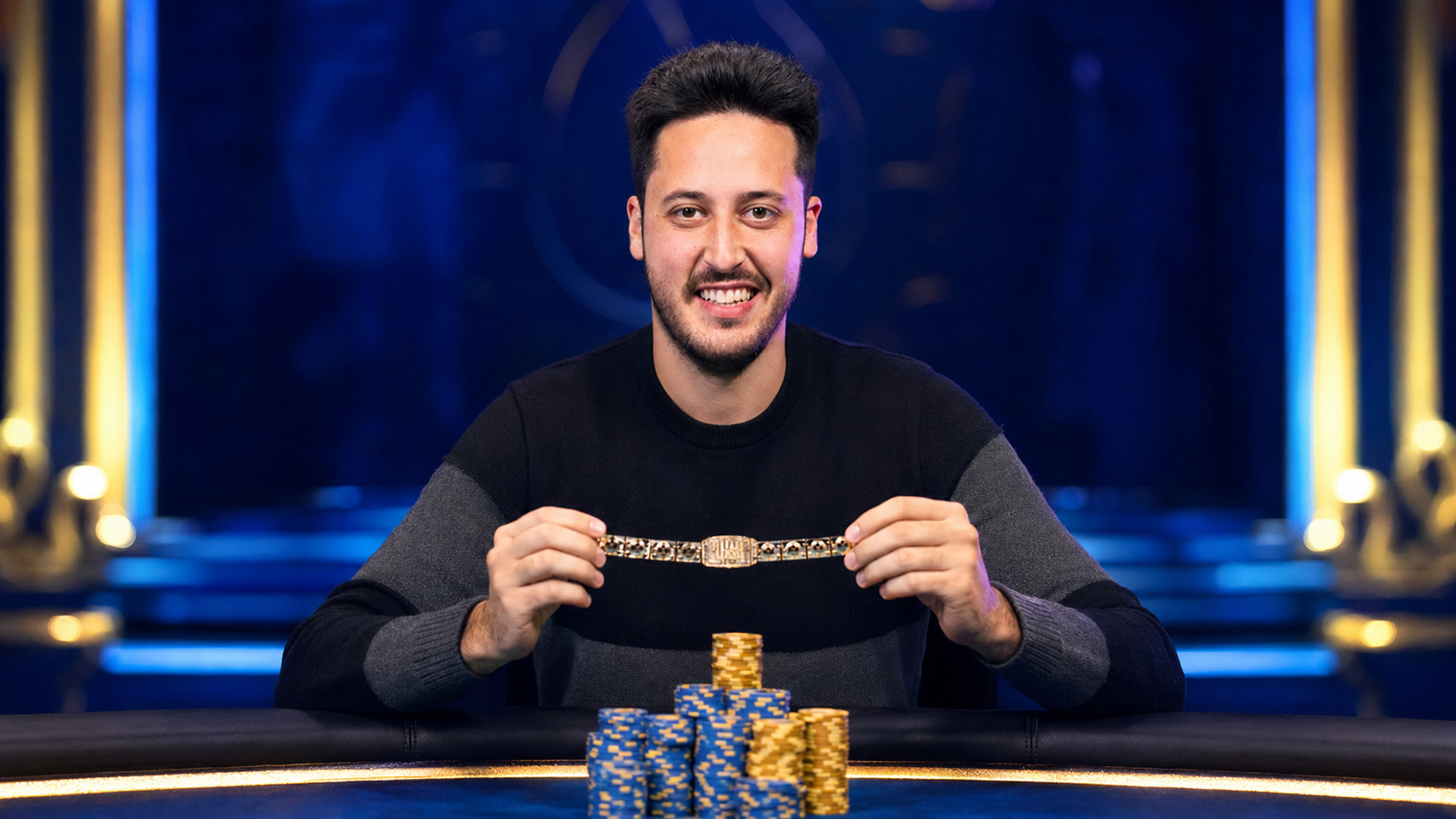
Winning the WSOP Europe Main Event at 19
Mateos entered the 2013 WSOP Europe Main Event in Enghien-les-Bains, France, at age 19.
The 10.450€ championship attracted 375 players and generated a prize pool of 3.600.000€.
The final table included established professionals such as Dominik Nitsche, Fabrice Soulier, Benny Spindler and Shannon Shorr. Mateos arrived as the least internationally experienced player but held the chip lead.
He defeated Soulier heads-up and won 1.000.000€ together with his first WSOP bracelet.
Mateos became the second-youngest bracelet winner in WSOP history, behind only Annette Obrestad, who had won the 2007 WSOP Europe Main Event at 18.
The victory was remarkable for more than his age.
The WSOP Europe Main Event was one of the most prestigious championships on the schedule. Mateos did not win a small side tournament against an inexperienced field. He defeated 374 opponents in a multi-day event filled with proven professionals.
His live career had moved from a regional title to a world championship within ten months.
Too Young to Play the WSOP in Las Vegas
Mateos’s first bracelet created an unusual situation.
He was a WSOP Main Event champion in Europe but remained too young to compete in the World Series of Poker in Las Vegas.
Nevada requires casino participants to be at least 21. Mateos therefore had to wait until 2015 before he could play a WSOP event in the United States.
The delay prevented him from immediately using his new reputation on poker’s largest annual stage.
It may also have helped his development.
Instead of rushing into every available Las Vegas tournament, Mateos continued competing online and throughout Europe. He gained experience, strengthened his bankroll and faced increasingly difficult opponents.
The WSOPE victory could have become a single spectacular result followed by regression.
Mateos used the following years to prove that it was the beginning of a career.
His next defining achievement arrived before his first full WSOP summer.
First Spanish EPT Champion
Mateos won the EPT Grand Final Main Event in Monte Carlo in May 2015.
The 10.600€ tournament attracted 564 entries and generated a prize pool of 5.640.000€.
Mateos reached heads-up play against Muhyedine Fares and won the championship for 1.082.000€.
At 20 years old, he became the first Spanish player to win an EPT Main Event.
Spain had produced strong professionals and enthusiastic tournament fields, but an EPT title had remained absent through more than a decade of the tour’s history. Mateos ended that wait in the final Main Event of Season 11.
The victory also gave him two legs of poker’s unofficial Triple Crown.
He had won a WSOP bracelet and an EPT Main Event. A World Poker Tour championship would be required to complete the traditional achievement, and Mateos has not yet won one.
Even without the WPT title, his two major championships before turning 21 established him as an exceptional talent.
First WSOP Summer in Las Vegas
Mateos became eligible to compete in Las Vegas shortly before the 2015 WSOP.
His arrival carried unusual expectations.
Most first-time WSOP players are trying to record an initial cash or experience the Main Event. Mateos entered the series as an existing bracelet winner and reigning EPT Grand Final champion.
The Las Vegas environment still required adjustment.
The WSOP schedule includes weeks of tournaments, enormous fields and long days inside crowded convention rooms. European experience does not automatically translate into summer success.
Mateos did not win immediately, but his breakthrough came one year later.
The victory demonstrated his ability to navigate a large field rather than only elite championships with smaller entry lists.
Second Bracelet in the Summer Solstice
Mateos won his second WSOP bracelet in the 2016 Summer Solstice No-Limit Hold’em event.
The 1.500 $ tournament attracted 1.840 entries.
Mateos defeated a final table that included several strong professionals and beat future WSOP Main Event champion Koray Aldemir heads-up. He collected 409.171 $.
It was his first bracelet victory in Las Vegas.
The title showed a different side of his tournament ability.
His WSOPE Main Event win came in a prestigious 10.450€ championship with 375 players. The Summer Solstice required surviving almost five times as many entries at a much lower buy-in.
Large fields create long paths to the final table and repeated exposure to tournament variance. A player must adapt as opponents, stack sizes and table dynamics change.
Mateos completed that challenge just before his 22nd birthday.
One year later, he won a bracelet in a format that provided no room to hide from an individual opponent.
Youngest Three-Time Bracelet Winner
At the 2017 WSOP, Mateos won the 10.000 $ Heads-Up No-Limit Hold’em Championship.
The event attracted 129 players. To win the bracelet, a champion had to survive a sequence of one-on-one matches without losing.
Mateos defeated Daniel Negreanu early in the bracket and eventually faced John Smith in the final. Smith had also reached the championship match one year earlier and was almost five decades older than Mateos.
Mateos won the title for approximately 336.000 $.
At 22, he became the youngest player in WSOP history to collect three bracelets.
The heads-up format made the achievement particularly revealing.
There are no weak positions to avoid when only two players remain. Every hand requires attention, opening ranges become wide and opponents can identify habits quickly.
Mateos demonstrated that his success was not limited to multi-table tournament structures. He could study one opponent, adjust rapidly and maintain pressure across an entire match.
The 2017 Player of the Year Season
Mateos’s third bracelet was only one part of his exceptional 2017 season.
He recorded 22 qualifying final-table finishes, won four titles and accumulated approximately 5.664.635 $ in tournament prizes counted by the Card Player Player of the Year race.
His results included victory in the 50.000€ PokerStars Championship Monte Carlo Super High Roller for approximately 908.000€, the WSOP Heads-Up title and a win in the partypoker Caribbean Poker Party MILLIONS Finale.
Mateos overtook Bryn Kenney late in the year and became the 2017 Card Player Player of the Year.
He was the first European player to win the award.
The season established him as more than a young player with several major titles. It demonstrated consistency across a full international schedule.
Mateos succeeded in large fields, high rollers and heads-up play while travelling between North America, Europe and the Caribbean.
At 23, he had already become Spain’s leading live tournament earner.
Joining Team Winamax
Mateos joined Team Winamax in 2017.
The partnership connected Spain’s strongest tournament player with one of Europe’s most recognisable poker brands.
Winamax had built a respected professional roster that included elite players from France and other European countries. Mateos became a central representative as the platform expanded in Spain.
The sponsorship reflected more than visibility.
Poker operators look for ambassadors who can compete at the highest level while representing the game responsibly. Mateos’s results, study habits and relatively controlled public personality suited that role.
He has remained closely associated with Winamax through the following stages of his career.
Mateos later moved to London, England. The city became a practical base for an international professional travelling across Europe, Asia and the United States.
His nationality and poker identity, however, have remained unmistakably Spanish.
Transition to Super High Rollers
Mateos gradually moved from conventional championships into the largest buy-in tournaments in the world.
The transition changed both the level of competition and the financial risk.
A 100.000 $ event may attract fewer players than a 1.500 $ WSOP tournament, but almost every participant is either an elite professional or a wealthy amateur with extensive high-stakes experience.
The same opponents meet repeatedly and study one another. Strategic weaknesses are discovered quickly, while tournament variance can create enormous financial swings.
Mateos proved suited to this environment.
His aggression made him difficult to play against when tables became short-handed. His online experience helped him recognise recurring patterns, and his live success gave him confidence in major pressure situations.
The high-roller circuit also rewarded his work ethic.
When the average opponent is already excellent, long-term survival depends on continuing to improve rather than protecting old strategies.
Mateos remained one of the strongest regulars as the games evolved.
Winning the MILLIONS World Bahamas Main Event
Mateos produced one of his most important large-field victories in November 2019.
He won the 10.300 $ partypoker MILLIONS World Bahamas Main Event after overcoming 947 opponents.
The final three players reached a deal before playing for the remaining money and trophy. Mateos ultimately defeated Aaron Van Blarcum heads-up and received 1.162.805 $.
The title reinforced the breadth of his résumé.
Mateos had already won WSOP and EPT championships, but the Bahamas event combined an eight-figure prize pool with a field approaching 1.000 entries.
Earlier in the same festival, he also won the 25.500 $ MILLIONS Super High Roller following a heads-up deal.
Winning both events within several days demonstrated his ability to recover, refocus and continue playing at a high level through a demanding schedule.
The Main Event title became one of the defining achievements of his pre-pandemic career.
Online Excellence During the Pandemic
The cancellation of most live poker in 2020 forced leading professionals back onto the internet.
Mateos returned to the environment in which he had developed and produced several championship results.
He won two WCOOP titles in 2020, including the 25.000 $ Super High Roller Sunday Slam for approximately 543.686 $.
In 2021, he added three SCOOP victories.
The online period demonstrated that his live success had not reduced his technical ability on the internet.
Live tournaments and online tournaments reward overlapping but different skills. Internet fields move faster, players see more hands and physical behaviour provides no information. Professionals must rely on betting patterns, timing data and precise range construction.
Mateos could move back into that environment and immediately compete for major titles.
When the full WSOP returned to Las Vegas in 2021, he transferred that form into the most expensive bracelet event of his career.
Fourth Bracelet in the 250.000 $ Super High Roller
Mateos won his fourth WSOP bracelet in November 2021.
The 250.000 $ No-Limit Hold’em Super High Roller attracted 33 entries and created a prize pool of 8.217.000 $.
Mateos defeated Ben Heath heads-up and collected 3.265.362 $.
It was the largest live cash of his career at the time.
The victory also represented another major expansion of his bracelet record.
His first title came in a European Main Event. His second required defeating 1.840 players in a lower-buy-in tournament. His third came through heads-up matches. His fourth arrived in one of the most expensive and technically concentrated events ever held at the WSOP.
Few players can demonstrate that range within No-Limit Hold’em.
Mateos had now won bracelets in every environment from a 1.500 $ mass-field event to a 250.000 $ super high roller.
Remarkably, he would win the same 250.000 $ championship again five years later.
EPT Monte Carlo Super High Roller Victory
Mateos returned to one of his most successful locations in 2022.
Seven years after winning the EPT Grand Final Main Event in Monte Carlo, he entered the 100.000€ Super High Roller.
The event attracted 42 entries and generated a prize pool of 4.074.840€.
Mateos reached the final day with a commanding chip lead and converted it into the title. He defeated Marius Gierse heads-up and earned 1.385.430€.
The final table also included Mikita Badziakouski, Mikalai Vaskaboinikau and Laszlo Bujtas.
The victory connected two different stages of Mateos’s career.
In 2015, he had been a 20-year-old breakthrough star winning a major Main Event. In 2022, he returned as an established super-high-roller specialist and defeated a concentrated field of elite professionals.
Monte Carlo became a symbol of both his early potential and his later mastery.
The 3,12 Million $ Triton Runner-Up Finish
Mateos came close to winning his first Triton Poker title in Monte Carlo in October 2023.
He reached heads-up play in the 125.000 $ Triton Main Event after the tournament generated 135 entries and a prize pool of 16.875.000 $.
Mateos agreed to a heads-up deal with Matthias Eibinger. He eventually finished second and collected 3.120.739 $.
The result was one of the largest prizes of his career, even without the trophy.
It also ended any doubt that Mateos could succeed in Triton’s distinctive environment.
The series brings together elite online professionals, established live champions and wealthy businesspeople. Buy-ins escalate throughout each festival, and many events become short-handed quickly.
Mateos had already recorded several Triton cashes. The Monte Carlo Main Event placed him within one heads-up match of his first title.
He did not have to wait long for another opportunity.
First Triton Title in Jeju
Mateos won his first Triton Poker title in Jeju, South Korea, in March 2024.
The 30.000 $ eight-handed No-Limit Hold’em event attracted 185 entries and created a prize pool of 5.550.000 $.
Mateos defeated David Peters heads-up and won 1.175.000 $.
The victory made him the first Spanish player to win a Triton title.
It also removed one of the few obvious gaps from his résumé.
Mateos had already won major titles at the WSOP, EPT and partypoker MILLIONS. Triton had become the central super-high-roller series of the modern era, and its trophies carried increasing prestige among professionals.
Mateos had needed 11 cashes to secure his first Triton win. Once the breakthrough arrived, the second followed only two months later.
Second Triton Title in Montenegro
Mateos won the 50.000 $ eight-handed event at Triton Montenegro in May 2024.
The tournament attracted 159 entries and created a prize pool of 7.950.000 $.
Mateos defeated Justin Saliba heads-up and collected 1.761.000 $.
The event extended into an unscheduled third day because of the large turnout and lengthy final-table battle.
The final lineup included Joe Zou, Nick Petrangelo, Ben Tollerene, Phil Ivey, Mikalai Vaskaboinikau, Dan Smith and Mario Mosboeck.
Winning against that group demonstrated why Triton titles are so highly valued.
Mateos had gone years without a trophy on the tour and then won two within the same season.
His Montenegro festival was not finished. He immediately entered the 200.000 $ eight-handed event and produced an even larger financial result.
The 3,29 Million $ Near Miss
Mateos reached heads-up play in the 200.000 $ Triton Montenegro tournament only days after winning his second title.
The event attracted 93 entries and generated a prize pool of 18.600.000 $.
Mateos finished second to Wiktor Malinowski and earned 3.292.000 $.
At the time, it became the largest recorded cash of his career, narrowly exceeding the 3.265.362 $ from his 2021 WSOP bracelet.
The result completed an extraordinary Montenegro series.
Mateos repeatedly reached the final stages as the buy-ins increased and the fields became more difficult. He won the 50.000 $ event and then came within one opponent of capturing the 200.000 $ championship.
The accumulated prizes became a major part of a record-breaking year.
The Leading Live Tournament Winner of 2024
Mateos recorded 13.109.127 $ in live tournament cashes during 2024, more than any other player in the world.
His two Triton titles and 3,29 million $ runner-up finish formed the centre of the season, but the results continued throughout the year.
At the WSOP, he finished fourth in the 50.000 $ High Roller for 681.554 $, tenth in the 250.000 $ Super High Roller for 506.757 $ and fifth in the 10.000 $ Six-Handed Championship for 198.261 $.
He later produced high-roller final tables in Cyprus and cashed for 985.000 $ in the 1 million $ Triton Million at WSOP Paradise.
Mateos won the Card Player Player of the Year award for the second time.
His first victory had come in 2017, when he was still establishing himself as a young global star. The second arrived seven years later, after the tournament landscape had become more technical and financially demanding.
The gap between the awards demonstrated sustained excellence rather than one temporary peak.
Winning a Fifth WSOP Bracelet Online
Mateos won his fifth WSOP bracelet in June 2025.
The victory came in a 3.200 $ online No-Limit Hold’em High Roller during the WSOP. The event attracted 436 entries and generated a prize pool of 1.308.000 $.
Mateos defeated Alex Kulev heads-up and earned 253.080 $.
The prize was modest compared with his largest live scores, but the historical value was considerable.
Mateos became one of the youngest players ever to reach five bracelets.
The title also showed the connection between his origins and modern achievements. His first international reputation had been built through “Amadi_017” online, and more than a decade later he remained capable of winning a major internet tournament against a strong field.
Because the event was played online, its prize is not included in the Hendon Mob total used for his live tournament earnings.
The WSOP nevertheless counts the bracelet equally in its official records.
The 6,37 Million $ Triton Invitational Victory
Mateos produced the largest cash of his career in May 2026.
He entered the 200.000 $ Triton Invitational in Montenegro, an event that paired invited professionals with wealthy amateur players.
The tournament attracted 137 entries and created a prize pool approaching 27,5 million $.
Mateos reached the final day sixth in chips among the 12 remaining players. He then controlled the final table and won the title for 6.370.000 $.
The victory became his third Triton trophy and the largest live tournament prize ever recorded by a Spanish player.
It replaced his 3,29 million $ runner-up finish as his career-best cash by a wide margin.
The timing made the achievement even more important.
Mateos entered the 2026 WSOP only weeks later with confidence, momentum and another demonstration that he could defeat the world’s most expensive fields.
He converted that form into another historic victory.
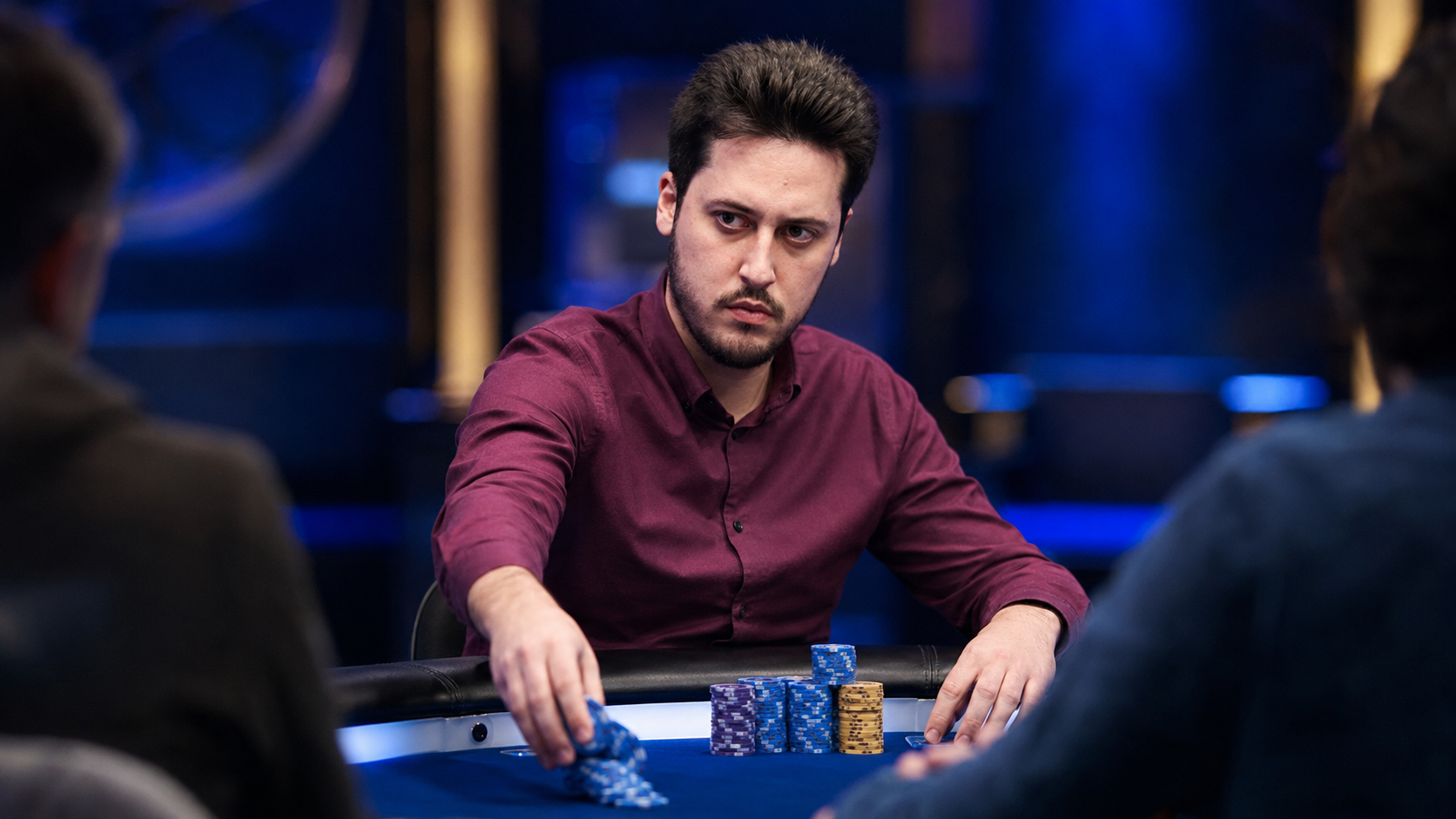
Youngest Six-Time WSOP Bracelet Winner
Mateos won the 250.000 $ WSOP Super High Roller in June 2026.
The event attracted 56 entries and generated a prize pool of 13.720.000 $.
The final table included Bryn Kenney, David Einhorn, Sean Winter, Jason Koon, Phil Ivey and several other elite high-stakes players.
Mateos defeated Kenney heads-up and won 4.334.411 $.
It was his sixth bracelet and his second victory in the WSOP’s 250.000 $ No-Limit Hold’em championship.
At age 31, Mateos became the youngest player ever to win six WSOP bracelets.
The final winning hand added an unusual historical detail. Mateos held ten-deuce of clubs, the same starting-card combination permanently associated with Doyle Brunson’s two Main Event victories.
Mateos’s bracelet did not come from nostalgia. It came from defeating one of the strongest final tables assembled during the 2026 series.
His two enormous victories within less than a month produced more than 10,7 million $ in first-place prizes.
Adrian Mateos’s Six WSOP Bracelets
Mateos has won six WSOP bracelets across live and online No-Limit Hold’em events.
|
Year |
Event |
Prize |
|
2013 |
WSOPE 10.450€ Main Event |
1.000.000€ |
|
2016 |
WSOP 1.500 $ Summer Solstice NLH |
409.171 $ |
|
2017 |
WSOP 10.000 $ Heads-Up NLH Championship |
approximately 336.000 $ |
|
2021 |
WSOP 250.000 $ Super High Roller NLH |
3.265.362 $ |
|
2025 |
WSOP Online 3.200 $ NLH High Roller |
253.080 $ |
|
2026 |
WSOP 250.000 $ Super High Roller NLH |
4.334.411 $ |
The list illustrates his versatility within No-Limit Hold’em.
Mateos has won a Main Event, a mass-field 1.500 $ tournament, a heads-up championship, an online high roller and the same 250.000 $ super high roller twice.
His bracelets span 13 years and three different WSOP environments: Europe, Las Vegas and online poker.
As of August 2026, six bracelets placed him among the top 20 players on the official all-time list.
He was still eight years away from turning 40, the traditional age of Poker Hall of Fame eligibility.
Adrian Mateos’s Three Triton Titles
Mateos has won three Triton Poker trophies.
|
Year |
Event |
Prize |
|
2024 |
Triton Jeju 30.000 $ NLH 8-Handed |
1.175.000 $ |
|
2024 |
Triton Montenegro 50.000 $ NLH 8-Handed |
1.761.000 $ |
|
2026 |
Triton Montenegro 200.000 $ Invitational |
6.370.000 $ |
The titles arrived after a long period of strong results without a victory.
Mateos had already earned more than 3,1 million $ for finishing second in the 2023 Triton Monte Carlo Main Event before winning his first trophy.
Once he broke through, he collected two titles in 2024 and added the largest of his career in 2026.
His Triton record also includes the 3.292.000 $ runner-up finish in Montenegro and numerous other final tables.
Unlike some Triton champions, Mateos has concentrated almost entirely on No-Limit Hold’em rather than Short Deck or Pot-Limit Omaha.
Within that speciality, he has succeeded across standard, eight-handed and invitational formats.
Adrian Mateos’s Biggest Tournament Results
Mateos’s largest recorded live cashes reflect his success across Triton, the WSOP, EPT and partypoker events.
|
Year |
Tournament |
Result |
Prize |
|
2026 |
Triton Montenegro 200.000 $ Invitational |
1st |
6.370.000 $ |
|
2026 |
WSOP 250.000 $ Super High Roller |
1st |
4.334.411 $ |
|
2024 |
Triton Montenegro 200.000 $ NLH |
2nd |
3.292.000 $ |
|
2021 |
WSOP 250.000 $ Super High Roller |
1st |
3.265.362 $ |
|
2023 |
Triton Monte Carlo 125.000 $ Main Event |
2nd |
3.120.739 $ |
|
2024 |
Triton Montenegro 50.000 $ NLH |
1st |
1.761.000 $ |
|
2022 |
EPT Monte Carlo 100.000€ Super High Roller |
1st |
1.385.430€ |
|
2013 |
WSOP Europe Main Event |
1st |
1.000.000€ |
|
2015 |
EPT Grand Final Main Event |
1st |
1.082.000€ |
|
2024 |
Triton Jeju 30.000 $ NLH |
1st |
1.175.000 $ |
|
2019 |
MILLIONS World Bahamas Main Event |
1st |
1.162.805 $ |
Currency conversion explains why the order of euro-denominated results can differ depending on the historical exchange rate.
The table also demonstrates that Mateos did not build his record through one tournament.
He has collected seven-figure prizes across more than a decade and in several different poker eras.
Fifth on Poker’s All-Time Money List
Mateos ranked fifth on the global live tournament money list in August 2026.
|
Rank |
Player |
Recorded live earnings |
|
1st |
Bryn Kenney |
90.761.210 $ |
|
2nd |
Stephen Chidwick |
79.029.052 $ |
|
3rd |
Jason Koon |
77.032.156 $ |
|
4th |
Mikita Badziakouski |
68.780.522 $ |
|
5th |
Adrian Mateos |
67.813.885 $ |
Mateos entered 2026 outside the top five and climbed rapidly after his two largest victories.
The 6.370.000 $ Triton title and 4.334.411 $ WSOP bracelet moved him beyond several established legends.
Money-list rankings require context.
Modern super high rollers create prize pools that were unavailable to earlier generations. They also require players to risk buy-ins of 100.000 $, 200.000 $ or 250.000 $ against exceptionally strong competition.
The gross total therefore measures sustained tournament results rather than pure profit.
Mateos’s age makes his position especially remarkable. He reached fifth place only weeks after turning 32 and has substantial time to continue climbing.
Playing Style
Mateos is known for an aggressive, technically prepared style built around constant pressure.
He enters more pots than conservative players and is willing to raise or reraise without waiting for premium hands. This prevents opponents from narrowing his range too easily.
His aggression is most effective when stacks are deep enough to create decisions after the flop.
Mateos understands which board textures favour the pre-flop raiser, which opponents are unlikely to hold the strongest combinations and when tournament pressure makes a player reluctant to risk elimination.
He is also comfortable making thin value bets.
Aggressive professionals are often discussed only through their bluffs, but extracting an additional bet with a moderately strong hand is equally important. Mateos applies pressure because opponents know that he can arrive with both value and bluffs.
His decisions are generally efficient and controlled.
The style reflects thousands of online tournaments combined with more than a decade of live high-stakes experience.
Heads-Up Strength
Mateos has repeatedly demonstrated unusual strength in heads-up poker.
His clearest achievement is the 2017 WSOP Heads-Up Championship, where one lost match would have ended his tournament.
He has also closed major titles against Fabrice Soulier, Muhyedine Fares, Koray Aldemir, David Peters, Justin Saliba, Ben Heath and Bryn Kenney.
Heads-up play requires wider ranges and faster adaptation than a full table.
Every opponent sees almost every decision. A predictable pattern can become expensive quickly, while emotional frustration is difficult to hide over a long match.
Mateos combines aggression with the ability to change pace.
He can attack repeatedly when an opponent becomes passive, but he is also willing to reduce variance when his chip lead or tournament position makes patience more valuable.
The number of major trophies he has secured through heads-up play suggests a repeatable skill rather than coincidence.
Large Fields and Elite Small Fields
Mateos’s career is unusual because he has succeeded at opposite ends of tournament poker.
He defeated 1.839 opponents in the 2016 WSOP Summer Solstice and overcame 947 opponents in the 2019 MILLIONS World Bahamas Main Event.
He has also won tournaments with only a few dozen entries, including the 2021 and 2026 WSOP 250.000 $ Super High Rollers.
The challenges are different.
Large fields demand stamina and repeated survival through changing tables. Opponents vary widely in experience, and a champion may play for several consecutive days before reaching the final stage.
Small super-high-roller fields contain fewer participants but almost no easy decisions. The same elite players meet repeatedly, and the value of every strategic mistake is magnified by the buy-in.
Mateos’s ability to win in both environments strengthens his case as a complete tournament player.
Work Ethic and Constant Study
Mateos consistently describes study as the foundation of his success.
Modern high-level poker changes rapidly. Solver software, aggregated hand data and specialised coaching allow professionals to analyse situations with a precision that was unavailable when Mateos began.
A successful player cannot rely permanently on strategies that worked five years earlier.
Mateos studies ranges, reviews hands and works to understand where theory should be adjusted against specific opponents. He has described periods of spending many hours each day on technical preparation.
The work is visible in his longevity.
Mateos became a major champion in 2013, before solvers transformed everyday poker study. He then won the world’s largest tournaments throughout the solver era and remained at the top in 2026.
Natural competitive instincts helped him begin quickly. Continuous improvement allowed him to remain successful.
The Role of Variance
Mateos’s career also illustrates the relationship between skill and luck in tournament poker.
Individual hands can be decided by a single community card. A world-class player can make the correct decision and still lose an entire tournament.
Over short periods, variance can dominate results.
Mateos has explained that the influence of chance decreases across larger samples, allowing stronger decision-making to become visible over time.
His résumé supports that argument.
One bracelet victory could be influenced heavily by a favourable run of cards. Six bracelets, three Triton titles, an EPT championship and more than a decade of high-roller final tables require repeated strong decisions.
The 2024 season also showed how near misses and victories coexist. Mateos won two Triton events but finished second in two of his largest career cashes.
Professional success depends on accepting both outcomes without allowing either to damage the next decision.
Poker as a Professional Business
Mateos approaches poker as both competition and a long-term profession.
Tournament selection, preparation and bankroll management matter alongside technical ability.
A super-high-roller schedule can involve millions of dollars in annual buy-ins. Even an elite player may experience extended periods without a victory because fields are difficult and payouts are concentrated near the top.
Professionals manage that risk through personal bankrolls, backing agreements, sold percentages and swaps with other players.
These arrangements allow a player to enter expensive events without personally carrying the entire financial result.
The exact details of Mateos’s tournament ownership are private.
His public live earnings show what the tournaments paid, not how much of every prize he retained.
Understanding this distinction is essential when discussing his career profit or personal wealth.
Adrian Mateos’s Net Worth
Adrian Mateos’s exact net worth is not publicly known.
The 67.813.885 $ listed in live tournament cashes is not a personal bank balance.
That total does not subtract unsuccessful buy-ins, re-entries, travel, accommodation, coaching, taxes or the percentages of action owned by other people. It also excludes complete online results and any private cash-game activity.
Mateos has clearly earned substantial money through poker.
He has won multiple seven-figure prizes, maintained a long sponsorship with Winamax and remained active in events carrying the largest buy-ins in the game.
Those facts support the conclusion that he is financially successful.
Any precise estimate beyond the public results would require information that has not been disclosed.
Responsible reporting should therefore separate recorded winnings from net worth and career profit.
Sponsorship and Public Profile
Mateos has become one of the leading international faces of Team Winamax.
His sponsorship provides visibility in Spain, France and the wider European market. He appears in promotional content, branded livestreams and major tournaments wearing the Winamax logo.
Mateos also shares elements of his career through Spanish-language interviews and social media.
His public identity differs from that of more theatrical poker stars.
He is competitive and confident but generally allows results to create the story. His reputation is built around study, aggression and major victories rather than table controversy.
That approach has helped him represent professional poker as a skill-based competitive discipline.
He has also spoken about responsible behaviour and the difference between professional poker and uncontrolled casino gambling.
The distinction is particularly important for a player whose results may attract young fans.
Spain’s Greatest Poker Player
Mateos is the most successful Spanish tournament player in history.
Before his rise, Carlos Mortensen represented the standard for Spanish poker achievement. Mortensen won the 2001 WSOP Main Event, collected two bracelets and became one of the most successful players in World Poker Tour history.
Mateos passed Mortensen on Spain’s all-time money list during his remarkable 2017 season.
He has since created an enormous lead.
His 67,81 million $ in live cashes, six bracelets and first Spanish EPT title give him the strongest overall tournament résumé produced by the country.
Mateos has also become a reference point for the Spanish online community.
His career showed that a player developing through Spain’s regulated internet environment could progress from regional tournaments to the largest events in the world.
Every new Spanish high-roller is now compared with a standard that Mateos established.
Poker Hall of Fame Future
Mateos is not yet eligible for the Poker Hall of Fame.
The traditional criteria require a nominee to be at least 40 years old. Born in 1994, Mateos will reach that threshold in 2034.
His current achievements already resemble those of an obvious future inductee.
He has six WSOP bracelets, an EPT Main Event title, three Triton trophies, two Card Player Player of the Year awards and the fifth-largest live earnings total in history.
He has also played consistently against elite competition and remained near the top for more than a decade.
The age requirement is the main obstacle, not the quality of his résumé.
Mateos has eight years before becoming eligible. Additional bracelets, a WPT championship or further movement on the all-time money list could make an already strong case even more complete.
If his career ended immediately, his achievements would still demand serious historical recognition.
Adrian Mateos’s Place Among the Greatest Players
Comparing players from different poker eras is difficult.
Earlier champions competed for smaller prize pools and had fewer high-buy-in opportunities. Modern professionals can accumulate enormous gross cash totals, but they must also risk more money against technically advanced fields.
Mateos’s strongest historical argument is not based on earnings alone.
He has won major championships in several environments, set repeated age records and remained successful as tournament strategy changed.
The six bracelets give him a traditional measure of greatness. The EPT Grand Final and partypoker MILLIONS victories show large-field ability. His Triton results establish his position within the modern super-high-roller era.
Online titles add another dimension that live databases cannot capture.
Very few players combine all of those achievements before age 32.
Mateos belongs in any serious discussion of the greatest No-Limit Hold’em tournament players of the modern era.
The Poker Legacy of Adrian Mateos
Adrian Mateos began breaking records before he was old enough to play poker in Las Vegas.
At 19, he won the WSOP Europe Main Event. At 20, he became the first Spanish EPT champion. At 22, he became the youngest player to win three WSOP bracelets.
Those early achievements could have defined his entire career.
Instead, they became the opening stage.
Mateos developed into a dominant super-high-roller competitor, won online championships, collected two Player of the Year awards and became the leading tournament winner of 2024.
His 2026 season elevated the résumé again.
Within less than one month, he won the Triton Invitational for a career-best 6.370.000 $ and the WSOP 250.000 $ Super High Roller for 4.334.411 $. The second victory made him the youngest six-time bracelet winner in history.
By August 2026, Mateos had accumulated 67.813.885 $ in live prizes and reached fifth place on poker’s all-time money list.
He achieved all of it before turning 33.
Mateos is already Spain’s greatest poker player and one of the defining tournament professionals of his generation. The remaining question is not whether his career is historic.
It is how much further he can take it.
Career statistics updated in August 2026. Recorded live earnings represent gross tournament cashes and exclude online results, private cash games, buy-ins, expenses, taxes and staking arrange