Antonio Esfandiari
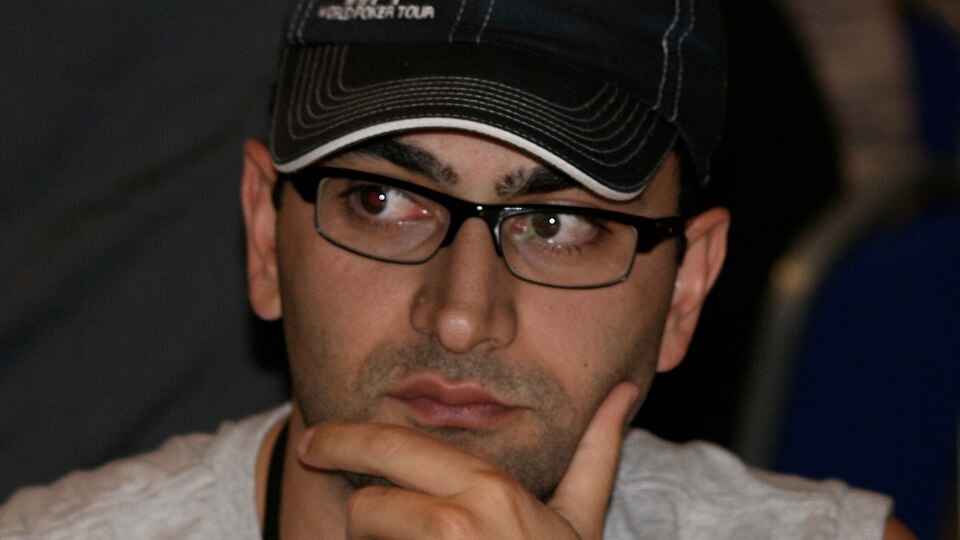
Antonio Esfandiari is an Iranian-American professional poker player, former magician and one of the most recognisable personalities of the televised poker era. Known as “The Magician,” he has won three World Series of Poker bracelets and two World Poker Tour titles.
His defining tournament victory came on July 3, 2012, when he won the inaugural 1 million $ Big One for One Drop at the WSOP. The first prize of 18.346.673 $ was the largest individual tournament payout in poker history at the time and immediately moved him to the top of the all-time live tournament money list.
Esfandiari’s recorded live tournament cashes total 27.810.802 $. That figure reflects only one part of a career that also includes high-stakes cash games, television appearances and commentary.
His appeal has never depended entirely on results. Table conversation, chip tricks, an outgoing personality and a long friendship with Phil Laak made him a central figure in poker entertainment. In later years, family life became more important than maintaining a full tournament schedule.
Early Life in Tehran and California
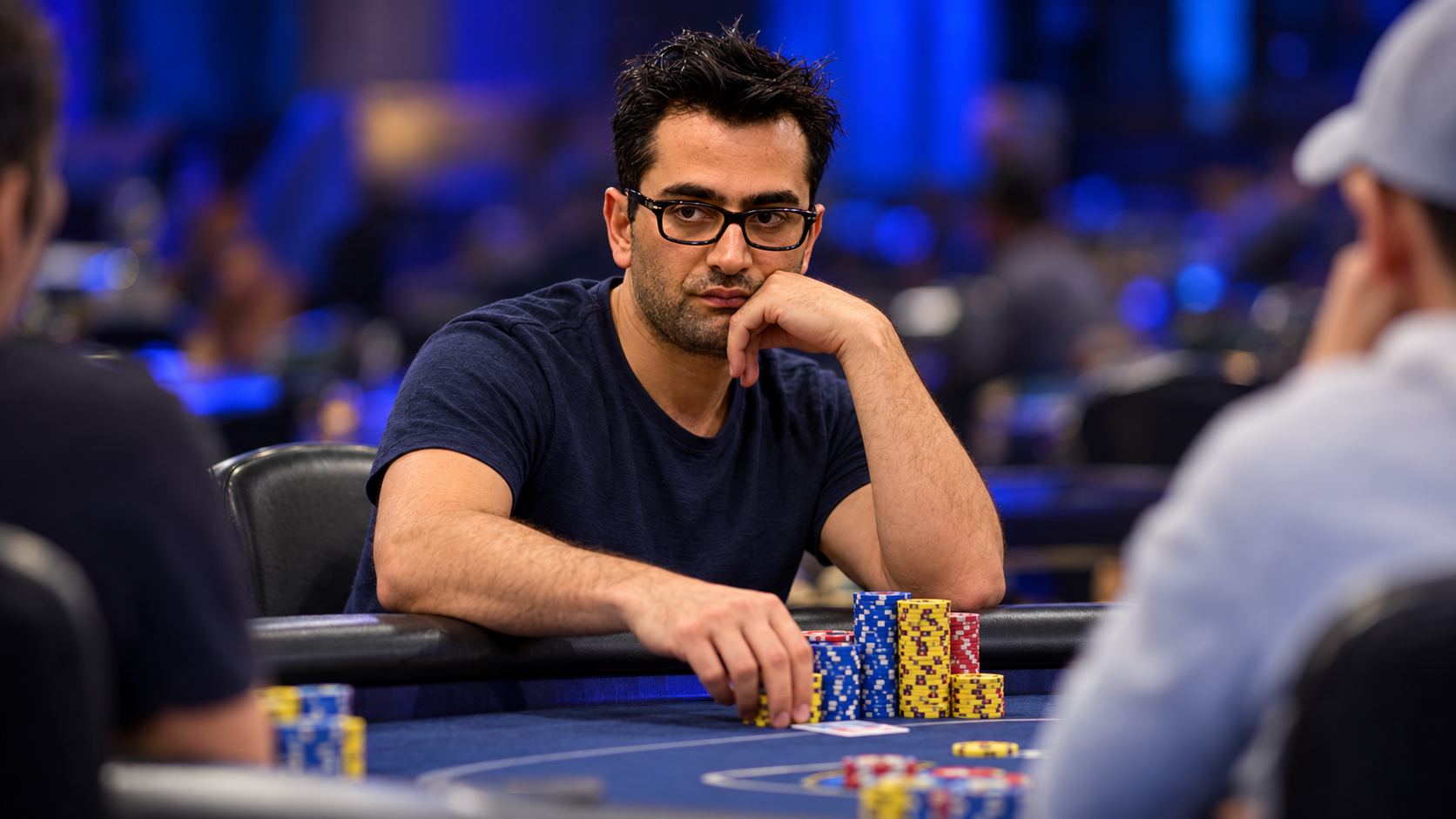
Antonio Esfandiari was born on December 8, 1978, in Tehran, Iran. His birth name was Amir Esfandiary, and he moved to California with his family while still a child.
In a later interview, Esfandiari recalled arriving in San Jose at eight years old and beginning school without speaking English. Other short biographies place the move at nine, but his own account emphasises the same difficult adjustment to a new country and language.
He described his father as the central figure in that transition. The family’s circumstances changed significantly after the move, and his father raised Antonio and his younger brother while working long hours.
Those experiences form the background to a public personality often associated with confidence and humour. His eventual career in entertainment developed after a childhood that required substantial adaptation.
From Restaurant Work to Professional Magic
Before poker became his profession, Esfandiari pursued magic. While working in a restaurant, he became interested in tricks demonstrated by a bartender and began learning the craft himself.
Magic eventually became more than a casual hobby. He performed professionally and developed the sleight-of-hand skills that later gave him his poker nickname.
At nineteen, he changed his first name from Amir to Antonio. The new name became familiar to audiences first through performance and later through poker.
The connection between his two careers was visible at the table. Chip tricks and occasional magic performances helped him stand out, while his ease with an audience suited the growing world of televised tournaments.
Why He Is Called The Magician
The nickname “The Magician” refers to Esfandiari’s genuine background as a performer. It was not simply invented to describe an unlikely poker victory.
His ability to handle chips and cards attracted attention during the poker boom, when televised broadcasts increasingly presented competitors as recognisable characters as well as skilled players.
The nickname became especially memorable after the 2012 One Drop victory. It gave commentators an obvious way to describe an extraordinary result, but the underlying story was a professional poker achievement rather than a magic trick.
Esfandiari’s lasting reputation depends on both sides of that identity: the entertainer who could engage a table and the competitor who could win against strong opposition.
Discovering Poker in the Bay Area
Esfandiari became interested in poker after visiting a Bay Area cardroom as a young adult. His early development took place in the live games around San Jose, before Las Vegas became the centre of his professional life.
That route differed from the online apprenticeship associated with many later champions. He learned in an environment where conversation, physical behaviour and repeated encounters with local opponents were part of the game.
Live poker also requires a player to remain attentive through periods when little appears to happen. A decision can depend on information gathered over an entire session rather than on the cards in one isolated hand.
Those early experiences provided the setting for Esfandiari’s transition from performing magic to competing professionally.
Phil Laak and an Enduring Friendship
Phil Laak became one of Esfandiari’s closest friends and most familiar companions in poker. Their personalities produced a partnership that viewers would encounter in cash games, tournament coverage and television shows.
Laak’s technical curiosity and unusual manner contrasted with Esfandiari’s more direct style of humour. Together, they helped make poker feel like a social contest rather than a silent sequence of bets.
The friendship also belonged to their development as players. Accounts of Esfandiari’s early career credit Laak with helping him improve his poker and bankroll management.
Their shared public presence would remain important even after Esfandiari established himself as a champion. The relationship gave poker television a recurring combination of rivalry, jokes and genuine familiarity.
An Early World Poker Tour Final Table
Esfandiari reached a televised World Poker Tour final table during the tour’s first season. He finished third in the 2002 Gold Rush event for 44.000 $.
The result came as the WPT was beginning to change how the public experienced tournament poker. Hole-card cameras allowed viewers to understand decisions that had previously been difficult to follow from outside the game.
For an outgoing player with a memorable nickname, that environment created an opportunity to become recognisable. Results still mattered, but audiences could also connect with the people making the decisions.
Esfandiari’s first WPT final table therefore arrived at an important moment for both his own career and the wider game.
Winning the 2004 L.A. Poker Classic
In February 2004, Esfandiari won the WPT L.A. Poker Classic at Commerce Casino. The 10.000 $ championship attracted 382 players and generated a prize pool of 3.781.500 $.
He defeated Vinny Vinh heads-up and collected 1.399.135 $. The final table also included Mike Keohan, Bill Gazes, Adam Schoenfeld and David Benyamine.
The win gave Esfandiari his first WPT title and transformed his tournament record. A player already comfortable in front of the cameras now had a championship and a seven-figure score to support his growing reputation.
It also connected him permanently with one of the tour’s most established venues. Commerce’s demanding live poker environment provided an appropriate stage for a player whose early experience had been built in California cardrooms.
His First WSOP Bracelet
Esfandiari’s breakthrough year continued at the 2004 World Series of Poker. He won the 2.000 $ Pot-Limit Hold’em event for 184.860 $ and his first bracelet.
Pot-Limit Hold’em limits the maximum bet to the size of the pot, creating different betting possibilities from the No-Limit game in which players can commit their entire stack at any time.
The victory added a second major championship to his season. Winning on both the WPT and at the WSOP established him as more than a television personality with one impressive result.
His first bracelet also preceded the famous One Drop win by eight years. Esfandiari was already an established champion long before the tournament that would dominate discussions of his career.
A Second WPT Title on His Birthday
In December 2010, Esfandiari won the WPT Doyle Brunson Five Diamond World Poker Classic at Bellagio. He defeated Andrew Robl heads-up and earned 870.124 $.
The victory came on his birthday, adding a personal celebration to the professional achievement. His supporters lifted him into the air after the final hand, producing one of the familiar images of his early championship career.
Winning a second WPT title placed him among the tour’s repeat champions. It also showed that his 2004 success had not been an isolated event.
Bellagio remained a productive venue for him. He made the Five Diamond final table in three consecutive seasons, following the win with sixth place in 2011 and fourth place in 2012.
The Big One for One Drop
The inaugural Big One for One Drop was unlike any previous WSOP tournament. Its 1 million $ buy-in created a field of 48 players, bringing together elite professionals and wealthy businessmen willing to compete at unprecedented tournament stakes.
The event was associated with the One Drop Foundation established by Cirque du Soleil founder Guy Laliberté. Part of each entry supported the organisation’s clean-water mission, while the tournament prize pool reached 42.666.672 $.
The combination of charitable purpose, famous competitors and enormous prizes made the event a major television spectacle. A single final-table decision could change a player’s payout by millions of dollars.
Esfandiari entered a contest that would become the defining result of his career. He emerged with a prize larger than any individual tournament cash awarded before it.
The 2012 One Drop Final Table
Esfandiari began the final table with the chip lead, closely followed by Sam Trickett. The remaining players included Phil Hellmuth, Brian Rast, Bobby Baldwin, Richard Yong, David Einhorn and Guy Laliberté.
The lineup combined major poker credentials with substantial business success. It was small enough for viewers to follow each player closely, yet financially larger than almost any tournament that had come before.
Esfandiari and Trickett remained the central contenders as the field narrowed. Esfandiari eliminated Laliberté and later Einhorn, leaving the final confrontation between the American and the English high-stakes professional.
The eventual winner would receive 18.346.673 $, while second place was worth 10.112.001 $. Even at the final stage, the difference between the two outcomes exceeded the largest win of many successful players’ careers.
The Hand That Won 18.346.673 $
Heads-up play ended with Esfandiari holding seven-five and Trickett holding queen-six of diamonds. The flop brought jack-five-five with two diamonds, giving Esfandiari three of a kind and Trickett a flush draw.
A sequence of raises put the remaining chips in the middle. Trickett needed the board to improve his hand, while Esfandiari was close to completing the largest tournament win of his life.
The turn was the three of hearts and the river the two of hearts. Neither card completed Trickett’s flush, and Esfandiari won the tournament.
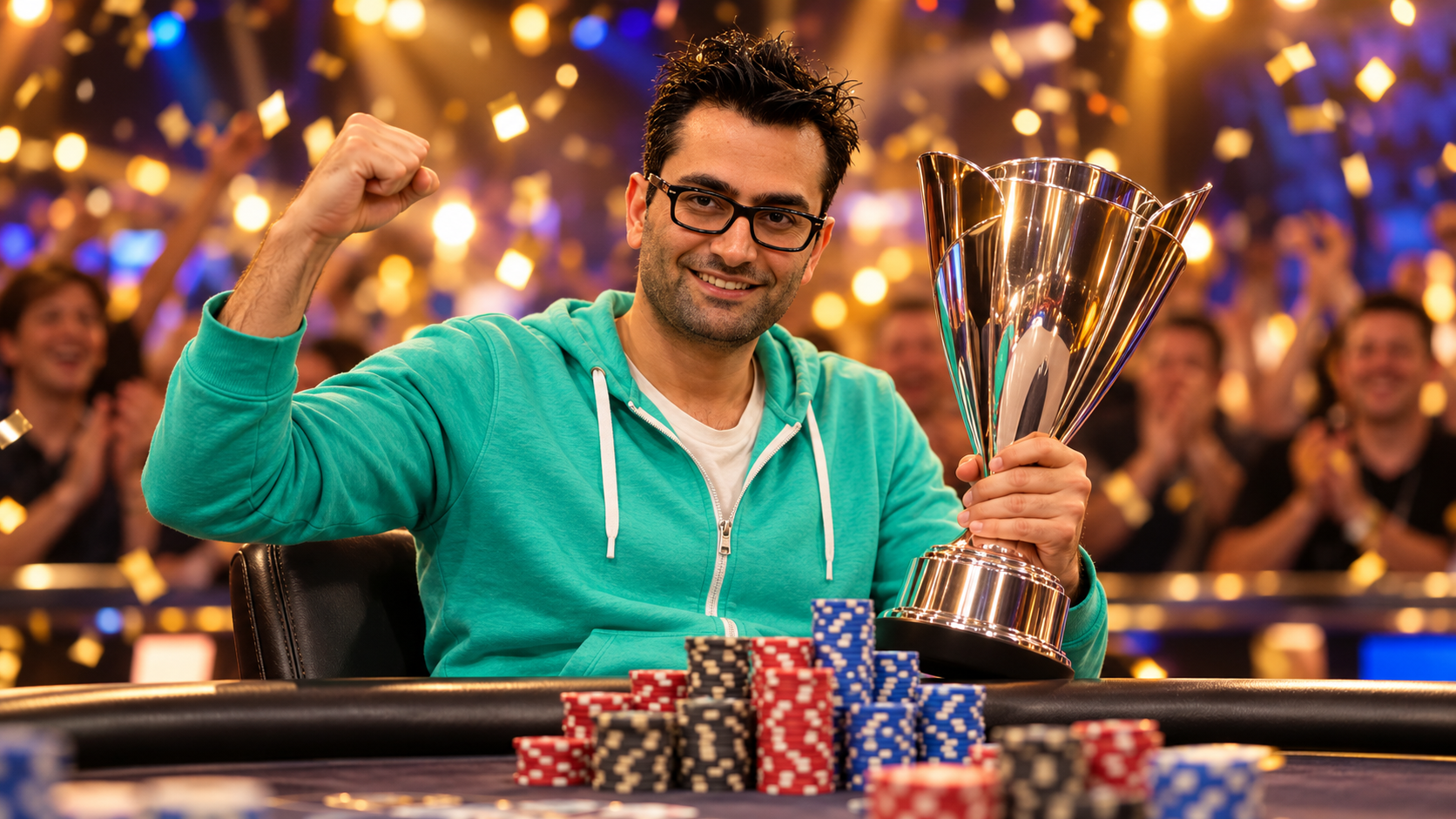
The celebration became one of the lasting images of the poker boom’s later years. His second WSOP bracelet accompanied a payout that moved him to the top of the all-time live tournament money list.
Why the One Drop Victory Matters
The 2012 win is frequently used as shorthand for Esfandiari’s entire career. Its scale makes that understandable: the prize accounts for roughly two-thirds of his recorded live tournament earnings.
However, the result should be read in context. He had already won two WPT titles and a WSOP bracelet, and he continued producing significant finishes after the One Drop victory.
The payout was a record at the time, rather than an unchanging record for all subsequent poker history. Later ultra-high-stakes events produced even larger individual cashes.
What remains distinctive is the moment itself. Esfandiari won the first million-dollar WSOP event, at a time when that buy-in represented a dramatic expansion of tournament poker’s financial scale.
A Third Bracelet in Cannes
In September 2012, Esfandiari won the 1.100 € No-Limit Hold’em event at the World Series of Poker Europe in Cannes. He defeated a field of 626 entries and received 126.207 €.
Remi Bollengier finished second. The win gave Esfandiari his third career bracelet and his second of the year, coming less than three months after the One Drop triumph.
The contrast between the tournaments strengthened the season’s significance. One Drop had involved 48 entries at an extraordinary buy-in; Cannes required him to outlast a much larger field in a more conventional event.
Esfandiari briefly moved into the lead in the WSOP Player of the Year race after the victory. He did not ultimately win that award, but the Cannes title completed an exceptional championship year.
Antonio Esfandiari’s WSOP Bracelets
| Year | Event | Prize |
| 2004 | 2.000 $ Pot-Limit Hold’em | 184.860 $ |
| 2012 | 1.000.000 $ Big One for One Drop | 18.346.673 $ |
| 2012 | WSOP Europe — 1.100 € No-Limit Hold’em | 126.207 € |
Returning to One Drop in 2013
Esfandiari made another major One Drop run in 2013, finishing fourth in the 111.111 $ High Roller event for 1.433.438 $.
The tournament was a different event from the million-dollar edition he had won the previous summer. Its smaller buy-in did not make the competition ordinary, but the distinction matters when comparing the two results.
The fourth-place finish became the second-largest recorded tournament cash of his career. It also demonstrated that the previous year’s huge win had been followed by another deep run in an elite field.
The One Drop name would remain closely associated with him, even when the tournament ended without another bracelet.
Selected Biggest Tournament Results
| Year | Tournament | Finish | Prize |
| 2012 | WSOP Big One for One Drop | 1st | 18.346.673 $ |
| 2013 | WSOP 111.111 $ One Drop High Roller | 4th | 1.433.438 $ |
| 2004 | WPT L.A. Poker Classic | 1st | 1.399.135 $ |
| 2010 | WPT Five Diamond World Poker Classic | 1st | 870.124 $ |
| 2014 | PCA 100.000 $ Super High Roller | 4th | 575.920 $ |
| 2009 | WSOP Main Event | 24th | 352.832 $ |
| 2012 | WPT Five Diamond World Poker Classic | 4th | 329.339 $ |
| 2016 | WSOP Circuit Bicycle Casino Main Event | 1st | 226.785 $ |
A WSOP Circuit Ring at the Bicycle
In March 2016, Esfandiari won the WSOP Circuit Main Event at the Bicycle Hotel and Casino. The 1.675 $ tournament attracted 756 entries, and his first-place prize was 226.785 $.
He defeated Jamie Gold heads-up, adding a Circuit ring to his three bracelets and two WPT titles. The matchup brought together the winners of two of poker’s most famous payouts: Esfandiari’s One Drop victory and Gold’s 2006 Main Event championship.
Esfandiari had almost not played the event. He was visiting while his father-in-law, Bob Bounahra, competed, and decided to enter himself.
The result showed that his competitive instincts remained effective even as family responsibilities were beginning to reshape his schedule.
Deep Runs in the WSOP Main Event
Esfandiari’s strongest WSOP Main Event finish came in 2009, when he placed 24th and earned 352.832 $. He came close to the final table in a field of 6,494 players, adding a substantial large-field result to his career.
Later appearances included 132nd place in 2018 and 82nd place in 2019. The latter finish paid 82.365 $ and was his only recorded tournament cash that year.
During the 2019 run, he remained an engaging presence at the table, exchanging jokes with opponents and performing the opening announcement before Day 5.
These Main Event results provide a useful counterweight to the small-field One Drop story. Esfandiari also demonstrated an ability to progress deep into tournaments with thousands of entrants.
High Stakes Poker and Television
Esfandiari became a familiar figure on High Stakes Poker, where viewers watched established professionals and wealthy enthusiasts compete in expensive cash games.
The format differs fundamentally from a tournament. Chips represent money, players can reload, and a session does not end with one champion. The decisions nevertheless carry considerable pressure, especially when large pots develop in front of television cameras.
His willingness to talk, joke and react openly made those broadcasts more accessible to viewers. He could participate in a serious hand while still contributing to the atmosphere around the table.
Televised cash games are also a reason his public career cannot be measured solely by tournament databases. A major cash-game pot does not appear as a tournament result.
I Bet You and Poker Entertainment
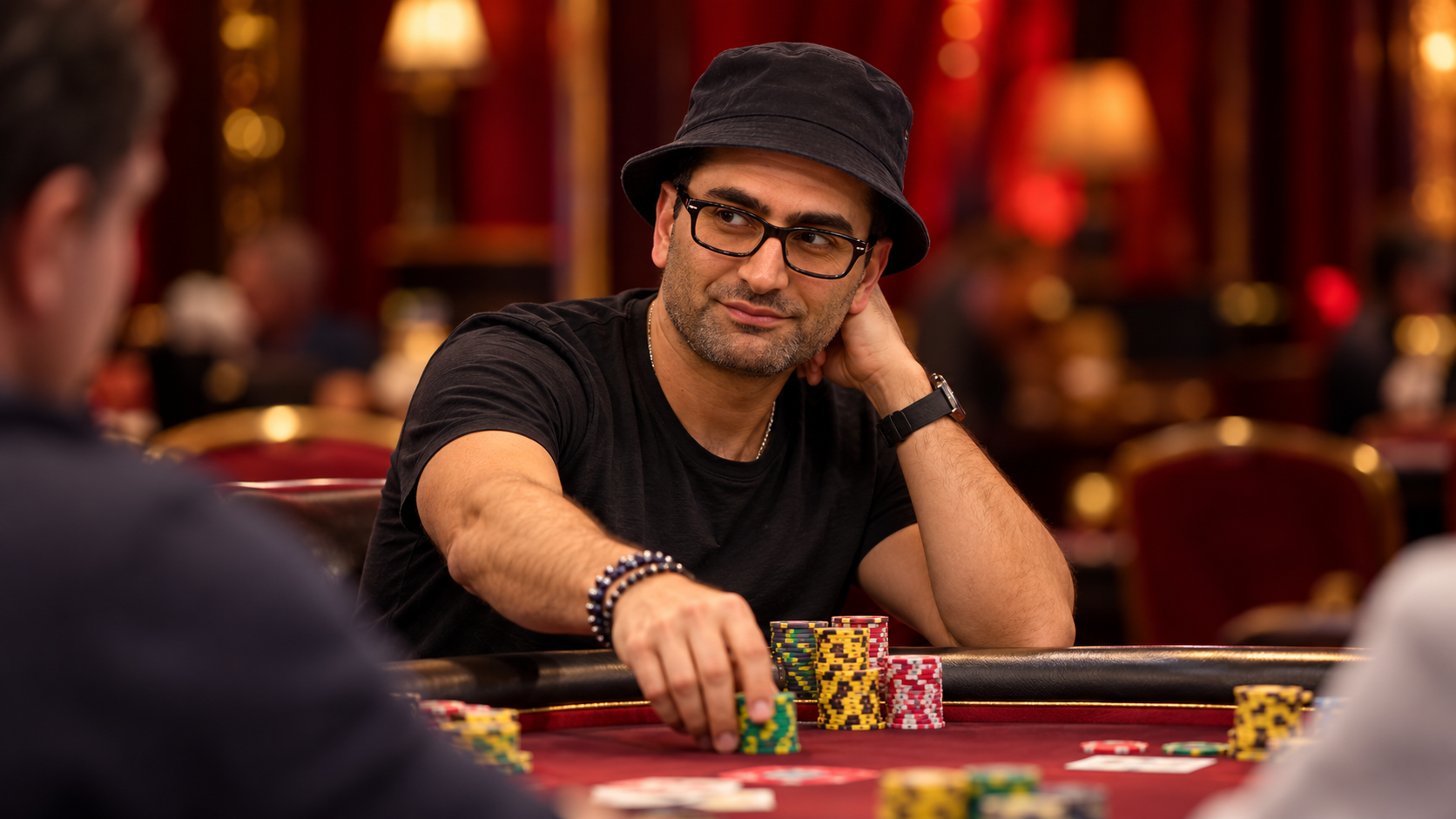
Esfandiari and Phil Laak starred in I Bet You, a television show built around unusual proposition bets and everyday challenges. Their chemistry carried the programme beyond the poker table.
The format reflected a wider part of poker culture, where competitive players often extend their interest in probability and rivalry into side bets.
For Esfandiari, the show reinforced an identity that was already visible in tournament coverage: playful, competitive and comfortable performing in front of an audience.
He also worked in poker commentary. Explaining a hand to viewers draws on a different skill from playing it, and his combination of experience and conversational ease made him a natural fit for the role.
Playing Style and Table Presence
Esfandiari’s public style combines active participation with a strong interest in the people across the table. His conversation has sometimes been part of gathering information, although he has also described talking simply because he enjoys it.
That distinction is important. A friendly exchange does not automatically reveal a player’s holding, and physical observations must be considered alongside position, bet sizes and the previous action.
His best-known results show success in both tournaments and televised cash games. The formats place different demands on a player, particularly when tournament payout pressure changes the value of preserving a stack.
Esfandiari’s table presence should therefore be seen as one component of his game. The entertainment made him recognisable, while the results established that he could compete seriously.
Family Life and a Quieter Tournament Schedule
Esfandiari is married to Amal, the daughter of poker player Bob Bounahra. They have three children, and he has repeatedly described fatherhood as the principal reason for reducing his time on the professional circuit.
In interviews, he has spoken about wanting to be present for ordinary family experiences, from homework and bedtime to outdoor trips and skiing.
His reduced tournament volume should not be interpreted automatically as an inability to compete. It reflects a deliberate change in priorities, with the travel and long hours of poker weighed against time at home.
He has continued making selective appearances. The difference is that poker now fits around family life rather than determining the entire calendar.
Later Returns to Televised Poker
Esfandiari returned to several television productions in 2024, including The Big Game on Tour and No Gamble, No Future. Those appearances brought a familiar personality back to the screen without signalling a full-time tournament comeback.
In late 2025, he featured in a memorable High Stakes Poker hand against Sameh Elamawy. Esfandiari flopped four eights, while Elamawy’s pocket aces improved to a full house on the turn.
The collision produced a pot of 824.500 $. The hand was an exceptional cash-game moment, but the pot size is not equivalent to net profit and does not belong in a table of tournament prizes.
His later appearances show that stepping away from constant tournament travel did not remove him entirely from high-stakes poker or its television audience.
Tournament Earnings and Net Worth
Esfandiari’s 27.810.802 $ in recorded live tournament earnings places him among the most financially successful players of his era. The One Drop win supplies the largest share of that total.
Tournament cashes are gross prizes. They do not deduct entry fees, re-entries, expenses or any money owed through staking arrangements.
Private cash-game results are not fully public, and a television pot shows only one moment rather than the complete outcome of a session. Neither tournament totals nor selected televised hands establish a reliable net-worth figure.
The most defensible assessment is therefore based on documented achievements: three WSOP bracelets, two WPT titles, a Circuit ring and one of the landmark tournament victories in poker history.
The Poker Legacy of Antonio Esfandiari
Antonio Esfandiari helped give televised poker a recognisable human character. His nickname, friendship with Phil Laak and willingness to engage opponents made him familiar to audiences who might otherwise have struggled to connect with the game.
His championship record gave that personality substance. The 2004 season established him as a winner, the 2010 Five Diamond title confirmed his staying power, and the 2012 One Drop victory created an enduring place in tournament history.
Winning again in Cannes prevented that remarkable year from being reduced to one huge payout. His later Circuit victory and Main Event runs added further evidence of competitive range.
His career also illustrates a change that tournament statistics cannot fully capture. After years in the spotlight, he chose to devote more time to family while preserving a selective connection to poker. The Magician remains remembered for both the extraordinary win and the personality that made the audience care about it.
Profile prepared in October 2026. Recorded tournament earnings represent gross cashes and exclude private cash-game results. The three accompanying images are AI-generated illustrations, not documentary photographs of specific events.