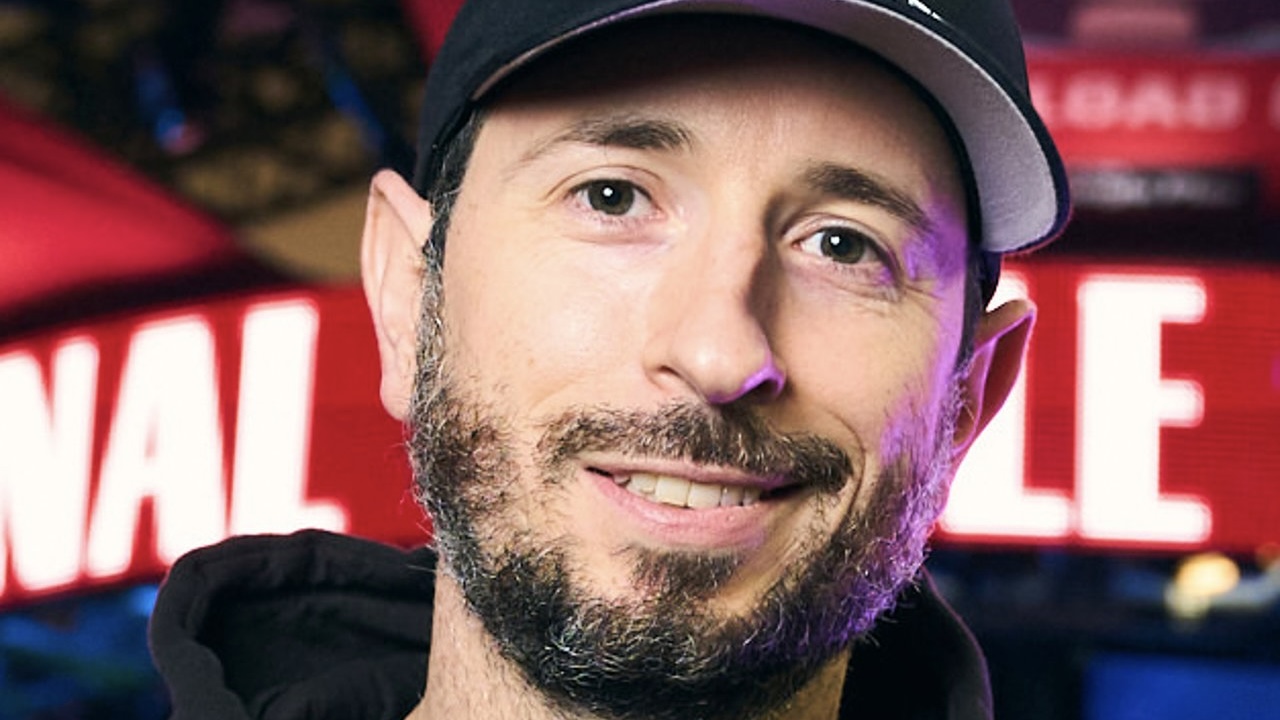
Brian Rast
Brian Rast is an American professional poker player, seven-time World Series of Poker bracelet winner and a member of the Poker Hall of Fame. His career combines success in the largest cash games with major tournament victories in Hold’em and several other poker formats.
He has won the 50.000 $ Poker Players Championship three times and was the champion of the inaugural Super High Roller Bowl in 2015. Those achievements place two very different kinds of excellence at the centre of his record: mastery across mixed games and success in an exceptionally expensive No-Limit Hold’em tournament.
The Hendon Mob lists 29.873.694 $ in recorded live tournament earnings in the latest profile available during preparation. His largest individual payout remains the 7.525.000 $ Super High Roller Bowl prize.
Rast’s importance goes beyond those figures. For more than two decades, he has developed a career in which tournament trophies provide public evidence of skills also tested in private high-stakes games.

Early Life: Born in Denver in 1981
Brian Rast was born on November 8, 1981, in Denver, Colorado. He grew up in Poway, California, near San Diego.
He graduated from Poway High School in 2000 as the class valedictorian and went on to attend Stanford University. His early path suggested a conventional academic career, but poker gradually became a serious alternative.
That transition is a useful starting point for understanding his later achievements. Rast did not enter poker with a famous name or a major trophy. He had to turn interest in the game into skills that could support a professional life, then prove those skills against increasingly strong competition.
Stanford and the Decision to Play Professionally
Rast left Stanford in 2004 to pursue poker professionally. It was a decision that exchanged the structure of university life for a profession built around uncertainty.
The attraction was not simply the possibility of a large tournament score. A sustainable poker career requires finding games, learning opponents and handling periods when good decisions do not produce immediate rewards.
His academic background became one part of the story rather than a guarantee of success. Poker offers no automatic advantage to a prestigious university name; opponents respond to the decisions made at the table.
Rast’s eventual achievements gave the decision a remarkable outcome, but the career still developed through years of practical experience.
Cash Games and the Name tsarrast
Online, Rast became known as tsarrast, a screen name associated with his activity on PokerStars and Full Tilt Poker. Much of his professional identity was built through cash games rather than a relentless tournament schedule.
A cash-game career is harder to describe through public statistics. Tournament results have dates, places and payouts. Private sessions may involve larger financial swings without leaving the same accessible record.
That distinction remains essential when assessing Rast. His public résumé is substantial, but it is not a complete ledger of his professional life. The tournaments show important victories; the cash-game background explains why those victories were never his only arena of competition.
Las Vegas and the Highest Stakes
Rast established himself in Las Vegas and became a participant in the high-stakes cash-game community. His career also included trips to Macau during the early 2010s.
The move between venues and games reflects a professional reality: the best opportunity is not always in the same place or the same format. A player may need to adjust both the technical decisions and the way opponents approach the game.
That flexibility gives cash-game experience a different character from a fixed tournament schedule. The public can follow a championship from first shuffle to final hand. A cash-game career unfolds through a much less visible series of sessions, relationships and choices.
Rast’s later mixed-game trophies provide a visible complement to that background.
The First WSOP Bracelet in 2011
Rast won his first World Series of Poker bracelet in 2011 in the 1.500 $ Pot-Limit Hold’em event. He defeated Allen Kessler heads-up and earned 227.232 $.
Pot-Limit Hold’em resembles its more familiar No-Limit counterpart, but the maximum bet depends on the size of the pot. That restriction changes how a player can apply pressure and build a large confrontation.
The first title supplied a milestone that cannot be replaced by a cash-game reputation. Whatever a player has achieved elsewhere, a bracelet is a public championship result with a place in the WSOP record.
For Rast, it was also the beginning of an extraordinary summer. A much more prestigious mixed-game title followed before the series ended.
Defeating Phil Hellmuth in the Poker Players Championship
Later in 2011, Rast won the 50.000 $ Poker Players Championship for 1.720.328 $. Phil Hellmuth finished second.
The event began with a mixed-game format, while the final table that year used No-Limit Hold’em. Rast therefore had to negotiate both a broad test of poker knowledge and a concluding contest in the game most familiar to television audiences.
The heads-up match became a memorable comeback after Hellmuth built a substantial lead. Rast recovered and finished the tournament with the title.
Winning two bracelets in one summer was significant. Winning the second in the Poker Players Championship made the season something more: it established him as a player capable of succeeding in one of the WSOP’s most demanding competitions.
Why the Poker Players Championship Matters
The Poker Players Championship rewards versatility. Its rotation requires players to make repeated adjustments between games with different betting structures, hand values and information.
A Hold’em specialist cannot assume that strong performance in one round will carry through every other discipline. Stud games demand attention to exposed cards; draw games introduce decisions about replacing cards; split-pot formats require evaluating two possible sides of a pot.
The title also carries the David “Chip” Reese Memorial Trophy, linking the competition to one of poker’s most respected all-around players.
For Rast, repeated success in this event became a defining feature of his career. It offers a stronger explanation of his technical range than a description built solely around his largest Hold’em payout.
Seven-Figure Results Before the Super High Roller Bowl
Rast finished sixth in the inaugural 1.000.000 $ Big One for One Drop in 2012 for 1.621.333 $. The enormous buy-in made it one of the most distinctive events of the period.
In December 2013, he won the 100.000 $ High Roller at the WPT Doyle Brunson Five Diamond World Poker Classic for 1.083.500 $, defeating Erik Seidel heads-up.
That result was a high roller victory at a WPT festival, rather than a WPT Main Tour championship. The distinction matters when describing his titles accurately.
These scores established that the 2011 breakthrough had a continuation. Rast was producing major results before the tournament that would deliver the largest payout of his career.
Winning the First Super High Roller Bowl
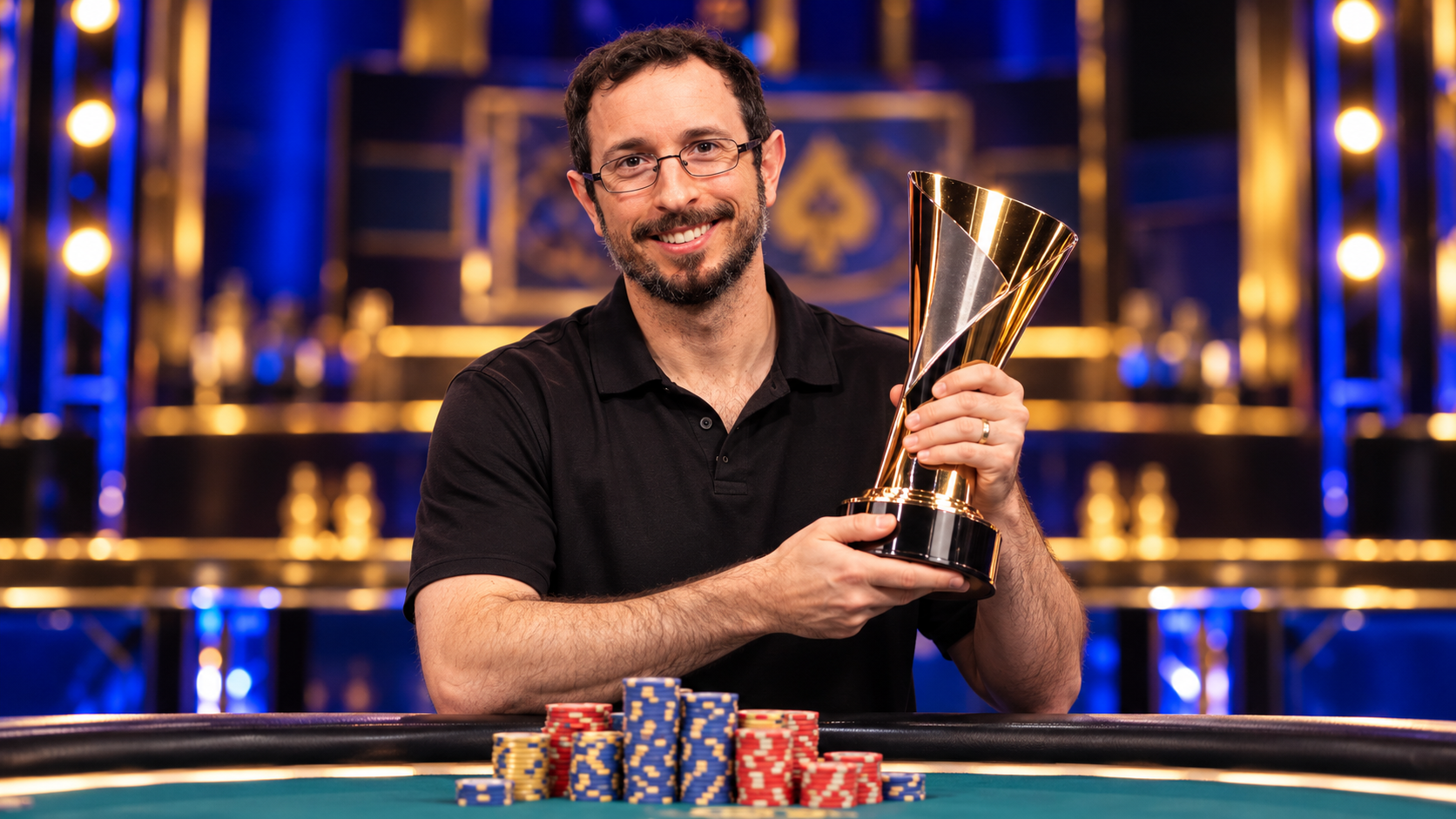
In 2015, Rast won the inaugural 500.000 $ Super High Roller Bowl at ARIA in Las Vegas. The tournament attracted 43 players and generated a 21.500.000 $ prize pool.
He defeated Scott Seiver heads-up and received 7.525.000 $, along with the championship ring. The final table also included Connor Drinan, David Peters, Tom Marchese and Erik Seidel.
The result remains his largest recorded tournament cash. It also made him the first champion in an event that would become an important fixture of elite poker.
Winning an inaugural tournament has a particular historical value. Later champions can add their names to the record, but the first entry always identifies the player who established the event’s competitive beginning.
A Second Poker Players Championship in 2016
Rast returned to the top of the Poker Players Championship in 2016. He defeated Justin Bonomo heads-up, outlasted 91 entries and collected 1.296.097 $.
The victory made him the second player to win the event twice, following Michael Mizrachi. It was his third WSOP bracelet.
Five years separated Rast’s two championships. That interval gave the repeat a different meaning from a short burst of form: he had returned to the same demanding event and won again after several seasons of changing opponents and strategies.
The result strengthened the connection between his reputation in mixed cash games and his tournament record. It was no longer necessary to rely on one championship as the principal evidence of his all-around ability.
Lowball Gold and Doyle Brunson’s Final Table
In 2018, Rast won the 10.000 $ No-Limit 2-7 Lowball Draw Championship for 259.670 $. Mike Wattel finished second in a field of 95 entries.
The tournament attracted particular attention because Doyle Brunson reached the final table during what became his final recorded WSOP cash. Brunson finished sixth, while Rast completed the event as champion.
The setting brought two generations of poker into the same story. The celebrated veteran supplied the emotional focus, while the eventual winner added another specialist title to his own record.
No-Limit 2-7 also widened Rast’s bracelet collection. Rather than making the strongest high hand, players compete to make a low hand while managing the information created by drawing or standing pat.
The Fifth Bracelet in 2021
Rast earned his fifth WSOP bracelet in 2021 by winning the 3.000 $ Six-Handed No-Limit Hold’em event for 474.102 $.
Six-handed tournaments create frequent decisions because fewer opponents remain between the player and the blinds. A successful competitor must respond to changing ranges and avoid waiting indefinitely for premium starting cards.
The title added a conventional No-Limit Hold’em championship to a collection already strongly associated with mixed games and Lowball.
It also showed longevity. A decade after his first two bracelets, Rast was still winning WSOP events. That continuation made his record more persuasive than an isolated peak season, and helped sustain the discussion of his place among the game’s leading professionals.
A Third Poker Players Championship in 2023
Rast won the 50.000 $ Poker Players Championship for a third time in 2023, receiving 1.324.747 $ and his sixth bracelet.
The event attracted 99 entries. He defeated Talal Shakerchi in a short heads-up match, with the final hand played in Razz.
At the time, the victory matched Michael Mizrachi’s record of three championships. It completed a sequence spanning 2011, 2016 and 2023.
Those dates are central to the achievement. Twelve years separated the first victory from the third, while the structure and competitive landscape continued to evolve. Rast had repeatedly returned to the event that most clearly expressed his strengths and finished as the champion.
Induction into the Poker Hall of Fame
Rast was inducted into the Poker Hall of Fame in July 2023. The ceremony took place during the WSOP in Las Vegas.
The honour recognised a career that combined tournament success with sustained participation in high-stakes games. His third Poker Players Championship victory had provided a particularly timely addition to an already strong record.
Hall of Fame recognition has a different meaning from winning a single event. A tournament identifies the player who finishes first on that occasion; induction assesses a longer body of work and a player’s standing within the game.
For Rast, the two achievements arrived in the same summer. The championship supplied a fresh result, while the induction placed the broader career in historical context.
The Seventh Bracelet: A Razz Comeback in 2025
Rast won his seventh WSOP bracelet in the 10.000 $ Razz Championship in 2025, collecting 306.644 $. Andrew Yeh was the runner-up.
The heads-up match extended into an additional day. Rast began that session behind and fell to a stack worth only one big bet before rebuilding.
He survived several critical confrontations, regained the lead and eventually completed the comeback. The title added a standalone Razz championship to his collection.
The victory is one of the clearest examples of why tournament results require both skill and survival. A player can make sound decisions and still need favourable cards at a decisive moment. Rast’s recovery supplied another memorable chapter after his Hall of Fame induction.
Brian Rast’s Seven WSOP Bracelets
| Year | Event | Prize |
| 2011 | 1.500 $ Pot-Limit Hold’em | 227.232 $ |
| 2011 | 50.000 $ Poker Players Championship | 1.720.328 $ |
| 2016 | 50.000 $ Poker Players Championship | 1.296.097 $ |
| 2018 | 10.000 $ No-Limit 2-7 Lowball Draw Championship | 259.670 $ |
| 2021 | 3.000 $ Six-Handed No-Limit Hold’em | 474.102 $ |
| 2023 | 50.000 $ Poker Players Championship | 1.324.747 $ |
| 2025 | 10.000 $ Razz Championship | 306.644 $ |
Major Tournament Payouts
The selected results below show the financial scale of Rast’s public tournament career. They include victories and deep finishes, rather than only titles.
The Super High Roller Bowl score is much larger than the other individual payouts, but the repeated Poker Players Championship results carry a distinct competitive significance.
| Year | Tournament | Result | Prize |
| 2015 | 500.000 $ Super High Roller Bowl | 1st | 7.525.000 $ |
| 2011 | WSOP 50.000 $ Poker Players Championship | 1st | 1.720.328 $ |
| 2012 | WSOP 1.000.000 $ Big One for One Drop | 6th | 1.621.333 $ |
| 2023 | WSOP 50.000 $ Poker Players Championship | 1st | 1.324.747 $ |
| 2016 | WSOP 50.000 $ Poker Players Championship | 1st | 1.296.097 $ |
| 2013 | WPT Five Diamond 100.000 $ High Roller | 1st | 1.083.500 $ |
| 2026 | PGT Mixed Games 25.300 $ 10-Game Championship | 1st | 480.000 $ |
| 2024 | WSOP Main Event | 24th | 350.000 $ |
Continued Success in the Modern Mixed Games
In February 2026, Rast won the PGT Mixed Games 25.300 $ 10-Game Championship for 480.000 $. The event attracted 64 entries.
He defeated Yuri Dzivielevski heads-up, with Badugi providing the final confrontation. Rast won the tournament, while Dzivielevski secured the overall PGT Mixed Games series championship.
The distinction is useful: winning the final event does not automatically make a player the best performer across an entire festival.
The result nevertheless continued Rast’s strongest career theme. Long after his first mixed-game WSOP championship, he was still winning important tournaments that required proficiency across a substantial rotation of games.

The WSOP Main Event and a Different Challenge
Rast finished 24th in the 2024 WSOP Main Event for 350.000 $. The deep run added a major large-field Hold’em result to a career more closely associated with cash games and specialist championships.
The Main Event presents a different test from a compact high roller or mixed-game tournament. Players must navigate a much larger field and many days of changing opponents.
A player can have an exceptional career without reaching its final table. Rast’s result therefore adds breadth to the record without becoming the sole measure of his ability.
It is another reminder that tournament poker contains several kinds of challenge. Success in one format is valuable, but a complete biography should also recognise the settings in which those results were achieved.
Playing Style, Composure and Adaptability
Rast’s results support an assessment built around adaptability. His bracelet collection spans Pot-Limit Hold’em, No-Limit Hold’em, Lowball, Razz and the broad demands of the Poker Players Championship.
Those games do not reward identical decisions. The player must recognise when a familiar instinct needs to change because the betting structure or objective has changed.
His career also illustrates the importance of maintaining a competitive approach while short-stacked. The 2011 championship match and the 2025 Razz comeback each involved difficult positions before victory.
That does not mean every recovery was the product of skill alone. It means that a professional needs to remain capable of making useful decisions while the outcome is still uncertain.
Personal Life and the Limits of Public Earnings
Rast married Juliana Karla Carlos da Silva in 2011. Las Vegas became the main base of his professional life.
His recorded tournament earnings approach 30 million dollars, but that total should not be described as his net worth or his lifetime poker profit.
The database records gross payouts. It does not subtract every buy-in, expense or tax obligation, and it does not reveal private staking arrangements. Cash-game wins and losses are a further separate component.
For a player with Rast’s background, the limitation is especially important. The visible tournament record is impressive, but a complete financial account of his career is not publicly available.
Brian Rast’s Poker Legacy
Rast’s strongest claim to a place among the leading players of his era comes from the combination of achievements rather than one statistic.
He won the first Super High Roller Bowl, captured the Poker Players Championship three times and continued adding bracelets after entering the Poker Hall of Fame.
The record links specialist knowledge with success at the highest tournament stakes. It also covers a long enough period to show that his relevance survived changes in opponents, venues and the wider game.
Brian Rast’s career demonstrates how much poker greatness can depend on range. The largest payout attracts attention, but the repeated ability to compete across different games gives the story its lasting depth.
Career information checked in October 2026. Recorded live tournament earnings represent gross cashes and exclude private cash-game results. Image positions are reserved for AI-generated illustrations