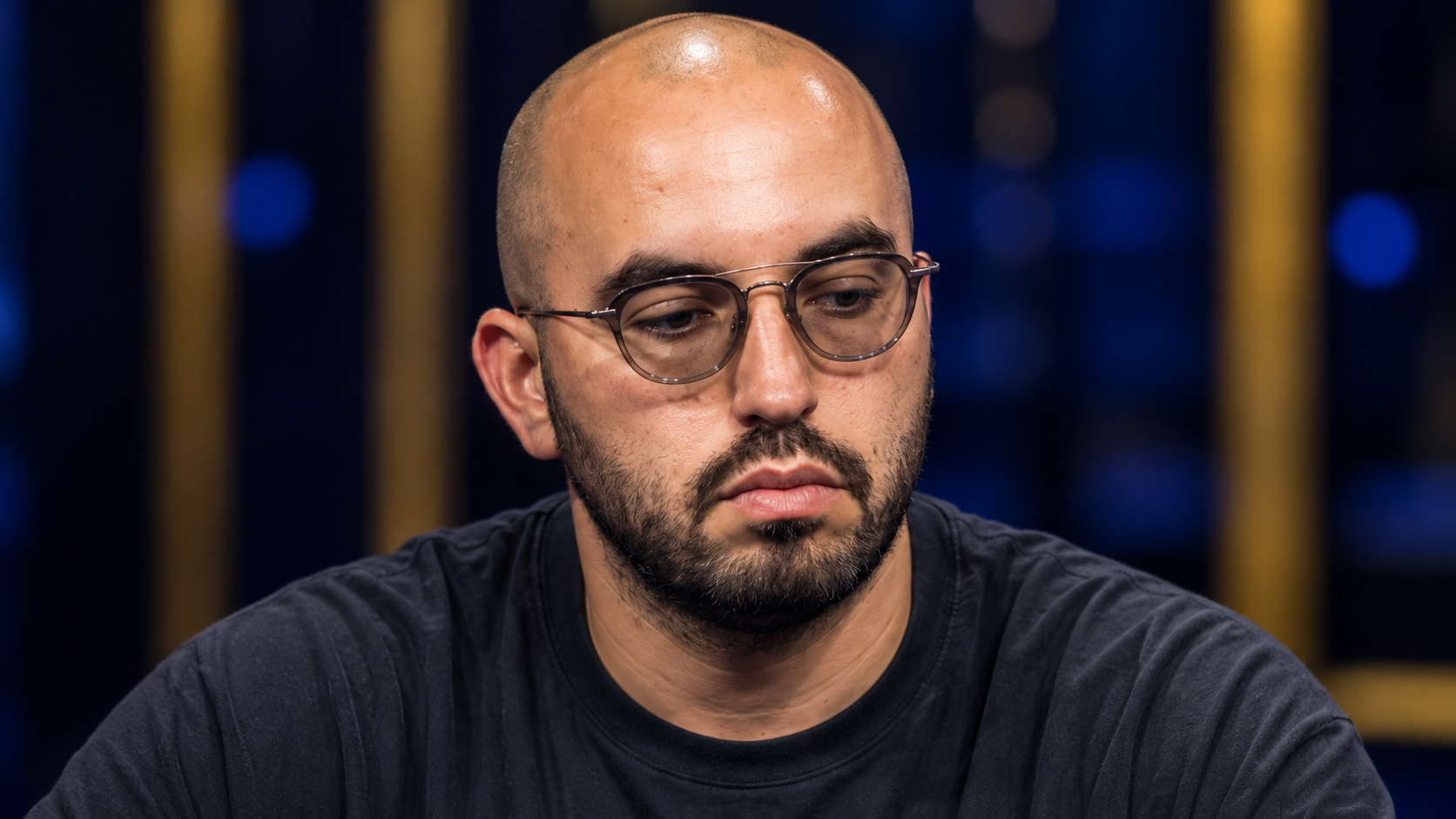
Bryn Kenney
Bryn Kenney is an American professional poker player, two-time World Series of Poker bracelet winner and the leading live tournament money winner in poker history.
By August 2026, Kenney had accumulated 90.761.206 $ in recorded live tournament cashes. No other player had reached 90 million $, and his advantage at the top of the all-time money list had grown to more than 10 million $.
One result explains a large part of that total. In 2019, Kenney finished second in the 1.050.000 £ Triton Million for Charity but secured 16.890.509 £, worth 20.563.324 $, through a heads-up deal. It remains the largest single payout recorded in live tournament poker.
That extraordinary score does not tell the complete story.
Kenney has won major high rollers in the Bahamas, Monte Carlo, Montenegro, Jeju and London. He became an Aussie Millions Main Event champion, collected five Triton titles and won WSOP bracelets ten years apart. In 2026, he added more than 10 million $ in recorded results before the end of July and became the first player to pass 90 million $ in live cashes.
His career is also one of the most controversial among modern poker stars.
In 2022, former member of Kenney’s staking group Martin Zamani accused him of operating an online stable in which ghosting, multi-accounting, collusion and real-time assistance were allegedly used. Kenney denied running a cheating operation. Messages published after his denial raised further questions, but the most serious accusations were not established through a public legal judgment.
Kenney therefore occupies an unusual place in poker history. His tournament record is unmatched in financial terms, but the number beside his name cannot be separated from the enormous buy-ins of the modern super-high-roller era, the role of staking and the controversy surrounding his online poker stable.
Early Life in Long Beach, New York
Bryn Kenney was born on November 1, 1986, and grew up in Long Beach, New York.
His connection with strategy games began long before poker. Kenney has described possessing an unusually strong memory from childhood. His family reportedly showed him baseball cards when he was very young, and he could identify dozens of players from their pictures before he could read.
He enjoyed competitive games including Risk and Stratego, but the most important discovery came when he was 12.
A cousin introduced him to Magic: The Gathering, the collectible card game that has provided an early strategic education for several successful poker professionals.
Magic combines mathematics, incomplete information, preparation and constant adaptation. A player must understand the value of individual cards, anticipate an opponent’s possible actions and build a strategy capable of surviving unpredictable situations.
Kenney developed quickly. By age 14, he was ranked first in the world among Magic players aged 15 and under.
The game gave him experience in high-pressure competition and taught him to process complicated card interactions rapidly. It also connected him with a community that would later produce poker players including David Williams, Justin Bonomo, Isaac Haxton and Eric Froehlich.
From Magic: The Gathering to Online Poker
Kenney’s interest in poker grew during the early online boom.
David Williams’ second-place finish in the 2004 WSOP Main Event was particularly influential. Williams had also come from the Magic community, and his 3,5 million $ result demonstrated that skills developed in one card game could be transferred to another with dramatically greater financial rewards.
Kenney had considered working in real estate, but he never completed the required licensing examination.
After the death of his grandmother, he moved into his grandfather’s home. The arrangement gave his younger siblings more space in a crowded family house and allowed Kenney to keep his grandfather company.
It also gave him the time and freedom to play online poker intensively.
Kenney later described sitting at the computer and playing all day, every day. The transition from Magic felt natural: a different deck of cards, but another game based on memory, probability and finding advantages over repeated opponents.
His progress was not immediate or smooth. Like many young online players, Kenney went through losing periods while learning bankroll management and adjusting to stronger competition.
Volume became his education. He played thousands of hands, observed how opponents reacted under pressure and built a style based less on standard rules than on confidence in his own decisions.
The Commerce Casino Breakthrough
Kenney’s move from online poker into major live games was accelerated by backing.
After establishing himself online, he was staked to play at Commerce Casino in Los Angeles. According to Kenney’s account, he began the trip with a 20.000 $ bankroll and turned it into approximately 1 million $ in little more than a month.
The run changed the scale of his career.
Commerce offered large cash games and a constant supply of experienced professionals. Success there required more than knowledge of online tournament structures. Kenney had to make decisions while sitting directly across from opponents, manage long sessions and interpret physical behaviour that did not exist on a computer screen.
His results reinforced one of his defining characteristics: an unusually high level of confidence.
Kenney did not approach the largest games as environments in which he needed permission to belong. He believed his instincts and competitive background were already strong enough to challenge established professionals.
That confidence could appear arrogant, but it also allowed him to take opportunities that more cautious players might have rejected.
First Live Results and WSOP Breakthrough
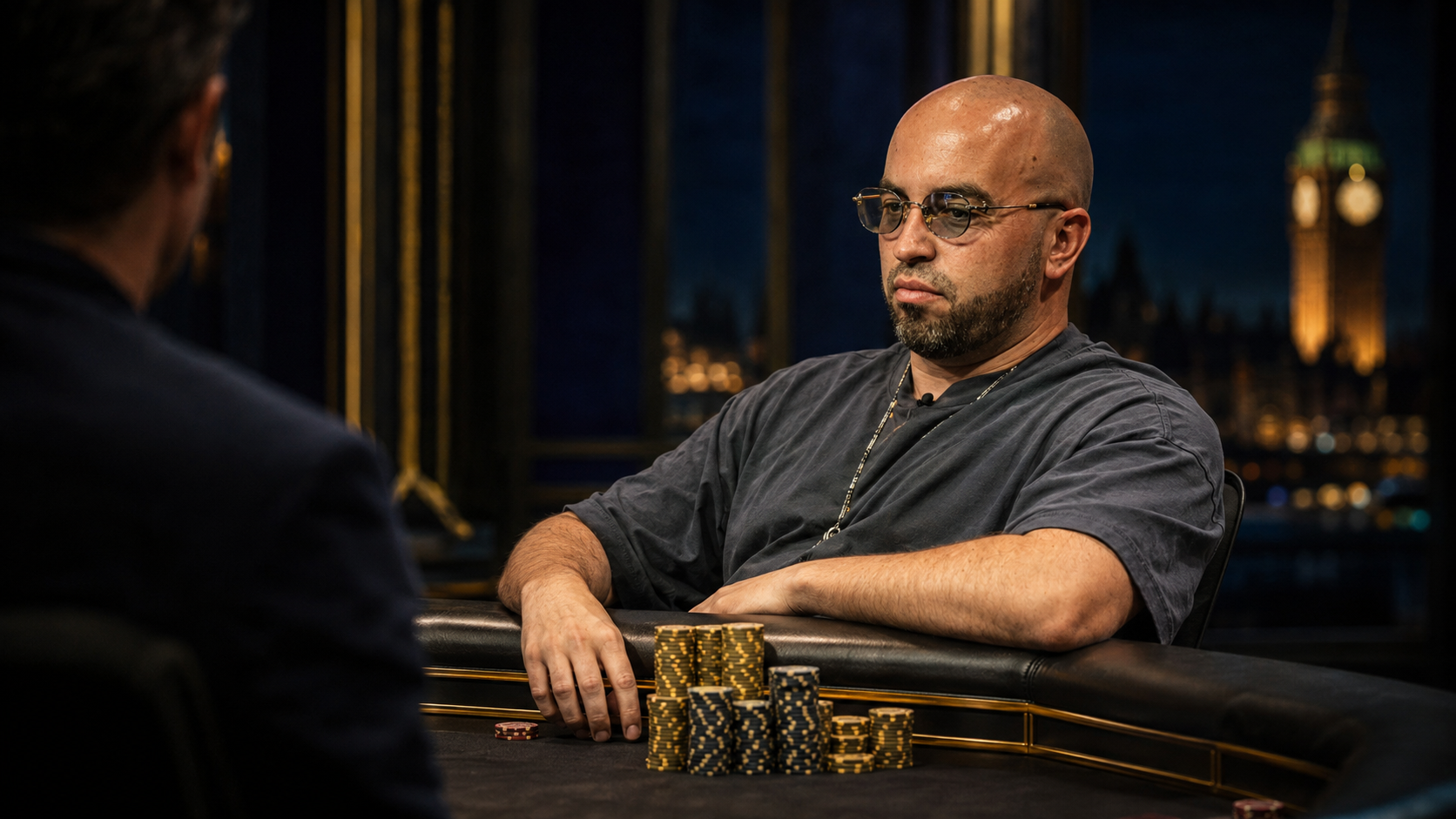
Kenney’s first recorded live tournament cash came in 2007 at the East Coast Poker Championships in Verona, New York.
He reached his first WSOP final table in 2009, finishing eighth in a 1.500 $ six-handed No-Limit Hold’em event for 42.320 $.
The following summer produced his first major international results.
Kenney finished eighth in the 25.000 $ WSOP six-handed event for 141.168 $. He then made a deep run in the 2010 Main Event, surviving a field of 7.319 entries and finishing 28th for 255.242 $.
The Main Event result remains his best finish in poker’s world championship.
In January 2011, he entered the 100.000 $ PokerStars Caribbean Adventure Super High Roller and placed third for 643.000 $. The result showed that he could compete in the new generation of events designed for small fields, elite professionals and exceptionally wealthy recreational players.
These tournaments would soon become the centre of his career.
Winning His First WSOP Bracelet
Kenney won his first WSOP bracelet in 2014 in the 1.500 $ Ten-Game Mix Six-Handed event.
The tournament tested players across No-Limit Hold’em, Limit Hold’em, Pot-Limit Omaha, Omaha Hi-Lo, Seven Card Stud, Stud Hi-Lo, Razz, Badugi, 2-7 Triple Draw and 2-7 Single Draw.
Kenney defeated 445 entries and Jan Suchanek heads-up to win 153.220 $.
The victory was important because it demonstrated a range that his later No-Limit Hold’em high-roller results can obscure. Kenney was not simply a specialist who had learned how to apply pressure in one format. He could adjust to ten variants inside the same event.
The bracelet also ended a series of close calls. Kenney had already collected 25 WSOP cashes and four final-table appearances before finally winning a title.
He would wait another decade for bracelet number two.
Becoming a Super High Roller Regular
The rapid expansion of super-high-roller poker matched Kenney’s appetite for risk.
Traditional tournament professionals often focused on events with buy-ins between 1.000 $ and 10.000 $. Kenney increasingly selected tournaments costing 25.000 $, 50.000 $, 100.000 $ or more.
These events produced smaller fields but offered no easy path to a title. A typical lineup could include the best tournament professionals in the world, experienced private cash-game players and wealthy businesspeople comfortable risking six figures in a single entry.
Kenney’s first seven-figure live score came at the 2016 PCA. He defeated 2015 WSOP Main Event champion Joe McKeehen heads-up in the 100.000 $ Super High Roller and won 1.687.800 $.
Later that year, he finished second to Wai Kin Yong in the Triton Manila Main Event for approximately 1.401.694 $.
In 2017, Kenney won a 50.000 $ event in the Bahamas for 969.075 $, the 100.000€ PokerStars Championship Monte Carlo Super High Roller for 1.784.500€ and a 50.000 $ Poker Masters event for 960.000 $.
He recorded more than 8,5 million $ in tournament cashes during the year and established himself as one of the most productive high-roller players in the world.
The 2019 Season That Changed Everything
Kenney entered 2019 as an elite professional. He ended it as the most financially successful tournament player poker had ever seen.
The year began with a victory in the 10.600 A$ Aussie Millions Main Event. Kenney defeated a field of 822 entries and won 1.272.598 A$ after a three-way deal.
His success then accelerated on the Triton circuit.
In March, he finished second in the 2.000.000 HK$ Triton Jeju Main Event for 3.062.513 $. In May, he won the 1.000.000 HK$ Triton Montenegro Main Event for 2.713.859 $.
Those results alone would have made 2019 a historic year.
The Triton Million in London placed Kenney’s career on an entirely different financial level.
The 1 Million £ Triton Million
The Triton Million for Charity was held in London in August 2019 with a buy-in of 1.050.000 £.
It was the largest tournament entry fee in poker history. The first 1 million £ went into the prize pool, while 50.000 £ from every entry was donated to charity.
The invitational format paired wealthy recreational players with invited professionals. Business participants and professionals were initially separated before the fields combined later in the tournament.
Fifty-four entries created a prize pool of 54 million £.
Kenney reached heads-up play against Chinese businessman Aaron Zang with a commanding chip lead. Before continuing, the two negotiated a deal based largely on their stack sizes.
Kenney secured 16.890.509 £, equivalent to 20.563.324 $, while Zang locked up 13.779.491 £.
They then played for the title.
Zang recovered from the chip disadvantage and won the final confrontation, officially finishing first. Kenney placed second but received approximately 3,1 million £ more because of the deal.
The unusual outcome created two records. Zang won the largest buy-in tournament ever held, while Kenney received the largest individual payout in live tournament history.
Why Kenney Earned More Than the Winner
The Triton Million result is sometimes incorrectly described as a 20,5 million $ victory.
Kenney did not win the tournament. Aaron Zang won the trophy and is listed as the champion.
Kenney earned more because tournament deals redistribute the remaining prize money before play ends. When one player holds a major chip advantage, that player can secure an amount larger than the original second-place prize and sometimes larger than the eventual champion receives.
Kenney held more than five times Zang’s stack when the agreement was made. The deal therefore protected the financial value of his position, even though he did not close out the tournament.
Both records are legitimate but refer to different achievements.
Zang won the title. Kenney won the largest amount of money.
The All-Time Money List
The Triton Million moved Kenney to the top of poker’s all-time money list.
Justin Bonomo later regained the lead, but Kenney returned to first place after winning the 250.000 $ Triton Luxon Invitational in London in 2023 for 6.860.000 $.
His total continued to grow rapidly.
Kenney won the 125.000 $ Triton Monte Carlo Main Event in 2024 for 4.410.000 $, becoming the first player to exceed 70 million $ in recorded live cashes. He passed 80 million $ in December 2025 and crossed 90 million $ in July 2026.
By August 27, 2026, The Hendon Mob listed Kenney with 90.761.206 $ in earnings, the highest total in tournament history.
The milestone is extraordinary, but the money list requires careful interpretation.
It records gross prizes, not profit. It does not subtract tournament buy-ins, re-entries, travel, taxes or the percentage of a player’s action owned by backers and investors. It also does not add unrecorded cash-game results.
A 1 million $ tournament cash can represent a major profit, a recovery from several losing entries or money shared among multiple people.
Kenney is poker’s official all-time tournament money leader. That does not mean a public database can determine exactly how much he personally kept.
Bryn Kenney’s Biggest Poker Results
Kenney’s largest cashes show how closely his record is connected to the super-high-roller and Triton eras.
|
Year |
Tournament |
Result |
Prize |
|
2019 |
Triton Million for Charity, London |
2nd |
20.563.324 $ |
|
2023 |
Triton 250.000 $ Luxon Invitational, London |
1st |
6.860.000 $ |
|
2024 |
Triton 125.000 $ Main Event, Monte Carlo |
1st |
4.410.000 $ |
|
2019 |
Triton 2.000.000 HK$ Main Event, Jeju |
2nd |
3.062.513 $ |
|
2026 |
EPT Monte Carlo 250.000€ Super High Roller |
2nd |
2.520.268€ / 2.946.648 $ |
|
2026 |
WSOP 250.000 $ Super High Roller |
2nd |
2.776.634 $ |
|
2019 |
Triton 1.000.000 HK$ Main Event, Montenegro |
1st |
2.713.859 $ |
|
2017 |
PokerStars Championship 100.000€ Super High Roller, Monte Carlo |
1st |
1.784.500€ |
|
2016 |
PCA 100.000 $ Super High Roller |
1st |
1.687.800 $ |
|
2024 |
Triton 150.000 $ Event, Monte Carlo |
4th |
1.616.000 $ |
The figures represent gross recorded payouts. Currency conversions reflect the values used by tournament databases at the time and may differ slightly between sources.
Triton Poker Success
No tour has contributed more to Kenney’s public tournament record than Triton Poker.
By April 2025, he had already accumulated more than 48 million $ in Triton earnings. The tour’s combination of elite professionals, wealthy invitees and buy-ins regularly reaching six figures created an environment ideally suited to his game.
Kenney has won five Triton titles.
His first came in the 500.000 HK$ Six-Handed event in Montenegro in 2019. He added the 1.000.000 HK$ Main Event at the same stop, the 250.000 $ Luxon Invitational in London in 2023 and the 125.000 $ Monte Carlo Main Event in 2024.
In March 2025, he finished second in the 50.000 $ Seven-Handed event at Triton Jeju for 1.897.430 $. Less than 24 hours later, he won the 50.000 $ Bounty Quattro Turbo for 839.000 $ and his fifth Triton title.
The series rewards qualities central to Kenney’s reputation: comfort with enormous financial pressure, willingness to re-enter, short-handed experience and an ability to adjust to opponents whose strategies differ from standard professional theory.
The 2023 Luxon Invitational Comeback
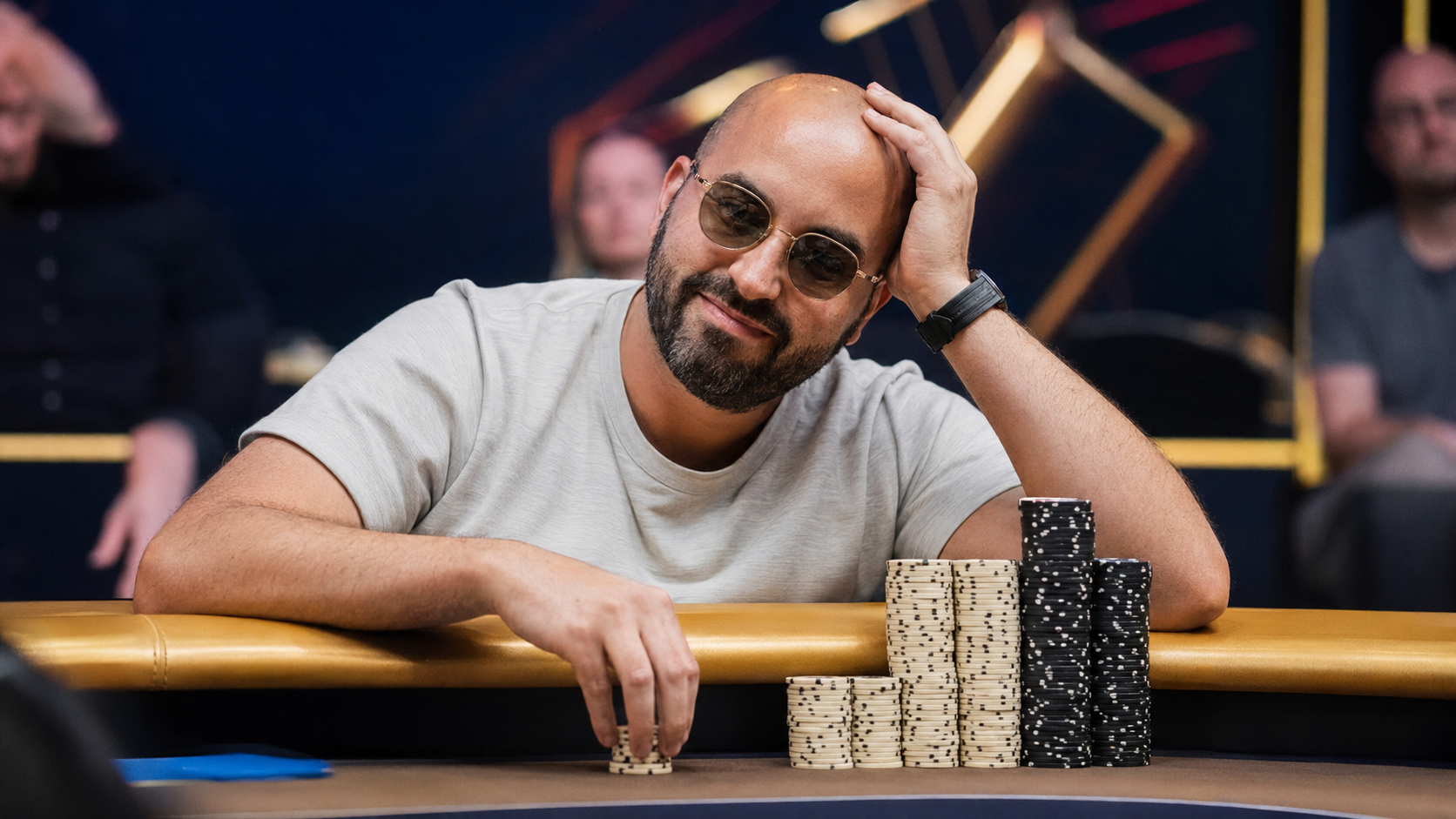
Kenney’s 2023 victory in London carried significance beyond the 6.860.000 $ prize.
The 250.000 $ Luxon Invitational attracted 118 entries and created a 29,5 million $ prize pool. As in other Triton invitational events, recreational participants invited professional players into the field.
Kenney defeated British businessman Talal Shakerchi heads-up. Chris Moneymaker, Punnat Punsri, Aleksejs Ponakovs and other leading players also reached the final table.
The victory returned Kenney to first place on the all-time money list after Justin Bonomo had overtaken him.
It also arrived little more than a year after the allegations surrounding Kenney’s online stable had damaged his public reputation.
The result did not answer any of the ethical questions. It demonstrated that the controversy had not reduced his ability to compete at the highest live tournament level.
Second WSOP Bracelet Online
Kenney won his second WSOP bracelet during the 2024 international WSOP Online series on GGPoker.
He defeated a field of 798 entries in the 2.100 $ No-Limit Hold’em Bounty Championship. Kenney earned 94.635 $ from the regular prize pool and 131.422 $ in bounties, producing a total payout of 226.057 $.
The victory came ten years after his first bracelet.
The two titles represent opposite ends of his poker range. His first came in a live ten-game mixed event, while the second was won online in an aggressive No-Limit Hold’em bounty format.
Kenney had come close to bracelet number two in 2023, finishing second to Ryan Miller in the 10.000 $ Seven Card Stud Hi-Lo Championship.
He came close again in the 50.000 $ Poker Players Championship in 2025, losing heads-up to Michael Mizrachi and collecting 887.542 $.
As of August 2026, Kenney has two bracelets. His tournament earnings greatly exceed those of many players with larger bracelet collections, illustrating the difference between WSOP success and performance in high-buy-in events across the global circuit.
A Huge 2026 Season
Kenney’s position at the top of the money list became even stronger in 2026.
At EPT Monte Carlo, he finished fourth in the 100.000€ High Roller for One Drop for 728.500€. Days later, he reached heads-up play against Alex Kulev in the 250.000€ Super High Roller.
Kenney and Kulev made a deal before Kulev won the title. Kenney received 2.520.268€, worth approximately 2.946.648 $ in The Hendon Mob’s conversion.
At the WSOP, Kenney finished second to Adrian Mateos in the 250.000 $ Super High Roller. The tournament attracted 56 entries, and Kenney earned 2.776.634 $.
He later placed third in the 50.000 $ High Roller for another 1.041.908 $.
At the end of July, Kenney won the 100.000 $ King’s Charity Super High Roller during the King Poker Cup in Jeju. He and Jesse Lonis agreed to a heads-up deal worth 1.667.000 $ to Kenney in the official database.
The result pushed his career total beyond 90 million $.
Kenney did not win a WSOP bracelet during the season, but his repeated deep runs against small fields of elite opponents offered further evidence that his position on the money list is not based on one exceptional score.
Playing Style: “Street Poker” Over Study Groups
Kenney has described his approach as his own version of “street poker.”
While many elite professionals study in groups, exchange hand histories and use charts to refine decisions, Kenney has presented himself as a “lone wolf.” He has said that he protects his thought process rather than allowing strategic discussion to pull him towards the same conclusions as other players.
His game relies heavily on intuition, observation and confidence.
That does not mean his decisions are random or anti-mathematical. Years of online volume and high-level competition created an internal library of patterns. Kenney can draw on that experience without explaining every decision through conventional technical language.
He is particularly dangerous in short-handed play, where ranges widen and opponents must make more decisions with marginal hands.
Kenney is willing to use unusual bet sizes, enter pots with hands that other professionals might discard and apply pressure when he believes an opponent is uncomfortable rather than only when the cards clearly justify aggression.
His approach can be difficult to copy. Intuition becomes useful only after enough experience has trained it. Without that foundation, “playing by feel” can become an excuse for undisciplined decisions.
Confidence, Energy and Risk
Kenney’s greatest strength may also be the quality that divides opinion about him most sharply.
He believes he can beat the strongest available fields.
That belief encourages him to enter events with buy-ins that can damage even a wealthy professional’s bankroll. Kenney has often been willing to fire multiple bullets when re-entry is available, creating more opportunities to reach a final table but also increasing the true cost behind his recorded cashes.
His language around poker frequently emphasises energy, momentum, focus and the ability to remain present.
Following major victories, he has spoken less about solver outputs than about refusing to give up and maintaining the correct mental state through inevitable swings.
The philosophy suits high-roller tournaments, where one lost confrontation can cost hundreds of thousands of dollars and weeks may pass without a recorded cash.
Kenney’s confidence sometimes produces statements that other professionals view as excessive. Yet maintaining belief after losing enormous buy-ins is part of the psychological requirement of his career.
Staking and Building a Poker Stable
Kenney’s influence in online poker extended beyond his own results.
He backed groups of players, commonly known as horses, by paying some or all of their tournament entries in exchange for an agreed share of future winnings.
Staking can benefit both sides. A talented player receives access to larger games without risking a complete personal bankroll, while the backer spreads investment across many tournament entries.
The arrangement also creates power.
A backer may decide which tournaments a player enters, set study expectations, manage makeup after losses and control whether the relationship continues. When several players from the same stable compete on one platform, questions about information sharing and conflicts of interest become especially important.
Kenney’s stable became central to the most serious controversy of his career.
The 2022 Cheating Allegations
In April 2022, Martin Zamani publicly accused Kenney of operating what he described as a cult-like online poker group.
Zamani had previously been backed by Kenney and acknowledged his own participation in improper activity. He alleged that members of the stable colluded in satellites, ghosted other players, used multiple accounts and had access to real-time assistance.
Ghosting occurs when someone other than the registered player makes decisions or provides prohibited assistance during an active tournament. Multi-accounting allows one person to play through more than one identity, while collusion involves players secretly cooperating against opponents.
Each practice undermines the basic assumption that every online seat represents one independent player making unaided decisions.
Zamani also described strict lifestyle expectations inside the group, including dietary demands and a shamanic Kambo ritual involving frog secretion. Those claims generated sensational headlines, but they were separate from the evidence required to establish cheating in poker games.
The most important allegations concerned what happened at the tables.
Kenney’s Denial and the Published Messages
Kenney denied running a cheating operation during a lengthy PokerNews interview.
He rejected claims that he instructed players to collude or use real-time assistance. He also denied playing through the account of high-stakes amateur Lauren Roberts and challenged Zamani’s credibility.
Kenney acknowledged that, across a long career, he may have occasionally discussed hands with players while they were competing. He argued that this was very different from organising systematic ghosting.
The response did not end the controversy.
PokerNews later reviewed Telegram messages between Kenney and player George Wolff. Some exchanges appeared to show knowledge of players assisting one another, discussion of using another person’s account and instructions to help a player who was active in a tournament.
Kenney argued that the messages did not prove the full operation Zamani had described. Critics believed they contradicted the clarity of his original denial.
The correct distinction remains important.
Zamani made allegations. Kenney denied operating the alleged scheme. Published messages created legitimate questions about ghosting and multi-accounting, but a public accusation and a collection of messages are not the same as a complete independent adjudication of every claim.
The controversy remains part of Kenney’s record because the questions were never resolved to the satisfaction of much of the poker community.
GGPoker and 4Poker
Kenney became the first major public face of GGPoker in 2018.
He represented the brand, advised on tournament structures and helped attract players to its high-stakes games. Kenney later described his role as extending beyond standard sponsorship into player recruitment, transfers and the organisation of games.
The formal ambassador relationship ended in 2020.
After the 2022 allegations, Kenney became a founder and public face of 4Poker. The new platform promoted itself as an online room created by poker players, with low rake, high rewards and a focus on game integrity.
The connection was controversial. A player facing unresolved online cheating allegations was asking customers to trust a poker platform he helped establish.
4Poker stated that Kenney would not have access to back-end tools or player data. The room launched in 2023 and continued operating in 2026 under a Malta Gaming Authority licence.
The project reflects the two competing versions of Kenney’s public identity.
Supporters see an experienced player trying to improve online poker. Critics see unanswered integrity questions that make his leadership role difficult to accept.
Bryn Kenney’s Net Worth
Bryn Kenney’s exact net worth is not publicly known.
Online estimates often begin with his tournament earnings and assume that a large percentage belongs to him. That method is unreliable.
Kenney has paid extremely large buy-ins across hundreds of events. Some tournaments allowed several entries, and a losing entry never appears in a winnings database. Staking, swaps with other professionals and the sale of tournament action can also change how much of any prize a player owns.
Taxes, travel and living expenses further separate gross cashes from personal wealth.
Kenney has also participated in private cash games and business projects whose complete financial results are not public.
It is reasonable to say that he has generated more recorded tournament prize money than any other player. It is not responsible to convert 90,7 million $ in gross cashes into a precise personal net-worth figure.
Why the Money Record Still Matters
The limitations of the all-time money list do not make Kenney’s achievement meaningless.
Every modern high-roller faces buy-ins, re-entries, swaps and staking. Kenney has still accumulated more recorded prize money than any of them.
His results also extend across different periods of tournament poker.
He cashed at the WSOP before super high rollers became a regular global category. He won a mixed-game bracelet, succeeded during the PokerStars Championship era, dominated major Triton stops and continued reaching seven-figure final tables in 2026.
The 20,5 million $ Triton Million payout is the largest component of his total, but removing it would still leave more than 70 million $ in cashes.
The record therefore reflects both one historically exceptional result and almost two decades of repeated success.
Bryn Kenney’s Place in Poker History
Kenney’s historical position depends on the measurement being used.
He does not have Phil Hellmuth’s bracelet record, Phil Ivey’s reputation across live cash games and tournaments or Doyle Brunson’s influence on poker’s development.
He has never won the WSOP Main Event, a WPT Championship or an EPT Main Event.
But no player has extracted more gross prize money from live tournaments.
Kenney helped define the super-high-roller specialist: a professional willing to travel globally, compete repeatedly for six-figure buy-ins and build a career in events where a small number of results can move millions of dollars.
His five Triton titles, two bracelets, Aussie Millions Main Event victory and sustained performance against elite fields make the résumé deeper than the headline number alone suggests.
The controversy prevents a purely celebratory interpretation.
Poker skill and poker integrity are separate questions. Exceptional live results cannot answer allegations about conduct online, just as unresolved allegations do not erase documented tournament victories.
Both belong in a complete assessment of his career.
The Complicated Legacy of Bryn Kenney
Bryn Kenney’s story is the story of modern high-stakes tournament poker at its most successful and most uncomfortable.
He came from competitive card games, learned through the online boom and used backing to enter a live poker world that rewarded confidence and risk. He then followed tournament poker as its centre of gravity shifted from traditional championship events towards global super high rollers.
No result captured that transformation better than the Triton Million.
Kenney finished second, won more than the champion and received a payout larger than the first prizes of two WSOP Main Events combined. The deal placed him at the top of the all-time money list and created a record that still stood in August 2026.
He proved that the score was not an isolated accident. The Luxon Invitational, Triton Monte Carlo Main Event, two WSOP bracelets and his remarkable 2026 season kept adding evidence of elite tournament ability.
At the same time, the allegations surrounding his online stable created questions that tournament trophies cannot settle. Kenney denied the central claims, but published communications ensured that the story did not disappear.
His legacy is therefore neither simple celebration nor simple condemnation.
Kenney is the most successful live tournament player in recorded financial terms. He is also a divisive figure whose influence on staking, online poker and game integrity continues to be debated.
The number at the top of his record is clear: 90.761.206 $.
Everything that number means is considerably more complicated.
Statistics updated on August 27, 2026. Recorded tournament earnings represent gross cashes and exclude buy-ins, re-entries, taxes, staking arrangements and private cash-game results.