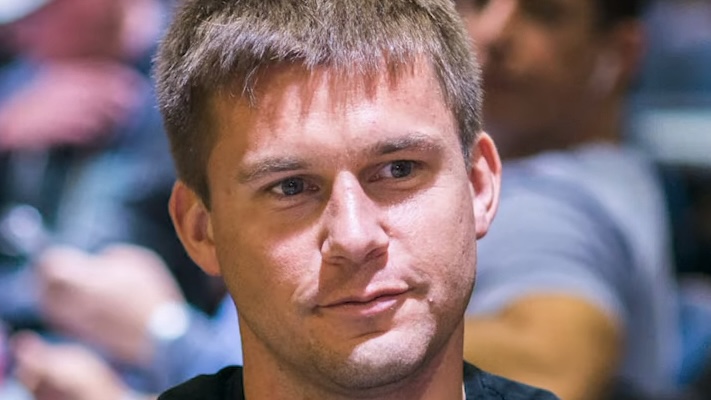
Byron Kaverman
Byron Kaverman is an American professional poker player, World Series of Poker bracelet winner and former number one in the Global Poker Index. His career connects the major tournament circuits of the 2010s with the modern international high-roller game. He has reached final tables at the WSOP, World Poker Tour, European Poker Tour and events with buy-ins ranging from tens of thousands of dollars to one million dollars.
Kaverman’s defining season came in 2015. He won the WSOP 10.000 $ No-Limit Hold’em Six-Handed Championship, defeated Doug Polk heads-up and finished the year as the GPI Player of the Year. The combination established him as one of the strongest tournament professionals of his generation.
His record also includes fifth place in the 2017 Super High Roller Bowl and the 2018 Big One for One Drop. The latter paid 2.000.000 $, his largest recorded live tournament prize. By October 2026, his recorded live cashes exceeded 22,9 million $.
Kaverman has generally attracted attention through his results rather than a flamboyant public personality. His route from Ohio to the world’s most expensive tournaments illustrates how sustained performance can build a career across several distinct eras of poker.

Early Life in Ohio
Kaverman was born in 1987 and grew up in Fort Jennings, Ohio. Before becoming a full-time poker professional, he pursued an academic and sporting path. He attended Tiffin University, studied psychology and played collegiate soccer.
Those interests were connected. Sport offered competition and the demands of performing under pressure, while psychology provided a possible professional direction beyond the playing field. Kaverman considered further study in sports psychology before poker became his principal occupation.
His background helps explain the circumstances of his career change, although it should not be treated as a complete explanation of his poker ability. Tournament success also requires technical study, experience and the capacity to make decisions through long periods of uncertainty.
Discovering Poker
Kaverman began playing poker with friends during his high-school years in the mid-2000s. This was the period when televised tournaments and online poker were introducing the game to a much wider audience. For a young player, a home game could become the starting point for a far more serious competitive interest.
He gradually moved beyond casual play and began entering organised tournaments. The change required more than understanding which starting hands were strong. Live tournaments introduced unfamiliar opponents, longer playing sessions and the need to protect a limited stack while still finding opportunities to accumulate chips.
His early career developed before the current abundance of solver tools and training platforms. Experience at the table remained an essential source of information. Each event offered a new opportunity to observe how opponents responded to pressure and how tournament conditions changed their decisions.
First World Series of Poker Results
Kaverman’s recorded WSOP results began in 2008. He finished 37th in a 3.000 $ No-Limit Hold’em event for 7.311 $. It was a modest payout compared with his later achievements, but it marked an early step into the game’s most important tournament festival.
The WSOP offered a different environment from a local event or home game. Large fields required players to navigate many tables and opponents before reaching the final stages. A successful run demanded both technical execution and resilience over an extended schedule.
For Kaverman, this period was the foundation of a career rather than an immediate arrival at the top. His most important breakthrough would come outside Las Vegas, in a tournament that changed the practical balance between poker and his plans for further education.
The 2011 PCA Breakthrough
In 2011, Kaverman won the 5.200 $ No-Limit Hold’em Eight-Max event at the PokerStars Caribbean Adventure. He defeated a field of 245 entries and collected 320.840 $. The result was his first major tournament victory and a substantial increase in the scale of his recorded earnings.
The timing mattered. Kaverman had been considering graduate study, but the victory made a professional poker career a more concrete option. A large early score cannot guarantee a lasting career; it can, however, provide resources and confidence to pursue a more demanding schedule.
Kaverman’s subsequent record gave the result lasting significance. He continued competing on major circuits and developed into a regular contender in events far more expensive than the tournament that had provided his initial breakthrough.
A Deep Run in the WSOP Main Event
In 2013, Kaverman finished 34th in the WSOP Main Event for 229.281 $. The performance placed him within reach of the most recognisable final table in poker, although he did not advance to the championship’s concluding stages.
A Main Event run tests a different set of conditions from a small high roller. Players must survive a huge field, changing table dynamics and several days of competition. The value of a strong decision cannot always be assessed immediately, and one unfortunate confrontation can end a long campaign.
For Kaverman, the result added a major large-field achievement to his growing record. It also demonstrated that his career was not limited to small tournaments populated almost entirely by established professionals.
Runner-Up in the WPT World Championship
Kaverman reached another important milestone in 2014 when he finished second in the WPT World Championship. He collected 727.860 $, while Keven Stammen took the title.
The result was a near miss in terms of winning a flagship championship, but it was also a clear advance in Kaverman’s tournament career. Reaching heads-up play in a prestigious event requires a player to handle both the accumulation phase and the increasingly expensive decisions near the top of the payout ladder.
His WPT performances helped build the reputation that preceded his breakthrough season. By the time he won a WSOP bracelet, Kaverman already had a substantial record on other circuits and experience at final tables where each decision carried a significant financial consequence.
Moving into High Rollers
As his career developed, Kaverman increasingly competed in high rollers. These events combined larger buy-ins with smaller fields and frequent encounters against the same experienced opponents. They required adjustments that differed from those used to navigate a broad recreational field.
In this environment, familiar opponents can build detailed knowledge of one another’s tendencies. A profitable approach has to account for how previous hands influence expectations and how stack sizes alter the range of reasonable decisions.
Kaverman’s results at ARIA and other high-stakes stops made him a regular presence in this competitive setting. The tournaments also became an important part of the schedule through which he assembled his exceptional 2015 season.
The 2015 WSOP Six-Handed Championship
Kaverman won his first WSOP bracelet in Event 37 of the 2015 series, the 10.000 $ No-Limit Hold’em Six-Handed Championship. The event attracted 259 entries and awarded him 657.351 $.
The six-handed format gives each player more frequent involvement in the action than a full-ring table. Blinds arrive more quickly, opening ranges widen and confrontations between strong players occur repeatedly. It is a format in which passively waiting for premium cards can become expensive.
Kaverman reached a final table featuring Doug Polk, Fedor Holz, Thomas Muehloecker, Sam Greenwood and Paul Volpe. The quality of the lineup made the bracelet particularly persuasive evidence of his ability to compete against leading professionals.
| Place | Player | Prize |
| 1st | Byron Kaverman | 657.351 $ |
| 2nd | Doug Polk | 406.261 $ |
| 3rd | Fedor Holz | 268.463 $ |
| 4th | Thomas Muehloecker | 182.448 $ |
| 5th | Sam Greenwood | 126.745 $ |
| 6th | Paul Volpe | 89.934 $ |
Defeating Doug Polk Heads-Up
Kaverman’s final opponent was Doug Polk, already recognised for his heads-up No-Limit Hold’em expertise. The pairing gave the final stage an obvious point of interest: a player building a remarkable live season faced an opponent particularly comfortable in one-on-one competition.
The heads-up match lasted only ten hands. An early straight gave Kaverman a commanding advantage, and he completed the victory with ace-five against Polk’s queen-jack. The bracelet represented the culmination of a strong tournament performance rather than a lengthy final duel.
The result became one of the central achievements of Kaverman’s career. It placed a major championship alongside his WPT runner-up finish and gave him a title in an event whose structure and field strongly emphasised professional No-Limit Hold’em ability.

GPI Player of the Year in 2015
Kaverman finished 2015 as the Global Poker Index Player of the Year. The award reflected a season of results across the international live tournament schedule, with his WSOP bracelet forming part of a broader record.
An annual ranking rewards a different achievement from winning a single tournament. A player must repeatedly produce strong finishes and remain competitive across multiple events. A spectacular isolated payout does not automatically establish the same kind of season-long consistency.
The distinction is also important when describing poker awards. The GPI Player of the Year is separate from the WSOP Player of the Year, which is tied to the World Series schedule. Kaverman’s 2015 award belonged to the wider GPI competition.
Becoming the World Number One
During 2015, Kaverman also reached first place in the Global Poker Index world ranking. The position gave statistical recognition to the strength of his recent tournament record and placed him at the top of a ranking followed across the live poker community.
The world ranking and the annual Player of the Year award describe related but different measures. A rolling ranking evaluates recent performance over its defined period, while an annual race centres on results within a particular year.
Reaching the top of both measures made 2015 the clearest landmark season in Kaverman’s career. It combined a major title with sustained output, establishing him as a player whose success extended beyond one final table or one favourable run of cards.
The 2017 Super High Roller Bowl
Kaverman finished fifth in the 2017 Super High Roller Bowl for 1.400.000 $. The 300.000 $ buy-in tournament attracted 56 entries and was won by Christoph Vogelsang.
The event illustrated the increasingly expensive end of the tournament market. A player entering such a competition faced a field filled with accomplished professionals and a substantial financial commitment before the first hand was dealt.
Kaverman’s final-table result added a seven-figure payout to his record and confirmed his place in this tier of competition. It also provided a different kind of achievement from his bracelet: a deep finish in one of poker’s most demanding invitational-style high-stakes events.
The 2018 Big One for One Drop
In 2018, Kaverman entered the Big One for One Drop, the WSOP tournament with a 1.000.000 $ buy-in. He finished fifth and received 2.000.000 $, his largest recorded live tournament cash.
The size of the event created an unusual relationship between entry cost and prize money. Even a seven-figure payout needed to be understood alongside the enormous buy-in. A tournament database records the prize received, not the player’s complete financial position.
Kaverman’s tournament ended in a three-way all-in confrontation involving Fedor Holz and Rick Salomon. Holz eliminated both opponents, with Kaverman taking fifth place and Salomon finishing fourth. The hand became a dramatic moment in a tournament where every remaining payout was measured in millions.
Selected Major Tournament Results
Kaverman’s career includes major results in large fields, six-handed championships and compact super high rollers. The following selection highlights important milestones rather than attempting to list every cash.
The currencies shown are those of the event payouts. Euro and sterling amounts should not be added directly to dollar figures, and a database’s career total may use converted dollar values when combining international results.
| Year | Tournament | Result | Prize |
| 2008 | WSOP 3.000 $ No-Limit Hold’em | 37th | 7.311 $ |
| 2011 | PCA 5.200 $ No-Limit Hold’em Eight-Max | 1st | 320.840 $ |
| 2013 | WSOP Main Event | 34th | 229.281 $ |
| 2014 | WPT World Championship | 2nd | 727.860 $ |
| 2015 | WSOP 10.000 $ No-Limit Hold’em Six-Handed Championship | 1st | 657.351 $ |
| 2017 | Super High Roller Bowl | 5th | 1.400.000 $ |
| 2018 | WSOP Big One for One Drop | 5th | 2.000.000 $ |
| 2021 | Seminole Hard Rock Poker Showdown 25.500 $ High Roller | 2nd | 670.285 $ |
| 2022 | EPT London 25.000 £ Single-Day High Roller | 1st | 273.710 £ |
| 2024 | EPT Barcelona 25.000 € No-Limit Hold’em | 1st | 381.060 € |
| 2026 | EPT Barcelona 100.000 € Super High Roller | 4th | 314.000 € |
Continuing Success at the Seminole Hard Rock
Kaverman finished second in the 25.500 $ High Roller at the 2021 Seminole Hard Rock Poker Showdown, earning 670.285 $. The result came several years after the season that had made him a world-ranking leader.
Its significance lies partly in that distance. Tournament poker changes as new players enter, study methods improve and established opponents adapt. A strong result in a later period adds evidence that a player can remain competitive after the conditions of his original breakthrough have changed.
The high-roller finish should be distinguished from the festival’s Main Event. Kaverman’s result came in the separate, more expensive tournament, another example of the specialised circuit that had become central to his career.
Winning the 2022 EPT London High Roller
At EPT London in 2022, Kaverman won a 25.000 £ single-day high roller for 273.710 £. The tournament drew 30 entries, and he defeated Orpen Kisacikoglu heads-up.
The victory required a complete tournament campaign within a compressed schedule. Single-day events give players less opportunity to reset between stages, while the progression from opening hands to final-table decisions can happen quickly.
For Kaverman, London added another major European result to an already international record. The win also showed why his career cannot be reduced to the WSOP bracelet or the two million-dollar payout: he continued collecting important titles long after those milestones.
The 2024 Barcelona Victory
Kaverman won the 25.000 € No-Limit Hold’em event at EPT Barcelona in 2024 for 381.060 €. The tournament attracted 46 entries and ended with his heads-up victory over Markkos Ladev.
The final table included Mike Watson, Enrico Camosci, Niklas Astedt and Sam Grafton. It was another setting in which Kaverman faced opponents with extensive experience in high-stakes tournament poker.
Barcelona reinforced the pattern established throughout his career: familiar tournament destinations, strong final-table opposition and the ability to turn a deep run into a title. Nearly a decade after his GPI-winning season, he remained capable of winning against a new mixture of established and emerging contenders.
| Place | Player | Prize |
| 1st | Byron Kaverman | 381.060 € |
| 2nd | Markkos Ladev | 248.500 € |
| 3rd | Mike Watson | 171.200 € |
| 4th | Enrico Camosci | 127.000 € |
| 5th | Niklas Astedt | 99.400 € |
| 6th | Sam Grafton | 77.300 € |
Remaining Competitive in 2026
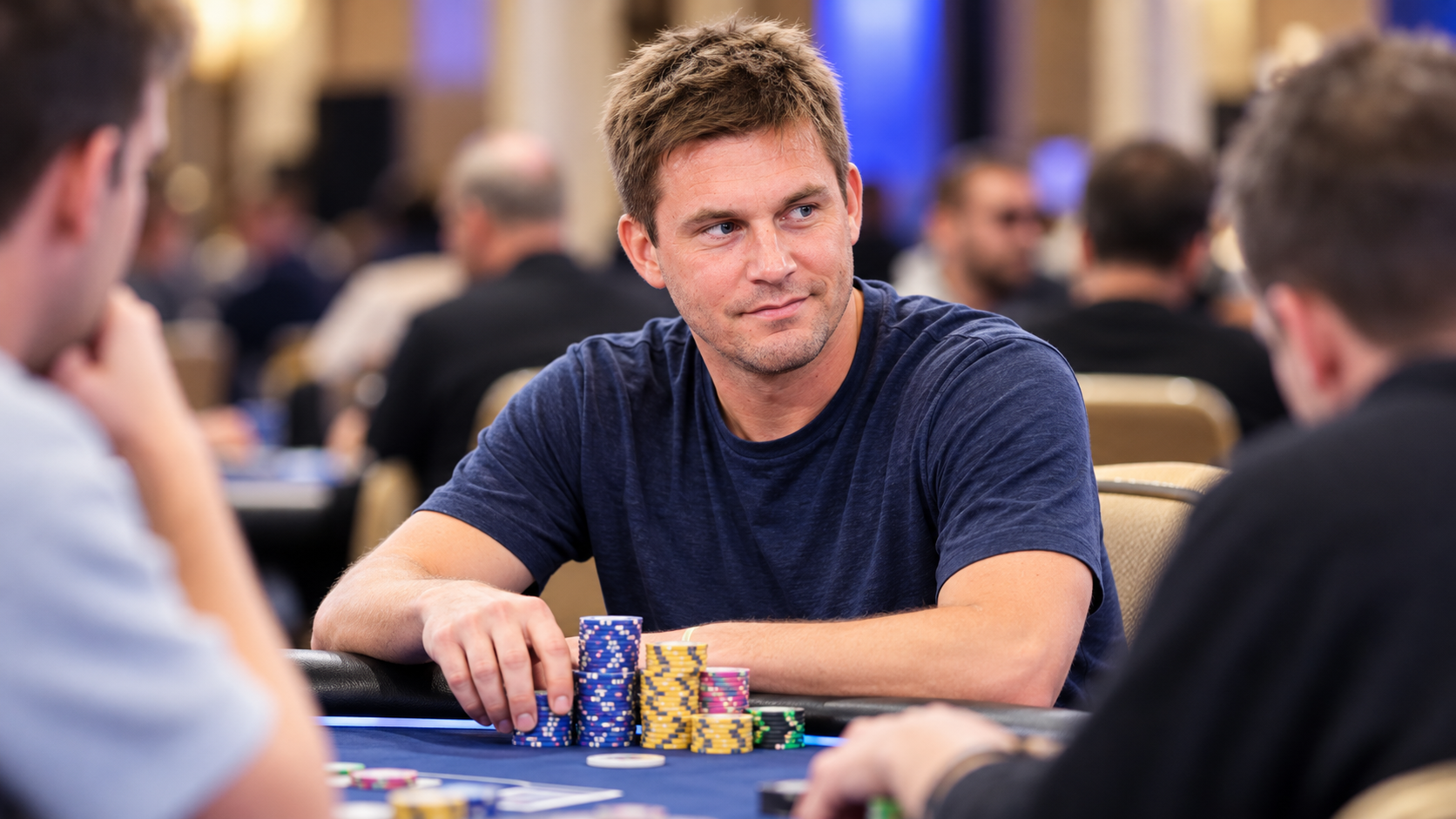
Kaverman continued recording significant high-stakes results in 2026. At EPT Barcelona, he finished fourth in the 100.000 € Super High Roller for 314.000 €. He also cashed in the Triton schedule in Jeju.
These later results extend the competitive arc that began with his first WSOP cash in 2008. The intervening years brought substantial changes to tournament structures, player preparation and the availability of events at the highest buy-in levels.
Longevity in this setting does not require winning every season. It means continuing to produce meaningful results against opponents who also spend years improving their understanding of the game. Kaverman’s later high-roller record makes that longevity part of his career story.
Playing Style and Tournament Decisions
Kaverman is often associated with a measured table presence. His public image centres on concentration and careful decisions rather than constant conversation or theatrical reactions. That impression is consistent with the understated way his career has been presented.
A complete account of a professional’s strategy cannot be reconstructed from selected televised hands. Tournament decisions depend on position, effective stacks, payout pressure and assumptions about opponents. The same cards may require different actions in different circumstances.
His results nevertheless show experience across environments that ask different questions of a player. A WSOP Main Event run requires navigating a vast field; a six-handed championship requires repeated involvement; a super high roller demands adjustments against a small and exceptionally skilled group.
Why Final Tables Require More Than Strong Cards
The final stages of a tournament change the value of risk. Moving up one place can represent a substantial increase in prize money, while winning the event still requires accumulating every remaining chip. Players must balance those competing incentives.
Kaverman’s record contains both victories and major runner-up finishes, reflecting repeated experience in these situations. Heads-up play then changes the structure again: every hand involves the same opponent, and the strategic demands differ from those at a full final table.
This context helps explain the breadth of his achievements. A title in a six-handed WSOP championship and a fifth-place finish in a million-dollar event may sit beside one another in a database, but they arise from different fields, structures and financial pressures.
Tournament Earnings and Career Profit
As checked in October 2026, Kaverman’s Hendon Mob record listed 22.947.505 $ in live tournament earnings. His largest individual cash remained the 2.000.000 $ payout from the 2018 Big One for One Drop.
These figures represent recorded gross prizes. They do not deduct entry fees, travel, accommodation, taxes or any money owed under staking arrangements. They also do not provide a complete record of private cash games or online poker results.
The distinction is especially relevant for a player whose schedule includes very expensive tournaments. A large payout is a sporting achievement and a recorded cash, but it is not automatically the same amount of personal profit. Kaverman’s verified tournament record can be described precisely without assigning him an unsupported net worth.
Byron Kaverman’s Place in Modern Poker
Kaverman belongs to the generation that developed during the poker boom and matured as international high rollers became an established part of the professional circuit. His career bridges those stages without relying on a single format or tournament brand.
He has a WSOP bracelet, a WPT World Championship runner-up finish, a GPI Player of the Year award and victories at major European stops. His biggest payouts came in events at the extreme upper end of the buy-in range, while his earlier record includes success in more conventional championship fields.
The strongest account of his importance is therefore cumulative. His peak season was exceptional, but the years surrounding it demonstrate how he reached that position and how he continued competing after other players became the focus of the rankings.
The Poker Career of Byron Kaverman
Byron Kaverman’s career began with an interest shared among friends and developed into an international professional record. The 2011 PCA win helped turn poker into a practical career choice. His 2015 WSOP bracelet and GPI achievements then established him among the leading tournament players of the period.
Later results at the Super High Roller Bowl, Big One for One Drop, EPT London and EPT Barcelona expanded that record. They show a player who could succeed at different stages of his career and against fields whose composition continued to evolve.
His legacy remains a story of sustained competition. From Ohio and collegiate soccer to world-ranking leadership and multimillion-dollar tournament payouts, Kaverman built a career through repeated appearances at the tables where poker’s strongest players meet.
Career statistics checked in October 2026. Recorded live tournament earnings represent gross cashes and exclude unrecorded private results. Image positions are reserved for AI-generated illustrations.