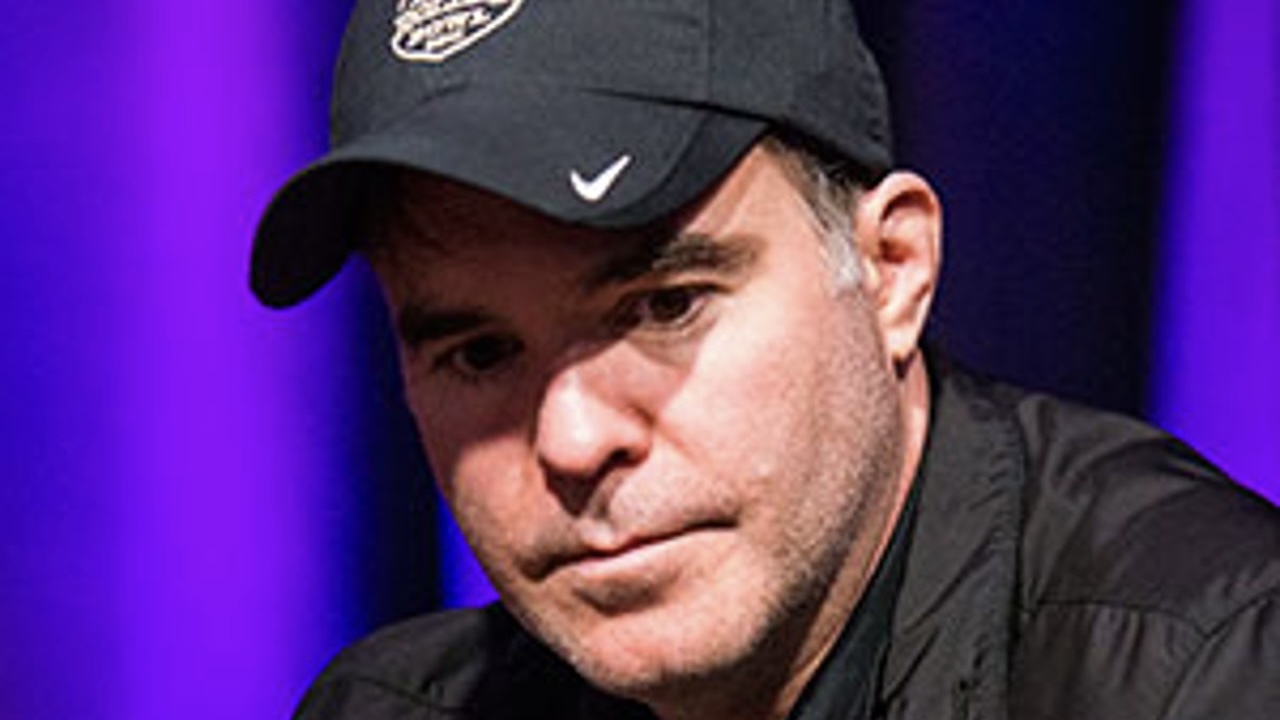
Cary Katz
Cary Katz is an American businessman, the founder of PokerGO and a high stakes poker player with more than 43 million dollars in recorded live tournament cashes. He won the 2019 Super High Roller Bowl London, captured the 2023 PokerGO Cup series title and claimed his first World Series of Poker bracelet in 2025. The Hendon Mob listed his live earnings at 43.178.677 $ and ranked him 21st on its all-time money list when checked on 23 September 2026.
His career has an unusual shape. Katz made his fortune in the student loan business before becoming a fixture in expensive poker tournaments. He then helped build a media company that streams many of the same high roller events in which he competes. That combination has made him both a participant in and an organiser of modern poker’s televised era.
The bracelet arrived after years of near misses and many larger individual payouts. Katz won it in a 2.500 $ freezeout with 1.299 entries, a field very different from the compact six-figure buy-in tournaments that established his reputation. His results show that a successful entrepreneur can be a serious competitor at the table, while his business projects changed how fans follow the game.
Early Life and Introduction to Poker
Katz grew up in Atlanta, Georgia, in a family that enjoyed games and competition. He learned poker from his grandmother when he was six years old and played with friends during his college years. Those early games were a personal interest long before poker became a major public part of his life.
He attended the University of Georgia and studied business administration. Chess and other games also interested him, but the first major phase of his adult career would be in finance and entrepreneurship rather than on the tournament circuit.
The detail about his grandmother matters because it connects the two sides of his later identity. Katz did not enter poker only after building a media company or discovering a new investment opportunity. The game had been familiar to him for decades before PokerGO existed.
He began recording live tournament cashes in the 2000s. By then, he had already made progress as a businessman and could enter major events without depending on poker winnings for a living. Financial freedom gave him access to large buy-ins, but it could not make decisions for him against experienced professionals.
His competitive poker record was built over years of participation, including many events that produced no headline prize. The gradual development from enthusiast to high roller regular is central to understanding why his later titles carried significance beyond their payout amounts.
Building College Loan Corporation
Katz founded College Loan Corporation in 1999 and served as its chief executive. The business grew into a substantial participant in the United States student loan industry. Its success supplied the financial foundation that later allowed him to pursue ambitious poker projects.
Running a large company requires different skills from playing tournaments, but the activities share some demands. Both involve uncertainty, assessing risk and making decisions without knowing how every factor will develop. That resemblance should not be exaggerated: business success does not automatically transfer to a poker table.
Katz could afford to play events that many talented professionals would need to approach through backing or by selling a share of their action. This distinction is important when comparing players’ careers. Access to a buy-in creates an opportunity, while consistently reaching final tables against top opponents requires a separate set of abilities.
He eventually devoted more time to poker and poker media. College Loan Corporation remained the source of much of his public business reputation, but it did not provide a reliable public figure for his personal wealth. Ownership, company value and private assets cannot be reconstructed from a poker results database.
Katz’s entrepreneurial background later shaped Poker Central and PokerGO. He had the resources and interest to invest in a long-term production operation at a time when poker coverage was still adapting to digital viewing habits.
From Businessman to Tournament Regular
Katz began appearing in live poker results in 2004. Early entries in a tournament database do not describe every game a person has played, but they show the beginning of his documented competitive record.
He entered an environment in which skilled professionals often considered wealthy businesspeople desirable opponents. High stakes poker depends partly on players who have made money outside the game and enjoy testing themselves against specialists. Katz fit that broad category, although his eventual results made it increasingly difficult to dismiss him as a casual participant.
The transition took time. Tournament success requires surviving short-term swings while learning how professionals approach stack sizes, position, blind levels and payout pressure. The same opponent can behave differently in a cash game, early tournament level and final-table bubble.
Katz became a frequent participant in the high roller circuit as its schedule expanded. Las Vegas supplied regular events, while international stops offered larger buy-ins and new groups of opponents. His public profile grew through repeated appearances rather than one isolated victory.
That persistence became one of the defining features of his poker career. He could lose an event, return for the next and keep competing with players who spent much of their lives studying the game. The resulting record is broad enough to include major wins, painful near misses and one long-awaited WSOP bracelet.
The Rise of High Roller Poker
The modern high roller circuit developed around a relatively small population of professionals and wealthy enthusiasts willing to enter tournaments costing tens or hundreds of thousands of dollars. These events can have fewer entries than a mainstream championship but still assemble exceptionally strong fields.
Katz was a visible participant as that ecosystem expanded. His results include competitions at ARIA, the PokerStars Caribbean Adventure, the WSOP and the Super High Roller Bowl. He also played on international circuits including Triton Poker.
High roller records need careful interpretation. A 100.000 $ first prize does not carry the same economic meaning as a 100.000 $ prize from a 1.000 $ event. The cost of entering, possible re-entries and financial arrangements between players can affect the amount personally retained.
The circuit also transformed how audiences encountered tournament poker. Events that once attracted only a small group of spectators became streamed productions with commentary, multiple cameras and an archive accessible after the final hand. Katz would become one of the people financing and shaping that change.
As a player, he faced a recurring challenge: frequent contact with specialists who knew his tendencies and could study past broadcasts. Repeated success in that setting meant adapting rather than relying on unfamiliarity or the element of surprise.
Founding Poker Central and PokerGO
Katz founded Poker Central in 2015. The venture later developed PokerGO, a subscription streaming service built around live poker tournaments, cash games and original programming.
The idea was ambitious. Traditional television schedules offered limited space for long poker broadcasts, while digital subscriptions allowed a dedicated audience to follow whole events, watch final tables and return to archived shows. PokerGO gave high stakes poker a regular production home.
The service became associated with the Super High Roller Bowl, Poker Masters, the U.S. Poker Open and coverage of the WSOP. The accompanying PokerGO Tour provided a wider competitive framework with rankings and season-long storylines.
Katz’s position is unusual because he both founded the platform and competed in events it showed. The dual role is part of his public poker identity and should be stated plainly. It does not mean every event he enters is a PokerGO production or that his tournament prizes measure the commercial success of the media business.
His contribution extends beyond any one show. Consistent broadcasting helped give small-field high rollers recognisable recurring characters, records and rivalries. Fans could follow the same competitors throughout a season instead of seeing only occasional edited highlights.
What PokerGO Changed for Viewers
Poker is difficult to present as a live spectator event. A tournament can last several days, many hands end without a showdown and the most consequential decision may involve information hidden from the players. Coverage has to make those elements understandable without distorting the competition.
PokerGO’s model supported regular streams, commentary and an archive of previous events. That made it easier for viewers to follow an entire series, recognise strategic patterns and understand why a final table mattered within a broader schedule.
The platform also gave high roller players a more visible public profile. A specialist who repeatedly cashed in small fields might previously have been known mainly within the poker industry. Streaming exposed the player to an audience that could watch decisions rather than only read a result afterward.
For Katz, the project was a major investment in poker’s long-term audience. There is no simple equation between a streaming service’s influence and its founder’s personal tournament earnings. The two achievements belong together in his biography because he helped build the stage on which he often competed.
His role in poker media may ultimately be as important to the game’s development as any individual trophy. It helped establish an infrastructure for repeated, accessible coverage of modern tournament poker.
The 2016 Big One for One Drop
Katz reached fifth place in the 2016 Big One for One Drop in Monte Carlo. The event had a 1.000.000 € buy-in and assembled some of the most prominent wealthy players and professionals in poker.
His deep run resulted in a substantial seven-figure prize and showed that he could survive pressure at the most expensive end of the tournament spectrum. A field of this kind is small in absolute numbers, but each elimination changes the distribution of a very large prize pool.
The Big One also illustrates why tournament entries and cashes need separate treatment. Reaching a paid position is a major achievement, yet the public prize does not tell readers how much of a player’s entry they personally funded, whether action was sold or what their net result was after related costs.
For Katz, the event was part of a broader climb into high stakes competition. It preceded his major wins at the PokerStars Caribbean Adventure and Super High Roller Bowl London. His name was already familiar to high roller viewers before those titles arrived.
The Monte Carlo result strengthened his reputation as more than the founder of a poker company who happened to sit at the table. Against an expensive and demanding field, he produced a major finish on his own competitive record.
The Earlier One Drop Result in 2014
Katz had already entered a million-dollar tournament before the Monte Carlo event. At the 2014 WSOP Big One for One Drop, he finished eighth for 1.306.667 $. The result came against an exceptionally wealthy and experienced field and supplied one of the first seven-figure landmarks of his tournament career.
The Big One raises unusual questions about how fans discuss prize money. A seven-figure cash sounds like a huge profit until the 1.000.000 $ buy-in is considered. The difference between the public payout and one entry fee is far smaller than the headline figure, even before other expenses or private arrangements.
It is also dangerous to assume that every participant personally funded the whole buy-in or retained an entire payout. Players can sell pieces, exchange percentages and make arrangements that never appear on the broadcast or in the tournament database.
The eighth-place finish showed that Katz could hold his own in a major televised high stakes event before PokerGO became established. It also supplied experience in an environment where financial pressure and publicity are unusually intense.
His subsequent fifth-place finish at the 2016 edition added to a pattern. Reaching the money in more than one of these exceptionally expensive competitions required more than the ability to buy a seat.
The 2018 PCA Super High Roller Victory
Katz won the 100.000 $ Super High Roller at the 2018 PokerStars Caribbean Adventure for 1.492.340 $. The tournament drew 48 entries and provided his first major high roller championship.
The PCA was a destination festival that brought top professionals and well-funded enthusiasts to the Bahamas. Winning its largest events required dealing with experienced opponents in a compact field, with substantial changes in prize value as the final table approached.
Katz’s victory challenged the easy distinction between a wealthy amateur and a professional winner. He remained a businessman with substantial resources outside poker, yet he had now defeated a field built around the kind of competition many specialists pursued full time.
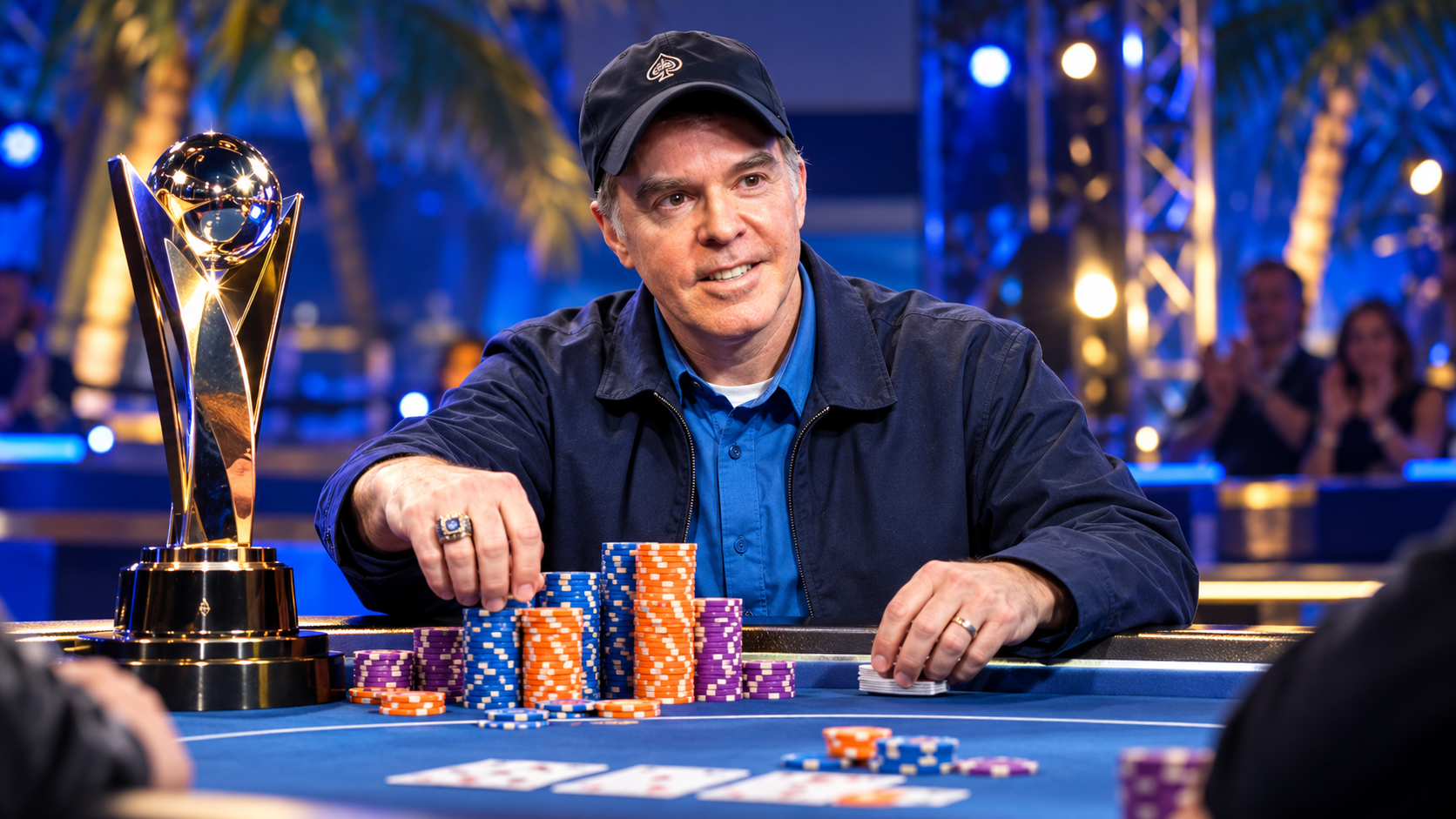
The payout was large, but the trophy mattered independently. A winner can no longer be described solely through the ability to afford entry fees. The result also provided a point of reference for later successes, showing that the Super High Roller Bowl London win was not his first moment at the top of an elite event.
It arrived during a period when televised and streamed high roller poker was becoming increasingly prominent. Katz’s own media venture was helping bring those events to viewers while his playing record supplied a compelling story within them.
Further High Roller Wins in 2019
Katz followed the PCA breakthrough with another international success at the 2019 Aussie Millions, winning the 100.000 A$ Challenge. The result reinforced that his game could travel beyond the Las Vegas circuit and produce titles in different conditions.
Australian-dollar prizes require currency context. A listed payout in A$ should not be added directly to a United States dollar career figure without conversion at the relevant rate. The Hendon Mob presents its live earnings total in US dollars, while individual festivals may report prizes in local currencies.
The Aussie Millions is also a useful reminder that a player’s recognition can vary by audience. PokerGO viewers might know Katz from ARIA and Poker Masters broadcasts, while international festival followers encounter him at Melbourne, London or Monte Carlo.
He continued entering events against strong fields despite already having significant business responsibilities. That regular competition supplied the experience needed for the largest title of his career later in 2019.
By September, he was ready for Super High Roller Bowl London. The event would give him his biggest recorded live payout and a championship associated with the highest end of the tournament calendar.
Super High Roller Bowl London Champion
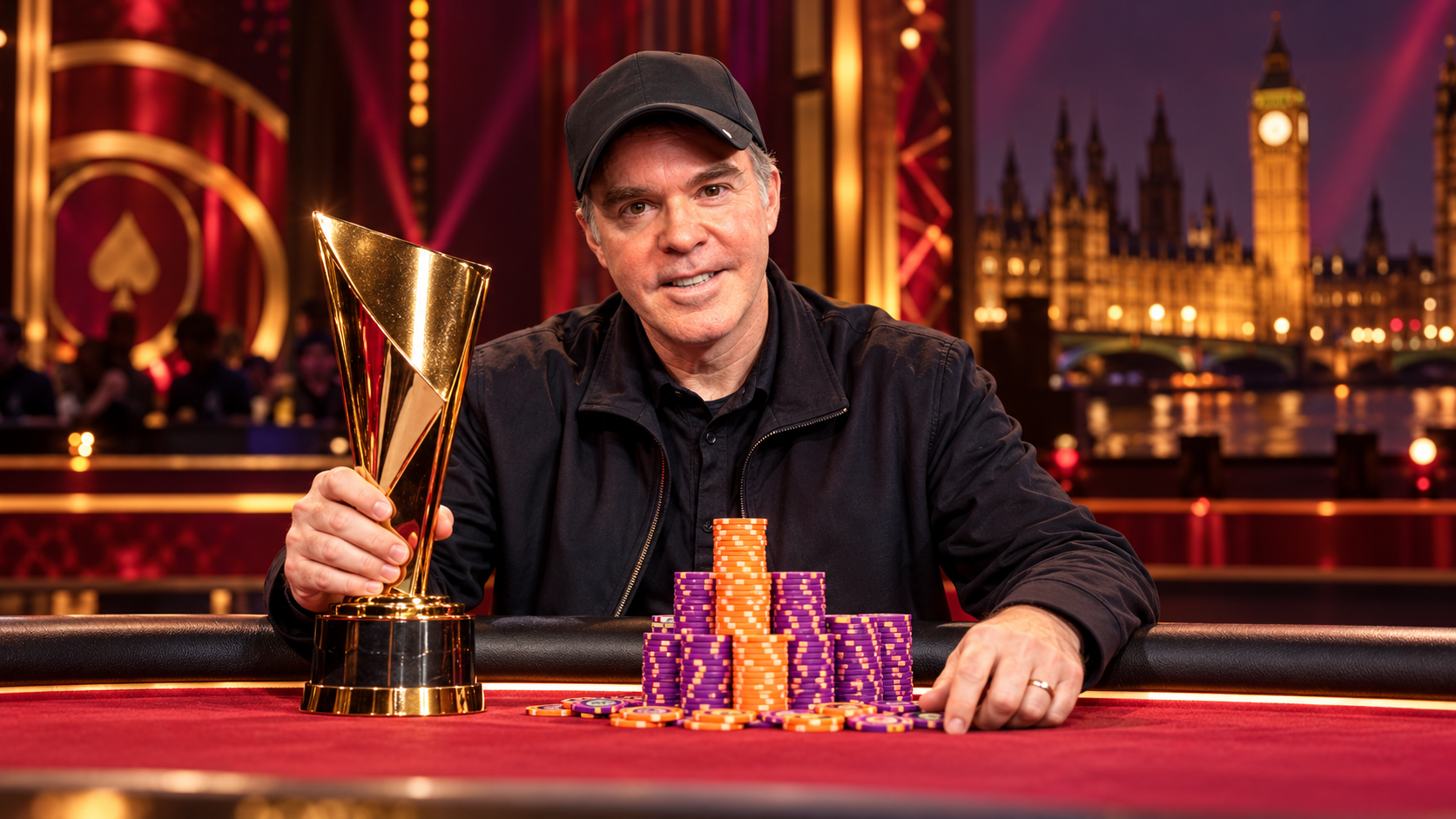
Katz won the 2019 Super High Roller Bowl London for 2.100.000 £, recorded as a 2.610.317 $ live cash on The Hendon Mob. It remained his largest individual live tournament payout as of 23 September 2026.
The event attracted 12 entries at a buy-in above 250.000 £. Its final table featured elite opponents including Stephen Chidwick, Christoph Vogelsang and Ali Imsirovic. A ten-hour final day required patience as well as the ability to make high-pressure decisions.
Katz acknowledged afterward that his opponents had played well and that favourable outcomes helped him. Poker champions do not control every card. His candid reaction was consistent with a player who understood that surviving a field of top specialists involves both skill and variance.
The win brought a Super High Roller Bowl title to his résumé and a championship ring alongside the substantial prize. It also made an unusual visual story: the founder of the streaming platform had won one of its most prominent televised competitions.
The size of the prize should be read with the buy-in in mind. Gross tournament cashes do not reveal Katz’s net profit in London or his broader financial results. Competitively, however, the title was unmistakable.
The Triton London Short Deck Cash
Katz recorded another enormous London result in 2019 when he finished fourth in a 250.000 £ short deck event at the Triton series. The recorded US-dollar cash was 2.085.096 $, making it one of his largest individual tournament payouts.
Short deck removes the deuces through fives from the standard pack, leaving 36 cards. That changes hand frequencies and the value of many starting combinations. A player cannot simply transfer every ordinary hold’em assumption into the variant.
The result deserves attention even though it was not a title. A fourth-place finish at this buy-in adds substantially to a public career total and reflects another demanding format in which Katz competed against high stakes opposition.
It also complicates an easy narrative about the Super High Roller Bowl London. That victory was his biggest cash and one of his signature championships, but it was not the only major result he produced in the city that year.
The event was listed as a private short deck competition in tournament records. The public payout is known; the details of individual players’ financial participation are not. The same gross-versus-net caution applies here more forcefully because of the exceptionally large buy-in.
Competing Against the Best Players
Katz’s most familiar opponents include professionals who devote extensive time to tournament study. At the highest buy-ins, a player may encounter the same people repeatedly, allowing both sides to observe tendencies and adjust.
That environment differs from a vast tournament in which new tables continually introduce unfamiliar players. High roller regulars can remember how an opponent reacted in previous final-table situations, study broadcast hands and arrive with a more detailed strategy for the next encounter.
Business success may make entry fees manageable, but it does not shield a participant from these strategic pressures. Katz has won against such fields and also suffered expensive eliminations. His willingness to keep returning became a defining part of his public poker persona.
Some commentators describe wealthy entrants only as the financial engine of the high roller circuit. Katz’s career shows why that label can become too simple. He remained a non-traditional poker professional because of his business activities, but his tournament results include major victories and decades of documented competition.
The correct assessment leaves room for both facts. He brought resources and media infrastructure to the circuit, and he earned titles at the table against formidable opponents.
A Broader PokerGO Tour Record
PokerGO Tour events gave Katz a regular competitive setting close to home in Las Vegas. The schedule includes no-limit hold’em, pot-limit Omaha and mixed games, with buy-ins that often draw a concentrated group of specialists.
Katz’s results reflect steady participation across the tour rather than dependence on a single championship. He recorded wins at ARIA, reached final tables in Poker Masters and PokerGO Cup events and appeared on leaderboards across multiple seasons.
In 2021, he won a 100.000 $ PokerGO Cup high roller for a seven-figure prize. In later seasons, he continued adding smaller titles and cashes that contributed to his career total even when they received less attention than the London Super High Roller Bowl.
The circuit rewards consistency. A player can win a series title by accumulating points in several events rather than winning the largest individual tournament. Katz would demonstrate this in particularly clear fashion at the 2023 PokerGO Cup.
His repeated appearances also placed the founder of PokerGO within the same competitive framework as the players the platform featured. The results were public and measurable, while his business responsibilities remained a separate part of his life.
The 2021 PokerGO Cup Finale
Katz won the 100.000 $ finale of the 2021 PokerGO Cup for 1.058.000 $. The event drew 23 entries and gave him another seven-figure live cash and a major title in the Las Vegas high roller setting most closely associated with his media venture.
Winning a single finale and winning an overall series are different accomplishments. The 2021 result was an event victory. In 2023, he won the PokerGO Cup series leaderboard through five cashes in eight events without taking first place in any one of them.
Together, the two achievements show different routes to success. A one-event title requires a player to reach the end of that particular tournament with all the chips. A series championship rewards a sustained accumulation of points over several separate fields.
The comparison also demonstrates that the PokerGO Cup was more than a business project for Katz. He repeatedly entered its events and had the public results to become a winner in both senses, two years apart.
The 2021 payout belongs in a career overview because it exceeds a million dollars. It should still be understood as gross prize money from a 100.000 $ buy-in tournament, not as a statement of personal profit.
Winning the 2023 PokerGO Cup Without an Event Victory
Katz became the 2023 PokerGO Cup series champion after cashing in five of eight events. Those finishes produced 655.800 $ in recorded tournament prizes and enough leaderboard points to win the overall title.
He did not win any individual event during the series. His closest result came in the 50.000 $ finale, where he finished runner-up to Isaac Haxton for 364.000 $. The distinction between an event winner and a series champion matters: the cup recognised accumulated performance over the full schedule.
Five cashes in eight tournaments are difficult to achieve in high roller fields. Even a strong player will often leave an event without reaching the paid places. Consistency through that concentrated stretch therefore carried substantial competitive weight.
The cup also came from the tournament ecosystem Katz helped build. That made the story appealing, but the achievement was decided by the published results and points structure rather than by ownership of the media platform.
This title broadened his record beyond single large payouts. His London win showed he could finish first in one of the most expensive events. The 2023 PokerGO Cup showed he could perform repeatedly across a whole festival.
The 2023 WSOP High Roller Runner-Up Finish
Katz came close to a WSOP bracelet in 2023 when he finished second in the 100.000 $ No-Limit Hold’em High Roller. His 1.592.539 $ payout was one of his largest WSOP cashes.
The result brought him to the final confrontation in a field packed with players comfortable at the game’s highest buy-ins. A runner-up finish is a substantial achievement, but it also leaves the particular absence of a bracelet more visible.
Katz already had major titles elsewhere. The WSOP bracelet nevertheless holds a distinct place in poker culture. For many players, the prize money in a single tournament becomes secondary to the chance to add that title to a career record.
His 2023 near miss helped set up the contrast with 2025. The eventual bracelet came in a 2.500 $ freezeout, far below the buy-in at which he had been one heads-up victory away from one two years earlier.
Both results belong to the same career story. The expensive runner-up finish supplied far more prize money; the lower-cost victory supplied the piece of WSOP history he had pursued for years.
More Titles After the 2023 PokerGO Cup
Winning a series leaderboard did not end Katz’s involvement in the PokerGO Tour. He won a 10.000 $ PokerGO Cup event in January 2024 for 226.800 $, this time taking an individual event title rather than the overall series crown.
He also won a 10.000 $ Poker Masters event in September 2025 for 223.300 $. These prizes are modest compared with the Super High Roller Bowl London payout, but they illustrate continued competitiveness against regularly returning opponents.
The Poker Masters win came after his first WSOP bracelet. It helped show that the bracelet was part of an active period rather than a final flourish after which he stopped playing major tournaments.
There is a practical difference between an occasional headline victory and a career built through many smaller cashes. The Hendon Mob total reflects a long sequence of finishes across a substantial schedule. Most individual results cannot each carry a biographical section, but they contribute to the overall pattern.
Katz’s repeated PokerGO Tour appearances also gave viewers opportunities to see the development of familiar opponents and rivalries. For the founder of a poker streaming company, those events were both personal competitions and part of the wider environment he helped make visible.
Experience Beyond No-Limit Hold’em
Although Katz is most closely associated with no-limit hold’em high rollers, his tournament record includes pot-limit Omaha and mixed games. These formats require different starting-hand judgments and approaches to betting.
In Omaha, players receive four hole cards and must use exactly two of them with three community cards. More potential combinations create frequent strong draws and change how a player evaluates a hand. Stud and draw variants introduce other information patterns altogether.
Katz has cashed in WSOP championships involving H.O.R.S.E., eight-game formats and no-limit deuce-to-seven draw. He also recorded a mixed-games win on the PokerGO Tour in 2023.
That range matters when describing his place among high roller participants. A player who can sit only in one familiar format has fewer ways to compete when a festival moves between variants. Katz’s schedule shows a willingness to enter demanding games beyond his most visible no-limit hold’em events.
The results do not establish that he is equally strong in every poker discipline. They do show that his interests and competitive appearances cover more of the game than a list of his largest no-limit payouts would suggest.
What Different Formats Demand
The variety of games in Katz’s record matters because the fundamental information available to players changes. In no-limit hold’em, each competitor receives two private cards and shares a five-card board. In pot-limit Omaha, four private cards create more possible draws, while the pot-limit betting rule changes the size of a legal raise.
Short deck alters the composition of the pack. Draw games allow a player to exchange cards and reveal information through the number taken. Stud games expose some cards individually, making observation and memory especially relevant. Mixed-game events move between variants on a schedule.
A player accustomed to one format may be comfortable with general ideas such as position and pressure while still needing to learn different hand values and betting patterns. The best approach in one game can be a serious mistake in another.
Katz’s results do not justify a claim that he mastered every format to the same degree. They do provide evidence of a broader competitive appetite than the image of a wealthy hold’em entrant alone would suggest.
That appetite is useful in an era when high stakes festivals offer a wider range of events. Being willing to play more than one game creates opportunities and demands a different kind of preparation from repeatedly entering one familiar tournament structure.
The Long Wait for a WSOP Bracelet
Katz’s first bracelet did not arrive during the early phase of his live career or immediately after his biggest high roller titles. By 2025, he had spent roughly two decades in recorded live tournaments and had earned many millions in WSOP and other event prizes.
The absence of a bracelet despite major success elsewhere illustrates tournament variance. A skilled, well-funded player can enter many WSOP events, reach final tables and still finish without the trophy. Conversely, a much less expensive event can produce the breakthrough.
The waiting period made the title emotionally important even though its 449.245 $ payout was much smaller than several earlier Katz cashes. It also offered a story beyond a wealthy businessman buying into the highest stakes. The eventual event was an accessible 2.500 $ freezeout with 1.299 entries.
Winning that field required surviving several days against opponents with different experience levels and approaches. A strong record in small high rollers offered no automatic advantage over hundreds of additional entrants.
By the time he reached the final table, Katz had already proved himself in much more expensive events. The bracelet supplied a missing honour, while the format displayed a different aspect of his tournament ability.
The 2025 WSOP Freezeout Victory
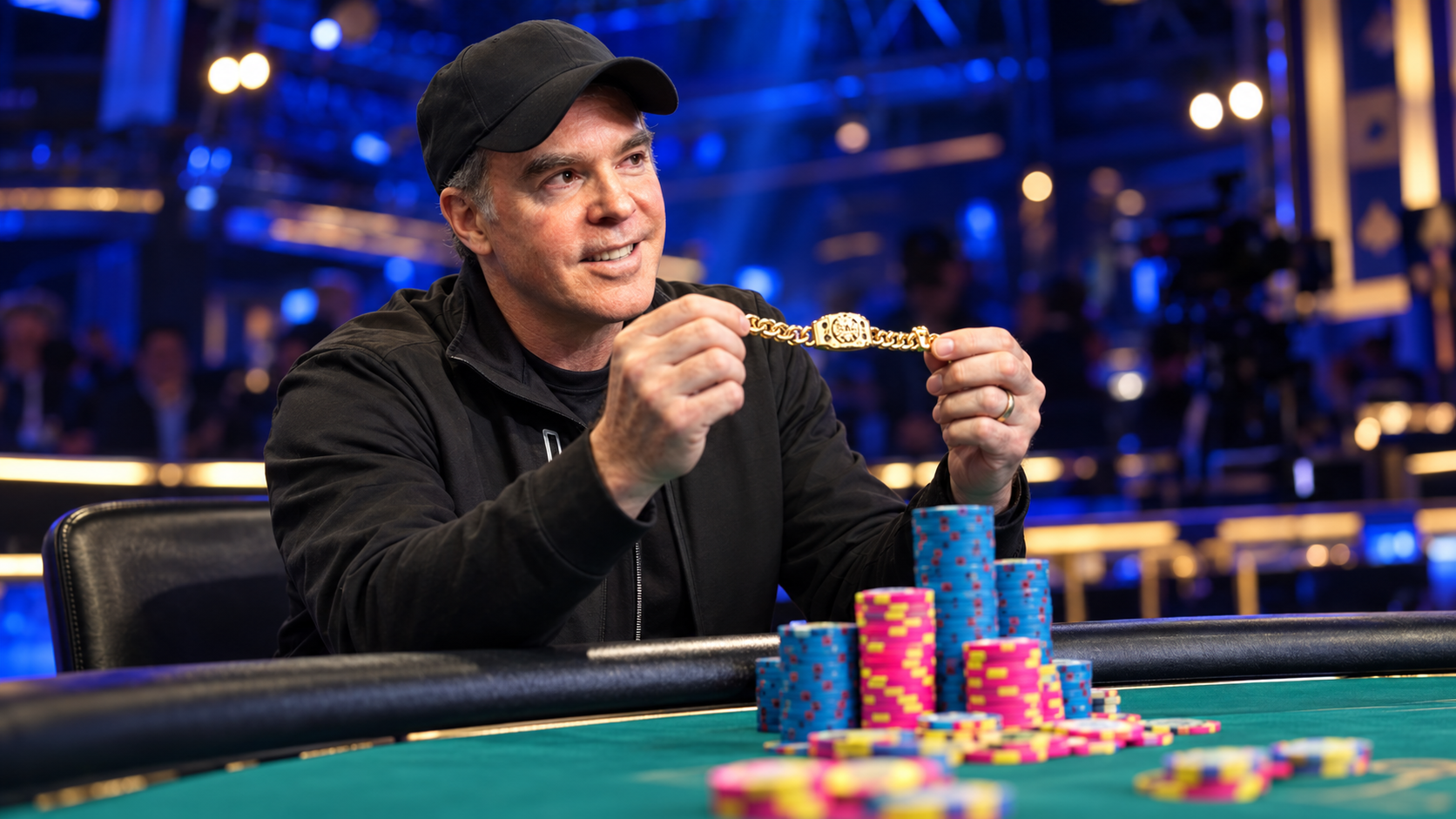
Katz won Event #83, the 2.500 $ No-Limit Hold’em Freezeout, at the 2025 WSOP. He outlasted 1.299 entries and received 449.245 $ and his first bracelet.
A freezeout gives a player one entry. Once eliminated, a participant cannot buy back into the same event. That rule differs from many high roller tournaments, where re-entries can be part of the schedule and the economics of competition.
Katz defeated Breno Drumond heads-up. The final duel included swings, but Katz ultimately claimed the title after years of WSOP participation. The result was celebrated as a long-awaited personal milestone, not as his largest payday.
The contrast with his previous WSOP high roller near miss was sharp. In 2023, second place in a 100.000 $ event paid 1.592.539 $. In 2025, first place in a 2.500 $ event paid less than one-third of that amount but brought the bracelet.
It also challenged assumptions about his tournament range. Katz could defeat a small, exceptionally expensive field and a much larger competition at a buy-in available to a broader group of serious players.
Why the Freezeout Format Mattered
The one-entry rule changed the meaning of Katz’s 2025 win. Players could not simply pay for another stack after losing all their chips. Every elimination was final, and the champion had to survive an event in which 1.298 other entries failed to take first place.
Large-field freezeouts involve many uncertain situations. A player may begin with recreational opponents, later encounter professionals and finally face a final table where payout differences alter everyone’s incentives. Adjusting to each stage matters as much as entering with a sophisticated high roller strategy.
For Katz, the event also carried an unusual economic contrast. He had competed at buy-ins of 100.000 $, 250.000 £ and even 1.000.000 €. The entry that brought his first WSOP bracelet cost 2.500 $.
This does not make the smaller event less valuable competitively. Field size, structure and opponent mix all affect difficulty. The bracelet recognised the outcome under the WSOP’s rules, regardless of whether another tournament had awarded him a larger cash.
It is a useful reminder that poker’s most meaningful career moments are not always the entries at the top of a personal earnings table.
Cary Katz’s Biggest Recorded Live Cashes
The following selection places some of Katz’s major public results in context. It is not a complete tournament record, and amounts converted from events played in other currencies can vary slightly across databases.
| Year | Tournament | Result | Recorded prize |
| 2019 | Super High Roller Bowl London | 1st | 2.610.317 $ |
| 2019 | Triton London 250.000 £ Short Deck private event | 4th | 2.085.096 $ |
| 2016 | Big One for One Drop Invitational | 5th | approximately 1,93 million $ |
| 2023 | WSOP 100.000 $ No-Limit Hold’em High Roller | 2nd | 1.592.539 $ |
| 2018 | PCA 100.000 $ Super High Roller | 1st | 1.492.340 $ |
| 2021 | PokerGO Cup 100.000 $ finale | 1st | 1.058.000 $ |
| 2025 | WSOP 2.500 $ No-Limit Hold’em Freezeout | 1st | 449.245 $ |
| 2023 | PokerGO Cup 50.000 $ finale | 2nd | 364.000 $ |
The Big One for One Drop payout is rounded here because databases use slightly different exchange conversions for the original euro prize. Katz has additional substantial cashes, including his Aussie Millions victory and other PokerGO Tour results.
The 2019 London prize was paid as 2.100.000 £ and appears in US dollars in the database. Readers comparing original festival reports with career lists should account for that conversion.
The table also makes the bracelet story clear. The first WSOP title was not his largest cash. It filled a gap in his record that several bigger payouts had not filled.
Understanding His 43.178.677 $ in Live Cashes
The Hendon Mob displayed 43.178.677 $ in total live earnings for Katz on 23 September 2026, along with a best live cash of 2.610.317 $. These numbers are gross recorded tournament payouts.
They do not subtract buy-ins for the events in which he cashed or those in which he was eliminated without a payout. They also do not establish the number of entries he purchased in re-entry events, his travel costs, taxes or any private arrangements involving shares of a tournament entry.
Nor do live cashes include every form of poker income. Private games, online results, media revenue and commercial investments are separate from a public tournament results column. For Katz, this separation is particularly important because PokerGO and his other business activities are substantial parts of his story.
All-time money list position is a comparison of one documented metric. His 21st-place ranking demonstrates the scale of his recorded live results; it is not a ranking of poker skill, return on investment or personal wealth.
The same caution applies when comparing players from different eras. Katz competed during a period with many expensive tournaments. Earlier generations had fewer opportunities for seven-figure prizes and cannot be assessed fairly through gross cashes alone.
Cary Katz’s Net Worth
Katz’s precise personal net worth is not publicly verified through his poker tournament record. Articles may describe him as extremely wealthy or attach a numerical estimate to his business holdings, but those claims require independent financial evidence.
The value of a privately held company is not the same as cash available to its founder. Ownership percentages, debt, transactions, investments and taxes all affect what an individual ultimately owns. Tournament winnings add another layer of uncertainty because public results do not show buy-ins or the shares retained after backing arrangements.
It would therefore be misleading to equate 43.178.677 $ in live cashes with poker profit or with his overall fortune. He built a major business before the largest phase of his poker career and later invested in poker media. Those ventures cannot be valued by reading The Hendon Mob.
The supported conclusion is narrower and more useful: Katz is an established entrepreneur and a highly successful live tournament competitor, with gross recorded cashes above 43 million dollars as of the stated date.
His ability to enter the highest buy-in events is visible. The full balance sheet behind that ability remains private.
The 2026 Tournament Record
Katz continued recording live results in 2026. His PokerGO Tour profile listed multiple WSOP cashes that summer, including 15th place in a 100.000 $ No-Limit Hold’em High Roller for 201.754 $ and fifth place in the 25.000 $ Heads-Up Championship for 150.000 $.
Those events demanded different skills. A heads-up championship pits players against one opponent at a time, while a large high roller requires managing table dynamics and payout pressure against several players. Katz’s involvement in both is consistent with the breadth of his long-running tournament schedule.
He also appeared in mixed games and PokerGO Tour events earlier in the year. None of these cashes matched the headline value of his London championship, yet they showed that his 2025 bracelet had not been an endpoint.
Current-year totals can change whenever a new result is added or a database corrects an older entry. That is why the career figure in this article has a specific check date instead of being described as a permanent final total.
The 2026 results underline a basic point about his career: Katz remained an active competitor decades after his first recorded live cash and after helping build one of poker’s best-known streaming brands.
Media Founder and Player in the Same Room
Katz’s presence on both sides of the camera can invite easy narratives. A PokerGO founder winning an event shown on PokerGO makes a compelling headline, but the tournament still has opponents, published structures and a result decided at the table.
His involvement also helps explain his sustained commitment to poker coverage. A person who regularly plays the events understands the emotional stakes, the long hours and the difficulty of turning technical decisions into a broadcast that viewers can follow.
There are practical boundaries between the two roles. PokerGO is a media business, while Katz’s recorded cashes belong to him as a tournament entrant. Combining their finances or assuming every televised event directly benefits his personal poker results would be speculation.
The relationship is most important historically. Poker’s high roller era needed both competitors willing to play and institutions capable of presenting the action to an audience. Katz became a notable figure in each category.
That dual identity makes his place in modern poker different from that of a player whose entire reputation comes from tournament winnings or a media executive who never enters the events being covered.
Playing Style and Competitive Reputation
Katz has sometimes been described through his business background before his poker results. That description can obscure the skill required to remain competitive in elite fields across many years.
He has shown a willingness to compete at high buy-ins, return after difficult outcomes and play against opponents who spend extensive time studying tournament theory. His results include wins in small high roller fields and a large WSOP freezeout.
No short label captures every strategic choice he makes. In tournament poker, the right level of aggression depends on stack depth, position, opponent tendencies and how prize pressure changes risk. Katz’s repeated final tables suggest an ability to adjust to those conditions, while any single televised hand can offer only a narrow glimpse.
His own reaction after the Super High Roller Bowl London victory was notable for acknowledging the strength of his rivals and the role of favourable outcomes. That approach is consistent with the reality of tournament poker: good play matters over time, but luck influences when a trophy is won.
The strongest evidence for his competitive reputation remains his documented record across more than two decades, multiple formats and major series.
Comparing the Business and Poker Legacies
Katz’s contribution to poker has two public measures that should be considered separately. His tournament record includes a WSOP bracelet, a Super High Roller Bowl title, a PokerGO Cup series championship and more than 43 million dollars in gross live cashes.
His media work helped create a regular place to watch major poker events. PokerGO’s broadcasts and the PokerGO Tour made the high roller circuit easier to follow as an ongoing competition, with recurring players, seasonal points and a substantial archive.
Neither measure fully replaces the other. A viewer might admire the business project without believing its founder to be one of the game’s best technical players. Another reader might focus on the tournaments and overlook the infrastructure that gave many events sustained visibility.
Both perspectives are part of the same career. Katz entered poker as someone who had succeeded outside the game, then made himself a regular competitor and invested resources in presenting poker to a larger audience.
The 2025 bracelet tied those threads together. The founder of a platform associated with expensive televised events won his first WSOP title in a conventional freezeout with 1.299 entries.
Cary Katz’s Place in Poker History
Katz’s story cannot be reduced to a wealthy entrant paying to play against professionals. He won major high roller events, accumulated one of the largest recorded live cash totals and eventually added a WSOP bracelet after years of pursuit.
It cannot be reduced to those results either. PokerGO changed the visibility of modern tournament poker, and his investment helped turn a collection of expensive events into programming that fans could follow across seasons.
His biggest cash came in London in 2019. His first WSOP bracelet came six years later in a tournament with a fraction of the buy-in and a vastly larger field. Between those milestones, he won a PokerGO Cup series title through consistency without winning any single event in the series.
That sequence captures the range of his career. Katz could win an exclusive high roller, build a points lead through repeated cashes and outlast a mainstream WSOP field. He also helped create a platform on which such stories reached viewers.
As of 23 September 2026, his 43.178.677 $ in recorded live cashes placed him 21st on The Hendon Mob’s all-time money list. His broader legacy lies in the rare combination of business, broadcasting and sustained competition at poker’s highest levels.
Career statistics checked on 23 September 2026. Recorded live earnings represent gross tournament cashes, exclude entry costs and private financial arrangements, and do not establish personal net worth.