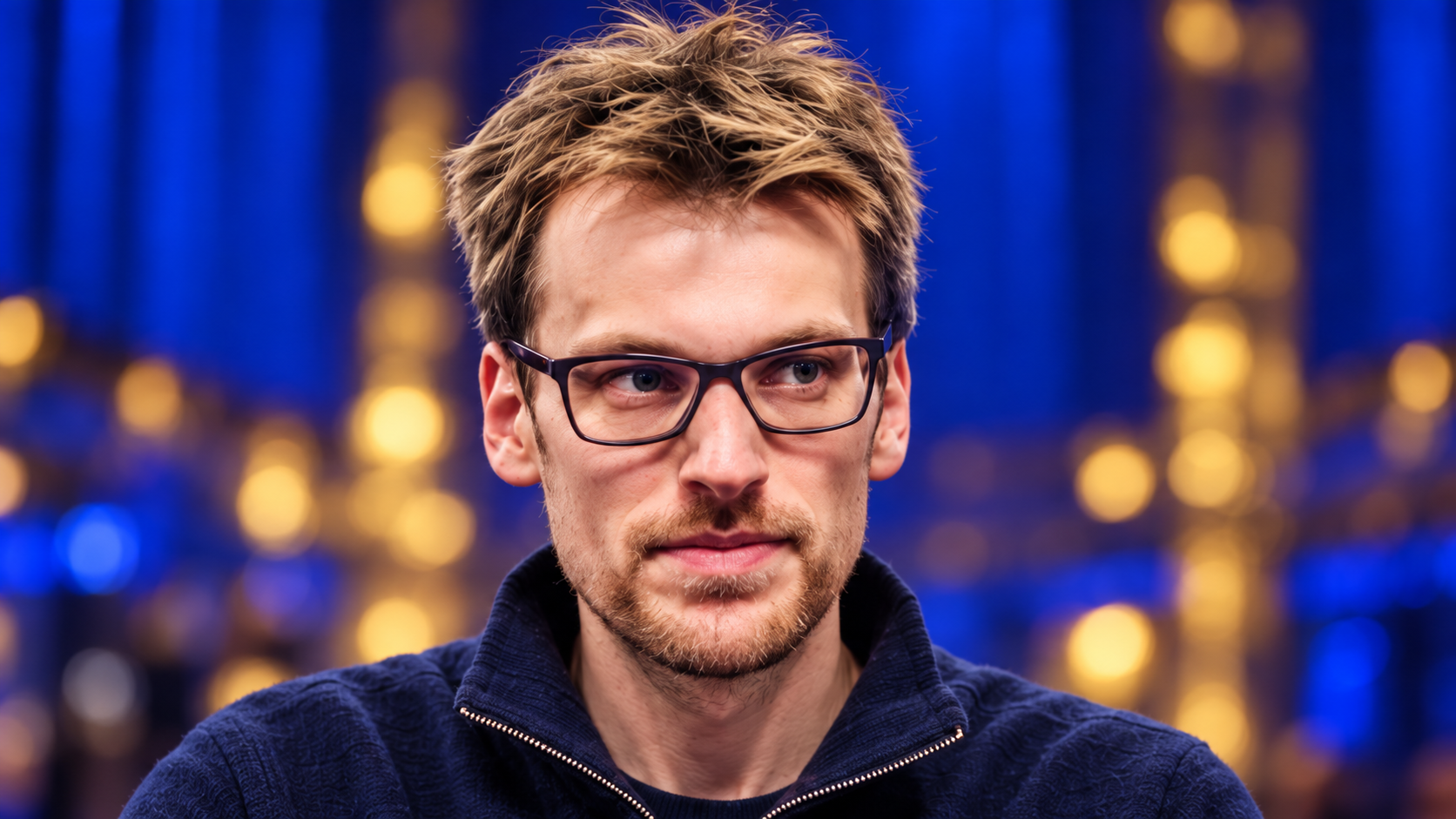
Christoph Vogelsang
Christoph Vogelsang is a German professional poker player, Super High Roller Bowl champion, three-time Triton Poker title winner and one of the most successful high-stakes tournament specialists in history.
By September 2026, Vogelsang had accumulated 47.025.848 $ in recorded live tournament earnings. The total placed him 17th on poker’s all-time money list and second among German players. His largest cash remains the 6.000.000 $ he earned for winning the 2017 Super High Roller Bowl at Aria in Las Vegas.
The numbers are remarkable, but the route that produced them was even more unusual. Vogelsang began playing online poker in 2010 with a series of deposits worth only 10 $. Within weeks, he had progressed to games with thousands of dollars on the table. Under the names “Tight-Man1” and “26071985,” he became a feared high-stakes cash-game player before most live poker audiences knew who he was.
His first major live result arrived in a 50.000£ European Poker Tour Super High Roller in London. Less than a year later, he finished third in the 1.000.000 $ Big One for One Drop for 4.480.001 $. He had entered the most expensive tournament in World Series of Poker history with almost no conventional live résumé and left as an international star.
Vogelsang has since built a career around the most difficult and expensive No-Limit Hold’em tournaments in the world. His record includes victories on three continents, repeated final tables in Super High Roller Bowl events and 13 seven-figure cashes.
He is also one of poker’s most debated competitors. His deep analytical process and exceptionally slow pace have generated criticism, especially when tournaments do not use strict shot clocks. That controversy forms part of his public image, but it does not explain away more than a decade of success against elite opposition.
Vogelsang’s career is the story of a private, highly mathematical player who moved from small online deposits to the centre of modern super high-roller poker.
Early Life in Sassenberg, Germany
Christoph Vogelsang was born on July 26, 1985, and grew up in Sassenberg, a small town near Münster in the German state of North Rhine-Westphalia.
He has revealed relatively little about his childhood. Unlike professionals whose public identities depend on constant interviews and social media, Vogelsang has generally separated his private life from his work at the poker table.
The information that is available presents a consistent picture. He was academically capable, comfortable with abstract problems and interested in subjects requiring careful reasoning. Those qualities eventually led him toward economics and later became visible in his approach to poker.
Sassenberg was far removed from the traditional centres of professional gambling. Vogelsang did not grow up around Las Vegas card rooms, casino cash games or an established family poker tradition. His route into the game belonged to a different era.
Online poker allowed a player from a small German town to face international opponents, study enormous numbers of hands and move through the stakes without relocating to a casino city. The internet replaced geography with access.
That change helped produce an entire generation of German high-stakes professionals. Vogelsang would become one of its most accomplished representatives.
Studying Economics in Germany and London
Before poker became his profession, Vogelsang studied economics at Witten/Herdecke University in Germany and later at the London School of Economics.
The academic background fits the way other professionals describe his game. Economics requires thinking about incentives, incomplete information, risk and the decisions people make under uncertainty. Poker places many of the same ideas inside a competitive environment in which every choice has an immediate financial consequence.
Moving to London also became important for Vogelsang’s future. The city offered access to a large international poker community, major European Poker Tour events and convenient travel to high-roller stops across Europe.
Vogelsang eventually made London his residence. The decision allowed him to remain connected with German players while participating in an English-speaking professional network.
His education is sometimes used to explain his analytical style too neatly. A degree does not automatically create a great poker player, and many elite competitors followed completely different paths. In Vogelsang’s case, however, formal study strengthened habits that clearly transferred to the game: patience, model building, attention to assumptions and comfort with complicated decisions.
He entered poker not as a casino gambler searching for excitement, but as a problem solver attracted by a difficult strategic system.
Discovering Online Poker in 2010
Vogelsang began playing online poker seriously in 2010.
Accounts of his start describe several deposits of 10 $. The amount makes the later career almost impossible to imagine. Within approximately four weeks, he had reportedly moved into 25 $/50 $ No-Limit Hold’em cash games, where a normal buy-in could reach 5.000 $.
Such rapid progression is not a realistic model for most new players. It required unusual natural ability, favourable short-term results and the confidence to keep moving upward. Vogelsang has openly acknowledged the role of good fortune in his development rather than presenting the rise as proof that talent eliminates variance.
Online cash games provided an accelerated education. He could play many more hands than a live professional, review difficult situations and immediately encounter stronger opposition after moving up in stakes.
The environment was also unforgiving. High-stakes regulars searched constantly for weaknesses, and losing sessions could erase months of progress. A player who advanced too quickly without the necessary skill usually returned to lower limits just as fast.
Vogelsang remained. The small deposits became a bankroll, the bankroll opened the highest games and the unknown student developed into one of the most profitable tracked players of his online generation.
Tight-Man1 and 26071985
Vogelsang became known online through two main screen names.
He played as “Tight-Man1” on Full Tilt Poker and as “26071985” on PokerStars. The second name represents his birth date: July 26, 1985.
Historical tracking records credited Tight-Man1 with more than 1,9 million $ in profit and 26071985 with more than 600.000 $. Contemporary reports during 2014 placed the combined tracked figure even higher, close to 3 million $, because databases covered different periods and used different methods.
These numbers should be treated as incomplete records rather than audited career accounts. Online tracking did not capture every game, every platform or every private arrangement. It nevertheless confirms the central point: Vogelsang was already a major winner before his live breakthrough.
The name Tight-Man1 was memorable because it appeared at stakes followed closely by the poker community. Railbirds watched the largest games, results were discussed on forums and anonymous screen names developed reputations long before the people behind them became public figures.
When Vogelsang finally appeared in televised live events, experienced online players already understood the level he had reached. To the broader audience he seemed to arrive from nowhere. To his regular opponents, the success was less surprising.
From Cash Games to Live Tournaments
Online cash games and live tournaments reward overlapping but different skills.
Cash players can leave at any time, reload after losing a stack and make decisions at relatively stable blind levels. Tournament players must protect a limited stack, adjust to rising blinds and understand how payout pressure changes the value of chips.
Live play adds another layer. Decisions occur in public, physical behaviour becomes observable and a single tournament may continue for several long days. A player accustomed to rapid online action must learn to maintain focus through a much slower environment.
Vogelsang entered live poker with an unusually strong technical foundation. He did not need years of low-buy-in events to learn basic strategy. His experience against elite online cash players allowed him to begin near the top of the tournament ladder.
The financial transition was still enormous. Even a successful 25 $/50 $ professional faces a different risk when one tournament entry costs 50.000£ or 1.000.000 $.
Backing, swaps and sold action are common at those stakes, but private arrangements are rarely disclosed. The public buy-in therefore does not reveal how much personal money a player has at risk.
Vogelsang’s early results ensured that he would continue receiving opportunities in the largest events.
The German High-Stakes Generation
Vogelsang emerged during an extraordinary period for German poker.
The group included Fedor Holz, Ole Schemion, Rainer Kempe, Koray Aldemir, Dominik Nitsche, Stefan Schillhabel and several other players who became regulars in the world’s largest tournaments.
They did not all belong to one formal team, and their careers developed in different ways. They nevertheless benefited from a shared culture of online study, strategy discussion and international travel.
Information moved quickly through trusted networks. Players reviewed hands together, exchanged observations about opponents and helped one another prepare for final tables. At the same time, they frequently competed directly for enormous prizes.
German success became especially visible in the Super High Roller Bowl. Rainer Kempe won the event in 2016 with Holz finishing second. Vogelsang won the following year, while Stefan Schillhabel finished third.
Those results were not created by nationality, but the concentration was too strong to ignore. Germany had produced a generation comfortable with mathematical analysis, online volume and collaborative improvement.
Vogelsang’s career occupies a distinctive place within it. Holz became the most famous, Aldemir won the WSOP Main Event and Schemion collected many conventional titles. Vogelsang specialised more completely in small, exceptionally expensive tournaments against elite fields.
First Major Live Cash at EPT London
Vogelsang’s first major recorded live result came in October 2013 at the European Poker Tour in London.
He entered the 50.000£ Super High Roller and finished third for 383.200£, worth approximately 621.321 $ at the time.
The event was a remarkable place to begin. Most professionals build confidence through smaller tournaments before risking an amount that could purchase a home in many parts of Europe. Vogelsang chose a field filled with established high-stakes specialists.
Martin Finger won the tournament, Tobias Reinkemeier finished second and Vogelsang completed an all-German top three. The result demonstrated both his individual ability and the growing influence of Germany’s professional community.
The cash also introduced his live style to a wider audience. He appeared calm, considered decisions deeply and showed little emotional reaction to the size of the money involved.
One result could still have been dismissed as a fortunate start. Vogelsang needed to prove that his online ability could produce repeated live results.
He did so almost immediately. The following summer, he reached the final table of a tournament with a seven-figure buy-in and one of the largest prize pools in poker history.
Third in the 2014 Big One for One Drop
The 2014 World Series of Poker Big One for One Drop carried a 1.000.000 $ buy-in.
Only 42 players entered, but the field included many of the best and wealthiest competitors in the game. The prize pool reached 37.333.338 $, and first place was worth more than 15 million $.
Vogelsang survived to the final three with Daniel Colman and Daniel Negreanu. He eventually finished third for 4.480.001 $.
The payout was more than seven times larger than his EPT London result and immediately placed him among Germany’s leading tournament earners. More importantly, it showed that the London final table had not been an isolated performance.
Vogelsang’s deep run came in his first World Series of Poker cash. He had almost no traditional bracelet-event record, yet he competed successfully under the brightest available spotlight.
Colman won 15.306.668 $, while Negreanu earned 8.288.001 $ for second. Their fame dominated coverage, but Vogelsang’s third place represented one of the fastest transitions from live newcomer to multimillion-dollar finalist in poker history.
The result also created a pattern that would define his career. Vogelsang did not accumulate money primarily through hundreds of ordinary cashes. He repeatedly converted a small number of very expensive opportunities into enormous payouts.
Establishing a Super High-Roller Career
After the Big One, Vogelsang became a permanent member of the international super high-roller circuit.
He travelled to events in Las Vegas, Monte Carlo, Barcelona, Macau, London, Russia, Cyprus, Montenegro and South Korea. The locations changed, but the player pool often remained familiar.
Small high-roller fields create repeated strategic battles. Professionals build detailed histories against one another and can no longer rely on a general style. They must adjust to adjustments.
Vogelsang was suited to that process. His online cash-game background provided experience in deep-stack pots, while his analytical patience helped him manage tournament pressure.
He did not win frequently during the first phase of his live career. Final tables and large cashes arrived more often than trophies. That imbalance became one of the unusual features of his record.
Many players with far less money on the all-time list have dozens of recorded titles. Vogelsang concentrated his success into tournaments where one victory could be worth more than an entire conventional career.
The most important of those victories came in 2017 at Aria.
Winning the 2017 Super High Roller Bowl
The 2017 Super High Roller Bowl attracted 56 entries at 300.000 $ each.
The field created a prize pool of 16.800.000 $, with seven players reaching the money. Justin Bonomo finished seventh, Pratyush Buddiga sixth, Byron Kaverman fifth and Leon Tsoukernik fourth.
That left three players: Jake Schindler, Christoph Vogelsang and fellow German Stefan Schillhabel.
Vogelsang began the final day second in chips. He eliminated Schillhabel in third and entered heads-up play against Schindler, one of the strongest American high-roller professionals of the period.
The match lasted several hours. Vogelsang remained patient, recovered from difficult positions and eventually secured all the chips.
The title paid 6.000.000 $, still the largest live cash of his career. Schindler received 3.600.000 $ and Schillhabel earned 2.400.000 $.
It was also Vogelsang’s first recorded live tournament victory. By the time he finally lifted a trophy, he already had more than 13 million $ in career cashes.
The unusual sequence captured his career perfectly. He did not learn to win through small local events. His first live title came in one of the strongest and most expensive tournaments ever held.
Returning to the Super High Roller Bowl Final Table
Vogelsang returned to the final table of the 300.000 $ Super High Roller Bowl in 2018.
The tournament drew 48 entries and paid seven places. Justin Bonomo defeated Daniel Negreanu for the title during one of the most successful years ever recorded by a tournament player.
Vogelsang entered the final table as the shortest stack and finished fifth for 1.200.000 $.
The result did not attract the attention of his victory one year earlier, but it reinforced the quality of that win. Repeating a deep run in a field of elite players is extremely difficult, especially when the buy-in limits the number of entries.
Across the 2017 and 2018 editions, Vogelsang received 7,2 million $ in gross payouts from two Super High Roller Bowl final tables.
The series became closely connected with his career. Its slow structure, deep stacks and small fields rewarded detailed post-flop analysis. Those were exactly the conditions in which he appeared most comfortable.
Vogelsang would later add major finishes in the Russian and European editions of the event.
Runner-Up in Super High Roller Bowl Russia
In March 2020, the Super High Roller Bowl travelled to Sochi, Russia.
The 250.000 $ tournament attracted 40 entries and created a 10.000.000 $ prize pool. Six players reached the money.
Vogelsang advanced to heads-up play against Timothy Adams. The Canadian won the title and 3.600.000 $, while Vogelsang collected 2.400.000 $ for second.
The cash became one of the five largest of his career. It also confirmed that his 2017 performance had not depended on one particular venue or moment.
The timing made the event historically unusual. International poker was about to stop as the COVID-19 pandemic closed casinos and restricted travel. For many professionals, Sochi became the final major live tournament before an extended interruption.
Vogelsang returned to online poker during the disruption. His original professional environment suddenly became the centre of the tournament world again.

When live high rollers resumed, he continued producing the same kind of results.
Third in Super High Roller Bowl Europe
Vogelsang reached another Super High Roller Bowl podium in April 2022 in Northern Cyprus.
The 250.000 $ event attracted 32 entries and generated an 8.000.000 $ prize pool. Jake Schindler won 3.200.000 $, Paul Phua finished second for 2.080.000 $ and Vogelsang collected 1.280.000 $ in third.
The result created a connection with the 2017 final. Five years after Vogelsang had defeated Schindler heads-up in Las Vegas, the two again reached the final three of a Super High Roller Bowl.
Vogelsang spent much of the final day with a short stack but continued surviving as other players were eliminated. His run ended when his queen-nine failed to improve against Schindler’s pocket sixes.
By this point, his record in the series included a victory, a runner-up finish, a third place and a fifth place in four different editions.
That range of results provides one of the strongest arguments for his position among super high-roller specialists. The Super High Roller Bowl repeatedly gathers concentrated fields with enormous financial pressure. Vogelsang repeatedly reached its final stage.
Runner-Up in the 2022 WSOP Heads-Up Championship
Vogelsang came close to winning his first World Series of Poker bracelet in June 2022.
The 25.000 $ Heads-Up No-Limit Hold’em Championship filled its 64-player bracket. Vogelsang progressed through a series of direct matches and defeated Kevin Rabichow in the semifinal.
Dan Smith waited in the final. Both players were widely included in discussions of the greatest active professionals without a bracelet.
Their match became a long strategic battle. Vogelsang built a substantial chip lead, but Smith recovered and eventually won the title. Vogelsang received 315.029 $ for second, while Smith collected 509.717 $ and his first bracelet.
The runner-up finish strengthened Vogelsang’s heads-up credentials even without the trophy. Reaching the final required defeating several elite opponents in a format where no weak table draw can protect a player for long.
The event also intensified the debate surrounding his pace of play. Viewers and fellow professionals criticised the time he used on routine decisions, arguing that the match had become difficult to watch.
The strategic achievement and the presentation controversy cannot be separated when discussing this event.
One of the Best Players Without a WSOP Bracelet
As of September 2026, Vogelsang had not won a WSOP bracelet.
That absence looks surprising beside 47 million $ in live cashes. It places him among the most successful tournament players without a title at the World Series.
His WSOP record still contains several exceptional performances. He finished third in the 2014 Big One for One Drop for 4.480.001 $, reached the 2022 Heads-Up Championship final and placed third in the 2024 50.000 $ No-Limit Hold’em High Roller for 957.104 $.
Vogelsang also finished 445th in the 2017 Main Event for 27.743 $, his best result in the world championship.
Bracelet comparisons require context. Vogelsang has devoted much of his schedule to standalone super high rollers and Triton events rather than playing dozens of WSOP tournaments every summer. Volume strongly affects the opportunity to win.
None of this makes a bracelet irrelevant. Winning one would add an important category to his résumé. It simply explains why the zero does not conflict with his status as an elite No-Limit Hold’em player.
His biggest WSOP cash alone exceeds the lifetime earnings of most bracelet winners.
The Six-Year Wait for Another Live Title
After his July 2017 Aria victory, Vogelsang went more than 2.300 days without winning another recorded live tournament.
The gap did not represent a disappearance. He finished fifth in the 2018 Super High Roller Bowl, second in the 2020 Russian edition, third in Super High Roller Bowl Europe and second in the WSOP Heads-Up Championship.
Each result required defeating most of an exceptionally strong field. Yet the final step remained unavailable.
Tournament poker creates these contradictions. A player can make correct decisions for years without winning a title because the last table compresses so much variance into a small number of hands.
For Vogelsang, the drought ended in a way that made the wait even more dramatic. He entered a Triton event in Monte Carlo, fell to only one big blind before the money and then produced one of the greatest recoveries of his career.
The victory became his first Triton trophy and the beginning of a new period. He would win three titles on the tour within less than three years.
The One-Big-Blind Comeback in Monte Carlo
The 2023 Triton Monte Carlo 100.000 $ No-Limit Hold’em 8-Handed event attracted 120 entries.
Before the bubble, Vogelsang’s stack fell to a single big blind. In most situations, elimination from that position is almost automatic. One lost confrontation ends the tournament, while even several successful all-ins leave the player short.
Vogelsang survived. He rebuilt gradually, reached the final table and eventually faced Nacho Barbero heads-up.
The finalists agreed to a deal. Vogelsang secured 2.644.000 $, Barbero received 2.198.000 $ and the German completed the comeback to claim his first Triton title.
The final table also included Danny Tang, Punnat Punsri, Ben Heath, Daniel Dvoress, Jonathan Jaffe and Phil Ivey. There was no easy stage of the recovery.
The title ended Vogelsang’s six-year live victory drought. It also added a different kind of achievement to his résumé. The Super High Roller Bowl win had shown his ability to convert a deep run into a championship. Monte Carlo demonstrated exceptional short-stack survival and emotional control.
The phrase “a chip and a chair” is often used casually in poker. Vogelsang’s comeback gave it a literal modern example.
Christoph Vogelsang’s Triton Poker Titles
Vogelsang has won three Triton Poker titles in No-Limit Hold’em.
|
Year |
Event |
Entries |
Result |
Prize |
|
2023 |
100.000 $ NLH 8-Handed, Monte Carlo |
120 |
1st |
2.644.000 $ |
|
2025 |
100.000 $ NLH Main Event, Jeju |
228 |
1st |
4.099.975 $ |
|
2026 |
50.000 $ NLH 7-Handed, Montenegro |
118 |
1st |
1.037.858 $ |
The three victories illustrate different parts of his game.
Monte Carlo required a recovery from one big blind. Jeju required him to protect and expand a chip lead through a large final table. Montenegro ended with an ICM deal among three experienced German-speaking professionals.
Together, the titles produced 7.781.833 $ in gross prizes. Vogelsang also recorded many other Triton cashes, including runner-up and fourth-place finishes worth more than 1 million $.
Triton became the natural home for the later phase of his career. Its deep structures, shot clocks and elite international fields matched both his strategic strengths and the practical need to regulate decision time.
Runner-Up at EPT Monte Carlo in 2024
Vogelsang returned to the European Poker Tour spotlight in April 2024.
The 100.000€ Super High Roller in Monte Carlo attracted a record 72 entries. Vogelsang reached heads-up play against Finnish cash-game legend Patrik Antonius.
Vogelsang held the lead during part of the match, but Antonius recovered and won the title. The champion earned 1.967.440€, while Vogelsang collected 1.269.300€ for second.
The final table included Juan Pardo, Byron Kaverman and Ben Heath, continuing the pattern of concentrated opposition that defines Vogelsang’s résumé.
The result arrived more than ten years after his first EPT high-roller final table in London. That longevity is important. Online poker strategy changed dramatically during the period, solver-based study became normal and a new generation entered the high-roller circuit.
Vogelsang adjusted well enough to remain at the top. His style may appear slow, but it has never been static.
The Monte Carlo runner-up finish also showed that his 2023 Triton title was not an isolated late-career return. More major results were approaching.
Third in the 2024 WSOP 50.000 $ High Roller
The 2024 World Series gave Vogelsang another opportunity to pursue a bracelet.
He reached the final three of the 50.000 $ No-Limit Hold’em High Roller and earned 957.104 $.
Jared Bleznick won the event for 2.037.947 $, defeating Jesse Lonis heads-up. Vogelsang’s third place became one of his largest WSOP results outside the Big One for One Drop.
The tournament mattered because it used a more conventional high-roller format than his signature 250.000 $ and 300.000 $ events. A larger field introduced more table changes, more unfamiliar opponents and a wider range of stack sizes.
Vogelsang again reached the stage where one or two successful confrontations could have delivered a bracelet.
The near miss added to a résumé filled with podium finishes. It also demonstrated that he remained competitive at the WSOP despite focusing much of his schedule on Triton.
At age 38, he was no longer the unknown online player who entered the 2014 Big One. He had become the established opponent younger professionals expected to face in the final stages of a high roller.
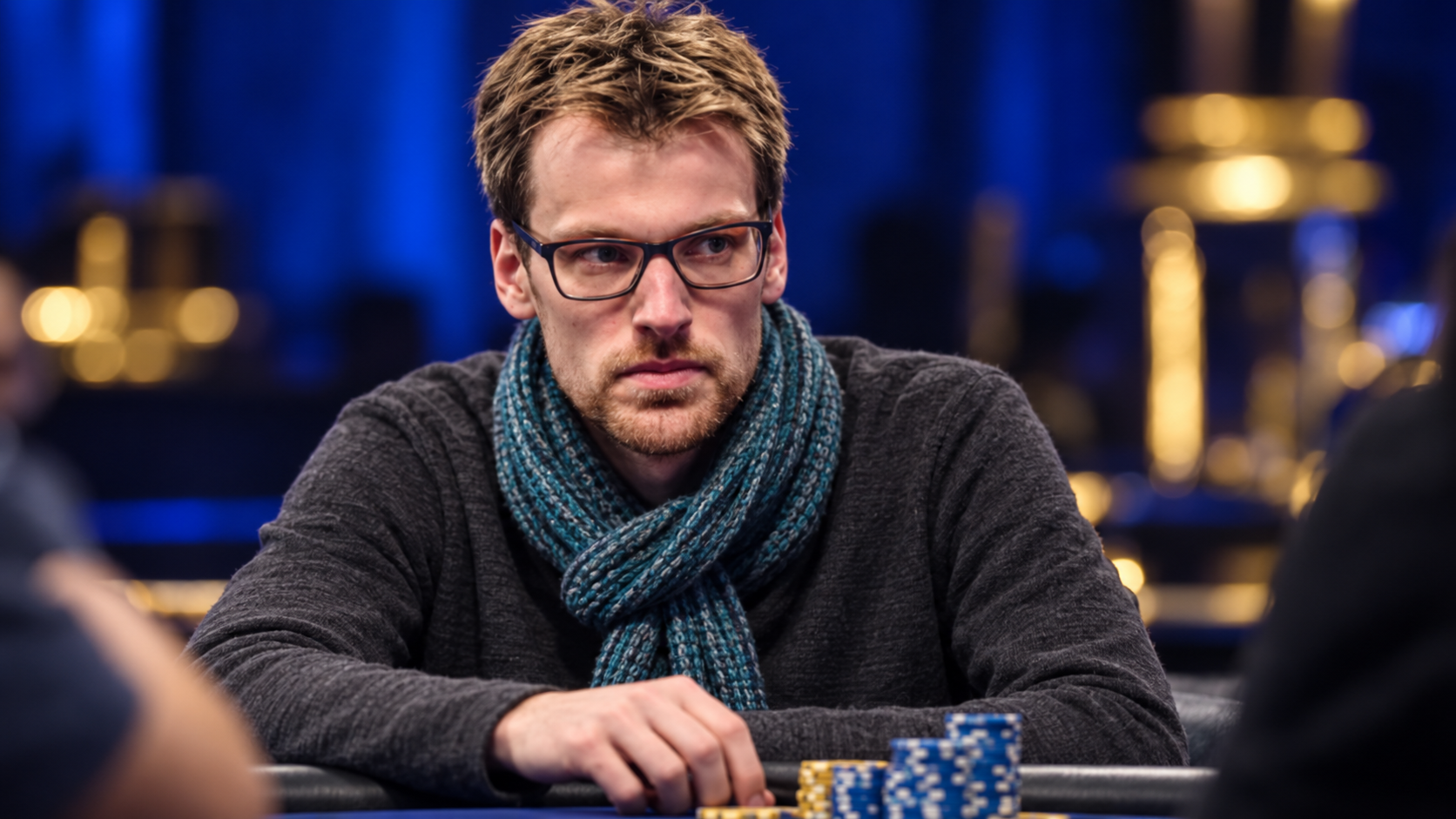
A 2.456.445 $ Runner-Up Finish in Jeju
Vogelsang began 2025 with another enormous Triton result in Jeju, South Korea.
The 125.000 $ No-Limit Hold’em 7-Handed event attracted 93 entries and generated an 11.625.000 $ prize pool.
He reached heads-up play against Punnat Punsri. The finalists made a deal that guaranteed Punsri 2.504.555 $ and Vogelsang 2.456.445 $, leaving 90.000 $ and the trophy to play for.
Punsri held the lead when the agreement was completed and eventually secured the title. Vogelsang’s runner-up payout became the fifth-largest cash of his career at the time.
The result proved particularly important in the context of the season. Six months later, Vogelsang returned to Jeju and won the Triton Main Event.
High-roller schedules often bring the same opponents and venues together repeatedly. Information gathered during one final table can influence the next. Vogelsang’s ability to return and improve on second place reflects the long-term adaptation required at this level.
Two Major Cashes in Montenegro in 2025
Vogelsang continued his strong 2025 season at the Triton stop in Montenegro.
He finished 19th in the 200.000 $ Triton Invitational for 335.000 $. He then reached the final four of the 100.000 $ Main Event and collected 1.463.000 $.
The Main Event result was his third seven-figure cash within little more than a year, following the 2024 EPT Monte Carlo runner-up finish and the 2025 Jeju second place.
Fourth place can disappear inside a career containing several victories worth millions. In a 100.000 $ event, however, it represents a major contribution to both earnings and long-term survival.
Vogelsang’s volume is lower than that of professionals who play every available tournament. He therefore depends on converting selected entries into deep runs.
The Montenegro results helped build the financial foundation for the defining victory of his 2025 season.
Winning the 2025 Triton Jeju Main Event
In September 2025, Vogelsang won the 100.000 $ Triton Poker Main Event in Jeju.
The tournament attracted 228 entries, including 84 re-entries, and created a 22.800.000 $ prize pool. It was much larger than the small-field super high rollers that had produced his earliest success.
Vogelsang entered the final table as chip leader. He maintained the advantage through a lineup including Aleks Ponakovs, Ben Heath, Samuel Mullur and several accomplished Asian professionals.
One of the most important hands came against Ponakovs. Facing aggression on a threatening board, Vogelsang made a difficult call and won a pot that gave him a commanding lead.
He eventually faced Austrian professional Samuel Mullur heads-up. They agreed to an ICM deal before playing for the remaining money and title.
Vogelsang won the final confrontation and received 4.099.975 $. Mullur earned 3.509.025 $.
The prize became the third-largest live cash of Vogelsang’s career, behind only the 2017 Super High Roller Bowl and 2014 Big One for One Drop.
The title carried additional prestige because it was a Triton Main Event. It confirmed that Vogelsang could dominate a 228-entry field rather than relying only on small invitation-style tournaments.
A Third Triton Title in Montenegro in 2026
Vogelsang won his third Triton title in May 2026 at the Maestral Resort in Montenegro.
The 50.000 $ No-Limit Hold’em 7-Handed event attracted 118 entries and generated a 5.900.000 $ prize pool.
Vogelsang reached three-handed play with German Leonard Maue and Austrian Thomas Mühlöcker. The players agreed to an ICM deal that gave Mühlöcker the largest guaranteed payout because he held the chip lead.
They left 100.000 $ and the trophy in play. Vogelsang then eliminated both opponents in consecutive hands to complete the victory.
His official prize was 1.037.858 $. Maue received 909.127 $ for second, while Mühlöcker’s deal produced 1.071.015 $ despite his third-place finish.
The unusual payout order demonstrates how deals affect tournament records. A finishing position and prize amount do not always rise together.
For Vogelsang, the title mattered more than the difference. It placed him among Triton’s three-time champions and continued a period in which German players won three consecutive events at the festival.
The result also lifted his recorded live earnings to the 47.025.848 $ shown in his current Hendon Mob profile.
Christoph Vogelsang’s Biggest Live Tournament Results
Vogelsang has recorded 13 cashes worth at least 1 million $.
|
Year |
Tournament |
Result |
Prize |
|
2017 |
300.000 $ Super High Roller Bowl, Las Vegas |
1st |
6.000.000 $ |
|
2014 |
1.000.000 $ Big One for One Drop, WSOP |
3rd |
4.480.001 $ |
|
2025 |
100.000 $ Triton Main Event, Jeju |
1st |
4.099.975 $ |
|
2023 |
100.000 $ Triton NLH 8-Handed, Monte Carlo |
1st |
2.644.000 $ |
|
2025 |
125.000 $ Triton NLH 7-Handed, Jeju |
2nd |
2.456.445 $ |
|
2020 |
250.000 $ Super High Roller Bowl Russia |
2nd |
2.400.000 $ |
|
2025 |
100.000 $ Triton Main Event, Montenegro |
4th |
1.463.000 $ |
|
2022 |
250.000 $ Super High Roller Bowl Europe |
3rd |
1.280.000 $ |
|
2024 |
100.000€ EPT Super High Roller, Monte Carlo |
2nd |
1.269.300€ |
|
2018 |
300.000 $ Super High Roller Bowl, Las Vegas |
5th |
1.200.000 $ |
|
2026 |
50.000 $ Triton NLH 7-Handed, Montenegro |
1st |
1.037.858 $ |
The table uses the original payout currency when appropriate. Rankings by size can shift slightly when historical euro prizes are converted into dollars at different exchange rates.
Vogelsang’s largest results cover more than a decade. Four of the listed cashes came after he turned 38, demonstrating that his all-time position is not only the product of the 2014–2017 high-roller boom.
Christoph Vogelsang’s Career Statistics
|
Category |
Record |
|
Recorded live tournament earnings |
47.025.848 $ |
|
Best live cash |
6.000.000 $ |
|
All-time money list |
17th |
|
Best all-time money-list rank |
16th |
|
Germany all-time money list |
2nd |
|
Global Poker Index ranking |
265th |
|
Triton Poker titles |
3 |
|
WSOP bracelets |
0 |
|
WPT titles |
0 |
|
EPT Main Event titles |
0 |
|
Best WSOP Main Event finish |
445th in 2017 |
|
Seven-figure live cashes |
13 |
The figures are updated to September 2026. Rankings such as the Global Poker Index change weekly, while lifetime earnings can change after each new result or database correction.
The current total also differs from figures displayed by some other poker websites. The 47.025.848 $ amount follows the latest Hendon Mob profile used for this article.
How Christoph Vogelsang Plays Poker
Vogelsang’s style is built around detailed analysis, strong range construction and a willingness to use unusual amounts of time.
He is often described as tight because of his online name and quiet table image. The description is incomplete. In short-handed high rollers, a player cannot succeed by waiting only for premium hands.
Vogelsang is capable of wide opens, light calls and aggressive pressure when stack distributions make them profitable. His key call against Ponakovs in the 2025 Triton Main Event showed that his patience does not prevent bold decisions.
His strongest skill may be the ability to connect one action with an entire strategic tree. A bet is evaluated not only for the current hand but for the range it represents, the future streets it creates and the information it reveals.
This approach is especially powerful in deep-stack tournaments. More chips behind create more possible bet sizes and more complex river decisions.
It also explains why Vogelsang prefers time. He is not simply deciding whether his two cards are strong. He is comparing combinations, blockers, incentives and how an opponent will respond across several parts of a range.
The method has produced extraordinary results. Its effect on the pace of the game remains controversial.
The Tanking Controversy
No discussion of Vogelsang’s career is complete without addressing slow play.
He has repeatedly drawn criticism for taking a long time on decisions that viewers and opponents consider routine. The issue became especially visible during the 2022 WSOP Heads-Up Championship.
Professionals including Scott Seiver and Lex Veldhuis publicly criticised the pace. Their objection was not that a difficult million-dollar decision deserves thought. It was that extended tanks occurred even before simple folds, making the match less watchable and reducing the number of hands played.
Vogelsang’s likely strategic concern is timing consistency. Acting instantly with weak hands but slowly with difficult ones can reveal information. Using a similar process across decisions prevents opponents from reading that difference.
The explanation does not resolve the entertainment problem. Poker tournaments depend on players, broadcasters and spectators, and extremely slow action affects everyone at the table.
Criticism is therefore legitimate even when the behaviour remains within the rules. If an event permits unlimited time until an opponent calls the clock, a player has an incentive to use it. Organisers must decide where strategic freedom ends and unacceptable delay begins.
How Shot Clocks Changed High-Roller Poker
Shot clocks have become common in the high-roller tournaments Vogelsang plays.
The system gives each player a limited amount of time for an ordinary decision and a supply of time-bank extensions for unusually difficult situations. When the clock expires without an extension, the hand may be declared dead.
This structure addresses two problems. It keeps broadcasts moving and prevents a player from using unlimited time simply to avoid timing tells.
Vogelsang has continued winning under shot-clock conditions. His three Triton titles all came on a tour known for regulating decision time.
That fact matters. It shows that his success does not depend on slowing every hand indefinitely. When the rules establish a fixed limit, he adjusts and performs within it.
The controversy has nevertheless influenced his reputation. Some fans first recognise Vogelsang as the player who tanks rather than the player with 13 seven-figure cashes.
A balanced assessment should separate pace from ability. Slow play can be harmful to the product and frustrating to opponents. It does not make the strategic decisions themselves less sophisticated.
The best solution comes from consistent tournament rules rather than personal arguments at the table.
Why His High-Roller Record Is So Difficult to Reproduce
Gross earnings have expanded rapidly during the modern high-roller era. Large totals can therefore appear easier to achieve than those of earlier generations.
Vogelsang’s 47 million $ still represents an exceptional record.
His events regularly contain the strongest available professionals. A 50-player field may be smaller than a WSOP tournament with thousands of entries, but almost every table contains opponents who study full time.
The financial pressure is also constant. Missing the money in four 100.000 $ events creates 400.000 $ in buy-ins before travel or expenses. A player needs access to capital, emotional stability and enough long-term skill to retain the confidence of backers or buyers.
Vogelsang has survived those conditions from 2013 through 2026. He remained competitive as online tools improved, solver work spread and younger players entered with more formal technical training.
His results also cover multiple versions of the high-roller ecosystem: EPT super high rollers, WSOP million-dollar events, Aria tournaments, Super High Roller Bowls and Triton festivals.
Longevity across those environments is stronger evidence than one exceptional year.
Live Tournament Earnings Versus Online Results
The Hendon Mob total counts recorded live tournament cashes.
It excludes most online results, private cash games and sessions that were never reported publicly. For Vogelsang, the missing online category is especially important because it created his career.
Historical databases tracked millions of dollars in profit under Tight-Man1 and 26071985. He also won the 2021 Powerfest Super High Roller for approximately 469.691 $ and recorded other online tournament cashes.
None of those amounts should simply be added to the live total. Cash-game tracking can be incomplete, and profit records measure wins after losses while tournament databases list gross prizes before buy-ins.
The categories describe different things.
Vogelsang’s public live record establishes his position in tournament history. His online record explains how he developed the skill and bankroll to enter that world.
Together, they show a more complete professional journey than either database can provide alone.
What Is Christoph Vogelsang’s Net Worth?
Christoph Vogelsang’s net worth has not been publicly verified.
Websites sometimes estimate that he possesses tens of millions of dollars, but those figures are speculative. Recorded tournament earnings cannot establish private wealth.
The 47.025.848 $ total represents gross cashes. It does not subtract buy-ins, losing tournaments, taxes, travel, coaching or other professional expenses.
It also does not reveal staking. If Vogelsang sold half of an entry, he would receive only half of the resulting prize while the database would still credit the full cash to his name. If he owned pieces of other players, income from those arrangements would not appear on his profile.
Online poker, investments and private financial decisions make the calculation even less certain.
The responsible conclusion is limited but clear. Vogelsang has generated one of the largest live tournament totals in history and has remained financially capable of competing at the highest stakes. His precise lifetime profit and personal net worth remain private.
Any exact estimate should be treated as conjecture rather than established fact.
Second on Germany’s All-Time Money List
By September 2026, Vogelsang ranked second among German players with 47.025.848 $ in recorded live earnings.
Fedor Holz remained first with more than 50 million $. The gap had narrowed significantly after Vogelsang’s 2025 Jeju Main Event victory and 2026 Montenegro title.
Comparing the two careers is interesting because their routes were different. Holz combined an extraordinary 2016 peak with online tournament titles, WSOP bracelets, Triton success and business projects. Vogelsang concentrated more heavily on elite No-Limit Hold’em events and online cash games.
Koray Aldemir owns the achievement neither of them has: a WSOP Main Event title. Ole Schemion, Rainer Kempe and Dominik Nitsche also built major international résumés.
Gross earnings do not settle every comparison. Buy-ins, field sizes, game selection and titles all matter.
Vogelsang’s argument rests on the difficulty of his schedule and his longevity within it. Very few German players—or players from any country—have reached as many final stages of 100.000 $ and 300.000 $ tournaments.
More Final Tables Than Trophies
Vogelsang’s résumé contains an unusual relationship between earnings and wins.
Before his first Triton title, he had more than 28 million $ in live cashes but only two recorded victories. He repeatedly reached second, third, fourth and fifth place in events with enormous payouts.
Some observers interpret the pattern as evidence that he struggles to close tournaments. That conclusion gives too much weight to a small sample.
Final tables reduce a long event to a handful of high-variance confrontations. Heads-up matches can turn on one dominated hand improving or one coin flip holding. Vogelsang lost the 2022 WSOP final after Dan Smith’s dominated ace-four paired against his ace-ten.
The later record also changed. Vogelsang won three Triton titles between October 2023 and May 2026, including a 228-entry Main Event.
His many near misses should therefore be treated as evidence of repeated deep runs, not failure. Winning remains the ideal outcome, but reaching the final stage is what creates the opportunity.
Vogelsang has created that opportunity more consistently than almost anyone playing comparable stakes.
Christoph Vogelsang’s Place Among the Greatest Players
Vogelsang is one of the greatest super high-roller specialists of the modern era.
The narrower description is more accurate than simply ranking him among all poker players. His public record is concentrated in No-Limit Hold’em tournaments, while all-around legends are also judged across mixed games, cash formats and decades of private action.
Within his speciality, the evidence is exceptional. He won the Super High Roller Bowl, reached three other podium or top-five finishes in the series, finished third in the Big One for One Drop and collected three Triton titles.
His 13 seven-figure cashes show that the total is not based on one tournament. The results range from 2014 to 2026.
The absence of a WSOP bracelet and his relatively small number of conventional titles remain gaps. His slow play also affects how some fans evaluate his contribution to the game as entertainment.
Neither issue removes the competitive record.
Vogelsang’s strongest claim is simple: for more than a decade, the organisers of the world’s most expensive tournaments assembled their strongest fields, and he kept reaching the final table.
The Poker Legacy of Christoph Vogelsang
Christoph Vogelsang represents the analytical transformation of professional poker.
He began with 10 $ online deposits rather than casino connections. Within weeks, he was playing high-stakes cash games. Under Tight-Man1 and 26071985, he built a reputation strong enough to enter live poker near the top of the financial ladder.
His first major cash came in a 50.000£ EPT Super High Roller. His first WSOP cash paid 4.480.001 $ in the Big One for One Drop. His first live title was the 6.000.000 $ Super High Roller Bowl.
Those achievements would have created a complete career by themselves. Vogelsang continued long enough to add a runner-up finish in Russia, third place in Super High Roller Bowl Europe, a WSOP Heads-Up Championship final and three Triton victories.
The 2025 Jeju Main Event became the clearest proof of his adaptability. At 40, he defeated a 228-entry field filled with players trained in the solver era and recorded the third-largest cash of his life.
His legacy will always include debate about pace. Vogelsang pushed tournament organisers and viewers to confront how much time a player should receive and helped make shot clocks an important part of modern high-roller presentation.
The larger story, however, is competitive endurance. He moved from university economics to online nosebleeds, from an unknown live debutant to a Super High Roller Bowl champion and from a six-year title drought to three Triton trophies.
Poker has produced louder stars and more prolific winners. Few players have built a purer record against the strongest available No-Limit Hold’em opposition.
That is why Christoph Vogelsang is remembered not only for taking his time, but for repeatedly making that time count.
Career statistics updated in September 2026. Recorded live tournament earnings represent gross cashes and exclude most online results, private games, buy-ins, staking agreements, expenses and taxes. Christoph Vogelsang’s net worth has not been publicly verified.