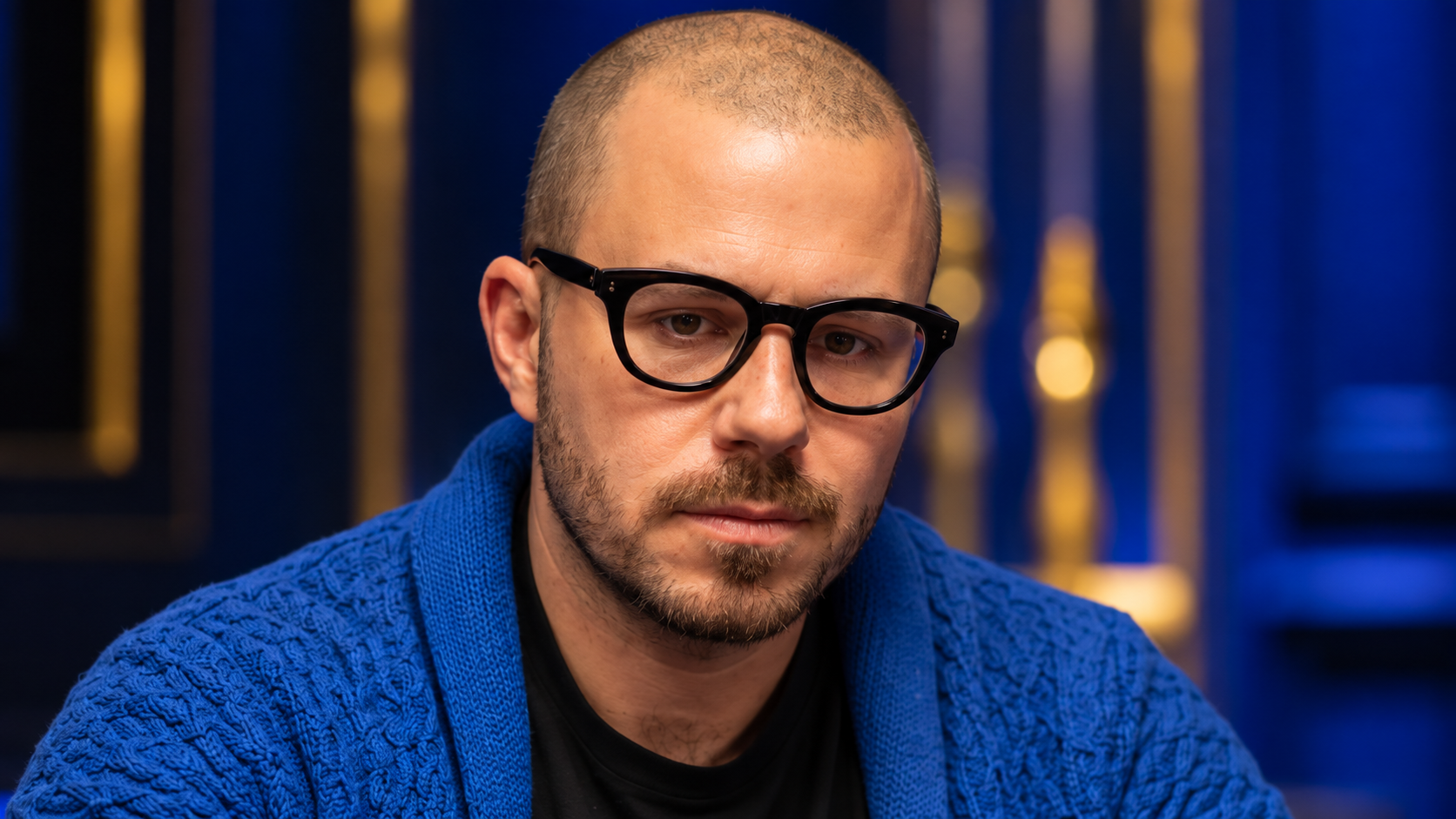
Dan Smith
Dan Smith is an American professional poker player, WSOP bracelet winner, World Poker Tour champion, two-time Triton titleholder and founder of the charitable organisation Double Up Drive.
Known as “Cowboy Dan,” “King Dan” and online as “Danny98765,” Smith has been one of the most consistent tournament players of the modern high-roller era. His career includes major victories in Australia, Monte Carlo, Barcelona, Las Vegas and Montenegro, together with some of the largest third-place prizes in poker history.
As of August 2026, Smith has 61.359.471 $ in recorded live tournament earnings. His largest cash is the 8.765.628 $ he received for finishing third in the 2019 Triton Million for Charity, and he currently occupies eighth place on poker’s all-time money list.
Smith’s résumé is unusually broad. He won the inaugural Global Poker Index Player of the Year award after collecting six titles in 2012. He captured the WPT Five Diamond World Poker Classic in 2013, spent 16 consecutive weeks as the world’s number-one ranked tournament player in 2014 and finished second in the 2016 WSOP High Roller for One Drop for more than 3 million $.
Two enormous third-place finishes followed. Smith earned 4.000.000 $ in the 2018 Big One for One Drop and then produced his career-best result at the million-pound Triton event in London.
For years, Smith was described as one of the greatest players without a WSOP bracelet. He finally removed that label in 2022 by winning the 25.000 $ Heads-Up No-Limit Hold’em Championship.
His contribution beyond the table is equally important. Double Up Drive has used matching campaigns to help raise more than 28,7 million $ for charities selected for measurable impact. Smith’s analytical mindset therefore influences not only how he plays poker, but also how he approaches philanthropy.
Few players combine tournament success, peer respect and charitable work at his level.
Early Life in Manalapan, New Jersey
Daniel Smith was born on February 23, 1989, in Manalapan Township, New Jersey.
He showed a strong interest in competitive games from childhood. Chess became his first serious discipline, providing a structured environment in which preparation and calculation produced visible results.
Smith began playing when he was approximately six years old.
He progressed through youth competitions and developed into one of the strongest young players in his age group. His rating eventually climbed beyond 2.100, placing him at expert level and approaching the standard required for recognised master titles.
Chess taught Smith to examine a position rather than react only to the most obvious move. A strong player must anticipate several responses, calculate variations and recognise when a small positional advantage matters more than an immediate attack.
The game also taught him emotional discipline. One mistake can erase hours of good play, while a losing position may still contain practical chances if the opponent is forced to make difficult decisions.
These ideas transferred naturally to poker. The cards introduced hidden information and financial risk, but the basic challenge remained familiar: choose the action that performs best across many possible responses.
A Chess Scholarship and a Change of Direction
Smith’s chess ability earned him a scholarship to the University of Maryland.
The opportunity suggested a conventional academic path, but his relationship with chess was changing. Years of structured competition had reduced some of the enjoyment, and poker offered a new strategic challenge.
Smith had begun playing online poker at approximately age 16.
The game immediately added elements that chess could not provide. Poker combined logic with uncertainty, and correct decisions did not always produce immediate rewards. Opponents could represent hands they did not hold, and a weaker player could win a session through short-term variance.
Smith also discovered that poker could become highly profitable. Online games allowed him to compete from home, play several tables and accumulate more decisions in one day than a live player might experience in a week.
By 2007, at age 18, he decided to leave university and pursue poker full-time.
The choice involved substantial risk. Online poker was still evolving, professional income was unstable and a young player could not know whether early success reflected skill or a favourable run.
Smith believed his results were strong enough to justify the attempt.
Danny98765 and the Online Poker Years
Smith became known online under the screen name “Danny98765.”
He played cash games and tournaments while building the bankroll and experience required for a professional career. Online poker rewarded fast processing, range analysis and the ability to separate individual losses from long-term performance.
Smith’s chess background gave him an advantage in structured study. He was comfortable reviewing mistakes and accepting that an apparently successful decision might still have been strategically poor.
The online environment also forced constant adaptation. Regular opponents collected information quickly, and a player using the same betting patterns would become predictable.
Smith learned to vary his ranges, understand stack-to-pot ratios and apply pressure when tournament payouts made opponents reluctant to risk elimination.
His other online and social identities included “King Dan” and “DanSmithHolla.” The cowboy nickname became more visible later, particularly after he began appearing in a Stetson at major live events.
The foundation of his game, however, was established behind a computer screen before most poker fans knew his name.
First Live Victory at Turning Stone
Smith’s first recorded live cash was also his first tournament victory.
In June 2008, he entered a 1.500 $ Heartland Poker Tour Main Event at Turning Stone Resort Casino in New York. The event attracted 250 entries.
Smith took an early chip lead and maintained his position through the two-day tournament. He won the title and collected 101.960 $.
The result immediately validated his decision to pursue poker professionally. A six-figure prize could support a larger schedule and reduced the pressure on his online bankroll.
Turning Stone was a common starting point for young American professionals because players could enter at age 18. Most major Las Vegas casinos required customers to be 21.
Smith’s victory therefore arrived before he was eligible to compete in many of the country’s most famous poker rooms.
He did not instantly become an international high roller. The following years involved gradual development, online volume and increasingly expensive live events.
By 2012, that preparation produced one of the greatest breakout seasons of the era.
The Historic 2012 Season
The year 2012 transformed Dan Smith from a respected young professional into an international tournament star.
He won six live titles and cashed in 12 additional events. His victories came in Australia and Europe across different buy-ins and structures.
The season began at the Aussie Millions, where Smith won the 100.000 A$ Challenge for 1.012.000 A$, worth slightly more than 1 million $ at the time.
He then travelled to the European Poker Tour Grand Final in Monte Carlo and won three separate 5.000€ tournaments within five days. The combined prizes reached 520.980€.
In August, Smith added the 50.000€ EPT Barcelona Super High Roller for 962.925€.
The sequence demonstrated more than one successful week. Smith won in January, April and August against fields containing many of the strongest players in the world.
He finished the year as the inaugural Global Poker Index Player of the Year and moved into the high-roller elite at age 23.
Aussie Millions 100.000 A$ Challenge
Smith’s first seven-figure live victory came at the 2012 Aussie Millions.
The 100.000 A$ Challenge brought together leading international professionals and wealthy high-stakes competitors. Smith defeated a final table that included established names and beat Mikhail Smirnov heads-up.
First place paid 1.012.000 A$.
The title was important because Smith’s earlier live record had not yet established him as a super high-roller specialist. He was entering a tournament in which one buy-in exceeded the total prize from his Heartland Poker Tour victory.
Winning provided the bankroll and credibility required to continue at that level.
The result also showed that Smith could manage the emotional pressure created by six-figure entry fees. The strategic decisions remain the same size in chips, but the knowledge that each mistake may represent tens of thousands of dollars can affect inexperienced players.
Smith appeared comfortable immediately.
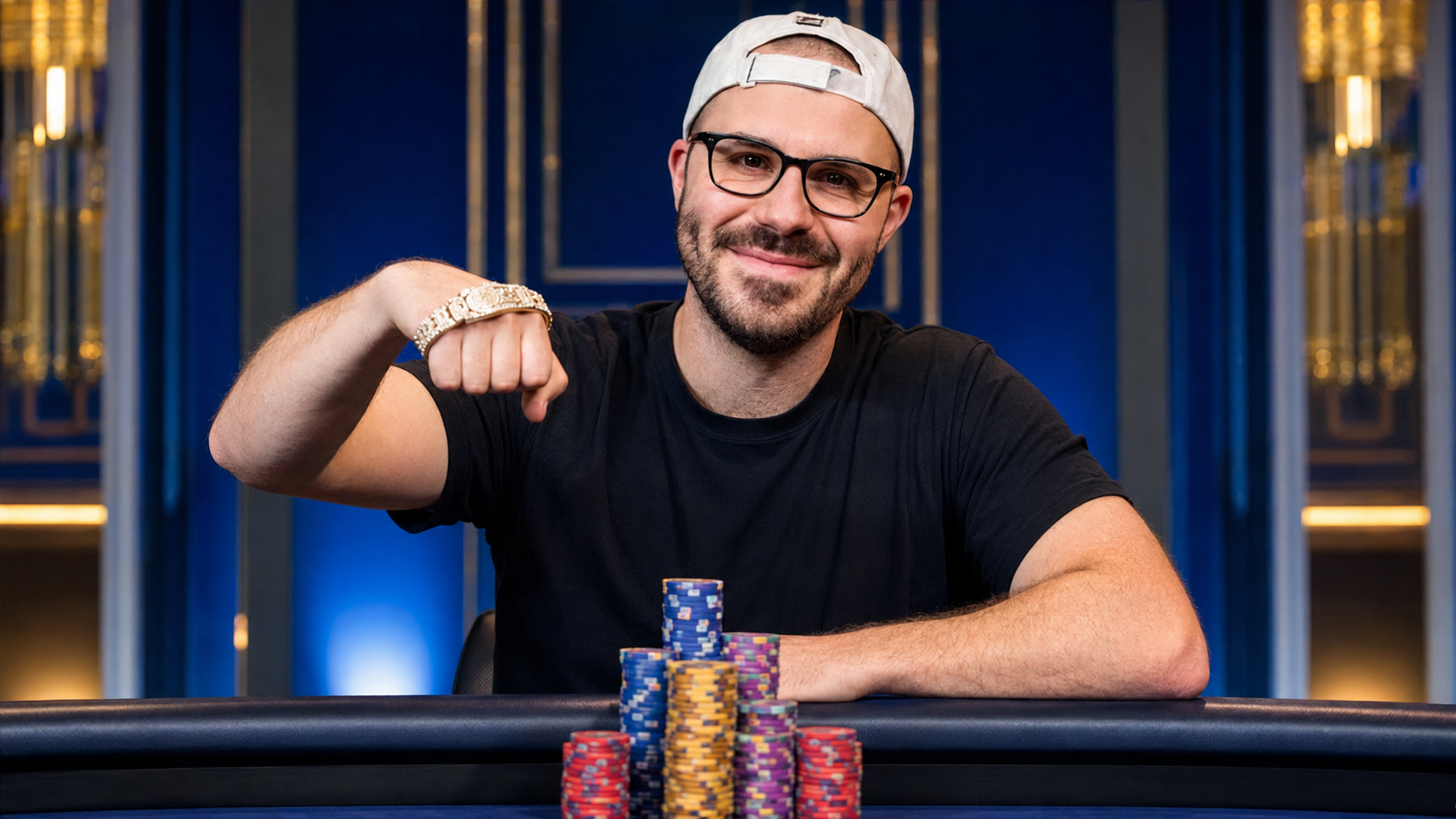
Three Victories in Five Days in Monte Carlo
Smith produced one of the most unusual winning sequences in EPT history at the 2012 Grand Final.
He entered a schedule of 5.000€ No-Limit Hold’em side events and won three of them within five days.
The tournaments used different structures, including six-handed and turbo formats. Smith collected a combined 520.980€.
Winning one tournament requires a combination of strong decisions and favourable short-term outcomes. Winning three within the same festival is exceptionally rare.
The run became the clearest early example of Smith’s ability to maintain concentration through consecutive final tables. Instead of treating the first victory as a reason to reduce his schedule, he returned and repeated the result.
The prizes were smaller than those available in the headline super high rollers, but the achievement played a major role in his Player of the Year campaign.
It also connected Smith permanently with the European Poker Tour, where he would accumulate numerous high-roller titles and final tables.
Winning the First EPT Barcelona Super High Roller
The European Poker Tour introduced its first 50.000€ Super High Roller at Barcelona in August 2012.
Smith reached the final table and defeated JC Alvarado heads-up. First place paid 962.925€.
The victory became his second seven-figure score of the year when converted into dollars.
The field contained many of the professionals who would define the emerging super high-roller era. Smith was no longer an outsider taking one ambitious shot. He had become one of the players expected to appear whenever the largest tournament on a schedule began.
The Barcelona title completed a six-win season and gave Smith an important piece of poker history as the first champion of that event.
His total performance earned the inaugural GPI Player of the Year award, narrowly ahead of German professional Marvin Rettenmaier.
Smith finished runner-up in other major Player of the Year systems, but the GPI title provided the most visible recognition of his consistency.
2012 Global Poker Index Player of the Year
The Global Poker Index launched its annual Player of the Year race to identify the strongest live tournament performance across a complete calendar.
Smith became the first winner.
The ranking rewarded his six titles, 18 total cashes and results across several countries. No single prize determined the outcome.
Player of the Year systems remain imperfect because each formula assigns different value to buy-ins, field sizes and finishing positions. They nevertheless measure something the all-time money list cannot: sustained performance within one competitive period.
Smith’s victory established him as more than a high roller who had won one large tournament. He had produced depth, volume and repeated success across the year.
The award also became an early sign that his chess-trained analytical style could survive the travel and variance of a full international schedule.
The 2013 WPT Five Diamond Championship
Smith captured his first World Poker Tour title in December 2013.
The 10.300 $ Doyle Brunson Five Diamond World Poker Classic was held at Bellagio in Las Vegas. Smith reached the final table and completed the victory for 1.161.135 $.
The title placed his name in the WPT Champions Club and pushed his career live earnings beyond 5,6 million $.
Winning a Main Tour championship required a different route from the small-field super high rollers that had produced many of his 2012 results. The Five Diamond field was larger and included a wider range of styles and experience levels.
Smith had to adjust between recreational qualifiers, established professionals and high-stakes regulars over several long days.
The tournament remains one of the most important trophies on his résumé. It confirmed that he could win a major championship rather than only expensive side events.
Bellagio Super High Roller and the Number-One Ranking
Smith added another major Las Vegas victory in June 2014.
He won a 100.000 $ Super High Roller at Bellagio for 2.044.766 $. It was the largest cash of his career at that time.
The result formed part of another exceptional year. Smith also reached 20th place in the WSOP Main Event for 286.900 $, his best finish in poker’s world championship.
In August 2014, Smith moved to first place in the Global Poker Index rankings.
He remained number one for 16 consecutive weeks.
The weekly GPI list measures recent tournament performance over a rolling period. Holding the top position for several months showed that Smith’s success was not based only on the 2012 season.
At age 25, he had already won major titles on three continents, collected a WPT championship and established himself as the world’s highest-ranked active tournament player.
The 2016 High Roller for One Drop
Smith came close to his first WSOP bracelet in the 2016 111.111 $ High Roller for One Drop.
The event attracted 183 entries and created an enormous prize pool. Smith reached heads-up play against Fedor Holz, who was then producing one of the strongest high-roller runs in poker history.
Smith held the lead during part of the final duel, but Holz recovered and won the bracelet.
Second place paid Smith 3.078.974 $.
It was the largest prize of his career to that point and a painful near miss. A victory would have delivered both a bracelet and almost 5 million $.
The result nevertheless demonstrated Smith’s ability to compete through a field containing the modern game’s strongest specialists. It also began a sequence of enormous One Drop and million-buy-in cashes.
Smith would finish third in two different 1.000.000 $ events during the following years.
Third in the 2018 Big One for One Drop
The 2018 WSOP Big One for One Drop carried a buy-in of 1.000.000 $ and attracted 27 entries.
Smith reached the final three alongside Justin Bonomo and Fedor Holz.
Bonomo won the title for 10.000.000 $, Holz finished second for 6.000.000 $ and Smith collected 4.000.000 $ for third.
The prize became another career record, even though he did not win the event.
Third place in a small field can appear less impressive than winning a tournament with thousands of entries. The comparison ignores the quality and financial pressure of the Big One. Every participant had access to an extraordinary bankroll or backing arrangement, and many belonged to the world’s high-roller elite.
Smith had now earned more than 7 million $ from two One Drop final tables without receiving a bracelet from either.
The largest result was still one year away.
The 2019 Triton Million for Charity
The Triton Million for Charity in London became the largest buy-in poker tournament ever held.
Entry cost 1.050.000 £. The field was divided between invited recreational players and professionals selected by those participants. The structure ensured that every professional seat depended on a relationship with an invited businessperson.
Smith entered a field of 54 players and reached the final three with Bryn Kenney and Aaron Zang.
Smith finished third for 7.200.000 £, recorded as 8.765.628 $ in his Hendon Mob career total.
The prize remains his largest live cash.
Zang officially won the tournament, while Kenney received the largest payout after the final two negotiated a deal. Smith had been eliminated before that agreement and therefore received the fixed third-place prize.
The result moved him dramatically higher on the all-time money list and became the clearest financial example of his ability to perform under extreme pressure.
Why the Triton Million Result Matters
The 2019 Triton Million was not a conventional open tournament.
Professionals could not simply pay the buy-in and enter. Each needed an invitation from an eligible recreational participant, creating a field shaped by trust and private high-stakes relationships.
Smith’s place therefore reflected his reputation away from public final tables. Wealthy players were willing to select him for the largest event ever organised.
The million-pound buy-in also required careful risk management. Few professionals would personally fund the full entry. Players commonly sell action, receive backing or exchange percentages to prevent one tournament from threatening their financial stability.
The database credits Smith with the complete 8.765.628 $ prize, but his personal share has never been publicly verified.
The result still belongs to his tournament record regardless of the private financial arrangement. Smith defeated 51 of the 53 opponents in a uniquely difficult field.
The Best Player Without a Bracelet
By the end of the 2010s, Smith had become a regular answer to the question of who was the greatest player without a WSOP bracelet.
He had won the WPT Five Diamond, the inaugural EPT Barcelona Super High Roller, the Aussie Millions 100.000 A$ Challenge and a Bellagio 100.000 $ event.
His WSOP record contained repeated near misses. Smith had finished second in the 2016 High Roller for One Drop, third in the 2018 Big One and reached final tables in Pot-Limit Omaha and 2-7 Draw.
The missing bracelet did not indicate a lack of ability. Tournament titles depend on small samples, and Smith often concentrated on high-buy-in events with elite fields.
The label nevertheless remained because the WSOP bracelet is poker’s most recognisable individual trophy.
Daniel Negreanu and other prominent players publicly described Smith as the best without one.
That description ended in June 2022.
First WSOP Bracelet in the Heads-Up Championship
Smith won his first bracelet in the 2022 25.000 $ Heads-Up No-Limit Hold’em Championship.
The tournament used a direct knockout format. Smith had to defeat one opponent in each round rather than accumulate chips across several tables.
He reached the final against German high-roller specialist Christoph Vogelsang. Both players were seeking their first bracelet.
The match became a demanding battle of range adjustment, patience and short-stack strategy. Smith completed the victory and earned 509.717 $.
The prize was relatively small beside his multi-million-dollar cashes, but the emotional significance was greater. Fourteen years had passed since his first recorded live win.
Smith no longer had to defend a résumé without WSOP gold.
The event was an appropriate place for the breakthrough. His chess background and online experience made heads-up competition one of the clearest tests of his analytical strengths.
Winning His First Triton Title in 2023
Smith reached another career milestone at Triton Monte Carlo in October 2023.
The 200.000 $ Invitational attracted 73 entries and combined elite professionals with wealthy invited competitors.
Smith reached heads-up play against Austrian professional Christoph Vogelsang, the same opponent he had defeated for his WSOP bracelet.
Smith won the match and collected 3.870.000 $.
The victory delivered his first Triton Poker title and the third-largest cash of his career. Only the 2019 Triton Million and 2018 Big One had paid more.
The result also demonstrated that Smith remained capable of winning against the modern high-roller generation more than a decade after his 2012 breakthrough.
At 34, he was no longer a young online player attempting to enter the elite. He had become one of the established competitors newer professionals were required to defeat.
Another Million-Dollar Buy-In Final Table
Smith entered the 2023 WPT Big One for One Drop at Wynn Las Vegas.
The tournament again required a 1.000.000 $ buy-in and attracted 17 entries. Smith reached the final three with Mikita Bodyakovsky and Mario Mosböck.
He finished third for 2.806.750 $.
It was his third major cash in a tournament with a buy-in of approximately 1 million $: third in the 2018 WSOP Big One, third in the 2019 Triton Million and third in the 2023 WPT Big One.
The repeated finishing position is a coincidence, but the ability to survive three fields at such stakes is not.
Smith’s prize increased his live earnings close to 50 million $. It also created a remarkable 2023 in which he won his first Triton title and added another multi-million-dollar One Drop result.
Second Triton Title in Jeju
Smith won his second Triton title in March 2024.
The 50.000 $ No-Limit Hold’em Turbo Bounty event at Triton Jeju attracted 108 entries. Smith accumulated all the chips and collected five bounty payments, including the value attached to his own survival.
The regular first-place prize was 951.000 $, while the bounties added another 300.000 $.
His total return from the event therefore reached 1.251.000 $.
Turbo structures reduce stack depth quickly and force competitors to make more all-in decisions. The increased variance rewards players who understand push-fold ranges and can adapt when conventional post-flop strategy becomes less important.
The title made Smith a two-time Triton champion only months after his first victory.
He also won a 10.100 $ U.S. Poker Open event in April 2024 for 235.200 $, continuing to collect PokerGO Tour titles at lower buy-ins than the Triton schedule.
The 2025 and 2026 Seasons
Smith reduced his pace of major live results after the enormous 2023 and 2024 seasons.
In 2025, he reached the final table of the 10.000 $ WSOP No-Limit 2-7 Single Draw Championship and finished sixth for 83.179 $. The result reinforced his ability outside standard Hold’em.
He also recorded cashes at the PokerGO Cup, NAPT Las Vegas and several high-roller events without adding another major title.
Smith remained active in 2026. He finished second in a 5.100 $ PokerGO Tour Kickoff event for 109.475 $, third in a 10.100 $ turbo for 72.800 $ and cashed in the 200.000 $ Triton Montenegro Invitational for 345.000 $.
During the summer, he finished 20th in the WSOP 25.000 $ mixed Pot-Limit Omaha and No-Limit Hold’em High Roller for 52.500 $. He then reached second and fifth place in consecutive PokerGO Tour Summer Series high rollers for 131.250 $ and 104.000 $.
As of August 2026, Smith ranks 442nd in the Global Poker Index. The lower recent ranking reflects the rolling nature of the system and his reduced volume of top finishes, not the disappearance of his career achievements.
Dan Smith’s WSOP Bracelet Record
Dan Smith has won one World Series of Poker bracelet.
|
Year |
Event |
Result |
Prize |
|
2022 |
25.000 $ Heads-Up No-Limit Hold’em Championship |
1st |
509.717 $ |
His bracelet count understates the scale of his WSOP career.
Smith finished second in the 2016 111.111 $ High Roller for One Drop for 3.078.974 $ and third in the 2018 1.000.000 $ Big One for 4.000.000 $.
He has also reached final tables in Pot-Limit Omaha, No-Limit 2-7 Single Draw and other high-buy-in events. His best WSOP Main Event finish came in 2014, when he placed 20th for 286.900 $.
In 2024, Smith came close to a second bracelet in an online Pot-Limit Omaha Mystery Bounty event but finished runner-up to Alex Foxen.
The official bracelet total remains one as of August 2026.
Dan Smith’s Biggest Live Tournament Results
Smith has recorded five individual cashes worth more than 2 million $.
|
Year |
Tournament |
Result |
Prize |
|
2019 |
Triton London 1.050.000 £ Million for Charity |
3rd |
8.765.628 $ |
|
2018 |
WSOP 1.000.000 $ Big One for One Drop |
3rd |
4.000.000 $ |
|
2023 |
Triton Monte Carlo 200.000 $ Invitational |
1st |
3.870.000 $ |
|
2016 |
WSOP 111.111 $ High Roller for One Drop |
2nd |
3.078.974 $ |
|
2023 |
WPT 1.000.000 $ Big One for One Drop |
3rd |
2.806.750 $ |
|
2014 |
Bellagio 100.000 $ Super High Roller |
1st |
2.044.766 $ |
|
2013 |
WPT Five Diamond World Poker Classic |
1st |
1.161.135 $ |
|
2012 |
EPT Barcelona 50.000€ Super High Roller |
1st |
962.925€ |
The table shows why titles alone provide an incomplete picture. Smith’s two largest prizes came from third-place finishes, while several prestigious victories paid much less.
All figures represent gross tournament cashes. They do not subtract buy-ins, staking obligations, taxes or travel expenses.
Eighth on the All-Time Money List
Smith currently ranks eighth in recorded live tournament earnings.
|
Rank |
Player |
Live tournament earnings |
|
1st |
Bryn Kenney |
90.761.210 $ |
|
2nd |
Stephen Chidwick |
79.029.052 $ |
|
3rd |
Jason Koon |
77.032.156 $ |
|
4th |
Mikita Bodyakovsky |
68.780.522 $ |
|
5th |
Adrian Mateos |
67.813.885 $ |
|
6th |
Justin Bonomo |
65.611.094 $ |
|
7th |
Isaac Haxton |
65.340.450 $ |
|
8th |
Dan Smith |
61.359.471 $ |
Smith ranks fifth among United States players and first on Nevada’s all-time list. His best global position is fourth.
Different databases may display a higher career total because they include confirmed online results. The Hendon Mob live-only figure is used here for consistency with the official all-time ranking.
The list is not a direct measure of profit or skill. It rewards participation in the most expensive modern tournaments and does not account for unsuccessful buy-ins.
Smith’s position remains meaningful because the total was built across almost two decades and includes success in open championships, heads-up matches, high rollers and invitationals.
Playing Style and Chess-Based Decision-Making
Smith’s style is based on preparation, range awareness and controlled aggression.
Chess trained him to evaluate complete positions rather than isolated moves. In poker, that means considering stack depth, position, previous betting and tournament incentives before examining the absolute strength of his cards.
He is willing to apply pressure when an opponent’s range appears capped. A player who has shown limited strength across several betting rounds may struggle to defend against a large river bet, even with a hand that looked strong earlier.
Smith also understands when aggression has lost its purpose. Folding is not a sign of weakness if the available combinations and price no longer justify continuing.
His table presence is generally calm and conversational. He does not depend on confrontation, but he is more socially active than some high-roller regulars. The ability to communicate comfortably can encourage recreational players to enjoy a difficult table while giving Smith additional information about their emotional state.
Modern solver analysis has changed specific strategies, but Smith’s results show that he continued updating his game rather than relying on principles learned during the early online era.
.jpg)
Heads-Up Ability
Smith’s first bracelet came through a heads-up championship, one of the clearest tests of direct poker adaptation.
In heads-up play, both participants post blinds constantly and must enter far more pots than they would at a full table. Waiting for premium cards is not a viable strategy.
The format rewards wide ranges, positional pressure and the ability to detect changes in an opponent’s approach. A strategy that succeeds during the first hour may become unprofitable once the opponent adjusts.
Smith defeated several specialists on his route to the 2022 title and overcame Christoph Vogelsang in the final.
The result connected his poker career with chess. Both games become most direct when one player faces one opponent without assistance from a larger table dynamic.
Smith’s heads-up record also includes final confrontations in WPT, EPT, Triton and high-roller events. Not every match ended in victory, but repeated appearances demonstrate his closing ability.
Success in Million-Dollar Buy-In Events
Smith has one of the strongest records in tournaments costing approximately 1 million $ to enter.
He finished third in the 2018 WSOP Big One for One Drop, third in the 2019 Triton Million and third again in the 2023 WPT Big One for One Drop.
The three prizes total more than 15,5 million $.
These events contain small fields, but every entry carries unusual financial and psychological pressure. A player may be risking a sum equal to the prize for winning a normal championship.
Smith’s success reflects technical ability and access. Professionals often need backing, action buyers or invitations to participate. The Triton Million specifically required an invited partner.
His repeated presence shows that the high-stakes community considered him both strong enough to compete and trustworthy enough for private financial arrangements.
The results also illustrate variance. Smith eliminated most of each field but did not win any of the three tournaments. He still earned career-defining prizes.
Founding Double Up Drive
Smith founded Double Up Drive in 2014.
The organisation runs campaigns in which Smith and other matching donors agree to contribute money when members of the public support selected charities. A donation can therefore unlock an equal amount from the matching pool.
Smith began the project after recognising that public matching could encourage people to give more and consider the effectiveness of their chosen organisations.
Double Up Drive became a registered non-profit organisation and expanded beyond a personal annual campaign. Poker professionals including Stephen Chidwick, Martin Crowley, Elio Fox and others have participated as team members or matching donors.
As of 2026, Double Up Drive reports more than 28.720.885 $ raised for highly impactful charities.
Smith’s own fundraising efforts account for more than 26 million $ of that total.
The achievement gives his poker career a broader significance. Tournament winnings created financial capacity and a public network, which Smith then used to direct money toward causes outside the game.
The Logic of Effective Giving
Double Up Drive reflects ideas associated with effective altruism.
The central principle is that charitable intentions should be combined with evidence about results. Two organisations may address equally serious problems while producing very different impact from the same donation.
Smith’s campaigns have supported organisations working in global health, poverty reduction, animal welfare, criminal justice reform and other areas. The exact list changes as evidence and funding needs develop.
The approach resembles tournament analysis. A poker player does not choose an action because it feels generous or aggressive. He evaluates the expected outcome across many possible futures.
Effective giving attempts to apply similar discipline to philanthropy by asking how much measurable benefit each additional dollar can create.
The philosophy has critics. Some outcomes are difficult to measure, and a strict focus on quantifiable efficiency may undervalue local, cultural or experimental work.
Double Up Drive does not resolve every debate about charity. It provides donors with a transparent mechanism for increasing the financial effect of causes selected through research.
How Donation Matching Works
A matching campaign begins with money committed by Smith and other funders.
Members of the public donate to eligible charities through the drive. The matching pool then contributes an additional amount under the campaign rules, usually up to a limit per donor or organisation.
The structure creates an incentive. A donor who planned to give 500 $ may see the opportunity to generate 1.000 $ in total funding.
Matching campaigns are sometimes criticised when the original money would have been donated regardless of public participation. Double Up Drive has attempted to address that concern by stating that matching funds are conditional on outside donations and by offering several eligible organisations.
The model also helps charities reach people who may never have encountered them independently.
Smith’s poker network has been particularly useful. High-stakes players understand matching, expected value and leverage, making the concept easy to communicate within the community.
Double Up Drive may ultimately represent a more lasting contribution than any individual tournament result.
The Meaning of the “Cowboy Dan” Nickname
Smith has accumulated several nicknames during his career.
“King Dan” reflects his online and social-media identity, while “Danny98765” was his best-known PokerStars screen name.
“Cowboy Dan” became associated with the Stetson he occasionally wore at the table. Doyle Brunson reportedly gave him a cowboy hat during the 2018 WSOP, connecting Smith visually with one of poker’s original Texas legends.
The nickname does not describe an aggressive road-gambler background. Smith grew up in New Jersey and developed through chess and online poker.
He nevertheless embraced the image and has worn cowboy hats during selected tournament appearances and winner photographs.
The contrast makes the nickname memorable. Behind the hat is not a traditional Western gambler but one of poker’s most analytical modern professionals.
Dan Smith’s Net Worth
Dan Smith’s exact net worth is not publicly known.
His 61.359.471 $ in recorded live cashes cannot be treated as personal wealth. The figure is a total of gross prizes and ignores the cost of producing them.
Smith has entered several tournaments with buy-ins of 1.000.000 $, together with a long schedule of 25.000 $, 50.000 $, 100.000 $ and 200.000 $ events. Unsuccessful entries do not appear beside his winning results.
Staking further complicates the calculation. Smith may sell parts of his action, receive backing or exchange percentages with other players. He would then retain only his agreed share of a prize while also owning pieces of other results.
Taxes, travel, accommodation and charitable donations create additional differences between gross earnings and net assets.
Online cash games and tournaments may add income that the live database does not record. Investments and private financial decisions remain unknown.
Any precise net-worth figure published without access to Smith’s accounts should be treated as speculation.
Personal Life and Public Image
Smith has kept most of his private life away from poker coverage.
His public identity focuses on tournaments, chess and Double Up Drive rather than relationships or luxury spending.
This relative privacy separates him from players who build commercial brands through lifestyle content. Smith appears frequently on livestreams and in interviews, but the discussion usually returns to poker decisions, charity or competition.
He resides in Las Vegas, Nevada, placing him close to the Bellagio, Wynn, Aria and PokerGO Studio events that form a large part of the American high-roller schedule.
Smith’s reputation among peers is generally positive. His invitation to private-format Triton events and the willingness of other professionals to join his charitable campaigns suggest trust extending beyond table results.
He has avoided the major integrity scandals associated with some high-stakes contemporaries.
Poker Hall of Fame Eligibility
Smith is not yet eligible for the Poker Hall of Fame.
Candidates must be at least 40 years old. Born in February 1989, Smith will reach that threshold in 2029.
His eventual statistical case is already strong. He has more than 61 million $ in live cashes, a WSOP bracelet, a WPT championship, two Triton titles and a GPI Player of the Year award.
He has also competed successfully against recognised elite players for almost two decades.
The bracelet total may be viewed as modest compared with some candidates, but Hall of Fame criteria consider high-stakes performance, peer respect and longevity rather than one statistic.
Smith’s charitable work is not a formal playing requirement, yet it strengthens his broader contribution to poker culture.
The results he produces between 2026 and 2029 will determine whether he enters eligibility as an immediate favourite or part of a crowded group of modern high-roller candidates.
Dan Smith’s Place in Poker History
Smith belongs among the defining tournament players of the modern high-roller era.
His rise began before six-figure buy-ins became a normal part of every major festival. The 2012 season established him through victories at the Aussie Millions, Monte Carlo and Barcelona.
He then added a WPT championship, the world-number-one ranking and a sequence of enormous One Drop and Triton results.
The money list cannot determine greatness by itself. Modern prize pools are much larger than those available to earlier generations, and Smith’s total includes expensive invitationals that only a small group could enter.
His record remains historically important because it combines scale with variety. Smith won an open WPT championship, a heads-up bracelet, super high rollers and turbo bounty events. He reached major final tables in Hold’em, PLO and draw poker.
The strongest period lasted far beyond one heater. His first live title came in 2008, while his second Triton victory arrived 16 years later.
The Poker and Charitable Legacy of Dan Smith
Dan Smith entered competitive games through chess, earned a university scholarship and then left school to pursue online poker.
His first recorded live cash was a victory at Turning Stone in 2008. Four years later, he produced six titles across three continents and became the inaugural GPI Player of the Year.
The victories continued. Smith won the WPT Five Diamond, reached number one in the world rankings and collected more than 3 million $ by finishing second to Fedor Holz in the High Roller for One Drop.
His largest prizes came without trophies. Third place in the 2018 Big One paid 4.000.000 $, while third in the 2019 Triton Million produced 8.765.628 $.
Smith finally won his first bracelet in the 2022 Heads-Up Championship. In 2023, he captured a first Triton title for 3.870.000 $ and reached another million-dollar-buy-in final table. A second Triton victory followed in 2024.
As of August 2026, he has 61.359.471 $ in recorded live earnings and ranks eighth globally.
Those numbers establish his place among poker’s greatest tournament professionals. Double Up Drive extends the legacy beyond competition.
By helping direct more than 28,7 million $ toward selected charities, Smith turned the leverage of poker success into a mechanism for public giving.
The hat made him Cowboy Dan. The results made him a champion. The charitable work may become the part of his career that matters longest.
Career statistics updated in August 2026. Recorded tournament earnings represent gross live cashes and exclude buy-ins, taxes, expenses, private games and most online results.