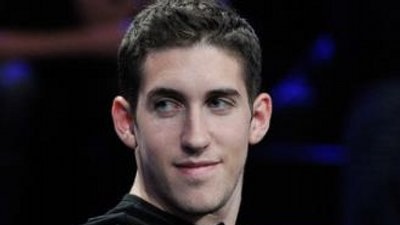
Daniel Colman
Daniel Colman is an American professional poker player best known for winning the 2014 World Series of Poker Big One for One Drop. His victory over Daniel Negreanu earned him 15.306.668 $ and a WSOP bracelet, turning an accomplished online specialist into one of the most recognisable names in tournament poker.
Colman’s breakthrough extended far beyond that extraordinary payout. During the same year, he won major tournaments in Monte Carlo, Florida and London, finished second in Barcelona and accumulated more than 22 million $ in recorded live tournament cashes.
His career total stands at 28.925.058 $ in the Hendon Mob record consulted for this profile. The largest share came during a relatively short period of intensive tournament success, followed by a much quieter public presence after 2017.
Colman also became known for his complicated relationship with poker publicity. He enjoyed its strategic challenge while questioning the promotion of gambling, making his story unusually interesting both at the table and away from it.
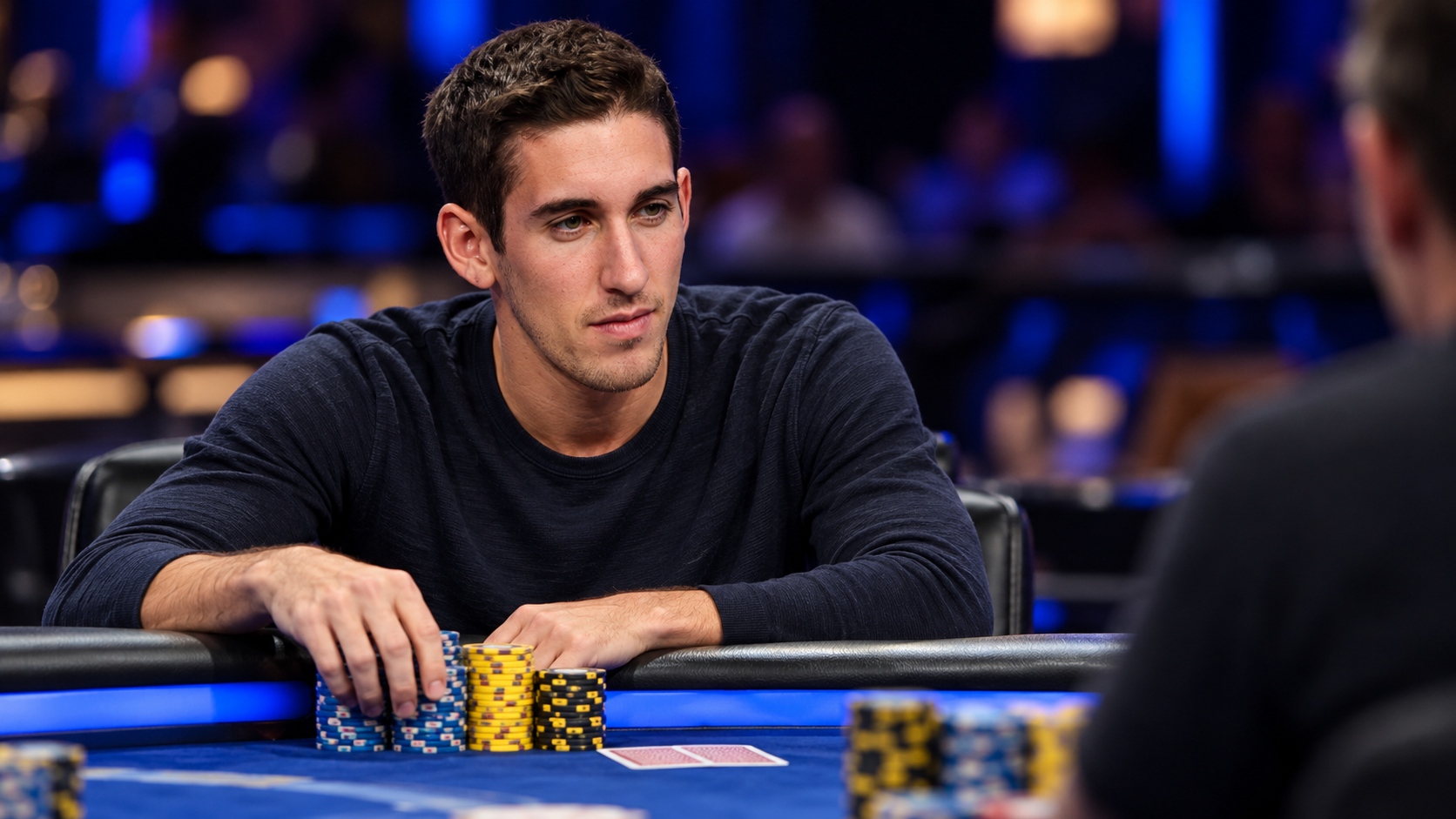
Early Life in Holden, Massachusetts
Daniel Alan Colman was born on July 11, 1990, in Holden, Massachusetts. His development as a player belonged to the generation that discovered poker during the internet boom rather than through the traditional casino circuit.
Like many young Americans drawn to the game during that period, he encountered a rapidly expanding world of televised tournaments and online competition. Chris Moneymaker’s 2003 WSOP Main Event victory helped make poker feel accessible to players far outside Las Vegas.
Colman’s eventual reputation was built primarily through online heads-up play. Public accounts provide relatively little reliable detail about his education or family life, and those gaps do not need to be filled to understand his competitive career.
The important early development was his ability to recognise patterns in an opponent’s decisions. That skill attracted the attention of a professional who would become central to his progress.
Olivier Busquet and the Online Apprenticeship
Olivier Busquet, already a respected heads-up specialist, noticed Colman while the teenager watched his online matches. Colman repeatedly posted hand readings in the chat, and the accuracy of those observations encouraged Busquet to investigate further.
Their relationship developed into coaching and staking. Busquet supplied experience and support, while Colman brought an unusually strong interest in the decisions behind each hand.
This was a demanding apprenticeship. Heads-up poker gives a player fewer opportunities to wait for perfect cards, because almost every hand requires engagement with the same opponent. Small weaknesses can be exploited repeatedly.
The relationship also created one of the most memorable encounters of Colman’s later career. In 2014, mentor and former student would meet across a major live tournament’s final table, with more than a million dollars at stake.
The Player Behind mrGR33N13
Online players knew Colman through the screen names mrGR33N13 and riyyc225. His strongest reputation came from high-stakes heads-up sit-and-go tournaments, especially the hyper-turbo format.
Hyper-turbos compress the contest through shallow starting stacks and rapidly increasing blinds. Decisions about raising, calling and moving all in arrive quickly, leaving little room for a passive approach.
Colman became widely recognised for a reported milestone in 2013: earning more than 1 million $ in hyper-turbo profit within nine months, excluding rakeback. Contemporary accounts described him as the first player in that format to reach the mark within a calendar year.
That online figure is separate from his recorded live tournament earnings. It explains why his relatively modest early casino results concealed a player who already had considerable experience at expensive stakes.
Learning Through Difficult Early Years
Colman later described an uneven beginning rather than an immediate march toward success. In an interview with Paul Phua, he acknowledged early losses and poor bankroll management.
That account adds useful context to his rapid emergence. Becoming a strong decision-maker and managing a professional bankroll are related skills, but improvement in one does not automatically solve the other.
Coaching, experience and repeated exposure to different opponents helped him develop a more effective approach. By the time the live circuit began paying serious attention, he had already spent years competing online.
The spectacular results of 2014 were therefore a public breakthrough. The underlying work had started much earlier.
Moving from Online Matches to Live Tournaments
Before his exceptional 2014 season, Colman’s live record was comparatively small. His profile did not resemble that of a veteran with dozens of famous final tables.
The transition nevertheless drew on skills he already possessed. Reading an opponent’s range, choosing pressure points and adjusting to short stacks remained relevant when the action moved from a screen to a casino table.
Live tournaments added further demands: long playing days, changing opponents and a prize structure that could make preserving chips more valuable than taking a marginal gamble.
His early success in elite events showed that he could adapt. Winning against professionals familiar with the live environment required more than transferring a collection of online opening ranges.
The Monte Carlo Breakthrough
In April 2014, Colman won the 100.000 € Super High Roller at the EPT Grand Final in Monte Carlo. The tournament attracted 62 entries, including re-entries, and brought together a strong international field.
Colman invested in three entries before reaching the final stages. A three-handed deal with Daniel Cates and Igor Kurganov shaped the payouts, after which play continued for the remaining prize money and championship.
He defeated Cates heads-up and received 1.539.300 €, recorded as approximately 2.127.398 $ in the tournament database. It was his first live seven-figure score.
Monte Carlo established the pattern that would define the year. Colman was comfortable competing against famous opponents, and his heads-up background became particularly valuable when a title came down to two players.
A Strong Start to the 2014 WSOP
Before the Big One for One Drop, Colman reached the semi-finals of the 10.000 $ Heads-Up No-Limit Hold’em Championship at the 2014 WSOP. His third-place finish paid 111.942 $.
The result fitted his established online specialty, but it also supplied another piece of live evidence. He could perform in a bracelet event designed around direct individual matches.
His next major appearance would involve a very different financial scale. Instead of a conventional high roller, he entered a tournament with a 1 million $ buy-in.
The Big One for One Drop offered both a world-class field and a charitable purpose. It also created the possibility that one result could permanently change a player’s place in poker history.
Winning the Big One for One Drop
The 2014 Big One for One Drop attracted 42 entries. Its mixture of elite professionals and wealthy participants produced one of the most closely watched tournaments of the year.
Colman reached heads-up play against Daniel Negreanu, an established champion and one of poker’s most prominent public figures. The contrast between the experienced ambassador and the comparatively unfamiliar online specialist sharpened the story.
After a changing heads-up contest, Colman won the championship on July 1, 2014. He received 15.306.668 $ and his first WSOP bracelet, while Negreanu earned 8.288.001 $ for second place.
Colman was 23, with his 24th birthday only ten days away. At the time, the prize was the second-largest single tournament payout in poker history, behind Antonio Esfandiari’s victory in the inaugural Big One in 2012.
The Hand That Secured the Championship
In the deciding hand, Colman held king-queen against Negreanu’s ace-four. The flop came ace-jack-four, giving Negreanu two pair and putting him in a strong position to survive.
A ten on the turn completed Colman’s Broadway straight. Negreanu could still recover by making a full house, but a seven on the river left the straight ahead.
The hand ended the tournament and attached Colman’s name to one of poker’s largest prizes. Its dramatic reversal also made it an enduring highlight of the event’s television coverage.
The final runout provided the decisive moment, but the championship followed three days of competition. Colman had first needed to navigate the field, reach the final table and establish the position from which he could win.
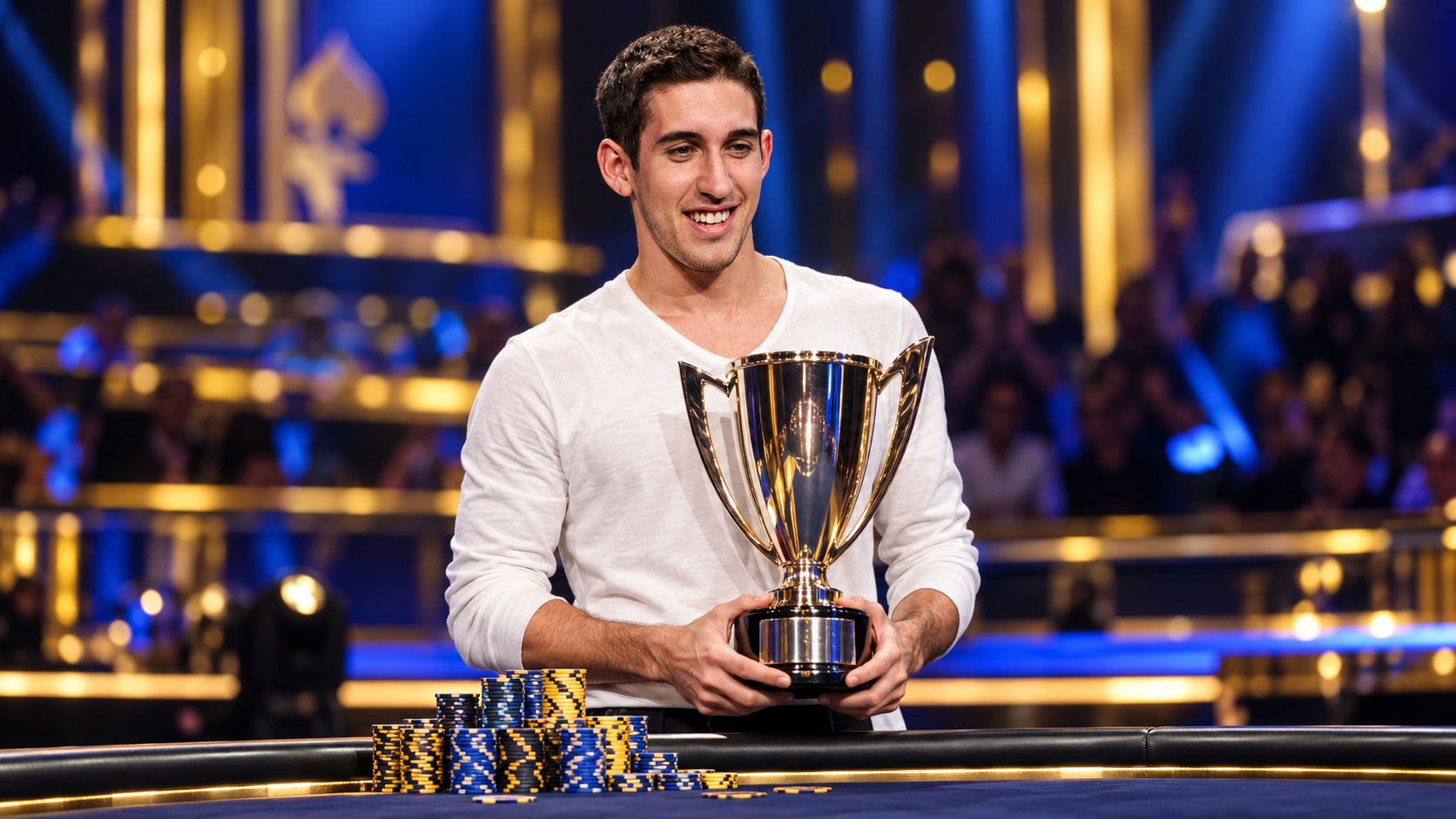
An Unusual Response to an Extraordinary Win
Colman’s response to victory became almost as widely discussed as the result. He avoided the usual extended celebration and declined most media interviews, briefly acknowledging the charitable aspect of the tournament.
He subsequently explained that he felt conflicted about promoting gambling. His concern centred on the financial and emotional difficulties that poker can create, even while he enjoyed its strategic side.
The reaction divided observers. Some expected the winner of such a prominent event to participate in its publicity; others defended his right to choose how much attention he accepted.
Negreanu expressed respect for that choice. The episode made Colman a distinctive public figure: an exceptionally successful professional who was reluctant to become a conventional ambassador for the industry.
Barcelona and a Meeting with His Mentor
Colman’s success continued at the 2014 EPT Barcelona 50.000 € Super High Roller. This time, his final heads-up opponent was Olivier Busquet.
Busquet won the title, while Colman received 843.066 € after a deal, recorded as approximately 1.118.479 $. The result linked their shared online history to one of the season’s biggest live stages.
Barcelona also attracted attention because the two players wore shirts carrying political messages. The tournament sponsor subsequently announced restrictions on such messages at its events.
The competitive significance remained clear. Colman had followed two major victories with another seven-figure finish, and the person who had helped develop his game was the only player left ahead of him.
The Seminole Hard Rock Poker Open Title
In September 2014, Colman won the 5.300 $ Seminole Hard Rock Poker Open Main Event in Hollywood, Florida. The tournament drew 1,499 entries, giving him a very different test from the smaller super high roller fields.
He defeated Mike Leah heads-up and earned 1.446.710 $. The final table also included experienced competitors such as Joe Kuether, Shawn Cunix and John Dolan.
This victory broadened the argument for his exceptional year. He had succeeded in both expensive, compact tournaments and a large-field Main Event requiring a longer path through changing opposition.
It was his fourth seven-figure cash of 2014. The accumulating results made it increasingly difficult to explain the season through the Big One payout alone.
Another Championship at WPT Alpha8 London
In October, Colman added the WPT Alpha8 London title at the Palm Beach Casino. The 60.000 £ event recorded 23 entries, including six re-entries.
Colman and Max Altergott both used a second entry and eventually met heads-up. After shifts in the chip lead and an agreement to advance the blinds, Colman secured another championship.
The first prize was 600.000 £, recorded as approximately 957.396 $ by the Hendon Mob. It supplied his fourth major tournament victory of the year.
Alpha8 was a separate WPT high-stakes series. Its title belongs in Colman’s record, while distinctions between that circuit and the conventional WPT Main Tour should remain clear.
A Season Recognised by the Poker World
Colman ended 2014 with more than 22 million $ in recorded tournament prizes. Different contemporary publications used slightly different dollar totals, partly reflecting conversion methods and the events included.
The broad conclusion was consistent: he had produced one of the most remarkable seasons then seen on the live circuit. Major wins were accompanied by runner-up finishes and additional high roller final tables.
He received Player of the Year honours from Card Player, BLUFF and ALL IN, and won the 2014 Global Poker Index Player of the Year race.
Those awards recognised a sequence of results rather than simply the biggest cheque. Monte Carlo, Las Vegas, Barcelona, Florida and London together supplied the evidence for a season with unusual breadth.
Daniel Colman’s Major Tournament Results
| Year | Tournament | Result | Prize |
| 2014 | WSOP 1.000.000 $ Big One for One Drop | 1st | 15.306.668 $ |
| 2014 | EPT Grand Final 100.000 € Super High Roller | 1st | 2.127.398 $ |
| 2015 | WSOP 111.111 $ High Roller for One Drop | 3rd | 1.544.121 $ |
| 2014 | Seminole Hard Rock Poker Open Main Event | 1st | 1.446.710 $ |
| 2014 | EPT Barcelona 50.000 € Super High Roller | 2nd | 1.118.479 $ |
| 2014 | WPT Alpha8 London | 1st | 957.396 $ |
| 2014 | ARIA 100.000 $ Super High Roller | 3rd | 796.821 $ |
| 2017 | PokerStars Championship Bahamas 100.000 $ Super High Roller | 3rd | 759.660 $ |
Dollar equivalents for events held in other currencies follow the recorded tournament figures used here. They can differ from conversions published in contemporary news reports. These are gross cashes, rather than verified net profits.
Returning to One Drop in 2015
Colman returned to a One Drop final table in 2015, this time in the 111.111 $ High Roller for One Drop. The event was won by Jonathan Duhamel.
Colman finished third for 1.544.121 $, behind Duhamel and runner-up Bill Klein. Another major payout reinforced his standing after the extraordinary previous year.
His success in Florida also continued. One year after winning the Seminole Hard Rock Poker Open championship, he reached third place in the 2015 edition for 310.000 $.
The follow-up season could hardly match the financial scale of a 15 million $ victory. It nevertheless showed that he remained capable of deep runs in difficult tournaments.
The 2016 WSOP Main Event Run
In 2016, Colman finished 31st in the WSOP Main Event and received 216.211 $. It became his best recorded finish in the championship.
The result required a different kind of endurance from a short heads-up match or a compact high roller. The Main Event stretches across many playing days and exposes contenders to an extensive range of opponents.
Colman fell short of the final table, but the run added another dimension to his tournament résumé. His significant results were not confined to events carrying six-figure buy-ins.
It also provided a useful reminder that prize size and competitive achievement are not interchangeable. A deep Main Event finish can represent an important performance even when its payout is smaller than a high roller cash.
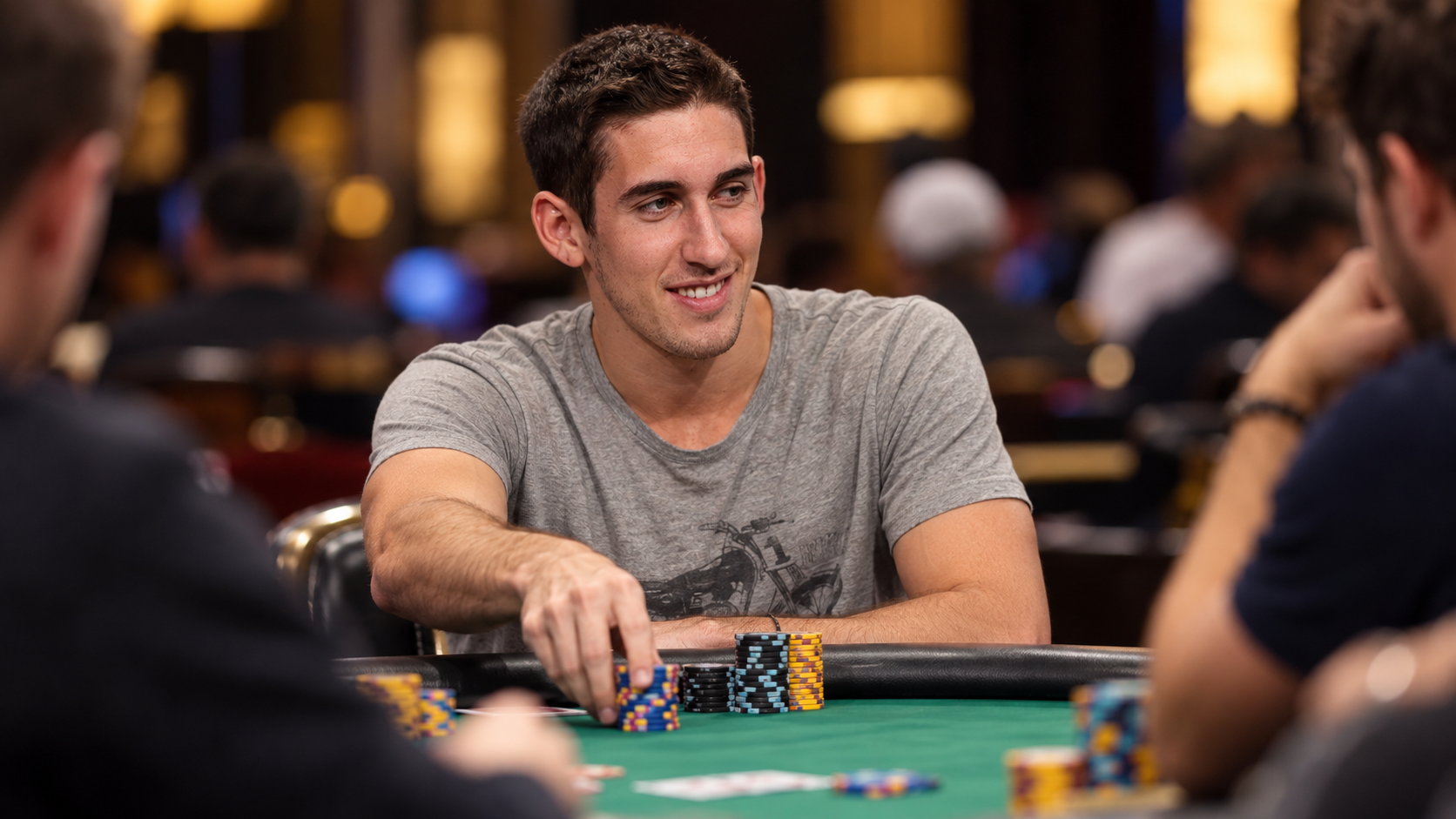
A Triton Championship in Manila
Colman began 2017 with strong results in the Bahamas, including third place in the 100.000 $ Super High Roller for 759.660 $ and fourth in the 50.000 $ Single-Day High Roller for 341.240 $.
In February, he won the 250.000 HK$ Six-Max event at the Triton Poker Series in Manila. The tournament attracted 43 entries and concluded with a heads-up match against Erik Seidel.
Colman received 3.641.600 HK$, reported at the time as approximately 473.408 $. The paid places also included Rainer Kempe, Sergio Aido, Timofey Kuznetsov, Mustapha Kanit and Mikita Badziakouski.
The title placed him among the early champions of a circuit that would later become central to international high-stakes poker.
King of the Hill and the Heads-Up Connection
Later in 2017, Colman won the third King of the Hill competition organised by Poker Night in America. The invitational used a televised heads-up format with a 200.000 $ winner-take-all prize.
He defeated Busquet in the semi-finals and Brandon Adams in the final, winning both matches in straight games. Scott Blumstein was the fourth participant.
The event brought his career back to its original specialty. Whatever the setting or television presentation, the challenge was to outperform one opponent through a sequence of direct decisions.
It also supplied a different chapter in his relationship with Busquet. The mentor who had won their Barcelona final now met a former student whose live record had become extraordinary.
Selected WSOP Results
| Year | Event | Result | Prize |
| 2014 | 1.000.000 $ Big One for One Drop | 1st | 15.306.668 $ |
| 2015 | 111.111 $ High Roller for One Drop | 3rd | 1.544.121 $ |
| 2016 | 10.000 $ Main Event | 31st | 216.211 $ |
| 2017 | 111.111 $ High Roller for One Drop | 16th | 187.772 $ |
| 2014 | 10.000 $ Heads-Up Championship | 3rd | 111.942 $ |
Colman’s WSOP bracelet came from the 2014 Big One for One Drop. The other results illustrate the range of his Hold’em tournament appearances without treating every deep finish as a championship.
Playing Style and Strategic Outlook
Colman described his approach in interviews as intuitive, with considerable attention to the behaviour of strong opponents. He also valued discussion with other accomplished players and the willingness to reconsider a decision.
That description should not be mistaken for a complete technical blueprint. A player’s public explanation offers insight into how he thinks, while individual hands still depend on the situation.
He emphasised adapting to opponents, stack sizes and payout jumps. A large stack can support pressure; a short stack near an important pay increase can require a more cautious plan.
The common thread is flexibility. His success across heads-up matches, six-max tournaments and larger fields depended on adjusting the approach as the competitive problem changed.
A Quieter Public Presence After 2017
After 2017, Colman stepped away from regular public tournament coverage. The Hendon Mob record consulted for this article retains a total of 28.925.058 $, with his last listed cash coming in December 2017.
A quieter database record does not establish exactly what someone does privately. It does not prove that he stopped every form of poker, nor does it supply reliable information about private games or his personal finances.
His absence from the familiar high roller schedule nevertheless changed how his career was discussed. The focus shifted from the next major result to the extraordinary concentration of success he had already achieved.
That limited public information deserves a measured treatment. His verified competitive record is substantial enough without speculation about a retirement announcement, current bankroll or reasons for staying away.
Earnings, Profit and the Scale of One Drop
Colman’s recorded live earnings place him among the game’s most successful tournament players. His 15.306.668 $ Big One prize accounts for more than half of the 28.925.058 $ total.
That concentration helps explain his position on earnings lists, but it does not describe his entire ability. The surrounding championships and later final tables supply a broader competitive record.
Recorded cashes also exclude entry costs, re-entries, expenses, taxes and money owed to financial backers. The Big One result involved investors, so the headline prize should not be treated as an amount he personally retained.
His precise lifetime profit and net worth are not publicly verified. The reliable number is the gross tournament total, with its limitations stated clearly.
Daniel Colman’s Place in Poker History
Colman’s historical importance rests on a remarkable combination: a major online reputation, a breakthrough season featuring four prominent live titles and one of the largest prizes poker had ever awarded.
His 2014 results linked the fast decisions of internet heads-up competition with success against celebrated live professionals. Subsequent results at the WSOP, Triton and televised heads-up events strengthened that connection.
His reluctance to embrace conventional publicity added another dimension. He became famous while openly questioning aspects of the industry that made that fame possible.
The defining image of his career remains the Big One final table, but the story is larger than a single cheque. Daniel Colman demonstrated how quickly an accomplished online specialist could change the live tournament landscape, then chose a far quieter public path than his results might have suggested.
Profile prepared in October 2026. Recorded live tournament earnings represent gross cashes and exclude private cash-game results. Image placeholders refer to AI-generated illustrations inspired by reference photographs, rather than documentary photographs of the events described.