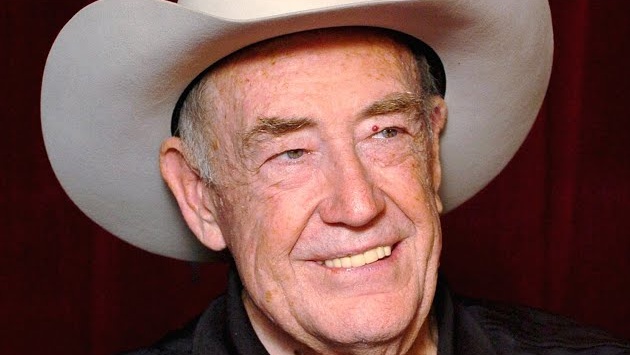
Doyle Brunson
Doyle Brunson was an American professional poker player, two-time World Series of Poker Main Event champion and one of the most influential figures in the history of the game. Known as “Texas Dolly” and the “Godfather of Poker,” he played professionally for more than six decades and helped transform poker from an underground gambling activity into an international competition.
Brunson won ten WSOP bracelets, including consecutive Main Event titles in 1976 and 1977. He also captured a World Poker Tour championship, accumulated more than 6,1 million $ in recorded live tournament earnings and competed in the biggest cash games in Las Vegas well into his eighties.
His importance extends far beyond tournament results. Brunson belonged to the original generation of Texas road gamblers who travelled in search of profitable games despite the constant risk of violence, robbery and cheating. He later shared professional strategy with the public through Super/System, one of the most important poker books ever written.
By the time of his death in 2023, the game had changed almost beyond recognition. Poker had moved from illegal back rooms to television, casinos, online platforms and tournaments attracting thousands of players.
Brunson remained a respected figure through every stage of that transformation.
Early Life in Longworth, Texas
Doyle Frank Brunson was born on August 10, 1933, in Longworth, a small community in West Texas.
Before poker became his profession, Brunson’s greatest ambition was sport. He developed into a successful basketball player and competed for Hardin–Simmons University in Abilene.
Brunson reportedly attracted interest from the Minneapolis Lakers, the franchise that would later become the Los Angeles Lakers. A professional basketball career appeared possible.
That path ended after a serious workplace accident.
While Brunson was helping unload sheetrock, a large stack shifted and crushed his right leg in two places. Doctors initially feared that the injury might never heal properly. He spent an extended period in a cast, and the damage ended any realistic chance of playing professional basketball.
Brunson walked with a limp for the rest of his life and later used a cane or mobility scooter as he grew older.
The injury changed the direction of his life. Without basketball, he focused increasingly on games involving probability, psychology and competition.
Poker became the most important of them.
From Salesman to Professional Gambler
Brunson earned a master’s degree in administrative education and initially took a job selling business machines.
During one early sales trip, he was invited to play in a Seven Card Stud game. Brunson reportedly won more than a month’s salary in only a few hours.
The experience made the economics of his two possible careers difficult to ignore.
He began playing poker more seriously, first in local games and eventually as a full-time professional. Texas did not yet offer legal casino poker, so the most profitable games often operated outside the law.
Brunson travelled through Texas, Oklahoma and Louisiana looking for action. These travelling professionals became known as road gamblers or rounders.
The lifestyle was dangerous.
The Dangerous World of Texas Road Gambling
Poker in the 1950s and 1960s had little in common with the regulated casino environment familiar to modern players.
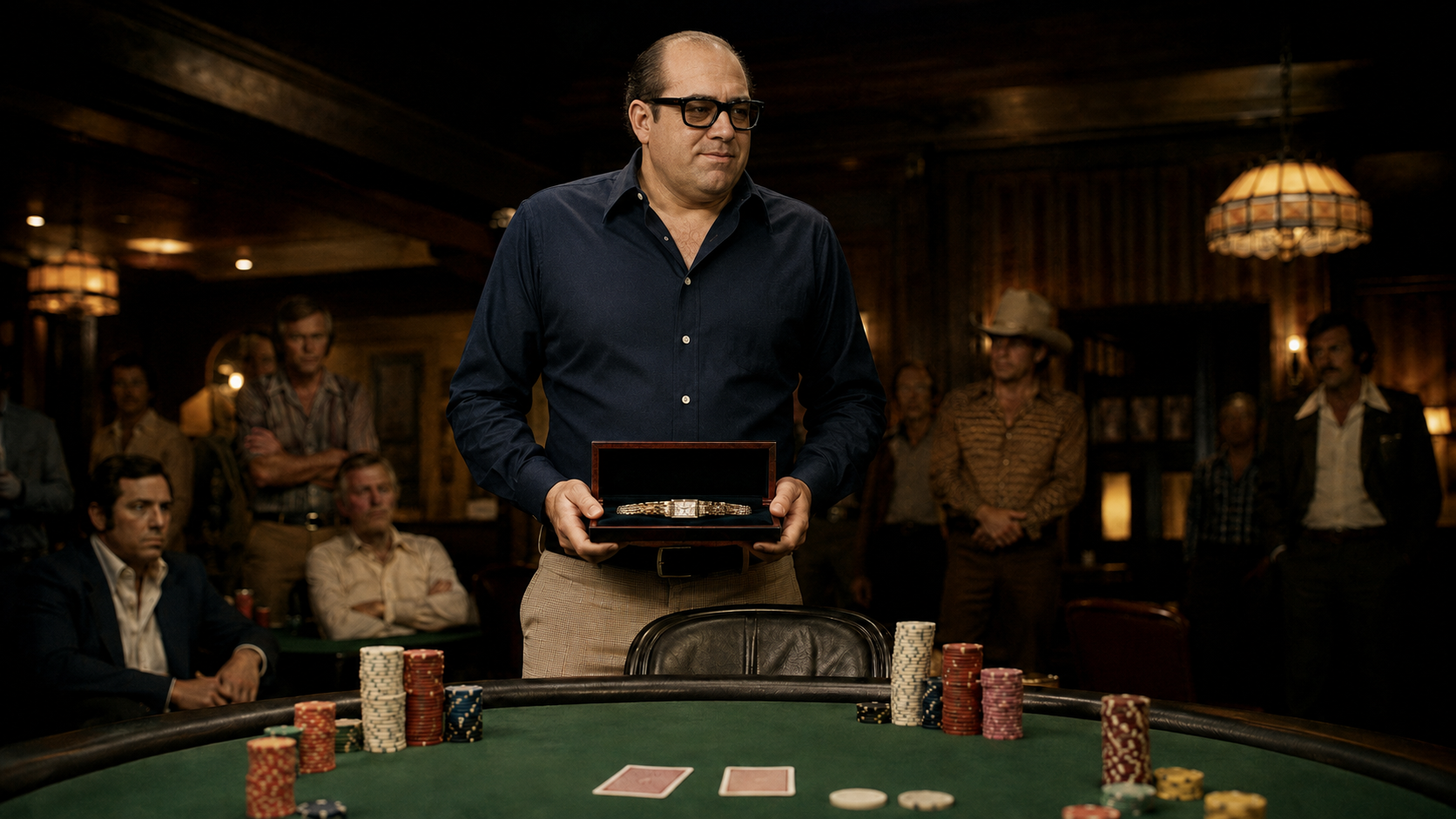
Games took place in bars, back rooms, private clubs and buildings controlled by people who might not welcome an outsider winning large amounts of money. Security was limited, rules could change without warning and players had little legal protection.
Brunson and his fellow professionals sometimes carried guns for protection. They faced armed robberies, crooked games and opponents who refused to pay.
Brunson later recalled seeing people killed and being robbed on several occasions. Winning the game was only part of the challenge. A successful player also had to collect the money and leave safely.
During this period, Brunson frequently travelled and shared bankrolls with other future legends, particularly Amarillo Slim Preston and Brian “Sailor” Roberts.
Pooling their money reduced individual risk and allowed the group to participate in larger games. The arrangement eventually ended after the players made an unsuccessful trip to Las Vegas and lost a significant shared bankroll.
They decided to continue separately, and each later became a WSOP Main Event champion.
Those years gave Brunson an education that no strategy book could provide. He learned to evaluate opponents quickly, recognise dangerous situations and remain calm when the consequences extended far beyond chips.
Moving to Las Vegas
Las Vegas offered something the Texas road games could not: regular access to legal, organised poker.
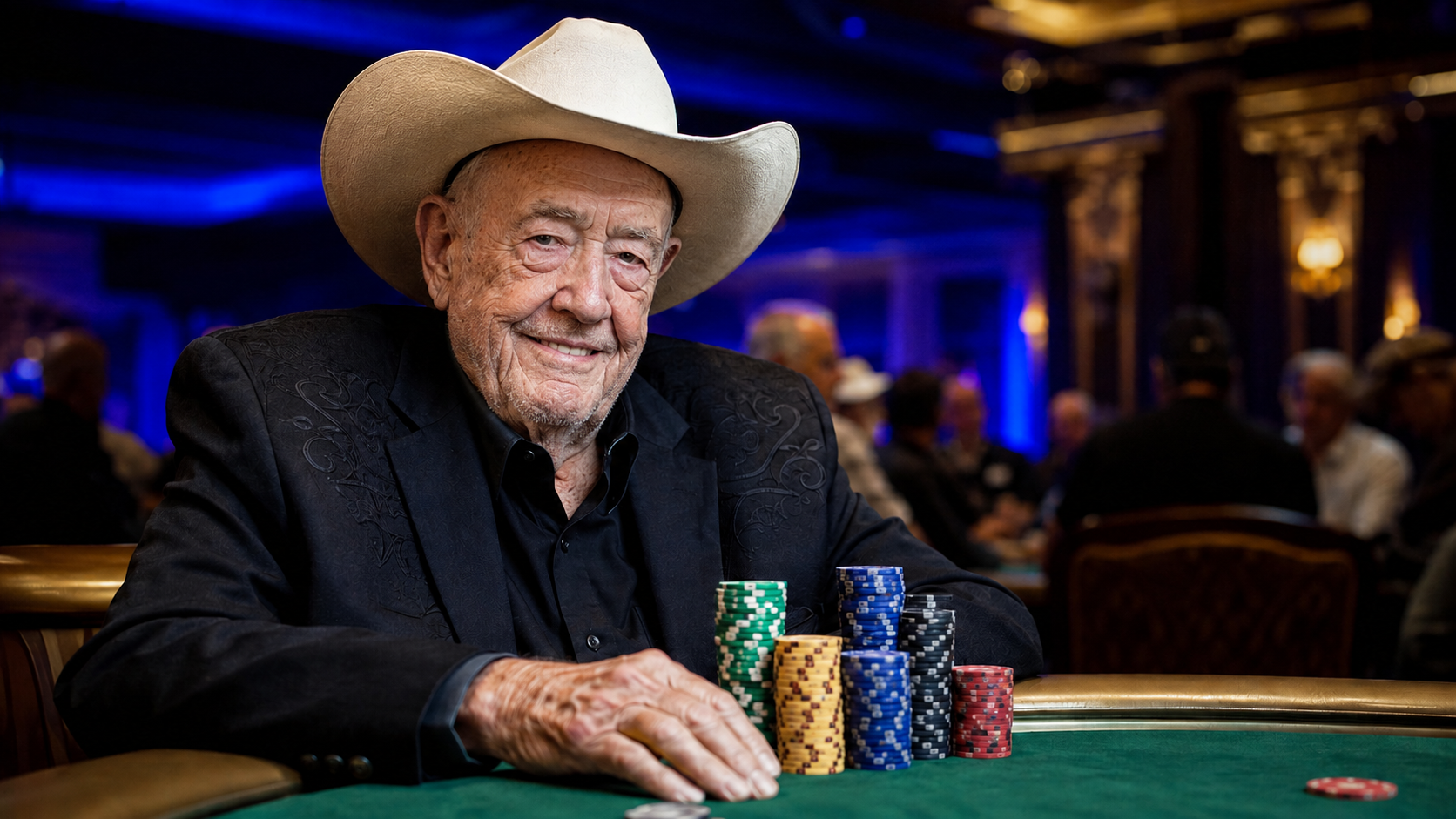
Brunson eventually moved his family to Nevada and became a permanent part of the city’s high-stakes poker community. He played in the largest available cash games and developed relationships with the professionals who would shape the early World Series of Poker.
In 1970, casino owner Benny Binion invited a small group of leading players to Binion’s Horseshoe for the first WSOP.
The original series did not resemble the modern schedule. Rather than playing a freezeout tournament to determine the world champion, the players competed in cash games across several poker variants. Johnny Moss was then selected as the best all-around player through a vote.
Brunson participated alongside figures such as Moss, Amarillo Slim, Puggy Pearson, Sailor Roberts and Crandell Addington.
These players could not have known how large the WSOP would become. Their participation nevertheless created the foundation for poker’s most important annual competition.
First WSOP Bracelet
Brunson won his first WSOP bracelet in 1976 in the 5.000 $ No-Limit 2-7 Draw Lowball event.
The victory demonstrated his all-around ability. Although modern audiences associate Brunson primarily with Texas Hold’em, his professional background included numerous poker variants.
Players in the highest cash games could not afford to specialise in only one format. They followed the action and played whatever game was available, including Stud, Lowball, Draw, Omaha and mixed rotations.
The bracelet was only the beginning of Brunson’s historic 1976 WSOP.
Later in the series, he entered the Main Event and won poker’s world championship for the first time.
The 1976 WSOP Main Event
The 1976 WSOP Main Event attracted 22 players, each paying the traditional 10.000 $ buy-in.
Brunson reached heads-up play against Jesse Alto.
In the final hand, Brunson held ten-deuce, an extremely weak starting hand in Texas Hold’em. Alto began with ace-jack and paired his ace on the flop, becoming a strong favourite.
Brunson nevertheless continued. The turn gave him two pair, tens and deuces, and the river completed a full house.
The hand gave Brunson the Main Event title and approximately 220.000 $ in prize money.
At the time, nobody could have predicted that ten-deuce would become one of poker’s most recognisable starting hands. That required Brunson to produce an almost unbelievable repetition one year later.
Back-to-Back World Champion
Brunson returned to the WSOP Main Event in 1977 and successfully defended his title.
The field had grown to 34 players, and Brunson eventually faced Gary “Bones” Berland heads-up.
Once again, the final hand began with Brunson holding ten-deuce.
Brunson started behind but improved to two pair on the turn and completed another full house on the river. The pot gave him his second consecutive Main Event championship and a prize of 340.000 $.
Winning the same tournament twice in a row was extraordinary. Winning both deciding hands with the same weak starting cards, and making a full house on each occasion, turned the achievement into poker folklore.
The ten-deuce combination has been known as the “Doyle Brunson hand” ever since.
Players sometimes enter pots with it specifically because of its connection to Brunson. When the hand wins a significant pot, commentators and opponents rarely need an explanation.
Brunson’s name became permanently attached to two of the worst cards a Hold’em player can receive.
Why the Ten-Deuce Hand Became Immortal
Ten-deuce is not a strategically strong starting hand.
The cards are usually unsuited, separated by too large a gap to form many straights and vulnerable to almost any pair. Under normal circumstances, folding is the correct decision.
The “Doyle Brunson hand” is therefore a historical nickname rather than a recommendation to play ten-deuce.
Its appeal comes from the contrast. Brunson won poker’s world championship twice with a hand most players would immediately discard. Both times, he began the final hand behind and completed a full house.
The coincidence is so unlikely that ten-deuce became more famous than many premium starting combinations.
Another hand, ace-queen, was occasionally associated with Brunson because he wrote about trying not to play it. That connection never became as universal.
In poker culture, “Doyle Brunson” means ten-deuce.
Ten WSOP Bracelets
Brunson won ten WSOP bracelets between 1976 and 2005.
His collection reflects both longevity and versatility. It includes titles in No-Limit Hold’em, No-Limit 2-7 Draw Lowball, Seven Card Stud Hi-Lo, Seven Card Stud, Mixed Doubles, Pot-Limit Omaha, Razz and H.O.R.S.E.
| Year | Event | Prize |
| 1976 | 5.000 $ No-Limit 2-7 Draw Lowball | 90.250 $ |
| 1976 | 10.000 $ WSOP Main Event | 220.000 $ |
| 1977 | 10.000 $ Seven Card Stud Hi-Lo | 52.500 $ |
| 1977 | 10.000 $ WSOP Main Event | 340.000 $ |
| 1978 | 5.000 $ Seven Card Stud | 69.000 $ |
| 1979 | 600 $ Mixed Doubles Seven Card Stud | 4.500 $ |
| 1991 | 2.500 $ No-Limit Hold’em | 208.000 $ |
| 1998 | 1.500 $ Razz | 93.000 $ |
| 2003 | 2.000 $ H.O.R.S.E. | 84.080 $ |
| 2005 | 5.000 $ No-Limit Hold’em Six-Handed | 367.800 $ |
The Mixed Doubles bracelet was won with Starla Brodie. At the time, team events were included in the WSOP schedule and bracelets were awarded to both winners.
Brunson’s final bracelet came in 2005, almost three decades after his first. He defeated a field of 301 entries in a six-handed No-Limit Hold’em tournament, proving that he could still compete during the online poker boom.
As of August 2026, his ten bracelets leave him tied with Johnny Chan and Erik Seidel, behind only Phil Hellmuth and Phil Ivey on the official all-time list. Official WSOP profile
More Than a Hold’em Player
Brunson is remembered for two Hold’em Main Event victories, but treating him only as a Hold’em specialist would misrepresent his career.
Six of his ten bracelets came in other formats.
His first title was in 2-7 Draw Lowball. He also won in Stud, Stud Hi-Lo, Razz and H.O.R.S.E. His biggest cash-game sessions frequently involved mixed rotations requiring players to adjust between several variants.
Brunson belonged to an era in which the strongest players were expected to follow the biggest available game. If the wealthy participant wanted to play Stud, the professionals played Stud. If the game changed to Lowball, they had to adapt.
His ability to succeed across formats contributed to the respect he received from other professionals.
It also explains why his career cannot be judged only through modern No-Limit Hold’em results.
Super/System Changes Poker Strategy
In 1978, Brunson published How I Made Over $1,000,000 Playing Poker. The book later became widely known as Doyle Brunson’s Super/System.
At the time, elite professionals treated their strategies as valuable secrets. Players learned through expensive experience, private conversations and direct observation. Publishing detailed advice risked helping the same opponents who provided their income.
Brunson broke with that tradition.
Super/System gathered contributions from several leading specialists. Brunson wrote about No-Limit Hold’em, while players such as Chip Reese, Mike Caro, Bobby Baldwin, David Sklansky and Joey Hawthorne contributed expertise in other games.
The book explained professional concepts to a general audience in a depth rarely available before. It discussed aggression, position, starting hands, psychology and the strategic requirements of several poker variants.
Brunson’s No-Limit Hold’em section became particularly influential. He advocated applying pressure, playing certain drawing hands aggressively and forcing opponents to make difficult decisions.
These ideas appeared radical to many recreational players accustomed to waiting for premium cards.
Brunson later joked that publishing the book had cost him more money than he earned from sales because it taught his opponents how to play better.
Whether literally true or not, the observation captured the book’s impact.
Why Super/System Matters
Modern players have access to training platforms, databases, livestreams, coaching communities and solver software. In the 1970s, almost none of this existed.
Super/System offered access to the thinking of players who had spent decades in the largest cash games. It did not merely provide a list of rules. It attempted to explain how professionals approached decisions.
Some specific advice has aged as poker strategy evolved. Games became more aggressive, mathematical analysis improved and online poker produced enormous samples of hands.
The book’s historical importance remains intact.
It established the model for collaborative poker strategy books and helped professionalise the way the game was studied. Many later champions identified it as one of their earliest serious introductions to poker theory.
Brunson released Super System 2 in 2004 with updated material and contributions from a new group of professionals.
He also wrote other books, including According to Doyle, Online Poker: Your Guide to Playing Safely and Winning Money and his autobiography, The Godfather of Poker.
Doyle Brunson’s Biggest Tournament Wins
Brunson recorded 6.176.737 $ in live tournament cashes. His largest payout came in 2004, nearly three decades after his first WSOP Main Event victory.
| Year | Tournament | Result | Prize |
| 2004 | WPT Legends of Poker Championship | 1st | 1.198.260 $ |
| 2005 | WPT Five Diamond World Poker Classic | 3rd | 563.485 $ |
| 2005 | WSOP 5.000 $ No-Limit Hold’em Six-Handed | 1st | 367.800 $ |
| 1977 | WSOP Main Event | 1st | 340.000 $ |
| 2006 | WSOP 50.000 $ H.O.R.S.E. | 8th | 274.560 $ |
| 1976 | WSOP Main Event | 1st | 220.000 $ |
| 1991 | WSOP 2.500 $ No-Limit Hold’em | 1st | 208.000 $ |
The amounts require historical context. Brunson built much of his career before super high rollers and tournament schedules offering dozens of events each month.
His primary income also came from cash games, which are not included in tournament databases.
The 6,1 million $ total represents gross recorded prizes. It does not account for buy-ins, staking arrangements, expenses, taxes or private cash-game results. The Hendon Mob record
Brunson’s precise lifetime poker profit and net worth were never publicly verified.
WPT Legends of Poker Victory
Brunson produced the largest tournament score of his career at the 2004 WPT Legends of Poker.
The 5.000 $ championship attracted 667 entries, a field dramatically larger than those Brunson had faced during his original WSOP victories.
Brunson defeated the field to win approximately 1,2 million $ and his first World Poker Tour title.
The victory arrived during the height of the poker boom. Online qualifiers, television coverage and the effect of Chris Moneymaker’s 2003 Main Event win had introduced thousands of new players to tournament poker.
Brunson was already 71.
His success demonstrated that the skills developed in the old Texas games could survive in a new environment filled with younger and more aggressive opponents.
The tournament carried an appropriate name. A legend had won the Legends of Poker.
Brunson returned to another major WPT final table in 2005, finishing third in the Five Diamond World Poker Classic for 563.485 $.
Playing Style and Poker Philosophy
Brunson’s playing style was based on controlled aggression.
He preferred placing opponents under pressure rather than waiting passively for the strongest possible hand. His strategy recognised that poker pots can be won in two ways: showing the best cards or convincing every opponent to fold.
This principle appears obvious today, but Brunson helped introduce it to a wide public audience.
He was particularly interested in hands with disguised potential. Small connected cards could win enormous pots when they completed an unexpected straight or two pair against an opponent holding an obvious premium hand.
Brunson also understood the importance of position and initiative. Acting after an opponent provided additional information, while betting first could force that opponent to reveal the strength of a hand.
His strategy was not reckless. Decades of cash-game experience taught him when aggression was profitable and when survival mattered more.
Brunson’s physical presence contributed to his success. He appeared relaxed, spoke comfortably with opponents and rarely seemed overwhelmed by the size of a pot.
Behind the friendly Texas manner was a competitor who had survived games far more dangerous than any regulated tournament.
The Big Game at Bellagio
Tournament titles made Brunson famous, but high-stakes cash games remained the centre of his professional life.
He became a regular in the Big Game at Bellagio, played in the casino’s exclusive high-limit area known as Bobby’s Room. The lineup included legends such as Chip Reese, Doyle Brunson, Jennifer Harman, Chau Giang and Phil Ivey.
The games used mixed rotations and limits that could reach thousands of dollars per bet.
Cash-game results from Bobby’s Room were private, so there is no complete record of Brunson’s wins and losses. His continued presence over many years offers stronger evidence than any isolated story.
Players who cannot compete do not survive permanently in the biggest game.
Brunson continued appearing in high-stakes Las Vegas games even as age and health problems limited his mobility. Poker remained part of his daily identity, not simply a profession from which he had retired.
Following his death, the Bellagio renamed the room Legends Room. The change honoured not only Brunson but the generation of players who helped establish Las Vegas as the centre of high-stakes poker.
Texas Dolly and the Godfather of Poker
Brunson’s most famous nickname originated through an apparent misunderstanding.
Sports broadcaster Jimmy “The Greek” Snyder reportedly intended to introduce him as “Texas Doyle.” The words came out as “Texas Dolly,” and the name remained attached to Brunson despite his initial dislike of it.
Over time, Texas Dolly became one of poker’s most recognisable nicknames.
“The Godfather of Poker” described his broader position within the community.
Brunson was not the first professional poker player, nor did he create the WSOP. His longevity allowed him to connect poker’s underground history with its modern commercial era.
Younger professionals sought his approval and listened to his stories. Even players with more advanced technical knowledge recognised that Brunson had survived situations they would never encounter.
His respect came from results, experience and conduct.
Marriage, Family and Personal Faith
Brunson met his future wife, Louise, in 1959. They married in 1962 and remained together for more than 60 years.
Shortly after their marriage, doctors discovered a tumour in Brunson’s neck. The prognosis was extremely serious, and surgery was initially expected only to extend his life.
After the operation, doctors found no remaining trace of the cancer. Brunson and his family viewed his recovery through the lens of their Christian faith, which remained central to his life.
Doyle and Louise had three children: Todd, Pamela and Doyla.
Their daughter Doyla died at age 18 because of a heart condition. Brunson later wrote about the loss as one of the most painful experiences of his life.
Their son Todd followed Doyle into professional poker. Todd Brunson won a WSOP bracelet in a 2005 Omaha Hi-Lo event and was inducted into the Poker Hall of Fame in 2016.
Doyle and Todd became the first father and son to both win WSOP bracelets.
Pamela Brunson also competed in poker tournaments, including the WSOP Main Event.
Brunson’s public image combined the dangerous history of a road gambler with the stability of a long marriage, strong family connections and openly expressed religious belief.
Final WSOP Appearance
In 2018, Brunson announced that the 10.000 $ No-Limit 2-7 Lowball Draw Championship would likely be his final WSOP tournament.
He entered at age 84 and reached the final table.
Brunson eventually finished sixth for 43.963 $. Brian Rast won the tournament, but much of the attention remained focused on Brunson.
Players and spectators understood that they might be witnessing the final WSOP run of one of the series’ original figures.
The result was an appropriate conclusion. His first bracelet had come in 2-7 Lowball in 1976, and his last WSOP final table came in the same game 42 years later.
Brunson did not completely stop playing poker. He continued appearing in cash games and occasional televised events, but the 2018 tournament became his final recorded WSOP cash.
Death and Tributes
Doyle Brunson died in Las Vegas on May 14, 2023, at the age of 89.
His family described him as a beloved Christian man, husband, father and grandfather.
The poker world responded with tributes from multiple generations of players. Professionals who had competed against Brunson during the early WSOP years were joined by modern champions who knew him primarily as a mentor and historical figure.
The 2023 WSOP held a celebration of his life. Daniel Negreanu, Phil Hellmuth and other prominent players shared memories of Brunson and his influence.
The timing carried emotional significance. Brunson had participated in the first WSOP in 1970 and remained closely associated with the series for more than half a century.
His absence marked the end of a direct connection to poker’s early Las Vegas era.
Doyle Brunson’s Place Among the Greatest Players
Comparing Brunson with modern professionals is difficult.
Today’s players have access to more tournaments, larger prize pools and advanced study tools. A successful high-roller specialist can accumulate Brunson’s lifetime recorded earnings within a single season.
Brunson competed under completely different conditions.
His early results came in small fields, but those fields included many of the strongest professional gamblers in the world. His cash-game success lasted for decades and cannot be measured through a public database.
He also won across multiple poker variants and continued producing major results after the poker boom transformed tournament fields.
The strongest argument for Brunson’s greatness is not any single statistic.
It is the complete arc of his career.
He succeeded as a Texas road gambler, Las Vegas cash-game professional, WSOP champion, strategy author, WPT winner and respected elder of the modern game.
Very few players have remained relevant through one major transformation of poker. Brunson survived several.
The Poker Legacy of Doyle Brunson
Doyle Brunson helped build the bridge between poker’s past and its present.
He carried the knowledge of underground Texas games into Las Vegas, participated in the first World Series of Poker and won back-to-back world championships during the period when the event was developing its identity.
Through Super/System, he then shared professional strategy with players who would never have access to the Big Game. The book changed how poker knowledge was distributed and helped establish serious study as part of the game.
His ten bracelets demonstrate technical range and extraordinary longevity. His WPT victory at age 71 proved that his success did not belong only to small tournaments from the 1970s.
The ten-deuce hand ensures that Brunson will remain part of poker language. Every time those two cards appear, his two Main Event victories return to the conversation.
His greater contribution, however, cannot be represented by one hand.
Brunson gave poker continuity. He knew the dangerous road games, the earliest WSOP champions, the high-stakes cash legends, the television stars and the online generation. All of them recognised him as one of their own.
Poker produced players with more bracelets, larger tournament earnings and deeper knowledge of modern theory. It may never produce another career that travels across so much of the game’s history.
That is why Doyle Brunson is remembered not only as a champion, but as the Godfather of Poker.
Career statistics updated in August 2026. Doyle Brunson died on May 14, 2023, at the age of 89. Recorded tournament earnings represent gross cashes and exclude private cash-game results.