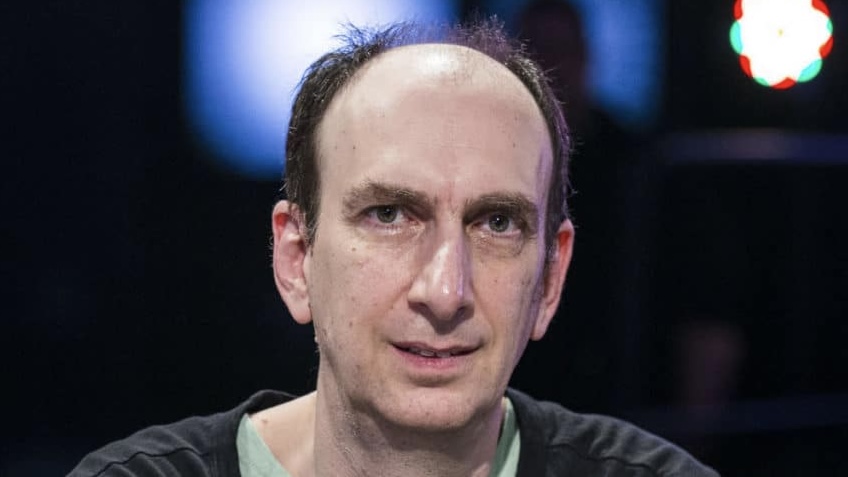
Erik Seidel
Erik Seidel is an American professional poker player, ten-time World Series of Poker bracelet winner, World Poker Tour champion and member of the Poker Hall of Fame. His career stretches from the backgammon clubs of New York to the international high roller circuit, where he has continued competing against successive generations of elite players.
For many viewers, Seidel first became familiar through a defeat. His heads-up encounter with Johnny Chan in the 1988 WSOP Main Event became one of poker’s most recognisable pieces of footage after appearing in the film Rounders. The player on the losing side of that famous hand went on to build a career far larger than the moment that introduced him to the public.
The Hendon Mob’s latest indexed profile available during preparation lists 49.263.842 $ in recorded live tournament earnings and a largest single cash of 2.472.555 $. Those figures describe tournament prizes, while his broader importance rests on consistency, versatility and an unusual ability to keep learning.
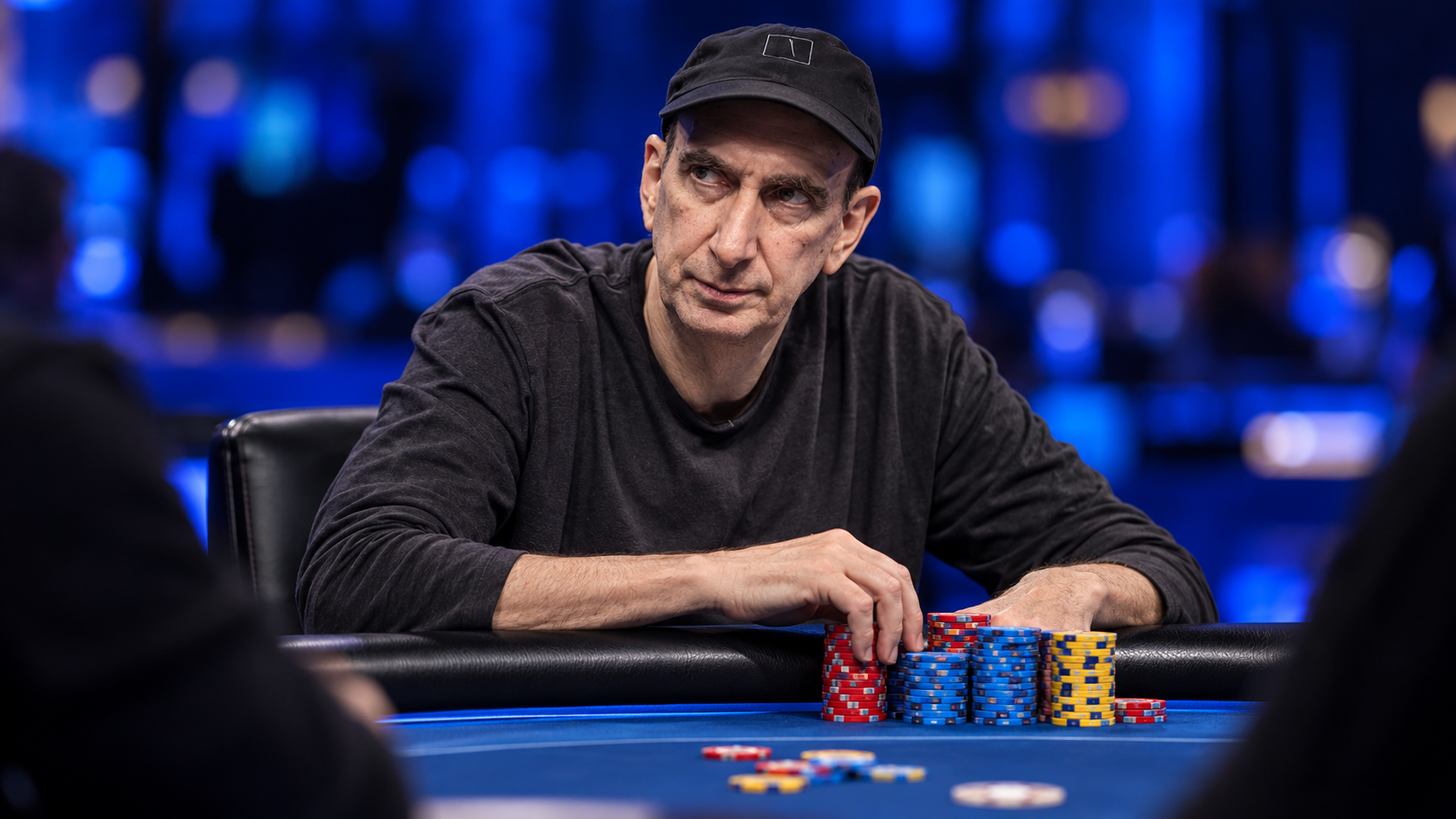
Early Life in New York
Erik Seidel was born on November 6, 1959, in New York City. Before poker became his profession, backgammon provided an early outlet for his interest in competitive games.
As a teenager, he became involved with New York’s Mayfair Club. The club offered more than a place to play: it brought together people who treated games as serious intellectual competition. Seidel developed his skills in backgammon and travelled to compete professionally.
That background mattered when he turned to poker. Both games require decisions under uncertainty, an understanding of risk and the ability to separate a good choice from an unlucky result. Poker added another layer: incomplete information about opponents and their intentions.
The Mayfair Club and a Return to Poker
Seidel also worked in finance before committing fully to poker. Following the stock market crash of 1987, he returned more seriously to the games at the Mayfair Club.
The club became associated with a remarkable group of future poker professionals, including Dan Harrington and Howard Lederer. Players tested ideas against one another, discussed hands and learned through competition. Their environment anticipated the study groups that later became common among online professionals.
Seidel’s development came before training platforms and solver software. Experience, observation and conversations with strong opponents supplied the education. He would later adopt new approaches without abandoning that curiosity.
The 1988 WSOP Main Event
Seidel’s first major introduction to the wider poker world came at the 1988 WSOP Main Event. The tournament attracted 167 players, and he reached heads-up play against defending champion Johnny Chan.
Chan held jack-nine in the deciding hand and flopped a straight on a queen-ten-eight board. Seidel held queen-seven and had top pair. The confrontation ended with Chan retaining the title and Seidel finishing second for 280.000 $.
Ten years later, Rounders used footage of the hand to illustrate Chan’s skill and composure. That scene gave Seidel a lasting connection to poker cinema, but it represented the beginning of his tournament story rather than its conclusion.
A Main Event runner-up finish can define a player’s entire career. Seidel continued building results across different games and formats until the famous defeat became only one chapter.
Building a Career Beyond One Famous Hand
Seidel won his first WSOP bracelet in 1992, defeating Phil Hellmuth heads-up in a 2.500 $ Limit Hold’em event. He followed it with victories in Omaha Hi-Lo in 1993 and Limit Hold’em in 1994.
Those early titles established that his Main Event performance had substance behind it. His success also extended beyond No-Limit Hold’em: Omaha, Lowball and other formats became part of his championship record.
He returned to the Main Event final table in 1999 and finished fourth. The result reinforced his ability to compete in the event that had first made his name, even while he developed a much broader tournament career.
Ten World Series of Poker Bracelets
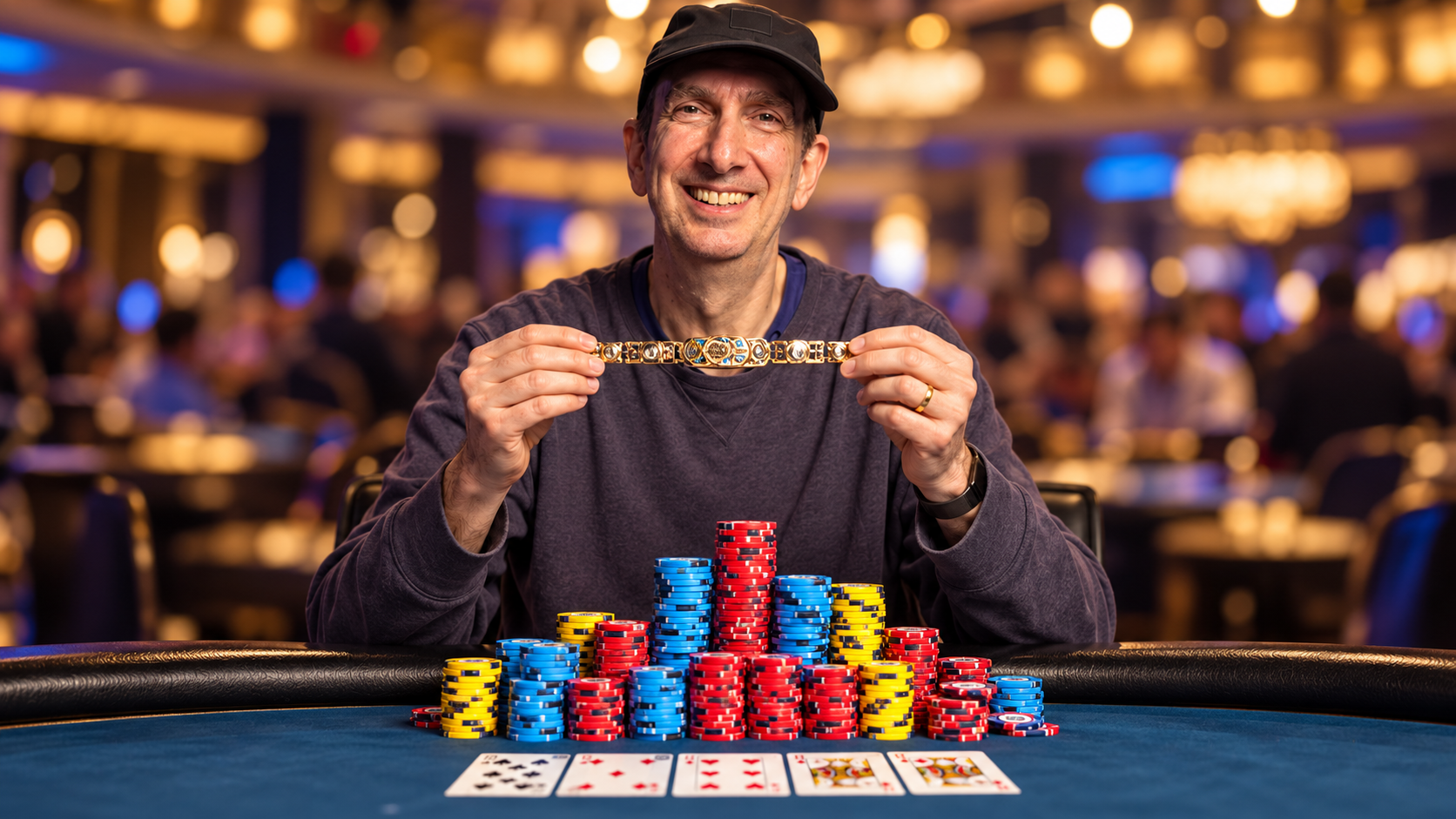
Seidel’s ten bracelets were won between 1992 and 2023. The collection spans live and online events, several poker variants and more than three decades of changing tournament conditions.
| Year | Event | Prize |
| 1992 | 2.500 $ Limit Hold’em | 168.000 $ |
| 1993 | 2.500 $ Omaha Eight or Better | 94.000 $ |
| 1994 | 5.000 $ Limit Hold’em | 210.000 $ |
| 1998 | 5.000 $ No-Limit 2-7 Draw Lowball | 132.700 $ |
| 2001 | 3.000 $ No-Limit Hold’em | 411.300 $ |
| 2003 | 1.500 $ Pot-Limit Omaha | 146.100 $ |
| 2005 | 2.000 $ No-Limit Hold’em | 611.795 $ |
| 2007 | 5.000 $ No-Limit 2-7 Draw Lowball | 538.835 $ |
| 2021 | 10.000 $ Super MILLION$ High Roller — WSOP Online | 977.842 $ |
| 2023 | 50.000 $ Super High Roller — WSOP Paradise | 1.704.400 $ |
An Online Bracelet After Fourteen Years
Seidel’s ninth bracelet arrived in 2021, fourteen years after his previous victory. He won the WSOP Online 10.000 $ Super MILLION$ High Roller, a tournament with 624 entries, and collected 977.842 $.
He defeated Francisco Benitez heads-up. At 61, Seidel had added an online championship to a record originally established in live cardrooms. The result showed that his competitive reach extended into a setting shaped by players who had grown up online.
A Tenth Bracelet at WSOP Paradise
In December 2023, Seidel won the 50.000 $ Super High Roller at WSOP Paradise in the Bahamas. The event attracted 137 entries and generated a prize pool of 6.850.000 $.
He defeated Seth Gottlieb heads-up to win 1.704.400 $, his largest WSOP payout. At 64, he had reached ten bracelets and ended a sixteen-year wait for another live WSOP title.
The achievement connected two very different eras. His first bracelet had come when the WSOP was still far smaller than its modern counterpart; his tenth came in an international high roller tournament populated by contemporary specialists.
World Poker Tour Success
Seidel won the 2008 WPT Foxwoods Poker Classic for 992.890 $. The title added a major World Poker Tour championship to his WSOP record.
That same year, he finished second in the Aussie Millions Main Event. Success in these events demonstrated his ability to compete beyond the WSOP schedule and across different tournament structures.
His career did not depend on a single annual festival. He became a presence wherever strong fields and substantial prizes brought the international circuit together.
The Exceptional Year of 2011
The opening months of 2011 produced one of Seidel’s most memorable runs. At the Aussie Millions, he won the A$250.000 Super High Roller, defeating Sam Trickett and collecting A$2.500.000. The Hendon Mob records the payout as 2.472.555 $, still his largest individual cash.
He also won the NBC National Heads-Up Poker Championship, beating Chris Moneymaker in the final and earning 750.000 $.
The two victories required different adjustments. A super high roller tests play against a small field of specialists, while a heads-up championship demands repeated adaptation to individual opponents. Together, they underlined the breadth of Seidel’s tournament skill.
Erik Seidel’s Biggest Tournament Payouts
Seidel’s largest scores reflect his later success in expensive tournaments. The table lists selected major cashes in US dollars as recorded in tournament databases; original local-currency prizes can differ from their converted database values.
| Year | Tournament | Result | Prize |
| 2011 | Aussie Millions A$250.000 Super High Roller | 1st | 2.472.555 $ |
| 2016 | Super High Roller Bowl | 3rd | 2.400.000 $ |
| 2015 | EPT Monte Carlo €100.000 Super High Roller | 1st | 2.222.222 $ |
| 2023 | WSOP Paradise 50.000 $ Super High Roller | 1st | 1.704.400 $ |
| 2022 | EPT Barcelona €100.000 Super High Roller | 2nd | 1.320.344 $ |
| 2008 | WPT Foxwoods Poker Classic | 1st | 992.890 $ |
| 2021 | WSOP Online 10.000 $ Super MILLION$ High Roller | 1st | 977.842 $ |
Adapting to the High Roller Era
Seidel’s victory in the 2015 EPT Monte Carlo Super High Roller and third-place finish in the 2016 Super High Roller Bowl extended his relevance into the modern high roller era. He later finished second in the 2022 EPT Barcelona Super High Roller.
These results came against fields shaped by online experience, intensive study and increasingly detailed mathematical analysis. Seidel continued finding ways to compete as the standards around him changed.
His longevity should not be understood as simply repeating a successful old strategy. Remaining competitive across decades requires recognising when opponents have improved and when familiar assumptions need revision.
Playing Style and the Importance of Learning
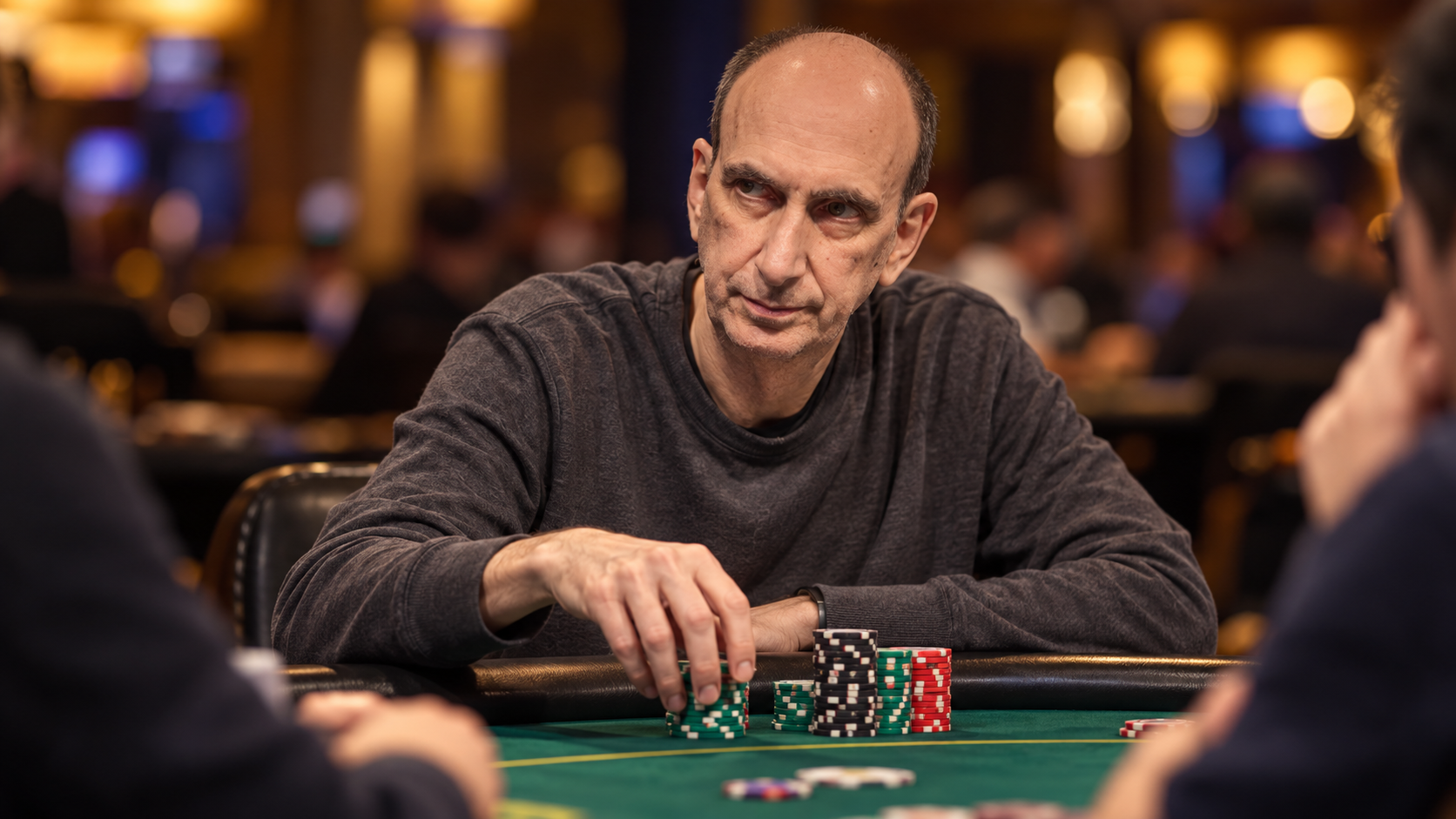
Seidel’s public presence is generally calm and understated. His reputation comes from sustained results rather than theatrical behaviour at the table.
His long career illustrates a practical principle: poker rewards adaptation. The player who succeeds in one environment must still learn how another environment works. Tournament size, opponent tendencies and the stage of an event all change the decisions that matter.
That approach also requires emotional discipline. A good decision can lose, and a poor decision can win. Treating every result as proof of skill or failure makes improvement harder. Seidel’s career offers an example of attention directed toward the next decision rather than constant celebration of previous achievements.
Mentoring Maria Konnikova
Seidel became the poker mentor of writer and psychologist Maria Konnikova, whose book The Biggest Bluff was published in 2020. Her project explored decision-making through learning the game and competing in tournaments.
Their collaboration introduced Seidel to readers outside the usual poker audience. Konnikova described a mentor whose curiosity, humility and focus on the process helped her understand more than hand selection.
The relationship highlighted another dimension of his influence. An elite player can pass on the habit of examining decisions carefully, not only a collection of strategies. That lesson travels beyond the poker table.
The Poker Hall of Fame and a More Selective Schedule
Seidel was inducted into the Poker Hall of Fame in 2010. The honour recognised an already substantial career, although several of his biggest tournament achievements were still ahead.
In an April 2026 interview reported by Card Player, he described substantially reducing his tournament schedule. He cited the economics of playing and concerns about US gambling taxation as reasons for becoming more selective.
A reduced schedule did not mean a complete retirement. He continued appearing in major events, including an eighth-place finish in the 2026 WSOP 25.000 $ six-handed high roller for 118.753 $.
The distinction matters when describing his current career: Seidel has stepped back from the volume of earlier years while continuing to compete selectively.
Tournament Earnings and Career Perspective
Recorded live earnings are gross prizes, not a verified measure of profit or personal wealth. Buy-ins, travel, expenses, backing arrangements and taxes affect the financial outcome of a tournament career. Private cash-game results are also outside the public tournament total.
Seidel’s achievements are therefore better assessed through a combination of titles, range and longevity. Ten WSOP bracelets, a WPT championship and major high roller results provide different pieces of that record.
His career began before online poker transformed the player pool and continued through the expansion of international high rollers. Few professionals have maintained a comparable competitive presence through so many changes.
The Poker Legacy of Erik Seidel
Erik Seidel’s story is one of continued development. He moved from backgammon to poker, from the Mayfair Club to Las Vegas, and from early WSOP events to some of the most demanding tournaments on the modern circuit.
The famous hand against Johnny Chan gave audiences a memorable image. The decades that followed supplied the fuller picture: a player capable of winning across formats, adapting to younger opponents and remaining curious about a game he had already mastered at an elite level.
His influence also extends through mentoring. The attention he gives to learning and decision-making helps explain why his example resonates with both professionals and people approaching poker for the first time.
Seidel’s place in poker history rests on more than ten bracelets or a large earnings total. It rests on the ability to remain a student while building one of the game’s most accomplished careers.
Statistics checked in October 2026 using the latest indexed tournament records available during preparation. Recorded earnings represent gross tournament cashes and exclude private cash-game results.