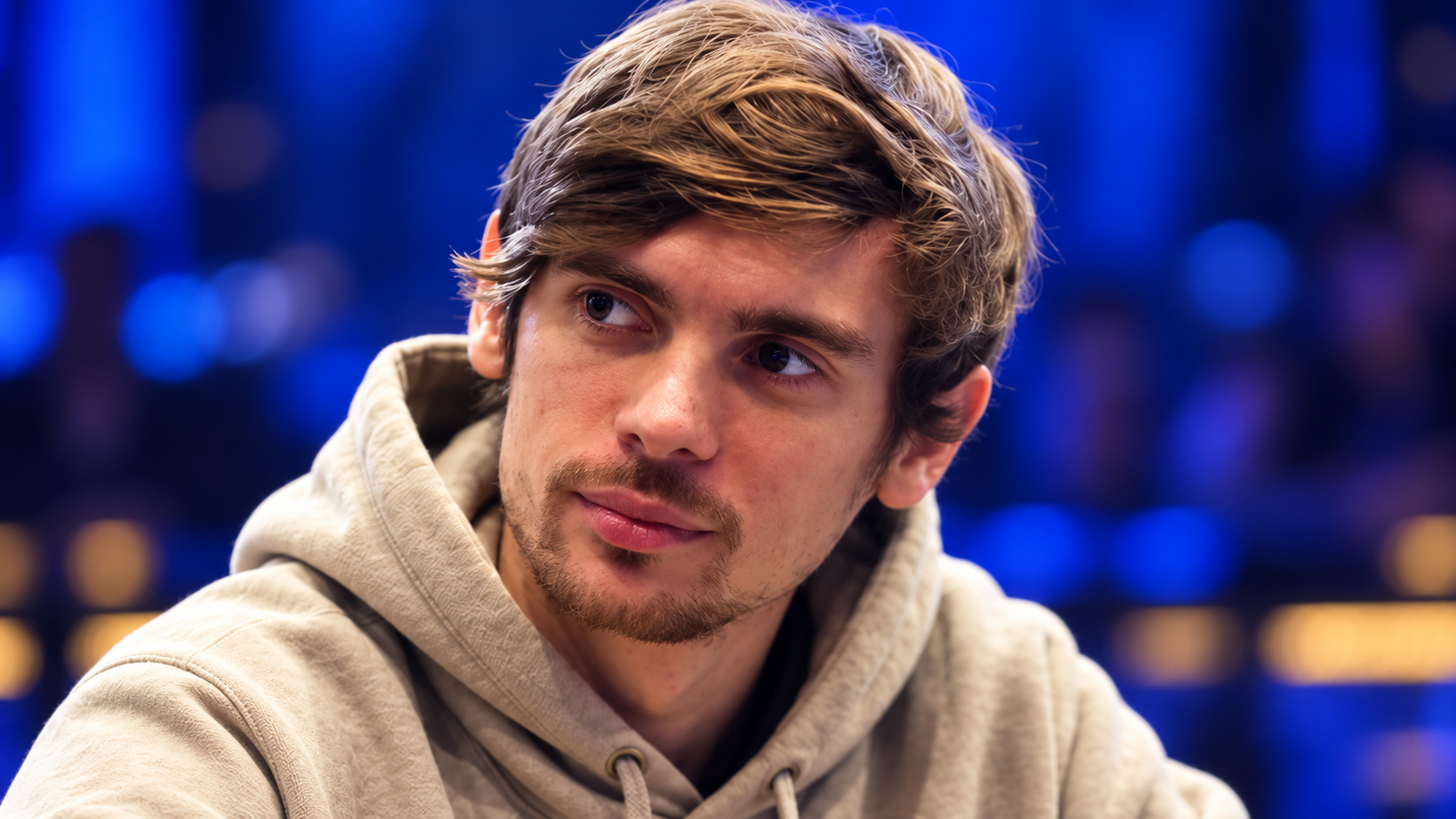
Fedor Holz
Fedor Holz is a German professional poker player, two-time World Series of Poker bracelet winner, five-time Triton champion and one of the defining tournament players of his generation. Known online as “CrownUpGuy,” he rose from micro-stakes games to the top of the global high-roller circuit before his 23rd birthday.
By August 2026, Holz had accumulated 50.681.509 $ in recorded live tournament earnings. The total placed him 14th on poker’s all-time money list and first among German players. His best live cash remains the 6.000.000 $ he earned for finishing second in the 2018 Big One for One Drop.
Those figures describe only the public tournament record. Holz also became the world’s leading online tournament player, won the 2014 World Championship of Online Poker Main Event for 1.300.000 $ and recorded more than 11 million $ in known online cashes. His live breakthrough then produced one of the greatest individual seasons in poker history: approximately 16,5 million $ in cashes during 2016.
Holz appeared to step away from full-time poker at the height of that run. He redirected much of his attention toward entrepreneurship, mental performance and the creation of Pokercode. The word “retirement,” however, never completely described what followed. He continued entering selected high rollers, won his second bracelet online and eventually returned to a more regular international schedule.
His fifth Triton title arrived in Montenegro in 2026, ten years after he had won the first tournament in the history of the series. The result completed a remarkable circle. Holz had moved from young phenomenon to established champion without losing the curiosity, analytical discipline or community-focused approach that originally separated him from the field.
Early Life in Saarbrücken, Germany
Fedor Holz was born on July 25, 1993, in Saarbrücken, the capital of the German state of Saarland.
Unlike the American professionals who discovered poker in casinos or through the television boom, Holz belonged to a European online generation. Fast internet, inexpensive tournaments and strategy forums allowed young players to study thousands of hands before they were old enough to enter major casinos.
Holz has generally kept the private details of his childhood and family outside his public poker identity. His early interviews instead emphasise independence, experimentation and an unusually strong desire to understand how successful people improve. He was interested not only in the rules of a game but in the habits, environments and relationships that make high performance possible.
That curiosity later became central to his career. Holz did not treat poker as an isolated contest of cards. He examined decision-making, emotional control, physical preparation, learning systems and the value of working with ambitious peers.
He eventually enrolled at Saarland University to study media informatics. The course combined technology and communication, two subjects that would remain relevant to his later business projects. University did not hold his attention for long. Holz left after two semesters as poker and travel became increasingly important.
The decision was risky. At that point he was not yet a millionaire or an established professional. He was a talented young online player who had repeatedly lost his bankroll and was still trying to determine whether the game could provide a sustainable future.
Discovering Poker at 16
Holz began playing poker at approximately 16 with school friends.
The games were extremely small. They included micro-stakes cash sessions with blinds such as 0,01/0,02 and inexpensive sit-and-go tournaments. The money was not enough to create a career, but the competition immediately appealed to him.
Poker offered several attractions at once. It was mathematical but not mechanically predictable. Players operated with incomplete information, adjusted to one another and experienced the emotional consequences of uncertainty. A correct decision could lose, while a poor decision could be rewarded in the short term.
Holz did not succeed immediately. He has said that he lost his bankroll eight times during his early development. The number is important because later accounts can make his rise appear effortless. His natural ability did not remove the need to learn bankroll management, emotional discipline and the difference between confidence and evidence.
Each failure forced him to reassess. He studied more seriously, discussed hands and rebuilt at manageable stakes. Online poker allowed the process to happen quickly because he could play much greater volume than a live casino schedule would permit.
The repeated restarts also influenced his later view of success. Holz came to believe that environment and process matter more than a single result. That philosophy eventually shaped the study communities around him and became one of the principles behind Pokercode.
First Recorded Live Tournament Cashes
Holz’s first recorded live cash came on September 6, 2012, at King’s Casino in Rozvadov.
He finished second in the 500€ German Poker Tour Deepstack Main Event for 15.320€, worth approximately 19.288 $ at the time. The result was modest compared with his later high-roller payouts, but it provided early evidence that his online skills could transfer to a casino environment.
Live poker required several adjustments. Decisions happened more slowly, physical behaviour supplied additional information and players could not use the convenience of multiple screens to maintain volume. A tournament trip also created expenses that did not exist when playing from home.
After leaving university and beginning to travel, Holz made Vienna the base of his early professional life. The city’s strong German-speaking poker community accelerated his improvement. He recorded his first live victory in 2013, winning a 550 $ bounty event in Cyprus for 4.695 $. Later that year, he finished second in a turbo event during the European Poker Tour Grand Final in Monte Carlo for 35.000€.
The cashes were useful, but his most important development still occurred online. Internet tournaments provided larger samples, strong international opposition and prize pools capable of changing a young player’s bankroll.
By 2014, Holz had become one of the most feared online tournament players in the world. His breakthrough would not be a small step. It would come in one of the largest internet events ever held.
How “CrownUpGuy” Became His Poker Identity
Fedor Holz is more closely associated with “CrownUpGuy” than with any other screen name.
Holz has explained that the nickname developed from a joke among older friends who told him to “grow up, guy.” He transformed the phrase into “CrownUpGuy,” combining the sound of the original comment with his fondness for the image of a crown.
The name became appropriate in ways nobody could have expected. Online poker identities often disappear when a player moves to live tournaments, but CrownUpGuy remained connected to Holz because of the scale of his internet results.
It also captured something about his public story. Holz entered elite poker at an unusually young age and was forced to mature quickly. He managed six-figure swings, international travel and public attention before many people his age had finished university.
The crown suggested ambition without requiring the aggressive persona used by some poker celebrities. Holz was competitive but generally collaborative, analytical and open about the role of other people in his success.
When he won the 2014 WCOOP Main Event, the CrownUpGuy account became visible to the entire online poker community. By the end of the following year, the person behind it was already competing for millions of dollars in live high rollers.
The nickname remains part of his brand even after his work expanded into coaching, entrepreneurship and mental performance.
Winning the 2014 WCOOP Main Event
Holz’s first career-defining title came in the 2014 PokerStars World Championship of Online Poker Main Event.
The tournament carried a 5.200 $ buy-in and attracted 2.142 entries. Its prize pool reached 10.710.000 $, making it one of the most valuable online poker events of the year.
Holz reached the final table as CrownUpGuy and participated in a six-way deal. He continued to first place and collected 1.300.000 $, the largest online result of his career at that point.
The victory changed his financial position and his reputation. A player who had lost several early bankrolls now possessed the resources to enter larger tournaments. More importantly, the title showed that he could survive an enormous field containing many of the strongest online professionals.
Poker rankings soon reflected the achievement. PocketFives listed Holz as the world’s number-one online tournament player during both 2014 and 2015. He had moved from an ambitious member of the German-speaking community to one of its international leaders.
The WCOOP win also created expectations. A seven-figure online title can become a player’s permanent peak if the result is not followed by consistent performance. Holz responded by expanding his live schedule and entering tournaments where the opposition was concentrated rather than diluted by a large field.
Within little more than a year, he would win his first live seven-figure prize. The online champion was becoming a super high-roller specialist.
The 2015 World Series of Poker Breakthrough
Holz made his first significant World Series of Poker run in 2015.
He reached the final table of the 10.000 $ Six-Handed No-Limit Hold’em Championship and finished third for 268.463 $. The event concentrated experienced professionals in a format that rewarded wide ranges and constant adjustment.
Holz then entered the WSOP Main Event and finished 25th for 262.574 $. The result remains his best finish in poker’s world championship. Navigating the Main Event required a different kind of patience from a six-handed high roller. The field was enormous, stack depths changed over several days and table quality varied dramatically.
Two deep finishes in the same summer established Holz as more than an online specialist. He could perform in a prestigious championship against elite professionals and in a long large-field event filled with unfamiliar opponents.
The 2015 season also produced strong European Poker Tour results. Holz became a regular in expensive side events and developed experience against the small group of players who travelled continuously between high-roller festivals.
He still lacked a major live title and a seven-figure live cash. Both gaps disappeared in December when he entered the WPT Alpha8 event at Bellagio.
WPT Alpha8 Las Vegas Victory
The 2015 WPT Alpha8 Las Vegas tournament carried a 100.000 $ buy-in and attracted 45 entries.
Holz entered the final day with approximately 40 percent of all chips in play. He maintained the advantage, defeated Nick Petrangelo heads-up and won 1.589.219 $.
The victory was his first recorded seven-figure live score. It arrived against a field in which nearly every seat was occupied by an established professional or wealthy high-stakes regular.
Small super high rollers create a special pressure. The chance of a cash is limited, every mistake is expensive and the same opponents understand one another’s tendencies. A player cannot wait indefinitely for premium cards because the blinds remove a meaningful share of the stack.
Holz’s aggressive short-handed style suited the format. He applied pressure while maintaining enough control to avoid turning every confrontation into a gamble.
The title completed his transition from online champion to live high-roller threat. It also came only weeks before the beginning of 2016, the season that transformed his career.
Holz entered the new year with confidence, a substantial bankroll and access to the world’s most expensive schedule. Over the following months, he reached one major final table after another with a consistency that appeared almost impossible.
The First Triton Tournament in the Philippines
Holz began 2016 by winning the 200.000 $ Cali Cup in the Philippines, the first tournament staged under what became the Triton Super High Roller Series.
The event was connected with WPT National Philippines and attracted many of the strongest high-stakes players in the world. Holz reached heads-up play against David Peters, another professional who would define the 2016 season.
The finalists made a deal before Holz secured the title. The current Hendon Mob record credits him with 3.072.748 $, while some contemporary reports displayed a higher headline figure of 3.463.500 $. The difference reflects the way deal-adjusted payouts and official published amounts were recorded.
Using the current database amount keeps Holz’s career total internally consistent. It also demonstrates why tournament figures should not always be treated as simple cash payments made exactly according to the original prize structure.
The title was important beyond the money. Triton would develop into the premier international super high-roller tour, staging events with enormous buy-ins in Asia, Europe and the Caribbean. Holz won its first tournament and remained connected to the series throughout the following decade.
His fifth Triton title in 2026 would arrive exactly ten years later. Few players have remained competitive across the complete history of the tour.
Runner-Up in the 2016 Super High Roller Bowl
The 2016 Super High Roller Bowl at Aria required a 300.000 $ buy-in and attracted 49 entries.
Holz reached heads-up play against fellow German professional Rainer Kempe. The confrontation reflected the strength of the German-speaking poker community that had developed around online study and collaborative improvement.
Kempe won the tournament for 5.000.000 $, while Holz collected 3.500.000 $ for second place. For most players, a payout of that size would define an entire career. In Holz’s 2016 season, it became one part of a much larger run.
The result also showed that the Philippines victory had not been an isolated heater. Holz was repeatedly building stacks and reaching final tables in the most technically demanding events available.
High-roller fields are small compared with the WSOP Main Event, but their difficulty is concentrated. A 49-entry tournament can contain almost no weak table. Players must defend blinds, three-bet frequently and make decisions against opponents who have studied the same advanced concepts.
Holz combined technical preparation with an ability to remain present during long days. He had also begun working with mindset coach Elliot Roe, using mental routines to improve focus and emotional stability.
The Super High Roller Bowl provided another enormous score. The summer in Las Vegas was only beginning.
First WSOP Bracelet in the High Roller for One Drop
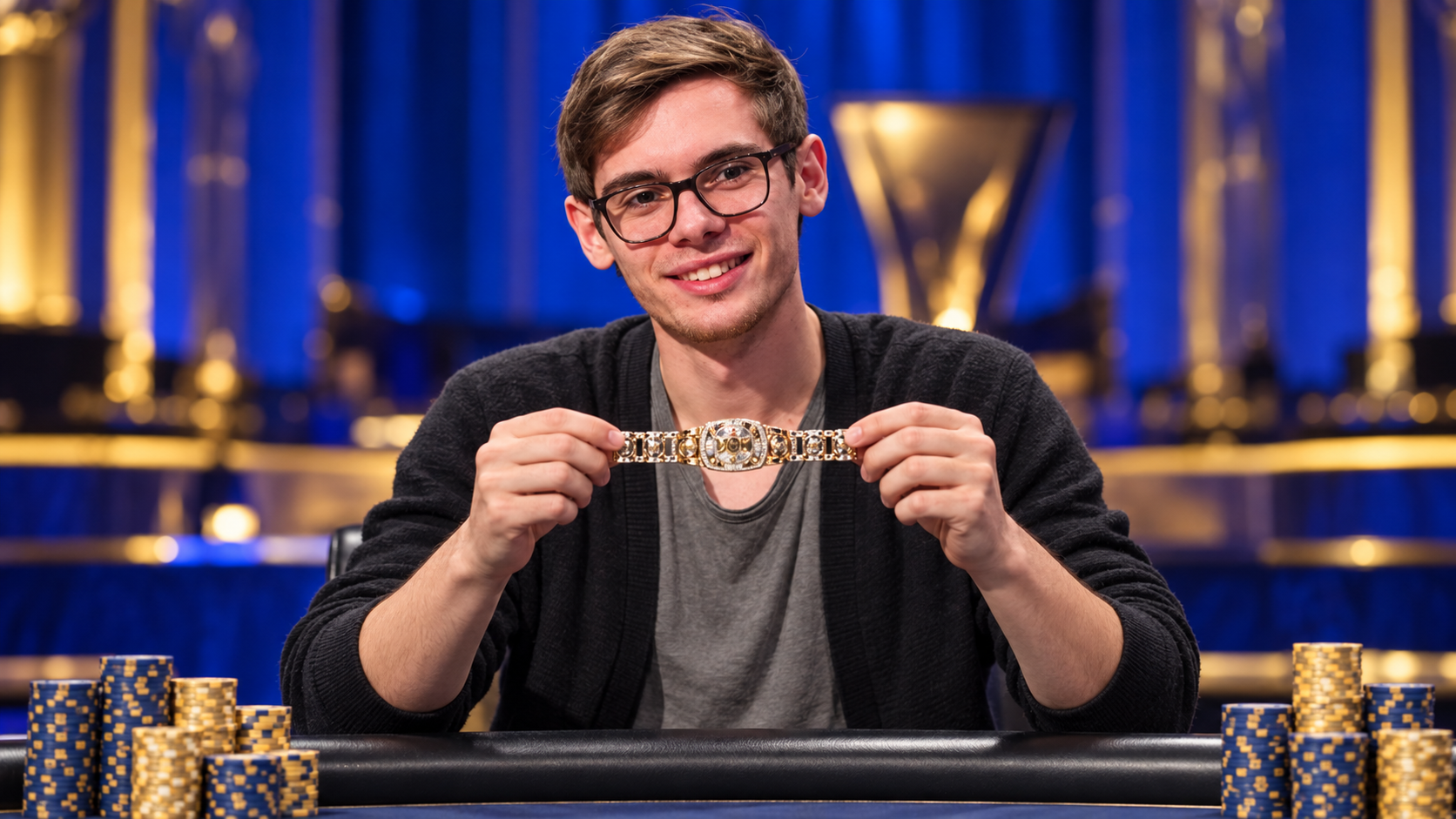
Holz won his first WSOP bracelet in the 2016 High Roller for One Drop.
The tournament carried a 111.111 $ buy-in and attracted 183 entries, generating a prize pool of 19.316.565 $. The unusual price reflected the event’s connection with the One Drop charitable initiative.
Holz reached the final table against a lineup that included Dan Smith, Koray Aldemir, Brian Green and Joe McKeehen. He eventually faced Smith heads-up and secured the title for 4.981.775 $.
The payout was the largest of Holz’s career at that moment. More importantly, it gave him a WSOP bracelet only one year after his first deep runs at the series.
The victory combined the demands of a large field and a super high roller. The 183 entries were far more than those in most six-figure tournaments, but the high buy-in ensured that the field remained extremely strong.
Holz was 22 when the event began and turned 23 shortly afterward. His age intensified the public reaction. Poker had produced young champions before, but few had accumulated online rankings, a WCOOP Main Event, a Triton title and a bracelet at such speed.
The bracelet became the centrepiece of his legendary summer. It did not end the run. The European high-roller season produced another major victory only weeks later.
Winning the 2016 EPT Barcelona Super High Roller
Holz arrived at the European Poker Tour festival in Barcelona as the most closely watched tournament player in the world.
He entered the 50.000€ Super High Roller and continued the form that had dominated the first half of the year. Holz won the tournament for 1.300.300€, worth approximately 1.473.127 $ at the time.
Barcelona attracted a strong mix of European professionals, international high rollers and wealthy recreational players. The field required both technical precision and the ability to adapt to opponents with very different levels of experience.
The victory mattered because it came after public discussion of whether Holz’s previous results represented an unsustainable rush of cards. Tournament variance always played a role, and no player could expect the same conversion rate indefinitely. Yet his repeated final tables across formats and continents showed that the run also reflected a genuine skill advantage.
Soon afterward, Holz returned online for the 102.000 $ WCOOP Super High Roller. He finished second after a deal for 1.067.639,40 $, adding another seven-figure internet score to a season already filled with live success.
The sequence made the distinction between live and online poker almost irrelevant to his reputation. CrownUpGuy could compete in either environment at the highest available stakes.
A 16,5 Million $ Year in 2016
Holz finished 2016 with approximately 16.484.153 $ in recorded live tournament cashes.
The total included the Triton title in the Philippines, second place in the Super High Roller Bowl, multiple Aria results, the WSOP High Roller for One Drop bracelet and the EPT Barcelona victory. It did not include his seven-figure online WCOOP score.
Few players in poker history had produced a comparable twelve-month run. Holz combined enormous payouts with an unusual frequency of top-three finishes. The season moved him near the top of the all-time money list while he was still 23.
The results naturally produced comparisons with the greatest tournament years ever recorded. Historical comparisons require context because modern high rollers create much larger gross payouts and buy-in costs than older schedules. Even with that qualification, Holz’s 2016 remains exceptional.
He did not win every annual ranking. David Peters passed him late in the Global Poker Index Player of the Year race. Peters finished with 3.666,31 points, only 21,51 ahead of Holz’s 3.644,80.
That narrow margin is sometimes overlooked when the season is summarised. Holz produced the more visually spectacular collection of titles, while Peters accumulated enough qualifying results to take the official GPI award.
The distinction does little to reduce Holz’s accomplishment. His 2016 run became the standard against which later young high-roller breakthroughs were measured.
Why Fedor Holz Announced a Semi-Retirement
At the height of his success, Holz began describing himself as retired from professional poker.
The announcement was surprising. Most players would continue playing maximum volume after winning nearly 16,5 million $ in one year. Holz felt that constant travel and tournament repetition no longer provided the same sense of growth.
“Retirement” was always an imperfect word. He did not promise never to play again, and he continued entering selected high rollers. The real change was that poker stopped being his only professional focus.
Holz wanted to build companies, explore mental performance and work on projects with effects beyond his own results. Financial security gave him the freedom to choose a lighter schedule without needing to protect a ranking or chase every valuable tournament.
The decision also reflected the cost of elite poker. High rollers demand long travel days, intense concentration and acceptance of enormous financial swings. A player can love competition while disliking the lifestyle created by constant participation.
Holz remained intellectually connected to the game. He studied, played privately, advised other professionals and entered events that interested him. His later titles show that the reduction in volume did not eliminate his competitive ability.
It is therefore more accurate to describe the period as semi-retirement. Holz stepped away from the identity of a full-time travelling professional, not from poker itself.
Second Triton Title in Montenegro
Holz won his second Triton title in Montenegro in 2017.
The 250.000 HK$ six-handed No-Limit Hold’em event attracted 41 entries. Holz defeated the field for 3.472.200 HK$, worth approximately 444.893 $ at the time.
Six-handed poker places players in the blinds more frequently and forces them to enter pots with wider ranges. The format suited Holz’s online background and his experience in aggressive high rollers.
The result also demonstrated the flexibility of his semi-retirement. He was no longer committed to a full schedule, but he could select tournaments, prepare and compete immediately against the strongest opposition.
Later in the year, Holz reached heads-up play in the Triton Macau Main Event. He finished second for 16.398.000 HK$, approximately 2,09 million $ at the time. The runner-up prize was far larger than the payout for his title in Montenegro and provided another example of why tournament greatness cannot be measured only by wins.
Some retrospective summaries have confused the location of Holz’s second Triton victory. The title came in Montenegro, while his first had been won in the Philippines and the later runner-up result occurred in Macau.
By the end of 2017, Holz had shown that his reduced schedule could still produce major international results.
The 2018 Big One for One Drop
Holz recorded the largest live cash of his career in the 2018 Big One for One Drop.
The tournament required a 1.000.000 $ buy-in and attracted 27 entries. Its prize pool reached 24.840.000 $, with only five positions paid.
Holz reached the final table alongside Justin Bonomo, Dan Smith, Rick Salomon, Byron Kaverman and David Einhorn. Smith finished third for 4.000.000 $, leaving Holz and Bonomo heads-up.
Bonomo won the title and 10.000.000 $. Holz received 6.000.000 $ for second place, setting the best-cash figure that remained on his Hendon Mob profile in August 2026.
The result came two years after Holz had supposedly retired. It offered the clearest evidence that he had reduced his volume rather than lost the ability or desire to compete.
The million-dollar buy-in also illustrates the limitations of gross earnings. A 6.000.000 $ prize sounds like a 6.000.000 $ profit, but the entry alone consumed one-sixth of that amount. Players at this level frequently sell pieces, exchange percentages or use backing arrangements to reduce risk.
Holz’s personal financial outcome was never publicly verified. The database records the full prize attached to his finishing position, not the share he retained after all agreements.
Mental Performance and Working With Elliot Roe
Holz’s technical development was accompanied by deliberate work on his mental game.
He began working with performance coach Elliot Roe in 2015. Roe used hypnotherapy, visualisation and structured mental preparation to help poker players manage anxiety, tilt and confidence.
The timing coincided with Holz’s most successful period. Over approximately 18 months, he produced more than 21 million $ in tournament results across live and online poker. It would be too simple to credit those winnings to one coaching relationship, but Holz believed that better mental preparation made his technical ability more reliable under pressure.
High-stakes poker creates unusual psychological problems. A player can make a correct decision and lose hundreds of thousands of dollars. Repeated bad outcomes can cause fear, aggression or hesitation even when the underlying strategy remains sound.
Holz used routines to separate decision quality from short-term results. He also paid attention to sleep, physical fitness and the ability to enter a tournament with a clear purpose.
The collaboration with Roe eventually developed into Primed Mind, a performance application built around guided mental training. Formed through Primed Group near the end of 2016 and launched in 2017, the project connected Holz’s poker experience with a broader interest in entrepreneurship.
Mental game work was not presented as a substitute for study. Its purpose was to allow a prepared player to access technical knowledge when the pressure was greatest.
Creating Pokercode
Holz co-founded Pokercode with Austrian high-stakes professional Matthias Eibinger in 2019.
The training platform combined strategic content with a community model. Members could study structured courses, discuss hands and participate in group learning rather than watching isolated videos without feedback.
The concept grew directly from Holz’s own development. His fastest improvement had occurred around ambitious players who reviewed decisions together and held one another accountable. Pokercode attempted to make a version of that environment available to a wider audience.
Eibinger contributed elite tournament experience, while Holz brought a globally recognised poker identity and a strong interest in product design. Other coaches and community members expanded the range of perspectives.
The platform appeared during a period when solver-based analysis was becoming central to poker education. Modern players could examine theoretically balanced strategies with software, but the amount of information could become overwhelming. Pokercode focused on organising knowledge into practical decisions and study habits.
By 2026, Holz remained the company’s chief executive officer, while Hannes Neurauter led much of the day-to-day management. Holz concentrated increasingly on strategic direction and the long-term development of the community.
Pokercode became a bridge between his two professional identities. It allowed him to build a company while remaining connected to serious poker study and the development of other players.
Second WSOP Bracelet in the 2020 Heads-Up Championship
Holz joined GGPoker as an ambassador in May 2020 and soon won his second bracelet in the 2020 WSOP Online 25.000 $ Heads-Up No-Limit Hold’em Championship on the platform. He chose not to renew the ambassador agreement in April 2026, while remaining active through Pokercode and live high rollers.
The event attracted 127 entries and generated a prize pool of 3.111.500 $. Holz defeated a series of elite opponents, including Luc Greenwood, Anton Morgenstern, Robert Flink, George Wolff and Justin Bonomo.
He beat Sergi Reixach in the semifinal and faced Brazil’s Brunno Botteon in the final. Holz won the match and received an official event payout of 1.070.250 $.
The bracket required seven consecutive match victories. Heads-up poker is highly specialised because each player competes in every pot, ranges become extremely wide and small strategic imbalances can be attacked repeatedly.
Holz’s victory also provided a public lesson about staking. He sold 77,5 percent of his tournament action at a markup of 1,15 through GGPoker’s staking feature. Approximately 130 backers purchased pieces.
The bracelet and database cash belonged to Holz, but most of the direct financial result was distributed according to those percentages. This is one reason a player’s recorded earnings should never be treated as personal net profit.
The title arrived four years after his first bracelet and in a completely different format. Holz had now won WSOP gold in a large live high roller and an elite online heads-up championship.
The 2022 Coin Rivet Invitational
Holz returned to a major seven-figure live result at the 2022 Coin Rivet Invitational in Cyprus.
The 200.000 $ tournament formed part of the Triton series and paired invited recreational participants with professional players. The structure created an unusual field while maintaining one of the highest buy-ins on the calendar.
Holz reached the final table and finished fourth for 2.100.000 $. Sam Grafton won 5.500.000 $, while Linus Loeliger placed second for 3.900.000 $.
Fourth place did not add a title, but it became one of the ten largest cashes of Holz’s career. It also demonstrated that his 2018 Big One result had not been the last seven-figure performance of his semi-retirement period.
Invitationals introduce strategic challenges that differ from ordinary professional high rollers. Some tables contain experienced entrepreneurs with unconventional styles, while others become concentrated with players trained in modern game theory. Successful participants must recognise those differences quickly.
Holz’s social confidence and technical flexibility suited the format. He could interact comfortably without losing focus on precise decisions.
The result began a more visible competitive return. During 2023 and 2024, Holz increased his volume, won two additional Triton titles and reached several seven-figure final tables.
The 2023 Return to Regular High Rollers
Holz opened 2023 with second place in a 100.000 $ seven-handed event at the PokerStars Caribbean Adventure for 1.014.400 $.
He then travelled to Triton Vietnam and finished fifth in the 100.000 $ Main Event for 965.000 $. The two results showed that his increased activity was producing immediate returns.
The most important title came at Triton London. Holz entered the 25.000 $ seven-handed No-Limit Hold’em event, which attracted 120 entries and generated a 3.000.000 $ prize pool.
He reached heads-up play against Chris Brewer. The finalists agreed to an independent chip model deal, then continued for the trophy. Holz won and received 609.853 $, while Brewer collected 600.647 $.
The victory was Holz’s third Triton title and his first since Montenegro in 2017. Six years had passed, but the result connected the young CrownUpGuy era with his renewed schedule.
Holz added seventh place in the Triton Monte Carlo Invitational for 694.000 $ later in the year. He was no longer appearing only for one or two exceptional tournaments. Multiple stops and final tables suggested a genuine return to regular high-roller competition.
The comeback did not require abandoning his companies. Instead, Holz developed a schedule that allowed business and poker to coexist.
Fourth Triton Title at Jeju in 2024
Holz won his fourth Triton title in Jeju, South Korea, in March 2024.
The 15.000 $ eight-handed No-Limit Hold’em event attracted 269 entries, including 93 re-entries. The resulting 4.035.000 $ prize pool was unusually large for a Triton event at that buy-in level.
Holz navigated the biggest field of his Triton victories and won 786.000 $. The title demonstrated that his edge was not restricted to small super high rollers. A 269-entry tournament requires endurance, table adaptation and the ability to survive several days of changing stack depths.
The Jeju victory also reflected the growth of Triton. Holz’s first title in 2016 had helped introduce the series. Eight years later, the tour attracted enormous international fields, professional livestreams and an audience that followed every final table.
Holz had become one of its central historical figures. His four titles placed him among a small group capable of winning across several eras of the circuit.
The remainder of 2024 strengthened that position. Holz did not simply collect one trophy and disappear. He reached major final tables in Monte Carlo and at WSOP Paradise, producing three seven-figure cashes within a short period.
Three Major Final Tables at the End of 2024
Holz’s late-2024 run was one of the strongest periods since his legendary 2016 season.
At Triton Monte Carlo, he finished third in a 100.000 $ eight-handed event for 1.528.097 $. He then reached third place in the 150.000 $ eight-handed tournament for 1.962.000 $.
Both results came against compact fields filled with elite high-stakes professionals. Holz earned almost 3,5 million $ from the two third-place finishes without winning either tournament.
He continued the run at WSOP Paradise in the Bahamas. The 100.000 $ Triton Main Event attracted 182 entries and created a prize pool of 18.200.000 $. Holz again finished third, this time for 1.830.000 $. William Alex Foxen won the title for 3.850.000 $.
Holz also placed sixth in a 50.000 $ event for 352.210 $. The combined results moved his live earnings closer to 50 million $ and confirmed that the comeback was statistically significant.
Three third-place finishes can be emotionally difficult for a player who expects to win. They also provide strong evidence of consistency. Each tournament required Holz to outlast most of an exceptionally difficult field.
By the end of 2024, he had returned to the centre of the global high-roller conversation.
Fifth Triton Title in Montenegro in 2026
After recording six Triton cashes worth more than 2,3 million $ in 2025, Holz won his fifth title in the 40.000 $ Mystery Bounty event in Montenegro in 2026.
The tournament attracted 111 entries. Holz reached heads-up play against Latvia’s Aleksejs Ponakovs, and the finalists agreed to a deal before Holz secured the trophy.
His main-prize payment was 528.811 $. Holz also collected 11 mystery bounties worth a combined 620.000 $, bringing the complete return from the event to 1.208.811 $.
The distinction explains an apparent conflict in published figures. Hendon Mob’s standard live-tournament total credits the 528.811 $ finishing prize, while Triton reports the combined amount including bounty rewards. Both numbers describe different parts of the same result.
The victory came ten years after Holz won Triton’s inaugural tournament in the Philippines. Between those titles, the series grew into the most prestigious global high-roller tour.
Winning in 2016 and 2026 required adaptation. Tournament theory advanced, average field quality improved and new generations entered the highest stakes. Holz remained competitive despite spending substantial periods focused on business.
The fifth title also pushed his broader public earnings beyond 50 million $ and supplied an appropriate milestone near the end of his GGPoker ambassador period.
Fedor Holz’s Two WSOP Bracelets
Holz has won two official World Series of Poker bracelets in radically different forms of No-Limit Hold’em.
|
Year |
Event |
Format |
Prize |
|
2016 |
111.111 $ High Roller for One Drop |
Live No-Limit Hold’em |
4.981.775 $ |
|
2020 |
25.000 $ Heads-Up Championship |
Online No-Limit Hold’em |
1.070.250 $ |
The first title required Holz to defeat a field of 183 entries in Las Vegas. It became the most important victory of his historic 2016 season and remains his second-largest recorded live cash.
The second bracelet arrived online during the pandemic. Holz had to win seven consecutive heads-up matches against a bracket filled with elite professionals.
Together, the titles show range rather than volume. Holz has not built his WSOP record by entering every event for decades. His selective schedule produced championships in a large live high roller and a specialised online format.
His best WSOP Main Event finish remains 25th in 2015 for 262.574 $. Although he has never won poker’s world championship, his bracelet record and One Drop results place him among the most accomplished WSOP high-roller players of his generation.
Fedor Holz’s Five Triton Titles
Holz won five Triton tournaments between 2016 and 2026.
|
Year |
Location |
Event |
Recorded Prize |
|
2016 |
Philippines |
200.000 $ Cali Cup |
3.072.748 $ |
|
2017 |
Montenegro |
250.000 HK$ Six-Max |
3.472.200 HK$ |
|
2023 |
London |
25.000 $ Seven-Handed |
609.853 $ |
|
2024 |
Jeju |
15.000 $ Eight-Handed |
786.000 $ |
|
2026 |
Montenegro |
40.000 $ Mystery Bounty |
1.208.811 $ including bounties |
The first title launched the competitive history of Triton. The fifth demonstrated Holz’s longevity after the tour had become an international institution.
His victories also cover different structures. They include six-handed, seven-handed, eight-handed and mystery-bounty formats, as well as buy-ins ranging from 15.000 $ to 200.000 $.
Holz’s Triton résumé extends beyond the five wins. He finished second in the 2017 Macau Main Event, fourth in the 2022 Coin Rivet Invitational and reached multiple seven-figure final tables in 2024.
The series is therefore central to both halves of his career: the initial rise and the later comeback.
Fedor Holz’s Biggest Live Tournament Results
Holz’s largest recorded live cashes include victories, runner-up finishes and several third-place results in the world’s most expensive events.
|
Year |
Tournament |
Result |
Prize |
|
2018 |
WSOP Big One for One Drop |
2nd |
6.000.000 $ |
|
2016 |
WSOP High Roller for One Drop |
1st |
4.981.775 $ |
|
2016 |
Super High Roller Bowl |
2nd |
3.500.000 $ |
|
2016 |
Triton/WPT National Philippines Cali Cup |
1st |
3.072.748 $ |
|
2022 |
Coin Rivet Invitational |
4th |
2.100.000 $ |
|
2017 |
Triton Macau Main Event |
2nd |
16.398.000 HK$ |
|
2024 |
Triton Monte Carlo 150.000 $ Eight-Handed |
3rd |
1.962.000 $ |
|
2024 |
WSOP Paradise Triton Main Event |
3rd |
1.830.000 $ |
|
2015 |
WPT Alpha8 Las Vegas |
1st |
1.589.219 $ |
|
2024 |
Triton Monte Carlo 100.000 $ Eight-Handed |
3rd |
1.528.097 $ |
The list illustrates the concentration of Holz’s schedule. Nine of the ten results came in tournaments with buy-ins of at least 100.000 $ or equivalent high-roller pricing.
It also explains why his live total grew so quickly. A small number of deep runs in seven-figure prize pools can produce more gross earnings than decades of ordinary tournament cashes.
Fedor Holz Career Statistics
|
Category |
Record as of August 2026 |
|
Recorded live tournament earnings |
50.681.509 $ |
|
Largest recorded live cash |
6.000.000 $ |
|
Global all-time money list |
14th |
|
Germany all-time money list |
1st |
|
Best all-time money-list rank |
4th |
|
Current Global Poker Index rank |
1.546th |
|
Popularity ranking |
4th |
|
WSOP bracelets |
2 |
|
Triton titles |
5 |
|
Best WSOP Main Event finish |
25th in 2015 |
The rankings are snapshots rather than permanent measures of skill. Holz’s current GPI position reflects recent qualifying volume and results, while his best all-time money-list rank shows how high he climbed during the peak of his 2016 run.
The popularity ranking captures a different form of influence. Holz remains one of poker’s most searched and recognised players even after periods away from a full schedule.
His live earnings exclude online tournament results and private cash games. They also represent gross cashes rather than profit.
Playing Style and Strategic Strengths
Holz is best known for an aggressive, technically precise tournament style.
He applies pressure across a wide range of stack depths and is particularly comfortable in short-handed play. His online background trained him to defend blinds, three-bet light and recognise situations in which an opponent’s range cannot comfortably continue.
Aggression does not mean constant betting. Holz’s strength lies in choosing the situations in which pressure has the greatest effect. He combines game-theory-informed ranges with practical observations about individual opponents.
His record in heads-up and six-handed events reflects this flexibility. Fewer players at the table require wider opening ranges and more frequent post-flop decisions. There is less opportunity to wait for premium cards.
Holz also performs well at final tables, where payout jumps create strategic pressure that does not exist earlier in a tournament. Independent chip model considerations can make a technically strong hand a fold when another player is likely to be eliminated.
Modern high rollers are studied intensely, so no public description can capture the complete strategy of an active professional. Opponents change, solvers discover new frequencies and every lineup demands adjustment.
The durable elements of Holz’s game are decision speed, structured preparation and an ability to remain composed when the financial consequences are enormous.
Bankroll Management, Staking and Gross Winnings
Holz’s 50.681.509 $ in live earnings does not represent 50.681.509 $ in personal profit.
Tournament databases add the full payout attached to each finishing position. They do not subtract buy-ins, re-entries, travel, accommodation, coaching, taxes or losses in events where the player did not cash.
High-stakes professionals also reduce risk through staking. They may sell a percentage of an entry, exchange pieces with other players or operate under backing arrangements. Each method changes the amount personally invested and the share of any prize retained.
Holz’s 2020 bracelet provides a transparent example. He sold 77,5 percent of his action through the GGPoker staking system. The official result lists the complete 1.070.250 $ prize, but the financial return was divided among Holz and approximately 130 backers according to their shares and the markup.
Bounty events create another database issue. Holz’s 2026 Triton victory paid 528.811 $ from the standard prize pool and 620.000 $ in bounties. Some records display only the first amount, while tournament coverage reports 1.208.811 $ in total rewards.
These details do not reduce the achievement. They explain what tournament numbers measure and why they cannot determine net worth by themselves.
Fedor Holz’s Net Worth
Fedor Holz’s precise net worth has never been publicly verified.
Websites sometimes estimate a figure by looking at his 50,7 million $ in live cashes, online winnings and business projects. That method is unreliable because gross tournament prizes are not income statements.
Holz has paid exceptionally large buy-ins, including 1.000.000 $ for the 2018 Big One for One Drop. He has sold action, participated in staking agreements and incurred the ordinary expenses of a global tournament schedule. Taxes and private investment outcomes are also unknown.
His business interests add another layer of uncertainty. Primed Mind, Pokercode and other ventures may have meaningful value, but their financial accounts and Holz’s exact ownership stakes are not public. Private company valuations cannot be inferred accurately from brand visibility.
The responsible conclusion is therefore limited. Holz has generated more than 50 million $ in recorded live prizes, more than 11 million $ in known online cashes and income or equity through sponsorships and entrepreneurship. These facts strongly suggest substantial wealth, but they do not establish a precise net-worth figure.
Any number presented without access to his assets, liabilities, ownership agreements and tax position should be treated as speculation.
Fedor Holz’s Place Among Germany’s Greatest Players
Holz ranks first on Germany’s all-time live tournament money list with 50.681.509 $ in recorded cashes.
Germany has produced an exceptional generation of high-stakes professionals, including players such as Ole Schemion, Rainer Kempe, Koray Aldemir, Dominik Nitsche and Christoph Vogelsang. Several emerged from the same culture of online volume and collaborative study.
Holz’s results place him at the front of that group financially, but his influence extends beyond earnings. The 2016 run made the German approach visible to a global audience. Young players saw that disciplined study networks could compete with the most established professionals in Las Vegas.
His WCOOP title, two bracelets and five Triton victories also cover more categories than a single all-time ranking. He succeeded in online large fields, live super high rollers, heads-up play and bounty formats.
Comparisons within the German generation remain subjective. Aldemir won the WSOP Main Event, Vogelsang built an extraordinary super high-roller record and other players achieved results that gross earnings alone cannot measure.
Holz’s strongest argument is the complete combination: a historically dominant peak, long-term international results, online and live titles, business influence and continued relevance more than a decade after his breakthrough.
The Poker Legacy of Fedor Holz
Fedor Holz changed the expectations placed on a young tournament professional.
He began in micro-stakes games, lost his bankroll repeatedly and improved through an ambitious community. As CrownUpGuy, he became the world’s leading online tournament player and won the 2014 WCOOP Main Event.
His live transition was even more dramatic. The WPT Alpha8 victory established him at the highest stakes, and the 2016 season produced approximately 16,5 million $ in cashes, a Triton title, a Super High Roller Bowl runner-up finish, a WSOP bracelet and an EPT Barcelona championship.
Holz then stepped away from full-time volume when most players would have continued chasing records. Primed Mind and Pokercode turned his interest in performance and community into businesses. His reduced schedule still produced the 6.000.000 $ Big One for One Drop cash and a second bracelet.
The later comeback completed the story. Holz won Triton titles in London, Jeju and Montenegro, reached 50.681.509 $ in recorded live earnings and remained Germany’s all-time leader.
His legacy is not based on one number. It combines peak performance, strategic influence, online credibility, live high-roller success and a willingness to question the lifestyle created by victory.
Poker may eventually produce players with larger gross earnings. It will remain difficult to reproduce the speed of Holz’s rise, the quality of his 2016 season and the way he used that success to build opportunities beyond the table.
That is why CrownUpGuy is remembered not simply as a young prodigy, but as one of the architects of modern tournament poker.
Career statistics updated in August 2026. Recorded live tournament earnings represent gross cashes and exclude most online results, private games, buy-ins, staking agreements, expenses and taxes. Fedor Holz’s net worth has not been publicly verified