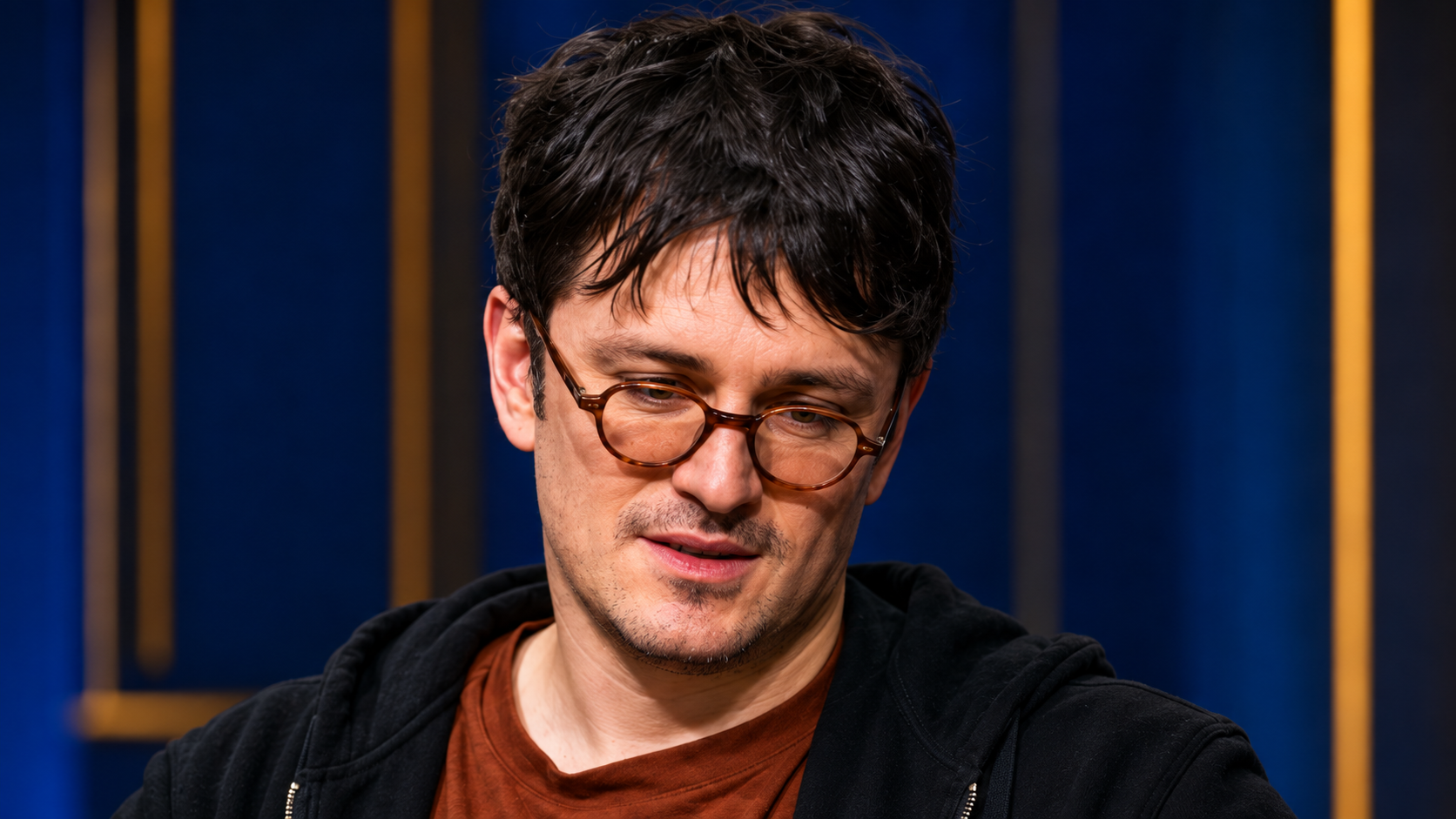
Isaac Haxton
Isaac Haxton is an American professional poker player, WSOP bracelet winner, two-time Super High Roller Bowl champion and one of the most consistent high-stakes tournament competitors in the history of the game.
Known as “Ike,” Haxton built his reputation through online cash games before becoming a permanent presence in the world’s most expensive live tournaments. His calm personality, mathematical approach and ability to adapt across No-Limit Hold’em, Pot-Limit Omaha, Short Deck and mixed formats have earned him exceptional respect from other professionals.
As of August 2026, Haxton has 65.340.450 $ in recorded live tournament earnings. His largest cash is the 3.672.000 $ he received for winning the 2018 Super High Roller Bowl V, and he currently occupies seventh place on poker’s all-time money list.
The career total becomes even more impressive when placed in context. Haxton did not win his first WSOP bracelet until 2023, approximately 16 years after his first WSOP cash. Before that breakthrough, he was regularly described as one of the greatest players never to have won one.
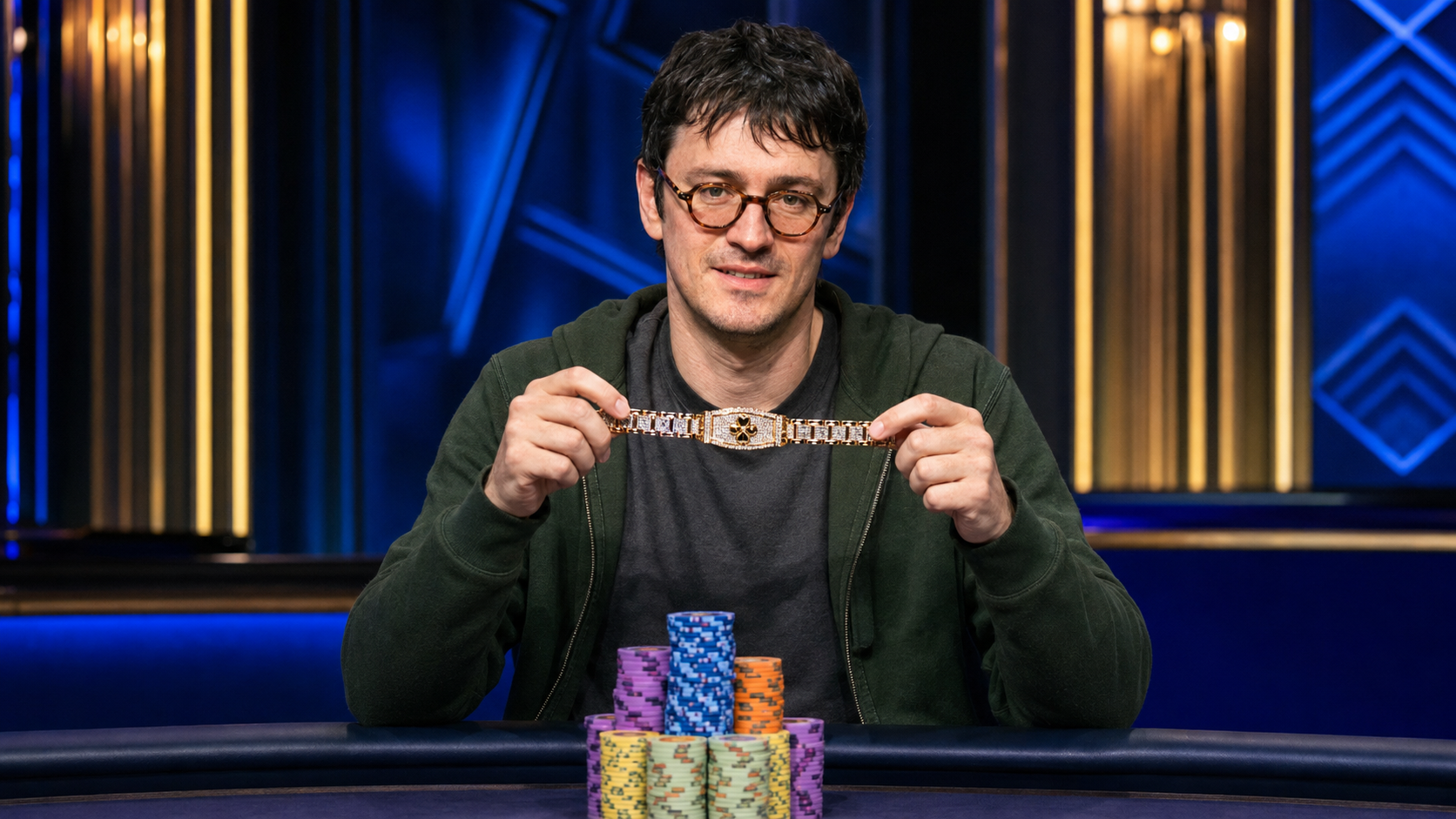
The bracelet became part of the best season of his career. Haxton collected almost 16 million $ in qualified tournament prizes during 2023, reached 27 final tables, won seven titles and finished the year as PokerGO Tour Player of the Year. He also captured his second Super High Roller Bowl championship.
Further milestones followed. In 2025, Haxton finished second in the 100.000 $ WSOP Pot-Limit Omaha High Roller for 1.972.860 $ and finally secured his first Triton Poker title by winning the 100.000 $ PLO Main Event in Jeju for 2.789.000 $.
Unlike many famous poker personalities, Haxton did not build his public identity through confrontation or theatrical table talk. His legacy is based primarily on technical excellence, volume and a willingness to compete against the strongest available opposition.
His career illustrates how far an analytical player can progress when elite decision-making is sustained for more than two decades.
Early Life in Syracuse, New York
Isaac Blum Haxton was born on September 6, 1985, in Syracuse, New York.
He grew up in an academic family. His mother worked as a psychiatrist, while his father, Brooks Haxton, was an English professor and poet. Games involving logic, planning and competition entered Isaac’s life at a remarkably early age.
His father introduced him to chess when he was approximately four years old.
Haxton showed an immediate ability to understand structured problems and think several moves ahead. Chess taught him that the visible position on the board was only the beginning. Every decision had to be evaluated according to the possible responses it created.
He developed into a strong youth player and competed seriously. The game rewarded concentration and calculation, but it also demonstrated the limits of purely mechanical thinking. Two players could understand the same fundamental principles while choosing different plans based on style, preparation and risk tolerance.
Those lessons later became relevant to poker. A strong poker player does not simply identify the best current hand. He considers future betting streets, the range of possible opposing holdings and the consequences of every available action.
Haxton’s childhood therefore provided a strategic foundation years before he played for money.
Chess and Magic: The Gathering
At approximately ten years old, Haxton became deeply interested in Magic: The Gathering.
The collectible card game combined strategic preparation with incomplete information and probability. Players constructed decks before a match, studied the competitive environment and attempted to predict which strategies their opponents would use.
Haxton competed seriously and became part of a community that produced several future poker professionals. Magic players were accustomed to travelling for tournaments, analysing individual decisions and discussing strategy with other skilled competitors.
The transition from Magic to poker became common during the early internet era. Poker offered many of the same attractions: cards, hidden information, flexible strategic choices and an opportunity to gain an advantage through study.
The financial difference was enormous.
Magic could provide prestige and limited prize money, but online poker allowed successful players to compete every day for sums that could support a professional career.
Haxton carried three important habits from chess and Magic into poker. He was comfortable studying abstract situations, he did not assume that conventional strategy was automatically correct and he enjoyed competing against people who challenged his understanding.
These qualities would help him progress rapidly after his eighteenth birthday.
Brown University and the Discovery of Poker
Haxton attended Brown University and initially studied computer science.
The subject matched his analytical interests, but poker increasingly competed for his attention. After turning 18, he began playing at Turning Stone Resort Casino in Verona, New York, where players under 21 could legally enter the poker room.
Haxton started in 3 $/6 $ Limit Hold’em games.
The stakes were far removed from the 100.000 $ tournaments that later defined his career. The games nevertheless provided a practical education. Limit Hold’em requires disciplined value betting, accurate assessment of drawing odds and the ability to make repeated marginal decisions.
Haxton gradually moved into larger games as his bankroll and confidence increased. He also began playing online after making a deposit of approximately 50 $ on UltimateBet.
Poker soon consumed more of his time than university study. He stepped away from Brown as his professional opportunities expanded, but later returned and completed a degree in philosophy.
The change of academic focus was appropriate. Philosophy demanded precise reasoning, the identification of assumptions and the ability to examine an argument from several perspectives.
Those skills were directly applicable to a game in which every bet communicates information but may also be designed to deceive.
From Turning Stone to Online Poker
Online poker accelerated Haxton’s development.
A live casino table might deal 25 or 30 hands per hour. An online player could participate at several tables simultaneously and experience thousands of decisions within a relatively short period.
Haxton became known under several screen names, including “philivey2694,” “luvtheWNBA” and variations of “Ike Haxton.”
The name philivey2694 reflected the enormous reputation Phil Ivey held among young professionals. Ivey represented complete poker ability: cash games, tournaments, live reads and multiple variants. Choosing the name did not imply that Haxton already belonged in the same category, but it revealed the standard he admired.
Haxton concentrated heavily on online cash games. Heads-up and short-handed formats gave him repeated opportunities to adjust to individual opponents. Because the same players often faced each other for long sessions, a static strategy could quickly become predictable.
He learned to widen his ranges, identify betting patterns and separate the quality of a decision from the immediate result.
The online environment also gave Haxton access to high-level discussion communities. Strong players shared hands, challenged assumptions and treated poker as a technical discipline rather than a collection of gambling instincts.
By his early twenties, Haxton had developed into one of the most respected online specialists of his generation.
The 2007 PokerStars Caribbean Adventure Breakthrough
Haxton entered the 2007 PokerStars Caribbean Adventure with little public live tournament history.
The 7.800 $ Main Event was then part of the World Poker Tour. It attracted 937 entries and created a first prize worth more than 1,5 million $.
Haxton reached the final table and eventually played heads-up against Ryan Daut. He began the duel with a major chip advantage, but Daut recovered and won the title.
Haxton finished second for 861.789 $.
The result was extraordinary for a player making his first major live impact. It transformed his public profile, supplied a bankroll capable of supporting much larger games and demonstrated that his online strategy could survive in a televised tournament.
The defeat also became an early example of a recurring theme. Haxton could reach the final stage of prestigious events without converting every opportunity into a title.
Tournament poker produces this outcome even for elite players. A heads-up lead is valuable, but short stacks and rapidly increasing blinds can allow one double-up to reverse the match.
Haxton’s performance remained a breakthrough regardless of the final result. He had entered the international poker conversation.
The 2009 WSOP 40.000 $ Anniversary Event
Two years later, Haxton produced another major runner-up finish at the World Series of Poker.
The 2009 WSOP opened with a special 40.000 $ No-Limit Hold’em event celebrating the series’ 40th anniversary. The buy-in attracted an exceptionally strong field of established champions and leading online professionals.
Haxton reached heads-up play against Russian professional Vitaly Lunkin.
Lunkin won the bracelet and 1.891.012 $, while Haxton collected 1.168.566 $ for second place.
The result was Haxton’s first seven-figure live cash. It also reinforced his reputation as a player capable of competing immediately in the most difficult tournament environments.
Finishing second again created frustration, but there was no strategic reason to treat the result as failure. Haxton had outlasted nearly the entire field in a tournament designed to gather poker’s elite.
The missing bracelet would eventually become more noticeable as his list of major final tables grew. At this stage, however, he was still only 23.
Online Cash Games and Heads-Up Excellence
Tournament databases provide the easiest way to measure Haxton’s career, but online cash games played a central role in his development and income.
He competed at high stakes against many of the strongest specialists available. Complete results are difficult to verify because databases covered different sites and did not always identify every account with certainty.
Haxton was particularly respected in heads-up No-Limit Hold’em.
Heads-up play forces both participants to enter a wide range of pots. There is no opportunity to wait for premium cards because the blinds arrive every other hand. A successful player must defend frequently, bluff in appropriate combinations and adjust as the opponent changes strategy.
Online volume allowed Haxton to develop these skills faster than a live-only player could. He could test new ideas, review large samples and face the same elite opponents across repeated sessions.
Cash games also strengthened his understanding of deep-stack play. Tournament stacks eventually become short relative to the blinds, while cash games may involve several rounds of complex betting with much more money behind.
Haxton has repeatedly been described by peers as a player with few obvious technical weaknesses. His online background is a major reason for that reputation.
Black Friday and the Changing Online Environment
The American online poker market changed dramatically on April 15, 2011.
The date known as Black Friday brought federal action against the largest poker sites serving United States players. Major platforms withdrew, balances became inaccessible and many professionals lost the ability to play their normal games from home.
Haxton adapted by spending more time outside the United States. He eventually established his residence in St. Julian’s, Malta, a location that offered access to European poker and regulated online platforms.
Relocation became common among American online professionals. Canada, Mexico and European countries allowed them to continue playing while remaining connected to the international tournament circuit.
Haxton’s career was already diversified enough to survive the disruption. He had live results, online cash-game experience and access to the emerging super high-roller market.
Black Friday nevertheless accelerated his transition toward the public live events that now dominate his recorded earnings.
The Expansion of Super High Rollers
Poker’s high-roller economy grew rapidly during the 2010s.
Traditional championship events usually charged between 5.000 $ and 10.000 $. New tournaments introduced buy-ins of 25.000 $, 50.000 $, 100.000 $ and eventually 300.000 $ or more.
The fields were smaller, but the average skill level was much higher. Wealthy recreational players supplied action, while elite professionals competed for a limited number of profitable seats.
Haxton became a natural regular.
His experience against strong online opponents reduced the strategic shock of entering a table without obvious weak players. He was comfortable with short-handed play, knew how to manage large financial swings and could evaluate decisions without being distracted by the nominal size of the buy-in.
The format also rewarded consistency. A player did not need to defeat thousands of entrants, but repeated participation created severe variance. One title could be surrounded by millions of dollars in unsuccessful entries.
Haxton’s results across more than a decade show that he was not dependent on one isolated high-roller victory.
The 2014 Aussie Millions 250.000 A$ Challenge
One of Haxton’s largest early high-roller scores came at the 2014 Aussie Millions.
He reached heads-up play in the 250.000 A$ Challenge against Phil Ivey, the player whose name had inspired one of Haxton’s best-known online aliases.
Ivey won the tournament, while Haxton received approximately 2.519.388 $ for second place.
At the time, it was the largest live cash of Haxton’s career. It also added another major runner-up finish to a résumé already containing the 2007 PCA and 2009 WSOP anniversary event.
The result illustrates why titles and earnings can tell different stories. Haxton did not receive a trophy, yet the prize exceeded the rewards for winning many major championship events.
He had now finished second to Ryan Daut, Vitaly Lunkin and Phil Ivey in three of the biggest opportunities of his early career.
Those defeats contributed to the later perception that Haxton was extraordinarily successful without possessing the traditional trophies expected from a player of his ability.
Team PokerStars Online and the VIP Dispute
Haxton became a member of Team PokerStars Online in 2012.
The sponsorship recognised his status as an elite internet professional. He represented the platform while continuing to compete in cash games and live tournaments.
The relationship ended in January 2016 after PokerStars changed its rewards programme.
The company reduced benefits associated with Supernova and Supernova Elite status, including rewards that high-volume players believed they had already been encouraged to earn. Haxton publicly argued that changing the terms after players had invested time and money was unethical.
He resigned from the sponsored team in protest.
The decision carried financial significance because Haxton was walking away from a commercial agreement rather than criticising the company as an outside observer. It reinforced his reputation as a player willing to take a public position when he believed an operator had treated customers unfairly.
The dispute was not about tournament cheating or Haxton’s conduct at the table. It concerned the relationship between a poker platform and its most active customers.
Haxton later joined partypoker as an ambassador in 2018. That partnership lasted four years and ended at the close of 2021.
Short Deck and Strategic Adaptation
Haxton was among the established Western professionals who adopted Short Deck Hold’em as the format gained international attention.
Short Deck removes the cards from deuce through five, leaving a 36-card pack. The smaller deck changes hand frequencies and makes equities run closer together. Tournament rules may also rank a flush above a full house because flushes become less common.
The format rewards players who can rebuild their intuition rather than applying standard Hold’em rules automatically.
In 2018, Haxton won a 10.000 $ Short Deck event at the Poker Masters for 176.000 $.
The prize was modest beside his later multi-million-dollar results, but the victory demonstrated flexibility. Haxton was willing to study a developing game before many tournament professionals had accumulated meaningful experience in it.
That quality later became even more important in Pot-Limit Omaha, where some of the largest tournaments of his 2025 and 2026 seasons were played.
Winning the 2018 Super High Roller Bowl V
Haxton achieved the largest cash of his career in December 2018.
Super High Roller Bowl V carried a buy-in of 300.000 $ and attracted 36 entries to the PokerGO Studio in Las Vegas. The field included many of the most successful high-stakes professionals in the world.
Haxton reached heads-up play against Alex Foxen and won the title.
The victory paid 3.672.000 $.
It represented more than a new personal record. The Super High Roller Bowl had become one of poker’s most prestigious modern trophies because of its buy-in, field strength and televised final table.
Haxton had spent years accumulating major cashes without always finishing first. This time, he converted the opportunity and defeated a player who was himself entering the elite level of the game.
The win increased Haxton’s live earnings beyond 23 million $ and moved him closer to the top ten of the all-time money list.
It also created a title he would repeat five years later.
The Best Player Without a WSOP Bracelet
By the beginning of 2023, Haxton had become a standard answer to the question of who was the best active player without a WSOP bracelet.
The description was both a compliment and a reminder of what was missing.
Haxton had earned tens of millions of dollars, won the Super High Roller Bowl and reached numerous WSOP final tables. He had finished second in the 40.000 $ anniversary event and produced deep runs across several formats.
Tournament variance explained much of the absence. A bracelet is awarded only to the winner, and even a player with a major edge may need hundreds of events before the final result arrives.
The label nevertheless followed Haxton because bracelets remain poker’s most recognisable championship measure. Other elite professionals with smaller earnings could point to multiple WSOP titles, while one of the game’s most technically respected players still had none.
Haxton finally removed himself from the list during the greatest season of his career.
The Record-Breaking 2023 Season
Haxton began 2023 with one of the strongest high-roller runs ever recorded.
He finished the year with seven tournament titles, 27 qualified final tables and approximately 15.946.000 $ in Card Player Player of the Year earnings. Broader live calculations placed his annual total close to 16,9 million $.
The difference comes from the events and payout categories included by individual tracking systems. Both figures describe the same reality: Haxton earned more from live tournaments during 2023 than any other player.
The season included seven separate seven-figure cashes.
He won the 50.000 $ PokerGO Cup finale, two 100.000 $ tournaments at the PokerStars Caribbean Adventure, a 25.000 $ U.S. Poker Open event, a 25.000€ tournament in Monte Carlo, his first WSOP bracelet and the 300.000 $ Super High Roller Bowl VIII.
Haxton’s results were not concentrated in one lucky week or one type of field. He won in Las Vegas, the Bahamas and Europe across a schedule lasting most of the year.
The run transformed his historical position. He began 2023 with approximately 31,8 million $ in live cashes and ended it close to 49 million $.
Three Titles in the Opening Weeks of 2023
Haxton’s season began at the PokerGO Cup in Las Vegas.
He won the 50.000 $ series finale, defeating a field of 26 entries and Cary Katz heads-up to collect 598.000 $.
Only days later, he travelled to the Bahamas for the PokerStars Caribbean Adventure.
Haxton won a 100.000 $ Super High Roller with 49 entries for 1.082.230 $. The final three players made an agreement that distributed prize money according to their stack values, after which Haxton won the trophy.
He then captured another 100.000 $ seven-handed event at the same festival. The tournament attracted 46 entries, and Haxton defeated Fedor Holz heads-up to win 1.555.360 $.
Within approximately two weeks, Haxton had won three high rollers and collected more than 3,2 million $.
The start would have represented a complete career peak for many professionals. For Haxton, it was the opening stage of a season that continued to accelerate.
U.S. Poker Open and Monte Carlo Victories
Haxton won his fourth title of 2023 at the U.S. Poker Open.
The 25.000 $ No-Limit Hold’em event attracted 54 entries. Haxton won 432.000 $ and continued building his lead among the year’s most successful tournament players.
In May, he added a fifth victory in a 25.000€ event at the European Poker Tour festival in Monte Carlo.
The repeated wins were important because high rollers contain limited separation in raw ability. Haxton was not facing hundreds of inexperienced opponents. Most entrants understood contemporary tournament strategy and had access to advanced study tools.
His edge came from small differences repeated across many decisions: range construction, bet sizing, physical endurance, emotional stability and familiarity with individual opponents.
The first five titles positioned Haxton for a major summer at the WSOP.
First WSOP Bracelet in 2023
Haxton won his first WSOP bracelet in Event #16 of the 2023 series, the 25.000 $ No-Limit Hold’em High Roller.
The tournament attracted 301 entries and generated one of the largest fields ever assembled for that buy-in level.
Haxton reached heads-up play against British professional Ryan O’Donnell and completed the victory. First place paid 1.698.215 $.
The title arrived approximately 16 years after Haxton’s first WSOP cash.
His reaction reflected relief as much as celebration. The bracelet did not suddenly prove that he was an elite player; his earlier results had already established that. It removed an obvious gap from one of poker’s strongest résumés.
The win also required Haxton to survive a field much larger than those found in most super high rollers. He could not rely only on detailed knowledge of a few regular opponents. He had to adjust repeatedly as tables changed and new players entered the action.
The 1.698.215 $ prize became the sixth title of his remarkable year.
Second Super High Roller Bowl Championship
Haxton returned to the Super High Roller Bowl in September 2023.
The eighth Las Vegas edition again carried a 300.000 $ buy-in. Haxton reached a final four that included Andrew Lichtenberger, Stephen Chidwick and Jason Koon.
He defeated Lichtenberger heads-up and won 2.760.000 $.
The victory made Haxton a two-time Super High Roller Bowl champion, joining a very small group of repeat winners. It also supplied his seventh title of 2023.
Winning the same elite event five years apart demonstrated more than short-term form. High-roller strategy had changed significantly between 2018 and 2023 as solver-based study became more sophisticated and the player pool improved.
Haxton remained capable of winning despite that evolution.
He nearly added a third title in the newly introduced 100.000 $ Super High Roller Bowl Pot-Limit Omaha event, finishing second for 836.000 $.
PokerGO Tour Player of the Year
Haxton finished the 2023 PokerGO Tour season in first place.
He accumulated 2.847 PGT points through four qualifying victories, 14 cashes and more than 7,2 million $ in tour earnings.
The relevant titles included the PokerGO Cup finale, the U.S. Poker Open victory, the WSOP bracelet event and Super High Roller Bowl VIII.
The award recognised sustained results across the complete season rather than one enormous cash.
Haxton also finished second in the Card Player Player of the Year race behind Bin Weng. Different rankings use different formulas, and Weng’s success in larger fields generated more points under that system.
The contrast shows why no single leaderboard can define the best player. Haxton led the high-stakes-focused PGT standings and earned the most live prize money, while another competitor topped a broader field-weighted ranking.
There was no doubt that 2023 belonged among the greatest seasons achieved by any high-roller professional.
Maintaining Momentum in 2024
Haxton could not realistically repeat a 16 million $ season every year.
He nevertheless remained active and successful in 2024. He won the Asian Poker Tour Taipei Super High Roller for approximately 287.690 $, finished second in a Triton Montenegro bounty event for 716.000 $ and reached eighth place in the 100.000 $ WSOP High Roller for 315.805 $.
In September, he won a 15.100 $ Poker Masters event for 352.800 $ after defeating a field of 84 entries.
He added another PokerGO Tour victory in October through a 15.100 $ Pot-Limit Omaha Progressive Bounty event. Haxton received 169.740 $ from the regular prize pool and a reported 214.000 $ in bounties.
Bounty accounting can create differences between database totals because some rankings record only the standard payout while others include the complete amount collected.
The year was quieter only when compared with his historic 2023. Haxton still won titles in Asia and Las Vegas, reached major final tables and expanded his experience in Pot-Limit Omaha.
That PLO development became central to his next two career milestones.
The 2025 WSOP PLO Runner-Up Finish
The 2025 WSOP introduced a 100.000 $ Pot-Limit Omaha High Roller.
The event attracted 121 entries and created the largest top prizes ever offered in a WSOP PLO tournament.
Haxton reached heads-up play against Shaun Deeb. He began the final confrontation with another opportunity to win his second bracelet, but Deeb completed the victory.
Haxton finished second for 1.972.860 $.
It was one of the largest cashes of his career and another demonstration of his growing PLO ability. Financially, second place was more valuable than most bracelet victories. Historically, however, the result extended his bracelet total at one.
Haxton also finished fourth in the 100.000 $ No-Limit Hold’em High Roller for 857.253 $ and reached 99th place in the WSOP Main Event for 70.000 $.
The summer showed that he remained competitive across both major big-bet formats.
Breaking the Triton Curse in 2025
Haxton had accumulated one of the strongest Triton records without a title.
Before his breakthrough, he had recorded 64 cashes, 34 final tables and six runner-up finishes on the tour. His Triton earnings were already approaching 20 million $, but a trophy continued to escape him.
The drought ended at Triton Jeju II in September 2025.
Haxton entered the 100.000 $ Pot-Limit Omaha Main Event, which attracted a record field of 116 entries. He reached heads-up play against Nacho Barbero and won the title.
First place paid 2.789.000 $.
The result became the second-largest cash of Haxton’s career, behind only his 2018 Super High Roller Bowl victory. It also arrived during the month in which he turned 40.
The format made the breakthrough more meaningful. Haxton had built his original reputation in Hold’em, but his first Triton trophy came in a four-card game against an elite international field.
After years of near misses, one of modern poker’s most complete résumés finally included a Triton title.
Isaac Haxton’s 2026 Results
Haxton remained active on the high-roller circuit during 2026.
In April, he finished third in the 75.000 $ Pot-Limit Omaha six-max event at Triton Jeju for 600.000 $.
At the European Poker Tour festival in Monte Carlo, he placed fourth in a 25.000€ No-Limit Hold’em event for approximately 191.529 $ and sixth in the 50.000€ event for approximately 162.864 $.
Haxton then travelled to Triton Montenegro. He finished ninth in the 200.000 $ Invitational for 635.000 $, 16th in a 100.000 $ tournament for 214.000 $ and seventh in a 30.000 $ mixed No-Limit Hold’em and Pot-Limit Omaha event for 78.000 $.
These results helped move his recorded live total beyond 65 million $.
As of August 2026, Haxton holds 23rd place in the Global Poker Index. Unlike the all-time money list, the GPI measures recent tournament performance and gradually reduces the value of older results.
His position confirms that he remains an active contemporary competitor rather than a historical name relying only on past cashes.
Isaac Haxton’s WSOP Bracelet Record
Haxton has won one World Series of Poker bracelet.
|
Year |
Event |
Entries |
Prize |
|
2023 |
25.000 $ No-Limit Hold’em High Roller Eight-Handed |
301 |
1.698.215 $ |
The single bracelet does not fully represent his WSOP performance.
Haxton finished second in the 2009 40.000 $ anniversary event for 1.168.566 $ and the 2025 100.000 $ PLO High Roller for 1.972.860 $. He has also reached final tables in additional championship events and accumulated more than 12 million $ in official WSOP-related earnings when the expanded modern series are included.
His bracelet count is lower than those of several players with much smaller career earnings. That difference reflects the tournament schedule Haxton chose, the small number of titles awarded in the high-buy-in events he favoured and the unavoidable variance of finishing first rather than second.
The 2023 win remains historically important because it ended one of poker’s longest-running “best without a bracelet” discussions.
Isaac Haxton’s Biggest Live Tournament Results
Haxton’s largest prizes span more than a decade and several poker formats.
|
Year |
Tournament |
Result |
Prize |
|
2018 |
300.000 $ Super High Roller Bowl V |
1st |
3.672.000 $ |
|
2025 |
Triton Jeju 100.000 $ PLO Main Event |
1st |
2.789.000 $ |
|
2023 |
300.000 $ Super High Roller Bowl VIII |
1st |
2.760.000 $ |
|
2014 |
Aussie Millions 250.000 A$ Challenge |
2nd |
2.519.388 $ |
|
2025 |
WSOP 100.000 $ PLO High Roller |
2nd |
1.972.860 $ |
|
2023 |
WSOP 25.000 $ NLH High Roller |
1st |
1.698.215 $ |
|
2023 |
PCA 100.000 $ Seven-Handed High Roller |
1st |
1.555.360 $ |
|
2009 |
WSOP 40.000 $ Anniversary Event |
2nd |
1.168.566 $ |
|
2007 |
PokerStars Caribbean Adventure Main Event |
2nd |
861.789 $ |
The table represents gross prizes, not profit.
Haxton’s online results are also excluded from the Hendon Mob live total. Some broader databases count confirmed real-name online events and therefore place his combined recorded earnings closer to 67,8 million $.
For consistency with the official live money list, the headline figure in this profile remains 65.340.450 $.
Seventh on Poker’s All-Time Money List
Haxton currently occupies seventh place on the global live tournament money list.
|
Rank |
Player |
Live tournament earnings |
|
1st |
Bryn Kenney |
90.761.210 $ |
|
2nd |
Stephen Chidwick |
79.029.052 $ |
|
3rd |
Jason Koon |
77.032.156 $ |
|
4th |
Mikita Bodyakovsky |
68.780.522 $ |
|
5th |
Adrian Mateos |
67.813.885 $ |
|
6th |
Justin Bonomo |
65.611.094 $ |
|
7th |
Isaac Haxton |
65.340.450 $ |
Haxton ranks fourth among United States players and second on the New York all-time list. His best global position is sixth.
The gap between Haxton and Bonomo is only 270.644 $, an amount that can be overcome with one high-roller final table. His rank may therefore change quickly even when the players above him remain active.
The list should not be treated as a pure ranking of skill. Modern super high rollers generate prizes unavailable to earlier generations, and the totals do not subtract buy-ins. Haxton’s position is still meaningful because it reflects repeated results over approximately two decades rather than one exceptional cash.
Playing Style and Technical Reputation
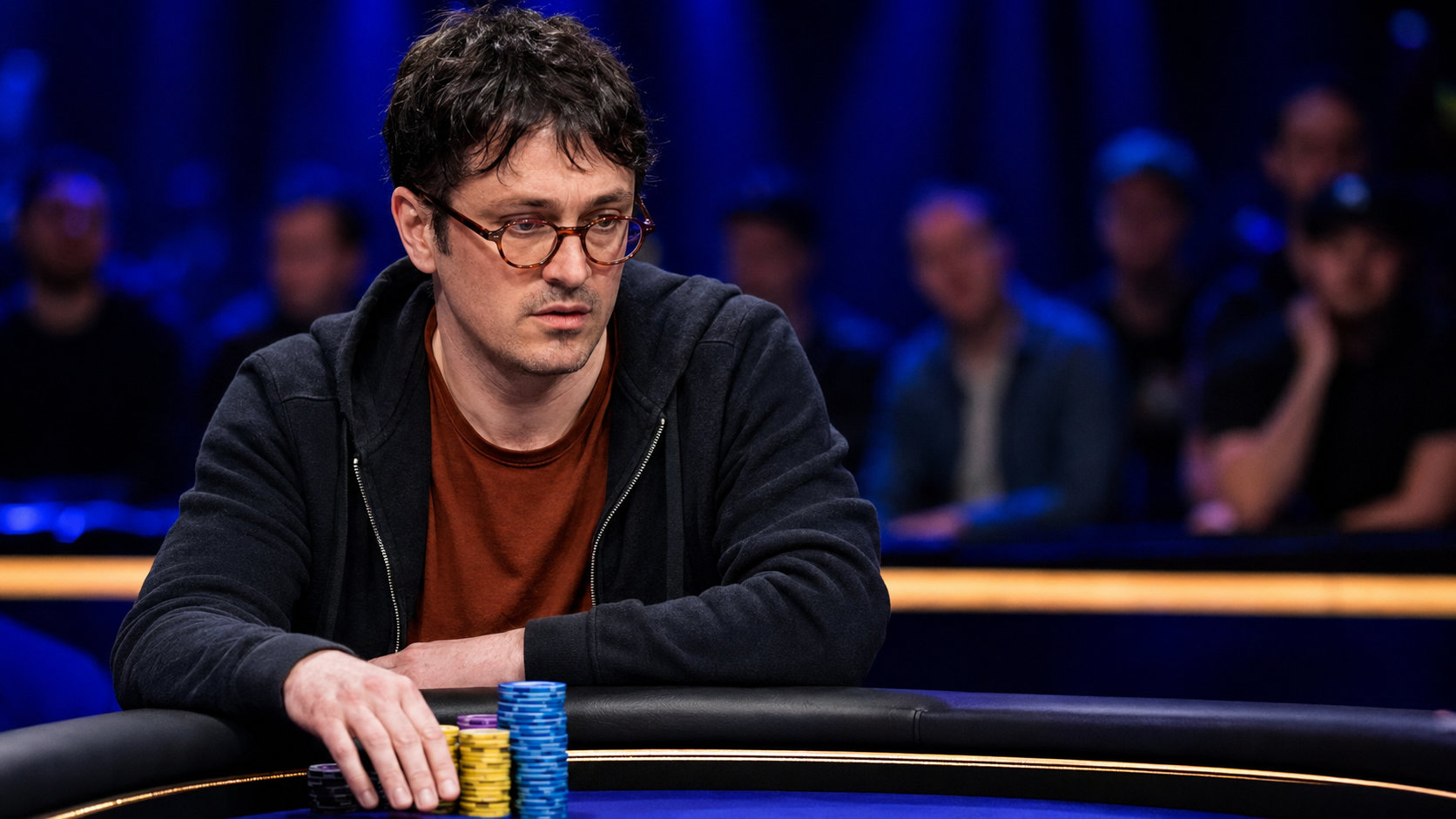
Haxton is known for a deeply analytical and balanced approach.
He entered poker before solver software became a standard training tool, but his method already focused on ranges rather than individual hands. Instead of asking only what cards an opponent held, he considered every reasonable combination produced by the previous action.
This approach supports both aggressive betting and disciplined folding. A player who understands range interaction can identify boards on which a large bet represents a credible advantage, even without a strong current hand.
Haxton is also comfortable changing bet sizes. Small bets can pressure a weak range while preserving flexibility, and overbets can force an opponent to defend for a large part of the stack.
His table manner is controlled. Haxton rarely uses emotional confrontation to influence opponents and generally avoids theatrical celebrations. That consistency makes physical reads difficult because strong hands and bluffs are presented through similar behaviour.
Other professionals frequently identify Haxton as one of the toughest players in a high-roller field. That respect is based not only on results but on the absence of obvious strategic weaknesses.
Why Haxton Succeeds Across Formats
Haxton’s career began in Limit Hold’em and moved through online heads-up cash games, No-Limit Hold’em tournaments, Short Deck and Pot-Limit Omaha.
Each format requires a different technical emphasis.
Limit Hold’em rewards thin value and repeated small edges. Heads-up No-Limit demands wide ranges and rapid adjustment. Short Deck changes basic hand probabilities, while PLO creates close equities and complicated draws because each player receives four private cards.
Haxton’s greatest strength may be his ability to rebuild a strategy from first principles.
Rather than relying only on memorised charts, he examines how the rules create incentives. He considers position, stack depth, nut potential and the number of strong combinations available to both players.
The 2025 PLO results provide the clearest evidence. Haxton finished second in the largest WSOP PLO High Roller of the year and then won the Triton PLO Main Event for his first title on the tour.
His ability to add a new major format at age 39 and 40 demonstrates continued technical development.
Volume, Stamina and High-Roller Variance
Haxton’s consistency depends partly on volume.
He enters many high-stakes events across the United States, Europe and Asia. More entries create more opportunities to win, but they also require enormous financial and physical endurance.
A player can spend several hundred thousand dollars during one festival without recording a cash. Even a successful season may include long sequences of first-day eliminations that do not appear in public result tables.
Travel adds another challenge. Haxton frequently moves between Las Vegas, Monte Carlo, Montenegro, South Korea and the Bahamas. Time-zone changes and consecutive tournament days can affect concentration.
His 2023 season was exceptional because he maintained decision quality across 27 final tables. The achievement was not simply winning seven trophies. It was repeatedly surviving long enough to reach the most demanding stages of elite events.
Variance ensures that no player can control short-term results. Haxton’s historical record matters because it covers enough years and events for skill to become visible through the noise.
The Face Mask Debate
Haxton became visually associated with wearing a face mask at the poker table during and after the COVID-19 pandemic.
He explained the choice as a health precaution during long tournament series involving crowded rooms, shared cards and extensive travel.
The mask attracted criticism from Phil Hellmuth and some other observers. Hellmuth argued that covering part of the face could provide a competitive advantage by hiding physical information and that it reduced the entertainment value of televised poker.
Haxton rejected the criticism and continued wearing it.
The debate involved two separate questions. A tournament operator may decide whether face coverings are permitted under its rules. If the rules allow them, a player is entitled to use one. Viewers and competitors can still discuss whether the choice affects live tells or broadcast presentation.
There is no evidence that Haxton broke a poker rule by wearing a mask. Describing it as cheating would therefore be inaccurate.
The discussion revealed a contrast between two poker traditions. Hellmuth emphasised personality, visible reactions and entertainment. Haxton prioritised personal health and technical competition.
The Six-Minute Main Event Decision
Haxton faced another public debate during the 2025 WSOP Main Event.
He spent more than six minutes considering a preflop decision while leaving only one small chip behind. Players at nearby tables reportedly questioned why the clock had not been called sooner, and Daniel Negreanu criticised the delay.
The hand became part of a broader discussion about excessive tanking in modern tournament poker.
Players have a legitimate right to think during difficult decisions, particularly when elimination from the Main Event is possible. Excessive delays can nevertheless reduce the number of hands played by everyone at the table and create an advantage for a player attempting to reach a break or payout level.
Tournament rules allow opponents to request a clock after what officials consider a reasonable period. The controversy therefore concerned pace and etiquette rather than a finding that Haxton had violated a rule.
Haxton eventually survived deep enough to finish 99th for 70.000 $.
The episode is a minor part of his career, but it demonstrates how closely elite players’ decisions are examined during poker’s largest event.
Isaac Haxton’s Net Worth
Isaac Haxton’s exact net worth is not publicly verified.
His 65.340.450 $ in live tournament cashes cannot be used as a direct estimate of personal wealth. The figure records gross prizes and ignores the cost required to generate them.
Haxton regularly enters tournaments costing 25.000 $, 50.000 $, 100.000 $, 200.000 $ or 300.000 $. Unsuccessful entries and re-entries disappear from headline statistics even though they reduce profit.
High-stakes professionals also manage risk through backing, action sales and swaps. Haxton may own only part of his entry in a particular event, while investors or other players receive agreed shares of the prize. The exact arrangements are private.
Taxes, international travel, accommodation and professional expenses create further deductions.
Online cash games and confirmed online tournaments add value not included in the live total. Private investments and losses are also unknown.
Estimates placing Haxton’s net worth at a specific number should therefore be treated as speculation. Public information supports the conclusion that he has built an exceptionally successful career, but not a precise personal balance sheet.
Family, Marriage and Fading Hearts on the River
Haxton is married to his wife, Zoe, and has generally kept his private life separate from his public poker career.
His family’s perspective became unusually accessible through a book written by his father.
Brooks Haxton published Fading Hearts on the River: My Son’s Life in Poker in 2014. The book examined Isaac’s development as a player and the difficulty a parent can experience while watching a child pursue a profession defined by financial variance.
The title refers to the emotional uncertainty created by community cards that can change the result of a hand. It also captures the tension between understanding poker as a skill game and recognising that even correct decisions can lead to enormous short-term losses.
Brooks approached the subject as a poet, professor and father rather than a strategy coach. The result provided a perspective rarely found in poker biographies.
Haxton’s career had already produced several million-dollar results by the time of publication, but the family could not know that his largest achievements were still ahead.
Poker Hall of Fame Candidacy
Haxton became eligible for the Poker Hall of Fame after turning 40 in September 2025.
His competitive case is extremely strong.
He has more than 65 million $ in live cashes, one WSOP bracelet, two Super High Roller Bowl titles, a Triton Main Event title and a PokerGO Tour Player of the Year award. He has also remained elite across online cash games and several live tournament formats.
The main statistical weakness is his bracelet total. Haxton has not won a WPT Main Tour title or an EPT Main Event either, although his runner-up finish at the 2007 PCA came when the tournament carried WPT status.
Hall of Fame voters must decide how to compare traditional championship trophies with sustained performance in modern super high rollers. Haxton’s peer reputation and the quality of his opponents strengthen his case beyond the raw title count.
As of August 2026, he has not been inducted.
His candidacy is likely to remain prominent because he already satisfies the longevity requirement and continues adding current high-level results.
Isaac Haxton’s Place Among the Greatest Players
Haxton is one of the clearest examples of greatness built through consistency rather than celebrity.
He has never needed a dramatic nickname, confrontational image or collection of televised outbursts. His reputation developed inside the games themselves.
The 2007 PCA announced his arrival. The 2009 WSOP anniversary event proved that the breakthrough was not isolated. The 2018 Super High Roller Bowl supplied his largest prize, and the 2023 season showed that he could dominate after more than 15 years of professional competition.
His later PLO results added another layer. Winning a first Triton title in a different format at age 40 suggested that Haxton was still expanding rather than protecting an old résumé.
The all-time money list favours the modern high-roller era, and gross earnings cannot determine the greatest player by themselves. Haxton’s seventh-place position nevertheless carries weight because it is supported by two decades of results against increasingly sophisticated opposition.
Very few players have remained near the top from the pre-solver online era through the current international high-roller circuit.
Haxton is one of them.
The Poker Legacy of Isaac Haxton
Isaac Haxton’s career began with chess positions and Magic decks before moving into small Limit Hold’em games at Turning Stone.
He deposited approximately 50 $ online, became a feared heads-up cash-game specialist and then announced himself to live poker by finishing second at the 2007 PokerStars Caribbean Adventure.
The runner-up result became the first of several major near misses. Haxton finished second in the 2009 WSOP 40.000 $ anniversary event and the 2014 Aussie Millions 250.000 A$ Challenge. Years later, the game still described him as the greatest active player without a bracelet.
He never allowed the missing trophy to define the quality of his decisions.
Haxton won the 2018 Super High Roller Bowl for 3.672.000 $, adapted to Short Deck and PLO and entered 2023 as an established elite professional. He then produced the defining year of his career.
Seven titles, 27 final tables, approximately 16 million $ in prizes, a first bracelet, a second Super High Roller Bowl and the PokerGO Tour Player of the Year award transformed an already exceptional résumé.
In 2025, he came within one heads-up match of a second bracelet and then ended a long Triton drought by winning the 100.000 $ PLO Main Event for 2.789.000 $.
As of August 2026, Haxton has 65.340.450 $ in recorded live cashes, ranks seventh globally and remains inside the current GPI top 25.
His career earnings do not reveal his net worth, and his single bracelet does not reveal the complete scale of his WSOP ability.
The strongest measure of Haxton’s legacy is the respect he receives from players required to face him.
Across online cash games, televised high rollers and four-card tournaments, Isaac Haxton has spent more than two decades becoming the opponent nobody wants to see at the table.
Career statistics updated in August 2026. Recorded tournament earnings represent gross live cashes and exclude buy-ins, taxes, expenses, private games and most online results.