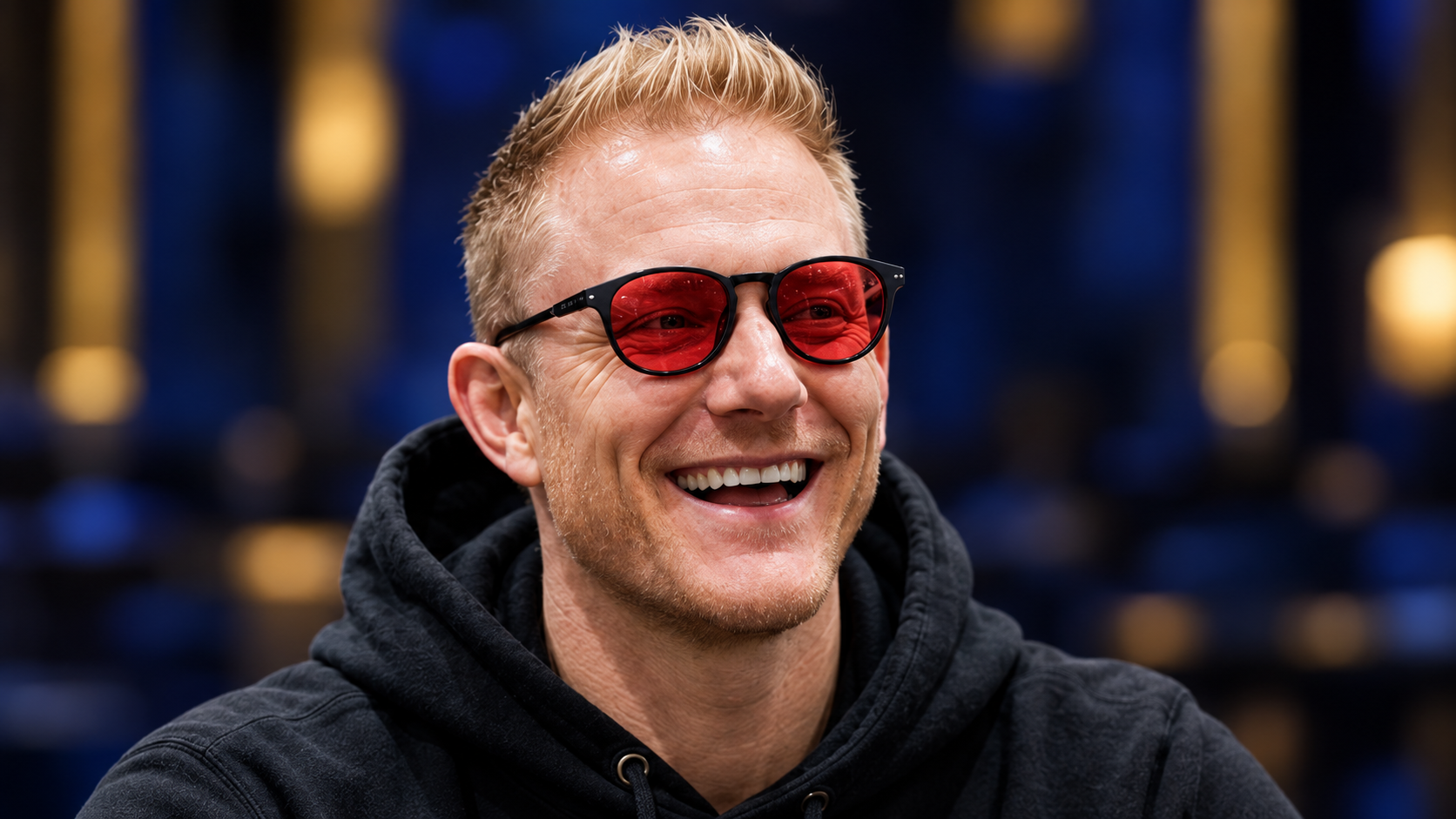
Jason Koon
Jason Koon is an American professional poker player, two-time World Series of Poker bracelet winner and the most successful title winner in Triton Poker history.
By August 2026, Koon had accumulated 77.032.156 $ in recorded live tournament cashes. He ranked third on poker’s all-time money list, behind only Bryn Kenney and Stephen Chidwick, and second among American players.
Those figures describe the scale of his career, but not its full significance.
Koon began as an online grinder using the screen names “JAKoon1985” and “NovaSky.” He developed during the period when ambitious players could play thousands of internet tournaments, share strategy with other young professionals and test new ideas far faster than the previous generation.
He then became one of the defining competitors of the super-high-roller era.
Koon has won 12 Triton Poker titles, twice as many as any player had collected when he entered the Poker Hall of Fame. His victories include six in No-Limit Hold’em, four in Short Deck and two in Pot-Limit Omaha. He was also the first player to win Triton Main Events in two different formats.
His first WSOP bracelet came in the prestigious 25.000 $ Heads-Up No-Limit Hold’em Championship in 2021. Four years later, he won a 50.000 $ No-Limit Hold’em High Roller for 1.968.927 $, moving into the top three of the all-time money list.
In August 2026, Koon received poker’s highest institutional honour. He was selected as the sole new member of the Poker Hall of Fame in his first year of eligibility.
The achievement completed a remarkable journey from a difficult childhood in rural West Virginia to the most exclusive tournaments and cash games in the world.
Early Life in West Virginia
Jason Koon was born on August 14, 1985, in Weston, West Virginia.
Weston is a small rural community far removed from Las Vegas, Monte Carlo and the other locations that would later define Koon’s professional life. He grew up with limited financial resources and has spoken openly about feeling like the poor child even among people from one of the least affluent regions of the United States.
His childhood also included serious family instability.
In a 2025 public interview, Koon explained that his father went to prison when Jason was eight and that he never saw him again. He became the first person in his family to attend college and had to develop the academic and strategic habits that were not available to him at home. PokerNews interview
Sport provided an early route toward a different future.
Koon became a talented track-and-field athlete and attended West Virginia Wesleyan College. He studied business administration and finance while competing as a sprinter.
The discipline of athletics would remain visible throughout his poker career. Koon approached training, nutrition, recovery and technical study as connected parts of professional performance.
Poker, however, entered his life because his athletic plans were interrupted.
The Injury That Introduced Him to Poker
Koon suffered a significant hip injury while competing in college.
Unable to train normally during his recovery, he began playing poker with friends. What started as a way to occupy time soon became a serious intellectual interest.
The game offered several qualities that appealed to an athlete.
Poker was competitive, measurable and demanding. Improvement could be pursued through repetition, study and honest assessment of mistakes. Results were affected by chance in the short term, but sustained success required discipline across a large sample.
Koon began playing online in approximately 2006.
He was not immediately a high-stakes star. Like most successful online professionals of the era, he worked upward through smaller games, built experience and formed relationships with other players who were analysing poker more systematically.
The injury ended one competitive path but created another.
“JAKoon1985” and “NovaSky”
Koon became known as “JAKoon1985” on PokerStars and “NovaSky” on Full Tilt Poker.
Online poker allowed him to compress years of conventional live experience into a much shorter period. He could play several tables, review hand histories and encounter the same strategic situations repeatedly.
The environment also connected him with a generation that was changing poker theory.
Players increasingly discussed ranges rather than individual hands. They used tracking software to identify tendencies, compared database samples and experimented with bet sizes that were uncommon in traditional live games.
Koon’s athletic mindset suited the process.
He did not treat early success as proof that he had solved the game. He looked for stronger players, studied their methods and attempted to understand where his own decisions could improve.
The first major evidence of his online ability arrived in 2009.
SCOOP and FTOPS Breakthroughs
In May 2009, Koon won a 2.100 $ No-Limit Hold’em event during the PokerStars Spring Championship of Online Poker.
The victory was worth more than 300.000 $ and established JAKoon1985 as a serious online tournament player.
He also recorded his first two WSOP cashes that year, beginning the gradual transfer from internet poker to the live circuit.
Another major online result followed in February 2011.
Koon reached a three-way deal in a Full Tilt Online Poker Series tournament that attracted 11.343 entries. He received 458.550 $, the largest share of the prize pool.
These results mattered for more than the money.
They provided the bankroll and confidence required to travel, enter larger live tournaments and continue treating poker as a profession rather than a temporary opportunity.
Koon eventually recorded hundreds of online cashes. Those results are kept separately from his 77 million $ live total and are another reason that public live databases do not capture the complete financial history of his career.
Moving Into Live Tournament Poker
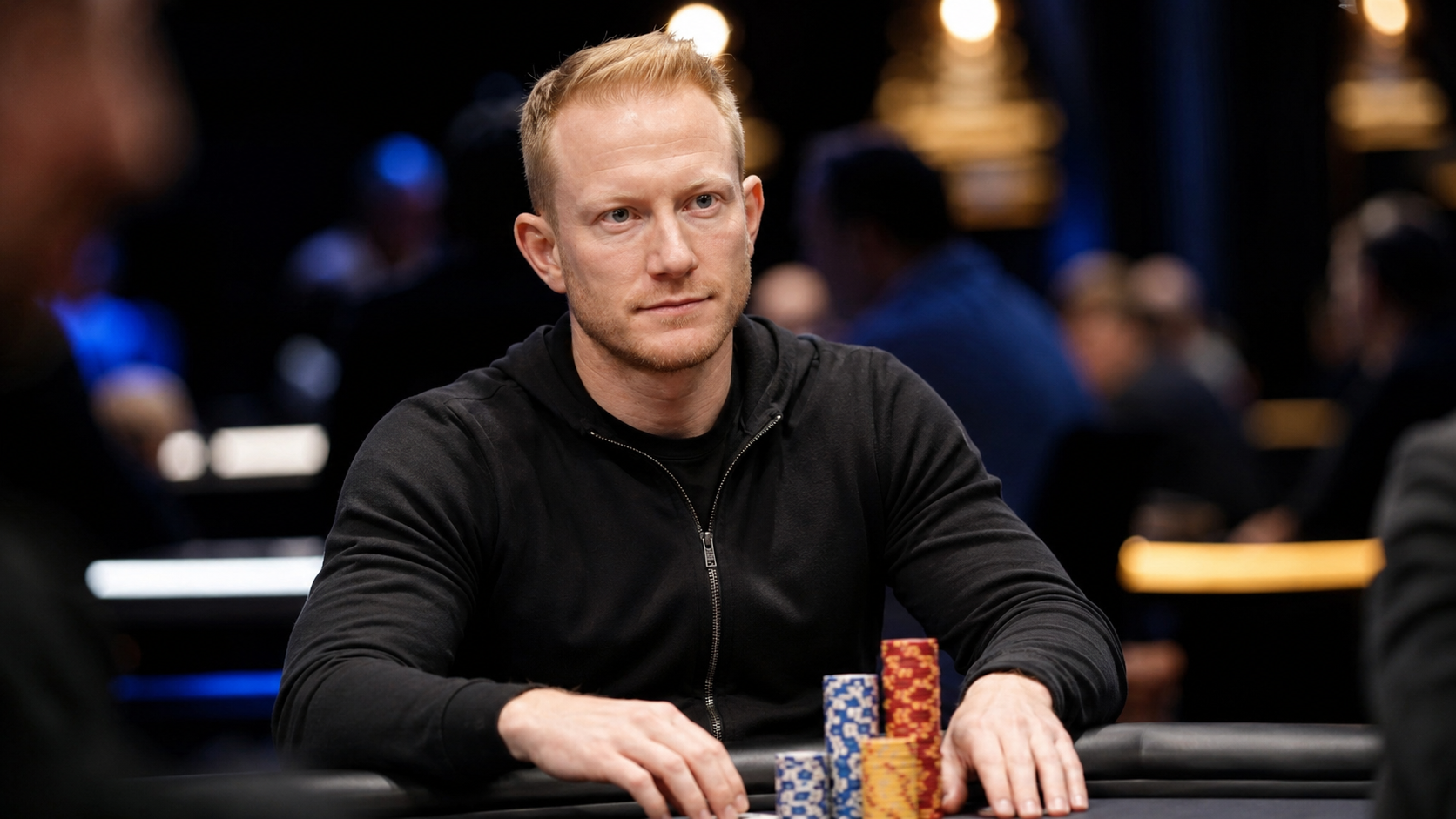
Koon’s first recorded live cash came in 2008, but his profile began rising more clearly in 2010.
He finished fourth in the WPT Festa al Lago Championship at Bellagio for 225.680 $. The result placed him at a televised final table and demonstrated that his online skills could survive in a slower environment filled with experienced live professionals.
The transition required adjustment.
Online players could rely on large samples and rapid decisions. Live poker offered fewer hands and introduced physical behaviour, table conversation, fatigue and travel. A professional had to maintain concentration for long days while extracting information that never appeared in a hand-history file.
Koon developed into a strong live player without abandoning the analytical foundation of his online career.
After Black Friday disrupted the American internet market in 2011, live tournaments became even more important. Koon expanded his schedule and competed across North America, Europe and the Caribbean.
He also surrounded himself with players whose technical standards forced him to improve.
Learning From Ben Tollerene
One of the most important relationships in Koon’s development was with Ben “Ben86” Tollerene.
Tollerene was already regarded as one of the strongest online cash-game players in the world. Koon later lived with him in Vancouver and observed how seriously he approached study.
The experience changed Koon’s assessment of his own ability.
He had already produced strong tournament results, but he recognised that winning tournaments did not automatically mean his underlying strategy was elite. Variance could make a player appear stronger or weaker than the quality of his decisions.
Koon began working more systematically with software, range analysis and simplified theoretical models. He studied how different bet sizes required appropriate combinations of value hands and bluffs. Card Player interview
Tollerene became both a mentor and a close friend.
More than a decade later, the two would play heads-up for one of the largest titles of Koon’s career. Their 2025 Triton confrontation gave the relationship an unusually emotional conclusion at the table.
Early WSOP Near Misses
Koon came close to winning a bracelet long before his first victory.
At the 2012 WSOP, he reached the final of the 3.000 $ Heads-Up No-Limit Hold’em/Pot-Limit Omaha event. He finished second to Leif Force for 128.660 $.
The result highlighted two qualities that would remain central to his career.
Koon was comfortable in heads-up poker, where every weakness is exposed and players must contest far more pots. He was also willing to compete across formats rather than limiting himself to standard No-Limit Hold’em.
More final tables followed, but the bracelet remained absent for almost another decade.
That gap was not evidence of failure. Tournament trophies are distributed through small samples, and even elite players can wait years for the right combination of performance and favourable variance.
Koon continued building a résumé that was already becoming too large to judge by a single piece of jewellery.
First Major High-Roller Victory
In 2015, Koon won the 50.000 $ No-Limit Hold’em Turbo High Roller at the L.A. Poker Classic for 436.344 $.
The victory marked an important transition.
He had won online titles and reached major live final tables, but defeating a 50.000 $ field placed him directly inside the developing high-roller circuit.
These tournaments offered a different professional environment.
Fields were smaller than conventional championships, but average ability was much higher. Many participants were among the strongest tournament players in the world, while the enormous buy-ins created significant financial pressure even for successful professionals.
High rollers also required constant adaptation. The same opponents met repeatedly, studied one another and quickly identified strategic habits.
Koon proved unusually suited to that ecosystem.
The Breakthrough Years of 2016 and 2017
Koon’s live results accelerated dramatically in 2016.
He won a 25.000 $ Bellagio High Roller for 514.080 $ in July and followed it one month later with his first seven-figure tournament score.
The Seminole Hard Rock Poker Open Championship attracted a large field and offered a guaranteed 5 million $ prize pool. Koon defeated Seth Davies heads-up to win exactly 1 million $.
He ended the year with another victory in a 25.000 $ event during the WPT Five Diamond World Poker Classic, earning 412.800 $.
In January 2017, Koon won the 100.000 $ PokerStars Championship Super High Roller in the Bahamas.
The final table included Bryn Kenney, Daniel Dvoress, Dan Colman and Charlie Carrel. Koon defeated the field for 1.650.300 $, then the largest prize of his career.
The victory confirmed that he was no longer approaching the top level.
He was already part of it.
A Career-Defining 2018
The 2018 season changed the scale of Koon’s career.
He produced several major results within a few weeks. In Montenegro, he entered the emerging world of Short Deck Hold’em at Triton Poker. He then returned to Las Vegas, won a 100.000 $ ARIA high roller for 1.039.940 $ and finished third in the 300.000 $ Super High Roller Bowl IV for 2.100.000 $.
The Super High Roller Bowl field included many of the best players in the world. Justin Bonomo won the title, Daniel Negreanu finished second and Koon collected the first of several two-million-dollar tournament scores.
Yet neither Las Vegas result became his largest prize of the year.
That came in a game Koon had learned only recently.
The 3,58 Million $ Short Deck Victory
Short Deck Hold’em removes the deuces through fives and uses a 36-card deck.
The smaller deck changes hand frequencies and equity relationships. Strong combinations appear more often, draws become more powerful and conventional Hold’em instincts can produce serious mistakes.
Koon encountered the format while Triton Poker was helping introduce it to an international audience.
At the 2018 Triton Montenegro festival, he first finished fourth in a smaller Short Deck event. He then entered the HK$1.000.000 Short Deck Ante-Only tournament, a buy-in worth approximately 127.000 $ at the time.
The event generated 103 entries.
Koon reached heads-up play against Xuan Tan after surviving a final group that included Phil Ivey and Tom Dwan. He won the tournament for 3.579.836 $, which remains the largest recorded cash of his career.
The result was extraordinary because Koon was still new to the game.
It demonstrated his ability to learn a format quickly, identify the most important strategic changes and compete against specialists who had far more Short Deck experience.
It also began the most productive relationship between a player and the Triton Poker tour.
Two Enormous Televised Cash-Game Hands
The 2018 Montenegro trip also showed the cash-game side of Koon’s career.
During a streamed Triton game, he played two consecutive confrontations involving sums rarely seen on television.
In the first, Koon four-bet ace-queen against Kane Kalas, continued betting after missing the flop and paired his ace on the river. Kalas had turned a set of tens and won the enormous confrontation.
Within the same orbit, Koon entered another huge hand against Elton Tsang.
Koon held six-five of hearts on an ace-eight-seven flop, giving him an open-ended straight-flush draw. The betting created a pot of approximately 1,5 million € before the river. A four completed Koon’s straight, and his all-in bet forced Tsang to fold a pair of sevens. Because the shove was not called, the unmatched portion returned to Koon rather than becoming part of the final pot.
The two hands illustrated the financial and emotional volatility of elite cash poker. Koon lost one historic pot and recovered much of the damage almost immediately.
Private and televised cash results are not included in his live tournament total. Complete records do not exist, so they cannot be used to calculate his lifetime profit.
Becoming the Face of Triton Poker
Triton Poker became the centre of Koon’s public career.
The series attracts leading professionals and wealthy recreational players to tournaments with buy-ins regularly ranging from 25.000 $ to 200.000 $ or more. Its schedule includes No-Limit Hold’em, Short Deck and Pot-Limit Omaha.
Koon succeeded in every format.
According to Triton, by mid-2026 he had recorded approximately 41 million $ in tour earnings, 81 cashes, 55 top-nine finishes and 12 titles. No other player had won more than seven events. Triton Poker Hall of Fame profile
His importance to the tour also extended beyond results.
Koon became a Triton ambassador and helped connect two sides of the high-stakes ecosystem. Professionals respected his technical ability, while recreational players and businesspeople valued his conversation, professionalism and ability to contribute positively to a table.
That combination matters in invitation-based poker.
Access is not determined only by who can afford the stakes. A player must also be someone hosts and participants want in the game.
Back-to-Back Triton Titles in Jeju
Koon expanded his Triton record in South Korea in March 2019.
He won two HK$1.000.000 events during the same Jeju festival.
The first was a No-Limit Hold’em Refresh tournament worth 993.221 $. The second was another Short Deck event, which produced a prize of 2.899.000 $.
The victories showed that his 2018 success had not been a one-time result based on unfamiliar opponents or favourable cards.
Koon could win standard Hold’em and Short Deck against many of the same elite players within days of each other.
By the end of the festival, he had three Triton titles and more than 7 million $ from those victories alone.
The record would later grow at a much faster rate.
Winning His First WSOP Bracelet
Koon finally won a WSOP bracelet in October 2021.
He entered the 25.000 $ Heads-Up No-Limit Hold’em Championship, one of the most technically demanding events on the schedule. The format required him to win six consecutive matches.
Koon defeated Henri Puustinen in the semifinal and Gabor Szabo in the final.
The title produced 243.981 $, a relatively modest prize compared with his largest high-roller cashes. Its symbolic value was much greater.
Koon had accumulated tens of millions of dollars and defeated the world’s strongest players, but the absence of a bracelet remained an obvious gap in his public résumé. The victory removed it in an event whose prestige came from the quality of competition rather than the size of the payout.
The win also returned to the format of one of his earliest WSOP disappointments.
Nine years after finishing second in a heads-up event, Koon completed the final match.
Beating Phil Hellmuth for 1,6 Million $
In December 2022, Koon faced Phil Hellmuth in the fifth round of High Stakes Duel III.
Hellmuth had built an exceptional record in the PokerGO heads-up series, winning nine of his first ten matches against opponents including Antonio Esfandiari, Daniel Negreanu, Nick Wright and Scott Seiver.
The prize pool had grown to 1,6 million $.
Koon contributed 800.000 $ to challenge Hellmuth, with the other half already carried forward from the previous round.
The match lasted less than three hours. Koon received favourable cards, but he also applied sustained pressure and controlled the contest once he gained the lead. Hellmuth was eventually eliminated, and Koon collected the full prize pool.
The victory did not count toward his Hendon Mob tournament total because of the show’s match structure.
It nevertheless became one of his most visible achievements. Koon defeated the most successful WSOP bracelet winner in a format closely associated with Hellmuth’s greatest strengths.
Six Triton Titles in One Year
Koon produced one of the greatest seasons in high-roller history in 2023.
He won six Triton events across four festival stops and three poker formats.
The run began in Vietnam with victory in a 50.000 $ No-Limit Hold’em Turbo for 574.000 $. In North Cyprus, he won a 20.000 $ seven-handed event for 663.000 $ and then captured the 100.000 $ No-Limit Hold’em Main Event for 2.451.082 $.
At Triton London, Koon added a 60.000 $ No-Limit Hold’em title worth 1.570.000 $ and the 60.000 $ Short Deck Main Event for 828.000 $.
He completed the year by winning a 25.000 $ Pot-Limit Omaha tournament in Monte Carlo for 365.000 $.
No single result explains the season.
Koon repeatedly defeated small but extraordinarily difficult fields, changing formats and locations without losing his advantage.
The PLO victory also completed the Triton “Trident”: titles in No-Limit Hold’em, Short Deck and Pot-Limit Omaha.
Jason Koon’s 12 Triton Poker Titles
Koon’s record includes six No-Limit Hold’em victories, four Short Deck victories and two Pot-Limit Omaha victories.
|
Year |
Location |
Event |
Prize |
|
2018 |
Montenegro |
HK$1.000.000 Short Deck |
3.579.836 $ |
|
2019 |
Jeju |
HK$1.000.000 NLH Refresh |
993.221 $ |
|
2019 |
Jeju |
HK$1.000.000 Short Deck |
2.899.000 $ |
|
2022 |
Madrid |
150.000€ Short Deck |
approximately 1.863.228 $ |
|
2023 |
Vietnam |
50.000 $ NLH Turbo |
574.000 $ |
|
2023 |
North Cyprus |
20.000 $ NLH Seven-Handed |
663.000 $ |
|
2023 |
North Cyprus |
100.000 $ NLH Main Event |
2.451.082 $ |
|
2023 |
London |
60.000 $ NLH Seven-Handed |
1.570.000 $ |
|
2023 |
London |
60.000 $ Short Deck Main Event |
828.000 $ |
|
2023 |
Monte Carlo |
25.000 $ PLO |
365.000 $ |
|
2025 |
Montenegro |
150.000 $ NLH |
3.393.656 $ |
|
2025 |
Montenegro |
30.000 $ PLO Bounty Quattro |
385.176 $ including bounties |
The list contains two Main Event titles in different variants and victories at six different Triton locations.
As of August 2026, Koon was still waiting for title number 13 despite reaching ten Triton final tables during the year.
The absence of another victory did little to reduce his lead.
Why Koon Is So Successful at Triton
Triton tournaments reward more than theoretical knowledge.
The fields combine elite professionals with recreational players whose experience may come from private cash games rather than conventional tournaments. Stack depths, table dynamics and strategic incentives can therefore change dramatically from one seat to another.
Koon can adjust to both groups.
Against leading professionals, he has the technical preparation to compete in balanced range-versus-range situations. Against less conventional opponents, he can move away from standard theory and make decisions based on specific tendencies.
He also understands the social environment.
High-stakes poker is a small community. Players spend long days together, travel to the same locations and often exchange or sell pieces of tournament entries. Trust and conduct matter.
Koon developed a reputation as an approachable professional who could compete without making a table unpleasant.
His Triton success is therefore not only a record of cards and decisions. It reflects technical flexibility, emotional control, relationships and the ability to remain effective in one of poker’s most demanding travelling environments.
Titles Number 11 and 12
Koon returned to the Triton winner’s circle twice in Montenegro in May 2025.
His 11th title came in the 150.000 $ No-Limit Hold’em event.
The tournament generated a 16,2 million $ prize pool and ended with Koon heads-up against Ben Tollerene, the friend and mentor who had transformed his approach to poker more than a decade earlier.
They agreed to an ICM deal. Tollerene secured 3.437.344 $, while Koon received 3.393.656 $ and won the trophy.
The payout became the second largest of Koon’s career.
Only days later, he won the 30.000 $ PLO Bounty Quattro event. The victory earned 305.176 $ from the conventional prize pool and 80.000 $ in bounties, taking the complete return to 385.176 $.
Koon had reached 12 Triton titles.
The back-to-back victories also showed the range of his modern game: one came in a deep, expensive No-Limit Hold’em event and the other in a fast bounty PLO structure.
Winning His Second WSOP Bracelet
Koon arrived at the 2025 WSOP only weeks after his double Triton victory.
He entered Event #32, the 50.000 $ No-Limit Hold’em High Roller. The tournament attracted 171 entries and created an 8.122.500 $ prize pool.
Koon reached the final day with a commanding chip lead.
The remaining field included Andrew Lichtenberger, Ben Tollerene, Brock Wilson and Viktor Blom. Koon maintained his advantage and defeated Lichtenberger heads-up.
The victory produced 1.968.927 $ and his second bracelet.
It was completely different from his first.
The 2021 title came through a series of heads-up matches and paid less than 250.000 $. The second came in a large-field No-Limit Hold’em high roller and represented one of the biggest WSOP prizes of the summer.
It also moved Koon ahead of Justin Bonomo and into third place on the all-time live money list.
Koon described the result as the product of a life dedicated to becoming very good at poker.
Jason Koon’s Biggest Tournament Results
Koon’s best cash remains the 2018 Triton Short Deck victory, but his career is not dependent on one enormous score.
|
Year |
Tournament |
Result |
Prize |
|
2018 |
Triton Montenegro HK$1.000.000 Short Deck |
1st |
3.579.836 $ |
|
2025 |
Triton Montenegro 150.000 $ NLH |
1st |
3.393.656 $ |
|
2019 |
Triton Jeju HK$1.000.000 Short Deck |
1st |
2.899.000 $ |
|
2023 |
Triton North Cyprus 100.000 $ NLH Main Event |
1st |
2.451.082 $ |
|
2018 |
Super High Roller Bowl IV 300.000 $ NLH |
3rd |
2.100.000 $ |
|
2025 |
WSOP 50.000 $ NLH High Roller |
1st |
1.968.927 $ |
|
2022 |
Triton Madrid 150.000€ Short Deck |
1st |
approximately 1.863.228 $ |
|
2023 |
WSOP Paradise 100.000 $ Ultra High Roller |
2nd |
1.817.000 $ |
|
2017 |
PokerStars Championship Bahamas 100.000 $ Super High Roller |
1st |
1.650.300 $ |
|
2023 |
Triton London 60.000 $ NLH Seven-Handed |
1st |
1.570.000 $ |
His largest individual payout represents less than 5% of his recorded live total.
Even his five biggest cashes combine for approximately 14,4 million $, less than one fifth of his career figure.
That distribution distinguishes Koon from players whose positions on the all-time list depend heavily on one exceptional tournament. His total was accumulated through repeated high-level results across almost two decades.
Reaching 77 Million $ in Live Winnings
By August 28, 2026, The Hendon Mob listed Koon with 77.032.156 $ in live tournament cashes.
|
Rank |
Player |
Recorded live earnings |
|
1 |
Bryn Kenney |
90.761.210 $ |
|
2 |
Stephen Chidwick |
79.029.052 $ |
|
3 |
Jason Koon |
77.032.156 $ |
Koon also ranked second on the United States money list and first among players born in West Virginia.
The historical position changed several times during the high-roller era as Kenney, Chidwick, Koon, Justin Bonomo, Mikita Badziakouski and others accumulated enormous results.
The ranking must be interpreted carefully.
It measures gross recorded cashes, not net profit. It gives no credit for private cash-game winnings and usually does not incorporate losses from events in which a player failed to reach the money.
It is still valuable as a measure of sustained tournament performance.
Reaching 77 million $ without a single payout larger than 3,58 million $ requires an extraordinary number of deep runs.
The 2026 Season
Koon continued producing elite results in 2026.
He finished second in the 100.000 $ Short Deck event at Triton Jeju for 997.000 $ and reached several additional final tables across Short Deck, No-Limit Hold’em and PLO.
At Triton Montenegro, he recorded six cashes. The largest came from second place in the 75.000 $ PLO six-handed event for 879.000 $. He also finished sixth in the 150.000 $ No-Limit Hold’em anniversary event for 684.000 $ and cashed the 200.000 $ Invitational for 466.000 $.
Koon then finished fifth in the 250.000 $ WSOP Super High Roller for 972.375 $.
By late August, his 2026 live cashes had reached 6.789.500 $, placing him 11th on the annual money list.
The most unusual victory of his year came outside the conventional multi-table format.
Winning Poker’s Toughest One-Table Tournament
During EPT Monte Carlo in May 2026, PokerStars organised a 100.000€ invitation-only Sit & Go with nine players and a winner-takes-all prize of 1 million €.
The lineup consisted of Koon, Stephen Chidwick, Ben Tollerene, Patrik Antonius, Mikita Badziakouski, Daniel Dvoress, Aleksejs Ponakovs, Artur Martirosian and Kayhan Mokri.
Together, the nine players had more than 429 million $ in recorded live earnings.
Koon described it as one of the toughest lineups imaginable.
He made a critical ace-high call against Chidwick, who had turned a counterfeited pair into a river bluff. Koon later reached heads-up play against Mokri and won the match on its first hand when his king-deuce made a flush.
The 1 million € payout was recorded as approximately 1.173.378 $.The victory arrived at an appropriate moment.
Only three months later, Koon entered the Poker Hall of Fame.
Poker Hall of Fame Induction
The Poker Hall of Fame requires a living player to be at least 40 years old at the time of nomination.
Koon turned 40 in August 2025 and became eligible for the first time in 2026.
His candidacy was unusually strong.
He had played at the highest stakes for more than a decade, won in every major high-roller format, collected two WSOP bracelets and built an unmatched Triton record. His peers also regarded him as one of poker’s best representatives away from the table.
Koon was selected as the sole member of the 2026 class.
On August 3, 2026, he was formally welcomed into the Hall of Fame at Horseshoe and Paris Las Vegas.
The timing made the honour especially meaningful.
Koon did not enter through a lifetime-achievement vote many years after his peak. He was inducted at the first available opportunity while still ranking among the most successful active players in the world.
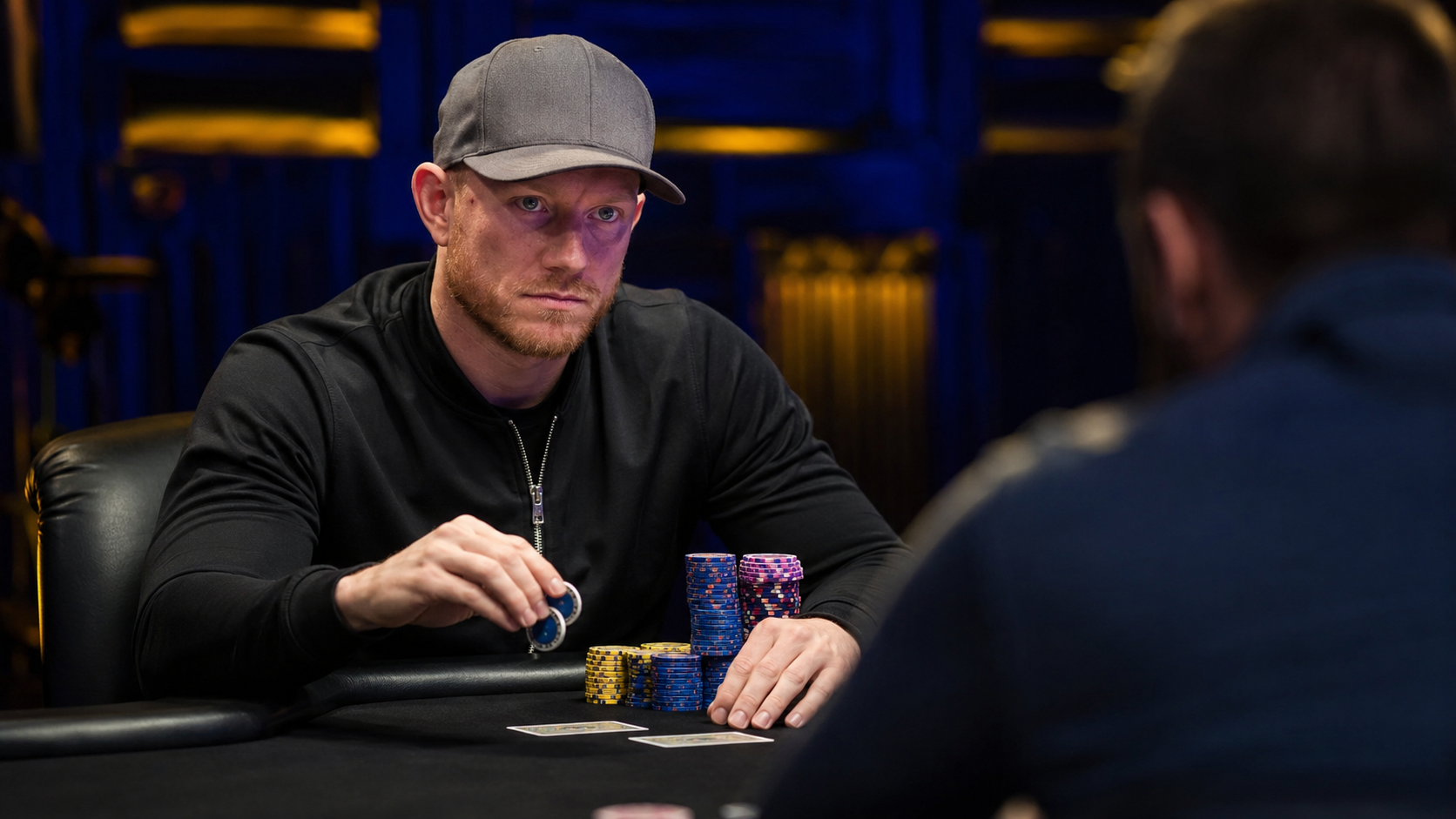
He became the sixth Triton champion to join the Hall of Fame, following Phil Ivey, Patrik Antonius, John Juanda, Nick Schulman and Chris Moneymaker.
Playing Style and Technical Preparation
Koon’s game combines theoretical study with targeted exploitation.
At high stakes, he must understand balanced strategy because his regular opponents study the same situations with advanced software. Obvious betting patterns are quickly identified and punished.
Theory provides a baseline.
It helps Koon determine which hands should bet, check, call or raise across different board textures and stack depths. It also prevents opponents from exploiting him through simple adjustments.
The baseline is not the final decision.
Koon pays close attention to how a specific player deviates from equilibrium. If an opponent bluffs too rarely, calls too often or uses bet sizes associated with a narrow range, the most profitable response may differ significantly from the theoretically balanced one.
His broad format knowledge reinforces that flexibility.
No-Limit Hold’em rewards range construction and pressure. Short Deck changes fundamental equities. Pot-Limit Omaha creates far more combinations and drawing possibilities. Heads-up play forces almost constant participation.
Koon has won major titles in all four environments.
The Work Ethic Behind the Results
Koon is frequently described by other professionals as one of poker’s hardest workers.
That reputation developed because he remained willing to rebuild his strategy after becoming successful.
When he observed Tollerene’s study habits, Koon did not protect his ego by assuming tournament results proved he was already good enough. He accepted that parts of his game were underdeveloped and began working on them.
The same process continued as poker tools improved.
Early online professionals relied on databases, equity calculators and peer discussion. Later generations gained access to solvers capable of analysing entire game trees. Koon adapted to the new environment rather than allowing his original success to become an excuse for outdated decisions.
He also used visualisation and explicit goal setting.
In 2010, Koon created a vision board that included becoming a better friend and son, buying his mother a house and winning a WSOP bracelet. He later completed all of those goals
For Koon, visualisation was not a claim that positive thinking could control the cards. It provided direction for the work required before the cards were dealt.
Fitness as a Professional Advantage
Koon carried his athletic background into poker at a time when unhealthy routines were common among travelling professionals.
He paid serious attention to strength training, nutrition, mobility and sleep. He also helped other poker players improve their fitness and spoke publicly about the relationship between physical health and decision-making.
The benefit is practical.
High-roller tournaments can continue for 12 hours or more, followed by another long day with little recovery. Cash games may run through the night. Travel across time zones disrupts sleep, while the emotional effect of large financial swings creates additional strain.
Technical knowledge loses value when fatigue prevents a player from using it.
Koon attempted to arrive at tournaments in strong physical condition and used lighter training to maintain energy while playing. His routine changed with age and injuries, but the principle remained the same: poker performance depends on the body as well as the mind.
He has also spoken publicly about depression and the importance of treating health as more than an appearance goal.
That openness helped challenge the older image of a professional poker player as someone whose preparation began and ended at the table.
Poker as a Business
Koon’s approach to high-stakes finance became increasingly structured as his career developed.
In 2025, he explained that he and his wife, Bianca, treated poker as a carefully managed business. They used historical data to understand expected swings, created detailed budgets and determined how each tournament should fit into the larger financial plan.
That discipline is essential at buy-ins of 100.000 $ or more.
Even a player with an edge can experience a long losing period. Re-entries increase the total investment, and travel, accommodation, coaching and taxes create additional costs.
High-stakes professionals may also sell pieces of their action or exchange percentages with other players. A 3 million $ tournament payout does not necessarily mean that the winner personally receives every dollar.
Koon has argued that technical talent alone is not enough to build lasting wealth.
A player must also manage risk, control expenses and avoid allowing temporary success to create permanently unsustainable spending.
Jason Koon’s Net Worth
Jason Koon’s exact net worth is not publicly verified.
Websites sometimes estimate the wealth of poker professionals by treating recorded tournament cashes as personal income. That method is unreliable.
The 77.032.156 $ listed by The Hendon Mob is a gross total. It does not subtract tournament buy-ins, re-entries, taxes, travel expenses, coaching costs or losing events. It also does not reveal staking and swapping arrangements.
Cash games create the opposite problem.
Koon has played privately and publicly at stakes where individual pots can exceed 2 million $. Wins and losses from most of those games are not recorded in public databases.
Commercial partnerships, investments and other assets are also private.
It is reasonable to conclude that Koon has built substantial wealth because of his longevity, high-stakes access and public emphasis on financial discipline. Assigning a precise number would be speculation.
The most accurate answer is therefore simple: his recorded poker winnings exceed 77 million $, but his net worth remains unknown.
Protecting the Integrity of Poker
Koon’s public reputation is connected closely with game integrity.
He joined GGPoker in 2021 with a role that included representing high-volume and high-stakes players. In 2022, the operator launched the Poker Integrity Council with Koon as Integrity Ambassador.
The council reviewed anonymised hand histories in cases involving suspected collusion, bots, ghosting or real-time assistance. Its original members included Koon, Andrew Lichtenberger, Fedor Holz, Seth Davies and Nick Petrangelo.
Koon left GGPoker in February 2024, and his formal role with the council ended.
He continued speaking about the threat of advanced cheating technology.
Koon has supported stronger controls on electronic devices and warned that private cash games as well as online platforms face risks from real-time assistance and concealed technology.
His position is based on a practical reality.
As the amount of money available increases, the financial incentive to cheat also increases. Poker operators and players must therefore improve security before a major scandal forces them to act.
Sponsorships and Ambassador Roles
Koon has represented several major poker brands.
He joined partypoker in 2017 and remained associated with the company until 2021. He became a Triton Poker ambassador in 2019 and developed into the tour’s most recognisable professional representative.
After leaving GGPoker in 2024, Koon joined Team PokerStars in November of the same year
As of August 2026, he represented both PokerStars and Triton Poker.
Koon’s value as an ambassador comes from more than tournament visibility.
He can discuss advanced poker in language that serious players respect while remaining accessible to recreational audiences. He is also willing to address difficult issues involving security, financial risk, physical health and the psychological demands of the profession.
That broader contribution strengthened his Hall of Fame case.
Family and a More Selective Schedule
Koon is married to Bianca and they have two sons.
Fatherhood changed the way he organised his career.
After almost two decades of relentless travel, Koon began reducing volume and choosing events more intentionally. He established a personal rule that he would not spend more than one week away from his family. If a tournament trip lasted longer, his wife and children would travel with him.
The decision did not remove his competitive ambition.
It changed the conditions under which he wanted to compete.
Koon believed that playing fewer events could allow him to bring greater focus to each one. At the highest stakes, where technical edges are small, enthusiasm and mental presence can separate an excellent performance from a tired one.
He also created a private daily record for his children.
Rather than keeping a conventional journal, Koon wrote an email each day to accounts created for his sons. His intention was to give them access when they were older, allowing them to read about his life and their childhoods in real time.
The practice reveals a different kind of long-term thinking from the one visible in a poker database.
Why Other Professionals Respect Jason Koon
Tournament earnings can establish that a player wins. They cannot fully explain how that player is regarded by competitors.
Koon’s peers repeatedly describe him through the same qualities: preparation, honesty, generosity and work ethic.
He credits other players for their influence rather than presenting his development as an isolated achievement. He has publicly called Tollerene a mentor and described Chidwick as possibly the greatest No-Limit Hold’em tournament player ever.
He also shares knowledge with younger professionals and communicates comfortably with recreational players.
This matters because poker is an adversarial game built on a community.
Every player attempts to win money from the others, but the game can survive only when participants trust the rules, honour financial agreements and want to return.
Koon demonstrated that a professional could be one of the strongest players in the room without treating every social interaction as another contest to dominate.
The respect generated by that approach became visible when Hall of Fame voting began. Leading figures from several generations publicly supported his candidacy.
Jason Koon’s Place in Poker History
Koon’s career represents the complete development of the modern high-stakes professional.
He learned through online volume, built a network of technically ambitious peers and adapted as software transformed poker theory. He then transferred those skills into live tournaments, televised cash games, Short Deck, PLO and heads-up competition.
His two bracelets strengthen the traditional portion of his résumé.
His Triton results define the modern portion.
Twelve titles across three formats are not simply a collection of small-field victories. Triton events consistently place Koon against the strongest high-roller specialists in the world with life-changing buy-ins at risk.
The all-time money list provides evidence of consistency.
Koon reached third place without a single payout approaching the 10-million-dollar prizes that dramatically elevated several other careers. His largest cash is less than 5% of his total.
He has no WSOP Main Event title, WPT Championship victory or EPT Main Event trophy.
Those omissions do not weaken the central argument for his greatness. Koon’s career was built in the most technically concentrated tournaments of his era rather than in the largest conventional championship fields.
His first-year Hall of Fame induction confirmed that the poker community understood the distinction.
The Poker Legacy of Jason Koon
Jason Koon turned an injury into an introduction and an introduction into one of poker’s greatest careers.
The journey began in West Virginia, where poverty and family instability made a global professional life appear unlikely. Athletics gave him discipline, college gave him an opportunity and online poker gave him a new competitive field.
As JAKoon1985, he won major internet tournaments and learned through volume. As a live professional, he accepted that early results did not eliminate the need for deeper study.
That willingness to rebuild became the foundation of his success.
Koon won his first seven-figure live prize in 2016, his first Triton title in 2018 and his first bracelet in 2021. In 2023, he won six Triton events in one year. In 2025, he collected two more Triton trophies and a second WSOP bracelet.
In 2026, he won a one-table tournament containing nine of the strongest players ever assembled, passed 77 million $ in live cashes and entered the Poker Hall of Fame at the first opportunity.
The numbers are extraordinary, but the broader legacy includes more than money.
Koon helped establish the modern image of a complete poker professional: technically prepared, physically disciplined, financially organised and conscious of responsibility to the game around him.
His 12 Triton titles may remain the visible record.
His greater achievement is sustained relevance. From the online boom to the solver era, from No-Limit Hold’em to Short Deck and PLO, Koon repeatedly adapted to whatever the strongest available competition required.
He did not simply reach poker’s highest level.
He remained there long enough to enter its Hall of Fame while still competing for the biggest titles in the world.
Statistics updated on August 28, 2026. Recorded tournament earnings represent gross cashes and exclude buy-ins, re-entries, taxes, staking arrangements, swaps and private cash-game results.