
Jeremy Ausmus
Jeremy Ausmus is an American professional poker player, six-time World Series of Poker bracelet winner and one of the most accomplished all-around competitors of his generation. He first became widely known after finishing fifth in the 2012 WSOP Main Event, but his subsequent career has extended far beyond that breakthrough.
His achievements include the 2022 PokerGO Cup championship, the 2024 PokerGO Tour Player of the Year award and victory in the season-ending PGT Championship, played in January 2025. He also won his first Triton Poker title in Jeju in 2025.
The Hendon Mob profile available during preparation lists 29.710.874 $ in recorded live tournament earnings. His largest recorded payout remains the 2.155.313 $ prize from the 2012 Main Event.
Ausmus has built this record through sustained success in No-Limit Hold’em, Pot-Limit Omaha and Limit Hold’em, while continuing to compete in demanding mixed-game events. His story is one of steady professional development followed by an extraordinary concentration of major results.
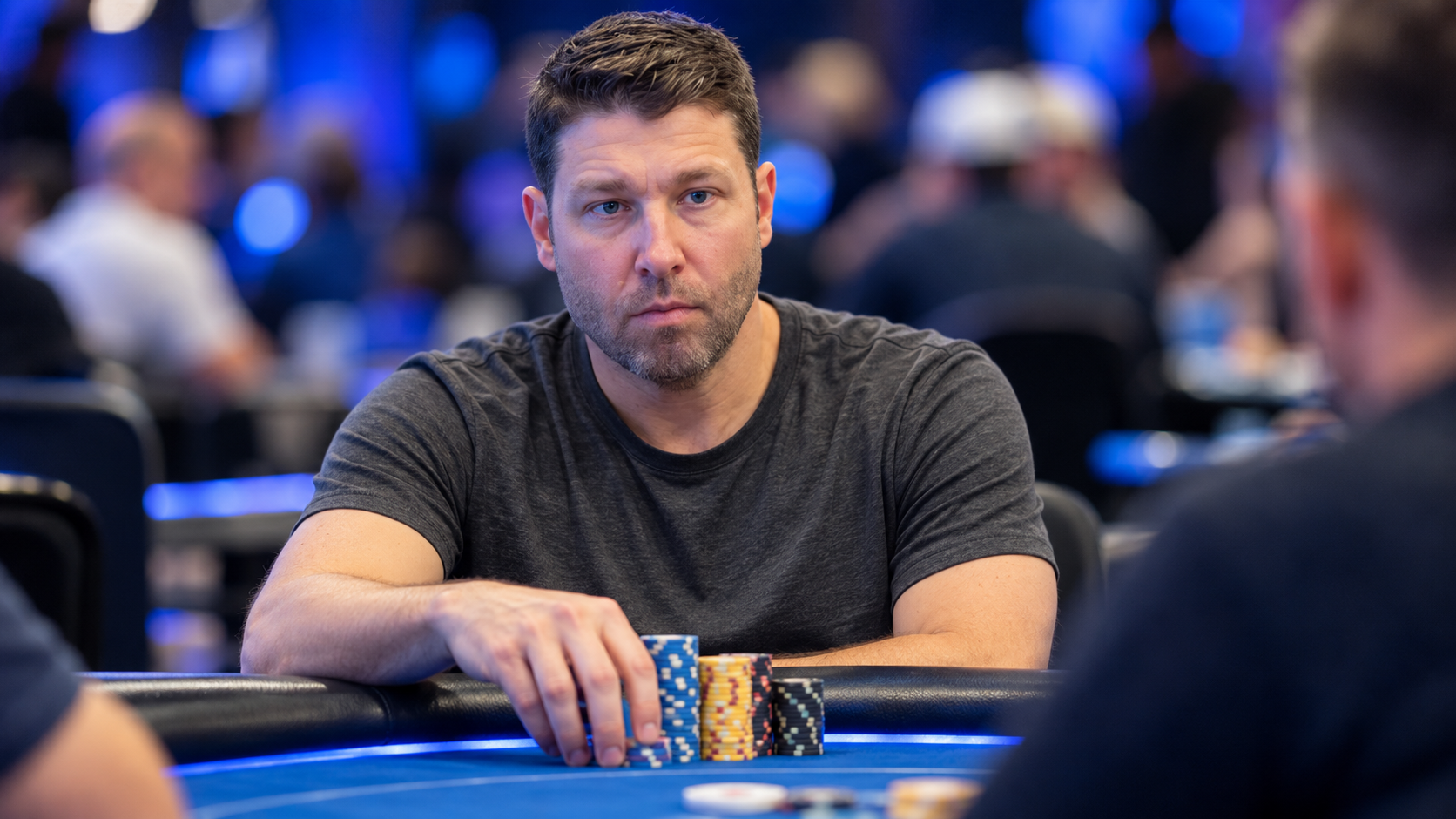
Early Life: Born in Lamar, Colorado
Jeremy Ausmus was born on September 22, 1979, in Lamar, Colorado. Before becoming a familiar face in Las Vegas poker rooms, he attended Colorado State University in Fort Collins.
College provided the setting for his early involvement in poker. In a later interview, he traced his growing interest to watching Rounders, the film that introduced many future professionals to the idea of making a living through the game.
That interest became practical experience. He played small local games, visited casinos in Black Hawk with a friend and began exploring online poker. These were modest beginnings compared with the high roller events he would eventually enter.
The progression matters because his career was established through playing and learning before a major televised result brought him public attention.
College Poker and the Move to Las Vegas
Ausmus has described becoming involved in poker around 2002. By 2004, he had left his job and was playing locally during his final year at university.
After graduating in 2005, he moved to Las Vegas with only a few thousand dollars to test whether he could support himself as a full-time player. The move placed him in an environment where poker was available regularly and where improving players could measure themselves against stronger competition.
Moving to Las Vegas did not immediately turn him into a tournament celebrity. His early professional work was rooted in cash games, where success required repeated profitable decisions rather than one deep tournament run.
That background later became an important part of his versatility. He had experience treating poker as a daily occupation before playing for the enormous prizes associated with the Main Event.
Building a Career Through Cash Games
For many spectators, a player’s career begins with the first appearance on television. Ausmus had already spent years earning his living through poker when the 2012 Main Event made him recognisable to a wider audience.
Cash games and tournaments test overlapping skills under different conditions. Cash-game players can often reload, leave a game or return the following day. Tournament players face rising blinds, elimination and prize structures that change the value of a chip.
Ausmus’ move between these environments gives useful context to his later results. The Main Event was a breakthrough in visibility and recorded earnings, while his professional foundation had been developed away from that spotlight.
His early career also helps explain why private cash-game results cannot be reconstructed from a tournament database. Public cashes document only one part of his working life.
The 2012 WSOP Main Event Breakthrough
Ausmus reached the final table of the 2012 WSOP Main Event as the shortest stack, holding 9.805.000 chips. The tournament paused after the summer play, with the final nine returning in October.
The delay gave the finalists time to prepare, but it did not remove the disadvantage of starting behind the other players. Ausmus had to navigate a final table where the difference between surviving another elimination and risking his tournament life carried substantial financial consequences.
He eventually finished fifth for 2.155.313 $. Greg Merson went on to win the championship.
The result transformed Ausmus’ public profile. It gave audiences a name and a face to associate with a professional who had already established himself in Las Vegas games. More than a decade later, it remains his largest recorded tournament payout.
Composure Under Main Event Pressure
Ausmus’ comments around the 2012 final table emphasised making the best decision available rather than allowing the prospect of elimination to dominate his thinking.
He also explained that his tighter play near the final table reflected his stack and the positions of larger stacks around him. The adjustment was a response to the situation, rather than a general reluctance to take risks.
That distinction is central to tournament poker. A short stack cannot always apply the same pressure as a chip leader, especially when opponents can threaten its entire tournament with a raise.
The Main Event supplied an early public example of a recurring theme in Ausmus’ career: adapting to the conditions in front of him. His later achievements would require the same flexibility across different games and tournament structures.
First WSOP Bracelet in Europe
In 2013, Ausmus won his first WSOP bracelet in the 1.650 € Pot-Limit Omaha event at the World Series of Poker Europe in France. The victory paid 70.324 €.
It was a meaningful follow-up to his Main Event final table. The earlier result had demonstrated his ability to survive deep into a major Hold’em tournament; the bracelet supplied a championship in another discipline.
Pot-Limit Omaha requires players to evaluate four-card combinations, strong draws and rapidly changing equities. Hands that appear powerful can be vulnerable, and small differences in card coordination matter.
Winning in that format made it harder to view Ausmus solely through his Hold’em breakthrough. It began a bracelet collection that would eventually span different betting structures and both live and online tournaments.
The Long Wait for Bracelet Number Two
Ausmus did not immediately add a succession of bracelets after his European victory. Almost eight years passed before he won his second.
The interval did not mean his career had stopped progressing. He continued recording results, including a runner-up finish worth 650.000 $ in the 2019 partypoker LIVE MILLIONS Vegas Main Event.
A bracelet total can conceal this kind of activity. Championship victories are rare even for strong professionals, while cashes, final tables and success in other settings continue between them.
The long gap also gives his later run a more striking shape. Ausmus moved from one bracelet over many years to a period in which major titles arrived repeatedly, turning an established career into one of poker’s most productive stretches.
The 2021 Charity Event Victory
Ausmus won his second bracelet in the 1.000 $ COVID-19 Relief Charity No-Limit Hold’em event at the 2021 WSOP. Jesse Lonis finished runner-up.
He nearly missed the event, joining shortly before late registration closed after dealing with long registration lines. The decision ultimately ended his extended wait for another bracelet.
The tournament used a fast structure. Ausmus spoke positively about having some quicker events in the schedule, while recognising that deeper structures offer more opportunities for skill to influence the outcome.
The prize was far smaller than his Main Event score, but the career significance was considerable. It restarted his bracelet collection and opened a remarkable sequence of victories over the following two years.
Beating Hellmuth and Negreanu in the 50.000 $ PLO
Later in the 2021 series, Ausmus won the 50.000 $ Pot-Limit Omaha High Roller for 1.188.918 $. The final stages brought him together with Phil Hellmuth and Daniel Negreanu, two of poker’s most recognisable figures.
Negreanu finished third, leaving Ausmus to defeat Hellmuth heads-up. The result gave Ausmus his third bracelet and a seven-figure victory in a specialist high roller event.
The names at the table made the tournament especially visible, but the underlying achievement was broader. Ausmus had won against elite opposition in a format that rewards detailed hand evaluation and disciplined management of volatile situations.
It was also a different kind of success from the fast charity tournament. Winning both during the same series showed that his results were not confined to one buy-in level or tournament structure.

Six WSOP Bracelets Across Several Formats
Ausmus added a fourth bracelet in the 3.000 $ Six-Handed Limit Hold’em event in 2022. Later that year, playing as Chipchecka, he defeated Nick Schulman heads-up to win a 365 $ online No-Limit Hold’em bracelet event.
His sixth bracelet came in the 2023 WSOP online 3.200 $ No-Limit Hold’em High Roller, where he earned 360.036 $. The six titles combine two Pot-Limit Omaha victories, a Limit Hold’em championship and three No-Limit Hold’em wins.
The collection is notable for its range. It includes Europe and Las Vegas, live tables and online play, modest entry fees and an elite 50.000 $ tournament.
| Year | Bracelet event | Prize |
| 2013 | WSOP Europe — 1.650 € Pot-Limit Omaha | 70.324 € |
| 2021 | WSOP — 1.000 $ COVID-19 Relief Charity NLHE | 48.687 $ |
| 2021 | WSOP — 50.000 $ Pot-Limit Omaha High Roller | 1.188.918 $ |
| 2022 | WSOP — 3.000 $ Six-Handed Limit Hold’em | 142.147 $ |
| 2022 | WSOP Online — 365 $ No-Limit Hold’em | 51.807 $ |
| 2023 | WSOP Online — 3.200 $ No-Limit Hold’em High Roller | 360.036 $ |
Five Bracelets in Less Than Two Years
Between his second bracelet in 2021 and his sixth in 2023, Ausmus won five titles in 629 days. That concentration of victories changed the way his tournament career was discussed.
The run was especially impressive because the events did not all ask the same questions. Limit Hold’em restricts bet sizes and often produces different decision patterns from No-Limit Hold’em. Pot-Limit Omaha adds another layer of hand combinations and drawing possibilities.
Success online also removes much of the physical information available at a live table. Players must interpret betting patterns and timing within a different environment.
No single tournament proves complete mastery, but the combined results offered strong evidence of an adaptable professional. Ausmus had assembled a championship record across conditions that demand more than one narrow specialty.
Winning the 2022 PokerGO Cup Championship
Ausmus became the 2022 PokerGO Cup champion after cashing four times in the eight-event series for 824.500 $. Each of those cashes was a top-three finish, including a victory in a 15.000 $ No-Limit Hold’em event.
He received an additional 50.000 $ championship bonus for leading the series standings. The title was determined by his accumulated results rather than by winning the final event alone.
This introduced another important feature of his career: performing consistently over a schedule. A series championship rewards repeated deep runs and creates pressure that extends beyond a single final table.
For Ausmus, the PokerGO Cup added a prominent Hold’em achievement alongside his accelerating WSOP record. It showed that his momentum could carry into the concentrated competition of the PokerGO Studio.
Seven Final Tables at the 2024 WSOP
At the 2024 WSOP in Las Vegas, Ausmus made seven official final tables, matching the single-series record Phil Hellmuth had set in 2021.
Those appearances included No-Limit Hold’em events, the Poker Players Championship, No-Limit 2-7 Draw Lowball and H.O.R.S.E. The range made the summer particularly revealing: he was reaching the last stages of tournaments with very different rules and player pools.
He did not win a bracelet during that series. The absence of a trophy, however, should not obscure the strength of repeatedly reaching final tables across such a demanding schedule.
The summer became a major part of his broader 2024 success. It supplied both substantial earnings and evidence that his all-around ability extended beyond the games in which he had already won bracelets.
The 100.000 $ High Roller Runner-Up Finish
One of Ausmus’ largest results came in the 2024 WSOP 100.000 $ No-Limit Hold’em High Roller. He finished second to Chris Hunichen and collected 1.892.260 $.
The result placed him close to a seventh bracelet while producing another major seven-figure payout. It also demonstrated that his experience remained relevant against the specialists entering the most expensive Hold’em tournaments.
A runner-up finish naturally invites attention to the title that escaped, but it represents a substantial achievement in its own right. Ausmus had survived almost the entire event and reached the final contest for the championship.
Together with his other final tables, the score helped make 2024 a season defined by repeated contention rather than one isolated highlight.
A Seven-Figure Score at the Super High Roller Bowl
Ausmus finished third in Super High Roller Bowl IX in Cyprus in August 2024, earning 1.200.000 $. Seth Davies won the tournament.
The event belonged to a different category from the large-field Main Event that had first made Ausmus famous. With a 300.000 $ entry before the fee, it brought together a concentrated group willing to compete at an exceptionally expensive level.
Ausmus’ result strengthened his position in the PGT season standings. It also extended his major achievements beyond Las Vegas during a year already marked by WSOP success.
His career now contained seven-figure finishes in a vast championship field, a high roller Hold’em tournament, a Pot-Limit Omaha championship and the Super High Roller Bowl. That variety gives the earnings total more context than the number alone.
The 2024 PokerGO Tour Player of the Year
Ausmus finished the 2024 PGT regular season with 2.966 points, 26 cashes and 5.991.016 $ in earnings from qualifying events. Those results secured the PGT Player of the Year award and a 50.000 $ bonus.
His season included a 288.000 $ victory in a 15.100 $ Pot-Limit Omaha event at the PGT PLO Series II. That win complemented the deep runs which had built his position throughout the year.
The award is distinct from WSOP Player of the Year. It measures performance within the PokerGO Tour’s qualifying schedule, and it should not be confused with the separate WSOP race.
For Ausmus, it provided a season-long conclusion to months of consistent high-stakes results. The title also gave him the largest starting stack in the PGT Championship, where stacks reflected players’ accumulated points.
Winning the PGT Championship in January 2025
Ausmus followed the Player of the Year award by winning the season-ending PGT 1.000.000 $ Championship in January 2025. Although played in the new calendar year, the tournament concluded the 2024 PGT season.
He defeated Nick Schulman heads-up and won 500.000 $. The championship was a freeroll for eligible leading players and promotional Dream Seat qualifiers, rather than a conventional open tournament with a paid entry.
The victory added a direct tournament title to his points-race achievement. It meant he had finished first over the qualifying season and then won its concluding championship.
Those are related but separate accomplishments. His starting-stack advantage rewarded the earlier results, while converting that opportunity into a trophy still required him to survive the championship itself.
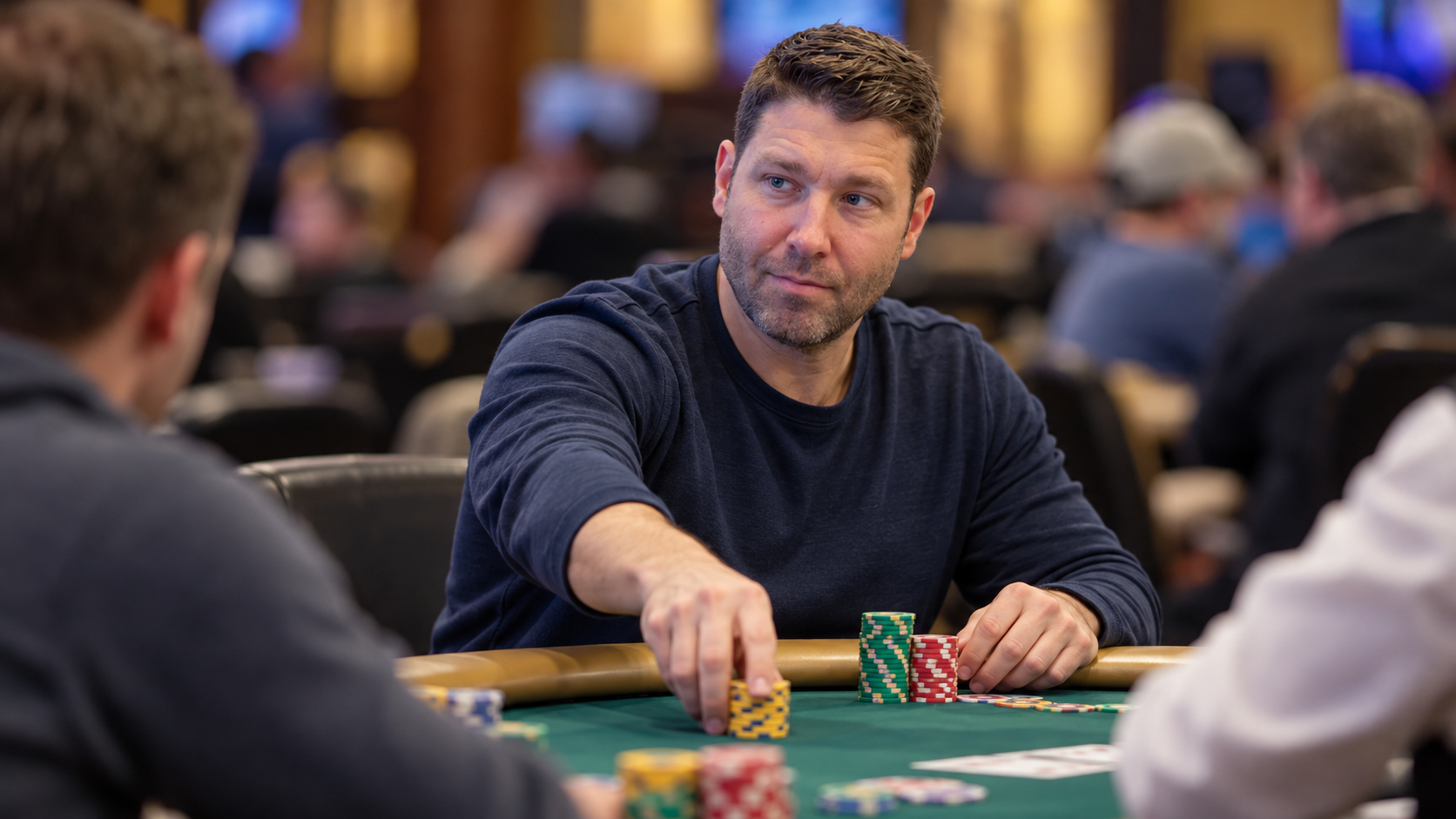
First Triton Title in Jeju
In March 2025, Ausmus won his first Triton Poker title in the 25.000 $ Eight-Handed No-Limit Hold’em event in Jeju, South Korea. He defeated Quan Zhou heads-up for 1.892.000 $.
The event attracted 391 entries, a record for the Triton series at that time. It gave Ausmus another major championship against international high roller competition.
The victory also had a memorable survival story. With 23 players remaining, he attempted an incorrectly sized raise with pocket kings and was required to call instead. His opponent held aces, and the board subsequently brought the other two aces, allowing Ausmus to escape without committing his whole stack.
The unusual incident gave him an opportunity to continue, but winning still required navigating the remainder of the tournament. Jeju filled an important gap in a record already rich in WSOP and PGT achievements.
Jeremy Ausmus’ Notable Tournament Results
The following selection brings together major cashes and championship victories. It is not a complete record of his results, and a large payout does not always mean the player won the event.
| Year | Tournament | Finish | Prize |
| 2012 | WSOP — 10.000 $ Main Event | 5th | 2.155.313 $ |
| 2024 | WSOP — 100.000 $ NLHE High Roller | 2nd | 1.892.260 $ |
| 2025 | Triton Jeju — 25.000 $ NLHE Eight-Handed | 1st | 1.892.000 $ |
| 2024 | Super High Roller Bowl IX, Cyprus | 3rd | 1.200.000 $ |
| 2021 | WSOP — 50.000 $ PLO High Roller | 1st | 1.188.918 $ |
| 2024 | WSOP — 250.000 $ NLHE Super High Roller | 7th | 754.052 $ |
| 2019 | partypoker LIVE MILLIONS Vegas Main Event | 2nd | 650.000 $ |
| 2025 | PGT Championship concluding the 2024 season | 1st | 500.000 $ |
Playing Style and All-Around Ability
Ausmus’ tournament record suggests a player whose strongest defining characteristic is adaptability. Calling him only a No-Limit Hold’em specialist would overlook both his Omaha championships and his success in Limit Hold’em.
His public comments also show an emphasis on decisions within their immediate context. Stack sizes, position and opponent pressure were central to his explanation of the 2012 Main Event, rather than an attempt to portray himself as permanently aggressive or permanently cautious.
The range of his final tables supports that interpretation. Different games reward different forms of pressure, and success in one does not automatically transfer to another.
It would be misleading to claim knowledge of his complete study routine or private strategy. The visible evidence is the breadth of his results and his ability to remain competitive as the tournament environment has changed.
Family, Scheduling and Life Beyond Poker
Family has been a recurring theme in Ausmus’ interviews. Around the 2012 Main Event final table, he discussed arranging his playing hours so that he could spend time with his wife and children, rather than playing all night and sleeping through the day.
He also connected bankroll decisions to providing for his family’s future. These comments offered a more practical portrait of professional poker than the image of a player constantly chasing the next large score.
Years later, at Triton Jeju, he explained that travelling overseas was a significant commitment and that he was generally happy living close to home in Las Vegas.
Those choices help explain the shape of his schedule. Ausmus has built much of his career around a city with extensive poker opportunities, while making selected international trips that have produced important results.
What His Tournament Earnings Represent
Ausmus’ recorded live tournament earnings exceed 29,7 million $. The figure establishes the scale of his public tournament success, but it should not be treated as his personal wealth or lifetime poker profit.
Recorded prizes are gross cashes. They do not subtract entry fees, travel costs or other expenses, and public databases do not reveal every staking agreement or how much of a player’s action was personally retained.
Cash-game results are another separate component. Ausmus’ professional background includes cash games, but there is no complete public ledger from which to calculate that part of his career.
His achievements are therefore best evaluated through a combination of tournament results, championship victories and longevity. The prize total is useful evidence, but it cannot answer every financial question about his life.
Jeremy Ausmus’ Place in Modern Poker
Ausmus’ career connects several different forms of poker success. He was a working Las Vegas professional before a Main Event final table brought broad recognition, then developed a championship record across multiple formats.
The six bracelets remain central, but the later achievements give the story additional depth. A PokerGO Cup championship rewards a strong series; a PGT Player of the Year award rewards a season; the PGT Championship and Triton title add individual victories against demanding opposition.
His seven official final tables at the 2024 WSOP underline the same point. Ausmus can be highly successful over a schedule even when the final outcome of each tournament does not produce a bracelet.
What makes his record distinctive is the accumulation of evidence across years and settings. The fifth-place Main Event finish introduced him to many fans, but the career that followed established Jeremy Ausmus as far more than a single-tournament success story.
Profile prepared in October 2026. Tournament figures reflect the public records available during preparation and may change as databases are updated. Recorded earnings are gross prizes and exclude private cash-game results. The three separately supplied images are AI-generated illustrations, not documentary photographs of the events described