John Juanda
John Juanda is an Indonesian-born professional poker player, five-time World Series of Poker bracelet winner and member of the Poker Hall of Fame. His career spans the established American tournament circuit, the European Poker Tour and the modern Asian super-high-roller scene.
Known as “JJ” and “Luckbox,” Juanda combines a quiet public manner with a record of success across several poker variants. His bracelets include lowball, Seven Card Stud Hi-Lo, Pot-Limit Omaha and the WSOP Europe Main Event.
He won the EPT Barcelona Main Event in 2015 and the Triton Macau Main Event in 2017. The latter produced his largest recorded live tournament payout, 2.870.092 $.
The Hendon Mob record consulted for this profile lists 26.779.394 $ in live tournament earnings. Those results tell the story of a player who remained relevant as poker moved from comparatively small professional fields to televised festivals and international super high rollers.
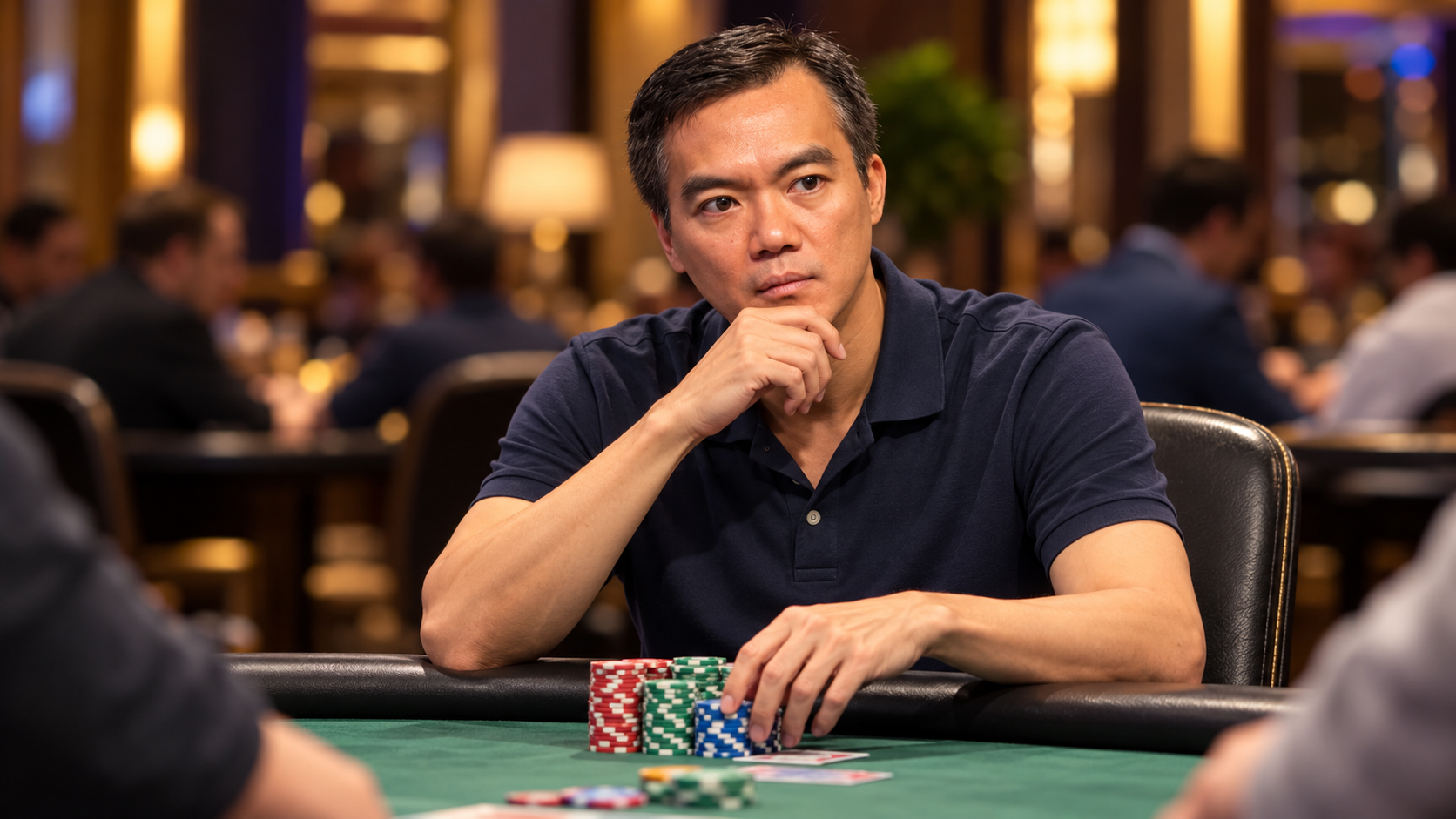
Early Life and Date of Birth
Johnson “John” Juanda was born on July 8, 1971, in Medan, North Sumatra, Indonesia. He comes from a family of Chinese heritage.
His early competitive interests included athletics. He was a successful school runner, with experience ranging from sprint distances to longer races.
The discipline required by sport offers useful context for a career later defined by patience and endurance. Poker would eventually demand a different form of competition, but sustained concentration remained important.
Juanda’s international journey began through education rather than a plan to become a tournament celebrity. His move to the United States created the setting in which poker gradually became a profession.
Moving to the United States
Juanda arrived in the United States in 1990 to attend Oklahoma State University. He later continued his studies at Seattle University, earning an MBA.
While studying, he worked various jobs, including selling Bibles door to door. These details are a reminder that his early American years were not financed by an already established poker career.
He also encountered casino poker and began developing his skills. The professional path emerged through experience rather than a single dramatic decision at a famous final table.
His background combined formal education with practical exposure to people and risk. Those experiences preceded the tournament results that would eventually make his name familiar throughout the poker world.
Learning to Read Opponents
Juanda has associated part of his ability to read opponents with the language difficulties he faced after arriving in America. When conversation was less accessible, observation became especially valuable.
Poker provides information through betting decisions, timing and the way a player responds to a changing situation. Physical behaviour can also matter, although it should not be treated as a perfectly reliable guide.
This emphasis on observation fits his later reputation. Juanda often appears composed and attentive rather than determined to dominate the conversation.
A quiet table presence does not mean a passive strategy. It can allow a player to gather information while opponents supply clues through their own choices.
Building a Professional Career
Juanda began playing tournaments during the 1990s and established himself through cash games and smaller events before reaching the best-known championships.
He made his first WSOP cashes in 1999. By the early 2000s, he was producing enough results to become a recognised part of the professional circuit.
That period required considerable versatility. Players encountered schedules containing Stud, Omaha, lowball and several betting structures rather than only No-Limit Hold’em.
Juanda’s eventual bracelet collection reflects those demands. His first titles did not come in the game most strongly associated with modern televised poker.
The First Bracelet in 2002
Juanda won his first WSOP bracelet in 2002 in the 1.500 $ Limit Ace-to-Five Triple Draw Lowball event. The victory paid 49.620 $.
Ace-to-Five lowball rewards the lowest five-card hand, with aces low and straights or flushes not counting against the player. Triple draw adds several opportunities to replace cards.
The championship established Juanda as more than a promising Hold’em player. It supplied a visible result in a discipline requiring different hand evaluation and drawing decisions.
The prize was modest compared with his later seven-figure cashes, but its historical importance is much greater than the amount suggests. It was the beginning of a five-bracelet career.
Two More WSOP Titles in 2003
At the 2003 WSOP, Juanda won the 2.500 $ Seven Card Stud Hi-Lo Split event for 130.200 $ and the 2.500 $ Pot-Limit Omaha event for 203.840 $.
The two victories brought his bracelet total to three and strengthened his reputation as an all-around professional.
Stud Hi-Lo requires players to evaluate both high-hand and low-hand possibilities, often using exposed cards to interpret an opponent’s likely holding. Pot-Limit Omaha instead uses four hole cards and a community board, with exactly two hole cards required in the final hand.
Winning both formats during the same series demonstrated technical range. Juanda’s accomplishments were already extending beyond a single successful tournament or favourite game.
A Generation of All-Around Professionals
Juanda developed alongside players such as Phil Ivey, Daniel Negreanu and Allen Cunningham. Their careers became central to poker’s expanding public profile during the television boom.
The strongest professionals of that generation were frequently expected to compete in several formats. A large game or attractive tournament did not always offer the discipline a player preferred.
For an all-around player, versatility creates more opportunities but also requires additional study and experience. A weakness in one game can become expensive when opponents recognise it.
Juanda’s early mixed-game titles helped establish the foundation for a reputation that would survive the later shift towards increasingly specialised No-Limit Hold’em competition.
The 2006 Australian Million-Dollar Victory
In January 2006, Juanda won the 100.000 AUD Speed Poker Million Dollar Challenge at Crown in Melbourne. His first prize was 1.000.000 AUD.
The field included established professionals such as Phil Ivey, Barry Greenstein, Mike Sexton and Jeff Lisandro.
The event belonged to an early stage of the high-buy-in tournament environment that would later expand dramatically. Juanda’s victory showed that he could compete at that financial scale well before modern super-high-roller schedules became familiar.
Australia also added another region to his international record. His career was increasingly defined by results outside a single home circuit.
The 2008 WSOP Europe Main Event
Juanda won the 2008 WSOP Europe Main Event in London for 868.800 £. The 10.000 £ championship attracted 362 entries.
He defeated Stanislav Alekhin heads-up to collect his fourth bracelet. Ivan Demidov finished third.
The victory became famous not only for the title but also for the extraordinary length of the final table. Its nine players contested 484 hands before a champion was determined.
For Juanda, London was a defining championship. It demonstrated his No-Limit Hold’em ability while producing one of the most memorable endurance tests in WSOP history.
The Marathon Final Table
The 2008 WSOPE final table began in the early afternoon and finished the following morning. Contemporary reporting recorded more than 19 hours of play.
The heads-up match against Alekhin alone lasted approximately seven and a half hours. The lead changed repeatedly, making the contest a test of stamina as well as strategy.
Juanda eventually won the deciding hand with king-six against ace-nine, making four sixes by the river.
The marathon illustrates a demanding part of live tournament poker. A player cannot assume that reaching a final table means the hardest work is nearly complete. Sometimes the final stage becomes longer and more exhausting than anything that preceded it.
A Fifth Bracelet Against Phil Hellmuth
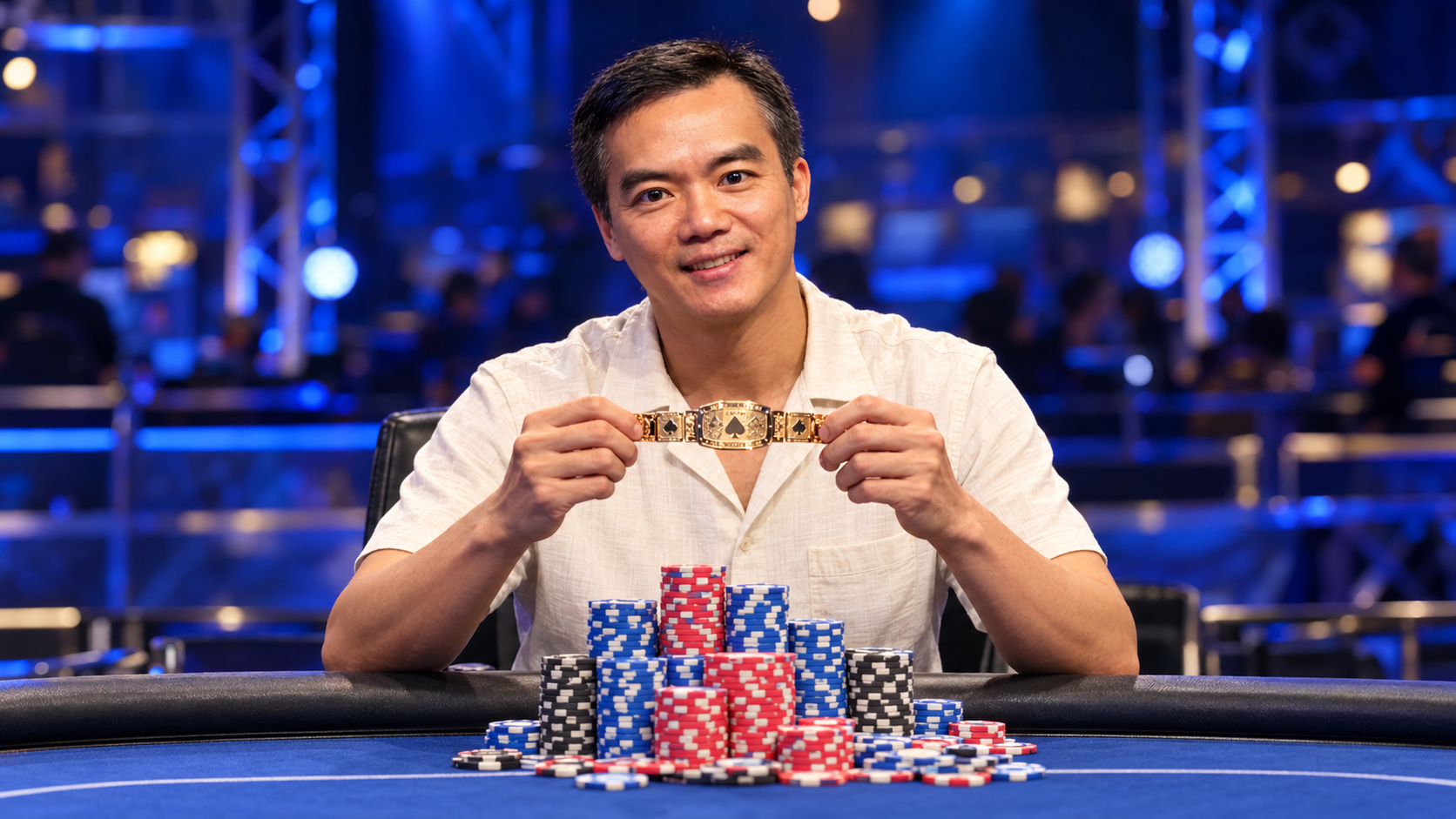
In 2011, Juanda won the 10.000 $ No-Limit 2-7 Draw Lowball Championship for 367.170 $. He defeated Phil Hellmuth heads-up from a field of 126 entries.
Hellmuth was pursuing a twelfth bracelet, while Juanda was attempting to add a fifth. The match therefore carried significance for both players beyond the prize money.
In the final hand, Hellmuth stood pat with a queen-low. Juanda drew one card and completed a jack-low, securing the championship.
The result added another lowball discipline to Juanda’s collection. His fifth bracelet completed a set in which every title had been won in a different game or format.
John Juanda’s Five WSOP Bracelets
| Year | Event | Prize |
| 2002 | 1.500 $ Limit Ace-to-Five Triple Draw Lowball | 49.620 $ |
| 2003 | 2.500 $ Seven Card Stud Hi-Lo Split | 130.200 $ |
| 2003 | 2.500 $ Pot-Limit Omaha | 203.840 $ |
| 2008 | 10.000 £ WSOP Europe Main Event | 868.800 £ |
| 2011 | 10.000 $ No-Limit 2-7 Draw Lowball Championship | 367.170 $ |
The London prize is shown in its original currency. Juanda’s bracelet total remains five in the records consulted for this article.
Why the Bracelet Collection Matters
Juanda’s five bracelets cover Ace-to-Five Triple Draw, Stud Hi-Lo, Pot-Limit Omaha, No-Limit Hold’em and No-Limit 2-7 Draw.
The collection is therefore a measure of breadth as well as the number of victories. The games require different definitions of hand strength, different information processing and different betting decisions.
A player cannot simply transfer every Hold’em habit into a lowball or split-pot event. Rules that improve one holding may make another worse.
Juanda’s record provides a clear public demonstration of adaptation. It helps explain why his standing among professionals cannot be reduced to his results in the most widely televised discipline.
Coming Close in London in 2010
Before winning an EPT Main Event, Juanda finished second at EPT London in 2010. David Vamplew won the championship, while Juanda received 545.000 £.
The runner-up finish showed that his 2008 London success had not been an isolated deep run in European competition.
It also created a familiar tournament distinction: a large payout and excellent performance can still leave a player short of the title.
Juanda would eventually resolve that unfinished chapter in Barcelona. The later victory added a separate major tour championship rather than merely another impressive final-table finish.
Winning EPT Barcelona in 2015
Juanda won the 2015 EPT Barcelona Main Event for 1.022.593 €. The tournament attracted 1.694 entries and was the largest EPT Main Event held up to that point.
He defeated Steve Warburton heads-up after a three-handed deal involving Frederik Jensen. Play continued for the remaining championship prize and the trophy.
The result gave Juanda his first EPT Main Event title, five years after his runner-up finish in London.
It also demonstrated that his success remained relevant in the large-field tournament environment. Barcelona presented a very different challenge from a small championship full of familiar mixed-game professionals.
The Barcelona Final Table
The final table included emerging and established professionals, with Warburton and Jensen joining Juanda in the last three.
The deal changed the payouts, so the amounts should be understood as agreed prizes rather than the original advertised distribution. Juanda ultimately received the additional money reserved for the champion.
He ended the tournament with pocket queens against Warburton’s pocket eights.
The victory connected two eras of his career. An experienced champion from poker’s earlier television boom had defeated one of the largest fields the European tour had assembled.
| Place | Player | Prize |
| 1 | John Juanda | 1.022.593 € |
| 2 | Steve Warburton | 941.613 € |
| 3 | Frederik Jensen | 810.294 € |
| 4 | Denys Shafikov | 405.100 € |
| 5 | Rainer Kempe | 320.400 € |
| 6 | Andreas Samuelsson | 253.900 € |
| 7 | Amir Touma | 194.100 € |
| 8 | Mario Sanchez | 137.080 € |
| 9 | Victor Bogdanov | 104.000 € |
Poker Hall of Fame Induction
Juanda was inducted into the Poker Hall of Fame in 2015 alongside Jennifer Harman. The ceremony took place at Binion’s in Las Vegas on November 6.
The recognition reflected an established career rather than one successful season. By that point, Juanda had five bracelets, an EPT title and an extensive international tournament record.
The Hall of Fame also places importance on sustained performance against strong competition and the respect of other professionals.
His selection therefore supplied a different kind of milestone. Tournament wins measure particular contests; induction recognised the accumulated significance of his career.
The 2017 Triton Macau Main Event
Juanda won the 2017 Triton Macau Main Event after defeating Fedor Holz heads-up. The 1.000.000 HKD tournament attracted 83 entries.
His first prize was 22.410.400 HKD, recorded by the Hendon Mob as 2.870.092 $. It remains his largest individual live tournament payout.
The victory arrived two years after his Hall of Fame induction. It showed that recognition of his earlier career had not marked the end of his ability to win major events.
Macau also placed him at the centre of a developing tournament scene. Triton would become one of the most important names in international high-stakes poker.
The Heads-Up Battle with Fedor Holz
The final match against Holz lasted approximately four and a half hours. Juanda initially held the advantage, but the contest included repeated changes in momentum.
Holz was one of the most successful high-roller players of the period, making him a particularly demanding final opponent.
Juanda eventually secured the title when his ace-five held against Holz’s ace-three.
The match represented a direct encounter between an established all-around champion and a leading figure from the newer high-roller generation. Juanda’s victory supplied strong evidence that his competitive skills could remain effective as opponents and tournament styles changed.
Selected Major Tournament Results
| Year | Tournament | Finish | Prize |
| 2017 | Triton Macau Main Event | 1st | 2.870.092 $ |
| 2008 | WSOP Europe Main Event | 1st | 868.800 £ |
| 2015 | EPT Barcelona Main Event | 1st | 1.022.593 € |
| 2006 | Crown Speed Poker Million Dollar Challenge | 1st | 1.000.000 AUD |
| 2010 | EPT London Main Event | 2nd | 545.000 £ |
| 2011 | WSOP No-Limit 2-7 Draw Championship | 1st | 367.170 $ |
These selected results highlight important career milestones rather than listing every large cash. Original currencies are retained for several events to avoid inconsistencies between historical exchange-rate conversions.
A Quiet but Competitive Table Presence
Juanda is widely associated with a calm, polite manner. That public image contrasts with the financial pressure and competitive intensity of the games he plays.
Quiet behaviour should not be confused with a willingness to surrender pots. A player can remain courteous while making aggressive bets, difficult calls or strategically demanding adjustments.
Across a long tournament career, emotional control becomes valuable because decisions continue after both favourable and disappointing outcomes.
Juanda’s most famous championships required him to keep competing through prolonged contests. His composed presence is part of the way observers understand those performances, rather than a substitute for the technical skill behind them.
Full Tilt Poker and the Television Era
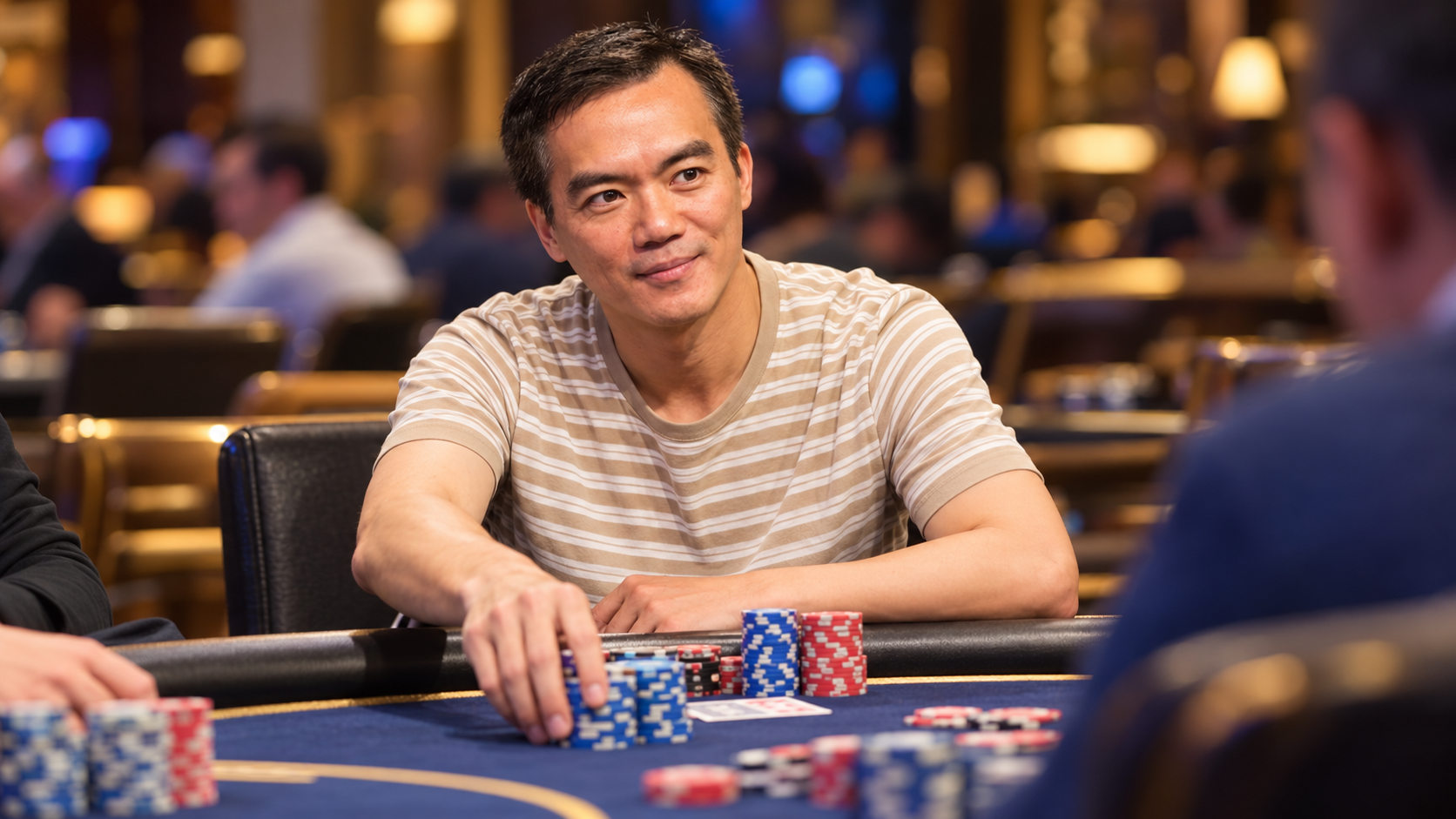
Juanda was a prominent member of Team Full Tilt during the online poker boom. His appearances connected an established live tournament career with one of the era’s most recognisable poker brands.
The association belongs to a historical period in which televised professionals and online poker companies became closely linked. Players could build a public following through both tournament broadcasts and sponsored appearances.
Full Tilt’s original operations ended in 2011, changing that environment. A player’s historical association with the brand should not be treated as proof of individual responsibility for every action taken by the company.
For Juanda’s biography, the central point is his visibility during that era and the continued tournament career that extended beyond it.
Charity and Professional Recognition
In 2017, Juanda auctioned a small percentage of his Super High Roller Bowl action to benefit Raise for Effective Giving. The initiative linked his participation in an expensive tournament with charitable fundraising.
Such activity is separate from competitive results, but it adds another dimension to a public career.
Poker can provide fundraising opportunities through events, donated action and the attention surrounding well-known professionals. The amount ultimately raised depends on the particular arrangement rather than the tournament’s headline buy-in alone.
Juanda’s involvement illustrates a way in which a professional player can use the visibility of high-stakes competition beyond the immediate pursuit of a trophy.
Earnings, Profit and Net Worth
The live tournament record consulted for this profile lists Juanda’s earnings at 26.779.394 $. His largest individual cash remains the 2017 Triton Macau victory.
Recorded tournament prizes are not equivalent to lifetime profit. They do not deduct entry costs, travel, taxes or other professional expenses.
They also do not provide a complete account of private cash-game results or financial arrangements involving tournament action.
Juanda’s personal net worth is not publicly verified. His documented achievements can be described accurately without converting a database total into an unsupported estimate of wealth.
Longevity Across Several Poker Eras
Juanda’s public results stretch from the 1990s into 2026. That span covers major changes in tournament size, study methods and the international organisation of professional poker.
Early success came in an environment where mixed-game versatility was especially important. Later championships required him to compete in large EPT fields and expensive Triton tournaments.
Remaining active across those transitions is different from producing one extraordinary season. It requires continued adjustment as strategies become more widely understood and new opponents enter the game.
His career therefore offers a useful example of longevity without relying on a claim that every period produced the same volume of play or the same level of tournament success.
The Poker Legacy of John Juanda
John Juanda’s career combines five WSOP bracelets, an EPT Main Event championship, a Triton Main Event victory and membership of the Poker Hall of Fame.
His most famous results capture different strengths. The WSOPE marathon demonstrated endurance, the lowball titles showed technical breadth, Barcelona proved large-field ability and Macau confirmed his relevance against modern high-roller specialists.
The complete record is more informative than a single earnings figure. It shows a professional succeeding across games, continents and changing generations of opponents.
Juanda is remembered as one of poker’s accomplished all-around players: a quiet presence at the table whose results have remained difficult to overlook.
Profile updated in October 2026. Recorded tournament earnings are gross cashes and exclude private cash-game results. The separately supplied images are AI-generated illustrations, not documentary photographs of the events described.