
Nick Petrangelo
Nick Petrangelo is an American professional poker player whose career spans online tournament poker, the World Series of Poker, the World Poker Tour and the largest live high roller events. He has won two WSOP bracelets, a WPT championship online and two Triton Poker titles. His recorded live tournament earnings stood at 45.530.973 $ on 23 September 2026, placing him 19th on The Hendon Mob’s all-time money list.
His largest individual live cash remains the 2.910.227 $ he received for winning the 100.000 $ High Roller at the 2018 WSOP. Yet a single result gives an incomplete picture. Petrangelo has won in formats ranging from a multi-table shootout to a 150.000 $ invitational-calibre high roller, and he has remained competitive through major changes in the way elite players study tournaments.
He developed his game online after a college sporting career was curtailed by injury. The combination of competitive drive, mathematical discipline and an appetite for difficult fields took him from online leaderboards to some of poker’s most expensive tables. His latest Triton victory, in September 2026, added another chapter more than a decade after his first WSOP bracelet.
Early Life in Massachusetts
Nicholas Petrangelo was born on 2 January 1987 and grew up in Feeding Hills, Massachusetts. The area is part of Agawam, near Springfield and the Connecticut border. The Hendon Mob lists Feeding Hills as his birthplace and Las Vegas, Nevada, as his residence.
Sport occupied a large part of his early life. Petrangelo played ice hockey and golf and went on to study at Skidmore College in New York, where he competed in college athletics. Hockey supplied the kind of demanding, fast-moving competition that later drew him towards tournament poker.
Concussions disrupted his sporting ambitions. Losing that outlet changed how he spent his time and pushed him towards another activity that rewarded preparation, quick decisions and composure under pressure. Poker offered an accessible competition in which an individual could test decisions over thousands of repetitions.
He studied finance, a background that suited probability and risk management. A degree alone did not make him a poker professional, but it provided a useful framework for understanding why an apparently strong result in one tournament might mean little without considering the costs and decisions that produced it.
Petrangelo’s path was therefore different from that of players who began in casino cash games. His first serious training ground was online poker, where volume and rapid feedback helped him develop before he became a familiar face in live high rollers.
A Competitive Outlet After Hockey
The transition from college sport to poker explains more about Petrangelo’s career than a simple story of discovering cards. A hockey player works within an environment of incomplete information, changing momentum and continual pressure. Poker poses different technical problems, but the need to keep competing after setbacks is familiar.
Tournament players lose far more individual events than they win. Even strong decisions can end in an early elimination, while a poor decision can occasionally be rewarded. That imbalance can be uncomfortable for someone accustomed to judging performance by the scoreboard at the end of a game.
Petrangelo learned to separate the quality of a decision from its immediate result. This is central to surviving online multi-table tournaments, where a player may register many events before one deep run produces a meaningful return.
The late-2000s economy also influenced his options after college. The financial crisis made conventional finance opportunities less straightforward just as online poker was becoming a plausible career for highly skilled players. Petrangelo devoted increasing time to the game and built the practical experience required to move up in stakes.
His sporting background did not guarantee poker success. It helped provide persistence while he learned a new discipline with its own technical language and unusually volatile rewards.
Building an Online Poker Career
Petrangelo became known in online tournaments under the screen name “caecilius”. Internet poker allowed him to play regularly against large fields, study hands and measure progress across a much bigger sample than a travelling live player could normally assemble.
Online competition rewards adaptability. Stack sizes change quickly, tables break and new opponents arrive, forcing players to adjust rather than rely on a single established image. Petrangelo developed the ability to navigate those conditions while gradually entering tougher, more expensive events.
He rose to the top of the PocketFives online tournament rankings in 2012. Such a ranking is a measure of a period of online results rather than a permanent verdict on a player’s ability. It nevertheless showed that Petrangelo was already a leading tournament specialist before his biggest live successes.
His online record continued to matter after he became a regular on the live circuit. In 2017, he won a 25.000 $ World Championship of Online Poker high roller for 625.000 $. Online prizes of this kind form part of his broader poker story, although they are separate from the live earnings total shown by The Hendon Mob.
That distinction matters whenever a career figure is discussed. A live tournament database records public live cashes, not every online result or the complete finances of a professional player.
The First Live Results
Petrangelo’s recorded live results begin in 2009. Early cashes were modest beside the seven-figure prizes that would later define his public profile, but they provided experience that online poker could not fully reproduce.
Live tournaments move more slowly. A player must process physical behaviour, long days and a structure in which fewer hands are dealt per hour. Travel, scheduling and fatigue also become part of the professional calculation. Petrangelo had to carry a strong online game into that different environment.
He did not become a high roller through one overnight breakthrough. His results built across several seasons as he entered larger events and demonstrated that he could compete with established live professionals. The transition was particularly demanding because a high buy-in can make a single poor decision extremely expensive.
The public record traces tournament prizes rather than his full profit. It cannot reveal every entry fee, re-entry, piece sold to another player, swap, backing arrangement or personal expense. Even at this early stage, the important measure of progress was the strength and repeatability of his decisions, not simply the amount printed beside a cash.
By 2015, Petrangelo had developed the experience to convert those decisions into a major WSOP title and several substantial scores in the same year.
The 2015 WSOP Shootout Bracelet
Petrangelo won his first World Series of Poker bracelet in the 3.000 $ No-Limit Hold’em Shootout in 2015. The event drew 308 entries and paid him 201.812 $ for first place.
A shootout changes the usual tournament problem. Instead of simply surviving while players are eliminated across the room, a participant must win an individual table to advance. Each new stage begins with another table to conquer. Reaching the final table therefore requires repeated victories under changing conditions.
The format suited a player experienced in adjusting to opponents and stack sizes. It also showed that Petrangelo’s online accomplishments could translate into a WSOP bracelet against a substantial live field.
The prize was not his largest cash of 2015. Its significance came from the title and the structure of the event. A bracelet is an enduring marker in poker, and a shootout bracelet signals skill in short-handed play as tables become smaller.
Petrangelo’s first WSOP win arrived before the largest phase of his high roller career. Rather than representing a final destination, it established him as a player who could finish the job when an important title was within reach.
The 2015 WPT Alpha8 Near Miss
Another important 2015 result came in a 100.000 $ WPT Alpha8 event in Las Vegas. Petrangelo finished runner-up to Fedor Holz for a prize of 1.015.335 $.
The buy-in alone was a dramatic step above a conventional tournament. A 100.000 $ event tends to attract wealthy recreational players alongside some of the most accomplished professionals in the world. The field may be small, but every stage can be technically demanding.
Finishing second delivered Petrangelo’s first seven-figure live payout and brought him greater attention in the high stakes community. It also illustrated the difference between cashing for a million dollars and winning a million dollars: the original entry fee, any further entries and a player’s financial arrangements affect what remains.
Holz became one of the defining figures of the high roller era. Facing him for an Alpha8 title placed Petrangelo in the same emerging generation of elite tournament players. The result did not give Petrangelo a WPT championship at the time, but it helped establish the level at which he could compete.
Five years later, Petrangelo would win an official WPT championship online. The Alpha8 runner-up finish therefore belongs to the story of a long pursuit rather than an incorrectly counted WPT title.
A High Roller Breakthrough in Australia
Petrangelo’s international results grew alongside his American successes. At the 2017 Aussie Millions, he won the 100.000 A$ Challenge, adding an important high roller title outside the United States.
Australia’s biggest poker festival had long drawn world-class visitors. Winning a six-figure buy-in event there demanded both technical preparation and the ability to handle a concentrated field of experienced opponents.
The result also reflected how the professional circuit had become global. The same player might compete in Las Vegas, Melbourne and European or Asian stops during a single period of his career. Travel imposed costs and fatigue, but it also opened opportunities unavailable to players restricted to one domestic series.
Prize amounts in Australian dollars should be kept distinct from amounts in United States dollars. Exchange rates change, and an international result cannot be added to a US-dollar career total merely by copying the local currency figure.
For Petrangelo, the title showed that he was capable of winning outside familiar surroundings. It preceded an even larger victory the following year, when he defeated the field in one of the most prominent high buy-in events on the WSOP schedule.
The 2018 WSOP 100.000 $ High Roller
Petrangelo won his second WSOP bracelet in the 100.000 $ No-Limit Hold’em High Roller in 2018. The event recorded 105 entries, and the 2.910.227 $ first prize remains his largest recorded live tournament cash as of 23 September 2026.

Elio Fox finished runner-up. Fox had already won another event early in that WSOP, making the final confrontation particularly strong. Petrangelo had to navigate a field filled with established professionals and opponents comfortable playing for enormous sums.
The difference between his two bracelets is striking. The 2015 shootout tested his ability to win a succession of tables at a 3.000 $ buy-in. The 2018 event required him to withstand the pressure of a 100.000 $ entry and make decisions in a much smaller, exceptionally strong field.
Both titles count as WSOP bracelets, but their settings reveal different parts of his game. Together they also explain why his public reputation extends beyond a single kind of tournament.
The 2018 payday pushed Petrangelo into a new financial and competitive tier. It was a gross tournament prize rather than verified personal profit, yet it remains the clearest single marker of his rise into poker’s high roller elite.
Why Two Bracelets Tell Different Stories
Poker results are often reduced to a bracelet count. Petrangelo’s two WSOP titles deserve a closer look because they came in events with very different demands.
The shootout rewarded repeated table wins. Opponents changed at each stage and the path to a bracelet could not be completed by simply accumulating chips while other tables lost players. Success required winning the local contest again and again.
The 100.000 $ High Roller placed enormous weight on decisions against experienced competitors. Every entry represented a large financial commitment, and the best players in the field were accustomed to reviewing hands in exceptional detail.
The gap between 2015 and 2018 matters as well. Petrangelo had already established himself online when the first title arrived. By the second, he had proved himself in international high rollers and was equipped for an event near the top of the WSOP buy-in scale.
The bracelets are not a complete measure of his career. Other series have offered more of his opportunities, and a player’s long-term performance is broader than any one trophy count. They do, however, provide two unmistakable reference points in a career built across several tournament ecosystems.
The 2020 WPT Online Championship
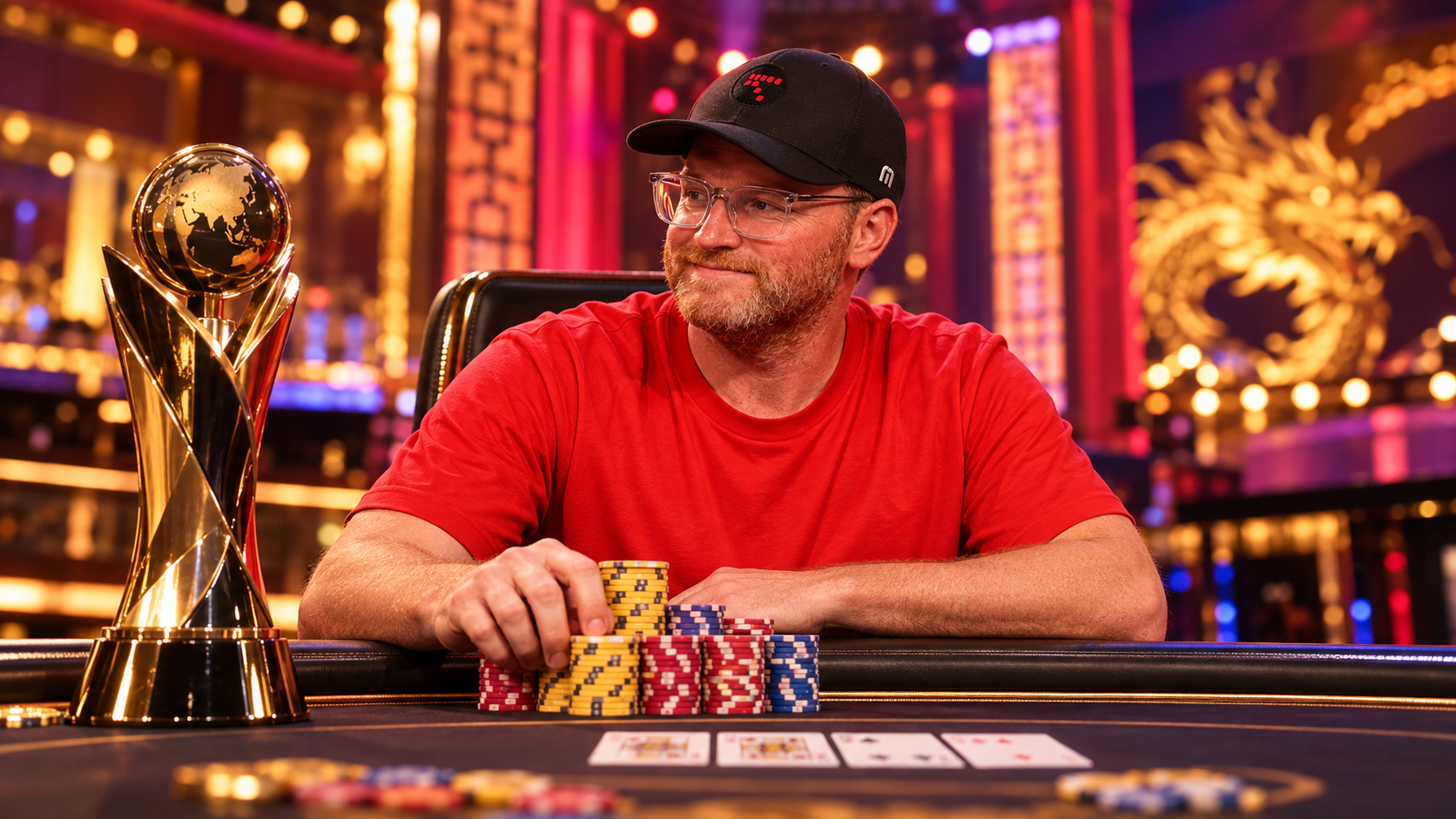
Petrangelo became a World Poker Tour champion during the 2020 WPT World Online Championships. He won the 3.200 $ Six-Max Championship against a field of 999 entries and collected 494.550 $.
His name was added to the Mike Sexton WPT Champions Cup. This was an official WPT championship, even though the event took place online rather than in a casino. That detail is important because older summaries of his career can miss the title or treat his earlier WPT near misses as his only connection to the tour.
Six-max poker keeps more players involved in decisions and generally requires wider ranges than a full table. Petrangelo’s online background and experience adapting to short-handed situations were relevant strengths in such a format.
The victory came during a period when online festivals carried unusual importance for the global tournament circuit. It also linked two phases of his career: the digital environment in which he had first made his name and the recognised championship titles normally associated with live poker.
The 494.550 $ online prize should not be included in The Hendon Mob’s 45.530.973 $ live earnings figure. It is a genuine career result, but the two figures measure different pools of events.
Success on the PokerGO Tour
The PokerGO Tour developed into another important setting for Petrangelo’s high roller results. Events in Las Vegas offered frequent competition against a compact group of elite regulars, with buy-ins often far above those of mainstream tournament schedules.
In October 2021, he won a 200.000 $ event at ARIA for 1.468.800 $. A prize of that size requires context: the entry cost represented a significant share of the payout, and such events can involve re-entries or financial arrangements that the public result does not disclose.
Petrangelo continued adding tour titles over subsequent seasons. In November 2025, he won the 20.000 $ Super High Roller Warm Up at NAPT Las Vegas for 309.030 $, defeating Faraz Jaka heads-up. PokerGO identified it as his seventh career PGT title.
That smaller headline prize, compared with the 2018 WSOP payout, still carried competitive weight. The 2025 event attracted 53 entries and included several prominent professionals at the final table.
Repeated wins within one tour demonstrate more than a single favourable run. They show a player returning to similar opposition across multiple seasons, refining strategy as the field changes and continuing to convert opportunities into titles.
Runner-Up at Super High Roller Bowl VII
One of Petrangelo’s largest live results without a title came at Super High Roller Bowl VII in 2022. He finished second to Daniel Negreanu in the 300.000 $ event and earned 2.016.000 $.
The Super High Roller Bowl sits near the summit of tournament buy-ins. A small field does not make it an easy path to a final table: the competition includes players who spend extensive time studying precisely the situations created by such events.
Negreanu’s victory attracted attention because of his established public profile and long history in poker. Petrangelo’s runner-up finish deserves recognition in its own right. Reaching heads-up play in a 300.000 $ event demonstrates the kind of consistency that allowed him to remain prominent in elite fields beyond his bracelet years.
The result also illustrates why a high roller’s recorded earnings can grow rapidly. A deep run in one expensive event adds millions to the gross cashes column. That column does not reflect the full risk taken, the number of entries funded or the share of a payout that the player actually owned.
For readers assessing his career, the meaningful point is competitive: Petrangelo remained a serious contender against some of the best-known names in the game.
Triton Poker and International High Stakes Events
Triton Poker became a natural destination as Petrangelo’s career expanded. Its series bring together professional specialists and wealthy enthusiasts in locations around the world, often with buy-ins that reach six figures.
The fields create a distinctive challenge. A professional may face another specialist with years of study at one table and an unconventional opponent with a very different approach at the next. Strong players cannot rely only on memorised solutions; they must recognise when the circumstances call for an adjustment.
Petrangelo competed on the Triton circuit for years before securing his first title. That history makes his victories more significant than a sudden arrival at a new series. He had repeatedly tested himself there and accumulated experience against a changing group of high stakes opponents.
International high roller travel also complicates any attempt to measure a career purely through public prizes. Flights, accommodation, entry fees, swaps and other arrangements matter. The database remains useful for identifying recorded finishes and comparing public gross cashes, but it does not provide an audited balance sheet.
By 2024, Petrangelo had the experience to turn a Triton final table into a win. Two years later, he would add another title at the series’ tenth anniversary celebration in Jeju.
A Costly Bubble at the 2023 Big One for One Drop
Petrangelo’s biggest non-cash illustrates the other side of high stakes tournament poker. He reached the last five players in the 2023 WPT Big One for One Drop, a tournament with a 1.000.000 $ buy-in and 17 entries. Only four places were paid.
He was eliminated in fifth, immediately before the money. Mikita Badziakouski eventually won the event for 7.114.500 $, while Mario Mosböck finished second. Petrangelo’s final-table appearance demonstrated that he had survived most of an extraordinarily demanding field, but the public result added nothing to his recorded live cashes.
The difference between fourth and fifth was enormous. At ordinary stakes, the bubble is a familiar point of pressure because players near a payout threshold may hesitate to risk their chips. In a million-dollar buy-in tournament, the same strategic problem carries exceptional financial consequences.
It would be misleading to infer Petrangelo’s personal loss from the listed buy-in. Players at this level can sell action, swap percentages or receive backing, and those arrangements are private. What is clear is that a deep run may look impressive to an observer while producing no recorded prize.
That result helps explain why a long-term career should not be judged only by the tables of cashes. Public databases show the paid finishes. They generally leave no comparable monetary record of expensive attempts that ended one place too early.
First Triton Title in Montenegro
Petrangelo won his first Triton Poker title in Montenegro in May 2024. He took down a 50.000 $ No-Limit Hold’em Turbo Single Day event for 775.000 $.
The field comprised 53 entries, including re-entries. A turbo structure shortens the time available to wait for favourable cards and places more decisions under pressure from rising blinds. Stack management, preflop ranges and the ability to respond quickly to opponents become particularly important.
For a player long associated with the highest buy-in tournaments, the first Triton trophy was a milestone. It added another recognised series title to a record that already included WSOP bracelets, a WPT online championship and PokerGO Tour wins.
The amount won was substantial, but the symbolic value of finally winning a Triton event carried its own weight. High roller regulars may enter many strong fields before the combination of good play and favourable outcomes leads to a trophy.
The Montenegro result also prevents a misleading account of the later Jeju victory. September 2026 was Petrangelo’s second Triton title, not his first. The two wins came in different settings and at different buy-in levels, reflecting the range of his high stakes experience.
The 2024 Wynn Summer Classic Championship
Petrangelo won the 10.400 $ Wynn Summer Classic Championship in Las Vegas in July 2024 for 2.221.775 $. The event drew 1.440 entries and generated a 14.112.000 $ prize pool.
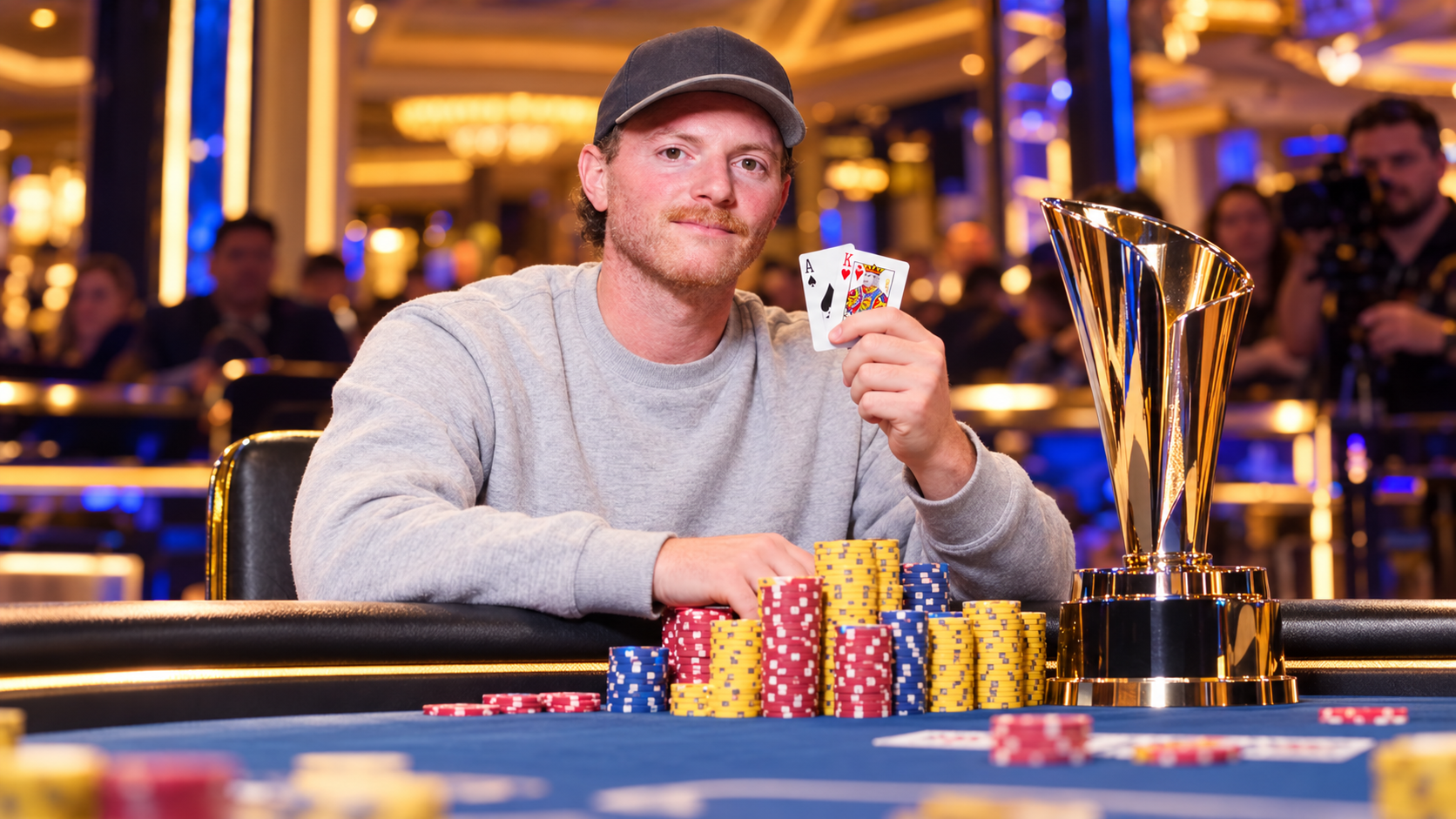
Its scale distinguished it from many of his highest buy-in successes. A large-field event demands the ability to navigate several days of play, survive changing tables and maintain concentration through many stages before the final table comes into view.
Gustavo Jimenez finished second for 1.516.617 $, while Lewis Spencer placed third. Petrangelo’s prize was his second-largest recorded live payout at the time, behind the 2018 WSOP 100.000 $ High Roller victory.
Winning a championship with more than a thousand entries reinforced the breadth of Petrangelo’s tournament ability. He could succeed both against a short list of high roller regulars and against a much larger field containing varied experience levels and playing styles.
The Wynn result also provided a clear answer to any suggestion that his strongest days belonged solely to the period around his WSOP bracelets. Nearly a decade after his first bracelet, he was still winning major titles and recording career-defining prizes.
The 2025 NAPT High Roller Win
At NAPT Las Vegas in November 2025, Petrangelo won the 20.000 $ Super High Roller Warm Up for 309.030 $. The 53-entry event concluded with a heads-up victory over Faraz Jaka.
PokerGO reported that it was his seventh career title in events qualifying for the PokerGO Tour. Kristen Foxen finished third, Jesse Lonis fourth and other established professionals also reached the paid places.
The event’s name included “Warm Up”, but the competition was serious. Buy-in size alone does not tell the whole story: a relatively compact field containing several accomplished specialists can be more technically demanding than a far larger event.
Petrangelo’s win came after he had already built a long record of high roller success. Its value lay in showing that he continued to compete effectively as new players entered the scene and analytical methods evolved.
It also placed his later 2026 results in context. The Jeju victory was not a sudden return after years away from poker. Petrangelo had remained active at the highest levels, winning on major tours and posting meaningful cashes between his biggest headline moments.
The 2026 Triton Jeju Runner-Up Finish
Before his September 2026 Triton title, Petrangelo finished runner-up to Pedro Padilha in a 50.000 $ Eight-Handed event at the Jeju series. A deal resulted in a 1.201.140 $ payout for Petrangelo.
This was another seven-figure result in a field built around strong international competition. Finishing second can feel disappointing when a trophy is close, but the result added substantially to his recorded live earnings and demonstrated that his game remained effective in major events.
Deals deserve precise treatment. Players may agree to divide most of a prize pool according to stack sizes or another formula before finishing the tournament. The eventual champion and the player with the largest cash award are therefore not necessarily the same person.
The Jeju runner-up finish was a prelude to the final high buy-in event of the stop. Petrangelo soon reached another heads-up match, this time in a tournament staged to mark ten years of Triton Poker.
The proximity of the results made September 2026 one of the most notable short stretches in his live career. Within the same series, he recorded a major runner-up payout and then won a title in an even more expensive event.
The 150.000 $ Triton Anniversary Victory
Petrangelo won Triton’s 150.000 $ 10th Anniversary Special in Jeju on 17 September 2026. The event drew 67 entries and created a prize pool of 10.050.000 $.
He reached heads-up play against João Simão, and the two agreed to divide the remaining money. Petrangelo received 2.212.910 $ and went on to claim the title. Simão finished runner-up but received 2.517.090 $ under the deal, more than the winner’s recorded payout.
That unusual distribution is not an error in the results. A deal can award the larger guaranteed amount to the player who holds more chips when it is made, while a separate amount and the trophy remain to be played for. Readers should therefore distinguish between the official finishing order and the negotiated cash amounts.
The win was Petrangelo’s second Triton title, following his 2024 success in Montenegro. It arrived at age 39 and more than eleven years after his first WSOP bracelet, underscoring his longevity in a rapidly changing high stakes environment.
It also lifted his live earnings above 45 million dollars. The Hendon Mob displayed 45.530.973 $ and an all-time money list rank of 19th on 23 September 2026.
Nick Petrangelo’s Biggest Live Tournament Cashes
Petrangelo’s career contains several payouts above one million dollars. The following selection shows major recorded live results, using the prize figures reported for each tournament. It is not a complete list of his cashes.
| Year | Tournament | Result | Prize |
| 2018 | WSOP 100.000 $ No-Limit Hold’em High Roller | 1st | 2.910.227 $ |
| 2024 | Wynn Summer Classic 10.400 $ Championship | 1st | 2.221.775 $ |
| 2026 | Triton Jeju 150.000 $ 10th Anniversary Special | 1st | 2.212.910 $ |
| 2022 | Super High Roller Bowl VII 300.000 $ | 2nd | 2.016.000 $ |
| 2021 | ARIA 200.000 $ High Roller | 1st | 1.468.800 $ |
| 2026 | Triton Jeju 50.000 $ Eight-Handed | 2nd | 1.201.140 $ |
| 2015 | WPT Alpha8 Las Vegas 100.000 $ | 2nd | 1.015.335 $ |
| 2024 | Triton Montenegro 50.000 $ Turbo Single Day | 1st | 775.000 $ |
The 2020 WPT online championship is absent from this live-results table by design. Its 494.550 $ prize was an online tournament result. The Hendon Mob total also does not include every private game or online event Petrangelo has played.
The table illustrates an unusually broad career. It includes WSOP, Wynn, Triton, the Super High Roller Bowl, ARIA and WPT Alpha8, with successes stretching from 2015 through 2026.
How to Read the 45.530.973 $ Figure
The Hendon Mob’s 45.530.973 $ figure represents recorded gross live tournament cashes as displayed on 23 September 2026. It is not a verified statement of Petrangelo’s personal profit, take-home pay or net worth.
High roller entry fees are expensive. A player who receives a million-dollar prize may have spent substantial sums entering that event and others that did not produce a cash. Re-entry formats can increase the cost further. Travel, accommodation, coaching and taxes also affect the economics of a professional career.
Staking and swaps add another layer. A player can sell a share of an entry to investors or exchange a share with another player. The tournament database ordinarily credits the full public prize to the person who finished in the money, even if the financial proceeds were shared.
On the other side, live databases leave out private cash games and many online results. Petrangelo’s online WPT championship and WCOOP win show why a live total cannot be presented as a complete inventory of all poker prizes.
The figure is useful when comparing documented live cashes across players. It must be read with its limits in mind, especially when high buy-ins and negotiated prize deals are involved.
Why Tournament Prizes Are Volatile
Even the strongest player cannot make a deep run every time. A tournament contains many decisions whose results depend partly on cards that neither participant controls. One lost confrontation can end an otherwise well-played event; one favourable turn card can create a chance to win a title.
That volatility is amplified in high rollers. Fewer players may enter, yet the buy-ins are much larger and the opponents are often extremely well prepared. The public sees the winner’s photograph and payout, while the same player may have entered a series of costly events before that result.
Petrangelo’s career includes both sides of the pattern. The 2018 WSOP High Roller gave him his largest recorded cash. The 2023 Big One for One Drop produced a fifth-place finish on the bubble and no cash despite his reaching the final day. Neither single outcome can stand in for his overall level of play.
Deals introduce another complication. At the 2026 Triton anniversary event, he won the trophy but received less money than the runner-up. Treating the first-place prize as a fixed amount determined only by finishing position would miss the actual agreement.
The sensible way to interpret his results is to look for sustained performance across years, field types and tournament formats. The fact that substantial finishes recur from 2015 through 2026 provides more information about his career than any isolated payday.
Net Worth and Private Finances
Petrangelo’s precise net worth has not been publicly verified. Published estimates often start with his live cashes and apply an unexplained discount or assume a particular level of profit. That method cannot account reliably for entry fees, re-entries, backing, swapped action, taxes, other income or investments.
A player may have a large gross prize total and a much smaller share of some individual winnings. Equally, income from coaching, online poker or private games may not appear in the live tournament database. Without complete financial records, neither side of the ledger can be reconstructed accurately.
The strongest supported financial statement is therefore narrower: Petrangelo had recorded 45.530.973 $ in live tournament cashes on 23 September 2026, with a largest single live payout of 2.910.227 $.
This caution does not diminish the achievement. Accumulating that level of recorded results across more than a decade requires repeated deep runs in demanding events. It simply prevents a public database from being mistaken for a private bank statement.
Readers who encounter a specific online estimate of his wealth should look for disclosed evidence of ownership percentages, costs and assets before treating it as fact.
Playing Style and Tournament Decisions
Petrangelo’s results reflect a tournament player comfortable with changing stack sizes and formats. Success in a shootout, online six-max championship, large-field Wynn event and elite high rollers cannot be explained by applying one fixed strategy in every situation.
In short-handed play, opponents act more frequently and the value of position becomes pronounced. In a large field, survival and chip accumulation must be balanced across several days. In high buy-in events, strong opponents identify predictable tendencies quickly.
Modern professionals analyse ranges of possible hands rather than guessing one exact holding. They also consider future cards, the effect of stack depth and the changing value of chips near a payout threshold. Petrangelo’s online background exposed him to rapid repetitions of these decisions before many of his biggest live results.
Describing him simply as aggressive would be incomplete. Effective aggression depends on selecting opponents and situations in which a bet can win immediately or create profitable options later. It also requires knowing when pressure is expensive and restraint is the better choice.
His longevity suggests an ability to keep revising those judgments. Tournament strategy has changed dramatically since he first appeared in live records in 2009, yet he was still winning major titles in 2026.
The Importance of Short-Handed Experience
Several of Petrangelo’s most important results involved play with fewer than nine opponents at a table. The 2020 WPT championship was a six-max event, and shootouts inevitably move towards short-handed and heads-up stages as each table is reduced.
Short-handed poker requires players to enter more pots than they would at a full table. Waiting only for the strongest starting cards becomes increasingly expensive as the blinds arrive more often. Reading stack sizes and understanding how an opponent’s range changes with position are essential.
Heads-up poker magnifies those pressures. Every hand is contested by two players, and there is no option to wait while several others fight for elimination. Petrangelo has repeatedly reached that stage in prominent events, including WPT Alpha8, the Super High Roller Bowl and Triton competitions.
None of this means that a short-handed specialist automatically wins every heads-up match. Outcomes remain volatile, especially when stacks are shallow. It does show why the skills developed through online volume can remain valuable at the final table of a live high roller.
The range of Petrangelo’s titles demonstrates how that foundation can be applied across different buy-ins, field sizes and tournament structures.
Poker Education and Coaching
Petrangelo has also taught tournament poker. He has appeared in training material for Upswing Poker, sharing the kind of structured thinking he developed through online and live competition.
Teaching strategy is different from publishing a list of attractive starting hands. Serious tournament study considers how position, stack depth, ante size and prize pressure change a decision. A useful lesson explains why an action is profitable in one situation and costly in another.
His involvement in poker education places him within a generation that treats study as a normal part of professional life. Earlier eras often valued secrecy and personal experience above public technical instruction. Online databases, training videos and solver software changed the incentives and raised the standard of preparation across the field.
An elite player who teaches must still keep learning. Once concepts become widely available, opponents adapt. Petrangelo’s continued results after taking on an educational role show that his career did not depend on maintaining one hidden trick.
For newer players, his path illustrates both the value and the limits of training resources. Studying expert decisions can accelerate understanding, but it cannot remove tournament variance or replace practice against real opponents.
The Evolution of the High Roller Circuit
When Petrangelo began recording live results, the modern high roller circuit was still expanding. Over the following years, festivals added more five- and six-figure buy-in events, online qualifiers brought new players into poker and dedicated broadcasts gave elite tournaments a wider audience.
The growth created more opportunities to win very large prizes. It also meant that career earnings totals from different generations became difficult to compare directly. A player active before the expansion had fewer chances to enter a 100.000 $ event than a professional travelling the contemporary global schedule.
Petrangelo’s career sits within that transformation. He rose through online poker, won a conventional WSOP bracelet, moved into Alpha8 and other high rollers, then accumulated major results on PokerGO and Triton schedules.
His 2024 Wynn win adds another dimension: the largest gross prize pools do not always require the highest buy-ins. A championship with 1.440 entries can award a seven-figure first prize while presenting a different challenge from a 50-player high roller.
Understanding that variety makes his record more informative. The headline earnings number reflects both the growth of the circuit and his repeated ability to perform within it.
Comparing Large Fields With Elite Small Fields
The 2018 WSOP High Roller and 2024 Wynn championship provide a useful comparison. The WSOP event had 105 entries at a 100.000 $ buy-in. The Wynn event had 1.440 entries at 10.400 $. Petrangelo won both.
In a large field, a player navigates many table changes and a long sequence of decisions before reaching the final stages. Even a strong competitor needs favourable outcomes at key moments to outlast more than a thousand entries.
In a small high roller, a much larger proportion of opponents may be specialists who know advanced tournament concepts. A shorter path to the title does not necessarily mean an easier path. Individual errors can be costly because opponents are prepared to exploit them.
The two victories should not be ranked solely by their first prizes. The 2018 result paid 2.910.227 $, while the Wynn win paid 2.221.775 $. Each demanded a different combination of skill, endurance and favourable tournament variance.
Together they strengthen the case that Petrangelo’s success was not confined to one field size. The same pattern appears in his online six-max title, shootout bracelet and Triton results.
Rankings and Recognition
On 23 September 2026, The Hendon Mob listed Petrangelo 19th on its all-time live money list and 12th among United States players by recorded live earnings. It also placed him first on the Massachusetts state list.
Rankings of this kind answer a specific question: how much has a player collected in recorded live tournament prizes? They do not directly compare return on investment, technical skill or personal wealth. The schedules available in different eras and the prevalence of expensive events affect the numbers.
Nevertheless, a place inside the global top twenty after more than a decade of major results is a notable achievement. Petrangelo did not reach it through one enormous payout. His biggest recorded live cash was below three million dollars, while his total exceeded 45 million dollars.
That spread points to repeated success across many events. It is also why his 2026 Jeju results mattered: the runner-up finish and anniversary title together added millions to an established record.
His two WSOP bracelets, official WPT online championship, seven PokerGO Tour titles as reported in November 2025 and two Triton titles offer a fuller set of markers than the money list position alone.
Career Milestones at a Glance
Petrangelo’s achievements are easier to place in sequence when the online and live records are kept distinct.
| Year | Milestone | Context |
| 2012 | Reached the top of the PocketFives online rankings | Established his online tournament reputation |
| 2015 | Won the 3.000 $ WSOP Shootout | First WSOP bracelet |
| 2015 | Runner-up in WPT Alpha8 Las Vegas | First seven-figure live cash |
| 2017 | Won the Aussie Millions 100.000 A$ Challenge | International high roller title |
| 2018 | Won the WSOP 100.000 $ High Roller | Second bracelet and largest live cash |
| 2020 | Won the WPT online Six-Max Championship | Official WPT title; online result |
| 2022 | Runner-up at Super High Roller Bowl VII | 2.016.000 $ live cash |
| 2024 | Won Triton Montenegro and the Wynn championship | First Triton title and a 1.440-entry win |
| 2025 | Won a NAPT Las Vegas 20.000 $ event | Seventh PGT title as reported then |
| 2026 | Won Triton’s 150.000 $ anniversary event | Second Triton title |
The milestones reveal a career that developed in stages rather than one sudden leap from small games to the largest events. The first phase was primarily online. The middle years brought WSOP recognition and a place in major high roller fields. The later phase featured repeated victories across several live tours.
The table is deliberately selective. It does not include every tournament, final table or online title. It gives the main reference points needed to understand how a player who once topped an online ranking reached the all-time top twenty for recorded live cashes.
Why His Career Has Lasted
Poker changes quickly. Strategy that once worked against an unprepared field can become standard knowledge, and techniques that were once considered advanced can be learned by a dedicated newcomer. Remaining competitive requires a willingness to reconsider familiar assumptions.
Petrangelo’s results run from early online rankings and a 2015 bracelet through a 2026 Triton title. Between them came a second bracelet, a WPT championship, major PokerGO Tour wins and a large-field Wynn victory.
That timeline shows adaptation across venues as well as years. Online six-max play, shootouts, a 300.000 $ Super High Roller Bowl and a 1.440-entry championship create different strategic and practical demands.
It also shows the limits of judging a career by one summer at the WSOP. Petrangelo’s largest prize came there, but many of his most informative results occurred elsewhere. The global circuit provided repeated opportunities to test himself against different fields.
No tournament record can prove precisely how much money a player retained. It can show that Petrangelo continued reaching final tables and winning titles while the quality of opposition and available study tools evolved.
Nick Petrangelo’s Place in Modern Poker
Petrangelo represents the generation that moved from online tournament volume into a global high stakes circuit. His early success under the name “caecilius” preceded public recognition at the WSOP. His later results put him at final tables in Las Vegas, Australia, Montenegro and South Korea.
The breadth of that path distinguishes him from a player remembered for one celebrated hand or one extraordinary payout. His record contains titles in different formats and at markedly different buy-ins, with significant wins more than a decade apart.
The 2020 WPT championship is an especially revealing part of the story. An online tournament supplied a recognised tour title, bringing the digital origins of his career back into focus even after he had become an established live high roller.
His two Triton wins add the most recent chapter. The 2026 anniversary event came with an unusual heads-up deal, leaving the champion with a smaller cash award than the runner-up. Understanding that detail is more useful than simply calling the 2.212.910 $ result another seven-figure win.
As of 23 September 2026, Petrangelo had recorded 45.530.973 $ in live tournament cashes. The figure captures a remarkable public record, while the full story lies in the sustained skill required to build it.
Career statistics checked on 23 September 2026. Recorded live tournament earnings are gross public cashes, exclude online results and do not establish personal profit or net worth.