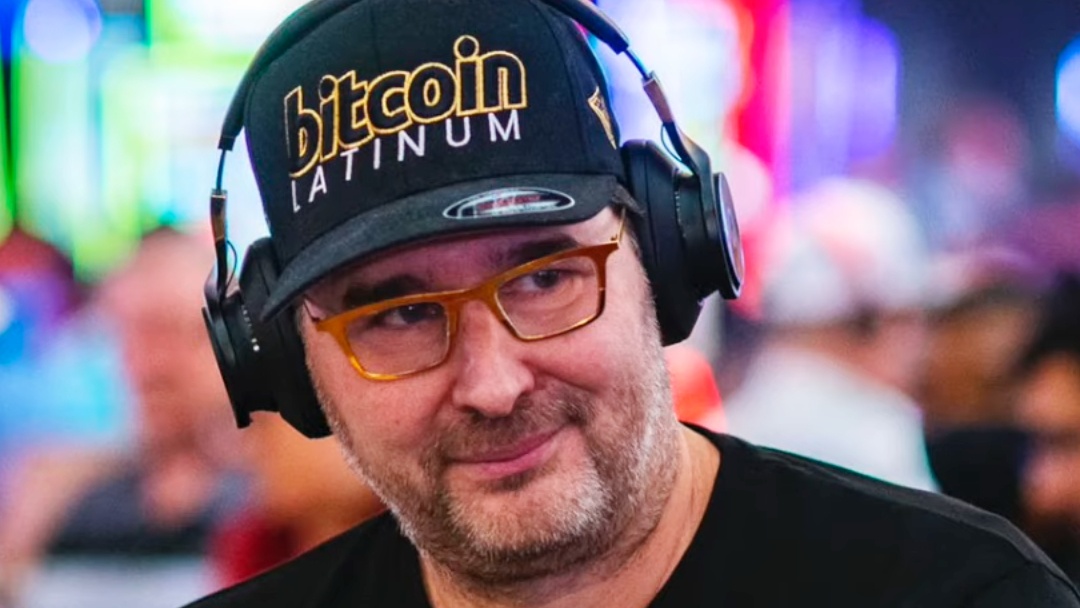
Phil Hellmuth
Phil Hellmuth is an American professional poker player, winner of the 1989 World Series of Poker Main Event and the all-time leader in WSOP bracelets. Known throughout the poker world as “The Poker Brat,” he has built one of the longest, most successful and most recognisable careers in the history of the game.
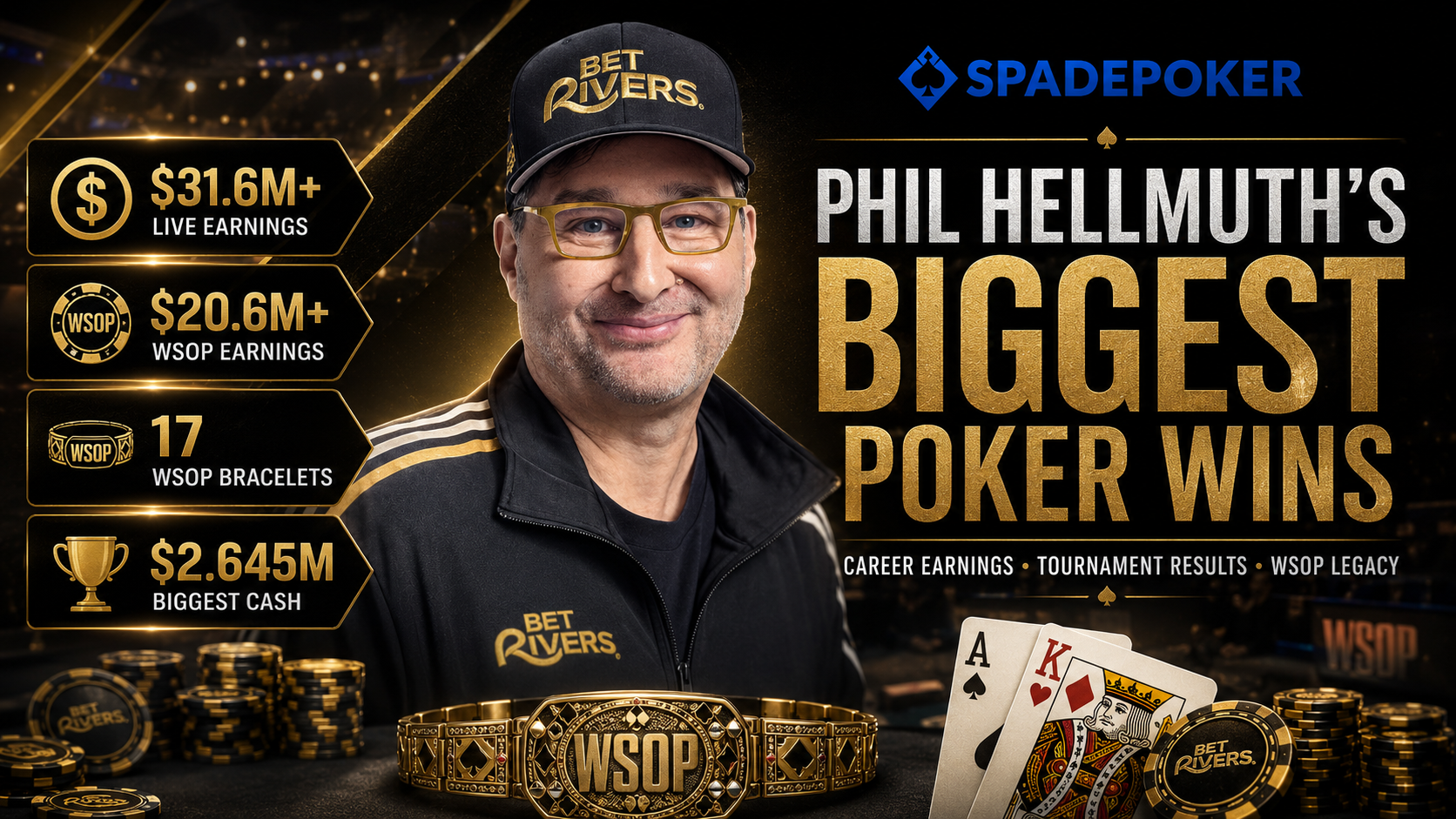
Hellmuth has won a record 17 WSOP bracelets and more than 31,6 million $ in recorded live tournament prizes. His achievements include victories in the WSOP Main Event in Las Vegas and the WSOP Europe Main Event, titles across several poker variants and bracelet wins spanning five different decades.
His place in poker history, however, is not based only on numbers. Hellmuth became famous for his emotional reactions, theatrical entrances, extraordinary self-confidence and ability to attract attention whenever he entered a room. His public personality has divided audiences for decades, but it has also made him one of the most important characters poker has ever produced.
Behind the outbursts and the nickname lies a tournament player with exceptional longevity, discipline and an unmatched record at poker’s most famous series.
Early Life in Wisconsin
Phillip Jerome Hellmuth Jr. was born on July 16, 1964, in Madison, Wisconsin. He grew up as the eldest of five children in a family that valued education and achievement.
Hellmuth has described himself as the “ugly duckling” of the family. He struggled academically and did not always feel that he matched the accomplishments of those around him. That insecurity later became an important part of his competitive personality. Poker offered him a place where confidence, patience and an ability to outperform other people mattered more than conventional academic success.
He attended the University of Wisconsin–Madison, where he began taking poker increasingly seriously. Instead of approaching the game only as entertainment, Hellmuth studied his opponents, developed a bankroll and started to believe that poker could become his profession.
After three years at university, he left without completing his degree and committed himself to playing full time. It was a risky decision, particularly in an era when professional poker offered none of the visibility, sponsorship opportunities or online infrastructure available to modern players.
Hellmuth began travelling to Las Vegas and playing in cash games and tournaments. The early years were not always easy. Like many aspiring professionals, he experienced significant swings and had to prove that his confidence was supported by repeatable results.
His defining breakthrough came at the World Series of Poker.
The 1989 WSOP Main Event Victory
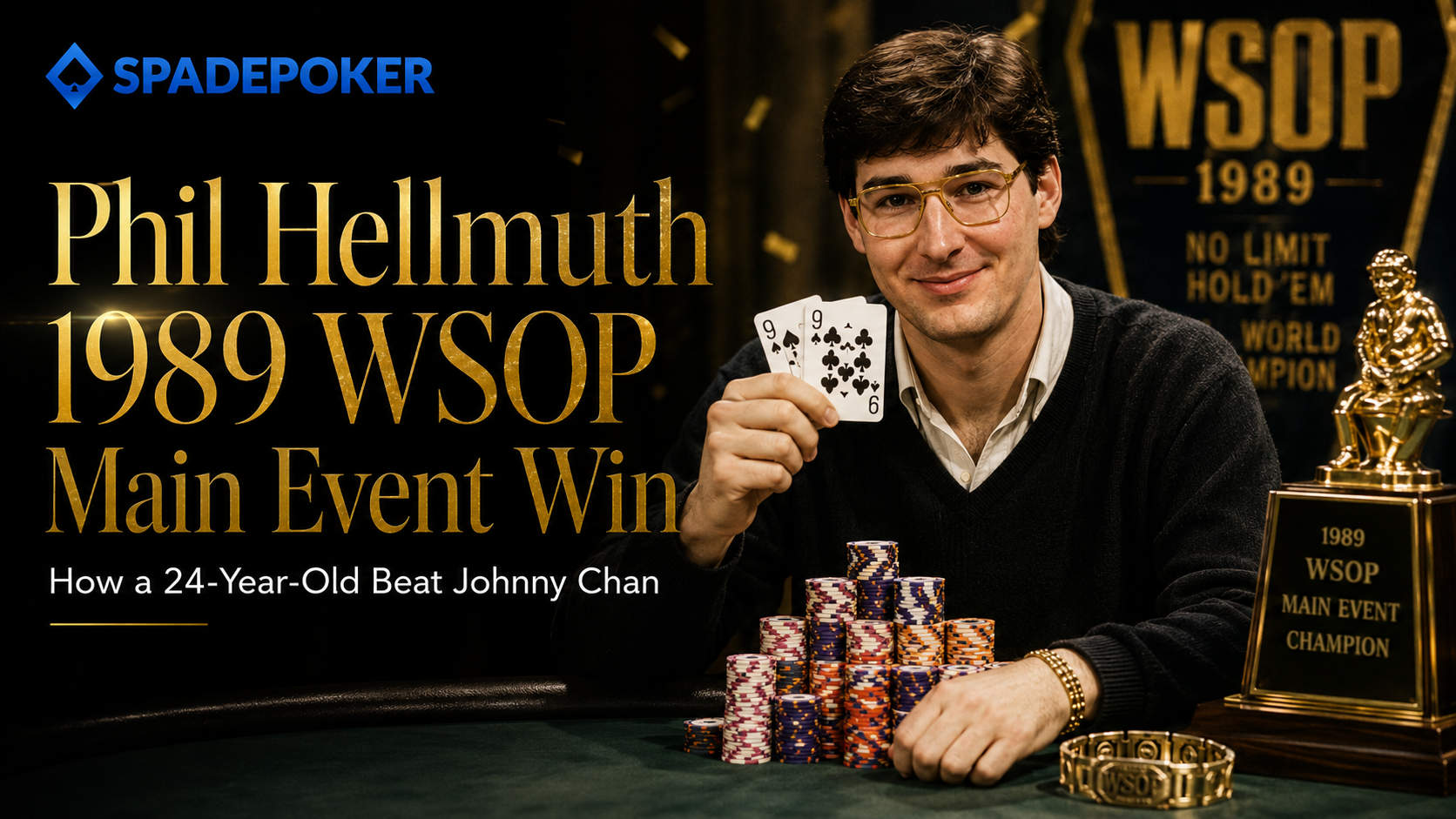
Phil Hellmuth entered the 1989 WSOP Main Event as a relatively unknown 24-year-old player. Johnny Chan, by contrast, was attempting to achieve something that had not been done in modern WSOP history: win the Main Event three consecutive times.
Chan had captured poker’s world championship in 1987 and 1988. His attempt at a third straight title became the central story of the tournament, but Hellmuth changed the expected ending.
The two players reached heads-up play, where Hellmuth defeated the reigning back-to-back champion and won 755.000 $. At 24, he became the youngest WSOP Main Event champion in history at that time.
The age record was eventually broken, but the victory remained one of the most important moments in WSOP history. Hellmuth did not simply win poker’s biggest tournament. He prevented one of the game’s greatest champions from completing an unprecedented three-peat.
The result gave Hellmuth his first bracelet and established the foundation of a career that would become inseparable from the World Series of Poker.
Becoming a Dominant WSOP Tournament Player
Winning the Main Event can define a player’s entire career. Some champions never come close to matching that first achievement. Hellmuth instead turned his 1989 victory into the beginning of a much larger WSOP story.
He won his second bracelet in Limit Hold’em in 1992 before producing one of the greatest individual series in WSOP history the following year. At the 1993 WSOP, Hellmuth won three bracelets, claiming two No-Limit Hold’em events and one Limit Hold’em title.
All three victories came within the same series and confirmed that the Main Event win had not been an isolated success. Hellmuth had become one of the most dangerous tournament players of his generation.
Further bracelets followed in 1997, 2001 and 2003. His success was built primarily in Hold’em tournaments, where his understanding of stack preservation, opponent tendencies and tournament pressure made him extremely difficult to eliminate.
Hellmuth was particularly effective against inexperienced or overly aggressive opponents. He often avoided marginal situations early, allowed other players to make large mistakes and then increased the pressure when the tournament structure made survival more valuable.
This style did not always look as mathematically balanced as the strategies preferred by later generations. In tournament fields filled with imperfect players, however, it repeatedly produced results.
Breaking the WSOP Bracelet Record
By 2006, Hellmuth had won ten bracelets, placing him level with Doyle Brunson and Johnny Chan at the top of the all-time list.
His tenth came in a 1.000 $ No-Limit Hold’em event with rebuys, where he earned 631.863 $. One year later, he won a 1.500 $ No-Limit Hold’em tournament for 637.254 $ and moved alone into first place with bracelet number eleven.
That victory transformed Hellmuth from one of several record holders into the undisputed leader.
The bracelet record has since become the central statistic of his career. Other legends have moved closer, most notably Phil Ivey, but nobody has matched Hellmuth’s total.
As of August 2026, Hellmuth has won 17 WSOP bracelets. His first came in 1989 and his most recent in 2023, creating a period of achievement that stretches across more than three decades.
He is also the first player to win WSOP bracelets in five different decades: the 1980s, 1990s, 2000s, 2010s and 2020s.
Success Beyond No-Limit Hold’em
Hellmuth’s reputation was built largely through No-Limit Hold’em, but his bracelet record is not limited to a single poker format.
In 2012, he won the 2.500 $ Seven Card Razz event for his twelfth bracelet. It was his first WSOP title outside Hold’em and answered some of the criticism that his record depended too heavily on one game.
He later added another Razz Championship victory in 2015, defeating a difficult field in the 10.000 $ event. In 2021, he won a 1.500 $ No-Limit 2-7 Lowball Draw tournament for bracelet number sixteen.
Hellmuth has also made deep runs in Omaha, Stud and prestigious mixed-game championships. During the 2011 WSOP alone, he recorded three runner-up finishes, including second place in the 50.000 $ Poker Players Championship.
He did not become the most complete mixed-game player of his generation, and his strongest results still came in Hold’em. Nevertheless, his victories and final tables across multiple formats show that his tournament abilities extend beyond the game most closely associated with his name.
Winning the WSOP Europe Main Event
One of Hellmuth’s most important victories came in Cannes in 2012.
Already the winner of the Las Vegas Main Event, he defeated a field of 420 entries in the 10.450€ WSOP Europe Main Event. Hellmuth earned 1.022.376€ and his thirteenth bracelet.
The victory made him the first player to win both the traditional WSOP Main Event in Las Vegas and the WSOP Europe Main Event.
It also came 23 years after his original world championship. Few poker players have remained capable of winning major open-field titles across such a long period.
The 2012 season was one of the strongest of Hellmuth’s later career. In addition to the European Main Event and his Razz bracelet, he finished fourth in the 1.000.000 $ Big One for One Drop. That result produced the largest recorded tournament cash of his career.
Phil Hellmuth’s Biggest Poker Wins
Hellmuth’s bracelet collection is more famous than his position on poker’s all-time money list. Unlike many modern high rollers, he built much of his career before 25.000 $, 50.000 $ and 100.000 $ tournaments became regular parts of the international schedule.
Even so, he has accumulated more than 31,6 million $ in recorded live tournament earnings.
| Year | Tournament | Result | Prize |
| 2012 | WSOP Big One for One Drop | 4th | 2.645.333 $ |
| 2012 | WSOP Europe Main Event | 1st | 1.022.376€ |
| 2016 | Super High Roller Bowl | 4th | 1.600.000 $ |
| 2017 | Poker Night in America King of the Hill | 1st | 800.000 $ |
| 2023 | WSOP 10.000 $ Super Turbo Bounty | 1st | 803.818 $ |
| 1989 | WSOP Main Event | 1st | 755.000 $ |
| 2007 | WSOP 1.500 $ No-Limit Hold’em | 1st | 637.254 $ |
| 2006 | WSOP 1.000 $ No-Limit Hold’em with Rebuys | 1st | 631.863 $ |
His biggest recorded cash came from the 2012 Big One for One Drop. Hellmuth finished fourth in the million-dollar buy-in tournament and collected 2.645.333 $.
The result also illustrates an important limitation of tournament earnings. Recorded cashes represent gross prizes, not profit. They do not account for buy-ins, tournaments in which the player did not cash, travel expenses, taxes, staking arrangements or swaps with other players.
Hellmuth’s exact career profit and personal net worth are therefore not publicly known.
The Seventeenth WSOP Bracelet
Hellmuth extended his record again at the 2023 World Series of Poker.
He entered the 10.000 $ Super Turbo Bounty No-Limit Hold’em event alongside a strong field of established professionals. The fast structure created constant pressure and left little room for passive play.
Hellmuth overcame a field of 642 entries to win 803.818 $ and his seventeenth bracelet. The result was one of the largest bracelet-event prizes of his career and demonstrated that he could still defeat modern fields more than 30 years after winning the Main Event.
Every deep run since then has renewed speculation about bracelet number eighteen. Hellmuth came close again at the 2026 WSOP, reaching the final table of the 10.000 $ Omaha Hi-Lo 8 or Better Championship, but fell short of another title.
At 62, he remained the all-time bracelet leader and an active threat in major WSOP tournaments.
The Poker Brat Personality
Phil Hellmuth’s public identity cannot be separated from the nickname “The Poker Brat.”
He is famous for emotional reactions after losing pots, particularly when he believes an opponent has played a hand badly. His complaints can include criticism of another player’s decisions, discussions of his own previous accomplishments and disbelief that a weaker starting hand defeated him.
Some of his phrases have become part of poker culture. His claim that he can “dodge bullets” and his repeated references to playing against opponents who “can’t even spell poker” helped create a character that fans immediately recognise.
These reactions have often been criticised as disrespectful. Poker is a game in which weaker decisions can still produce short-term victories, and Hellmuth has not always accepted those outcomes quietly.
At the same time, his emotional transparency made him ideal for televised poker. Viewers never had to wonder whether a pot mattered to him. His frustration, confidence and competitive intensity were visible in every expression.
Hellmuth has also shown an ability to laugh at his own character. He understands the commercial power of the Poker Brat identity and has incorporated it into books, appearances, sponsorships and public events.
The line between his natural personality and the character presented to audiences is not always clear. That ambiguity is one reason he has remained so compelling.
Theatrical Entrances and Poker Entertainment
Hellmuth has regularly treated the WSOP Main Event as both a competition and a stage.
Over the years, he has arrived dressed as historical and fictional characters, including Julius Caesar, a military general and a racing driver. His entrances have included costumes, models, vehicles and carefully planned performances.
Not every stunt has gone according to plan. Before the 2007 Main Event, Hellmuth crashed a race car into a light fixture in the Rio parking lot and eventually completed his entrance in a limousine.
For traditionalists, these performances sometimes appeared excessive. For television and poker media, they created memorable images and helped establish the Main Event as an entertainment product rather than only a card tournament.
Hellmuth understood earlier than many professionals that a poker player could also become a public character. His results gave the performances credibility, while the performances expanded his audience beyond people who followed tournament statistics.
Playing Style and Tournament Strengths
Hellmuth’s style is based heavily on exploiting how real opponents behave in tournament situations.
He is known for protecting his stack, avoiding unnecessary confrontations and waiting for opponents to make mistakes. He places particular value on survival and frequently argues that strong tournament players should not accept every mathematically close gamble available to them.
This approach has sometimes conflicted with modern theory. Solver-based strategy places greater emphasis on balanced ranges, correct frequencies and decisions that cannot be exploited over a large sample. Hellmuth has traditionally focused more on adjusting to the specific people sitting in front of him.
His greatest strength may be his understanding of amateur and mid-level tournament players. He recognises when opponents are uncomfortable, when they value survival too highly and when their bet sizes reveal more than they intend.
Hellmuth has often been criticised for entering tournaments late and allowing his stack to become short relative to the blinds. Yet he has repeatedly shown an unusual ability to operate with limited chips. His patience, short-stack experience and confidence in high-pressure situations have allowed him to recover from positions in which many players would quickly be eliminated.
He is not universally regarded as the strongest technical player in the world. His high-stakes cash-game results do not define his reputation, and several contemporaries have demonstrated greater success in mixed games or modern super high rollers.
Tournament poker, however, rewards a distinct set of skills. Hellmuth’s 17 bracelets provide exceptionally strong evidence that his approach works in the environment he values most.
High Stakes Duel and Heads-Up Success
Hellmuth strengthened his later-career reputation through the televised High Stakes Duel series.
He defeated Antonio Esfandiari in three consecutive matches and then completed another three-match sweep against Daniel Negreanu. The victories were notable because Negreanu entered the duel after extensive heads-up preparation for his challenge against Doug Polk.
Hellmuth later defeated Nick Wright and Tom Dwan in separate matches before Dwan ended his winning streak. Hellmuth subsequently won their rematch.
The format did not award bracelets or contribute to traditional tournament rankings, but it tested his ability to adjust against one opponent under increasing financial pressure.
His success challenged the argument that his results depended entirely on large tournament fields filled with inexperienced players. Although the sample remained relatively small, Hellmuth repeatedly defeated accomplished opponents in a format that demanded sustained heads-up adaptation.
Television, Books and Business Career
Hellmuth became one of the most visible personalities of poker’s television era.
He appeared on programmes such as High Stakes Poker, Poker After Dark, The Big Game and numerous WSOP broadcasts. Even when he was not winning, his presence created storylines. Producers understood that a table containing Hellmuth was more likely to generate conversation, conflict and memorable reactions.
He has also written several books, including Play Poker Like the Pros, Bad Beats and Lucky Draws and his autobiography Poker Brat. His instructional work introduced recreational players to tournament concepts and presented his personal approach to the game.
Outside tournament poker, Hellmuth has developed sponsorships, business partnerships and relationships with celebrities, athletes and technology entrepreneurs. He regularly appears in private games and charity events that connect poker with the wider entertainment and business worlds.
These activities contributed to his financial success and public profile, but they also make it impossible to calculate his wealth from tournament results alone. His precise net worth has never been independently confirmed.
Wife, Children and Life Away from Poker
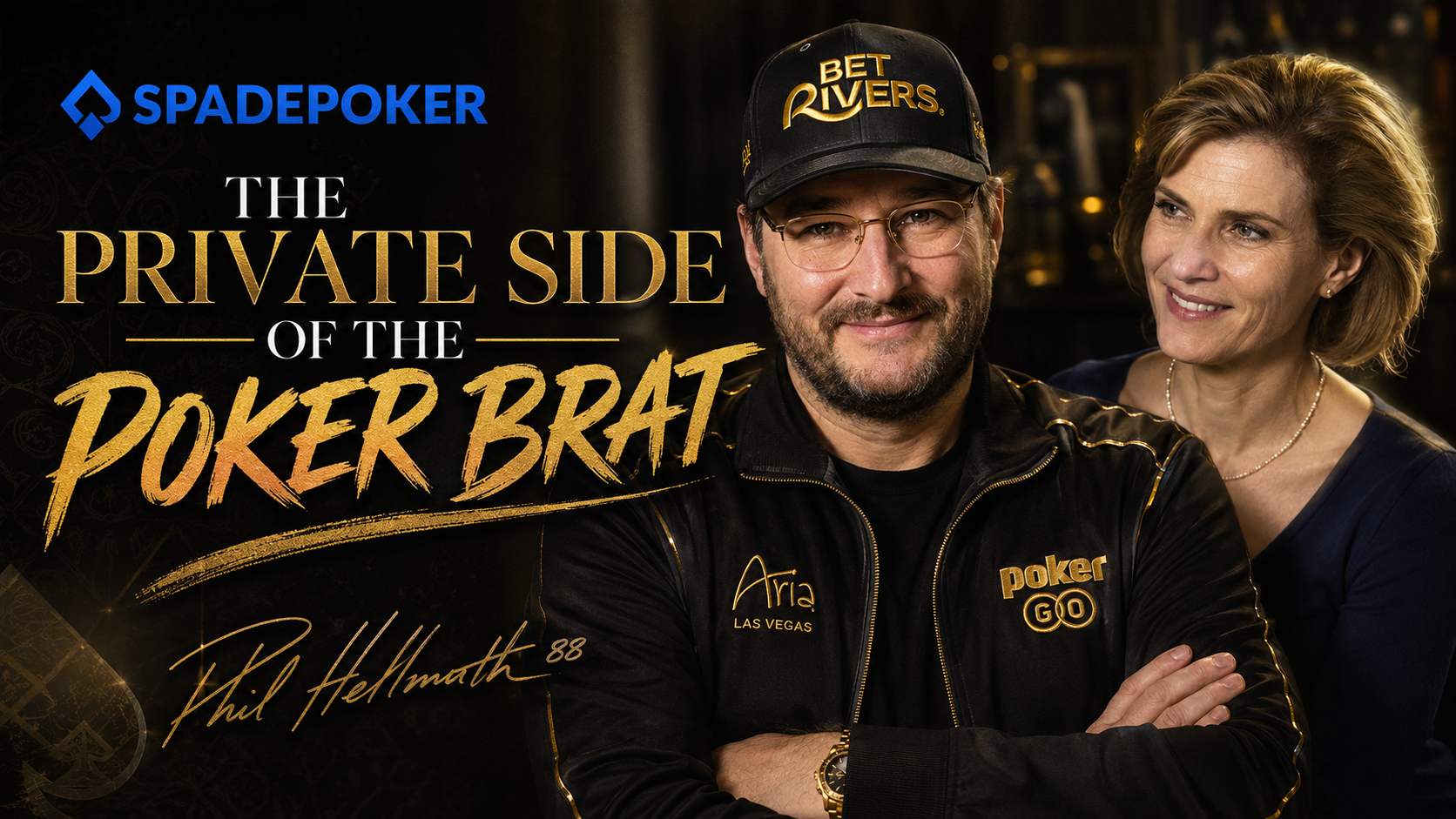
Hellmuth met Katherine Sanborn while they were students at the University of Wisconsin. They married in 1990 and have two sons, Phillip III and Nicholas.
Katherine built a successful medical career as a psychiatrist associated with Stanford University. The family has lived in California for much of Hellmuth’s professional career.
Their relationship has often attracted attention because of the contrast between Hellmuth’s public behaviour and his wife’s profession. The connection has produced many easy jokes within poker, but their long marriage also reveals a more stable private life than the Poker Brat character might suggest.
Hellmuth has spoken warmly about his family and regularly credits Kathy with providing perspective during emotionally difficult periods. Their son Phillip III has also played tournament poker, including an appearance in the WSOP Main Event.
Away from the tables, Hellmuth follows professional sports and has developed friendships with prominent athletes, team owners, entertainers and business figures. These relationships form an important part of his public identity and help explain his visibility outside the traditional poker community.
Controversies and Criticism
Most criticism of Hellmuth concerns his behaviour rather than the legitimacy of his results.
His verbal reactions have occasionally crossed the line from entertainment into personal criticism of opponents. Tournament officials and fellow professionals have challenged him over comments that would not be accepted from a less famous player.
One of the most discussed incidents occurred during the 2008 WSOP Main Event, when Hellmuth criticised Cristian Dragomir after folding what would have been the winning hand. Hellmuth received a one-round penalty for his conduct, although the penalty was later withdrawn.
Similar moments have appeared throughout his televised career. He has walked away from tables, argued over etiquette and reacted dramatically to losing against unconventional plays.
The criticism is justified when his behaviour becomes personally disrespectful. Poker’s competitive nature does not remove a professional player’s responsibility to treat opponents fairly.
At the same time, Hellmuth’s disputes have rarely involved accusations that his tournament achievements were illegitimate. The central debate has always been whether his behaviour should be viewed as unacceptable conduct, emotional weakness, calculated entertainment or some combination of all three.
Poker Hall of Fame
Phil Hellmuth was inducted into the Poker Hall of Fame in 2007.
At the time, he had already won the WSOP Main Event and a record eleven bracelets. He was only 42 and still had a substantial part of his playing career ahead of him.
Since his induction, Hellmuth has added six more bracelets, won the WSOP Europe Main Event and continued competing successfully against several new generations of professionals.
His post-induction achievements alone would represent an exceptional poker career. Combined with everything that came before them, they make him one of the strongest and most recognisable Hall of Fame members in the game’s history.
Phil Hellmuth’s Place Among the Greatest Players
Evaluating the greatest poker player of all time depends on the criteria being used.
Players such as Phil Ivey are often praised for succeeding in almost every poker environment, including elite cash games and mixed events. Modern stars have accumulated larger recorded earnings through super high rollers. Other specialists may possess a deeper theoretical understanding of individual formats.
Hellmuth’s claim is more specific.
No player has won more WSOP bracelets. He has captured the Las Vegas Main Event and the WSOP Europe Main Event, won bracelets in five decades and remained relevant from the pre-boom era to modern poker.
Critics can reasonably argue that bracelet totals do not settle every debate. Tournament sizes, game selection, field strength and the expansion of the WSOP have changed considerably during Hellmuth’s career.
However, those same changes strengthen part of his case. Hellmuth did not succeed under one fixed set of conditions. He continued winning as fields grew, online players transformed strategy and solver-based study increased the technical standard of professional poker.
His methods evolved, but the essential strengths remained: patience, confidence, emotional investment and an exceptional understanding of tournament opponents.
The Poker Legacy of Phil Hellmuth
Phil Hellmuth’s legacy combines competitive achievement with a personality that changed how poker was presented to the public.
His 17 bracelets are the clearest part of that legacy. The record places him alone at the top of the WSOP’s most famous historical ranking and gives every future bracelet chase a simple target.
His longevity is equally significant. Hellmuth won his first bracelet before online poker, televised hole cards and the modern poker boom. He continued winning after all three had transformed the game.
Finally, he helped demonstrate that poker stars could be characters as well as competitors. Audiences watched him not only to see whether he would win, but also to see how he would respond when he lost.
That personality has made him admired, criticised, imitated and parodied. It has never made him irrelevant.
Behind the entrances, speeches and emotional explosions stands a player who has spent more than three decades proving that his confidence is not based entirely on performance. The record is real, the Main Event title is real and the continued pursuit of bracelet number eighteen remains one of the longest-running stories in poker.
Phil Hellmuth may always inspire arguments about his behaviour and his place among the greatest. What cannot reasonably be disputed is that the Poker Brat has become one of the defining figures in the history of the game.
Statistics updated in August 2026. Recorded tournament earnings represent gross cashes and should not be interpreted as career profit.