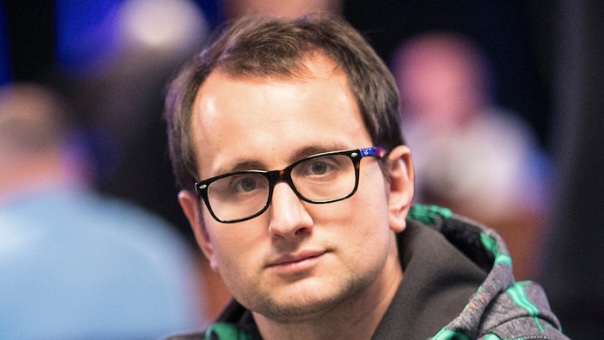
Rainer Kempe
Rainer Kempe is a German professional poker player, Super High Roller Bowl champion and World Series of Poker bracelet winner. He became internationally recognised through a rapid sequence of tournament results in 2015 and then secured one of poker’s most prestigious high-stakes titles in 2016.
His victory in the 300.000 $ Super High Roller Bowl earned 5.000.000 $, which remains his largest recorded tournament payout. Nine years later, he added a different kind of milestone by winning his first WSOP bracelet in the 10.000 $ Super Turbo Bounty tournament.
The Hendon Mob profile checked for this article records 23.534.768 $ in live tournament cashes. His major results span Europe, North America, the Caribbean, Macau and Australia, reflecting a career built around international competition.
Kempe belongs to the German generation that made high-stakes tournament poker increasingly analytical and collaborative. His reputation developed through strong performances against familiar elite opponents, while his quieter public manner distinguished him from some of the game’s more theatrical personalities.
Born in Berlin
Rainer Kempe was born on July 24, 1989, in Berlin, Germany. His German nationality has remained part of his tournament identity throughout an international career.
His educational background includes studying at the University of Potsdam and the University of Sussex. He later became associated with Brighton in England, giving his early adult life connections to both Germany and the United Kingdom.
That international background preceded the tournament schedule for which he became known. By the time his results began attracting widespread attention, travelling between European festivals and overseas events was already a central part of his poker life.
Kempe’s public biography is dominated by his professional achievements rather than detailed accounts of childhood or family life. The clearest way to trace his development is through the progression from early recorded tournaments to the exceptionally competitive events that later defined his career.
The Early Tournament Years
Kempe’s recorded live tournament history began in 2011. An early result was a tenth-place finish at a Berlin Triple A Series event, worth approximately 2.044 $ in the database’s dollar conversion.
That first stage looked very different from the career that followed. His initial results were modest, and the headline victories were still several years away.
The contrast is useful because high-roller success can make a player’s earlier development disappear from view. Kempe did not enter the public tournament record with a five-million-dollar victory. He built a record before reaching the most expensive fields.
His later comments about a sit-and-go background also indicate experience in formats where changing stack sizes and short-handed decisions matter. Those skills would become especially relevant when he won a fast-paced WSOP event many years after establishing himself in high rollers.
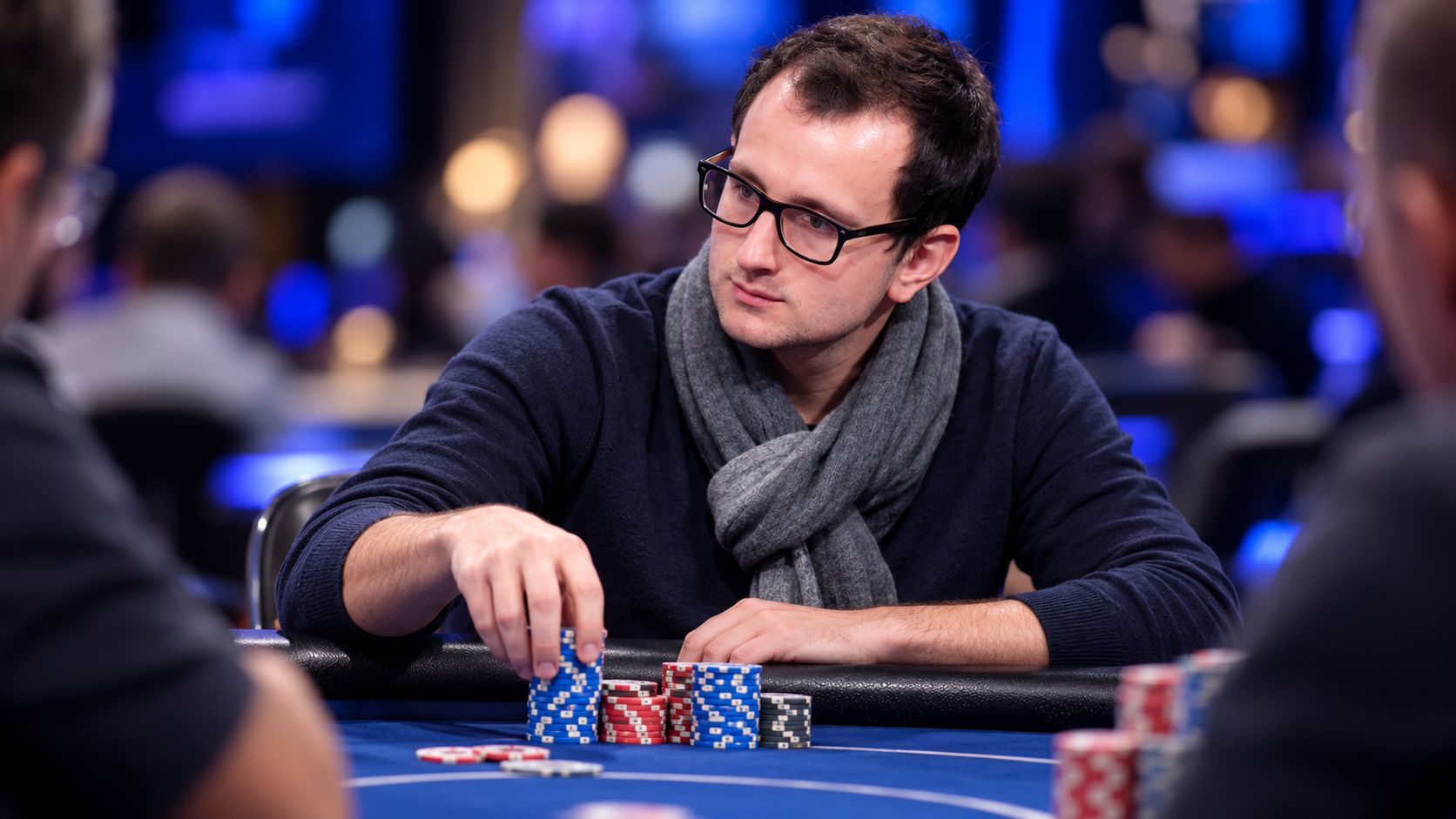
A Breakthrough Season in 2015
Kempe’s international breakthrough came in 2015. Several substantial results arrived within the same season, making it difficult to dismiss his emergence as the consequence of one unusually successful tournament.
At the WSOP, he finished seventh in the 1.111 $ Little One for One Drop for 90.189 $. It was a significant early Las Vegas result and an introduction to the late stages of a large championship-series field.
He then reached consecutive European Poker Tour Main Event final tables, followed by a major World Poker Tour finish and a high-roller victory in Prague.
These achievements tested different parts of tournament play. Large Main Events required survival over multiple days and against many unfamiliar opponents. High rollers offered smaller but more concentrated fields. Kempe’s ability to produce results in both settings gave his rise a broader foundation.
Consecutive EPT Main Event Final Tables
Kempe finished fifth in the 2015 EPT Barcelona Main Event for 320.400 €. Later in the season, he finished fifth again in the EPT Malta Main Event, earning 161.340 €.
Back-to-back EPT Main Event final tables were a particularly persuasive achievement. These tournaments were not small invitational contests. Reaching the final table required navigating deep fields, changing table lineups and the demands of a lengthy tournament structure.
The repeated fifth-place finishes did not give him an EPT Main Event championship, but they established him as a serious contender on the tour.
They also changed the scale of his public record. Kempe was now accumulating major prizes and appearing in the closing stages of events followed by an international audience. His name became familiar before his defining Super High Roller Bowl victory.
Montreal and Prague Extend the Momentum
The strong 2015 run continued at WPT Montreal, where Kempe finished third in the Main Event for 195.940 CAD. The tournament attracted 697 entries, offering another substantial field against which to measure his progress.
In December, he won the EPT Prague 25.500 € single-day high roller for 539.000 €. The event drew 80 entries and gave him a prominent European high-roller title.
The Prague result marked a change from coming close to completing a major victory. Earlier final tables had demonstrated consistency; this tournament supplied a trophy and an important example of closing out an expensive event.
The distinction between the competitions matters. Kempe’s Prague title was an EPT festival high-roller victory, while his Barcelona and Malta results were Main Event final tables. Together, they showed success across the festival schedule rather than one repeatedly favourable tournament format.
Selected Career Milestones
| Year | Tournament | Result | Prize |
| 2015 | WSOP Little One for One Drop | 7th | 90.189 $ |
| 2015 | EPT Barcelona Main Event | 5th | 320.400 € |
| 2015 | EPT Malta Main Event | 5th | 161.340 € |
| 2015 | WPT Montreal Main Event | 3rd | 195.940 CAD |
| 2015 | EPT Prague 25.500 € High Roller | 1st | 539.000 € |
| 2016 | Super High Roller Bowl | 1st | 5.000.000 $ |
| 2018 | Super High Roller Bowl China | 3rd | 16.005.000 HKD |
| 2018 | MILLIONS Barcelona 25.500 € Super High Roller | 2nd | 450.000 € |
| 2019 | PCA 50.000 $ Single-Day High Roller | 1st | 908.100 $ |
| 2019 | Aussie Millions 25.000 AUD Challenge | 1st | 826.465 AUD |
| 2025 | WSOP 10.000 $ Super Turbo Bounty | 1st | 892.701 $ |
Entering the Super High Roller Bowl
The 2016 Super High Roller Bowl at ARIA in Las Vegas required a 300.000 $ buy-in. Its 49 players created a prize pool of 14.700.000 $, and only seven places were paid.
For Kempe, the event represented an opportunity to compete on a much larger financial stage than the tournaments that had brought him attention in 2015.
A small field did not make the task simple. Many entrants were specialists in precisely this type of competition. Players had extensive experience with one another, and decisions could be examined against a background of previous encounters and detailed technical knowledge.
The structure also concentrated the financial consequences of late-stage hands. A player could spend days competing and still leave without a payout. Once the money was reached, each elimination substantially changed the prizes available to those who remained.
A Five-Million-Dollar Championship
Kempe won the 2016 Super High Roller Bowl and collected 5.000.000 $. His final opponent was fellow German professional Fedor Holz, who received 3.500.000 $ as runner-up.
The deciding hand matched Kempe’s pocket eights against Holz’s pocket deuces. Kempe’s larger pair held, completing the most valuable victory of his career.
The result gave him more than a large addition to his earnings. The Super High Roller Bowl was becoming one of the defining championships of the modern high-stakes circuit, and its winner gained recognition among players who specialised in the world’s most expensive tournaments.
His emergence now had a clear sequence: substantial Main Event final tables, an EPT high-roller title and then a championship against a concentrated elite field. The five-million-dollar score was the largest step in that progression.
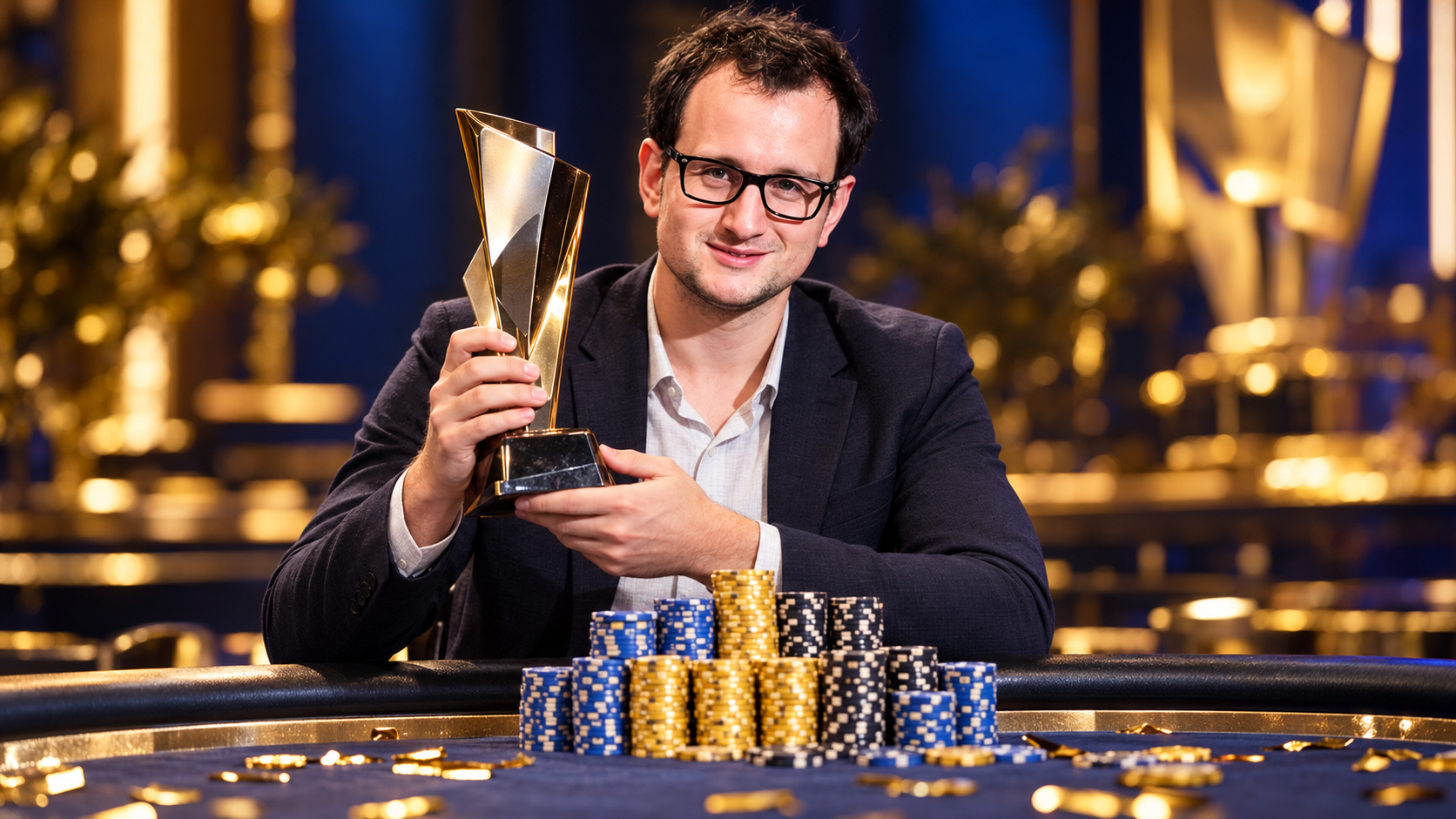
An All-German Heads-Up Finish
The final between Kempe and Holz highlighted Germany’s influence on the high-roller scene. Both belonged to a generation increasingly associated with intensive study, shared discussion and repeated success in expensive international tournaments.
Their shared nationality did not reduce the competitive significance of the encounter. Heads-up play required each to adjust to a single opponent, with wider starting-hand ranges and more frequent decisions than at a full table.
Kempe’s victory also demonstrated why the final result must be distinguished from broader reputations. Holz was already an outstanding player, but the championship belonged to the player who completed this particular tournament.
The final became a lasting reference point in both men’s careers. For Kempe, it remains the achievement most readily associated with his name, even after later titles expanded the range of his accomplishments.
The German High-Roller Generation
Kempe’s career developed alongside players such as Fedor Holz, Steffen Sontheimer, Stefan Schillhabel and Manig Loeser. This group helped make German professionals a regular presence at major high-roller final tables.
He was also associated with No Limit Gaming, a project connecting poker professionals and the wider competitive gaming environment.
The importance of that professional network was not simply visibility. Poker study often benefits from having decisions challenged by other strong players. Discussion can expose assumptions that remain unnoticed when a player works alone.
No shared approach guarantees tournament victories, and the individual records of these players are distinct. Kempe’s own contribution is identifiable through his titles and final tables. His success helped demonstrate the depth of that generation beyond any single star.
A Major Result in Macau
In March 2018, Kempe finished third in Super High Roller Bowl China in Macau. His prize was 16.005.000 HKD, worth approximately 2.040.533 $ in the historical conversion used in career reporting.
Justin Bonomo won the event. For Kempe, another podium finish in the same prestigious tournament family reinforced the significance of his 2016 championship.
The Macau result placed him in a different high-stakes environment from Las Vegas. International super high rollers brought together travelling professionals and regional participants, requiring players to adjust to unfamiliar opponents as well as recognisable regulars.
It was also a reminder that a player’s important performances are not limited to victories. Third place in an exceptionally expensive event can represent both a major financial result and a strong competitive achievement.
Runner-Up at MILLIONS Barcelona
Kempe added another substantial result in April 2018, finishing second in a 25.500 € Super High Roller at the partypoker LIVE MILLIONS Grand Final in Barcelona.
The tournament attracted 88 entries. Andreas Eiler won, while Kempe collected 450.000 € for second place.
This result continued his connection with Barcelona, the city where one of his breakthrough EPT Main Event final tables had taken place. The later event involved a different tour and a different field, but it supplied another major appearance in the closing stages of a European festival.
Across Macau and Barcelona, the 2018 record showed that Kempe’s relevance had continued beyond his most famous victory. He remained capable of challenging for titles while the high-roller circuit expanded into more locations and more frequent events.
Winning the PCA Single-Day High Roller
Kempe began 2019 with victory in the PCA 50.000 $ Single-Day High Roller in the Bahamas. He defeated a field of 64 entries and received 908.100 $.
Alex Foxen finished second, with Stephen Chidwick third. The final table also included Daniel Dvoress, Christoph Vogelsang, Steffen Sontheimer and Jason Koon.
Kempe won the final confrontation with pocket fours against Foxen’s ace-queen. The pair survived to give him the title.
The victory was another example of success in a compressed tournament schedule. Single-day high rollers place demands on concentration and adaptability: players must move from early-stage decisions to short-handed pressure without the overnight pause available in longer events.
An Aussie Millions Title
Later that January, Kempe won the 25.000 AUD Challenge at the Aussie Millions in Melbourne. The event attracted 151 entries, and his first-place prize was 826.465 AUD.
Toby Lewis finished second. The two reached a heads-up agreement that adjusted the prize distribution before Kempe completed the victory.
The Australian result extended an already successful start to the year. Within the same month, Kempe had won important high rollers in the Caribbean and Australia, against different fields and in different tournament settings.
The prize should be read in its original currency. An Australian-dollar payout cannot be directly compared with a US-dollar payout simply by looking at the number. Historical databases convert the amounts, but the conversion is a separate step from the original tournament award.

Major Victories Across Different Structures
| Year | Victory | Field | First-place prize |
| 2015 | EPT Prague 25.500 € High Roller | 80 entries | 539.000 € |
| 2016 | Super High Roller Bowl | 49 players | 5.000.000 $ |
| 2019 | PCA 50.000 $ Single-Day High Roller | 64 entries | 908.100 $ |
| 2019 | Aussie Millions 25.000 AUD Challenge | 151 entries | 826.465 AUD |
| 2025 | WSOP 10.000 $ Super Turbo Bounty | 809 entries | 892.701 $ |
The Long Wait for a WSOP Bracelet
A Super High Roller Bowl championship established Kempe among the high-stakes elite, but a WSOP bracelet remained absent from his record for several more years.
His seventh-place finish in the 2015 Little One for One Drop had already brought him close to the final stages of a bracelet event. In 2019, he finished fourth in the 600 $ Mixed No-Limit Hold’em/Pot-Limit Omaha Deepstack tournament.
The 2019 result is a useful detail in a career usually associated with expensive Hold’em events. It demonstrated a notable deep run in a lower-buy-in tournament combining two games.
The eventual bracelet arrived in 2025, ten years after his first WSOP cash. It added a championship-series achievement to a record whose best-known titles had previously come elsewhere.
First Bracelet in the 2025 Super Turbo Bounty
Kempe won Event #72 at the 2025 WSOP, the 10.000 $ Super Turbo Bounty No-Limit Hold’em tournament. He overcame 809 entries and defeated Yuya Arito heads-up to earn 892.701 $ and his first bracelet.
The competition ran from midday into the early hours of June 28, completing its course in roughly fifteen hours. Kempe arrived at the final table fourth in chips.
His published first-place award was supplemented by 30.000 $ in bounties, including the return of his own bounty. These amounts should be distinguished when comparing the reported tournament payout with his full proceeds from the event.
The victory added something different from his 2016 title: success in a large, fast-moving WSOP field, with elimination bounties affecting decisions alongside the regular prize schedule.
The 2025 WSOP Final Table
| Place | Player | Country | Prize |
| 1st | Rainer Kempe | Germany | 892.701 $ |
| 2nd | Yuya Arito | Japan | 595.078 $ |
| 3rd | Ryuta Nakai | Japan | 415.755 $ |
| 4th | Xiaoyao Ma | China | 295.133 $ |
| 5th | Martin Kabrhel | Czech Republic | 212.926 $ |
| 6th | Raoul Kanme | Netherlands | 156.166 $ |
| 7th | Colin Dentan | United States | 116.468 $ |
| 8th | Chad Thyzel | United States | 88.352 $ |
Playing Style and Competitive Strengths
Kempe’s tournament record points to adaptability rather than dependence on one structure. He has succeeded in multi-day Main Events, high rollers, single-day competitions and a super turbo bounty tournament.
At a strategic level, these formats reward different balances of patience and aggression. Deeper stacks create more room for decisions across several betting rounds. Shorter stacks increase the importance of preflop ranges, position and the willingness to commit chips at the right time.
His results do not support reducing his game to a simple label such as always aggressive or always conservative. A profitable tournament decision depends on stack sizes, opponents and the prizes at stake.
The recurring strength is his capacity to remain competitive as those conditions change. The contrast between a 49-player Super High Roller Bowl and an 809-entry WSOP bounty tournament provides a concrete example.
Preparation, Focus and Tournament Pressure
In interviews about high-stakes competition, Kempe has discussed preparation, rest and the quality of decisions. These themes fit a career in which a small number of late-stage confrontations can have unusually large financial consequences.
Preparation does not remove uncertainty. A strong decision can lose a pot, and an unsuccessful tournament can contain many well-played hands. Players therefore need a way to assess their performance that extends beyond the final finishing position.
For a travelling professional, focus also involves the practical demands of a schedule. Flights, unfamiliar time zones and long days at the table form part of the environment in which strategic decisions are made.
Kempe’s repeat results across international venues suggest sustained competence under those conditions. The evidence is the record itself: important performances continued after the initial breakthrough, rather than ending with the first major title.
Tournament Earnings and Their Meaning
The 23.534.768 $ listed in Kempe’s recorded live tournament earnings is a total of gross cashes, not a verified statement of lifetime profit or personal wealth.
Tournament buy-ins, unsuccessful entries, travel expenses, taxes and any staking arrangements affect the amount a player ultimately retains. Private cash-game results are not included in a public tournament database.
His 5.000.000 $ Super High Roller Bowl payout accounts for a substantial share of the total. That concentration reflects the size of the award, while the remaining record shows achievements in other countries and tournament series.
The strongest reading of the figures combines scale with context. Kempe accumulated major prizes, but the significance of his career also comes from the events he won, the opponents he faced and the different structures in which he succeeded.
Rainer Kempe’s Place in Modern Poker
Kempe’s career captures an important period in the development of high-stakes tournament poker. His rise coincided with the growth of super high rollers, closer professional study networks and greater international attention on elite final tables.
He first became widely visible through the EPT and WPT, then won a championship that required a 300.000 $ entry. Later successes in Macau, the Bahamas and Australia showed that the same career could extend across the global circuit.
The 2025 WSOP bracelet gave the story a further chapter. A player already known for winning one of poker’s richest tournaments finally secured the honour most closely associated with the game’s largest annual series.
His lasting profile is therefore broader than the five-million-dollar headline. Rainer Kempe is a major high-roller champion whose record includes repeated Main Event final tables, international trophies and a WSOP victory achieved a decade after his breakthrough season.
Prepared in October 2026. Earnings reflect the live tournament profile checked for this article and represent gross recorded cashes, not net profit. Prizes are shown in the currencies stated. Image markers indicate AI-generated illustrations of fictional poker scenes, supplied separately.