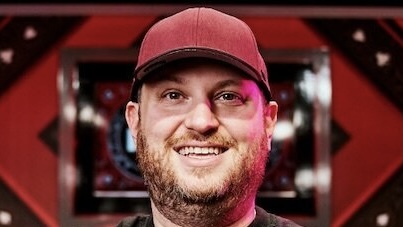
Scott Seiver
Scott Seiver is an American professional poker player, seven-time World Series of Poker bracelet winner and World Poker Tour champion. His career combines major No-Limit Hold’em results with success in the mixed games that have long defined the highest levels of professional poker.
Seiver won the WPT World Championship in 2011, the PokerStars Caribbean Adventure Super High Roller in 2013 and three WSOP bracelets during an exceptional summer in 2024. That final achievement earned him the WSOP Player of the Year award.
His recorded live tournament earnings stand at 27.539.292 $, with a career-best payout of 5.160.000 $ for second place in the inaugural Super High Roller Bowl in 2015. Those numbers represent only the public tournament side of a career also built around high-stakes cash games.
Seiver belongs to the generation that connected online poker’s analytical revolution with the established Las Vegas mixed-game tradition. He can compete for a multimillion-dollar Hold’em prize and then win a championship in a game requiring a completely different set of decisions.

Early Life and Date of Birth
Scott Brandon Seiver was born on April 14, 1985, in Columbus, Ohio, and grew up in Cold Spring Harbor, New York. His introduction to competitive card games came long before poker became his profession.
Family games helped familiarise him with probability, memory and the challenge of interpreting another player’s choices. Bridge and gin were part of that environment, followed by small poker games during his school years.
This background matters because poker was not an isolated discovery. It became another way to explore a competitive interest that had already developed around cards.
Seiver later attended Brown University. His university years placed him among young players who were exploring online poker while the game’s international audience expanded rapidly.
Brown University and a New Poker Generation
At Brown, Seiver’s circle included Isaac Haxton, who would also become one of the strongest players of his generation. Their careers eventually developed different public rhythms, but both emerged from a period in which young professionals could study and play at unprecedented volume.
Online poker made difficult opponents accessible without requiring constant travel. It also exposed weaknesses quickly: a habit that worked against inexperienced players could become expensive against a specialist.
For players developing during that era, improvement increasingly meant discussing hands, questioning assumptions and comparing alternative strategies.
Seiver’s later accomplishments show how effectively that analytical foundation could transfer beyond a single format. His career did not remain confined to the most popular game on an online lobby.
From Developing Player to Recognised Professional
Seiver’s first major public breakthrough arrived during the 2008 WSOP. He was 23, with most of his greatest tournament results still ahead of him.
A bracelet did more than add a trophy. It placed his name among established winners and supplied a meaningful early tournament score.
He subsequently developed a career with two overlapping tracks. International tournaments provided visible titles and prize money, while cash games offered another demanding professional environment.
The distinction became increasingly important as his career progressed. A quieter tournament schedule did not necessarily mean that he was playing less poker or encountering weaker competition.
The First WSOP Bracelet in 2008
Seiver won the 5.000 $ No-Limit Hold’em event at the 2008 World Series of Poker for 755.891 $. He defeated Dave Seidman heads-up to secure his first bracelet.
The tournament attracted 731 entries, making it a substantial test rather than a small invitational contest. Seiver’s final-table performance established him as a player capable of converting a strong position into a championship.
The victory became the starting point of a bracelet collection that would eventually span five different poker variants.
It also introduced a pattern visible throughout his career: success in one discipline would be followed by the willingness to compete seriously in another.
The 2011 WPT World Championship
In 2011, Seiver won the World Poker Tour World Championship at Bellagio. He defeated Farzad Bonyadi heads-up and received 1.618.344 $.
The title added a major WPT championship to his WSOP record and confirmed that his early bracelet had not been an isolated achievement.
Winning a championship of this scale requires more than playing strong starting hands well. Players must manage changing stack sizes, escalating blinds and the increasing financial consequences of each elimination.
Bellagio was also an appropriate setting for Seiver’s development. Las Vegas would remain central to his professional life, particularly as mixed cash games became a larger part of his routine.
Winning the 2013 PCA Super High Roller
Seiver began 2013 with another major title, winning the 100.000 $ Super High Roller at the PokerStars Caribbean Adventure. His first prize was 2.003.480 $.
The final stages included David “Doc” Sands and Nick Schulman. Seiver eventually defeated Sands heads-up to take the championship.
The result demonstrated his ability to compete in the emerging super-high-roller environment, where expensive entries frequently brought together a concentrated field of accomplished professionals.
A high buy-in does not remove tournament variance. It does, however, create a setting in which repeated technical mistakes can be punished by opponents familiar with the same situations. Seiver’s title showed that he could succeed under that pressure.
The Big One for One Drop in 2014
At the 2014 WSOP, Seiver finished sixth in the 1 million $ Big One for One Drop and earned 1.680.000 $. Daniel Colman won the event.
The tournament’s extraordinary entry price made it one of the most closely followed competitions of the summer. Even a deep finish short of the championship could produce a career-changing payout.
For Seiver, the result extended a sequence of major scores across different venues and tournament structures.
It should nevertheless be interpreted as a gross prize, not a statement about personal profit. High-buy-in events can involve substantial entry costs and private financial arrangements that are not visible in a results database.
The Inaugural Super High Roller Bowl
Seiver’s largest recorded tournament payout came at the first Super High Roller Bowl in 2015. The 500.000 $ event attracted 43 entries and became a landmark in the development of elite high-stakes tournaments.
He reached heads-up play against Brian Rast and finished second for 5.160.000 $. Rast received 7.525.000 $ for the championship.
Although Seiver did not win the title, the runner-up finish remains a defining result. It placed him at the centre of a tournament that would develop into an important part of the international high-roller calendar.
The score also illustrates a limitation of trophy-based comparisons. A second-place finish in an exceptionally demanding event can represent a major competitive achievement even when it adds no bracelet or championship to a player’s résumé.
Selected Major Tournament Results
| Year | Tournament | Finish | Recorded prize |
| 2015 | Super High Roller Bowl — 500.000 $ | 2nd | 5.160.000 $ |
| 2013 | PCA Super High Roller — 100.000 $ | 1st | 2.003.480 $ |
| 2014 | WSOP Big One for One Drop — 1.000.000 $ | 6th | 1.680.000 $ |
| 2011 | WPT World Championship | 1st | 1.618.344 $ |
| 2008 | WSOP No-Limit Hold’em — 5.000 $ | 1st | 755.891 $ |
These selected results highlight major career milestones rather than providing a complete list of Seiver’s largest cashes. Recorded prizes are gross payouts before entry costs and other expenses.
Cash Games at the Centre of His Career
Tournament databases make Seiver’s career easy to describe numerically, but they cannot capture the full picture. High-stakes cash games have remained an important part of his professional identity.
Cash poker presents a different challenge from tournaments. Players can often reload, leave or return, and the objective is not to survive until a final table. Decisions are evaluated through their long-term financial value.
Mixed games add another layer because the discipline changes during the session. A player must recognise when the rules, betting structure and definition of a strong hand have shifted.
Seiver’s tournament achievements in several formats provide visible evidence of that versatility. His private cash-game results, however, are not comprehensively documented and should not be presented as a verified lifetime profit figure.
Why Mixed-Game Ability Matters
No-Limit Hold’em dominates much of poker’s public coverage, but it is only one part of the professional game. Razz, Omaha Hi-Lo and lowball require different hand evaluations and different ways of using information.
In a mixed rotation, an opponent who is strong in one discipline may be vulnerable in another. Consistent success therefore depends on avoiding large weaknesses rather than relying entirely on a favourite game.
Seiver’s bracelet record reflects this broader standard. His titles include both community-card and stud-style games, split-pot poker and a draw format.
That range helps explain why players may rate a professional highly even when his tournament schedule is less extensive than that of a full-time high-roller specialist.
A Second Bracelet in Limit Hold’em
Ten years after his first WSOP title, Seiver won the 2018 10.000 $ Limit Hold’em Championship. He defeated Matt Szymaszek heads-up and received 296.222 $.
Limit Hold’em uses fixed betting increments rather than allowing a player to choose any bet size up to an entire stack. The resulting decisions involve different pot-odds relationships and different opportunities to apply pressure.
The championship therefore added more than another Hold’em trophy. It showed that Seiver’s success extended beyond the No-Limit format of his first bracelet.
The decade between those victories also demonstrates why bracelet totals need context. A player concentrating on private games can remain highly accomplished without producing a new WSOP title every summer.
The 2019 Razz Championship
Seiver won his third bracelet in the 2019 10.000 $ Razz Championship. He topped a field of 116 entries and defeated Andrey Zhigalov heads-up for 301.421 $.
Razz is a lowball form of seven-card stud. Players aim to make the lowest five-card hand, with aces low and straights or flushes not counting against them.
Unlike Hold’em, the game reveals individual upcards rather than a shared community board. Tracking exposed cards can influence the value of a draw and the likelihood that an opponent holds a strong low.
Seiver’s victory broadened his public record beyond Hold’em and provided an early indication of the mixed-game success that would become central to his remarkable 2024 campaign.
Returning to No-Limit Hold’em in 2022
At the 2022 WSOP, Seiver won the 2.500 $ Freezeout No-Limit Hold’em event for 320.059 $. The victory gave him a fourth bracelet.
A freezeout allows only one tournament entry. Once a player loses all his chips, there is no opportunity to re-enter and restart the event.
That structure creates a different competitive rhythm from events with repeated entries. Every participant must protect a single tournament life while still taking the risks necessary to accumulate chips.
The title also supplied a reminder that Seiver’s interest in mixed games had not replaced his ability to win in the discipline that first made him a bracelet champion.
A Deliberate Push at the 2024 WSOP
Seiver entered the 2024 WSOP with renewed motivation to pursue a substantial tournament campaign. Approaching the age of eligibility for the Poker Hall of Fame, he wanted his current performance to reinforce the reputation developed over many years.
The summer became far more than a symbolic appearance. He accumulated results across different games and converted three opportunities into bracelet victories.
His success was particularly striking because the titles did not all come in one familiar format. Each required a different technical foundation.
The campaign turned his versatility into a clear public achievement. Instead of relying on stories about private cash games, observers could follow a sequence of championships with recorded fields, final tables and payouts.
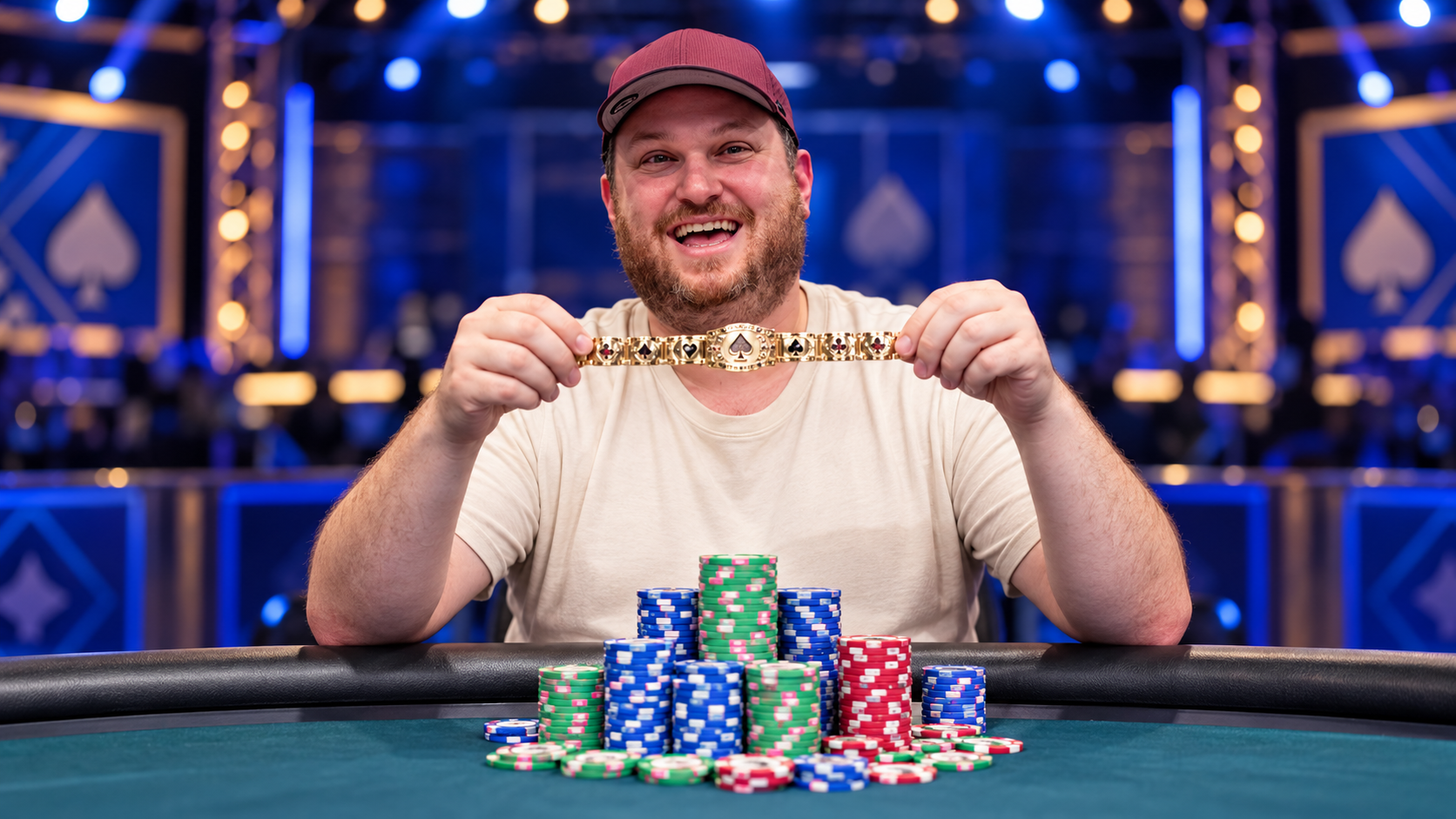
Winning the Omaha Hi-Lo Championship
The first of Seiver’s three 2024 bracelets came in the 10.000 $ Omaha Hi-Lo 8 or Better Championship. He defeated Jonathan Cohen heads-up and earned 426.744 $ from a field of 197 entries.
Omaha Hi-Lo can divide a pot between the strongest high hand and a qualifying low hand. Players use exactly two of their four hole cards together with three community cards.
The possibility of a split changes the value of seemingly strong holdings. Winning only half a pot can be less rewarding than it first appears, particularly when several players remain involved.
Seiver’s title added a new discipline to his bracelet collection and gave his summer an early championship result against a demanding mixed-game field.
A Second Razz Bracelet
Seiver next won the 1.500 $ Razz event at the 2024 WSOP for 141.374 $. He defeated Brandon Shack-Harris heads-up.
The victory complemented his 2019 Razz Championship. It showed success in the same discipline across tournaments with different buy-ins and field compositions.
Smaller buy-ins do not make a bracelet automatic for an established professional. Larger fields create additional rounds of elimination and more opportunities for variance to interrupt a strong performance.
By collecting a second title that summer, Seiver moved from having a good series to becoming one of its central figures. Another championship would make the campaign historically memorable.
The Seventh Bracelet in No-Limit 2-7 Draw
Seiver completed his triple-bracelet summer by winning the 2024 10.000 $ No-Limit 2-7 Lowball Draw Championship. He defeated Jonathan Krela heads-up, topping 186 entries for 411.041 $.
In this game, the objective is to make a low hand, but the rules differ from Razz. Aces count high, and straights and flushes count against the player. The strongest possible hand is seven-five-four-three-two without a flush.
Players also face a drawing decision and No-Limit betting, creating a blend of concealed information, hand selection and pressure.
The victory brought Seiver to seven career bracelets and five winning disciplines. His three titles in one summer were therefore a demonstration of breadth as well as sustained form.
Scott Seiver’s Seven WSOP Bracelets
| Year | WSOP event | Prize |
| 2008 | 5.000 $ No-Limit Hold’em | 755.891 $ |
| 2018 | 10.000 $ Limit Hold’em Championship | 296.222 $ |
| 2019 | 10.000 $ Razz Championship | 301.421 $ |
| 2022 | 2.500 $ Freezeout No-Limit Hold’em | 320.059 $ |
| 2024 | 10.000 $ Omaha Hi-Lo 8 or Better Championship | 426.744 $ |
| 2024 | 1.500 $ Razz | 141.374 $ |
| 2024 | 10.000 $ No-Limit 2-7 Lowball Draw Championship | 411.041 $ |
Seiver has won two bracelets in No-Limit Hold’em, two in Razz and one each in Limit Hold’em, Omaha Hi-Lo and No-Limit 2-7 Draw. His collection remains at seven in the records consulted for this article.
The 2024 WSOP Player of the Year Award
Seiver finished the 2024 WSOP campaign with 4.403,85 Player of the Year points, ahead of Michael Rocco and Jeremy Ausmus.
His overall summer included 17 cashes, five final tables and 1.449.736 $ in recorded prizes. The three victories were its defining achievement, but other deep runs helped complete the award-winning campaign.
A Player of the Year race rewards performance across a schedule rather than the outcome of one tournament. Different formats, field sizes and opportunities can influence the final standings.
For Seiver, the award brought those individual results together. It recognised a summer in which a long-established cash-game professional became the most successful player in the series-wide race.
Playing Style and Table Presence
Seiver is known for combining serious technical ability with a lively presence at the table. His public appearances often include conversation, humour and visible reactions rather than a permanently expressionless approach.
That personality should not be confused with a lack of concentration. A player can communicate freely while remaining attentive to betting patterns, exposed information and the consequences of a decision.
Across different poker variants, the appropriate strategy changes. Pressure that makes sense in No-Limit Hold’em may not translate directly into a fixed-limit split-pot game.
The most useful description of Seiver’s style is therefore adaptable rather than tied to a single slogan. His results suggest an ability to understand the requirements of the current game instead of imposing one method on every situation.

Earnings, Profit and the Limits of Public Records
The Hendon Mob record consulted for this profile lists Seiver’s live tournament earnings at 27.539.292 $. His Super High Roller Bowl runner-up prize remains the largest individual payout in that total.
Tournament earnings are not equivalent to profit or net worth. They do not deduct buy-ins, travel, taxes or other expenses, and they do not reveal private staking arrangements.
Cash-game results are a separate category. A professional may have substantial activity outside tournaments without those wins or losses appearing in a public database.
Seiver’s documented achievements can be assessed confidently without inventing a personal wealth estimate. His titles, payouts and performance across disciplines already provide a substantial record.
The Poker Hall of Fame Conversation
Seiver became age-eligible for the Poker Hall of Fame in 2025 and appeared among the finalists in both 2025 and 2026. His mixed-game reputation and 2024 WSOP results made him a serious candidate.
As of the October 2026 update for this article, he has not been inducted. Jason Koon was the 2026 inductee.
The distinction matters: appearing on a shortlist is recognition, but it is not membership. A biography should not convert nomination into an honour that has not been awarded.
The discussion nevertheless highlights Seiver’s standing. His career is evaluated not only through public prize money, but also through longevity, competitive range and the respect associated with high-stakes professional play.
An Active Career Beyond One Exceptional Summer
The 2024 WSOP provides a natural centrepiece for Seiver’s biography, but it should not be treated as the end of his competitive story. His tournament record continued to grow afterwards.
Later results may change cumulative earnings without changing the achievements that define the career. A new cash adds to the database; a major championship or another bracelet would add a different kind of milestone.
This is why a current profile needs both an update date and a stable historical narrative. Readers should be able to distinguish enduring titles from figures that can change after another tournament.
Seiver’s seven bracelets, WPT World Championship and major high-roller results remain the foundation of that narrative.
Scott Seiver’s Place in Modern Poker
Seiver’s career resists a simple classification. He is not exclusively a No-Limit Hold’em tournament specialist, and his public record is too strong to describe him only as a private cash-game professional.
His biggest payouts came in elite Hold’em events, while much of his bracelet collection demonstrates excellence in other disciplines. The 2024 summer brought those identities together.
Comparing him with players who travel constantly requires care. Tournament volume creates additional opportunities to accumulate cashes, while a cash-focused professional may direct much of his effort elsewhere.
The strongest argument for Seiver’s importance is the combination: major titles, sustained relevance and a technical range that remains valuable when the game changes.
The Poker Legacy of Scott Seiver
Scott Seiver has built one of the most varied careers of his generation. He won his first bracelet as a young No-Limit Hold’em player, added a WPT World Championship and produced multimillion-dollar results in the super-high-roller era.
He then expanded his championship record through Limit Hold’em, Razz, Omaha Hi-Lo and No-Limit 2-7 Draw. His three-bracelet summer in 2024 transformed that versatility into an unmistakable public achievement.
The Player of the Year award did not create his reputation. It provided a concentrated demonstration of skills that had developed through many years of professional competition.
His career ultimately illustrates a broader definition of poker excellence. The strongest players are not always those with the busiest tournament calendars or the most visible personalities. They are also those who remain dangerous when the rules, opponents and strategic demands change.
Profile updated in October 2026. Recorded live tournament earnings are gross cashes and exclude private cash-game results. Images supplied separately are AI-generated illustrations, not documentary photographs of the events described.