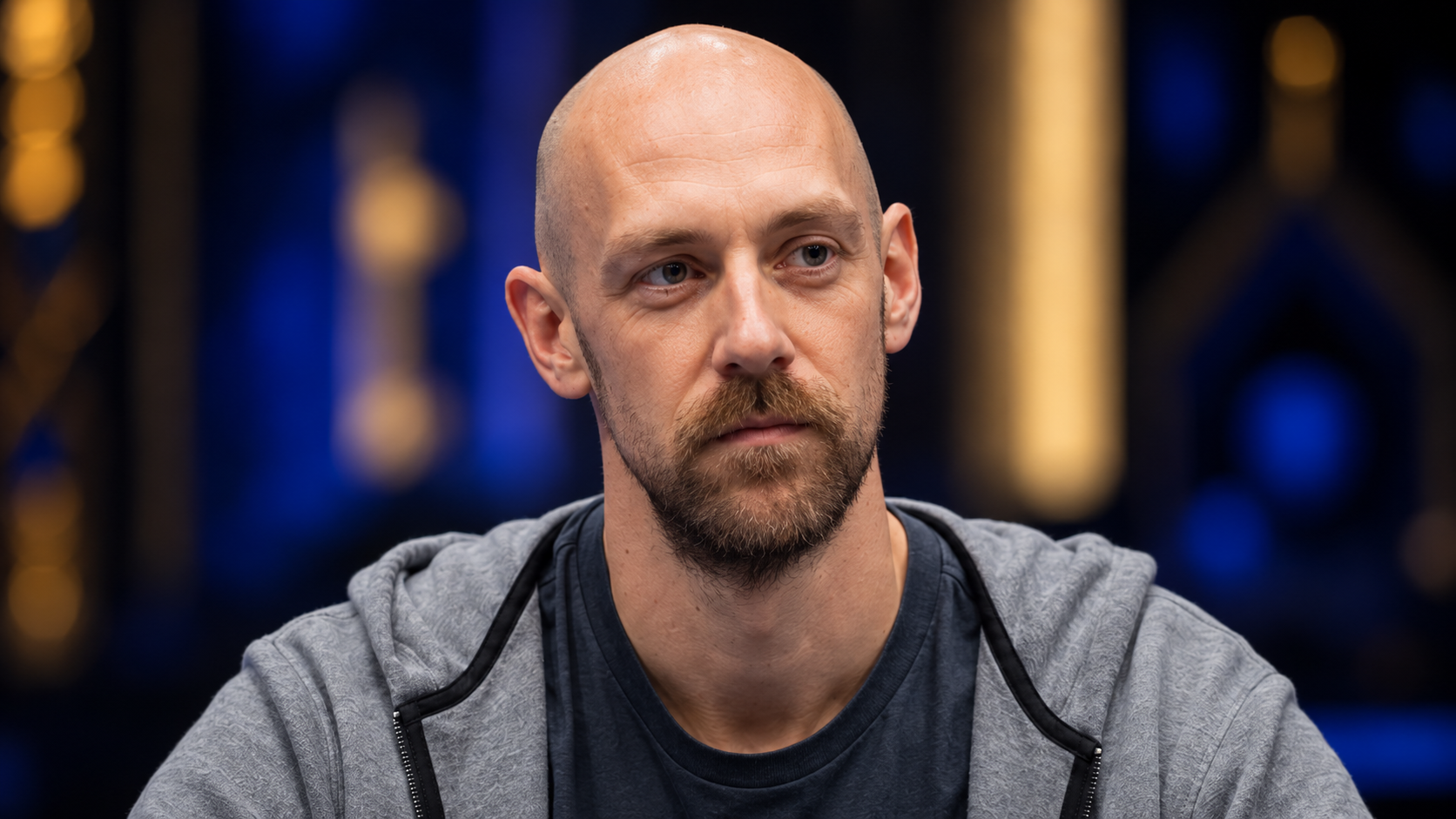
Stephen Chidwick
Stephen Chidwick is an English professional poker player, two-time World Series of Poker bracelet winner and one of the most successful tournament competitors in the history of the game.
By August 2026, Chidwick had accumulated 79.029.053 $ in recorded live tournament cashes. He ranked second on poker’s all-time money list behind Bryn Kenney and held a commanding lead over every other English player.
The scale of those results is remarkable, but the way Chidwick produced them may be even more impressive.
He began as an online grinder under the name “stevie444,” reportedly building his bankroll through freerolls before becoming a satellite specialist. In 2008, while still too young to play in Las Vegas, he won more than 100 packages to the 10.000 $ WSOP Main Event on PokerStars.
Chidwick then developed into one of live poker’s most complete players. Both of his WSOP bracelets came in Pot-Limit Omaha. All three of his Triton Poker titles came in Short Deck. He has reached major final tables in No-Limit Hold’em, H.O.R.S.E., mixed games and the 50.000 $ Poker Players Championship.
He has also demonstrated a level of consistency rarely seen in a high-variance profession. Chidwick recorded more than 1 million $ in live tournament cashes every calendar year from 2013 through 2025, including the pandemic-disrupted 2020 season.
His quiet table presence, intense stare and disciplined technical approach made him one of the most feared opponents in high-stakes poker. Other professionals regularly describe Chidwick as one of the best tournament players in the world, even though he rarely promotes himself or seeks attention away from the table.
Unlike many public estimates of poker wealth, Chidwick has also provided unusual context for his results. In January 2026, he estimated that only approximately 5–10 million $ of his then 76 million $ in recorded cashes represented actual lifetime tournament profit.
That admission makes his career an ideal example of both the extraordinary rewards and the hidden economics of modern high-roller poker.
Early Life in Deal, England
Stephen James Chidwick was born on May 10, 1989, in Deal, a coastal town in Kent, England.
Chidwick has kept most details about his childhood and education private. Unlike players who built public careers through television appearances, interviews or social media, he allowed tournament results to create his reputation.
What is known is that he developed an interest in poker during his teenage years and began playing online as soon as he was legally able to do so.
The timing was ideal.
Online poker was expanding rapidly, tournament fields were large and ambitious players could gain experience at a speed impossible in traditional live games. A young player could compete in hundreds of tournaments, review decisions and encounter thousands of different opponents without travelling to a casino.
Chidwick used that environment as his training ground.
The Online Rise of “stevie444”
Chidwick became best known online by the PokerStars screen name “stevie444.”
Accounts of his early career describe him beginning with freeroll tournaments and building a bankroll without making a large initial deposit. Freerolls offered no-cost entry but attracted enormous fields, forcing players to survive many hours before earning even a modest prize.
They were well suited to developing tournament discipline.
Chidwick learned how stack sizes changed strategy, how to adjust as blinds increased and how to remain focused through long periods without meaningful financial reward.
He did not remain at the lowest stakes for long.
As his bankroll and experience grew, Chidwick entered larger multi-table tournaments and became particularly effective in satellites. These qualifying tournaments award seats or packages to more expensive events rather than conventional cash prizes.
Satellite strategy differs from a normal tournament because survival can become more important than accumulating every available chip. Chidwick’s ability to understand those incentives produced one of the strangest achievements of the early online era.
Winning More Than 100 WSOP Main Event Packages
In 2008, PokerStars ran repeated satellites awarding packages to the 10.000 $ WSOP Main Event in Las Vegas.
Chidwick reportedly won more than 100 of them.
The combined theoretical value exceeded 1 million $, with each package including the tournament entry and travel expenses.
There was one major problem: Chidwick was only 19.
Nevada law requires casino players to be at least 21, so he could not use the packages to enter the Main Event. Instead, he accumulated PokerStars tournament dollars that could be used for other online events.
The achievement still transformed his career.
Winning one major satellite can require surviving hundreds of players. Repeating the process more than 100 times demonstrated that Chidwick had developed an exceptional understanding of tournament structures before he could legally play at the WSOP.
It also gave him a substantial online bankroll and the freedom to continue improving against stronger competition.
First Live Tournament Victory
Chidwick’s first recorded live cash was also his first recorded live victory.
In January 2008, he entered a 1.000 $ No-Limit Hold’em event during the PokerStars Caribbean Adventure in the Bahamas. He won the tournament for 88.760 $.
The result offered an early indication that his online skills would transfer to live poker.
The transition is not automatic. Live tournaments provide fewer hands, slower feedback and far more information about an opponent’s behaviour. Players accustomed to online decisions must learn to manage physical tells, table conversation and the emotional effect of seeing every opponent directly.
Chidwick adapted without changing his basic identity.
He remained quiet, observant and focused on extracting information from every action.
From Online Grinder to Live All-Rounder
Many online tournament players of Chidwick’s generation specialised almost entirely in No-Limit Hold’em.
Chidwick chose a broader path.
He studied Pot-Limit Omaha, Seven Card Stud, Razz, Limit Hold’em, Short Deck and mixed-game rotations. The decision gave him access to more tournaments and made him far more difficult to categorise.
His early WSOP results demonstrated that range.
In 2011, Chidwick finished fourth in the 10.000 $ Pot-Limit Hold’em Championship for 198.927 $. At the 2012 WSOP, he placed sixth in the 50.000 $ Poker Players Championship for 253.497 $ and third in a 1.500 $ H.O.R.S.E. event.
The Poker Players Championship is widely considered one of poker’s most demanding tournaments. Its mixed-game rotation attracts professionals who have spent years studying formats that many younger online players rarely encounter.
Chidwick reached its final table at only 23.
In 2013, he came close to a bracelet again, finishing fourth in the 25.000 $ six-handed No-Limit Hold’em event for 353.780 $.
The results established a pattern that would follow him for years: repeated WSOP final tables without a victory.
EPT Prague Breakthrough
Chidwick produced his first major European championship result at EPT Prague in December 2013.
He first finished third in the 1.100€ Eureka Main Event for 92.500€. A few days later, he reached the final table of the 5.300€ EPT Main Event and placed third for 378.000€, worth approximately 517.992 $ at the time.
The combined run changed how the wider poker community viewed him.
Chidwick was no longer only an online player with interesting mixed-game results. He had reached the final three of two enormous live fields during the same festival.
The EPT Main Event result remained one of his largest cashes for several years, but the most important effect was access.
Success on the European circuit allowed him to enter more high rollers and compete regularly against the small group of professionals who travelled globally in search of the largest buy-ins.
Entering the Super-High-Roller Era
Modern super-high-roller poker demands a particular combination of technical ability, bankroll access and psychological resilience.
Buy-ins of 25.000 $, 50.000 $, 100.000 $ or more create enormous financial swings. Fields are small, but most seats are occupied by elite professionals or wealthy amateurs with extensive experience in private games.
Chidwick became ideally suited to the format.
He could play a high volume of events, switch between poker variants and remain composed after losing an amount that would represent a career-changing score for most players.
His first recorded seven-figure cash came at the 2018 Super High Roller Bowl China in Macau. Chidwick finished sixth in the 2,1 million HK$ event and earned the equivalent of 1.298.521 $.
Only weeks later, he collected two prizes worth a combined 2,1 million€ during partypoker MILLIONS Barcelona. Chidwick finished second in the 101.000€ Super High Roller for 1,1 million€ and third in the 10.300€ Main Event for another 1 million€.
The run confirmed that he could convert frequent deep finishes into sustained success at the highest stakes.
Becoming the World’s Number-One Ranked Player
Chidwick reached the top of the Global Poker Index in April 2018.
The GPI uses a rolling formula based on tournament results over several periods. Reaching number one therefore requires more than a single huge payout. A player must produce repeated strong finishes against significant fields.
Chidwick remained at the top for approximately six months, holding the position until October.
He also led the 2018 GPI Player of the Year race for much of the season before Alex Foxen ultimately finished first. Chidwick ended second in the global race and was named the GPI European Player of the Year.
The rankings matched the opinion developing among his peers.
Chidwick was no longer discussed only as one of Britain’s strongest players. He had become a leading candidate whenever professionals were asked to identify the most difficult tournament opponent in the world.
The Famous Stephen Chidwick Stare
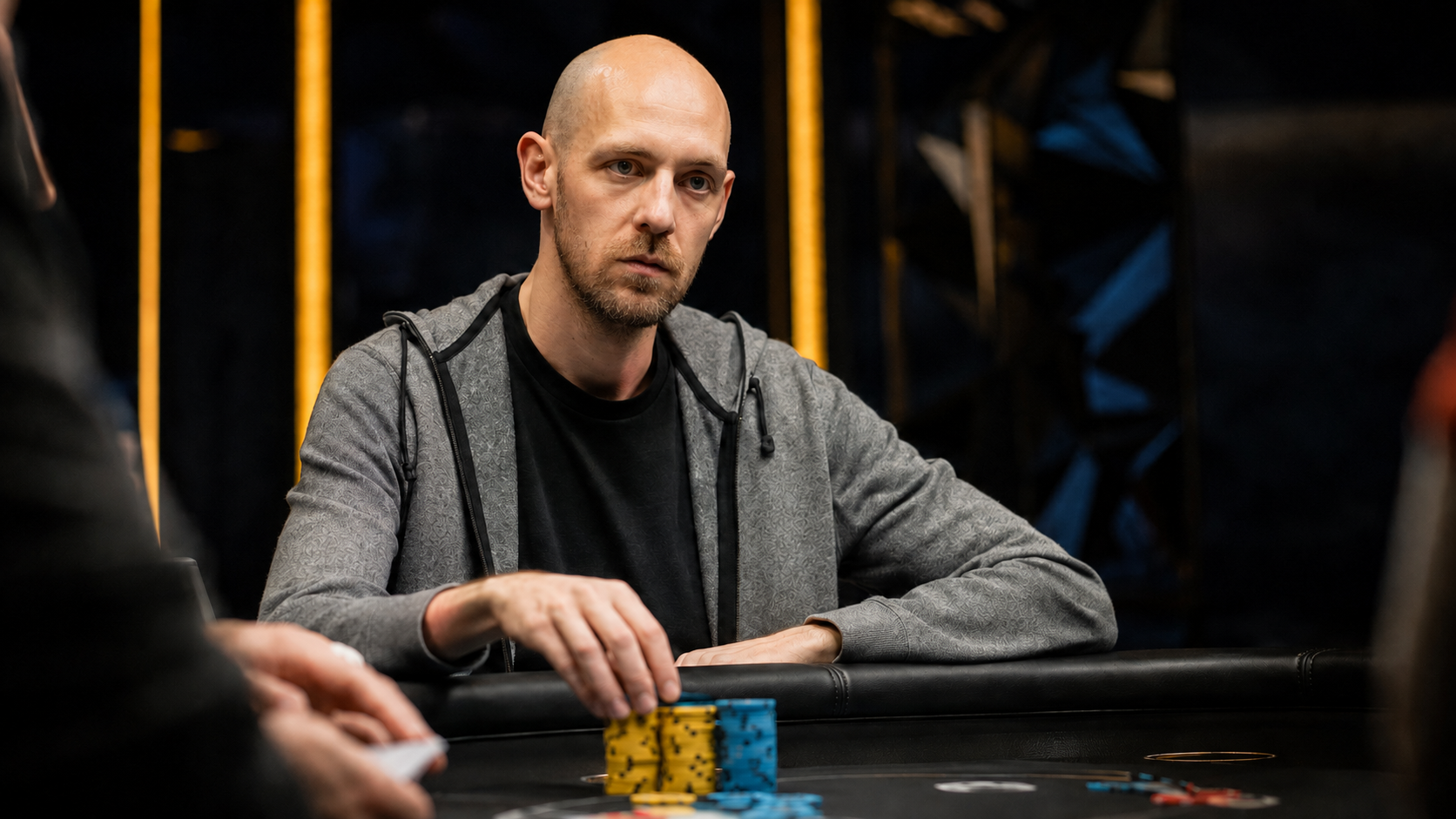
Chidwick’s intense table stare became one of the most recognisable features of modern high-stakes poker.
When involved in a hand, he frequently fixes his attention on an opponent for an extended period. The expression is controlled, quiet and difficult to interpret.
The behaviour was not originally designed to intimidate.
Chidwick explained that he had previously adopted a defensive posture, looking at the board or felt to avoid revealing information. He later realised that focusing directly on opponents caused them to stare at him less and allowed him to notice physical behaviour he had previously missed.
His results improved, so the method remained.
The stare serves two strategic purposes. It gathers information while making Chidwick’s own reactions harder to observe.
Its intimidating reputation is a useful side effect, but the original objective was information rather than theatre.
The Best Player Without a Bracelet
By the beginning of the 2019 WSOP, Chidwick had accumulated more than 23 million $ in live tournament winnings.
He had recorded 52 WSOP cashes and reached 13 final tables.
He had not won a bracelet.
The absence became one of poker’s most repeated talking points. Chidwick was frequently described as the best player in the world without WSOP gold.
That label reflected respect, but it also created pressure. Each additional final table extended the story.
Chidwick arrived late for the 2019 series after the birth of his daughter. Instead of following his usual schedule of entering events throughout the summer, he made the 25.000 $ Pot-Limit Omaha High Roller his first tournament of the WSOP.
The change worked immediately.
Winning His First WSOP Bracelet
Chidwick defeated 278 entries in the 2019 WSOP 25.000 $ Pot-Limit Omaha High Roller.
The field created a prize pool of 6.602.500 $, with James Chen, Matthew Gonzales, Robert Mizrachi, Alex Epstein and Erik Seidel joining Chidwick at the final table.
Chidwick entered the final day as chip leader and maintained control. He defeated Chen heads-up to win 1.618.417 $ and his first bracelet.
The victory ended one of the few statistical gaps in his résumé.
It also demonstrated his ability to perform in a four-card game against a field filled with specialists. Pot-Limit Omaha produces closer preflop equities and more complicated postflop combinations than Hold’em, creating difficult decisions even for highly experienced players.
Chidwick’s first bracelet did not come in the game that generated most of his public high-roller results. It came in the format that best demonstrated his technical range.
The 2019 Triton Million
Less than two months after his first bracelet, Chidwick entered the largest buy-in poker tournament ever held.
The Triton Million for Charity in London cost 1.050.000 £ to enter. Fifty-four entries created a 54 million £ prize pool, with professional players participating through invitations from wealthy recreational competitors.
Chidwick reached the final four.
He eventually finished fourth for 4.410.000 £, worth 5.368.947 $. The amount remains the largest single cash of his career.
Bryn Kenney received 20.563.324 $ after a heads-up deal, while Aaron Zang recovered to win the tournament. Chidwick’s fourth-place prize was smaller than those historic payouts but still exceeded the first prize of many WSOP Main Events.
The result helped Chidwick finish 2019 with 13.528.992 $ in recorded live cashes, the strongest year of his career at that point.
He also became the first British player to win the Card Player Player of the Year award.
Stephen Chidwick’s Biggest Poker Results
Chidwick’s largest results span No-Limit Hold’em, Pot-Limit Omaha and Short Deck.
|
Year |
Tournament |
Result |
Prize |
|
2019 |
Triton Million for Charity, London |
4th |
5.368.947 $ |
|
2025 |
Triton 200.000 $ Short Deck PLPF, Jeju |
1st |
3.455.000 $ |
|
2025 |
Triton 125.000 $ NLH Seven-Handed, Jeju |
2nd |
1.927.188 $ |
|
2022 |
Triton Madrid 100.000€ Short Deck Main Event |
1st |
1.800.000€ / 1.916.463 $ |
|
2019 |
WSOP 25.000 $ Pot-Limit Omaha High Roller |
1st |
1.618.417 $ |
|
2026 |
EPT Monte Carlo 100.000€ High Roller for One Drop |
2nd |
1.325.700€ / 1.554.526 $ |
|
2018 |
300.000 $ Super High Roller Bowl V |
3rd |
1.512.000 $ |
|
2025 |
WSOP 50.000 $ Pot-Limit Omaha High Roller |
2nd |
1.430.938 $ |
|
2022 |
Triton Madrid 75.000€ NLH Eight-Handed |
2nd |
1.291.414€ / 1.357.140 $ |
|
2024 |
WSOP Paradise 50.000 $ PLO Championship |
1st |
1.357.080 $ |
The figures represent gross tournament prizes. They do not account for buy-ins, re-entries, staking agreements, swaps, travel expenses or taxes.
Pot-Limit Omaha and Two WSOP Bracelets
Both of Chidwick’s WSOP bracelets came in Pot-Limit Omaha.
That is notable because most of his tournament schedule consists of No-Limit Hold’em. The bracelets confirm that his all-around reputation is supported by results rather than simply peer opinion.
PLO requires players to use exactly two of four private cards, creating far more possible combinations than Hold’em. Draws overlap, equities run close and the strongest hand can change dramatically with a single community card.
Chidwick’s ability to process those combinations allows him to compete with professionals who focus much more heavily on Omaha.
He has also repeatedly come close to further PLO titles.
At the 2025 WSOP, Chidwick finished second to Lautaro Guerra in the 50.000 $ PLO High Roller for 1.430.938 $. He reached additional PLO final tables on the PokerGO Tour, Triton Poker and WSOP Paradise.
The game has become one of the clearest demonstrations of his technical flexibility.
Winning Bracelet Number Two
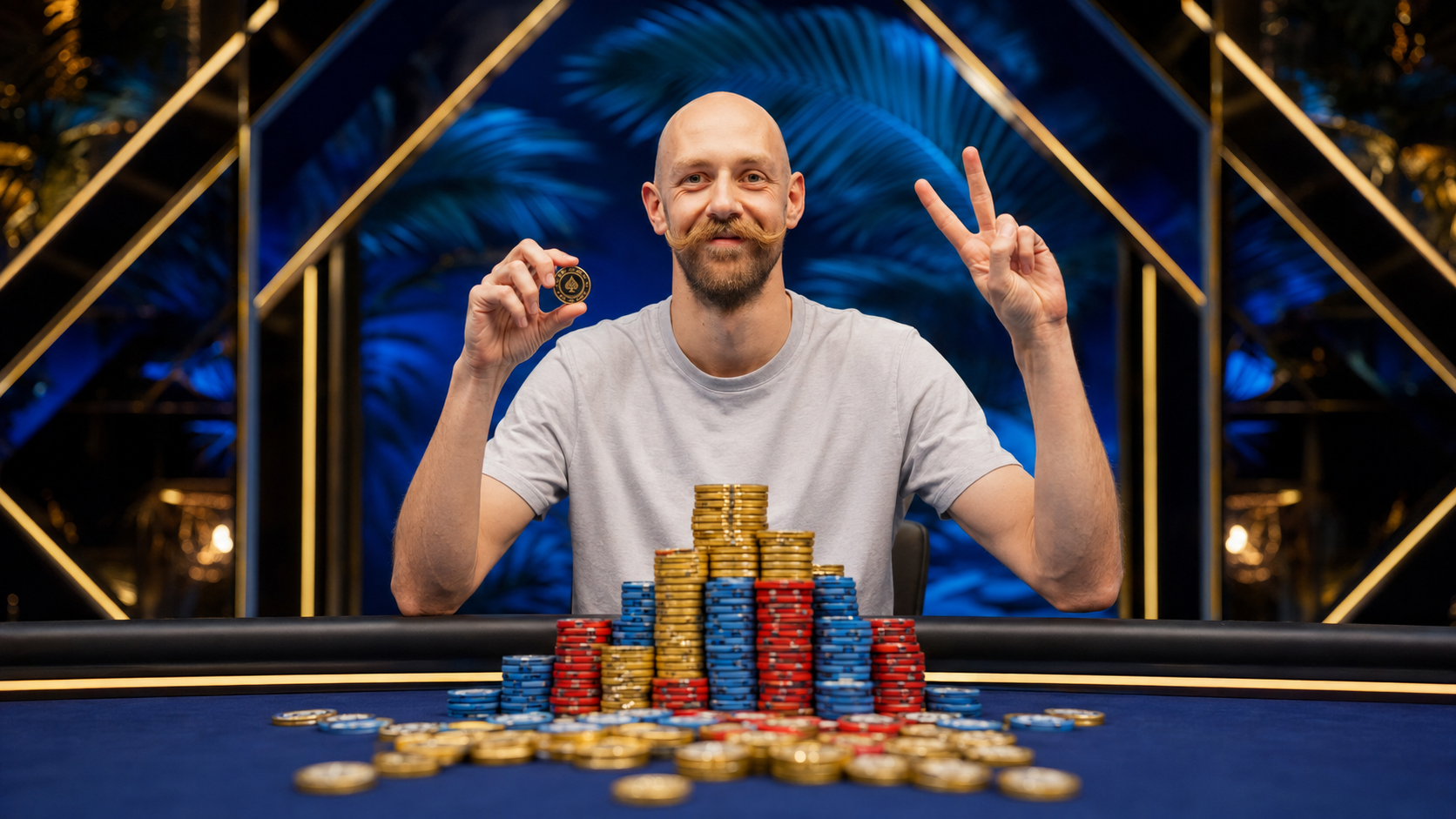
Chidwick won his second bracelet at the 2024 WSOP Paradise in the Bahamas.
The 50.000 $ Pot-Limit Omaha Championship attracted 122 entries and created a 6,1 million $ prize pool.
Chidwick began the final table sixth in chips with only 12 big blinds. He survived the short-stack phase, rebuilt and defeated Yang Wang heads-up to win 1.357.080 $.
The bracelet arrived five years after his first, in the same poker variant but under very different circumstances.
In 2019, he entered the final day with the lead. In 2024, he had to recover from near the bottom of the table.
The victory moved Chidwick into the group of English players with multiple bracelets and strengthened an unusual career pattern.
His most prestigious WSOP titles came in PLO. His greatest Triton success came in another non-traditional format.
Short Deck Mastery
Short Deck Hold’em removes cards from deuce through five, creating a 36-card deck.
The smaller deck changes hand frequencies, makes strong combinations more common and produces far more all-in confrontations. Traditional Hold’em instincts must be adjusted because drawing probabilities and relative hand values change.
Chidwick adapted exceptionally well.
All three of his Triton Poker titles have come in Short Deck.
He won the 100.000€ Short Deck Main Event at Triton Madrid in 2022, defeating Tony G heads-up for 1,8 million€. In 2024, he added a 20.000 $ Short Deck turbo title in Jeju for 265.000 $.
His largest tournament victory came in September 2025.
The 3,455 Million $ Short Deck Victory
Triton added a 200.000 $ Short Deck Pot-Limit Pre-Flop event to its 2025 Jeju schedule.
The tournament attracted 61 entries and generated a 12,2 million $ prize pool.
Chidwick led the final table from beginning to end, defeating Kiat Lee heads-up to win 3.455.000 $.
It was the largest first-place prize of his career and his third Triton title.
Only six days later, Chidwick nearly added another trophy. He finished second to Michael Watson in the 125.000 $ No-Limit Hold’em Seven-Handed event for 1.927.188 $.
The two results were worth more than 5,3 million $ combined.
They pushed Chidwick beyond 70 million $ in recorded live cashes and made him only the second player in poker history to reach that level.
A Remarkable 2025 Season
Chidwick recorded 12.627.025 $ in live tournament cashes during 2025.
It was the second-largest annual total of his career, behind only 2019.
The Triton Jeju results supplied the largest prizes, but the season was built through repeated performances across tours and poker variants.
Chidwick finished second in the 50.000 $ WSOP PLO High Roller for 1.430.938 $, sixth in the 100.000 $ Triton Montenegro Main Event for 879.000 $ and won the 50.000 $ NAPT Las Vegas Super High Roller for 557.930 $.
At WSOP Paradise, he added four more cashes, including fourth place in the 50.000 $ PLO High Roller for 481.000 $ and fifth in the 75.000 $ Triton PLO event for 526.500 $.
The year illustrates why Chidwick’s reputation is based on consistency rather than one record payout.
He produced results in No-Limit Hold’em, Pot-Limit Omaha and Short Deck across the United States, Europe, South Korea and the Bahamas.
Reaching Second on the All-Time Money List
Chidwick passed Justin Bonomo for second place on The Hendon Mob all-time money list in May 2025.
He then became the second player to cross 70 million $ and continued building the total through the end of the year.
By August 28, 2026, Chidwick’s 79.029.053 $ placed him behind only Bryn Kenney, who had 90.761.206 $.
The gap had grown during 2026 because Kenney produced several major seven-figure results, including second place in the 250.000 $ WSOP Super High Roller and victory at the King Poker Cup in Jeju.
Chidwick remained the strongest active challenger.
His total should not be interpreted as career profit, but reaching second place carries genuine significance. The same high buy-ins, staking arrangements and tournament variance affect every leading high-roller professional.
Chidwick has produced more gross live tournament prize money than every player except one.
The 2026 Season
Chidwick added 3.027.793 $ in live results during the first seven months of 2026.
The largest score came at EPT Monte Carlo.
He reached heads-up play against Albert Daher in the 100.000€ High Roller for One Drop. The event attracted 76 entries and created a 7.296.000€ prize pool.
Chidwick finished second for 1.325.700€, worth approximately 1.554.526 $ in The Hendon Mob’s conversion.
He also won a 20.000€ side event in Monte Carlo for 137.288€, placed second in a Triton Jeju PLO bounty tournament for 175.000 $ and collected several smaller WSOP cashes.
His 2026 WSOP did not produce another major final table. Chidwick cashed four times, including 394th in the Main Event and 26th in the 50.000 $ High Roller.
Even a relatively quiet summer demonstrated the scale of his normal schedule. Events with buy-ins of 25.000 $ and 50.000 $ were routine parts of his calendar rather than exceptional shots.
PokerGO Tour Excellence
Chidwick has been one of the most successful players in PokerGO Tour history.
By August 2026, he had won 12 PGT events and accumulated approximately 17,4 million $ in qualifying earnings. He ranked near the top of the tour’s all-time lists for victories, cashes and prize money.
His titles included events at the Poker Masters, U.S. Poker Open, ARIA High Rollers, Bellagio High Rollers, Triton Poker and NAPT Las Vegas.
Chidwick finished first in the 2022 PGT season standings.
These results are important because the PokerGO schedule rewards sustained participation. Many events have small fields but contain few weak seats. A player may need to face the same elite opponents repeatedly across consecutive days.
Chidwick’s ability to keep winning in that environment strengthens the argument that his success is not based solely on large invitational payouts.
Playing Style: Solvers and First Principles
Chidwick belongs to the generation that learned poker before solver software became widely available and then adapted as the technology transformed high-level strategy.
He uses modern analytical tools, but does not treat their outputs as instructions to memorise without context.
When reviewing a hand, Chidwick attempts to understand the logic behind a solver’s decision. He then compares the theoretical strategy with how opponents actually play and identifies where an exploitative adjustment may be more profitable.
In 2026, he argued that the ability to assign realistic ranges and reason from first principles had become undervalued.
A solver provides an answer based on its assumptions. Real opponents may use different bet sizes, misunderstand a board, avoid certain bluffs or react emotionally to tournament pressure.
Chidwick trains his intuition by predicting specific holdings while watching hands in which he is not involved and comparing those predictions with the cards shown at showdown.
This combination of theory, observation and accumulated experience explains why his game remains effective across eras.
Preparation and Decision-Making
Chidwick treats physical and mental preparation as part of poker strategy.
Before important sessions, he prioritises sleep and exercise. When returning for a second day, he reviews notes on the remaining opponents and develops a general plan for likely table situations.
His table decisions are deliberate but rarely theatrical.
Chidwick is willing to use pressure with wide ranges, yet his aggression appears controlled rather than impulsive. He understands when stack sizes, pay jumps and an opponent’s incentives create opportunities that do not exist in a standard cash game.
He is also comfortable playing short stacks.
The 2024 WSOP Paradise bracelet demonstrated that ability. Starting a final table with 12 big blinds provides little room for error, but Chidwick survived long enough to rebuild rather than forcing an immediate confrontation.
His calmness becomes particularly valuable at streamed final tables, where every decision is recorded and public criticism can influence less experienced players.
Two-Time Player of the Year
Chidwick won the Card Player Player of the Year award in 2019 and 2022.
He became the first British player to win the award in 2019. Three years later, he collected five titles and reached 25 qualifying final tables to win it again.
Chidwick has described a year-long points race as more meaningful than a single tournament because a larger sample reduces the influence of short-term variance.
That observation captures the central argument for his greatness.
Any elite player can run well in one event. Chidwick has remained near the top of annual rankings for more than a decade.
He finished inside the Card Player top ten seven times between 2017 and 2025. Across the ten-year period from 2016 through 2025, he led the publication’s combined rankings for points, titles, final tables and earnings.
His reputation is based on accumulation rather than a single peak.
Gross Winnings Versus Real Profit
The 79 million $ attached to Chidwick’s name does not represent the amount deposited into his personal bank account.
Tournament databases record prizes but ignore losing entries.
A player who enters a 100.000 $ event twice and cashes for 250.000 $ adds the full 250.000 $ to a public earnings total, even though the result produced only 50.000 $ before travel, taxes and other expenses.
High rollers also sell and exchange pieces of their tournament action. If Chidwick owns 40% of himself in an event, he receives only 40% of the final profit while other investors receive the rest. In another tournament, he may own percentages of several opponents.
In January 2026, Chidwick estimated that his actual lifetime tournament profit was approximately 5–10 million $.
He admitted that he did not know the exact figure.
The estimate is still unusually valuable because most high-stakes professionals never provide even a broad range.
It suggests that more than 85% of the number displayed on a tournament database may represent buy-ins, shared action and other costs rather than personal profit.
Stephen Chidwick’s Net Worth
Stephen Chidwick’s exact net worth is not publicly known.
His 5–10 million $ estimate concerned lifetime tournament profit, not total personal wealth.
Net worth could also include online poker results, cash games, investments, property, business interests and percentages held in other players. It would then need to subtract personal liabilities and taxes.
Chidwick’s tracked online winnings add another significant but incomplete part of the picture. Public databases have recorded approximately 3,9 million $ in PokerStars cashes under “stevie444,” but those totals again represent prizes rather than net profit.
Claims that his net worth equals 79 million $ are clearly incorrect.
The most responsible conclusion is that Chidwick has been a highly profitable professional by his own account, but no reliable public source can convert his tournament career into a precise net-worth figure.
Family and Life Away From Poker
Chidwick is married to Marine and became a father in 2019.
The birth of his daughter changed his normal WSOP routine. He arrived later than usual in Las Vegas and won his first bracelet in the first event he entered.
He continues to live a relatively private life and rarely shares family details publicly.
When discussing his interests away from poker, Chidwick has mentioned travelling, spending time with his family and rock climbing.
The physical and problem-solving aspects of climbing fit his personality. Each route demands planning, controlled risk and the ability to remain calm when a mistake has immediate consequences.
Chidwick’s low public profile also separates him from many modern professionals who treat social media and content creation as extensions of their careers.
For most of his rise, his public identity consisted almost entirely of tournament photographs, live streams and results.
Speaking About Mental Health
In July 2025, Chidwick used social media to publish a deeply personal reflection on self-doubt, isolation and the pressure he had experienced despite his professional success.
The message contrasted sharply with his table image.
Viewers knew Chidwick as controlled, expressionless and almost mechanically consistent. His writing described the human being behind that exterior and the difficulty of accepting his own value away from results.
He encouraged people experiencing darkness or disconnection to continue seeking help and reminded them that improvement was possible.
The post added important context to the psychological demands of elite poker.
Tournament players are judged through outcomes they cannot fully control. Long losing periods can continue even when decisions are correct, while public databases make every result visible and encourage constant comparison.
Chidwick’s willingness to discuss those pressures made his public image more complete without turning his private life into a permanent performance.
Octopi Poker and Teaching the Game
Chidwick became involved with Octopi Poker, a tournament training and study platform, in 2024.
He joined as an ambassador and soon became part of the leadership team, contributing to its trainers and product development. By 2026, he described himself as a co-founder.
The role represents a change from his earlier public career.
Chidwick once kept most of his strategic thinking private. Through Octopi, he began helping to build tools designed to teach players how to understand game theory, review hands and practise decisions.
His contribution is particularly relevant because his own approach does not end with solver outputs. Chidwick emphasises understanding why a strategy works and how real opponents deviate from theoretical play.
That philosophy gives him a useful position between poker’s pre-solver online era and its modern technical environment.
Why Other Professionals Respect Chidwick
Tournament earnings alone cannot measure how players are viewed by their strongest opponents.
Chidwick’s peer reputation is unusually consistent.
Professionals respect his work ethic, emotional control and ability to play almost every major format on a high-roller schedule. He does not depend on table talk, personal branding or confrontational behaviour to create an edge.
He also appears difficult to exploit.
A player who specialises in one game can be avoided or challenged in a weaker format. Chidwick can enter No-Limit Hold’em, PLO, Short Deck and mixed events without becoming an obvious target.
His long experience at streamed final tables reduces another common weakness. Cameras, time banks and seven-figure pay jumps have become normal conditions rather than exceptional pressure.
The combination explains why Chidwick is frequently selected when professionals are asked which opponent they least want seated on their left.
Stephen Chidwick’s Place in Poker History
Chidwick does not have the most WSOP bracelets, the largest single payout or a Main Event championship.
He has no WPT Championship title and has never won an EPT Main Event.
His historical argument is based on completeness and consistency.
Chidwick rose from freerolls to the largest tournaments in the world. He succeeded before solvers became standard and remained successful after every elite player gained access to advanced study tools.
He won bracelets in PLO, Triton titles in Short Deck and Player of the Year races through results accumulated across many formats.
He recorded at least 1 million $ in live cashes for 13 consecutive years and produced two seasons exceeding 10 million $.
By age 37, he had almost 80 million $ in recorded live winnings and ranked second in history.
The strongest comparison may not be with specialists who dominate one category. Chidwick belongs beside all-around tournament players such as Phil Ivey, Michael Mizrachi, Daniel Negreanu and Jason Koon.
The Poker Legacy of Stephen Chidwick
Stephen Chidwick represents a version of poker greatness built without spectacle.
He did not become famous through dramatic television confrontations, table talk or a carefully managed public personality. He became famous because the same name kept appearing at the end of the world’s most difficult tournaments.
The career began with online freerolls and an almost absurd number of WSOP satellite victories. It developed through mixed-game final tables, an EPT Prague breakthrough and years spent competing before he was finally able to remove the label of best player without a bracelet.
The first bracelet arrived in PLO. So did the second.
His Triton trophies came in Short Deck, while his wider high-roller record was built mainly in No-Limit Hold’em. Few players can demonstrate that level of success across formats.
The all-time money list places Chidwick second, but the number requires the context he provided himself. Tournament cashes are not profit, and even one of the most successful players in history estimated that he retained only a fraction of the headline total.
That honesty strengthens rather than weakens his legacy.
Chidwick’s career shows how difficult sustained high-roller success really is. It requires technical study, observation, financial organisation, emotional endurance and the willingness to continue improving after the game’s strategic environment changes.
His intense stare may be the image poker fans remember. His consistency is the achievement that matters.
Statistics updated on August 28, 2026. Recorded tournament earnings represent gross cashes and exclude buy-ins, re-entries, taxes, staking arrangements, swaps and private cash-game results.