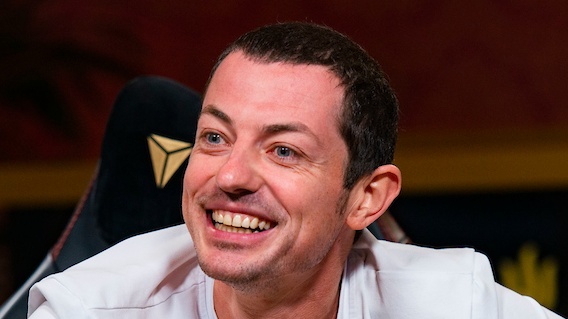
Tom Dwan
Tom Dwan is an American professional poker player who became one of the defining figures of online poker’s high-stakes era. Playing under the screen name “durrrr,” he rose from low-stakes games to the largest No-Limit Hold’em and Pot-Limit Omaha tables on the internet, where his fearless aggression changed how an entire generation thought about poker.
Dwan later transferred that reputation to televised cash games. His unconventional bluffs, enormous river calls and willingness to play pots that other professionals avoided made him one of the most compelling players ever featured on High Stakes Poker, Poker After Dark and the Million Dollar Cash Game.
Unlike Phil Hellmuth, Phil Ivey or Daniel Negreanu, Dwan’s legacy is not built primarily on tournament titles. He has no WSOP bracelet and his recorded live tournament winnings of approximately 7 million $ reveal only a small part of his career.
His most important results came in online and private cash games, where complete records do not exist. At his peak, Dwan regularly played for hundreds of thousands of dollars in individual pots and competed against the strongest specialists in the world.
He was also central to one of poker’s longest-running unresolved stories: the Durrrr Challenge against Daniel “Jungleman” Cates.
Tom Dwan’s career includes spectacular victories, severe online swings, unfinished challenges and years spent in secretive Asian cash games. Together, they created one of the most fascinating and difficult-to-measure legacies in modern poker.
Early Life in New Jersey
Thomas Dwan Jr. was born on July 30, 1986, in Edison, New Jersey.
He enrolled at Boston University but did not remain there long. Poker had already become a serious interest, and his rapid progress online suggested that the game could provide an unconventional professional career.
According to one of the most repeated stories about his beginning, Dwan received 50 $ from his father and deposited it on the Paradise Poker platform. He initially played low-stakes sit-and-go tournaments but struggled to build his bankroll.
His results improved after he moved into multiplayer cash games.
Cash poker gave Dwan more opportunities to use aggression, exploit repeated tendencies and make decisions across all betting streets. He gradually progressed through the limits, reinvesting his winnings and challenging stronger opponents.
The screen name he chose would soon become famous throughout online poker.
The Origin of “durrrr”
Dwan selected “durrrr” as his online nickname because he believed the deliberately foolish-sounding name would irritate opponents after they lost to him.
The idea worked.
As Dwan moved into higher games, the name appeared beside increasingly large wins and losses. “durrrr” eventually became one of the most recognisable screen names in poker history.
The lowercase spelling reflected the culture of early online poker, when anonymous usernames could become more famous than the players’ real identities. For many fans, Dwan was known as durrrr before they had ever seen his face.
The name also matched his playing style. His decisions sometimes appeared strange or unnecessarily aggressive, particularly to players trained in the more conservative strategies common before online poker’s rise.
Dwan regularly raised with weak hands, continued betting across multiple streets and placed opponents under pressure in situations where traditional strategy suggested caution.
What initially looked reckless was often based on a sophisticated understanding of ranges and leverage.
From a Small Deposit to the Highest Online Stakes
Dwan’s rise through online poker was exceptionally fast.
By his early twenties, he was playing the largest games available on Full Tilt Poker. These tables featured established professionals such as Phil Ivey, Patrik Antonius, Ilari “Ziigmund” Sahamies, Gus Hansen and Viktor “Isildur1” Blom.
The stakes frequently reached 500 $/1.000 $, meaning a standard buy-in could be worth 100.000 $ or more. Because many players bought in deep and played several tables simultaneously, millions of dollars could change hands during a single session.
Dwan specialised in heads-up and short-handed No-Limit Hold’em and Pot-Limit Omaha. Both formats rewarded aggression, creativity and an ability to make rapid adjustments against familiar opponents.
His style was ideally suited to the environment.

Dwan widened the range of hands with which he raised, called and reraised. He applied pressure on boards that appeared favourable to his overall range rather than only when he held a traditionally strong hand.
He also demonstrated that enormous overbets could be used for value and as bluffs. This forced opponents to defend in uncomfortable situations for amounts far larger than the pot sizes common in conventional poker.
At his peak, durrrr was widely considered one of the strongest online cash-game players in the world.
A New Type of Poker Aggression
Dwan did not invent aggressive poker, but he helped redefine what aggression could look like in deep-stacked games.
Traditional players often focused on the strength of their own cards. Dwan appeared more interested in the complete range of hands both players could hold and how that range changed after each action.
He recognised situations in which an opponent’s range was capped and used large bets to represent hands the opponent was unlikely to possess.
This approach became particularly effective on later streets. Dwan was willing to fire a second or third bluff when many professionals would abandon the pot. He understood that one large river bet could place greater pressure on an opponent than several smaller decisions earlier in the hand.
His timing also made him difficult to read. Dwan could take a long time with both strong hands and bluffs, preventing opponents from relying on simple behavioural patterns.
Many concepts associated with modern solver-based poker were not yet part of everyday strategy discussion. Dwan reached similar conclusions through experience, experimentation and intense competition against other elite players.
Young online professionals studied his hands and attempted to reproduce his aggression. Recreational players often copied the visible betting without understanding the ranges behind it, sometimes with expensive consequences.
Either way, Dwan influenced how poker was played.
High Stakes Poker and Television Fame
Dwan’s online reputation created enormous expectations when he began appearing in televised cash games.
He delivered almost immediately.
On High Stakes Poker, Dwan joined tables filled with established stars including Doyle Brunson, Barry Greenstein, Eli Elezra, Daniel Negreanu and Phil Ivey. Despite being considerably younger than many opponents, he showed no hesitation in playing large pots against them.
His television style was different from the personalities around him. He was quiet, intensely focused and frequently spent long periods staring at an opponent while considering a decision.
The contrast made him compelling. Dwan rarely explained what he was doing, but his bets forced commentators and viewers to reconsider what was possible.
He seemed willing to bluff anyone.
Several of his hands became permanent parts of poker culture, helping transform durrrr from a famous online screen name into an international poker celebrity.
The Million-Dollar Bluff Against Barry Greenstein
One of Dwan’s most famous televised hands came on High Stakes Poker against Barry Greenstein and Peter Eastgate.
Dwan raised before the flop with queen-ten, Greenstein called with pocket aces and Eastgate entered the pot with four-deuce. The flop gave Eastgate three of a kind while Greenstein still held an overpair.
Dwan had missed the flop completely.
After Greenstein bet and Eastgate called, Dwan raised both opponents. Greenstein continued with his aces, while Eastgate folded what was then the best hand.
Dwan kept applying pressure on the turn and moved all-in on the river. Faced with a massive decision, Greenstein eventually folded.
The hand became a classic because Dwan successfully bluffed the player who began with the strongest starting hand after another opponent had folded the strongest hand after the flop.
It captured everything associated with his game: creativity, fearlessness and an ability to represent strength through several rounds of betting.
The hand also demonstrated that televised poker could be exciting without an all-in confrontation followed by a lucky draw. The drama came from incomplete information and the possibility that Dwan was attempting something extraordinary.
The 1,1 Million $ Pot Against Phil Ivey
Dwan won another historic pot during the Full Tilt Poker Million Dollar Cash Game in London in 2009.
The hand involved Dwan, Phil Ivey and Patrik Antonius. Both Dwan and Ivey completed straights, but Dwan’s higher straight won the pot.
At approximately 1,1 million $, it was recognised at the time as the largest pot won in a televised poker game. Guinness World Records
The record added another layer to Dwan’s growing reputation. He was not only playing against the greatest cash-game competitors of the era. He was winning some of television’s largest pots from them.
Dwan had previously won a pot worth more than 919.000 $ against Barry Greenstein on High Stakes Poker. The Ivey hand moved him beyond the million-dollar boundary and created a record that stood for years.
Remarkably, Dwan would later reclaim the televised poker record with a pot almost three times as large.

The 3,1 Million $ Call Against Wesley Fei
In May 2023, Dwan appeared in the Hustler Casino Live Million Dollar Game.
Playing at stakes of 500 $/1.000 $ with a 3.000 $ big-blind ante, Dwan entered a huge pot against Wesley Fei. Dwan held pocket queens, while Wesley had ace-king.
The betting escalated rapidly before the flop. Dwan four-bet to 100.000 $, and Wesley responded with a five-bet to 275.000 $. Dwan called, creating a pot of more than half a million dollars before any community cards appeared.
The flop came 8-8-3. Dwan called a bet of 125.000 $.
After a five on the turn, Wesley bet another 350.000 $. Dwan called again.
The river was a six, leaving Wesley with only ace-high. He moved all-in for Dwan’s remaining 786.000 $.
Dwan faced a difficult decision with one pair in a pot that would become the largest in livestreamed poker history. After several minutes, he called.
Wesley revealed the bluff, and Dwan won 3.081.000 $. PokerNews hand report
The call became one of the defining moments of Dwan’s later career. More than a decade after his original television breakthrough, he was still willing to risk an extraordinary amount on a read.
Dwan did not win because he made an ambitious multi-street bluff. This time, he survived one.
The Durrrr Challenge
In 2009, Dwan issued an open challenge to the high-stakes poker community.
He offered to play 50.000 hands of heads-up No-Limit Hold’em or Pot-Limit Omaha against almost any opponent on four online tables simultaneously. If the challenger finished ahead after 50.000 hands, Dwan would pay an additional 1,5 million $. If Dwan won, his opponent would pay him 500.000 $.
Phil Galfond was excluded from the offer, suggesting that Dwan considered him an unusually dangerous opponent.
Patrik Antonius became the first player to accept. The match progressed slowly but ultimately produced more than 39.000 hands, with Dwan leading by approximately 2 million $ when play stopped.
The challenge was never completed.
A second and far more controversial match began against Daniel “Jungleman12” Cates in 2010. Cates quickly built a significant lead, winning more than 1,2 million $ across approximately 20.000 hands.
The match then slowed and eventually stopped.
Years passed without the remaining hands being played. Cates publicly criticised Dwan for failing to continue and argued that the terms of their agreement required compensation. The dispute became one of the longest-running personal conflicts in online poker.
Partial payments and proposed settlements were discussed, but the challenge remained unfinished.
In 2025, Dwan and Cates appeared together in a public conversation and indicated that much of their personal conflict had been resolved. Cates acknowledged that some of the contractual penalties had become excessive, while Dwan accepted responsibility for poor communication. PokerNews report
The match remains an important part of Dwan’s legacy. The original offer demonstrated extraordinary confidence, but its failure to reach a clear conclusion damaged his reputation.
Viktor “Isildur1” Blom and Online Poker’s Wildest Swings
Dwan’s online career also became closely connected with Viktor Blom, the mysterious Swedish player known as “Isildur1.”
Blom appeared in the highest Full Tilt games in 2009 and immediately challenged established professionals. His aggression was extreme even by the standards of the nosebleed tables.
Dwan and Blom played several enormous sessions across No-Limit Hold’em and Pot-Limit Omaha. Millions of dollars moved between them as they competed on multiple tables.
Dwan initially suffered severe losses, reportedly dropping several million dollars during the matchup. The swings became part of the legend surrounding both players and demonstrated the financial volatility of elite online cash games.
Blom was eventually identified publicly, but the period before his identity became known created enormous interest. Poker fans followed the tables in real time, watching two of the most aggressive players in the world compete for sums normally associated with major tournament prizes.
The matches also exposed the dangers of Dwan’s style. His willingness to seek difficult competition helped create his reputation, but it also produced losses that more selective professionals might have avoided.
Full Tilt Poker and Black Friday
Dwan became a sponsored member of Team Full Tilt shortly before the site’s collapse.
On April 15, 2011, a date known as Black Friday, the United States Department of Justice took action against the country’s largest online poker sites. Full Tilt eventually stopped operating, and players were unable to access substantial balances.
Investigations revealed that Full Tilt had not properly separated player deposits from operational funds. The company lacked the money required to repay customers immediately.
Dwan’s role differed from that of the founders and senior owners who controlled the company. He had joined the sponsored team relatively late and was not identified as one of the principal decision-makers behind the financial problems.
He nevertheless faced criticism because of his association with the brand.
Dwan publicly promised to return money he had received from Full Tilt if players were not repaid. The company’s assets were eventually acquired by PokerStars, which facilitated the repayment process for eligible customers.
Full Tilt’s collapse changed online poker and ended the environment in which durrrr had first become a star.
Moving to the Macau Cash Games
After Black Friday, Dwan became far less visible in Western poker.
He spent much of his time in Macau, where wealthy businessmen and professional players competed in private cash games at exceptionally high stakes. Games also developed in other Asian locations, including Manila.
Reliable results from these sessions are not publicly available. Players may agree not to reveal lineups, stakes or individual winnings, and many stories emerge only as unconfirmed rumours.
Dwan’s extended absence created constant speculation.
Some reports claimed he had won extraordinary sums. Others suggested that he was playing under financial obligations, dealing with large debts or backed in games he could not independently afford.
Without verifiable records, these claims should not be treated as established facts.
What is clear is that Dwan spent years playing in an environment where private relationships, access to wealthy opponents and personal trust were as important as technical poker ability.
The move also explains why his public tournament record appears modest compared with his fame. While other professionals accumulated visible results on the international circuit, Dwan concentrated on games that databases could not record.
Short Deck and the Triton Era
Dwan became one of the most visible early advocates of Short Deck Hold’em.
The game removes cards from deuce through five, creating a 36-card deck. The smaller deck changes hand probabilities, increases the frequency of strong combinations and produces more confrontations between powerful hands.
Short Deck grew in popularity through the Asian cash-game community before becoming part of the Triton Poker tournament schedule.
Dwan’s experience in Macau placed him in an ideal position to succeed. He understood the game before many Western tournament professionals had studied it seriously.
Several of his largest recorded tournament cashes came in Short Deck events. In 2019, he finished eighth in the 250.000 £ Triton London Short Deck private tournament for 793.775 $, the largest recorded tournament payout of his career.
He also won a 30.000€ Short Deck turbo event at Triton Madrid in 2022 for approximately 352.800 $.
Triton provided Dwan with a bridge between the secretive Asian games and public poker. He could compete against familiar high-stakes opponents while appearing in professionally produced livestreams available to a global audience.
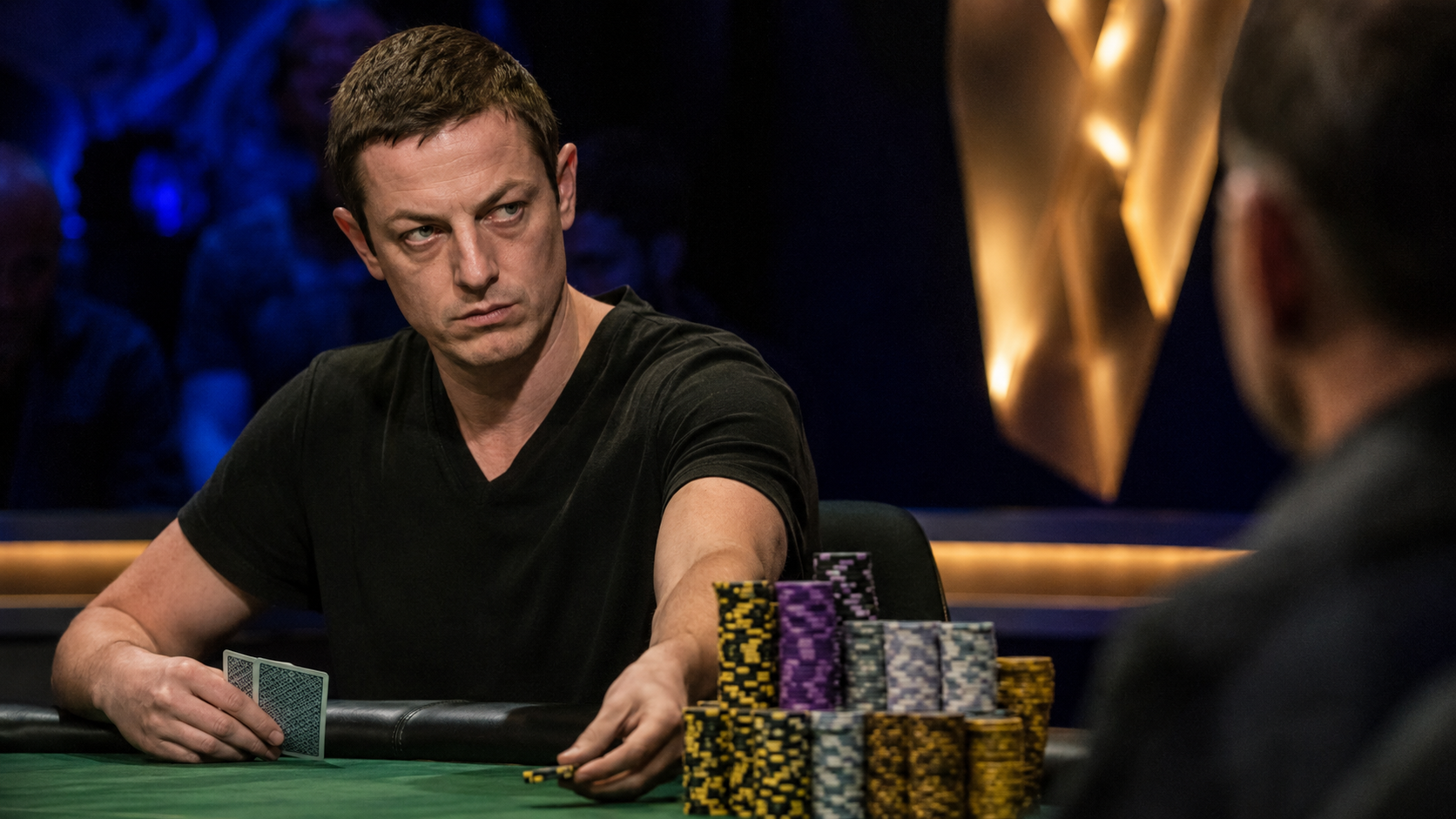
Tom Dwan’s Biggest Tournament Results
Tournament poker represents only a limited portion of Dwan’s career, but he has accumulated approximately 7 million $ in recorded live cashes.
| Year | Tournament | Result | Prize |
| 2019 | Triton London 250.000 £ Short Deck Private Event | 8th | 793.775 $ |
| 2019 | Triton London 100.000 £ Short Deck Private Event | 5th | 624.514 $ |
| 2014 | Aussie Millions 250.000 A$ Challenge | 6th | 446.700 $ |
| 2024 | Triton Jeju 50.000 $ NLH Turbo Bounty | 4th | 400.000 $ |
| 2010 | WSOP 1.500 $ No-Limit Hold’em | 2nd | 381.885 $ |
| 2022 | Triton Madrid 30.000€ Short Deck Turbo | 1st | 352.800 $ |
| 2007 | WPT World Poker Finals Championship | 4th | 324.244 $ |
| 2017 | Macau Billionaire Poker Spring Challenge | 2nd | 254.475 $ |
His largest payout came from an eighth-place finish rather than a victory because the 2019 Triton London event carried a 250.000 £ buy-in and created an enormous prize pool.
These figures represent gross tournament cashes. They do not include entry fees, staking arrangements, taxes, expenses or cash-game results.
They should not be used to estimate Dwan’s career profit or personal net worth.
The Bracelet That Nearly Changed Poker History
Dwan came extremely close to winning his first WSOP bracelet in 2010.
He reached heads-up play in a 1.500 $ No-Limit Hold’em event after surviving a field of 2.563 entries. Dwan entered the final duel against Simon Watt with a significant advantage but ultimately finished second for 381.885 $.
The poker community had an unusual financial interest in the result.
Dwan had reportedly made numerous bracelet bets with other professionals, offering significant odds that he would win a WSOP event. Had he completed the victory, several leading players could have lost millions of dollars through the side bets.
The atmosphere around the final table was therefore very different from a standard 1.500 $ tournament. Some of poker’s biggest names followed the action while effectively rooting against Dwan.
Watt’s victory prevented a payout that might have become almost as famous as the bracelet itself.
As of August 2026, Dwan still has no WSOP bracelet. The winner of the 2026 WSOP Event #90 was British professional Jamie Dwan, who is not Tom Dwan.
Playing Style and Fearless Decision-Making
Dwan’s game is built around creating difficult decisions.
He is willing to enter pots with a wide range of hands, particularly when stacks are deep enough to create pressure after the flop. His objective is not simply to make a strong hand. It is to reach situations where he understands the possible ranges better than his opponent.
He uses unconventional bet sizes, including large overbets that force opponents to risk a substantial part of their stack.
Dwan is also comfortable making thin value bets and light calls. The 3,1 million $ hand against Wesley Fei showed the other side of his aggression: an ability to recognise when an opponent’s story does not make sense and respond by calling with a hand far weaker than the nuts.
His willingness to think for long periods became part of his public image. Dwan popularised the intense stare-down that later became common in high-level live poker.
He has since expressed frustration with players who use excessive time and staring in routine situations. The reaction is slightly ironic, given how closely the behaviour became associated with his own television appearances.
Modern poker theory has caught up with some ideas that made Dwan appear revolutionary. Wide ranges, polarised river betting and aggressive pressure on capped ranges are now standard study topics.
Dwan’s contribution was demonstrating their power before most players had access to sophisticated tools for analysing them.
Controversies, Debts and Unverifiable Claims
Dwan’s long periods away from public poker produced persistent rumours about his financial position.
Players and gambling figures have occasionally accused him of unpaid debts or disputed agreements. Dwan has challenged several of those claims and explained that some involved misunderstandings, delayed settlements or arrangements more complicated than public accusations suggested.
The private nature of high-stakes gambling makes these disputes difficult to evaluate from the outside.
Backing agreements, currency exchanges, loans and shared action can create obligations that are not visible to observers. A player may participate in a huge game without personally owning all the money in front of him.
It is therefore important to separate documented facts from speculation.
The unfinished Durrrr Challenge is publicly established, as are Cates’ previous complaints about its progress. Individual claims about Dwan’s overall wealth, total debts or Macau results are not independently verified.
His exact net worth remains unknown.
ACR Poker and Return to Public Poker
In 2024, Dwan became an ambassador for ACR Poker.
The partnership marked a return to a more visible commercial role after years without a major online poker sponsorship. It also connected one of the original stars of online cash poker with a platform targeting a new generation of players.
The appointment generated discussion because of questions surrounding offshore poker regulation and ACR’s history. Dwan nevertheless continued representing the brand while appearing in livestreamed cash games and international tournaments.
He also became associated with GTO Wizard, participating in educational and promotional content. His public conversation with Daniel Cates was released through that relationship.
These appearances showed a more reflective version of Dwan. He remained private, but appeared increasingly willing to discuss the unfinished challenge, his career and the pressures surrounding high-stakes poker.
Tom Dwan’s Place in Poker History
Tom Dwan does not have the conventional résumé of an all-time tournament great.
He has no WSOP bracelet, WPT title or EPT title. His recorded tournament earnings place him far below the leaders of poker’s all-time money list.
Yet few players from his generation had a greater influence on how poker was played and watched.
Dwan represented the emergence of the online professional: young, mathematically aware, fearless and willing to challenge famous veterans without waiting for their approval.
His television appearances brought online aggression into traditional live cash games. His bets forced established professionals to confront strategies that had been refined through hundreds of thousands of internet hands.
His legacy is also more complicated than a simple story of progress.
The Durrrr Challenge was never completed. The Full Tilt era ended in scandal. Years in private Asian games created more rumours than verified results. His enormous wins were accompanied by swings and obligations that remain largely hidden.
These imperfections make Dwan’s story more difficult to summarise, but they also make it more representative of high-stakes cash poker.
The game does not produce a clean leaderboard. Much of its history exists through hands, stories and the testimony of people who were present.
The Poker Legacy of Tom Dwan
Tom Dwan changed the boundaries of acceptable aggression.
Before durrrr, many players understood that loose and aggressive poker could be profitable. Dwan demonstrated how far the concept could be pushed against elite opponents with deep stacks and enormous amounts of money at risk.
He became famous without winning the Main Event, collecting bracelets or dominating the tournament money list. His reputation was built one difficult decision at a time.
The million-dollar bluff against Barry Greenstein, the enormous straight against Phil Ivey and the 3,1 million $ call against Wesley Fei each represent a different part of his game. He could apply pressure without a hand, maximise value with a strong holding and call when an opponent attempted to use his own aggression against him.
The unfinished challenges and private financial disputes prevent his legacy from being entirely celebratory. They show the personal and financial risks of a career built around seeking the biggest available game.
Even so, his influence is unmistakable.
An entire generation watched durrrr and learned that poker did not have to be played according to established conventions. Ranges could be wider, bets could be larger and the strongest player at the table did not have to be the oldest or most experienced.
Tom Dwan never needed a bracelet to become a poker legend. His greatest contribution was making players reconsider what was possible every time the action reached him.
Statistics updated in August 2026. Recorded tournament earnings represent gross cashes and exclude private, online and televised cash-game results.