

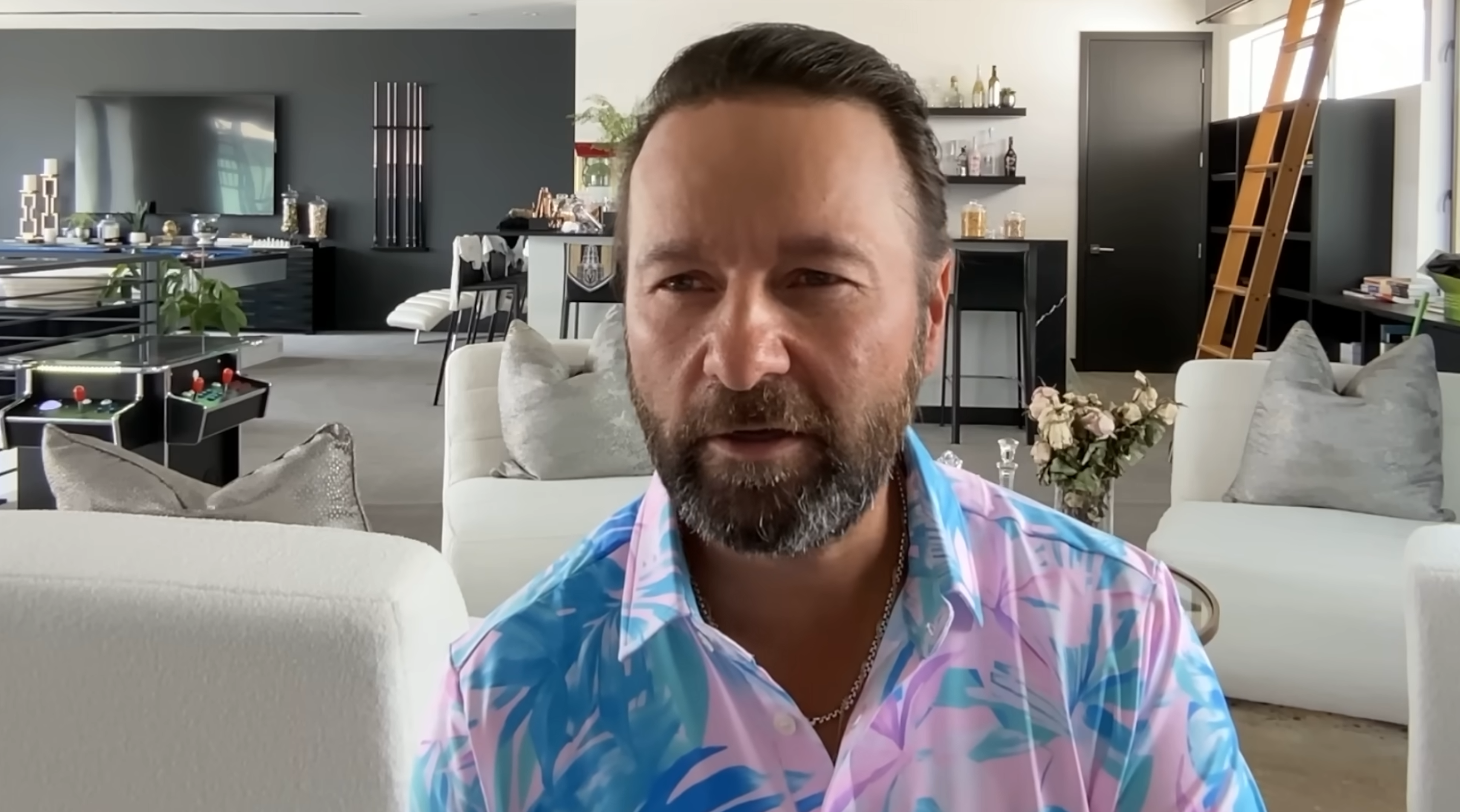
As the WSOP Europe Main Event progressed, players faced a stage where simply waiting for strong hands was no longer enough. They had to master stack pressure, table dynamics, opponent images, and judge whether a particular spot was worth the risk. In his latest breakdown, Daniel Negreanu examined three hands that illustrated the difference between standard play and decisions that could alter the tournament's course.
Mystery Hand: When Pocket 33 Forced a Better Hand to Fold
The first hand began inconspicuously but quickly turned into a scenario where the story mattered more than the cards. Button player Marián Uharček opened, Shawn Deeb called from the small blind with Q d J d, and the big blind with 6 h 6 c also decided to see the flop. The board K d 5 s K h gave the aggressor room to continue, and Negreanu pointed out that the button could c-bet a wide range on such a flop. With sixes, a call was made, though Daniel noted a small check-raise was also viable.
Things got interesting on the turn with the J s and Uharček continued with another barrel. For the sixes, this wasn’t an ideal situation as it favored the original aggressor more than the big blind. The river brought an A h and after another bet, Tuna faced a classic hero-call spot. He ultimately folded the better hand as the mystery hand revealed 3 d 3 c. Negreanu praised this bluff — not because it succeeded, but because the story on the flop, turn, and river was coherent.
Annette Obrestad Returns to the Scene and Puts Pressure on Opponents
The second hand involved the legendary Annette Obrestad, the youngest WSOP bracelet winner in history, who resurfaced deep in the tournament field after a long break. In a blind versus blind situation, she limped from the small blind with J c 9 d and the big blind Kalebashvili checked with T h 7 h suited. The flop 5 c 2 c T d gave her only backdoor possibilities, but Annette decided to bet and take the initiative. Negreanu explained that although she had almost nothing at that moment, she represented a stronger range than the big blind.
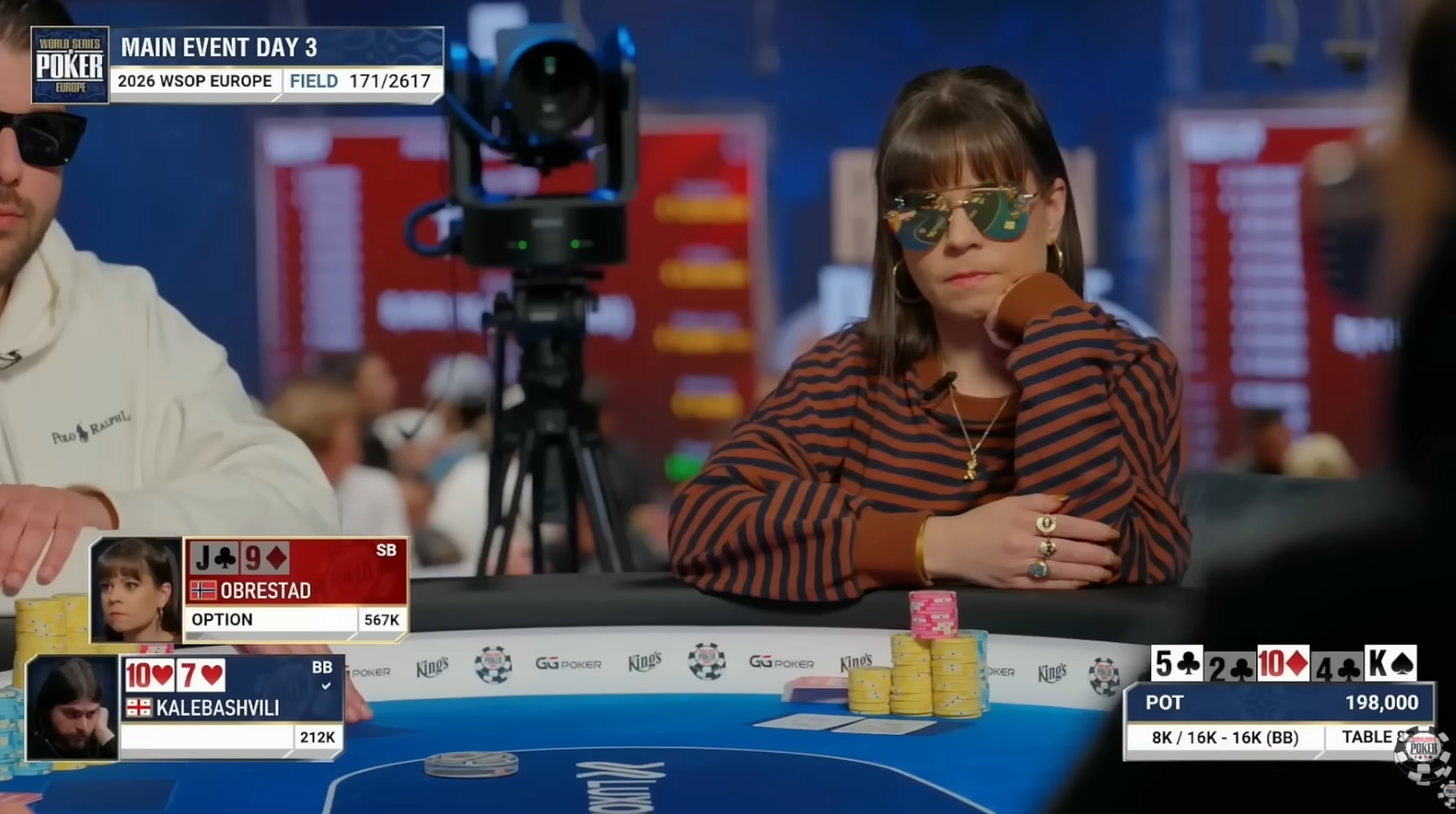
The turn brought another club 4 c and Obrestad kept up the pressure. Her opponent called with the top pair, but the river K s opened the door for a big final move. Annette effectively went all-in, putting her opponent in a tournament life decision. A call with ten-seven wasn't easy as it only beat a bluff, but the right decision was made. Negreanu highlighted an essential detail: such aggressive spots were why Annette had built such a significant stack in the first place.
Ace-King Isn't Always an Automatic Call
The third hand initially appeared the simplest but was strategically the most significant. Spirins opened with A s K d, Josh Arieh 3-bet with A c J s, and behind him sat Lulei, also with A h K c. He opted for a cold 4-bet, but the original raiser then went for a massive all-in, pushing more than a million in chips. With exposed cards, many spectators might say that folding ace-king was overly cautious. However, Negreanu dissected why it was an entirely different issue in real tournament situations.
Daniel reflected on his own famous hand against Joe McKeehen, where he managed to fold ace-king following substantial pre-flop action. The point was simple: when a player went all-in after a raise, 3-bet, and cold 4-bet extremely deep, their range wasn’t as wide as viewers might hope. In such a spot, ace-king could quickly turn from a premium hand into one hoping for a split or a flip against a pair. Negreanu deemed the fold a smart move, especially in a Main Event with a weaker field and a slower structure.
Not Every Big Card Requires a Big Decision
Negreanu's entire analysis demonstrated that tournament poker wasn't just about hand strength but primarily about context. Pocket threes could win a pot against sixes because the aggressor credibly represented a stronger story. Annette Obrestad might have lost a big part of her stack, yet at the same time, she showcased the style with which she had built it. And ace-king in one of the day's toughest spots didn’t have to play as an automatic call. Negreanu isn't just showing who was right based on the hand outcome but explaining how to think about decisions before the cards are revealed.
Read Also
Daniel Negreanu Analyzes Two Brutal Hands from the WSOPE Main Event

