

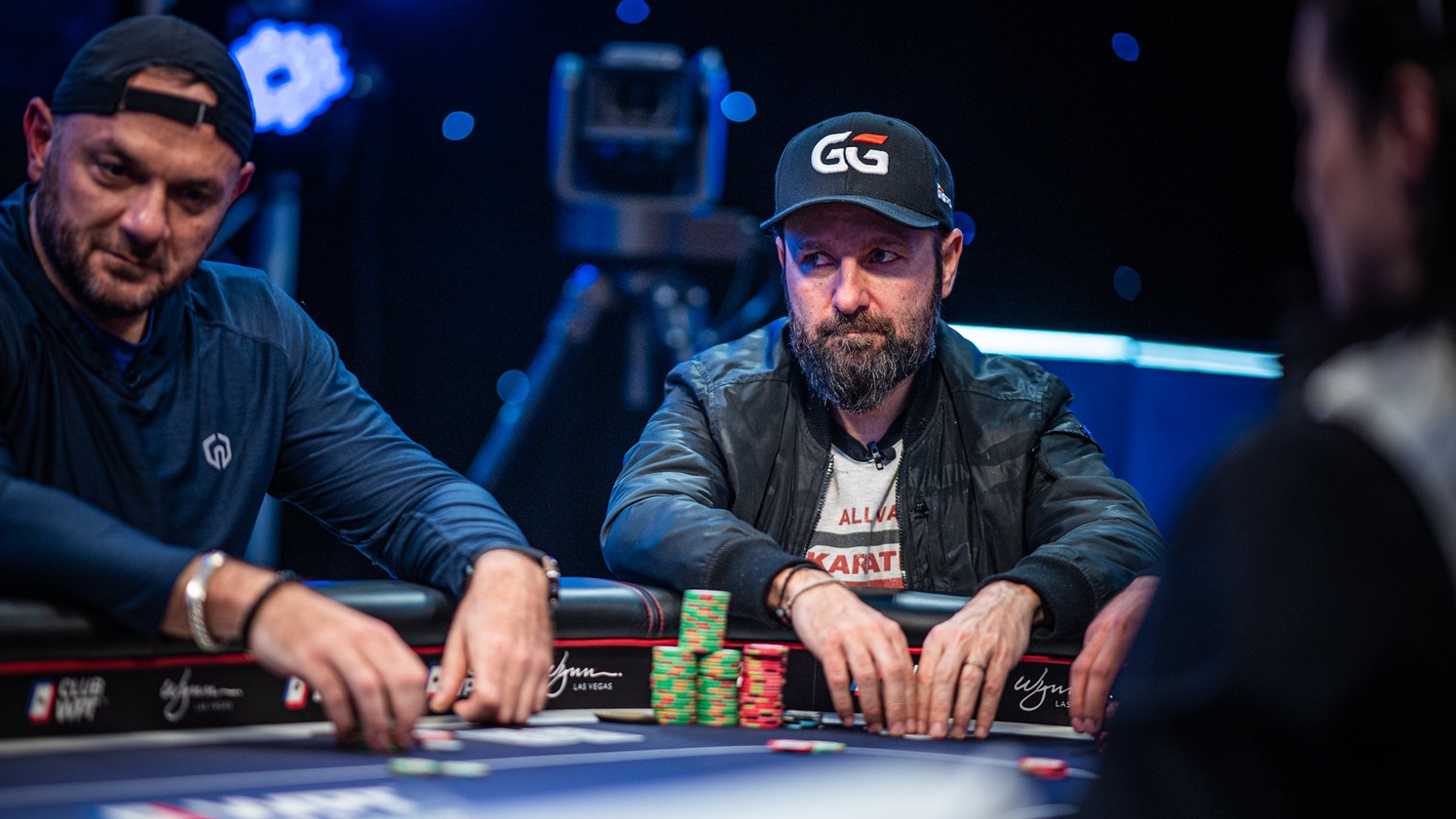
Negreanu became famous for doing something that looked almost impossible to casual viewers. He would sit across from an opponent, talk through the hand, eliminate possibilities one by one and sometimes name a hand that was shockingly close to the truth. It made for great television, but it also showed a deeper poker skill that separates elite players from the rest.
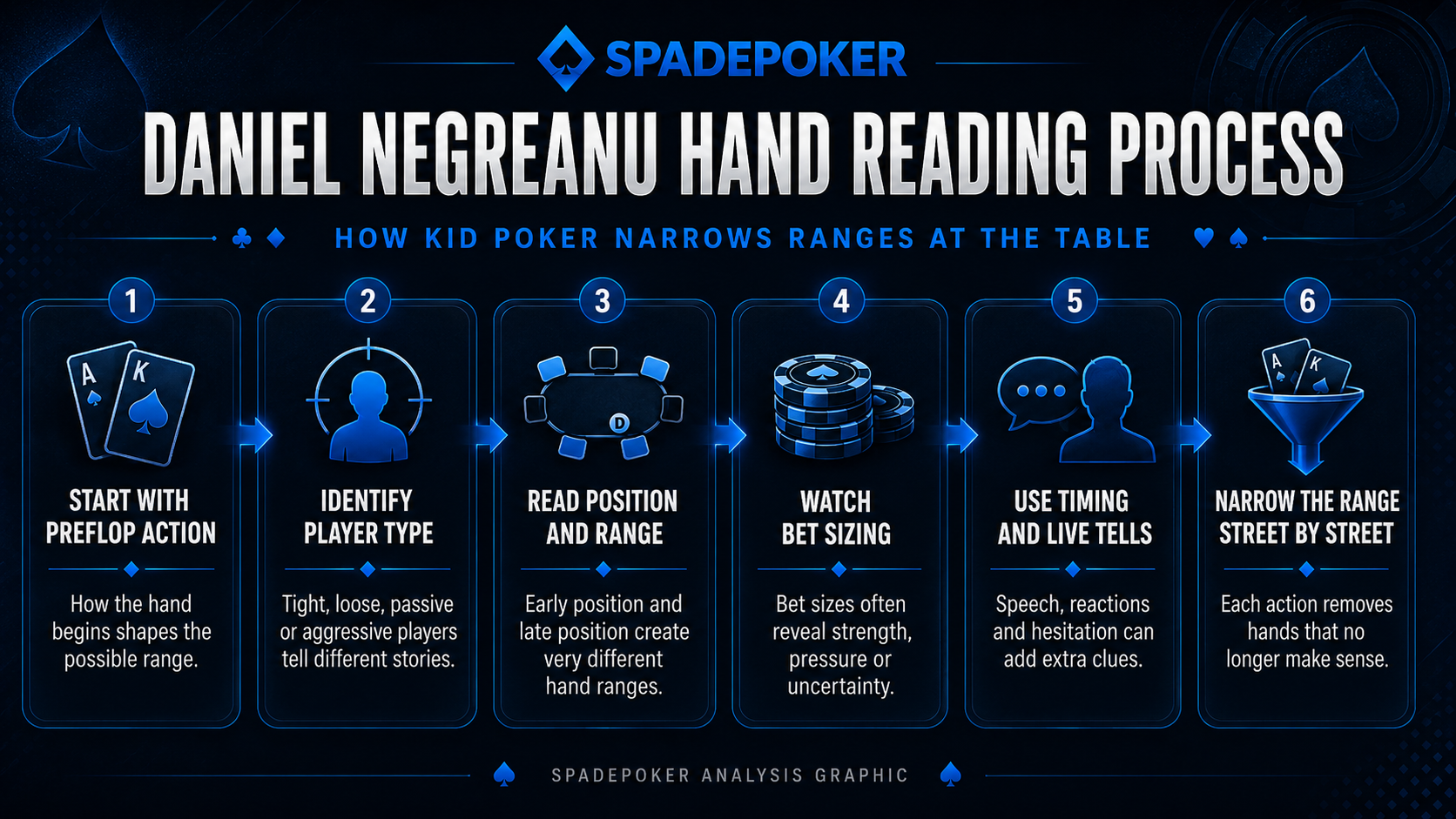
Hand reading is not magic. It is not a random guess. At the highest level, it is a structured process of narrowing an opponent’s possible hands based on preflop action, position, stack depth, bet sizing, board texture, timing, live behavior and previous tendencies.
That is why Negreanu’s hand reading became such a defining part of his poker identity. It connected his technical understanding of the game with his personality, live instincts and ability to make poker entertaining for viewers.
For the full background on his career, WSOP bracelets, WPT titles, GGPoker role and legacy, read our Daniel Negreanu ultimate guide.
What Is Hand Reading in Poker?
Hand reading in poker is the process of estimating what hands an opponent can realistically have based on the actions they take throughout a hand.
A beginner often asks, “What exact hand does my opponent have?” A stronger player asks a better question: “What range of hands makes sense?” That difference is crucial. Good hand reading does not usually begin with one exact holding. It begins with a wide set of possible hands and then removes the ones that no longer fit the story.
For example, if a tight player raises from early position, their range is usually stronger than if an aggressive player opens from the button. If that same tight player bets a dry ace-high flop, checks the turn and calls a large river bet, the story changes street by street. Each action gives information.
Daniel Negreanu’s gift has always been making that process visible. He talks through ranges out loud. He explains what does and does not make sense. He watches reactions. He uses the conversation itself as another source of information.
That is why fans often remember the final callout, but the real skill is the process that comes before it.
Why Daniel Negreanu Became Famous for Calling Hands
Daniel Negreanu became famous for hand reading because he combined accuracy with performance.
Many great players can read ranges well, but very few explain the process while the hand is still happening. Negreanu made that thinking part of the show. During poker’s television boom, this was extremely powerful. Viewers were not just watching cards. They were watching a player try to solve another human being in real time.
His table talk made the moments even more memorable. He did not simply stare in silence. He asked questions, joked, reacted, watched body language and sometimes pushed opponents into revealing more than they intended. That created the impression that he was inside their head.
But the foundation was still poker logic. Negreanu used position, action, sizing and board texture before relying on live reads. The table talk was not a replacement for strategy. It was an extra layer.
That is why his hand reading worked so well with his broader style. His famous small ball poker approach put him in many postflop situations, and those situations gave him more opportunities to use observation, pressure and range reading.
That is also why his Daniel Negreanu small ball poker strategy created so many postflop spots where reads and range pressure mattered.
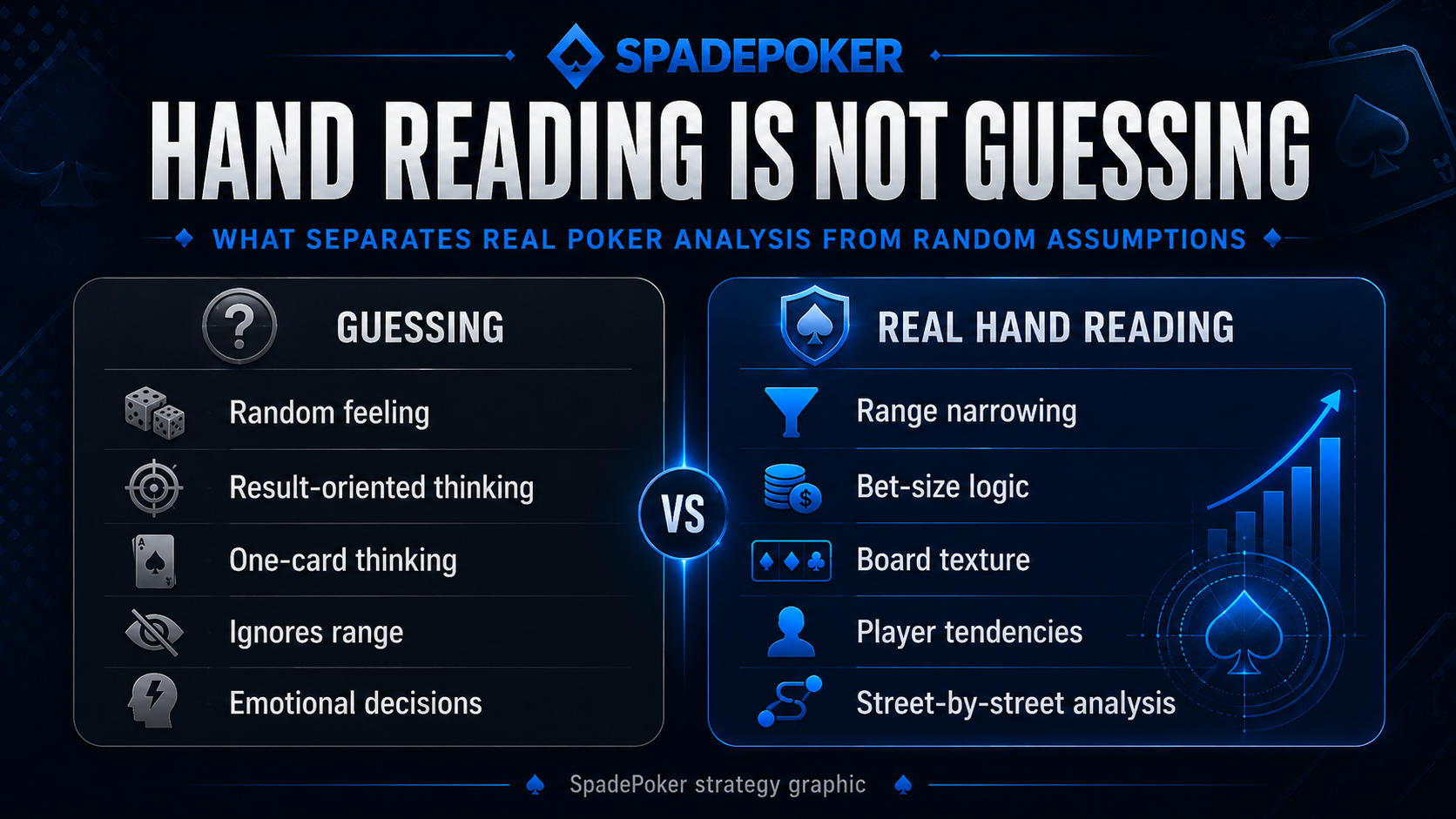
Range Reading vs Guessing: What Negreanu Actually Does
The biggest misunderstanding about Daniel Negreanu’s hand reading is that people think he is simply guessing exact cards.
That is not how serious hand reading works.
A real hand-reading process begins with a range. Before the flop, every opponent has a set of hands they could reasonably play in a certain way. That range depends on position, player type, stack depth, tournament stage, previous action and table dynamics.
Then the range changes after every decision. A bet removes some hands and strengthens others. A check can cap a range or create a trap. A call can suggest medium-strength hands, draws or slow-played monsters. A raise can polarize a range toward strong value or bluffs.
Negreanu’s skill is in narrowing that range quickly and accurately. Sometimes he ends up naming the exact hand. But even when he does not, the important part is that he often understands the shape of the opponent’s range: strong, weak, capped, polarized, draw-heavy or value-heavy.
That is what separates hand reading from guessing. Guessing starts with a feeling. Real hand reading starts with logic.
Preflop Clues: Position, Action and Player Type
Every hand read starts before the flop.
Position is one of the first clues. An early-position raise usually represents a stronger range than a late-position raise. A button open can include many more hands than an under-the-gun open. A small blind 3-bet means something different from a cutoff flat call.
Action is another key clue. Did the player limp, raise, 3-bet, call or squeeze? Did they choose a small sizing or a large one? Did they isolate a weaker player or attack a strong regular? Every decision adds information.
Player type matters just as much. A tight recreational player, a loose gambler, a young online pro and a cautious amateur do not usually have the same range in the same spot. Negreanu has always been strong at adjusting reads based on the person, not only the theoretical situation.
That is one reason his live reads became so famous. He rarely treated poker as a game played only against cards. He treated it as a game played against people making decisions under pressure.
Postflop Clues: Bet Sizing, Timing and Board Texture
Postflop hand reading is where the story becomes more detailed.
Board texture is one of the biggest clues. A player’s range on A♠ 7♦ 2♣ is very different from their range on J♠ 10♠ 9♦. Dry boards usually create fewer strong draws. Coordinated boards create more possible straights, flush draws, pair-plus-draw combinations and semi-bluffs.
Bet sizing also reveals information. A small bet can be a range bet, thin value, a blocker bet or a cheap bluff. A large bet often represents polarization: strong value hands or bluffs. But sizing only makes sense when compared to the player type and the board.
Timing is another useful clue, especially live. A snap call may suggest a medium-strength hand or draw. A long tank followed by a raise may indicate a difficult value decision or a carefully chosen bluff. But timing tells are dangerous if used alone. They become useful only when they support the larger story.
Negreanu’s strength is combining all these signals. He does not rely on one clue. He builds a pattern.
| Clue | What It Can Suggest |
| Preflop raise size | Strength, habit or player type |
| Position | Wider or tighter range |
| Fast call | Medium-strength hand, draw or automatic decision |
| Long tank then bet | Polarized range or difficult decision |
| Small turn bet | Block bet, thin value or setup |
| River overbet | Polarized value or bluff range |
| Sudden table talk | Comfort, confidence or uncertainty |
| Unusual line | Trap, bluff or confused medium-strength hand |
Common clues that help poker players narrow an opponent’s range.
Live Tells and Table Talk
Live tells are part of Daniel Negreanu’s legend, but they are often misunderstood.
A live tell is any physical, verbal or behavioral clue that may reveal information about a player’s hand or emotional state. This can include breathing, posture, chip handling, eye contact, speech patterns, timing and comfort level.
However, good players do not treat tells as automatic truth. A player who looks nervous might be bluffing, but they might also be nervous because they have a huge hand. A player who talks a lot might be relaxed, or they might be trying to appear relaxed.
Negreanu’s table talk works because it creates interaction. When he talks to an opponent, he may be watching how quickly they respond, whether their tone changes, whether they freeze, whether they become defensive or whether they seem comfortable continuing the conversation.
The words matter, but the reaction often matters more.
That is why table talk is not just entertainment in Negreanu’s game. It can be a tool for gathering information.
How Negreanu Uses Conversation at the Table
Negreanu’s conversations at the table often appear casual, but they can serve a strategic purpose.
When he asks an opponent a question, he is not always looking for the literal answer. He may be looking for hesitation, confidence, irritation or comfort. When he names possible hands out loud, he may be watching whether the opponent reacts differently to one hand than another. When he jokes, he may be testing whether the opponent stays relaxed.
This is one of the reasons Negreanu became such a strong television personality. His process was visible. Viewers could follow along as he built a story and tested it through conversation.
But there is a warning for regular players: copying Negreanu’s table talk without his experience can backfire. Talking too much may give away your own information, annoy opponents or distract you from the actual strategy. Table talk is only useful if it supports the hand-reading process.
Negreanu made it work because he knew what he was looking for.
Famous Daniel Negreanu Hand Reads
Daniel Negreanu’s most famous hand-reading moments usually share the same pattern. He does not simply announce a hand out of nowhere. He starts with the action, thinks about the range, talks through what makes sense and then narrows the possibilities.
That is what made those moments so memorable during the poker boom. Viewers were able to see the difference between guessing and structured reasoning. Even when the exact hand read was not perfect, the process often revealed how elite players think.
These moments also helped build his public image. A player who can name hands on television becomes more than just another tournament regular. He becomes a character, a teacher and a performer. Many of those moments are covered in our breakdown of Daniel Negreanu’s most famous poker hands.
That visibility had long-term value. It helped Negreanu become one of the most marketable players in poker and supported his broader career as an ambassador, content creator and public face of the game. That visibility also helped build his commercial profile, which we break down in our Daniel Negreanu net worth article.
Can Players Learn to Read Hands Like Negreanu?
Players can learn the principles behind Daniel Negreanu’s hand reading, but they should not expect to copy the final product overnight. His teaching style is also explored in our Daniel Negreanu MasterClass review.
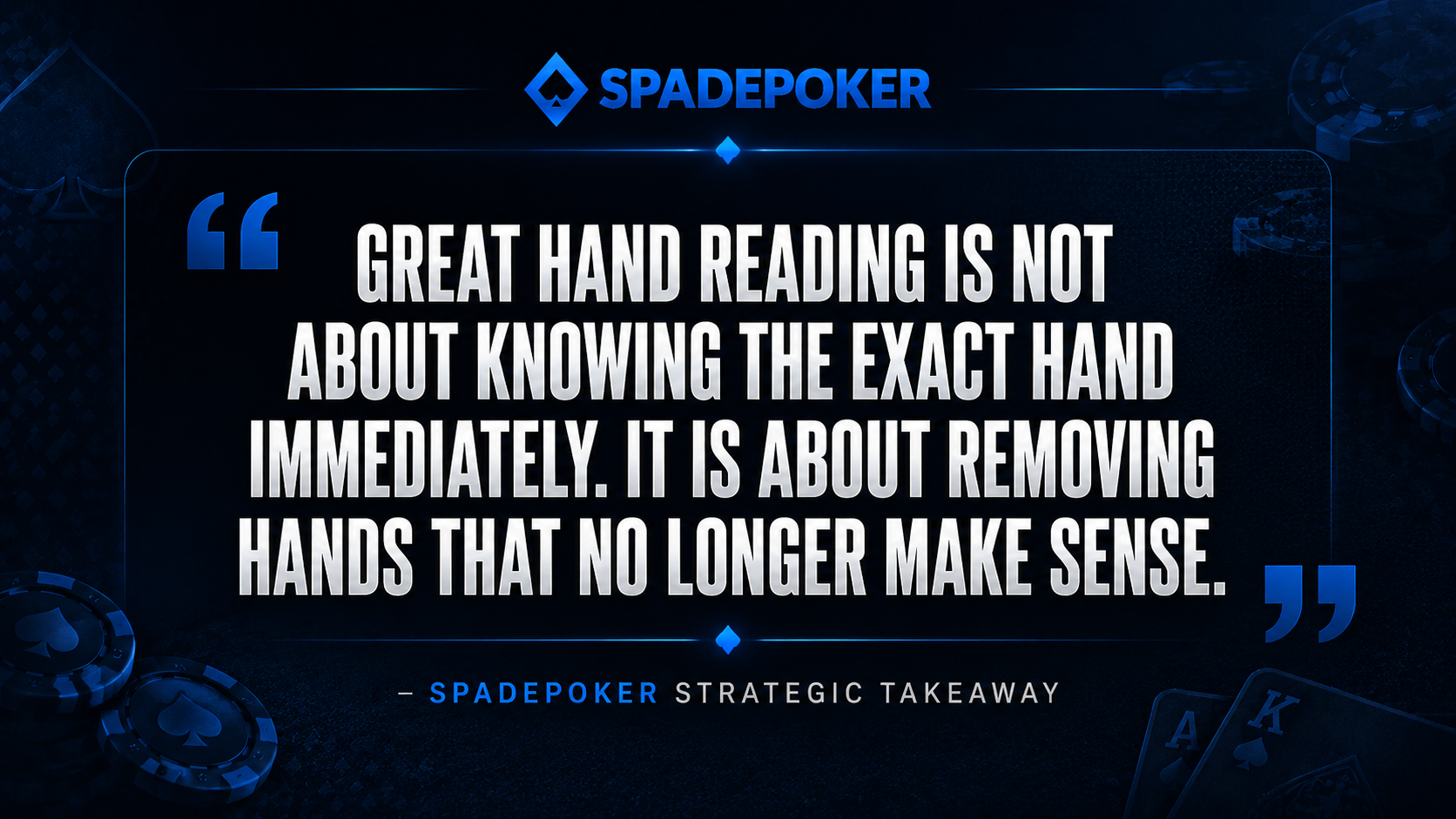
The first step is learning to think in ranges instead of exact hands. Instead of saying “he has ace-king,” ask what hands the opponent can have after each action. Then remove hands that no longer make sense.
The second step is paying attention to player types. Some opponents bluff too much. Some never bluff enough. Some overvalue top pair. Some become passive with draws. A good read depends on knowing who you are playing against.
The third step is reviewing hands away from the table. Negreanu’s reads look fast because he has processed thousands of similar situations. Most players improve by studying hands after the session, asking what ranges made sense and where their assumptions were wrong.
The final step is humility. Even great players get reads wrong. Good hand reading improves decisions. It does not guarantee perfect answers.
Hand Reading in the GTO Era
Modern poker has changed how players talk about hand reading.
In the solver era, elite players think more in terms of ranges, frequencies, blockers and balanced strategies. This does not make hand reading irrelevant. In many ways, it makes range reading even more important.
The difference is that modern hand reading must be more disciplined. It is not enough to say, “I feel like he is weak.” Strong players ask whether the opponent’s line is balanced, what value hands they represent, what bluffs they can have and whether their sizing makes theoretical sense.
Negreanu’s later career is interesting because he has had to adapt to this world. His old strengths — live reads, table feel and opponent adjustment — still matter, but they work best when combined with modern theory.
This old-school live-read identity versus modern solver-driven poker is one of the reasons the Daniel Negreanu vs Doug Polk rivalry became such a fascinating clash of eras.
Common Mistakes Beginners Make When Reading Hands
Many beginners misunderstand hand reading because they try to jump straight to the answer.
The first mistake is putting an opponent on one exact hand too early. This creates tunnel vision. Once a player decides “he has a flush draw,” they may ignore later information that points to a made hand or a bluff.
The second mistake is ignoring position. A hand that makes sense from the button may not make sense from early position. Ranges are not the same everywhere.
The third mistake is treating every tell as reliable. Live tells can help, but they should support the story created by action and sizing. They should not replace it.
The fourth mistake is being results-oriented. If you make a good call and lose, that does not automatically mean the read was bad. If you make a bad call and win, that does not mean the read was good. The quality of the process matters more than one result.
This is where Negreanu’s example is useful. His best reads are memorable because they look dramatic, but the real lesson is disciplined range narrowing.
Lessons from Daniel Negreanu’s Hand Reading Style
The biggest lesson from Daniel Negreanu’s hand reading is that poker is a story told through actions.
Every raise, call, check and bet says something. Every position has a range. Every board changes what hands are possible. Every opponent has habits. Great players connect these details into one coherent picture.
The second lesson is that observation matters. Many players focus only on their own cards. Negreanu became famous because he focused intensely on opponents: how they acted, how they talked, how they bet and how their decisions changed under pressure.
The third lesson is that hand reading should improve decision-making, not feed ego. The goal is not to impress the table by naming a hand. The goal is to make better folds, better calls, better bluffs and better value bets.
That is why Negreanu’s hand reading remains so influential. It is entertaining, but it is also a reminder that poker is still a human game, even in the solver era.
Final Verdict
Daniel Negreanu’s hand reading became legendary because it combined poker logic, live observation and entertainment.
He did not become famous simply because he guessed hands correctly. He became famous because he showed the process. He talked through ranges, tested opponents with conversation, used position and sizing, watched live reactions and narrowed possibilities street by street.
That skill helped make him one of the most compelling players of the televised poker era. It also became part of the style behind many of Daniel Negreanu’s biggest poker wins. It also explains why his strategy, personality and public image became so closely connected. Negreanu made poker feel understandable, dramatic and personal.
In modern poker, hand reading has changed. Solvers, balanced ranges and GTO concepts have made the game more technical. But the core idea remains the same: strong players do not just play their cards. They interpret the story their opponents are telling.
That is why Daniel Negreanu’s hand-reading legacy still matters. It is not magic. It is poker intelligence made visible.
FAQ
What is Daniel Negreanu’s hand-reading ability?
Daniel Negreanu’s hand-reading ability is his skill at narrowing opponents’ possible hands based on action, position, bet sizing, board texture, timing, live behavior and player tendencies.
Is Daniel Negreanu really guessing opponents’ cards?
No. His best reads are not random guesses. They are usually based on structured range reading and a process of eliminating hands that no longer make sense.
Why is Daniel Negreanu famous for hand reading?
Negreanu became famous because he often talked through hands out loud on televised poker shows and sometimes named an opponent’s holding with impressive accuracy.
Can you learn hand reading like Daniel Negreanu?
Yes, players can learn the principles behind his hand reading by studying ranges, position, bet sizing, board texture and opponent tendencies. However, reaching Negreanu’s level requires years of live experience and review.
Does Daniel Negreanu use live tells?
Yes. Live tells are part of Negreanu’s table approach, but they work best when combined with poker logic. Physical behavior alone is not enough for reliable hand reading.
How does Daniel Negreanu use table talk?
Negreanu uses table talk to create interaction, test reactions and gather information. He may ask questions or name possible hands to see how an opponent responds.
Is hand reading still useful in modern GTO poker?
Yes. Hand reading is still useful, but modern players combine it with range theory, blockers, frequencies and balanced strategy. The best reads are now more disciplined and theory-aware.
What is the difference between hand reading and putting someone on a hand?
Putting someone on a hand often means choosing one exact holding too early. Hand reading means starting with a range and narrowing it as new information appears.
What is the biggest lesson from Daniel Negreanu’s hand reading?
The biggest lesson is that poker decisions improve when players think in ranges, observe opponents carefully and follow the story of the hand street by street.
Is Daniel Negreanu the best hand reader in poker?
Negreanu is one of the most famous hand readers in poker history, especially because he made the process visible and entertaining on television. Whether he is the best is subjective, but his influence is undeniable.

