

Early Lessons in Deception
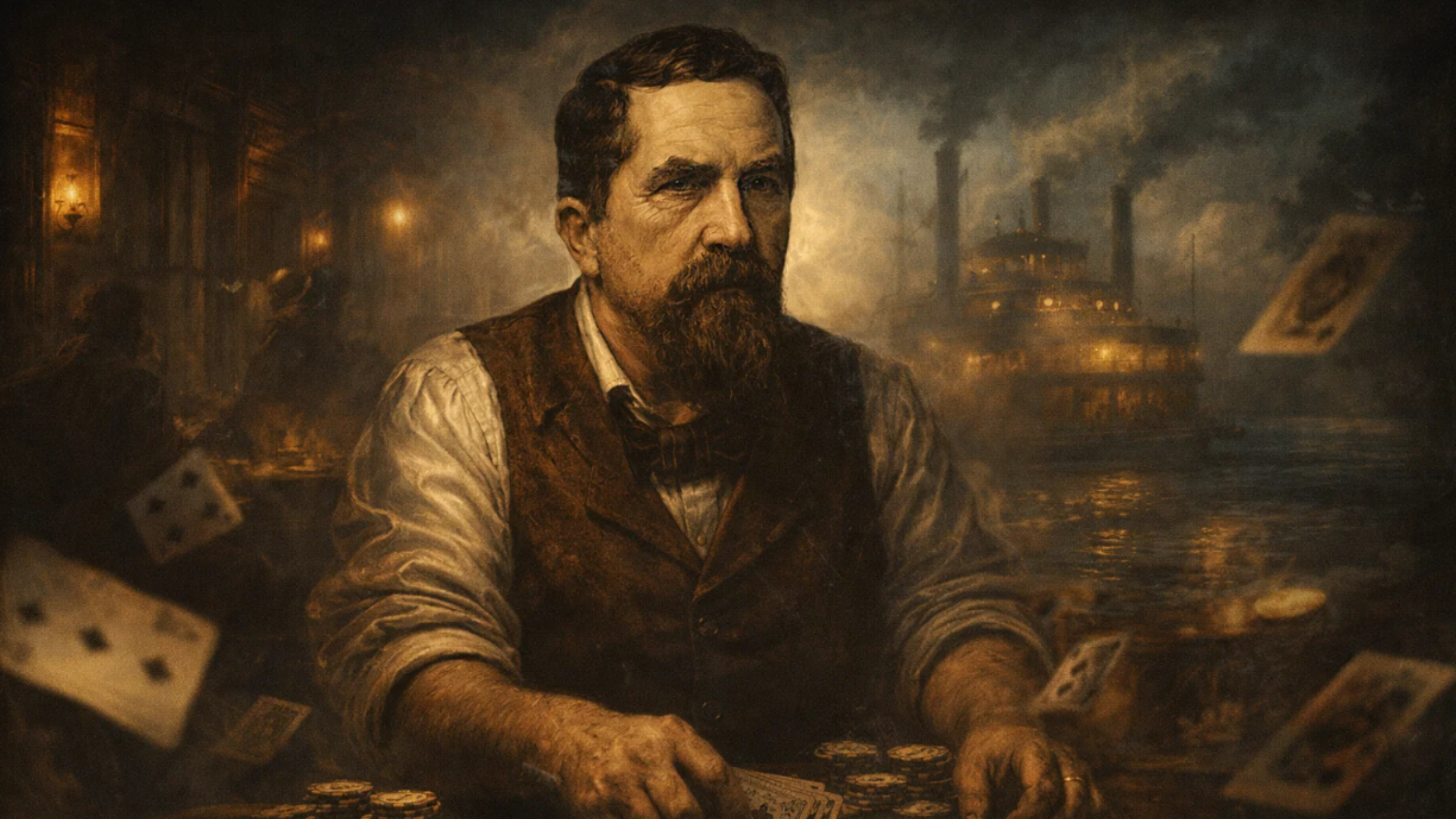
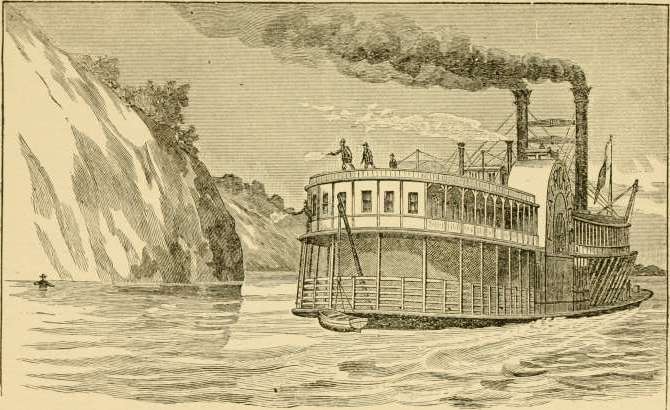
George was born in Ohio as the youngest of six children to a ship carpenter. Even as a child, he was uncontrollable. He hated school, threw stones at teachers, and returned home almost daily beaten from street fights. By the age of ten, he had run away from home and got hired as a cabin boy on the steamboat Wacousta.
The river became his university. By eleven, he knew how to pickpocket cards, by fourteen he could expertly shuffle them into prearranged decks, and by fifteen he was an expert at the game Seven-Up. During the Mexican-American War, he worked as a bartender on the ship Corvette, where he learned the technique of “stocking a deck” to allow an opponent a strong hand, while George had an even stronger one. With such skills, it’s no surprise that by the time he returned home at seventeen, he had pockets full of money. It's said he was already carrying an astonishing $3,000.
Steel Skull: George the “Battering Ram”
Devol was not only known for cards but also for his immense physical strength. He claimed doctors estimated his skull to be almost an inch thick. He used his head as a weapon, literally headbutting opponents in the face, often breaking their noses.
One of his most famous feats was a “bull fight” with a stoker on the John Walsh, rumored to be able to kill a man with his head. Devol bet hundreds of dollars that he could outdo him. When skull met skull, George knocked the stoker unconscious, leaving him with nose, eye, and ear bleeding. This curious battle made it into local newspapers, and soon everyone along the river knew of his hard head. Later in New Orleans, he even surprised William Carroll, a professional circus “ram” in a friendly match, with Carroll humorously declaring: “Gentlemen, I’ve finally found my father.”
Partnership with the Legendary “Canada Bill”
Devol often worked in teams with other gambling greats like Tommy Brown or Holly Chappell, but his longest partnership was with Canada Bill Jones, a character he described as having a “chicken head with a mouth from ear to ear.” Despite his appearance as a fool, Bill was a card genius. Bill wore clothes three sizes too big, giving off the impression of a country bumpkin—a perfect lure for unsuspecting victims. Together they mastered the game Three-Card Monte, enticing victims with a “randomly” bent corner of the winning card. Just as a victim was ready to bet it all, Devol would subtly straighten the corner and bend a different card.

Devol wasn’t above pulling a fast one on his own partner. Once, he hired a fake “victim,” dressing the man as a dirty tramp with $10,000 in his pocket. Bill was caught in his own trap when he tried to con the tramp out of his money in a monte game, only for Devol’s plant to beat him and even pull a revolver on him. Bill, frightened, handed over the money, and Devol later laughed and confessed that he’d tricked his own partner like a novice.
Bizarre Code: “Go and Sin No More”
Devol had a sense of humor rarely appreciated by his victims. One of his most famous tricks involved winning money from clergymen. After depriving them of their last cent, he would sometimes return the money (and occasionally their watches) with the words: “Go and sin no more.” However, he showed no such mercy to others. His philosophy was clear: “I intend to live off fools and suckers and make money rain.”
Yet, his heart was in the right place. On the John Simonds, after winning a man’s wife’s box of diamond jewelry, he saw the distraught woman with tearful eyes at breakfast the next day. Moved, he had the jewelry delivered to her cabin and refused to give the husband his address to reimburse him.
Escapes and Fateful Games
The life of a river gambler also involved dramatic escapes. Once, a group of cheated players, dubbed the “Arkansas Killers,” chased him all over the boat. Devol hid under the wheelhouse, paid the pilot $100 in gold, and jumped into the river at night. He got stuck waist-deep in mud, with bullets whizzing around him. Fortunately, the pilot steered the boat to the other side of the river.
In another case in New York, he conned a wealthy young man out of thousands by allowing him to “partner” in a poker game that Devol had secretly staged with his actual accomplice. The young man lost over $12,000, and this time George didn't have to flee, as the duped young man thought they merely had a run of bad luck.
During the Civil War, Devol won enormous sums from army paymasters. His record was a $19,000 win in a single game. However, he tarnished his reputation by playing with a railroad director, whom he relieved of $1,200, leading to an official gambling ban on trains and surveillance by the Pinkerton agency.
Devol’s reputation followed him beyond the Mississippi. In Cheyenne, at the Gold Room saloon, he encountered the legendary Wild Bill Hickok. Their game wasn’t friendly. When Hickok bet $50 and won, the dealer (working for Devol) tried to pay only $25, citing the table limit. Hickok protested that they took the full $50 when he lost, to which the dealer replied: “Fifty applies when you lose.” Known for his short temper, Hickok struck the dealer, overturned the table, and left with the entire purse.
The End of an Era
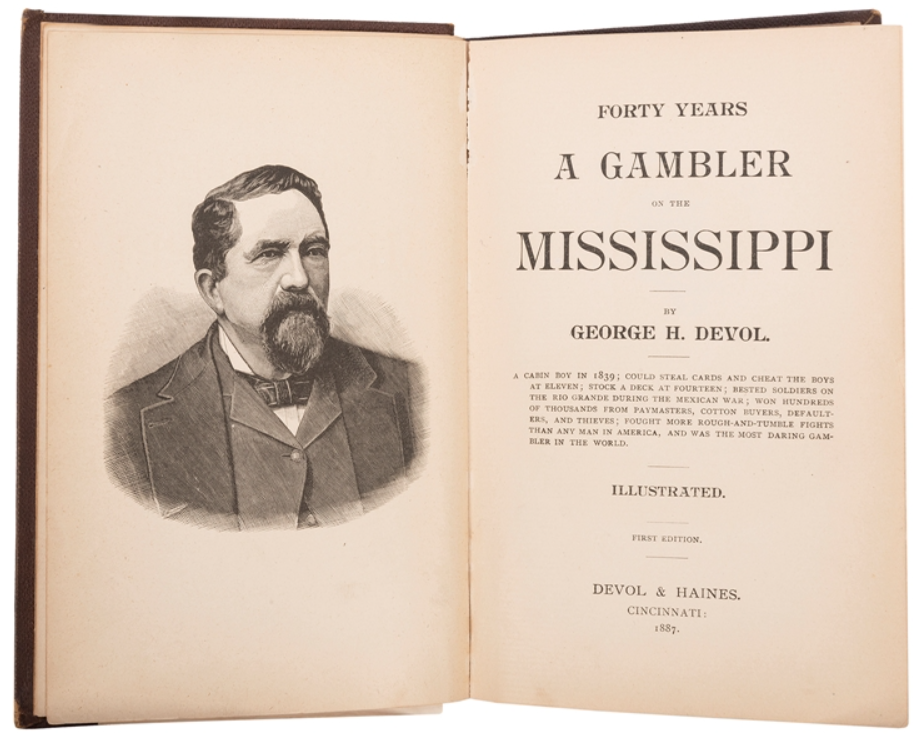
After forty years on the river, winning an estimated $2 million, his new wife finally persuaded him to quit gambling in 1896. He spent his remaining years selling his autobiography: Forty Years a Gambler on the Mississippi. The book is a treasure trove of incredible and often exaggerated tales, richly depicting life on riverboats and the world of gamblers.
Despite millions passing through his hands, George Devol died in 1903 in Hot Springs nearly penniless. As he admitted in his book, his only weakness was the game Faro. While he cheated elsewhere, he often legitimately lost everything he had previously won through deceit. His story is a reminder of times when poker on the Mississippi wasn’t just about math but also about courage, quick hands, and sometimes how hard you could hit with your head.
Also Read
The Story of Lottie Deno: The Card Queen of the Wild West
The Story of Kitty Leroy: The Gunslinger and Gambler Shot by Her Own Husband
The Tale of Poker Alice: The Devout Rebel Who Conquered the Wild West
Sources: Forty Years a Gambler on the Mississippi, Legends of America