

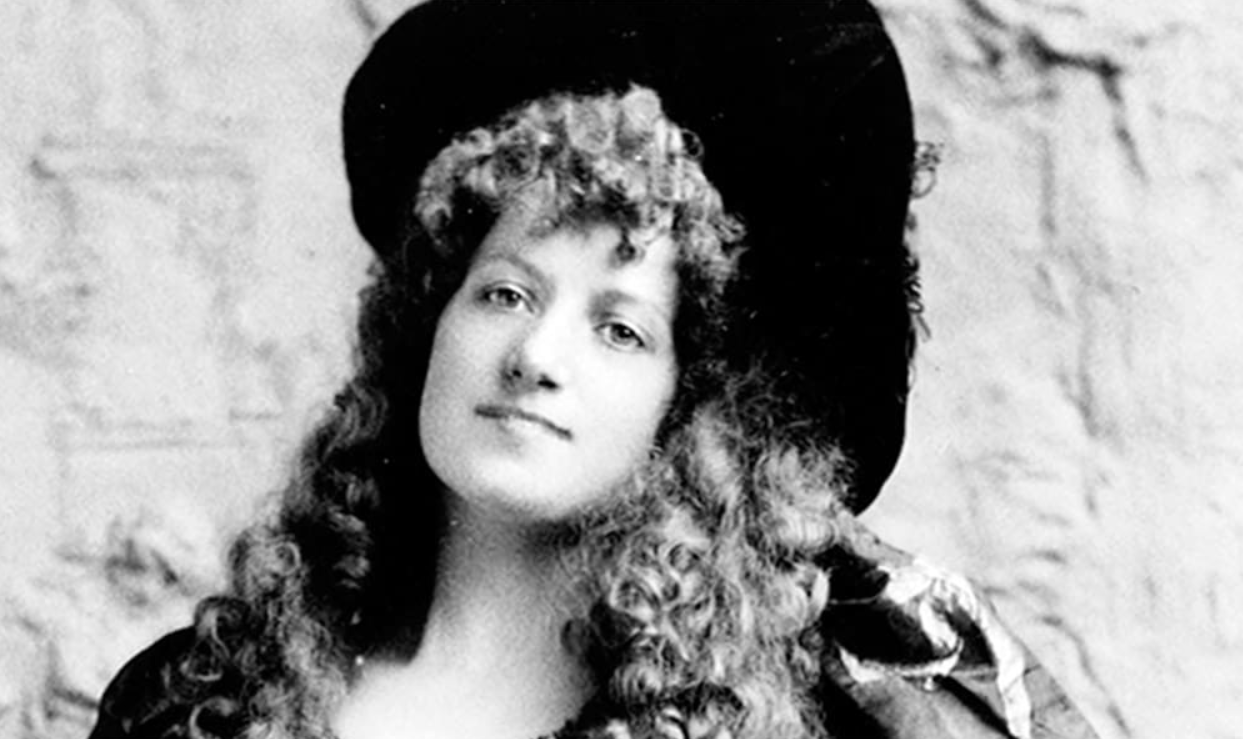
From Convent to Riverboat Gambling
Carlotta Thompkins, also known as Carlotta J. Thompkins, was born on April 21, 1844, in Warsaw, Kentucky, into a wealthy family. Her father, a horse breeder and prominent gambler, heavily influenced her. Lottie spent her early years traveling with him to gaming houses in New Orleans, Detroit, and across Europe. He taught her the secrets to winning at cards, believing survival required more than being a Southern belle, and inducted her into the art of gambling on land and riverboats. However, Lottie also received an education at an Episcopal convent and was well-versed in social etiquette.
Lottie Deno's life took a dramatic turn in 1861 when her father, who had joined the Confederate Army, was killed in battle. Her mother sent her to Detroit, hoping she would marry a wealthy man, but fate had other plans. When Lottie ran out of family money, she turned to gambling. She traveled the Ohio and Mississippi rivers, earning her way through cards. She excelled particularly in the game of faro, a popular card variant of the time. She even sent money home to her family, though she kept its source a secret.
A key figure in her early life was Mary Poindexter, her loyal slave and maid, reportedly seven feet tall (about 213 cm). Mary served as an imposing protector during their travels, standing behind Lottie at the gambling table and keeping cheaters at bay. Once, she even threw a Union soldier, who accused Lottie of cheating, overboard from a riverboat. On another occasion, she tackled a rattlesnake to protect her mistress, resulting in a bite and the amputation of her finger.
The Birth of a Legend and Her Alias Lotta Dinero
Around 1865, Lottie moved to San Antonio, Texas. There, she began working as a dealer at the University Club, owned by Frank Thurmond, a gambler from Georgia, with whom she fell in love. Her elegance, dress sense, and the ban on smoking, drinking, and swearing at her table earned her the nickname “Angel of San Antonio.”
Her most famous alias, however, came from elsewhere. When Frank Thurmond fled San Antonio (allegedly after killing a man in a card game with a Bowie knife he carried hidden on his back), Lottie followed him. Together, they traveled through the southwest gaming circuit, including Fort Concho (where she was nicknamed “Mystic Maud”), Jacksboro, and San Angelo, until reaching Fort Griffin in 1872.
.jpg)
Fort Griffin, dubbed “The Toughest Town in Texas,” was a wild frontier settlement known for its saloons. Lottie worked at Bee Hive Saloon there. One night, after winning every hand against each opponent, a drunk cowboy exclaimed, “Honey, with those winnings, you oughta call yourself Lotta Dinero” (dinero being the Spanish term for money). Carlotta embraced it, and with a slight adjustment, she became Lottie Deno.
This pseudonym helped conceal her true identity from her pious family in Kentucky, whom she told she had married a wealthy cattleman to explain the money she sent them.
A Steely Disposition
Lottie Deno was a captivating redhead with piercing brown eyes, always impeccably dressed and exuding the aura of a cultured Southern belle. While many in the saloon suspected her of cheating, no one ever caught her in the act.
In Fort Griffin, Lottie crossed paths with many Wild West legends. Most frequently mentioned is her encounter with Doc Holliday. It’s said that she defeated him in several games, and records show she won over $3,000 from him one evening.
One of the most dramatic stories from her time in Fort Griffin involves her conflict with Big Nose Kate Elder, Doc Holliday’s partner. Although the exact details are clouded by folklore and some quotes appear exaggerated, it’s claimed that Big Nose Kate accused Lottie of trying to steal Doc for herself. The incident allegedly led to both women drawing guns, with Doc Holliday intervening to prevent a shootout.
Lottie was known for her steely demeanor. A story that perfectly illustrates this involved a game of faro at Bee Hive Saloon, where a shootout erupted at a nearby table between two gamblers, known as “Monte Bill” and “Smokey Joe.” Both men were killed, but while others fled, the redheaded Lottie remained undisturbed, calmly counting chips. When the sheriff wondered why she hadn’t run, she supposedly replied, “You’ve never been a desperate woman.” The real reason might have been the money at the table mysteriously vanished and was rumored to have ended up in her purse.
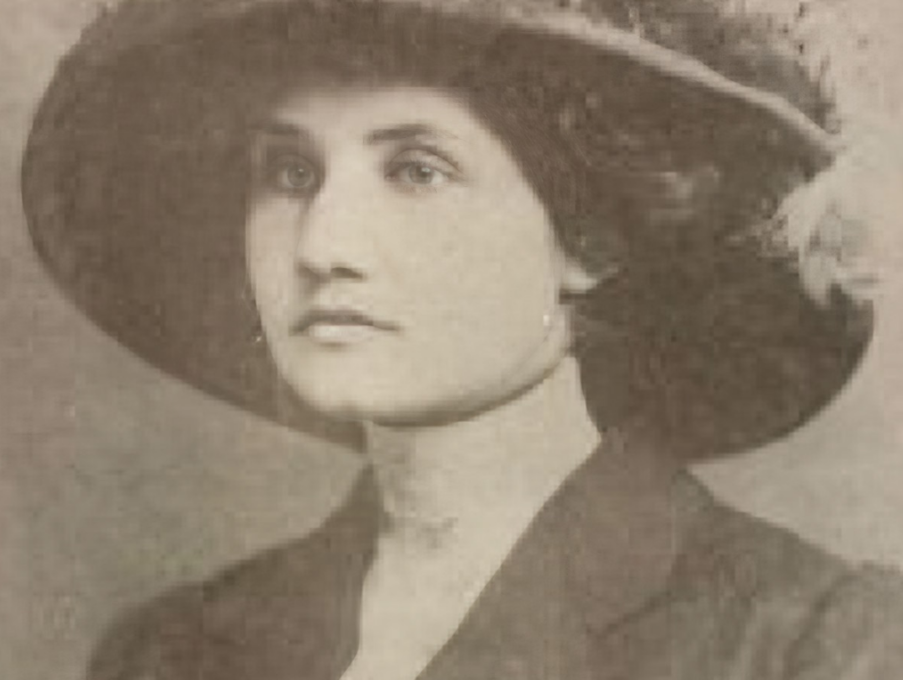
From Gambling Queen to Esteemed Lady
After years of wandering and gambling, Lottie and Frank Thurmond left Texas and moved to New Mexico in 1877. They first settled in Kingston, where they ran a small gaming room at the Victorio Hotel. Later, they moved to Silver City, getting married in 1880 but also experiencing a turning point. Frank, in self-defense, drew his knife and killed his second man. After this, they decided to give up gambling. They found a new home in Deming, New Mexico, moving there in 1882, and became respected community members.
Frank Thurmond invested in mining and later became vice president of the Deming National Bank. Under the name Charlotte Thurmond, Lottie actively engaged in social life. She helped establish the Episcopal Church of St. Luke and became vice president of its guild. Although she quit playing cards, legend says that the original church building was funded with $40,000 she won in a card game.
Charlotte appeared in newspapers only through social activities and earned the respect of her peers. In Deming, she became the pillar of the community, organizing charitable events and earning her last nickname, “Aunt Lottie.” Charlotte J. Thompkins Thurmond died in Deming on February 9, 1934. She lived to the remarkable age of 89 and was buried beside her husband, Frank Thurmond, who passed away in 1908.
The story of Lottie Deno is like a coin with two perfectly distinct yet equally valuable sides. One side is a shining gold coin representing her reputation as a poker queen and fearless gambler of the Wild West, risking everything for dinero. The other side is a beautiful silver coin symbolizing her later life in Deming, where as the esteemed “Charlotte Thurmond,” she invested her experiences and time into the community and the Episcopal Church, proving that even the wildest gamblers can find a path to respect and peace. Both sides created a complete and fascinating personality.
.jpg)
Read Also
The Story of Kitty Leroy: The Gunslinger and Gambler Shot by Her Own Husband
The Tale of Poker Alice: The Devout Rebel Who Conquered the Wild West
Sources: Wikipedia, Legends of America, Book Doc Holliday (Author John Mayers), Medium, New Mexico Historic Women, Texas State Historical Association

