

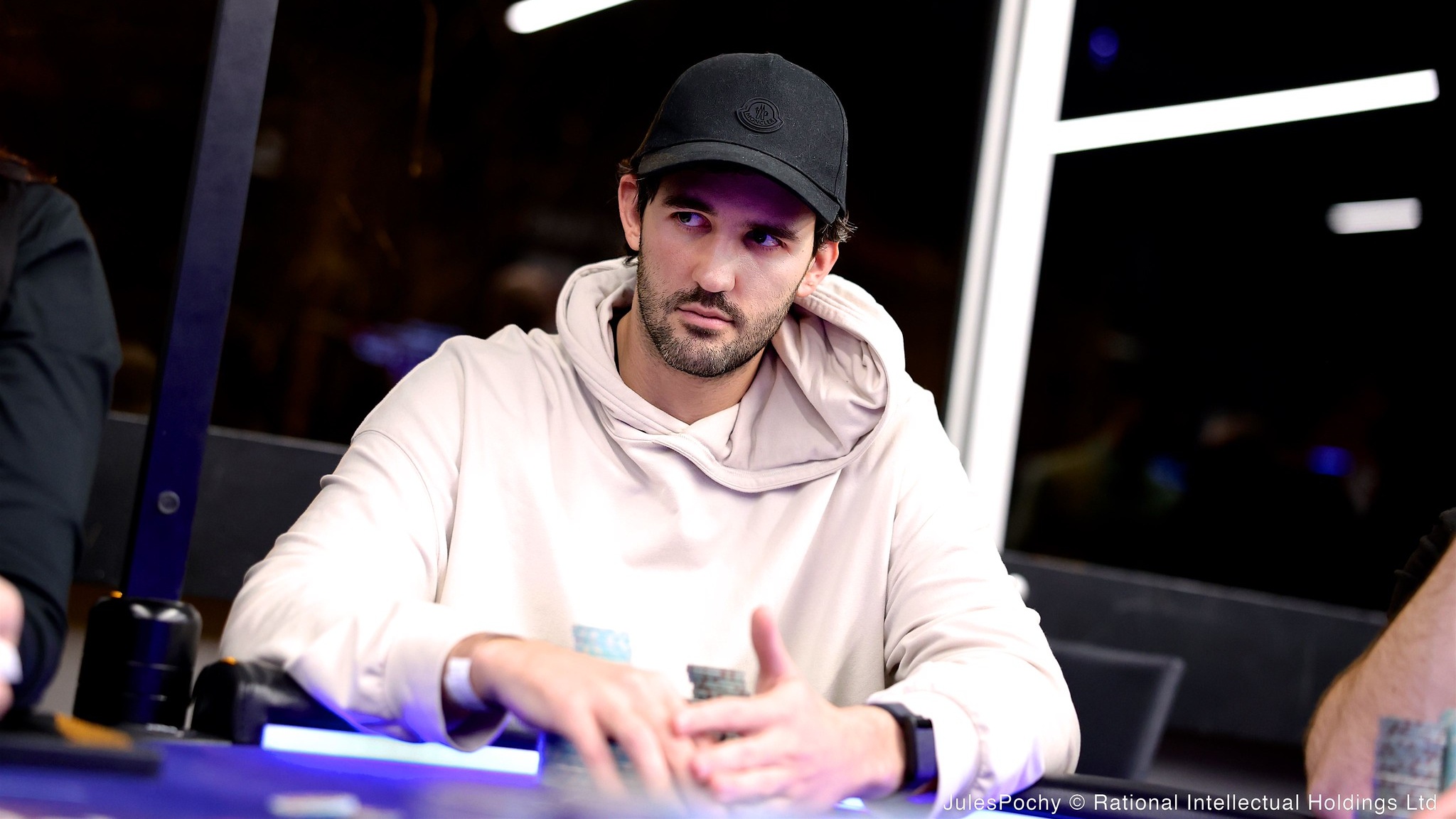
Justin Saliba belongs to the modern generation of players raised on online poker, solvers, databases, and endless study. Yet, in the Table One podcast, he shares more than tales of results, high rollers, and million-dollar cashes. His journey from a football goalkeeper and chemical engineering student to a player attempting to conquer Las Vegas — only to hate the grind within a month — is far more intriguing.
At the outset, he mentions that after returning from Jeju, he hadn't planned another tournament trip immediately. However, when he feels motivated to play, he wants to seize it entirely. According to him, poker is somewhat like a relationship. Initially, there is a honeymoon phase where you think about hands all the time and want to do nothing else. Then the swings, life, fatigue, and periods come when playing just because "it’s a good event" stops making sense.
Ohio, Football, and Early Poker Years
Saliba grew up in Beavercreek near Dayton, Ohio. He was introduced to poker through his older brother during the moneymaker boom when Hold'em began spreading among young players across the United States. As a child, he played with a group of friends and his brother’s acquaintances, or various online freerolls. It wasn’t about big money but rather the first contact with a game that would later consume him. Simultaneously, cards were nothing unfamiliar in his family as the Lebanese side had a strong affinity for card games.
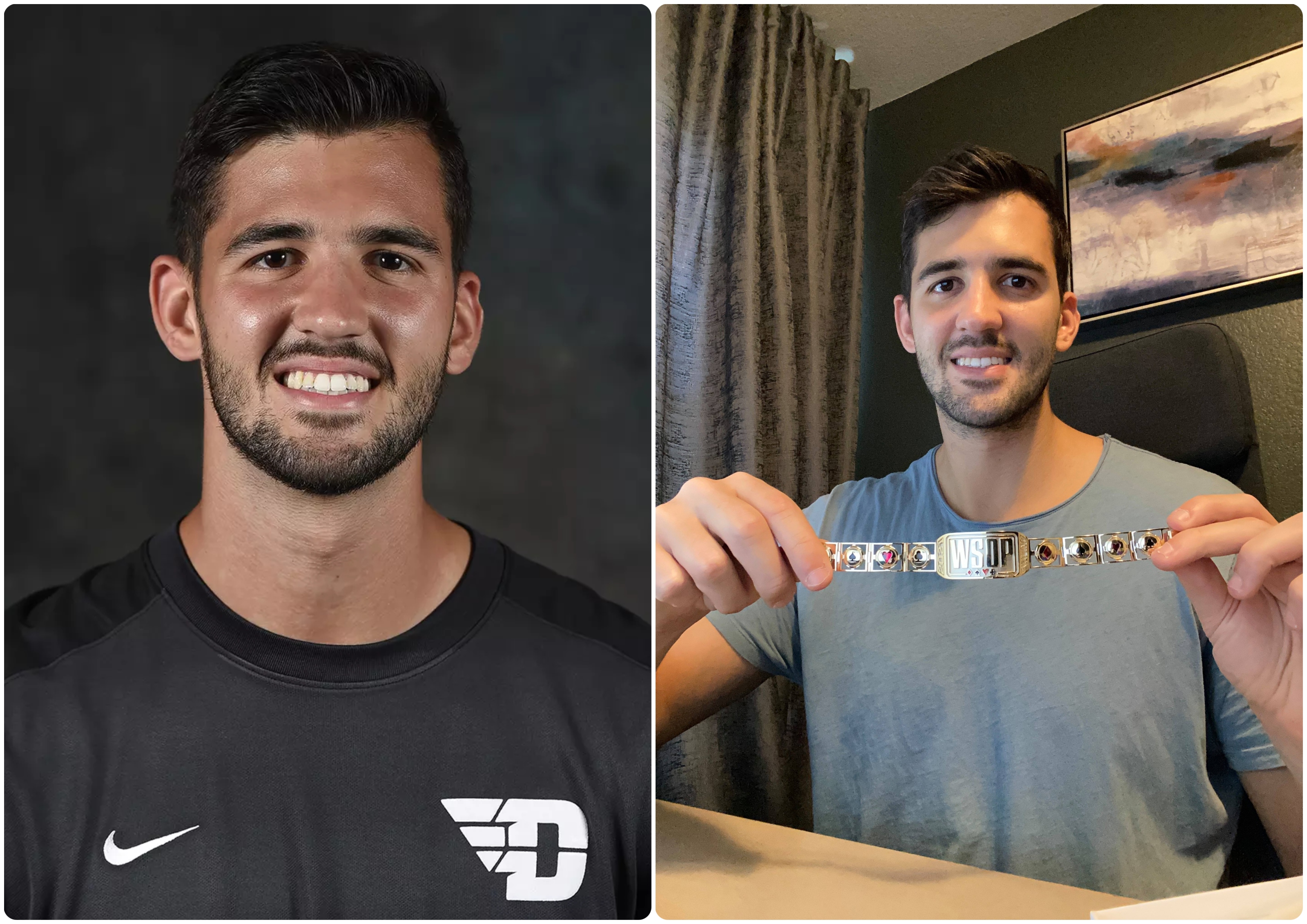
However, his first major identity wasn’t poker but football. Saliba played as a goalkeeper and reached the level of university sports at the University of Dayton. Football gave him competitiveness, discipline, and experience in an environment where performance is evaluated daily. He long believed he could continue professionally, even trying out for the MLS draft. But when neither draft nor contract came through, he suddenly found himself needing to consider his next steps. It was during this empty phase that poker began to regain significance.
An important turning point came when Saliba injured his shoulder and stopped traveling with the team. His teammates were on the road, while he stayed home and spent more time playing online poker. Initially playing low stakes, learning, and gradually realizing that poker wasn't just about reading your opponent and a feeling for the hand. His parents once bought him books by Jonathan Little for Christmas, which he says opened his eyes. He discovered that beneath the surface of the game, there’s a vast layer of strategy, structure, and decisions that can be systematically studied.
Later, he contacted Little for coaching. Realizing he couldn’t afford it, he proposed an exchange — working for his poker website in return for training hours. Saliba began exploring content, taking notes, breaking down large courses into smaller parts, and preparing materials for social media and training content. To him, it wasn’t dull work. It was an opportunity to study every layer of the game, dissect strategies from preflop to river, while gaining access to a person who helped him grow. This combination of work, study, and coaching later proved crucial.
The First Big Fall: From 30k to Zero
Saliba openly discusses a period when he already beat online cash games but simultaneously made rookie mistakes compounded by youthful confidence. He felt like the best player and since he had tens of thousands of dollars in his account, began playing higher stakes. Winning at $1/$2, then sitting at $10/$20, often on a tablet while watching TV. His parents had no idea about the real stakes played on his screen. To them, it looked like a hobby, but for him, it represented months of building a bankroll.
Then came the fall. In April 2018, he claims he lost everything and this swing hurt more than many later, much bigger losses because it was his whole world at the time. He didn’t have large living expenses, no family or professional support structure, but he felt he lost everything he had built. He wrote to Jonathan Little that he was quitting poker and looking for a job. But Little stopped him, reminded him of his winrate, and offered him steadier work for the company, enabling him to rebuild his bankroll.
After eight months of rebuilding, Saliba made a big move. He decided to move to Las Vegas, play live cash games, and, in his own words, “ruin everyone” within six months. He had a tough conversation with his father because the family saw he had a good degree and could take a more standard path. However, Saliba believed Vegas was the place where he would become a true professional. He arrived with a bankroll of about $40 to $50 thousand, a short-term lease, and plans to play $5/$10 daily at Bellagio. In his mind, it was the beginning of a grand poker story.
Reality was entirely different. He parked at Planet Hollywood because parking was free, walked to Bellagio, and ground from afternoon until early morning. He lasted about 30 days and then admitted to himself that he hated it. Live cash games were slow, boring, the regs were dull, and the whole idea that this would be his life was soul-crushing. He won some money, but it was nothing close to his expectations. After a month, he returned to online cash games and spent the rest of his Vegas lease almost as he could have done from home — at his computer, isolated, in an empty apartment with delivery meals.
Isolation, Discipline, and a Bunker-like Apartment
One of the most striking parts of the interview is Saliba’s description of life in his first Vegas apartment. He didn’t have a traditional couch, the TV stood on a box, there was a folding chair in the living room, and the whole place felt more like a temporary bunker than somewhere to build a new life. From bed to desk, ordering food, playing poker, repeating it daily. He admits it wasn’t the best for social life, but he says this period gave him the ability to sit down to poker without ideal conditions and perform even in uncomfortable regimes.
When COVID hit, many live players had to migrate online, but Saliba was already there. Online cash games were his natural environment, but the pandemic opened doors to tournaments. Large online fields grew, and in one of his first significant tournament attempts, he won an event on ACR for about $60,000. This hit changed his perception of tournaments. Suddenly he saw that he could also leverage his technical preparation and ability to study systematically. He didn’t immediately abandon cash games, but tournaments became his new challenge.
Soon Aram Zobian played a crucial role, assisting with tournament strategy and backing his action. At the time, Saliba was building preflop and ICM databases, working with solvers, possessing technical background not yet commonplace. However, he admits that technical skill doesn’t automatically make you a great tournament player. He knew a lot about solutions but was still learning to apply them to real spots, live dynamics, and the pressure of big buy-ins. This was where the player who later thrived in the high roller scene was born.
Online Bracelets and Entering the Toughest Games
Saliba eventually achieved online WSOP bracelets, yet one of the interview’s most intriguing discussions isn’t the victory itself but the atmosphere around online poker during cheating scandals. When suspicions about Ali Imsirovic arose in the community, Saliba found himself in an awkward position due to his friendship and poker ties. Some high stakes players messaged him saying his online play resembled Ali's, suggesting he should distance himself. Saliba says it hurt the most when doubts came from people he respected.
His response was straightforward. He decided to record his online sessions to prove he wasn’t cheating or using banned aids, and was playing alone. After about ten days of a break, he returned, recorded a whole session, and won the online 10K bracelet event. For him, it was a symbolic moment. If anyone thought his results weren’t clean, they could watch the entire recording. Saliba says this motivated him extremely and created a mindset that he wanted to beat these players live too.
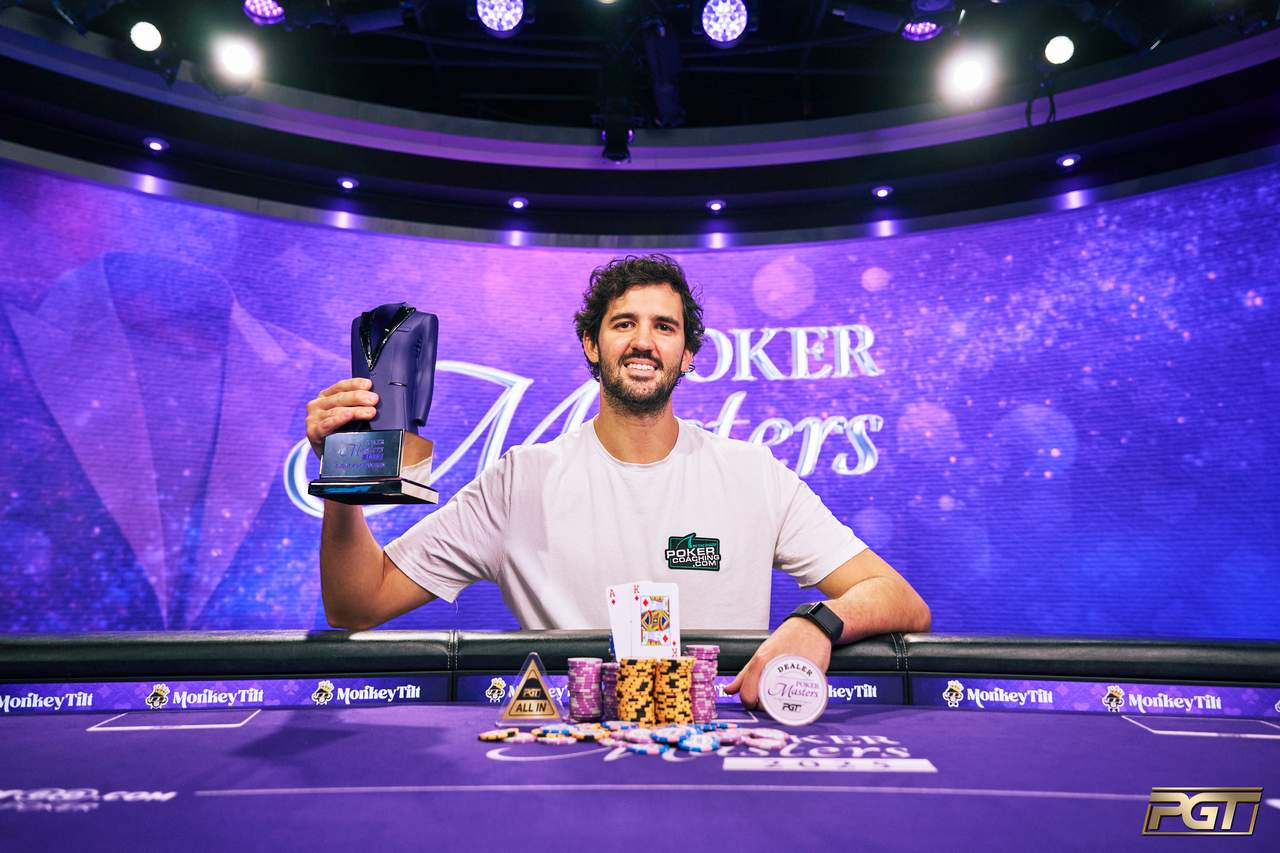
After this period came a great series of results. Saliba began playing more live high rollers like 25K tournaments in Florida, PokerGO events, Borgata tournaments, gradually entering environments where massive sums were at stake. According to him, he won several trips consecutively, feeling untouched by downswings. He attended tournaments with the mindset that he was going to take money from the best.
This heater brought another lesson. If one wins too quickly, it’s easy to lose the work intensity that got them there. Saliba openly admits that after significant successes came comfort, less hard work, and the need to find the right mental balance again. In the interview, he describes his “war mode,” that state where he goes on a tournament trip with the sole aim of playing his best and crushing the field. However, he also admits that such a regime isn't sustainable long-term. Sometimes it works perfectly, other times it exhausts you.
Triton Montenegro and the Question of Belonging to the Elite
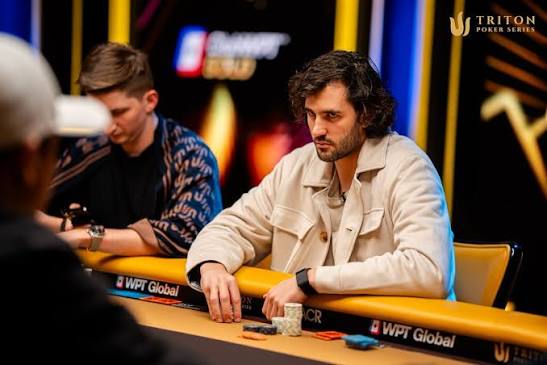
The biggest live cash of Saliba’s career came at Triton in Montenegro, where he finished second to Adrian Mateos. According to him, Triton demands a completely different mindset than typical high rollers. His first experiences were tough – starting 0/5 in Vietnam, then 0/3 in London, and naturally came the question of whether he really belonged at this level. The first final tables at Triton provided validation, yet he is still pained by not having a title. He has second, third, and fourth places, but a victory in this scene is still missing.
Montenegro was crucial for him not only for results but also how he began understanding swings. After a massive cash, he immediately entered a Main Event with a 132K buy-in and within minutes was in three bullets. In his old thinking, it might not have seemed like a downswing, just a brief chart dip. Today, however, he says moments like these forced him to mature as a professional. High stakes poker isn’t just about winning big events, but managing absurd financial swings without losing decision-making control.
The interview also touches on Saliba's personal life. He met his partner, now fiancée, who worked as a traveling baker and traveled extensively herself. Their life rhythms naturally intertwined — both spending part of the year in Vegas, part on the road. Saliba describes their relationship developing through travel, joint trips, and situations where people quickly learn how the other responds to stress, flight delays, or minor complications. For a player who operated in isolation and endless grinding for years, it meant a different type of balance.
He also hints the future might not be solely about no-limit high rollers. He still wants to play when feeling motivated but is more interested in PLO, other formats, and broader poker development. He’s not talking about leaving poker, more about finding a more sustainable career version. He knows if family comes along, traveling and extreme grinding might change. Therefore, he wants to utilize this period when he still feels the fight in him and still has something to prove.
More from Table One Podcast
John Bornstein: Underground Clubs, Robberies, Total Collapse, and a Poker Miracle
Nikki Limo: From YouTube and Stand-Up to a $130,000 Poker Run
Joe McKeehen: He Stopped Looking at His Cards and Won the WSOP Main Event
Andrew Moreno: From $3 Sit & Go to High Roller Champion
Yukon Brad Booth: Return to High Stakes Poker and the Ultimate Bluff Against Phil Ivey
Landon Tice: When Talent Outpaces Maturity and Poker Forces You to Grow Up
Jeremy Ausmus: From Dusty Poker Games in Colorado to the Pinnacle of World Poker
Cary Katz: Why High Stakes Attract Extremely Analytical Personalities
Sources – X, PokerNews, YouTube, Flickr, DaytonFlyers

