From Horse Trading to a First Kill
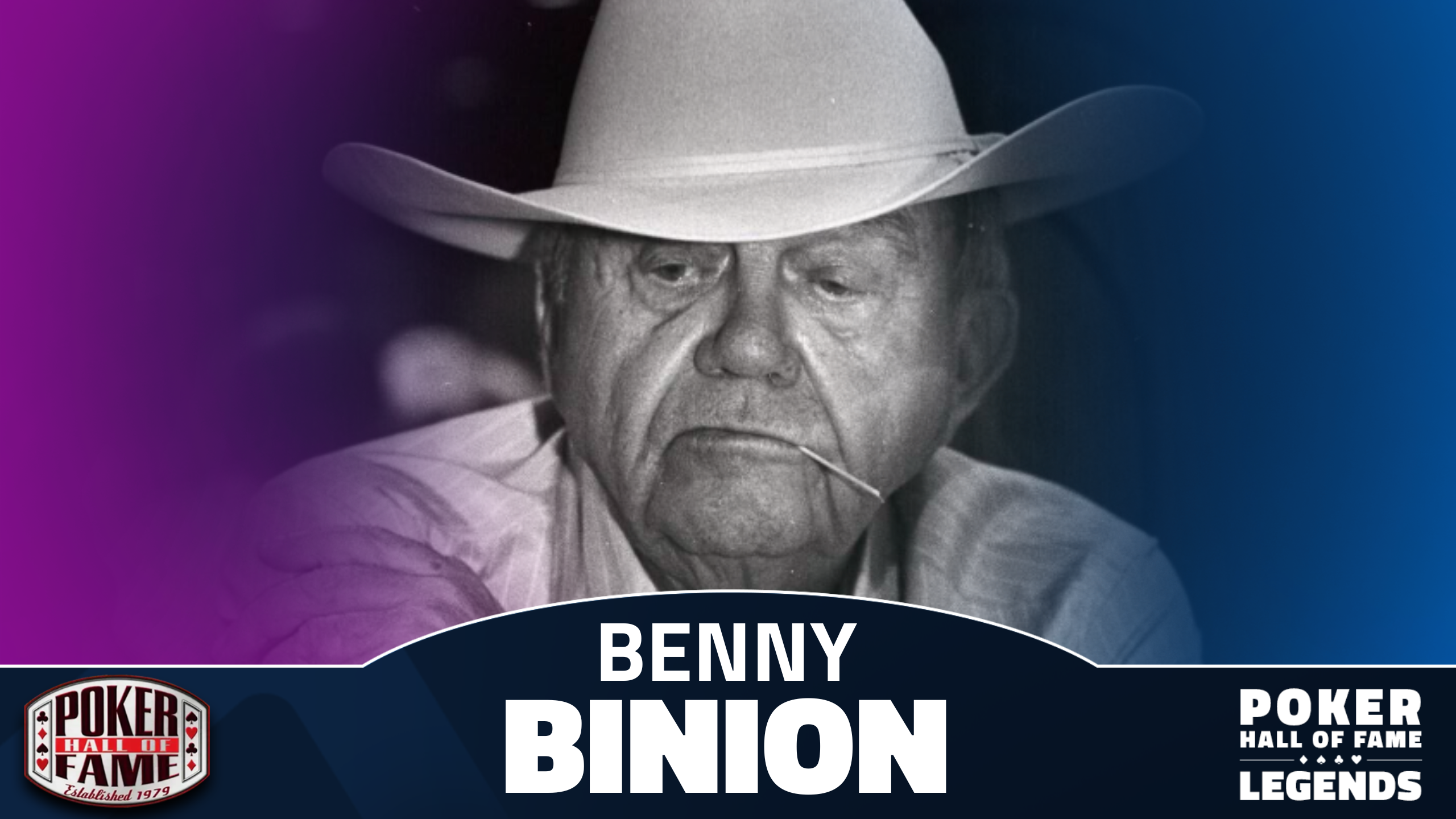
Benny Binion was born on November 20, 1904, in Texas. As a child, he rarely attended school and remained practically illiterate. Instead, he traveled with his father, a horse trader, learning to read people and master the art of business and bluffing. At eighteen, during Prohibition, he began making and smuggling illegal alcohol in El Paso.
Later, when he moved to Dallas, gambling was a natural choice for him. He organized illegal dice games and numbers lotteries. He opened his own gaming room in room 226 of the Southland Hotel, coining the infamous “Southland Syndicate.”
In October 1931, the first documented death occurred. Binion shot alcohol smuggler Frank Bolding. When Bolding pulled a knife on him, Binion fell back from the crate he was sitting on and, in a Wild West style, quickly drew his gun. He earned the nickname “The Cowboy” and received a two-year suspended sentence for the (self-defense) murder.
Five years later, in September 1936, he eliminated rival Ben Frieden with three shots to the heart. To deceive the police, after shooting Frieden, he shot himself in the shoulder and claimed it was self-defense. This tactic worked as the prosecutor dropped the charges against him.
The Relentless War with Herbert “The Cat” Noble
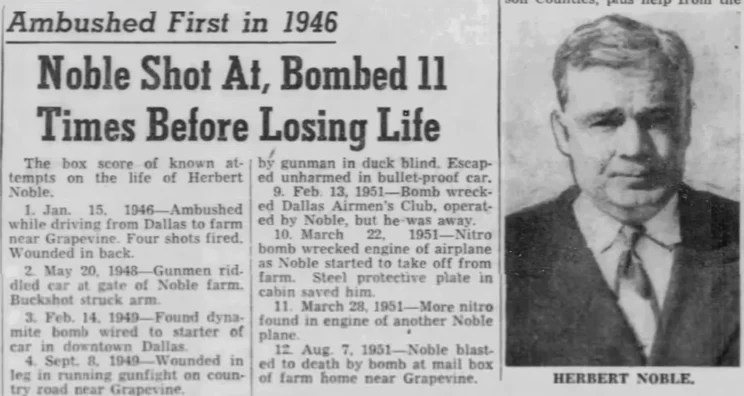
The most famous criminal chapter of Binion's life was the bloody feud with Herbert “The Cat” Noble. Noble opened his own illegal club, Airmen’s Club, in Dallas and refused to give Binion a 40-percent cut of his profits.
Binion put a $25,000 bounty on his head, yet Noble allegedly survived 11 assassination attempts. He dodged bullets, high-speed chases at 90 miles per hour, and explosions, earning the nickname “The Cat.” However, tragedy struck in November 1949 when a car bomb meant for Noble killed his wife, Mildred.
Grief-stricken, Noble planned a mad revenge, buying a plane to bomb Binion’s home in Las Vegas, to which Benny had moved in 1946. The police stopped him at the last moment just as he prepared for takeoff. Noble eventually used up more than his nine lives in August 1951 when he was killed by a booby trap bomb in his mailbox.
The Horseshoe Empire
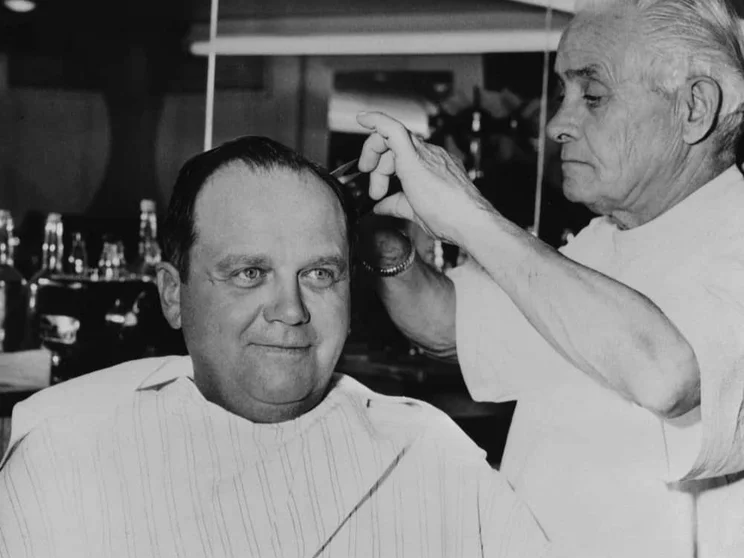
When Benny arrived in Las Vegas, he brought with him immense capital and uncompromising methods from Texas. In 1951, he purchased the bankrupt Eldorado Club on Fremont Street in downtown Las Vegas and renamed it Binion’s Horseshoe.
While casinos on the Las Vegas Strip focused on flamboyance and showbiz, Horseshoe adopted a completely different philosophy. Benny established basic rules that transformed the casino industry.
He created an atmosphere and environment for serious players. High-quality free alcohol and excellent food at affordable prices (including the famous $2 steak and spicy chili from a Dallas prison recipe) were available. Benny ensured respect and fair terms for both small-time and big-time players. He summed it up himself: “If you want to get rich, make little people feel like big shots.”
Benny also shocked the competition by lifting the upper limits on bets. While other casinos had limits for dice and roulette, Horseshoe accepted any wager. One of the greatest marketing moves in the city’s history was a horseshoe-shaped display case showcasing $1,000,000 in cash.
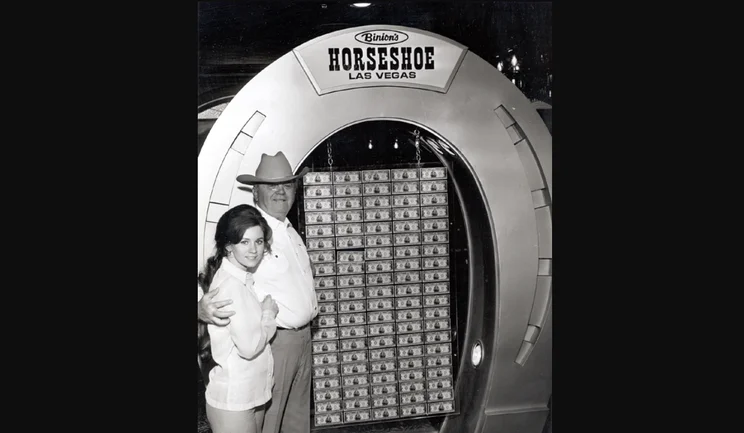
How did he deal with fraudsters and thieves? Police were never called to Horseshoe. Benny’s guards would escort offenders to the back alley and “explain” the rules using batons and broken limbs. “We beat the hell out of them,” Benny later recalled.
Jail Time in Leavenworth and Loss of License
His past eventually caught up with him. Texas prosecutor Henry Wade, in cooperation with the FBI, gathered evidence of tax evasion from Binion’s Texas operations in 1948, when he declared only a fraction of his multimillion-dollar earnings.
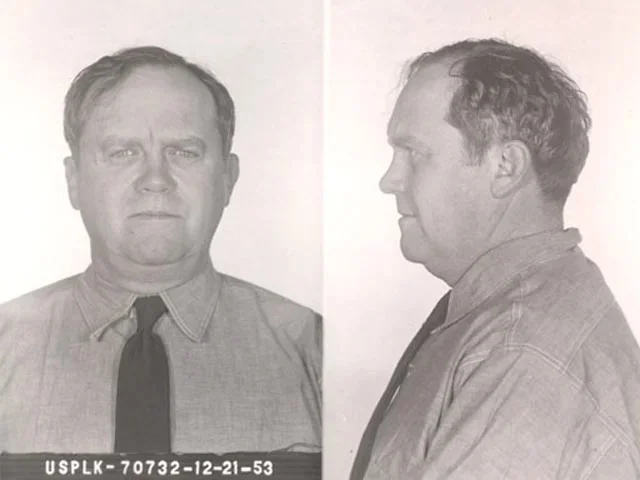
In 1953, Benny was sentenced to five years in the federal prison of Leavenworth, Kansas, and had to pay hundreds of thousands of dollars in back taxes. To pay fines and lawyers, he had to sell the majority stake in Horseshoe.
He served 42 months in jail and was released in 1957. He permanently lost the right to own a casino license in Nevada. Benny found a way around this. When he repurchased Horseshoe in 1964, his son Jack Binion became the official president, his other son Ted Binion became casino manager, and Benny served as a “consultant,” still effectively running the casino.
The Birth of the World Series of Poker
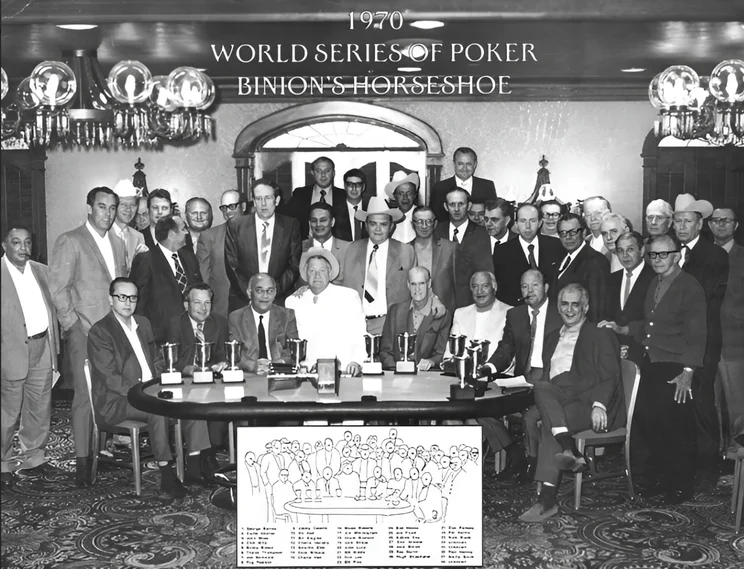
In 1969, Benny attended the Texas Gamblers Reunion in Reno, organized by Tom Moore and Vic Vickrey. Benny saw an opportunity. In 1970, he moved the gathering to his casino in Las Vegas and named it the World Series of Poker.
For the first event, he invited the era’s best players, including Johnny Moss, Doyle Brunson, Amarillo Slim, and Puggy Pearson. After several days of cash game action in various formats, players secretly voted to decide the best. The first vote ended comically, with everyone voting for themselves. Only in a second vote, where they had to choose the second-best, did Johnny Moss win.
In 1971, Benny changed the format to a freezeout tournament with a $10,000 buy-in. When journalists asked how big he thought the WSOP could become, Benny guessed it might one day attract 50 players. The tenth edition of the series surpassed this milestone, and the event grew to its current giant scale.
Posthumous Hall of Fame Induction
In the 1980s, Benny was a living legend and folk hero in Las Vegas. Even in old age, he wore his iconic hat, buffalo fur coat, and drove his Cadillac with horns mounted on the hood through his Montana ranch or Vegas streets.
Benny Binion died of heart failure on December 25, 1989, at the age of 85. Just a year later, in 1990, he was deservedly inducted into the Poker Hall of Fame as its 19th member.
Doyle Brunson later tweeted about him: “Benny Binion was not much of a poker player, but how could you leave him out of the Hall of Fame?”
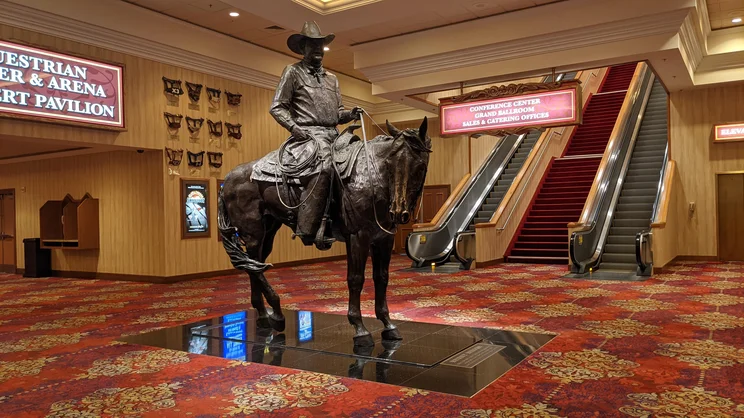
Las Vegas even erected a bronze statue of him on horseback in 1988 to honor him. Lester Ben “Benny” Binion was no saint. He was a tough gangster unafraid to use violence. Without his courage, marketing, and persistence, poker might never have emerged from the shadows of back rooms into the bright lights of television cameras.
More from Legends of PHoF
Legends of Poker Hall of Fame XVIII: Sarge Ferris
Legends of the Poker Hall of Fame XVII: Doyle 'The Godfather of Poker' Brunson
Legends of the Poker Hall of Fame XVI: Jack 'Treetop' Straus
Legends of the Poker Hall of Fame XV: Walter Clyde "Puggy" Pearson
Legends of the Poker Hall of Fame XIV: Henry Green
Legends of the Poker Hall of Fame XIII: Red Hodges
Legends of the Poker Hall of Fame XII: Murph Harrold
Legends of the Poker Hall of Fame XI: Joe Bernstein
Legends of the Poker Hall of Fame X: Tom Abdo
Legends of the Poker Hall of Fame IX: Bill Boyd
Legends of the Poker Hall of Fame VIII: T. "Blondie" Forbes
Legends of the Poker Hall of Fame VII: James Butler "Wild Bill" Hickok
Legends of the Poker Hall of Fame VI: Sid Wyman
Legends of the Poker Hall of Fame V: Red Winn
Legends of the Poker Hall of Fame IV: Edmond Hoyle
Legends of the Poker Hall of Fame III: Felton "Corky" McCorquodale
Legends of the Poker Hall of Fame II: Nick "The Greek" Dandolos
Legends of the Poker Hall of Fame I: Johnny Moss
Source: WSOP, Wikipedia, TexasMonthly, ATI