

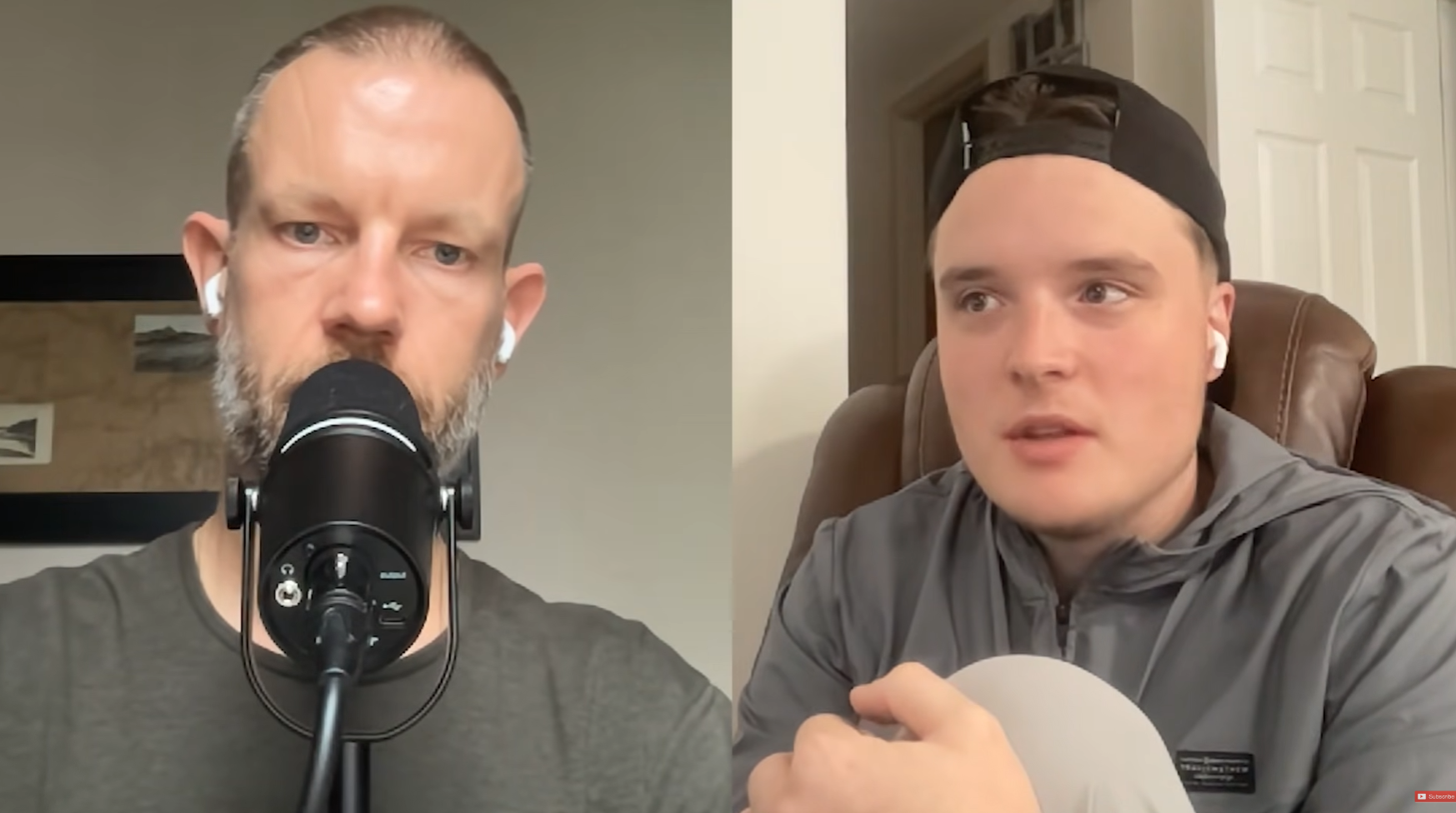
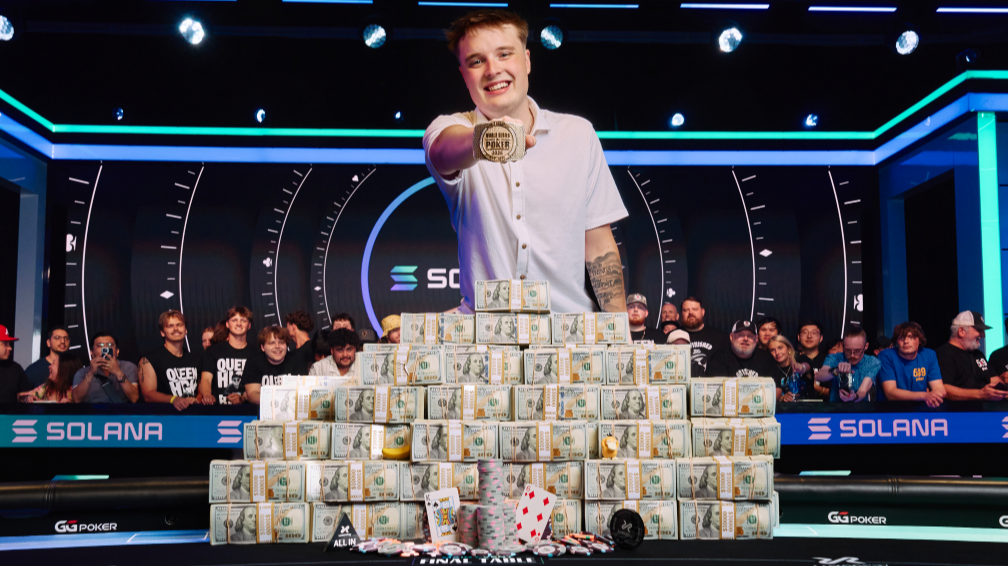
Before the WSOP Main Event, Lucas Jumalon didn't feel he was on the verge of a life-changing result. Quite the contrary. The year was full of deep runs that ended just short of a big finish, and he regarded the Main Event as almost a last attempt to see if professional poker could become a long-term career. A few days later, he held the bracelet, the world champion title, and $10 million in prize money.
The Main Event Was Supposed to Be the Last Chance, At Least in His Mind
Jumalon had been through a tough year. He was making deep runs, but the big moments consistently ended with a lost flip or just shy of a career-defining moment. He viewed the Main Event as the final big opportunity to prove to himself that he could thrive as a professional player. It didn't mean he would quit poker entirely — he loved the game too much. The real question was whether he'd travel the tournament circuit or find a regular job and keep poker as a side passion.
Ironically, this mindset helped him according to his own admission. He stopped trying to control the outcome and accepted the possibility that the tournament might not turn out as hoped. During the Main Event, he found himself down to about ten blinds multiple times, yet never felt it was definitively over. Even when risking his tournament life well before the money bubble, he saw his decisions more as part of the process rather than existential moments.
$10 Million and His First Big Purchase? A Pre-Owned Corvette
Winning $10 million at 22 naturally raises the question — what does someone who was contemplating a normal career a few months prior do with that kind of money? Jumalon isn't planning any major life upheavals. He had already saved a portion of his poker winnings before the Main Event and says he was never a big spender.
However, he did splurge on one reward. He bought a blue 2023 Corvette Stingray LT3. Even here, he didn't opt for a brand-new car costing around $150,000 but chose a several-year-old model for about half the price. “That was something I truly indulged in,” he says. He's not planning to shape the rest of his life around the fact that an eight-figure sum has appeared in his account.
His Father Understood What Outsiders Often Don't
One prominent theme in the interview is Jumalon's relationship with his father, who knew poker well, played home games, attended tournaments, and understood variance in a way that's rare for parents of young professional players. When Lucas was grinding online at home, his father would watch parts of the sessions right behind him, realizing that a single losing day didn't automatically mean his son was doing something wrong.
This support was crucial, especially during periods when results weren't forthcoming. His father didn't push him to give up after a losing day; instead, he'd ask if Lucas would “get back on the bike.” Therefore, Jumalon didn’t view the Main Event solely as personal validation. He also wanted to show his father that the thousands of hours of study, travel, and poker swings had been worthwhile — even though his father repeatedly told him that he was proud long before the title.
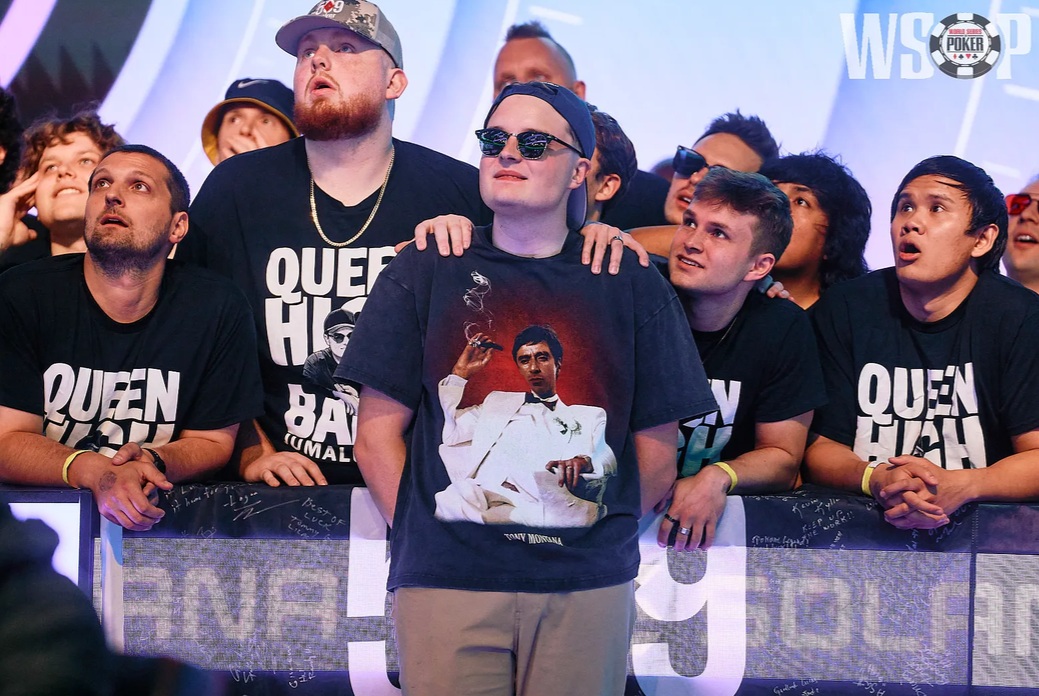
Jumalon speaks similarly about his group of poker friends. Some of them supported him right at the rail and soon after his victory, they achieved significant results themselves. He believes that the community around a player is one of the most important aspects of tournament poker.
According to him, MTT poker can quickly take a person from extreme highs to extreme lows. Trips can end in huge results or another loss, and without people who understand exactly what's going on, a player can end up in a very bad mental space. Jumalon describes poker as a peculiar team sport — everyone sits by themselves at the table, yet a career can't be managed long-term entirely on one's own.
Two Years in the Lab and Then Came Pads
Behind the Main Event run wasn't just the right mentality. For about two years, Jumalon regularly worked with a coach he refers to as “Bod,” and before the WSOP, they had morning sessions lasting one and a half to two hours. They worked with GTO Wizard, discussed ICM, watched Triton and GGMillion$, and constantly questioned why the best players made certain decisions.
Before the final table, another level of preparation came into play — Patrick “Pads” Leonard. During the last ten days or so before returning to the table, they worked about two and a half to three hours daily, and Jumalon says this process significantly changed the way he thinks about poker today. It wasn't just about memorizing ranges; they discussed what stack he was willing to play all-in with in specific spots, where opponents used linear or polarized ranges, and how to apply pressure before the cards were even dealt.
Despite the title, Jumalon has no qualms about pointing out hands he’s not entirely satisfied with today. One of the most debated spots was a battle with Will Givens, where his decision strayed from the theoretical line and resulted in a huge pot. The outcome was positive for the future champion, yet he admits in hindsight that he didn’t play the hand according to his own standards.
The Largest Chip Lead in History Without the Need to Play It Safe
Heading into the final nine, Jumalon had a historically massive chip lead. From the outside, it seemed inevitable that he was supposed to win the tournament. However, he claims he perceived the situation precisely the opposite — he prepared for the worst possible stack and then simply received the best one.
At this point, the ability to manage a large stack without becoming a player who merely protects his position became crucial. The Main Event payouts, according to him, clearly indicate where the real money is. The difference between ninth and eighth place is relatively small compared to the top three positions, and therefore it made no sense to forfeit the chance to win just to move up one place.
He didn't view the final table as a place to “enjoy the moment.” The job wasn't done yet. He wasn't content with seven players left, with three, or even when reaching heads-up. The objective was clear — win the Main Event.
Heads-up brought an entirely different dimension to the match. Jumalon describes how he'd had difficult dynamics with his final opponent in previous days, at one point even wondering if he had a physical tell on him. Gradually, however, he began to find spots where the dynamics shifted, and in heads-up, he wanted to show virtually no emotion to his opponent.
After one big pot, he immediately returned to the table, maintained eye contact, and asked, “Are you ready to go to war?” According to Jumalon, it was visible that this took the momentum away from his opponent. He didn't want him to feel that the previous hand had thrown him off balance. This psychological battle played a role in one of the most talked-about hands of the Main Event, where Jumalon worked not only with the cards and sizing but also with his understanding of his opponent's willingness to make a big fold in front of television cameras. The details of this hand are worth an entire video.
$10 Million Doesn't Automatically Send Him to Triton
After such a win, the natural next steps might seem like $100K and $200K high rollers. However, Jumalon currently has no such plans. He views the world of super high rollers as a place with extremely skilled players, small edges, and to some extent, an ego battle he doesn't need to rush into just because he can financially afford it now.
He doesn't rule out appearing at Triton one day. Yet he acknowledges that there is a huge difference between being able to “compete” with the best and being able to consistently beat them. He's more drawn to continuing on the classic circuit, meeting people, and further developing his game without letting $10 million change his identity.
This might be the most interesting answer from a 22-year-old whose financial possibilities transformed in just a few days. The Main Event resolved his question of whether he could be a professional poker player. Yet it didn't solve poker for him — and according to Jumalon, there's still a massive amount of work ahead.
More from Face the Ace
Josh Arieh: Gambling, Fame, Internal Chaos, and a Comeback That Came Only After a Life Change
Sources: YouTube, WSOP, PokerNews
