

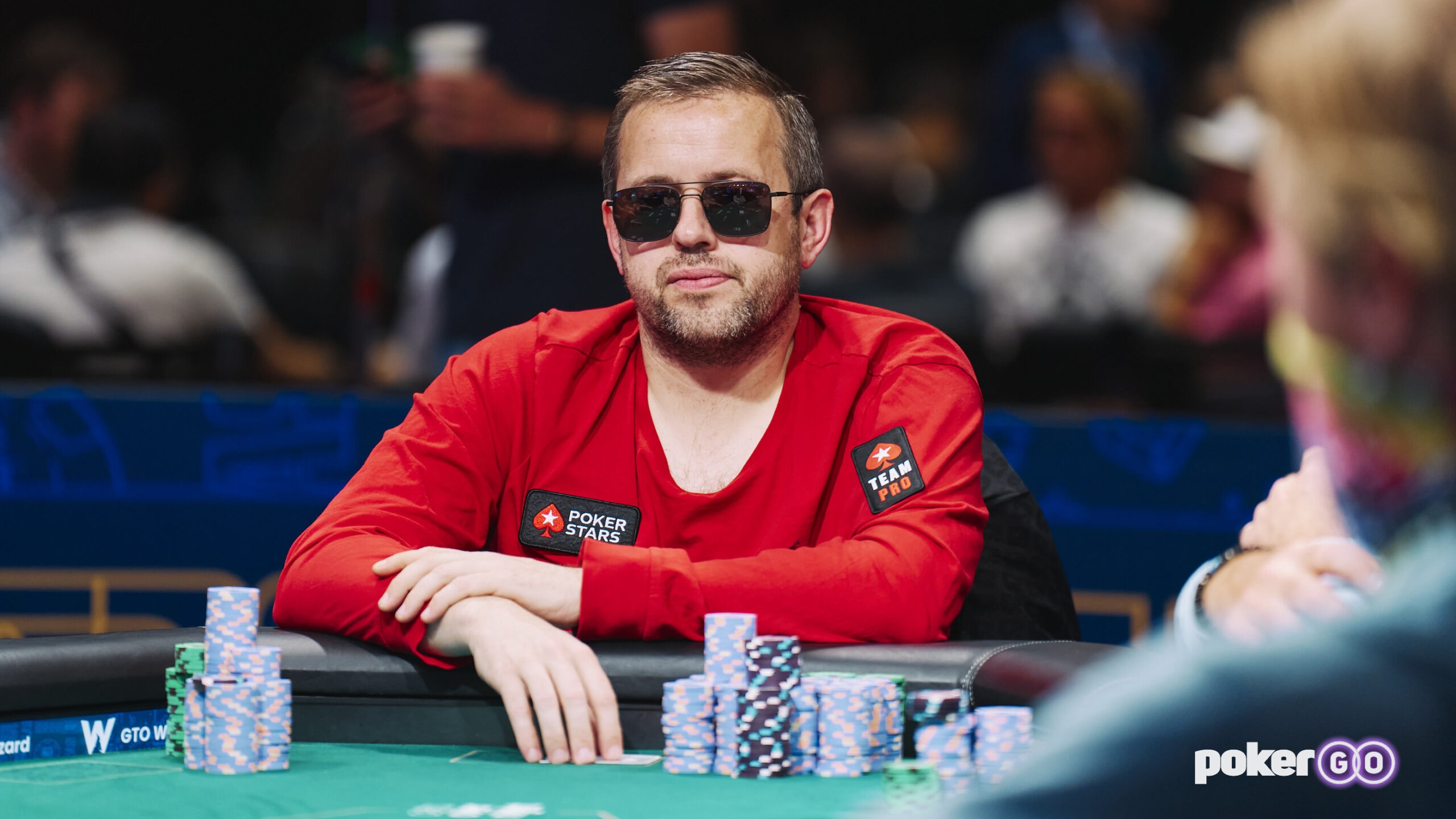
Kenny Hallaert's name holds special weight at the WSOP Main Event. Not because he once hit a big tournament heater and lived off it forever, but because he repeatedly reached the deepest stages of the world's biggest tournament. In this interview, Hallaert doesn't pretend to be an infallible genius or a player who won everything purely thanks to strategy. He openly admits his run good, talks about his own laziness in studying, and very precisely explains why experience in live poker remains extremely important.
Strategic Games and First Contact with Poker
Hallaert grew up in Belgium as an only child, and he was drawn to strategic games from a young age. His mom worked as a bartender, and he spent a lot of time in an environment where people naturally played cards, talked, and competed. It wasn't a poker school in the true sense, but a place where you learn to observe people, dynamics, and small decisions. He says he was always competitive and naturally good at math, which later helped him in his poker growth. However, school never fully captivated him because he could achieve good grades without much effort.
After high school, he pursued a technical path and studied electrical engineering. However, he dropped out after two years when he realized that succeeding wouldn't be as easy without studying as it had been before. He then worked as an electrician for about seven to eight years, contributing an important element to his poker journey: stability. When he stumbled upon an online banner in 2004 saying “play poker here,” he clicked, read the rules, and started with freerolls, micro stakes, and cash games.
Hallaert's poker journey wasn't the typical story of a young player who quits everything after his first success and goes “pro.” Quite the contrary. He had a job, a mortgage, and a background that allowed him to play without the pressure of needing immediate financial returns. In the podcast, he explains how he let his poker bankroll grow and used his job's salary for daily expenses. Mentally, this gave him a great advantage because even if something went wrong with poker, he still had a stable income and a plan B.
A significant turning point came after a soccer injury when he tore his ligaments. Unable to work or play soccer, he could sit with his leg elevated and play poker. Two months of intense online play, he says, significantly helped his growth. Online poker was a completely different world back then; tables were much softer, full ring dominated, and a disciplined player with math skills and basic game understanding had a huge edge.
From Casino Work to Namur Poker Classics
Interestingly, Hallaert didn't enter the poker industry just through results. He used to visit the Namur casino as a player and often brought people from the Netherlands or the Flemish part of Belgium with him. The casino noticed that he had connections with the community, was familiar with players, and could reach out to a market outside the French-speaking environment. In 2007, he was offered a job in the poker room, and by 2008, he joined the casino. For his surroundings, it wasn't an entirely easy decision – in the small Belgian community, working at a casino was still associated with prejudices and suspicions.
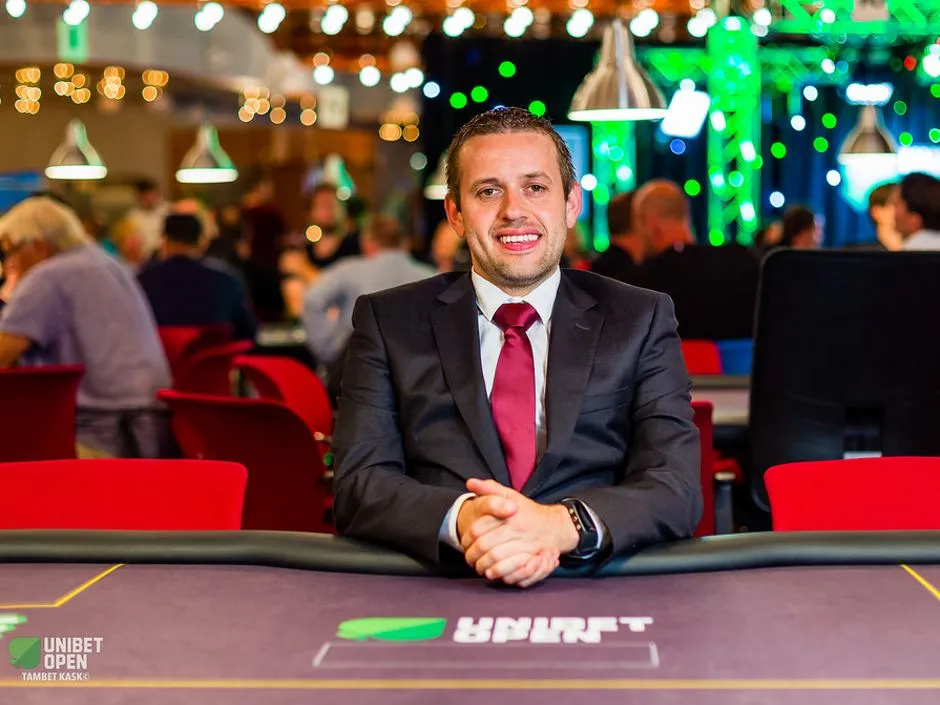
Initially, it was mainly a marketing role, but Hallaert quickly moved into tournament organization. He noticed that while the cash game room was operating, tournaments could bring more players, media, action, and overall activity. He proposed hosting more festivals, and his boss practically immediately responded: fine, prepare a tournament for Easter. That's how his tournament career began. In 2009, he launched the Namur Poker Classics with a €1,000 Main Event, side events, satellites, and PLO tournaments. For a player who always enjoyed organizing community events, sports tournaments, and local happenings, this was a natural combination of poker and production.
This is also why Hallaert doesn't view poker solely from his seat at the table. As a tournament director and floor, he listened for years to what players were concerned about, what they complained about, and which details enhanced or ruined their event experience. This later influenced his view on structures, schedules, late registration, re-entry formats, and live poker security. He says playing helped him organize better tournaments because at the table, you quickly understand what players really want.
Gradually, he also worked on larger European series, including the Belgian Poker Tour, French Poker Series, and EPT events, where he served as a floor. However, with the EPT, he also felt a player's lure. He didn't just want to organize some events; he wanted to play them. Over time, he had to choose when he would work at an event and when he would participate as a player. This dual career gave him a unique perspective on the poker world. He understood operations, rules, logistics, and player pressure, which proved to be a significant advantage in his further career.
First WSOP Dream in Rio
He first got to the WSOP in 2008 when he won a satellite for a package to Las Vegas shortly before starting his casino job. The package included a Main Event buy-in, airfare, accommodation, and spending money, and for Hallaert, it was a dream come true. As a player who grew up on ESPN episodes of the WSOP, High Stakes Poker, and names like Doyle Brunson, Phil Hellmuth, Erik Seidel, and Daniel Negreanu, he suddenly found himself in Rio among people he had only seen on screen. The first trip didn't result in a big run, but emotionally it completely showed him that he wanted to return.
Since 2008, he has practically never missed a WSOP. If he had to pick just one tournament a year, it would be the Main Event without hesitation. For Hallaert, it's not just about the biggest buy-in, prestige, or history. It's about a unique combination of a freezeout, enormous structure, vast field, media pressure, and the feeling that every player is facing one of the purest tournament tests in poker. It was precisely in this tournament that his almost unbelievable pattern of repeated deep runs began.
Colossus as the First Major WSOP Final Table
In 2015, a major milestone came in the Colossus event. It was the first WSOP bracelet event with a buy-in of less than $1,000, and the interest was immense – about 21,000 entries. The tournament's logistics were extreme, including a gigantic bubble that, according to Hallaert, could involve thousands of players at once. In such a field, he fought to the final table and finished sixth. It was his first WSOP final table and a result in one of the largest tournaments of its time.
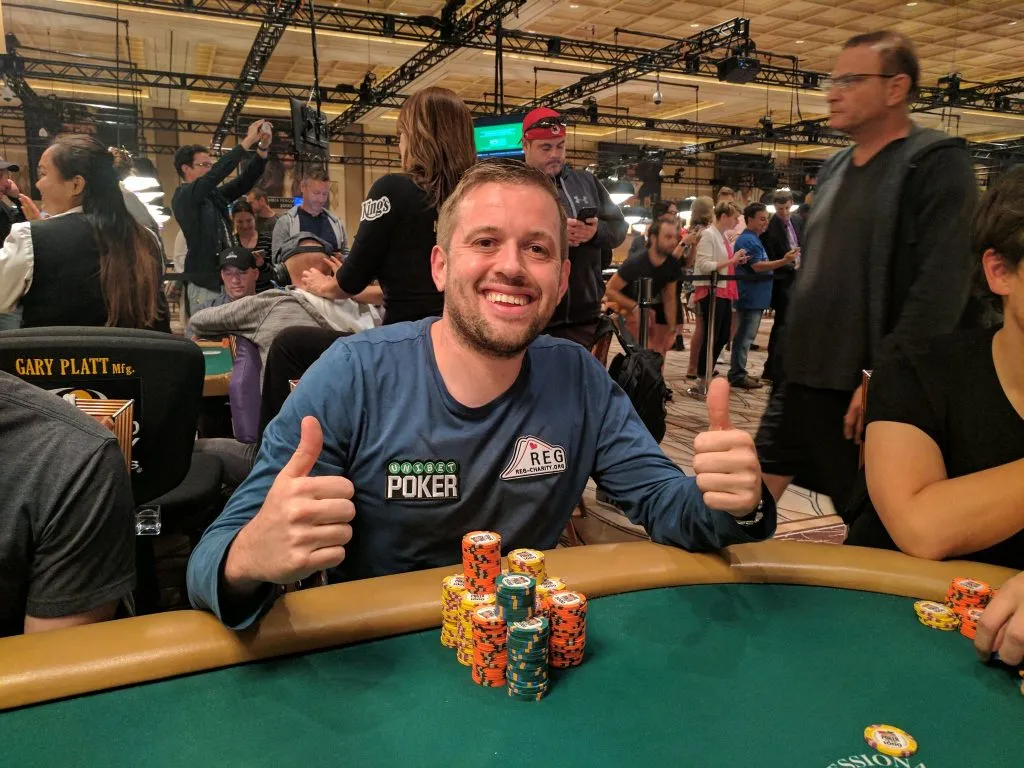
This run raised his personal bar. Initially, he wanted to experience the WSOP, then to cash, then to cash the Main Event, and then to make a final table. Colossus achieved that milestone in grand style. Naturally, the interview reflects that the next goal was even bigger: a bracelet or a Main Event final table. And precisely a year later, his name became permanently connected with the world's biggest tournament.
Main Event 2016 and November Nine
In the podcast, Hallaert explains with a smile that the secret to the Main Event final table is simple: run well for nine days. Of course, he doesn't downplay his decisions but realistically acknowledges that surviving such a tournament without luck is impossible. In 2015, he finished 123rd in the Main Event and was eliminated by the eventual winner Joe McKeehen. At that time, he thought that perhaps he'd had his one lifetime opportunity. But 2016 showed him that the story was just beginning.
He entered the 2016 Main Event excellently. He quickly built a significant stack, survived tough days, was a chip leader at one point, and when he dropped to about 20 blinds, he managed to bounce back. Kings held against a lower pair, and a few hours later, he was back among the top stacks. When he reached the final table, the November Nine format was still in place. The tournament paused in July and resumed in late October, turning the final table into an entirely new event with the same stacks but a different dynamic.
He used the break for preparation and coaching from Fedor Holz and his team. Entering the final, his goal was to reach the top four, but he finished sixth, earning over $1.4 million. In hindsight, he calls it a fantastic result, but he acknowledges some disappointment because no one leaves a Main Event final table satisfied if they haven't won it all.
When Day Five Stops Being a Shock
The biggest difference between Hallaert and the average Main Event player is his experience in the deep stages of the tournament. In 2015, he reached day six, in 2016 day eight, and again day six in 2017. He says that during approximately twenty game days of the Main Event in that period, he was eliminated only twice, which is statistically almost absurd. He admits he ran excellently: he didn’t run into sets, his value hands often dominated opponents' weaker hands, and major confrontations went his way. However, he emphasizes that experience has value. When a player reaches day five for the first time, everything is new. The money is real, media increase, every pot is more significant, and many people start playing differently.
The most practical part of the episode comes when asked how to actually play the WSOP Main Event. Hallaert describes it as a unique freezeout with about 10,000 players, two-hour levels, and 300 blinds at the start. According to him, day one is mostly about patience. You can play many flops, but primarily you need to gather reads, watch opponents, and wait for spots where people will simply give you chips. In such a slow structure, there’s no need to panic unnecessarily.
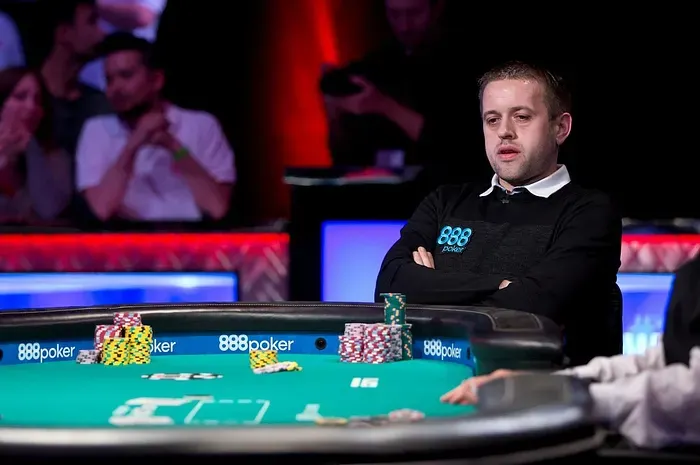
Day two is more about grinding and building a stack, but, according to him, the biggest exploit comes at the end of day three before the money. You must know precisely who at the table just wants to min-cash and who’s playing for the title. Against players who fear busting before the money, significant pressure can be applied. Hallaert speaks very directly: if you know your opponent just wants to survive, you can put them in a spot where they'll fold nearly everything on the river unless it's absolutely strong.
The most memorable sentence comes when discussing GTO. Hallaert claims that when he goes to the Main Event, the first thing he throws away is theory. Not because he doesn’t acknowledge modern poker, but because the Main Event isn’t a high roller against solvers. People often don’t bluff the river as they should. His simplified advice sounds brutally honest but precise: if you get check-raised on the river, look at your hand. Do you have the nuts? Call. Don’t have the nuts? Fold. Sometimes, in the world’s biggest tournament, this straightforward approach can be the most profitable discipline.
PokerStars, Technology, and the Future of Live Poker
Toward the end of the interview, Hallaert discusses his current work. He serves as a live events advisor for PokerStars, assisting in planning festivals, structures, schedules, new concepts, analyses, and player feedback. His role is a natural continuation of a career where player experience merged with organizational insight. He’s also known for his annual guide to Vegas tournaments, which many players use as a practical navigation tool during the WSOP summer.
Integrity in live poker is a major topic. According to him, live poker still thrives on players physically sitting across from each other, but technological development may force organizers into unpopular measures. In the future, bans on electronics, headphones, phones, or eyewear checks may be addressed. The aim is not to punish the majority but to protect the game from the small percentage of players who do not want to play fairly.
Kenny Hallaert is not just a player with two significant Main Event stories. He’s someone who has experienced poker in many roles: as an online grinder, live player, electrician with a bankroll, tournament director, floor in major series, PokerStars advisor, and a person who’s long listened to player feedback. This is why his perspective on the Main Event sounds different from typical strategic clichés. He knows what structure does to a field, what a bubble does to a recreational player, and when an exploit is more valuable than solver-like precision.
More from Table One Podcast
Allen “Chainsaw” Kessler: From Poker Weekends to 350 Days a Year in the Casino
Jeff Gross – Poker, Business, Six-Figure Prop Bets, and the New World of Poker Entrepreneurship
Matt Savage: The Man Who Helped Organize Poker Chaos from WSOP to WPT
Mike Matusow: Million-Dollar Falls, Old-School Charm, and the Comeback of a Player Who Never Gave Up
Justin Saliba: Moved to Vegas, Aspired to Win Millions and Quickly Realized He Hated It
John Bornstein: Underground Clubs, Robberies, Total Collapse, and a Poker Miracle
Nikki Limo: From YouTube and Stand-Up to a $130,000 Poker Run
Joe McKeehen: Stopped Looking at His Cards and Won the WSOP Main Event
Andrew Moreno: From $3 Sit & Go to High Roller Champion
Yukon Brad Booth: Return to High Stakes Poker and the Ultimate Bluff Against Phil Ivey
Landon Tice: When Talent Outpaces Maturity and Poker Forces You to Grow Up
Jeremy Ausmus: From Dusty Poker Games in Colorado to the Pinnacle of World Poker
Cary Katz: Why High Stakes Attract Extremely Analytical Personalities
Sources – YouTube, PokerNews, UnibetPoker, PGT
